Start with the event kit, not the catalog pouch
A useful RFQ for wholesale cotton drawstring pouches for trade show exhibitors starts with the item going inside. Catalog sizes help procurement begin the conversation, but they do not prove fit, presentation, closure, or packing speed. A pouch for a badge insert and USB cable should not be specified like a pouch for skincare bottles, glass vials, folded apparel, charger kits, sample tools, or a small press gift.
Give the supplier the practical details a production team needs: maximum item dimensions, total packed weight, number of items per pouch, and whether the pouch ships empty or pre-filled. Also name who will pack it. A warehouse team packing 5,000 kits needs a forgiving opening and consistent sizing. Booth staff packing on site need cords that move cleanly and a body that does not collapse awkwardly every time they insert a product.
Cotton drawstring pouches are good for presentation, grouping, and light organization. They are not impact protection, leak containment, or a replacement for inner product packaging. If the item has sharp corners, oily surfaces, fragrance, loose powder, glass, magnets, metal parts, or polished finishes that scratch easily, put that in the RFQ. The factory may recommend more clearance, heavier cotton, an inner wrap, a different packing method, or a different pouch structure. That advice only appears when the use case is clear before pricing.
- List the largest insert dimensions, total packed weight, and number of components per pouch.
- State whether the pouch must present, organize, conceal, lightly protect, or simply group the item.
- Flag rigid boxes, sharp corners, glass, oils, powders, fragrance, metal parts, batteries, or fragile finishes.
- Define whether the pouch is a mass giveaway, VIP meeting kit, sales sample kit, press gift, retail add-on, or internal event supply.
- Ask the supplier to flag fit, seam, print, odor, and packing risks before sampling.
Write one controlled specification per pouch type
A strong RFQ turns an event idea into a controlled product specification. Instead of asking for a natural cotton pouch with logo, define finished sewn size, target fabric weight, color state, drawcord, closure, decoration method, print size, print position, quantity tiers, packing format, delivery date, and inspection standard. That level of detail keeps suppliers quoting the same item and makes internal review easier for procurement, marketing, logistics, and event teams.
Many exhibitors need more than one pouch. A high-volume aisle giveaway may need a light, efficient pouch that ships well. A VIP meeting pouch may need midweight cotton, cleaner print detail, a woven side label, or a double drawstring. A sales sample kit may need extra clearance, stronger seams, or a gusset. When those needs are forced into one vague specification, the result is often too expensive for giveaways and not strong enough for premium use.
The RFQ should also show what is fixed and what can move. If arrival date is the main risk, the buyer may accept natural stock cotton, stock cord color, one-color screen print, and bulk packing. If brand color, label placement, or a specific unboxing feel is non-negotiable, the schedule must allow sampling, dyeing, and additional approvals. A practical wholesale cotton drawstring pouches for trade show exhibitors RFQ template guide should make those trade-offs visible early, before purchase orders and artwork deadlines tighten.
- Use a separate line item for giveaway, VIP, sales kit, and press kit pouches when requirements differ.
- Mark must-have requirements separately from preferences or approved alternates.
- Require suppliers to identify any substituted fabric, cord, print process, size, or packing method.
- Ask for quote tiers using the same base specification so price breaks are comparable.
Specify cotton fabric in GSM, construction, and color state
Many quote gaps come from fabric assumptions. One supplier may quote a light plain cotton around 120-140 GSM, another may price a 160-200 GSM midweight cotton, and another may assume 230-280 GSM canvas. Those are different products. They vary in opacity, hand feel, print surface, seam behavior, carton weight, freight cost, and perceived value. The RFQ should state the target GSM or ounce weight and ask each supplier to confirm the exact fabric basis used in the price.
For trade show pouches, 120-140 GSM can be appropriate for budget flat inserts, tags, cards, seed packets, cables, and lightweight literature. Around 160-200 GSM is often the practical middle range for reusable exhibitor giveaways because it feels more substantial and usually gives a cleaner print surface without becoming bulky. Canvas around 230-280 GSM supports heavier or more premium kits, but it can increase sewing cost, carton count, and air freight exposure.
Color state matters just as much as fabric weight. Natural cotton, bleached cotton, stock dyed fabric, and custom dyed fabric have different costs, MOQs, shade risks, and lead times. Natural cotton is not one fixed color; seed flecks, cream tone, and batch variation can be visible. Custom dyeing should be controlled by lab dip or approved swatch, with a realistic shade tolerance. If the brand requires a precise color, do not leave color as a casual note at the end of the RFQ.
- Ask for GSM or ounce weight and fabric construction, such as plain weave cotton or cotton canvas.
- Clarify conventional cotton, recycled cotton blend, or organic cotton only when the sourcing claim is required and documentable.
- State natural, bleached, stock dyed, or custom dyed fabric and how shade will be approved.
- Confirm whether fabric weight tolerance is controlled by mill specification, sealed swatch, or production sample.
- Request a physical swatch when two quotes appear similar but fabric weight, opacity, or hand feel may differ.
Control finished size, usable space, and tolerances
Size problems often start with language. A 150 x 200 mm pouch may mean cut panel size, nominal catalog size, or finished sewn size. After seam allowance, bottom closing, drawcord channel folding, and cotton handling, the usable internal space can be smaller than expected. For event kits packed under time pressure, a pouch can match a loose catalog description and still be too tight for the real item.
Define finished sewn width x finished sewn height with the pouch laid flat after sewing and cord insertion. If usable space matters, state the internal height below the drawcord channel. A soft flat card may only need 10-15 mm clearance per side. Rigid boxes, bottles, stacked samples, or sharp corners often need 20-30 mm or more because the pouch loses flat width as it wraps around volume. If the product must be fully hidden below the channel, write that requirement directly.
Tolerances should be realistic and agreed before sampling. Small simple pouches may be held around +/-5 mm when cutting and sewing are controlled. Larger cotton pouches, thicker fabrics, or gusseted styles may require +/-8 mm to +/-10 mm. Print placement needs its own tolerance because a logo can look off-center even when the pouch is within size tolerance. If the packed item is rigid, request a blank fit sample or require the supplier to test a dummy insert matching the real dimensions and weight.
- Write dimensions as finished sewn width x finished sewn height and define the measurement method.
- Separate full pouch height from usable internal height below the drawcord channel.
- Add more clearance for boxes, bottles, or stacked samples than for paper, cards, or soft textiles.
- Define gusset depth separately and confirm whether width is measured flat or with the gusset opened.
- Keep the print area away from seams, bottom corners, and the drawcord channel unless the factory approves the risk.
Match drawcord and construction to handling
Drawcord details affect both function and perceived quality. A single drawstring may be acceptable for a simple budget pouch, but a double drawstring usually opens and closes more evenly and feels better for reusable trade show giveaways. Cord material also matters. Cotton cord supports a natural look and consistent brand positioning for cotton packaging, while polyester cord can slide more smoothly, shed less fiber, and match bright colors more reliably.
Cord diameter should match the channel. A common range for small to medium pouches is about 3-5 mm, but the correct choice depends on pouch size, fabric thickness, and desired feel. A cord that is too thick makes the channel tight and slows packing. A cord that is too thin can feel flimsy, slip into the channel, or knot poorly. Cord length should be long enough to open the pouch fully but not so long that it tangles during kitting.
Construction details belong in the RFQ because they are hard to repair after bulk sewing. Ask how the drawcord channel is finished, whether channel ends are secured, whether side seams are overlocked or folded, and whether reinforcement is needed at stress points. For heavier inserts, bottom corners and side seams deserve extra attention. If labels are included, confirm that label placement does not weaken the side seam or interfere with the drawcord channel.
- Choose single drawstring only when cost and simplicity matter more than user experience.
- Use double drawstrings for reusable giveaways, VIP kits, or pouches visitors are expected to keep.
- Specify cotton or polyester cord, cord diameter, cord color, and end treatment.
- Check channel width, cord movement, knot security, and cord length balance during sample approval.
- Define seam type and reinforcement expectations for heavier inserts.
Choose decoration by artwork risk, not only unit price
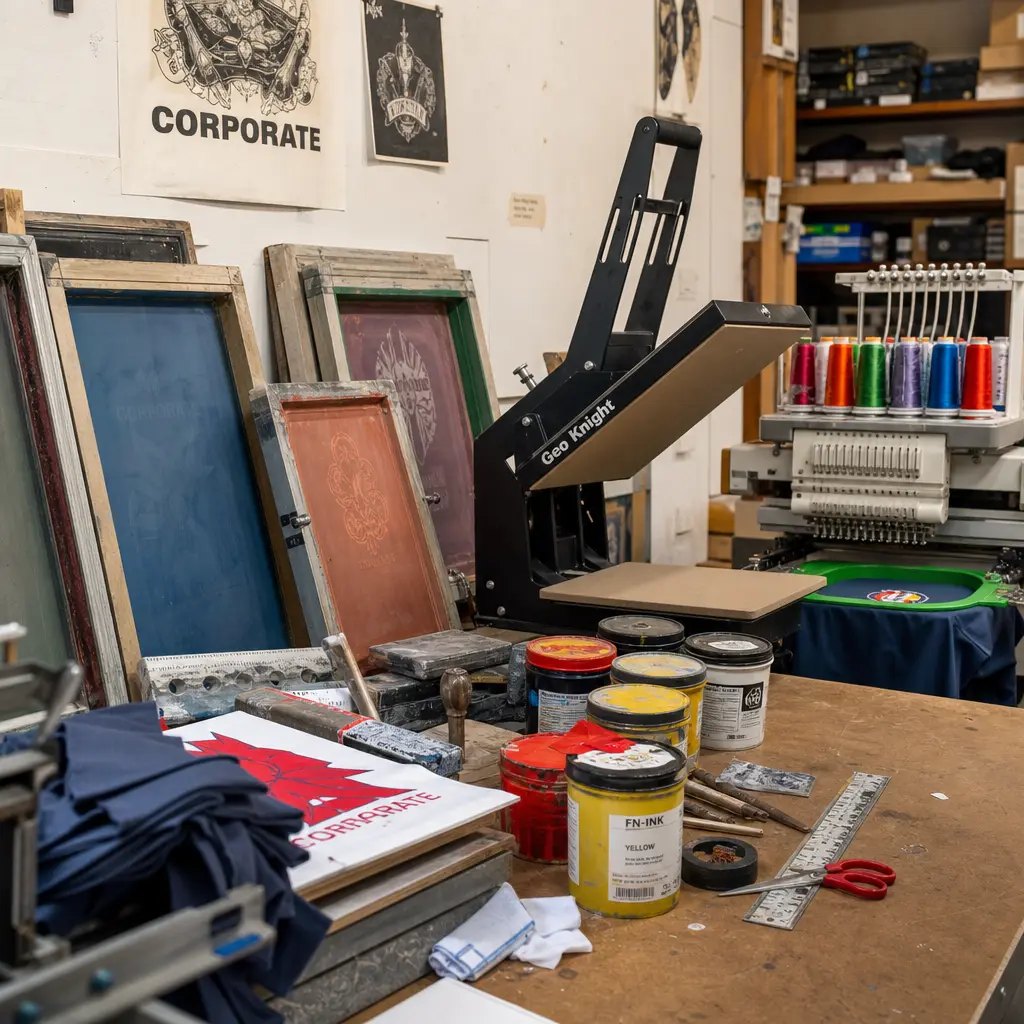
Most cotton drawstring pouches for trade show use are decorated with screen printing because it is economical for solid one-color or two-color logos and durable when cured correctly. Screen print works best with vector artwork, readable line weight, and moderate ink coverage. If the artwork has gradients, photographic elements, many colors, very fine text, or tight registration, heat transfer or digital print may be more suitable. Those choices can change cost, surface feel, lead time, and inspection criteria.
The RFQ should include print-ready artwork, target logo size, print location, ink color reference, and acceptable placement tolerance. A logo pasted into a presentation slide is not enough for production. Cotton texture affects small type and thin lines, especially on natural fabric. White ink on natural cotton, metallic ink, dense coverage, and large solid blocks should be sampled because opacity, cracking, bleeding, and hand feel can vary by ink system and curing.
For exhibitors, readability usually matters more than reproducing every tiny brand detail. Visitors may see the pouch while walking past a booth or opening a sample kit later. A clean, centered mark with strong contrast is often more valuable than a complicated logo that fills in on fabric. Procurement should ask the factory to flag artwork concerns before screens, transfers, or plates are made, because changes after setup cost money and can threaten the event schedule.
- Provide AI, EPS, SVG, or print-ready PDF artwork where possible.
- Specify logo width and height, location from pouch edges, and whether it is centered on the full pouch or body panel.
- Use Pantone references when color matters, but approve realistic variation on natural or textured cotton.
- Ask for minimum line width, minimum text height, and registration tolerance before sampling.
- Require a print strike-off for white ink, large coverage, fine detail, multi-color registration, or unusual placement.
Separate MOQ, setup charges, and price tiers
MOQ is rarely one number. The true minimum may be driven by pouch sewing, fabric roll availability, dyeing batch size, cord sourcing, woven label production, print setup, individual packing, or export carton planning. A supplier may quote 500 pieces for natural cotton with a one-color screen print but need a higher minimum for custom dyed fabric, special cord color, branded labels, or multi-color decoration. If the RFQ does not separate these drivers, the buyer cannot compare quotes accurately.
Ask for tiered pricing at quantities that match event reality, such as 500, 1,000, 2,500, 5,000, and 10,000 pieces when relevant. The quote should list unit price, screen or setup charges, sample charges, courier charges, packing charges, and any material surcharge separately. A low unit price is less useful if it excludes charges the buyer must actually pay.
Order quantity should be based on more than expected booth traffic. Include pre-event mailers, VIP meetings, distributor allocations, sales team samples, internal stakeholder sets, damaged units, and a modest reserve. At the same time, avoid overordering dated event graphics that will expire after the show. A disciplined RFQ asks suppliers to show the commercial impact of quantity changes while keeping fabric, print, and packing assumptions constant.
- Separate MOQ for pouch body, fabric, dyeing, cord, labels, print method, and packing method.
- Request price tiers using the same finished size, fabric weight, print size, and packing format.
- List setup costs separately from unit price so total project cost is visible.
- Confirm overrun and underrun policy for event-critical quantities.
- Ask whether price changes if the buyer accepts stock natural fabric, stock cord, or bulk packing.
Compare landed cost and packing practicality
The lowest ex-factory price is not always the lowest project cost. Fabric weight, carton count, gross weight, carton dimensions, individual packing, Incoterms, inspection, and freight mode all affect landed cost. A heavier pouch may have a modest unit price increase but a larger air freight impact. A quote without carton dimensions, gross weight, and pieces per carton is incomplete for logistics planning.
Ask for Incoterms in the first quote round. FOB is common when the buyer controls the forwarder. EXW may look cheaper but can add pickup, local handling, and export coordination. Delivered or DDP terms can be convenient, but procurement should clarify what is included, who handles customs paperwork, and what happens if the shipment is delayed. For trade show exhibitors, documentation clarity and schedule reliability often matter as much as a small unit-price saving.
Packing format can make or break event execution. Bulk packing in inner bags of 50 or 100 pieces is often practical because warehouse teams can count quickly and booth staff can open bundles as needed. Individual polybags may be justified for retail presentation, VIP kitting, dust control, or pre-packed distribution, but they add labor, plastic, carton volume, and unpacking time. If the pouch is pre-filled, carton strength, compression, dimensional weight, and item protection become part of the packaging specification.
- Request pieces per inner bag, pieces per carton, carton dimensions, gross weight, net weight, and estimated CBM.
- Compare EXW, FOB, and delivered options only after the physical pouch specification is identical.
- Ask whether packing changes carton volume enough to affect freight cost.
- Use clear carton marks for item code, quantity, color, print version, destination, and carton number.
- Confirm whether printed surfaces need curing time, interleaving, or a specific packing direction to prevent ink transfer.
Use samples as production controls
A digital proof confirms layout, but it cannot prove fabric hand feel, opacity, cord movement, stitching, odor, fit, or print curing. The approved sample is a production control tool. Once signed off, it becomes the reference for bulk inspection and gives the buyer, supplier, and inspector one shared standard when normal variation appears.
The safest path is to approve a fabric swatch or lab dip first when color or weight is important. A blank fit sample is useful when product dimensions are tight or the pouch carries a rigid item. A printed pre-production sample should use the actual fabric, cord, print method, logo size, label, and packing method. If schedule pressure forces combined sampling, the buyer should recognize that fewer approval stages mean fewer chances to catch a problem before bulk production.
Sample review should be physical and practical. Put the real insert inside the pouch, close and open the cord several times, inspect the logo while the pouch is filled, and check how quickly the item can be packed. Measure finished size after cord insertion. Smell the pouch after it has been closed in packing for a day. Keep one approved sample with procurement or quality control and require the factory to retain a sealed matching sample before bulk cutting.
- Approve fabric, size, cord, print, label, stitching, odor, and packing as one complete product.
- Test the actual insert or a dimensionally accurate dummy item inside the pouch.
- Open and close the drawstring repeatedly to check channel friction and cord length balance.
- Review the logo flat and filled, under lighting similar to the event or showroom.
- Record approved deviations so bulk inspection is based on written standards rather than memory.
Define QC standards and protect the event date
Cotton pouches are simple products, but simple products still fail when quality expectations are vague. Common defects include size variation, crooked print, weak seams, skipped stitches, loose threads, stained fabric, shade variation, cord mismatch, blocked channels, print cracking, poor curing, and strong odor. The RFQ should define critical, major, and minor defects in business terms before production starts.
Critical defects are issues that make the item unsafe, illegal, or unusable. Major defects are issues that make the pouch unsuitable for the event or visibly damage the brand impression, such as broken seams, blocked drawcord channels, unreadable logos, severe print misplacement, front-panel stains, strong odor, or missing required labels. Minor defects may include small loose threads or slight shade variation within the approved tolerance when presentation and function are not compromised. If using AQL, name the inspection level, acceptable limits, and who approves shipment release.
Schedule control belongs in the same conversation. Trade show dates do not move when artwork approval, sampling, curing, inspection, export handoff, customs, or domestic delivery runs late. Work backward from the latest warehouse arrival date, not only the event opening day. Natural stock cotton, stock cords, one-color screen print, and bulk packing usually reduce timing risk. Custom dyeing, special trim, woven labels, individual packing, split shipments, and pre-filled kits need earlier approval. A good RFQ protects the event date by making every production and logistics step visible.
- Set finished size, print position, shade, cord length, and packing count tolerances before bulk sewing.
- Classify broken seams, blocked channels, strong odor, stains, unreadable logos, and severe print defects as major defects.
- Inspect random cartons from early, middle, and late production where possible.
- Reserve time for inspection, rework, repacking, and shipment release before export handoff.
- Include event date, latest warehouse arrival date, artwork approval deadline, and backup freight decision date in the RFQ.
Specification comparison for buyers
| Spec decision | Recommended option | When it fits | Buyer risk to check |
|---|---|---|---|
| Fabric weight | 120-140 GSM for light budget pouches; 160-200 GSM for most reusable exhibitor giveaways; 230-280 GSM canvas for heavier or more premium kits | Use lighter cotton for cards, badges, cables, seed packets, small literature, or flat inserts; use midweight cotton for branded giveaways visitors may keep; use canvas for heavier samples, bottles, tools, or premium meeting kits | Suppliers may quote different GSM under the same ounce label; confirm actual GSM, weave, color state, and tolerance before comparing prices |
| Finished size | Specify finished sewn width x finished sewn height, measured flat after sewing, trimming, and cord insertion | Needed for cosmetics, sample bottles, chargers, folded textiles, cards, tools, boxed items, or mixed booth kits | Catalog size, cut panel size, and finished size are often mixed up; seam allowance and the drawcord channel reduce usable internal space |
| Clearance allowance | Add 10-15 mm per side for soft flat inserts; add 20-30 mm or more for rigid boxes, bottles, stacked items, or sharp corners | Useful when warehouse teams or booth staff need to pack quickly without forcing the item through the opening | Too little clearance slows kitting, stresses seams, wrinkles the print area, prevents clean closure, and causes fit-check failures |
| Size tolerance | Use +/-5 mm for small simple pouches when confirmed by the supplier; +/-8 mm to +/-10 mm is often more realistic for larger, thicker, or gusseted cotton pouches | Appropriate for cut-and-sew production where natural fabric handling and batch cutting create normal variation | Unrealistic tolerances create disputes; missing tolerances allow visibly uneven units to pass inspection |
| Drawcord construction | Double drawstring with 3-5 mm cotton or polyester cord for most reusable trade show pouches | Double cords open evenly and feel more finished; cotton supports a natural look; polyester slides smoothly and offers brighter color options | Cord diameter must match the channel; short cords, loose knots, fraying ends, and tight channels become functional defects |
| Print method | Screen print for solid one-color or two-color logos; heat transfer or digital print for gradients, small color detail, many colors, or short runs | Screen print is usually practical for common exhibitor quantities when vector artwork is available | Fine lines, white ink, large coverage, registration, and ink curing need a strike-off or pre-production sample, not just a digital mockup |
| MOQ drivers | Separate MOQ for pouch sewing, fabric, dyeing, cord, print setup, woven labels, and individual packing | Best for comparing natural stock cotton, dyed stock fabric, custom dyed fabric, branded labels, and special packing | A low MOQ may exclude screen charges, dye lot minimums, cord sourcing, label production, sample fees, or carton packing limits |
| Packing method | Bulk pack in inner bags of 50 or 100 pieces unless the pouch is retail-ready, pre-kitted, or cleanliness-sensitive | Trade show teams usually need receiving accuracy, fast booth setup, and practical counting more than retail presentation | Individual polybags add labor, plastic, carton volume, dimensional weight, and unpacking time; loose bulk packing can wrinkle or soil pouches |
| Inspection standard | Use written critical, major, and minor defect definitions with finished size, print placement, cord function, seam, odor, and packing checks | Important when the event date leaves little or no time for remake after shipment | If AQL level, sample size, defect classes, and rework rules are undefined, quality decisions become subjective |
Buyer checklist before sampling
- Define the pouch by finished sewn width and height, measured flat after sewing, trimming, and drawcord insertion, with a realistic tolerance such as +/-5 mm for small pouches or +/-8 mm to +/-10 mm for larger or gusseted pouches.
- List every item going inside the pouch, including maximum dimensions, total packed weight, shape, sharp corners, fragrance, oils, powders, glass, magnets, metal parts, batteries, or surfaces that can scratch or stain.
- State the cotton specification in measurable terms: fiber type if required, weave or canvas construction, target GSM or ounce weight, color state, and whether approval will be based on sealed swatch, lab dip, or pre-production sample.
- Clarify whether the fabric is natural, bleached, stock dyed, or custom dyed, and ask for shade tolerance, approved swatch reference, and whether visible shade variation between lots is acceptable.
- Provide logo artwork as vector files and specify decoration method preference, logo size, print location, ink color or Pantone target, minimum readable text, and print position tolerance.
- Decide whether the pouch needs one drawstring or two drawstrings, cotton or polyester cord, cord diameter, cord color, knotted ends, tipped ends, or heat-sealed synthetic cord ends.
- Specify label requirements, including woven label size, side seam or top seam placement, care label wording, fiber content, country-of-origin marking, and whether labels affect MOQ or lead time.
- Separate sample stages where schedule allows: fabric swatch or lab dip, blank fit sample, print strike-off, printed sample, packing sample, and sealed pre-production sample.
- Request carton quantity, inner bundle quantity, carton dimensions, net weight, gross weight, carton marks, pallet needs if applicable, and whether pouches are flat packed, folded, bundled, or individually packed.
- Include event date, latest warehouse arrival date, ship-to country, Incoterms preference, inspection window, required shipment release process, and whether air freight is approved if production slips.
Factory quote questions to send
- Which exact fabric are you quoting, including GSM or ounce weight, weave, color state, and whether it is stock fabric, custom woven fabric, stock dyed fabric, or custom dyed fabric?
- Is the quoted size the cut panel size, nominal catalog size, or finished sewn size, and where exactly should width, height, gusset, and usable internal height be measured?
- What finished size tolerance, print position tolerance, fabric shade tolerance, cord length tolerance, and packing count tolerance are included in your quotation?
- What is the MOQ for natural cotton, bleached cotton, stock dyed cotton, custom dyed fabric, special cord color, woven labels, each print method, and individual packing?
- Which print process do you recommend for our artwork, and what minimum line width, minimum text height, registration tolerance, or color adjustment should we approve before sampling?
- Are screen charges, artwork proofing, print setup, sample charges, pre-production sample fees, courier charges, packing charges, export documentation, and inspection support included or listed separately?
- How many pouches are packed per inner bag and per export carton, and what are the carton dimensions, net weight, gross weight, carton count, and estimated CBM?
- What is the timeline for artwork proof, material sourcing, lab dip if needed, sample production, sample transit, buyer approval, bulk cutting, printing, curing, sewing, trimming, inspection, packing, and export handoff?
- Can you provide close-up production photos during sample and bulk stages showing fabric, stitching, side seams, bottom corners, drawcord channel, cord ends, print surface, label placement, inner packing, and carton marking?
- What inspection standard will you use, including sampling level, AQL if applicable, critical defects, major defects, minor defects, measurement method, rework procedure, and shipment release rule?
Quality-control points to confirm
- Measure finished pouch width and height after sewing, trimming, pressing if used, and cord insertion, not only before assembly or before the drawcord channel is folded.
- Confirm the usable internal height below the drawcord channel when the packed item must fit completely inside the pouch and still close cleanly.
- Check fabric weight with a GSM cutter, supplier mill record, agreed swatch, or sealed approved sample, especially when quote differences seem unusually large.
- Compare fabric shade, weave, opacity, hand feel, cord color, stitch color, label placement, and logo appearance against the approved pre-production sample under consistent light.
- Inspect drawstring movement by opening and closing random units several times; the cord should slide without tearing the channel seam, catching loose threads, or leaving one side much shorter than the other.
- Check side seams, bottom corners, channel ends, labels, and reinforcement points for skipped stitches, seam slippage, loose threads, broken thread, puckering, and weak bartacks if used.
- Perform the agreed print curing check, such as tape test, dry rub, wet rub, wash simulation if relevant, or scratch check, using the same acceptance method approved before production.
- Measure print placement from top edge, side seam, bottom edge, and center line so the logo does not look tilted, too low, too close to the channel, or inconsistent across cartons.
- Review print quality for pinholes, ink bleeding, poor opacity, cracking, ghosting, registration shift, scorching, press marks, and unreadable small text.
- Smell-test random units after packing; strong chemical odor can indicate poor ink curing, storage contamination, damp fabric, or inadequate ventilation before packing.