Start With the Item the Pouch Must Protect
Wholesale cotton drawstring pouches for tech startups are usually bought for one of three jobs: protecting accessories, improving unboxing, or replacing disposable plastic packaging. The same pouch spec will not work equally well for a USB cable bundle, a small IoT device, a hardware demo kit, and a retail add-on pack. That is why the RFQ should begin with the item going inside the pouch, its dimensions, its surface sensitivity, and how many times the pouch is expected to be reused.
A common mistake is ordering by outside pouch size only. Cotton fabric folds, seams, cord channels, and bottom corners reduce the usable space. If the product has a rigid edge, adapter prongs, a screen, or a retail insert card, allow clearance. For a pouch that must hold a product measuring 120 x 80 x 25 mm, the finished flat pouch may need to be closer to 150 x 200 mm or 160 x 220 mm depending on fabric weight, seam allowance, and opening style. If the buyer plans to insert a device and a quick-start card together, the pouch must be sized for both items, not just the device.
The product brief should also explain what the pouch is doing in the workflow. A pouch used inside a fulfillment center needs easy opening and consistent stacking. A pouch handed to conference attendees needs immediate brand visibility and a tidy closure. A pouch sold through retail needs shelf appeal, barcode placement, and consistent appearance across lots. These are different procurement problems even when the pouch is the same shape.
- For cables and chargers, allow extra depth so the user does not fight the drawcord.
- For small electronics, test insertion with the actual product plus foam, card, or manual.
- For retail bundles, confirm whether the pouch is the final consumer-facing package or only an inner sleeve.
- For event giveaways, prioritize fast packing, consistent print, and carton count accuracy.
- For returnable or reusable kits, ask whether the pouch must survive repeated opening, folding, or light washing.
Choose Fabric Weight by Function, Not Habit
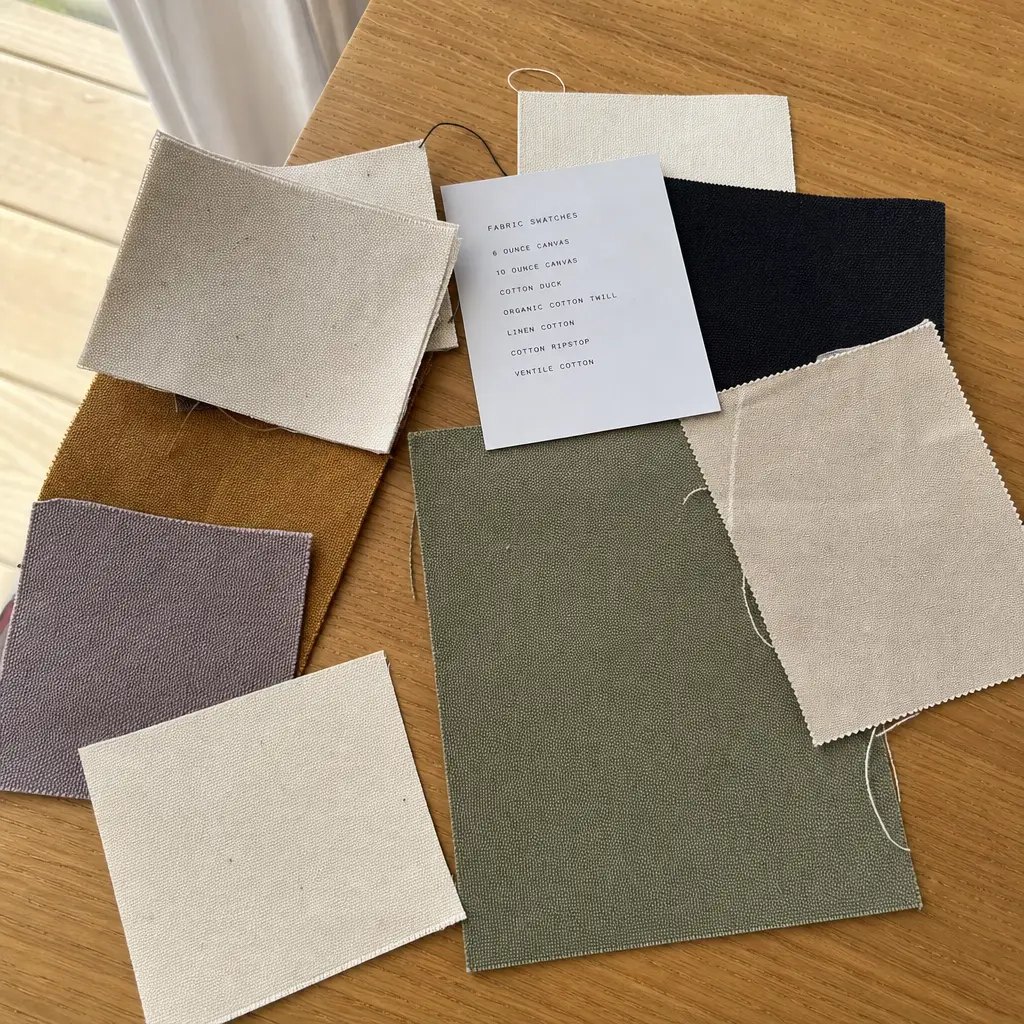
Cotton pouch quotes often mention 4 oz, 5 oz, 6 oz, 8 oz, or 10 oz fabric. In GSM terms, these usually sit around 120 GSM to 340 GSM, depending on weave and finishing. For most tech startup programs, 5 oz to 8 oz cotton is the practical range. It gives enough body for a reusable feel without making the pouch expensive to sew, slow to close, or heavy to ship. Very light cotton can be acceptable for cable dust bags, but it may look thin if used as a premium onboarding pouch.
The heavier the fabric, the more important the drawstring channel and cord diameter become. An 8 oz pouch with a narrow channel can feel stiff and difficult to close. A 10 oz canvas pouch can be excellent for tools or heavier accessories, but it may be overbuilt for earbuds, USB drives, small adapters, or welcome kit items. If the buyer wants a soft sustainable look, natural 6 oz cotton often performs better commercially than a heavy canvas that increases carton CBM and freight cost.
Fabric finish matters almost as much as fabric weight. Natural unbleached cotton gives the familiar eco look and usually samples quickly. Bleached cotton looks brighter and more retail-ready but can show dust and handling marks more easily. Dyed cotton may be necessary when the pouch color must match brand systems or campaign palettes, but it adds shade approval risk, fabric-lot control, and longer lead time. Organic or recycled cotton can be useful for brand positioning, but buyers should confirm whether the supplier can document the claim and whether the higher price is justified for the application.
- 120-140 GSM: light dust pouch, low-cost insert, limited structure, higher transparency risk.
- 150-180 GSM: common lightweight cotton pouch for cables, small gifts, and basic tech accessories.
- 200-270 GSM: stronger reusable pouch for premium kits, chargers, devices, and retail bundles.
- 300 GSM and above: canvas feel, higher unit cost, heavier freight, and more channel design risk.
- Natural cotton is the easiest route for low-MOQ sampling and broad brand compatibility.
Specify Construction Before Comparing Unit Prices
Two quotes for the same size cotton drawstring pouch can be far apart because the construction is not the same. One factory may quote a simple single-cord pouch with basic overlock seams. Another may include double drawcords, reinforced channel ends, cleaner seam finishing, thicker cotton cord, and individual packing. The cheaper quote may still be useful, but only if it matches the actual use case. Procurement should compare construction details before negotiating the final unit price.
For tech accessories, the drawstring channel is often the failure point. If the cord is too thick, closure becomes rough. If the channel is too narrow, the fabric bunches unevenly and the top edge looks messy. If the side seam is not secured at the channel opening, repeated pulling can cause fraying. A factory sample should be opened and closed repeatedly, not only photographed. Ten to twenty open-close cycles during sample review can reveal whether the pouch is pleasant enough for users.
The bottom construction also affects durability and presentation. Flat-sewn bottoms are simpler and cheaper. Gusseted or boxed bottoms give better volume for chunky items, but they add complexity and can change the visible size when the pouch is filled. Buyers should ask for a sample that shows the exact seam finish, corner treatment, and cord exit detail used in production. If the pouch will hold a heavier device, ask whether the factory recommends bartacks, extra seam reinforcement, or a wider channel opening.
- Single drawstring closes from one side and is lower cost, but the top may not gather evenly.
- Double drawstring closes from both sides and feels better for gift kits, but adds cord and labor.
- Cotton cord gives a natural look; polyester cord can be smoother and more color stable.
- Knotted cord ends are economical; metal tips or sewn tabs increase cost and should be justified.
- Ask whether the sewing line uses overlock, bound seams, or folded raw-edge construction.
Match the Print Method to the Logo and Cotton Texture
Most wholesale cotton drawstring pouches for tech startups use screen printing because it is stable, economical, and clean for one-color or two-color marks. It works well for bold logos, product names, web addresses, and simple icons. The buyer should provide vector artwork, Pantone references, logo size, and placement from finished edges. A supplier cannot control registration and position properly if the RFQ only says “print logo in center.”
Heat transfer can handle small gradients or full-color artwork, but it changes the hand feel and may not match a natural cotton brand direction. Embroidery gives a premium texture but can pucker light fabric and is usually not the best choice for small pouches unless the logo is simple and the fabric is heavy enough. Woven labels are a good alternative when the logo must look premium but ink coverage should be minimal. The print decision should be made with the fabric weight, logo detail, and expected handling in mind.
Print durability is a procurement issue, not just a design issue. Light cotton may allow the image to bleed into the weave if the ink is too thin, while heavy ink can make the pouch feel stiff in the printed zone. If the startup expects the pouch to be washed, steamed, or handled in a warehouse, the print spec should include a simple rub standard and an expectation for color consistency across the run. Buyers should also confirm whether the logo will be printed on one side only, both sides, or a specific panel because some factories quote based on each print location.
- Use screen print for solid marks, QR-free branding, and cost-controlled bulk orders.
- Use heat transfer when artwork has gradients, photos, or very small color areas.
- Use woven labels when a sewn brand detail is more durable than a large printed logo.
- Avoid tiny reversed text on natural cotton because slubs and ink gain can reduce legibility.
- Confirm whether the ink should be matte, glossy, water-based, or plastisol based on feel and durability goals.
Understand MOQ Logic Before Negotiating
MOQ is not only a sales rule. It is tied to fabric purchase units, cutting efficiency, print setup, sewing line changeover, trimming labor, and packing setup. A supplier may accept 300 or 500 pieces if stock fabric and one-color print are used, but the same supplier may require a higher MOQ for custom dyed cotton, special cord color, custom labels, or multi-position printing. The buyer should separate which MOQ belongs to fabric, which belongs to printing, and which belongs to final assembly.
For a tech startup testing a launch kit, the best buying route is often a pilot order using stock natural cotton and a simple print. Once the kit design is proven, the next run can move to dyed fabric, custom cord, label, or retail packing. Trying to force custom color, low MOQ, fast delivery, and low price into the first order creates avoidable risk. It also makes supplier quotes hard to compare because each factory may solve the low-volume problem differently.
The sales conversation should also cover whether MOQ changes by size, by color, or by logo version. A factory may be flexible on quantity if one size and one print are used, but much less flexible when the order includes several pouch dimensions, multiple logo placements, or mixed packaging styles. If the order is going into a startup bundle program, ask whether the supplier can hold the same base pouch spec while changing only the insert card or exterior label for each campaign.
- Low MOQ is easier with stock fabric, stock cord, standard size, and one print position.
- Custom dyed fabric raises MOQ because mills need dye-lot efficiency and lab dip approval.
- Multiple pouch sizes reduce cutting efficiency and may create separate MOQs per size.
- Retail barcoding and individual packing can create labor MOQs even when sewing MOQ is low.
- Ask whether MOQ applies to finished units, printed units, or total fabric consumption.
Read the Quote Like a Cost Engineer
A usable factory quote should show more than one unit price. It should identify fabric weight, finished size, print method, number of print colors, drawcord type, packing method, quantity basis, lead time, trade term, and quote validity. Without those details, the purchasing team may choose a low price that later increases after artwork, packing, or carton data are clarified. A clean quote protects both sides because the factory knows what to produce and the buyer knows what is included.
Cost drivers are usually predictable. Fabric weight affects material consumption and freight. Pouch size affects cutting yield and sewing time. Print colors affect screen setup and production speed. Individual polybags or paper bands affect labor and carton volume. Tight tolerance and high cosmetic standards affect inspection and rework. The buyer should not demand a single lowest unit price without deciding which of these cost levers matter to the brand experience.
A stronger procurement process asks for an itemized quote and then compares landed cost, not just ex-works unit price. That means checking sample fees, screen or setup charges, inner packing, export cartons, inspection fees, and the likely freight impact of carton size and gross weight. A quote that looks slightly higher may be cheaper overall if it reduces rework, repacking, or shipping volume. For startup buyers, this is especially important because the first pouch order often sets the standard for later replenishment orders.
- Request price breaks at realistic volumes, such as 500, 1,000, 3,000, 5,000, and 10,000 pieces.
- Separate one-time screen or setup charges from repeat-order unit pricing.
- Ask for estimated carton size, gross weight, and CBM before comparing landed cost.
- Clarify whether the quote includes export cartons, carton marks, barcode labels, and documentation.
- Confirm quote validity so material price changes do not surprise the purchasing team.
Approve Samples With Measurable Acceptance Criteria
The approved sample should not be only a visual reference. It should lock the fabric, GSM, finished size, print color, logo size, logo position, cord type, seam finish, packing method, and carton assumptions. If the sample uses available substitute fabric or a digital print while bulk will use screen print, that must be written clearly. Otherwise, the buyer may approve a sample that cannot represent bulk production.
Sample review should include practical handling. Put the real product inside. Pull the cord repeatedly. Check if the top closes enough to prevent the item from falling out. Look for print cracking, ink smell, stains, loose threads, and uneven corners. Measure several points with a ruler rather than relying on a photo. If the pouch will be used in retail, place it under the same lighting and shelf conditions expected in the store or warehouse, because natural cotton shade differences can become more visible in groups.
A good sample approval package should also include a signed or emailed reference image set. Capture the front, back, inside seams, cord exit, label position, and a measurement shot with a ruler. If the buyer expects a particular edge softness, seam appearance, or logo contrast, note that in the approval record. This prevents disagreement when bulk production starts and gives the supplier a clear target instead of a vague aesthetic preference.
- Measure finished width, finished height, channel height, and logo placement from fixed edges.
- Test the print by dry rubbing with white cloth and checking for visible ink transfer.
- Insert the actual device or accessory and confirm closure, fit, and removal speed.
- Photograph the approved sample beside a ruler and keep one sealed reference sample.
- Record any sample deviations in writing before approving bulk production.
Set QC Thresholds Before Bulk Sewing Starts
Cotton drawstring pouch defects are usually simple but costly if discovered late. Common issues include uneven size, print off-center, stains, broken stitches, loose thread tails, rough cord pulling, mixed fabric shade, and incorrect packing counts. The buyer should define which defects are critical, major, and minor before production. This prevents arguments when inspection finds borderline problems.
For startup launch orders, the most damaging defects are often not structural failures but visible brand problems: a crooked logo, dirty natural cotton, or inconsistent pouch size in a kit. These problems are preventable with clear placement drawings, fabric inspection before cutting, first-piece print approval, and in-line sewing checks. A final inspection is useful, but it should not be the first time anyone checks logo position or drawcord function.
A practical QC plan should include how many samples will be checked, who will approve the first piece, and what happens when defects are found. If the order is time-sensitive, the factory should be authorized to stop the line and correct a print or seam issue before the whole lot is complete. For high-visibility startup programs, correcting a problem early is much cheaper than sorting, reworking, or re-shipping finished stock.
- Critical defects: wrong logo, unsafe contamination, mold odor, unusable closure, or incorrect product size.
- Major defects: visible stains, open seams, severe print smudge, off-center logo beyond tolerance, or wrong packing.
- Minor defects: small loose threads, slight natural cotton slub, minor shade variation within approved range.
- Production controls: fabric roll check, first print approval, first sewn piece approval, in-line count audit, final carton audit.
- Ask the supplier what AQL or inspection standard they normally use and whether it can be adapted to your risk level.
Plan Packing Around the Next Handling Step
Packing should be designed around where the pouch goes next. If pouches ship to a co-packer that will insert devices or accessories, bulk packing in counted bundles may be better than individual polybags. If the pouch goes directly to retail stores or distributor warehouses, individual packing, barcode labels, warning labels, or paper bands may be required. Packing is not a small afterthought because it changes labor, carton count, carton size, and waste profile.
A practical RFQ should state units per inner bundle, units per export carton, maximum carton weight, carton marks, label format, and whether pouches should be folded or laid flat. Folding can reduce carton volume but may leave creases on printed areas. Compression can distort heavy cotton pouches and make them look less premium when unpacked. If the pouches are later packed into tech kits, the factory should avoid mixed sizes or mixed print versions in the same carton unless the carton label makes the mix obvious.
If the pouch is used as a retail component, ask whether the carton must support shelf-ready logistics or simple inbound warehouse storage. That decision affects how clearly the SKU is marked, whether the label needs a scannable barcode, and whether the carton should be palletized in a specific pattern. Startups often underestimate packing because it looks like a small line item, but packing can become a major source of damage or confusion if the next handling step is not defined in advance.
- Bulk bundles suit co-packing, internal kits, and low-waste warehouse handling.
- Individual polybags protect from dust and moisture but add plastic, labor, and compliance questions.
- Paper bands improve presentation but can slip during ocean freight if not sized correctly.
- Carton labels should show SKU, size, color, print version, quantity, PO number, and gross weight.
- Ask whether cartons need pallet marks, side labels, or destination-specific handling symbols.
Build a Lead Time That Includes Approval Delays
The production clock does not really start until the factory has approved artwork, confirmed material, received deposit if required, and resolved packing instructions. For a standard pouch using stock fabric and screen print, sampling may take several working days and bulk production may then run in a few weeks depending on order size and factory load. Custom dyed cotton, lab dips, woven labels, special cord, or retail packing can add additional approval steps. Buyers should build the schedule from decisions, not from optimistic sewing time only.
The highest schedule risk is often the buyer-side approval loop. Logo files arrive as low-resolution images, Pantone colors are missing, packaging rules are decided late, or the product that goes inside the pouch changes size. A good sourcing workflow freezes the pouch spec before bulk cutting and requires written approval for any change after that. If the order is tied to a launch event, book time for sample courier transit, inspection, export documentation, and freight handoff.
It also helps to identify which steps can run in parallel. For example, the factory may be able to prepare screens while the buyer approves carton labels, but it should not cut bulk fabric until the finished size and print position are signed off. If the startup expects repeated pouch orders, establish a reusable spec sheet now so replenishment orders can move faster and avoid re-quoting the same details every cycle.
- Freeze artwork before screen making; changing logo size after screen setup creates cost and delay.
- Approve fabric shade before cutting, especially for natural or dyed cotton used across several items.
- Reserve inspection time before the vessel, air booking, or warehouse appointment.
- Keep a small buffer for rework if print alignment or packing count problems are found.
- Separate sample transit time from factory production time in the project schedule.
Specification comparison for buyers
| Spec decision | Recommended option | When it fits | Buyer risk to check |
|---|---|---|---|
| Fabric weight | 5 oz to 8 oz cotton, about 170-270 GSM | Cable kits, onboarding gifts, accessories, chargers, or small retail bundles where the pouch must feel reusable but not bulky | Below 140 GSM can look thin and show contents; above 280 GSM raises freight weight and can make the top gather stiff |
| Fabric finish | Natural unbleached cotton for standard orders; bleached or dyed cotton only when brand color is critical | Startups wanting a clean low-waste look, quicker sampling, and lower dye-lot risk | Natural cotton shade varies by batch; dyed fabric needs lab dip approval and can add 7-14 days |
| Pouch construction | Double-fold drawstring channel with overlocked or bound inner seams | Repeated opening, kit packing, and distributor handling before final user receipt | Raw inner seams can fray; narrow channels make drawcord pulling stiff after washing or steaming |
| Drawcord type | Cotton cord, cotton tape, or polyester cord based on budget and hand feel | Cotton cord supports natural branding; polyester cord slides faster and is more color consistent | Cord ends can fray if not knotted, tipped, or heat sealed; thick cord needs a wider channel and may require a larger top hem |
| Logo method | Screen print for 1-3 solid colors; heat transfer for fine gradients; woven label for premium low-ink branding | Most startup logos, QR-free instructions, launch kit marks, and conference giveaways | Fine type below about 1.5 mm can fill in on textured cotton; heavy ink coverage can stiffen light fabric |
| MOQ route | Stock fabric with custom print for pilot volumes; custom dyed fabric for repeat programs | Pilot runs, investor events, retail launch tests, or first distributor orders | Low MOQ quotes may hide higher print setup, fabric waste, or carton handling charges |
| Packing method | Bulk pack in export cartons, or individual recycled polybag/paper band only when retail handling requires it | Internal swag kits can use bulk packing; retail or distributor shipments often need item-level protection | Individual packing adds labor, material, carton volume, and compliance questions |
| Supplier route | Direct pouch factory for controlled specs; trading company only when consolidating several product types | Direct factory suits repeat pouches with strict QC; consolidator suits mixed tech kits | A consolidator quote may not show the real factory capability, stitch tolerance, or print rejection standard |
| Lead time planning | Pre-production sample approval, then bulk fabric cutting, printing, sewing, trimming, packing, and inspection | Orders tied to launch dates, onboarding seasons, channel promotions, or warehouse booking windows | Artwork delays, shade approvals, and carton label changes are more common causes of late shipment than sewing capacity |
Buyer checklist before sampling
- Define the pouch use case first: device sleeve, cable pouch, retail insert, welcome kit, sample gift, or replacement packaging.
- Specify finished size with tolerance, not only flat cut size; include opening width and usable internal depth if the product must slide in easily.
- State cotton weight in oz or GSM and whether natural, bleached, dyed, organic, or recycled cotton is required.
- Confirm construction: single drawstring or double drawstring, cord material, channel width, seam finish, and bottom corner style.
- Send logo artwork in vector format and note Pantone references, print size, print position, and whether ink feel matters.
- Decide whether the pouch will be washed, steamed, folded, or compressed before it reaches the end user.
- Request one approved pre-production sample with final fabric, final cord, final print, and final packing method.
- Set carton packing rules: units per inner pack, units per carton, carton marks, barcode labels, and maximum carton weight.
- Ask suppliers to separate fabric, printing, sewing, packing, tooling, sample, inspection, and freight assumptions in the quote.
- Set inspection thresholds for size, stitching, print registration, stains, drawcord function, odor, and packing count accuracy.
Factory quote questions to send
- What cotton fabric weight, weave, construction, and shrinkage data are included in this quote?
- Is the quoted MOQ based on stock greige fabric, stock finished fabric, custom dyeing, or leftover material?
- What is the minimum print charge per color, and how does the price change for 1-color, 2-color, and full-color artwork?
- Will the bulk use the same fabric, cord, ink, label, and packing as the approved sample?
- What finished-size tolerance can your sewing line hold for this pouch size?
- How many units are packed per carton, and what are the estimated carton size, gross weight, and CBM?
- What defects are considered major for print smudging, skipped stitches, stains, loose threads, and drawcord failure?
- How many days are required for artwork proof, sample making, sample revision, bulk production, inspection, and export packing?
- Are setup fees, screen charges, sample cost, courier cost, export carton cost, and documentation fees included or separate?
- Can you provide photos or a short production video of fabric cutting, printing, sewing, and final packing for this order?
Quality-control points to confirm
- Finished pouch width and height should be measured flat after sewing, not estimated from fabric cut panels.
- Size tolerance should be agreed before production; a practical starting point is plus or minus 5 mm for small pouches under 200 mm and plus or minus 10 mm for larger pouches.
- Drawstring channel must allow smooth closing without fabric tearing, cord binding, or puckering around the logo area.
- Logo position should be checked against a placement drawing from seam edge and bottom edge, not only by visual center.
- Screen print should pass dry rub and tape-pull checks appropriate for the ink system before bulk approval.
- Seams should show consistent stitch density, secured ends, no open seams, no skipped sections, and no loose thread clusters.
- Natural cotton should be inspected for oil marks, colored yarn contamination, heavy slubs near the logo, and unacceptable shade mixing.
- Carton count accuracy should be verified by random carton opening before shipment, especially when pouches are packed into kits later.