1. Start with the pack-out problem, not the pouch price
Most procurement teams begin by asking for a unit price on cotton drawstring pouches, but the actual sourcing problem is pack-out consistency. The pouch has to fit the real product, close cleanly, protect the contents, and still look intentional when the subscription box is opened. If the pouch is too small, the packing team slows down, seams are stressed, and the drawcord can become difficult to operate. If it is too large, the insert shifts inside the box and the presentation looks loose or unplanned.
That is why an RFQ for wholesale cotton drawstring pouches for subscription boxes should begin with the filled item dimensions, the target presentation, and the way the pouch will sit inside the carton. A pouch for a beauty set behaves differently from a pouch for jewelry, stationery, snacks, or light apparel. You can only compare supplier quotes fairly when every factory is solving the same pack-out problem with the same assumptions about fill weight, closure style, and presentation requirements.
For B2B buyers, this also means the pouch should be specified as part of the box system, not as a standalone bag. If the pouch is meant to protect a bottle, pad a gift set, or hold several sample packs together, the pouch opening, seam allowance, and closure force all matter. A narrow specification that says only “cotton drawstring pouch” leaves too much room for mismatch later, especially when the order scales across multiple subscription cycles.
- State the item dimensions, not only the pouch dimensions.
- Include whether the pouch is decorative, protective, or both.
- Define whether the pouch must fit a single SKU, a set, or a mixed bundle.
- Note if the pouch must lie flat, stand neatly, or close tightly for shipping.
- Confirm whether the pouch is handled manually, machine-packed, or inserted at a co-packer.
2. Lock the measurement spec before you talk about unit price
A procurement-ready pouch spec should include finished dimensions, seam allowance, opening width, cord length, and an explicit tolerance range. The most useful way to quote is to give the supplier the finished flat size and the target internal capacity, then ask them to confirm the cut size they will use after seam allowance and any shrinkage allowance. Without that detail, two suppliers can quote the same pouch name but produce noticeably different results.
For standard subscription inserts, buyers often use a finished size that leaves 5-10 mm of ease around the packed item so the pouch closes without forcing the seam. That allowance is usually enough for soft goods and sample kits, but it may be too tight for rigid bottles or boxed components. If the product has corners, an irregular profile, or sharp edges, specify whether the pouch needs extra depth or a wider opening. A round bottom, side gusset, or deeper seam can change how the pouch sits in the box and how reliably it closes.
Tolerance matters because cotton is a natural material and small variation is normal. What buyers should ask for is a practical, written tolerance for length and width, and a confirmation of how the factory measures after cutting, sewing, and finishing. If the supplier cannot state how they measure, the quote is not yet procurement-ready. Ask for the same tolerance in the sample stage and in final inspection so there is no gap between what was approved and what is shipped.
- Use finished size and packed-item size together in the RFQ.
- Ask for a written tolerance in millimeters for both length and width.
- Confirm whether the factory measures before or after sewing and trimming.
- If the product is rigid, ask for extra opening ease or a deeper pouch body.
- For repeat orders, keep the same spec version number on every PO and approval file.
3. Choose the cotton fabric weight around the product, not around the catalog
Fabric weight is one of the biggest cost and quality levers in cotton pouches. A 100 gsm pouch may be adequate for light inserts and promotional packaging, but it often feels thin for premium subscription programs and can show the contents more easily than a buyer expects. In many procurement programs, 120-140 gsm is the most practical range because it balances hand feel, stitch stability, print opacity, and cost control without making the pouch overly bulky in carton packing.
The right GSM also depends on what is being packed. If the pouch carries a soft sample pack or light jewelry item, the pouch needs enough structure to present cleanly and resist wrinkling. If it contains a heavier glass bottle, sharp-edged product, or multi-item bundle, buyers should consider a heavier fabric, wider seam allowance, and a more robust drawcord. The cheapest fabric is not always the lowest-risk choice once you account for presentation complaints, rework, and warehouse labor.
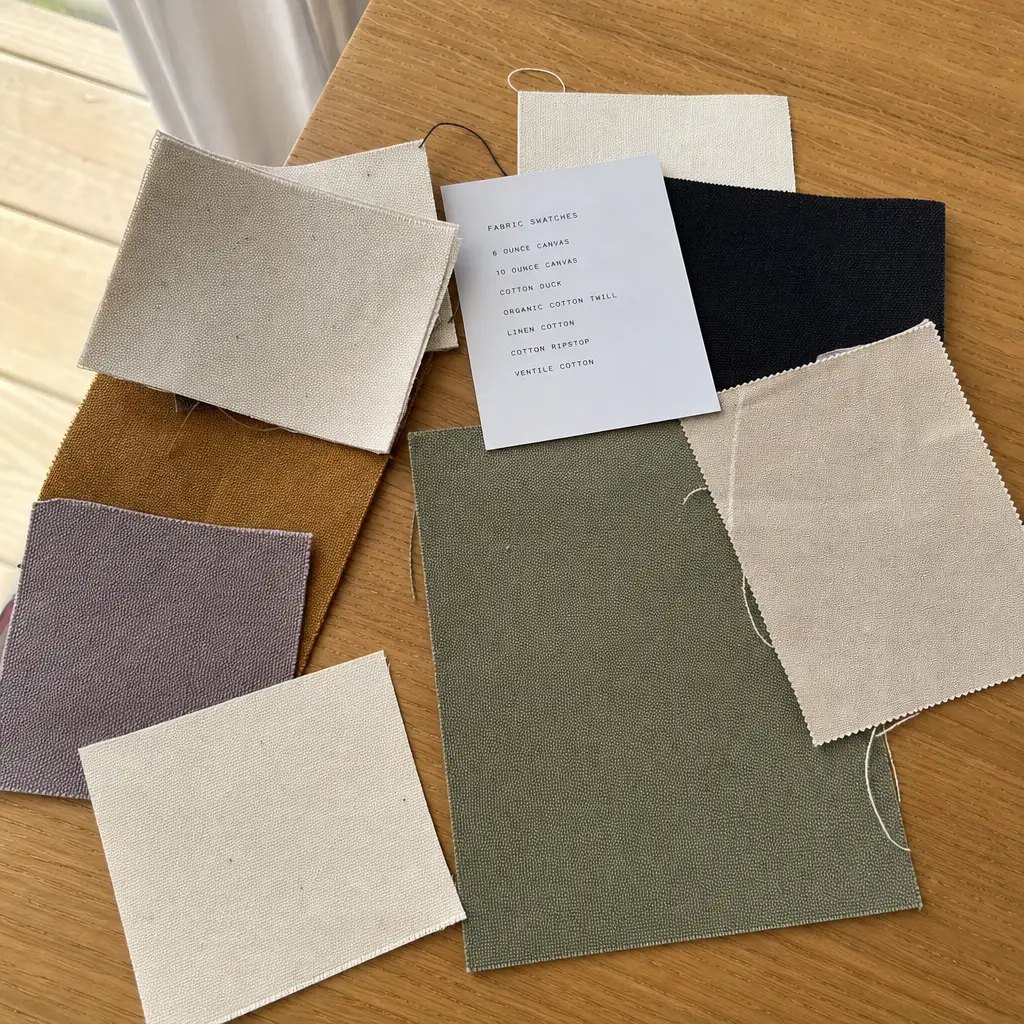
A fabric discussion should also include finishing details. Natural cotton can vary in texture, shrinkage, and shade depending on weave and pre-treatment. If you need dyed cotton or a specific natural tone, ask whether the factory controls shade against a standard, whether shrinkage has been considered in the cut size, and whether the fabric will be washed or heat-set before sewing. Those details affect both appearance and consistency in bulk production.
- 100 gsm: suitable for light inserts, giveaways, or very cost-sensitive launch orders.
- 120 gsm: common baseline for subscription boxes and general brand packaging.
- 140 gsm and above: better for premium appearance, denser print, and fewer see-through issues.
- If the fabric is dyed, request shade control and confirm whether shrinkage was accounted for.
- Ask whether the cotton is pre-shrunk, bio-washed, or left in raw natural finish.
4. Build the bulk pricing plan around real cost drivers
A useful bulk pricing plan is not a single target number. It is a breakdown of what changes the quote and why. Cotton pouch pricing usually moves with fabric GSM, cut size, cord type, print method, labor time, packing format, and whether the order is truly standard or partially custom. If a supplier only gives a headline unit price, you cannot tell whether the quote includes the same fabric weight, the same print setup, or the same packing requirements as the next supplier.
For procurement buyers, the clean way to compare quotes is to separate the quote into fabric, cutting loss, sewing, cord insertion, printing, packing, and export cartonization. If freight is part of the landed cost discussion, add carton dimensions, pallet pattern, and master carton count to the pricing conversation. That makes it much easier to see when a quote is cheap because the spec is weaker, not because the supplier is actually more efficient.
This approach also helps your team negotiate more intelligently. For example, if the unit price jumps sharply at a lower MOQ, ask which cost item is creating the difference: setup, plate making, fabric sourcing, or packing. A factory can often reduce price by using stock cord, simplifying label placement, or consolidating print colors, but those changes should be visible to the buyer instead of hidden inside a vague quote. When you request a bulk pricing ladder, ask for the same spec at each quantity break so the comparison is meaningful.
A practical pricing ladder for early-stage subscription programs usually includes at least four breaks: pilot quantity, first replenishment, mid-volume, and scale order. That gives procurement a view of how quickly unit price improves as fixed costs are spread across more pieces. It also shows whether the supplier has a stable pricing curve or only becomes competitive at a much larger order size. If you plan monthly or quarterly replenishment, compare not only unit price but also the recurring setup fees, sample fees, and any extra packing charges that may repeat on each batch.
- Fabric cost rises quickly when you move from 100 gsm to 140 gsm or when width waste is high.
- Logo printing adds setup and run cost; extra colors increase both labor and waste.
- Custom cord color or custom dye generally adds MOQ pressure and lead-time risk.
- Export packing can add real cost if cartons must be small, double-walled, or relabeled.
- Ask for a price split between blank pouch cost and decoration cost so you can compare options.
- Request the same quote at four quantity breaks so you can see the pricing curve, not just one number.
5. Compare supplier routes before you compare prices
The lowest quote often comes from a supplier route that changes the risk profile. A factory-direct source usually gives better visibility into sewing, printing, and QC, while a trading route may be helpful when you need lower MOQ or mixed items in one shipment. The point is not that one route is always better; it is that the sourcing route should match your launch stage, volume forecast, and control requirements.
For recurring subscription programs, factory-direct sourcing is often easier to scale because the same team controls fabric purchase, stitch quality, logo registration, and final packing. That reduces the number of handoffs and makes sample approval more meaningful. For test orders or multi-category subscription boxes, a strong trade supplier can consolidate items, but only if the factory of origin is traceable and the sample is tied to the actual production source. Otherwise, the quote may look good while the shipped goods come from a different line, fabric lot, or finishing process.
As a buyer, you should also ask who owns each quality step. If the supplier is not the actual maker, request a clear statement on which facility handles cutting, sewing, printing, inspection, and packing. That becomes important later if you need corrective action, replacement goods, or evidence of compliance. Traceability is a procurement tool, not just an admin detail.
- Factory-direct: better control, clearer claims process, usually stronger for repeat replenishment.
- Trade supplier: easier for mixed assortments or small tests, but watch hidden handoffs.
- Local converter: useful for quick turns, but per-unit cost often rises once volume increases.
- Integrated sewing-and-print factory: best when logo position and consistency are critical.
- Ask for the actual production site address if the quote is not from a direct manufacturer.
6. Use this comparison table to make quote decisions faster
The table below helps buyers compare supplier options, not just bag specifications. Use it when you are deciding between different sourcing routes, different quality levels, or different ways of structuring the order. In most procurement situations, the winner is not the lowest quoted unit price; it is the option that gives you the best balance of fit, consistency, and landed cost.
If two quotes are close on price, the stronger one is usually the quote with better sample control, clearer carton packing, and fewer assumptions. A good quote should make it easy for your team to calculate receiving effort, shipping efficiency, and the risk of rework before the order is placed. For subscription boxes, the comparison should include the finished look of the pouch on pack-out day, not only the fabric cost per unit.
- Write decisions in measurable language, not only descriptive wording.
- Ask for sample photos plus one physical approval sample for important orders.
- Keep quotation, sample approval, and inspection notes tied to the same spec version.
- Use the same size reference across supplier comparisons to avoid apples-to-oranges pricing.
7. Print method choice affects both appearance and rework risk
On cotton drawstring pouches, the common print options are screen print, heat transfer, digital print, and woven or sewn label application. For most subscription-box programs, screen print remains the best balance when the logo is one or two colors and the artwork has clean edges. It is economical, durable under normal handling, and relatively easy to repeat in bulk if the artwork stays stable across replenishment orders.
Heat transfer can work for smaller runs or more detailed graphics, but it should be tested for cracking, edge lift, and adhesion after folding. Digital print may be suitable for more complex art, but buyers should understand that not every print method gives the same coverage on natural cotton. Woven labels and side labels are often better for premium presentation or repeated use, especially when the pouch itself becomes part of the brand experience rather than just a disposable insert.
The practical buying rule is simple: the more detailed the artwork, the more important it is to inspect both the flat sample and the filled sample. A logo that looks centered on a table may shift visually once the pouch is stuffed and tied. Define exact placement, acceptable registration shift, and color expectations before mass production starts, because rework on decorated pouches is usually expensive and time-consuming.
Buyers should also ask whether the print is applied before or after sewing. Printing on cut panels can allow better logo centering and may improve coverage, while printing after assembly may be faster for some lines but can limit placement consistency. If your art has thin type, fine lines, or a small QR code, request a test print under the final method and confirm legibility at the actual viewing distance used in the box. For procurement, the question is not only “Can it be printed?” but “Can it be repeated without variation across the full order?”
- Screen print: strongest value for simple logos and medium-volume orders.
- Heat transfer: useful for detailed art, but require flex and rub checks.
- Woven label or sewn label: good for premium positioning and repeat orders.
- If you need both logo and care label, specify whether they are separate or combined.
- Ask whether artwork is printed before or after sewing, since that affects alignment and finish.
8. MOQ logic should match your launch and replenishment plan
MOQ is not just a factory rule; it is a pricing mechanism. At lower quantities, the supplier spreads setup, cutting loss, print plate cost, and inspection labor across fewer units, so the unit price rises fast. That is normal. What buyers should avoid is comparing a low-MOQ quote with a high-MOQ quote as if they represent the same order structure.
If you are launching a new subscription box, a smaller MOQ can be worth the higher unit price because it lowers inventory exposure and lets you validate the pouch in actual customer shipments. If the pouch is already proven and will repeat monthly, a larger MOQ can reduce landed cost significantly, especially when the same fabric and print setup can be repeated without new approvals. The right question is not “What is the lowest MOQ?” but “What MOQ gives us the best risk-adjusted cost for this stage of the program?”
It also helps to ask how MOQ changes by customization level. Stock fabric, blank pouches, and simple one-color printing may allow a lower entry point. Custom cord color, special sizing, custom dyeing, or multi-color printing usually increases MOQ and extends lead time. If the factory says low MOQ is possible, verify whether the fabric and cord are already in stock and whether the quote assumes a simplified finish.
A useful procurement tactic is to separate pilot order logic from scale order logic. For example, one batch may be approved only to validate fit and print registration, while the next batch can optimize price once the design is stable. That lets your team avoid overbuying on the first order while still planning a route to better pricing after the product is proven in the market.
- Use a small pilot MOQ when artwork or box size is still under review.
- Use a higher MOQ once fill dimensions and pack-out are locked.
- If the supplier says low MOQ is possible, verify whether the fabric is stock or custom.
- Check whether MOQ changes for custom cord, custom dye, or extra print colors.
- Ask whether MOQ is per design, per color, or per total mixed order.
9. Sample approval needs to test fit, finish, and closure
A sample is not just for visual approval. For drawstring pouches, the sample should prove that the product fits, the cord closes smoothly, and the logo looks right after the pouch is folded and handled. A flat sample photo can hide issues that only appear once the pouch is filled, tied, and packed into a box. If the pouch will be inserted by a fulfillment team, the sample should also reflect the way staff will actually handle it on the line.
The best sample sequence is a pre-production sample built with final fabric, final cord, and final artwork method. If the order is large or the launch date is fixed, consider a first-article sample from the actual production line so you can see the same sewing and print conditions the bulk order will use. This is when buyers should check pouch opening size, seam alignment, logo placement, thread trimming, and cord movement under normal use conditions.
For high-visibility subscription programs, the sample review should include a simple written approval record. Note the accepted size, the approved artwork version, the cord color, and any tolerance that has been allowed. That reduces later disputes when the factory is packing bulk goods and needs a clear reference for what was approved. If the product is color-sensitive, request a shade reference or physical swatch, not only photos, because camera lighting can hide real variation.
It is also worth asking for a simple functional test on the sample. Close the pouch at least several times, check whether the cord slides evenly, and verify that the opening does not gape after closure. If the pouch is expected to travel in a box with other items, place the actual insert inside and simulate the packing condition. A good sample approval process catches the issues that matter to operations, not just the issues that look good in a photo shoot.
- Fit test the actual product or a weighted dummy load.
- Inspect print placement after the pouch is filled, not only when flat.
- Check whether the drawcord closes in one smooth motion.
- Compare sample shade, texture, and label position against the approved artwork sheet.
- Retain photos of the approved sample next to the signed spec sheet.
10. Packing and carton setup can change your landed cost
Cotton pouches are light, but they can still create unexpected freight and warehouse costs if they are packed poorly. Loose bundles can wrinkle, collect dust, and take more labor to count. Overpacked cartons can crush the pouch shape and distort the logo panel. That is why your quote should specify exactly how the goods are packed: pieces per inner polybag, units per carton, carton dimensions, and whether the cartons are marked by size, color, and PO number.
For importers, carton planning matters because it affects cubic volume, pallet patterns, warehouse receiving time, and even the chance of damage in transit. If the factory can label cartons clearly and keep carton content consistent, your receiving team can process the shipment faster and with fewer discrepancies. If they cannot, the low unit price often disappears into counting labor, repacking, and issue resolution after landing.
When you compare quotes, ask whether the goods are packed bulk, sorted by size, individually polybagged, or retail-ready with barcode labels. If the supplier offers retail-ready packing, confirm whether that includes hang tags, barcode placement, and carton assortment logic. These details can materially affect labor cost at both the factory and your warehouse. For subscription boxes, also confirm whether the pouch must arrive flat-packed to save space or lightly stuffed to keep a premium hand feel during unboxing.
A strong packing instruction should also state whether cartons need double-wall construction, moisture protection, desiccant, or outer markings for export. These are not luxury items; they reduce receiving surprises and protect the pouch finish in transit. If your distribution center uses barcodes or bin labels, align carton labels to the same SKU naming convention before production starts so the receiving team does not need to re-identify each case.
- Confirm whether pouches are bulk packed, sorted by size, or individually bagged.
- Ask for carton dimensions before freight booking.
- Make sure carton labels match your PO and SKU system.
- If retail-ready packing is needed, define hang tags, barcode labels, and carton assortments early.
- Confirm whether cartons are export-strength and whether double-wall cartons are available if required.
Specification comparison for buyers
| Spec decision | Recommended option | When it fits | Buyer risk to check |
|---|---|---|---|
| Fabric weight | 120-140 gsm cotton for standard subscription inserts | Best balance for jewelry, beauty kits, sample packs, and light apparel | Too thin can show through print and wrinkle in transit; too heavy raises unit cost and fold bulk |
| Drawcord construction | Single channel with cotton cord or polyester-cotton cord | Works for low to mid-value subscription items where appearance and hand feel matter | Cord slippage, uneven knotting, or fraying at cut ends if finish is not specified |
| Print method | 1-2 color screen print or heat transfer for short runs; woven label for premium reorders | Screen print suits most brand logos on natural cotton; woven labels suit recurring subscription programs | Fine-line logos may fill in; heat transfers can crack if flex testing is ignored |
| Bag size | Sized to product pack-out dimensions with 5-10 mm extra ease | For standardized box inserts and nested product bundles | Over-sized pouches waste material; under-sized pouches cause seam stress and poor closure |
| MOQ route | Factory-direct mixed color or mixed logo only if fabric and cord are already in stock | For procurement teams consolidating first orders or testing a subscription launch | Low MOQ can hide higher setup costs, higher unit price, or longer approval time |
| Sampling route | Pre-production sample with final fabric, final artwork, and final cord color | When brand colors, print placement, and box presentation matter | Lab dips or mock samples may not reflect actual bulk shade or stitch density |
| Packing method | Bulk polybagged by size and carton count with carton labels and inner lot traceability | For importers handling warehouse receiving and retail distribution | Loose packing increases contamination, crush risk, and receiving labor |
| Supplier type | Factory-direct or audited trade supplier with internal sewing and printing control | For buyers who need predictable lead time and fewer handoffs | Trading layers can obscure real capacity, QC responsibility, and claim ownership |
| Lead time plan | 30-45 days after sample approval for common cotton pouches; longer for custom cord, dye, or packaging | For planned subscription launches and replenishment orders | Rush timelines often skip final inspection or create partial-shipment risk |
Buyer checklist before sampling
- Define the filled product size, not just the pouch size, so the pouch closes cleanly without overstuffing.
- Specify fabric weight in GSM, fabric finish, cord type, logo size, and print position on the RFQ.
- Request a pre-production sample made with final fabric, final cord, and final artwork method.
- Confirm carton count, inner polybag rule, label content, and carton dimensions before quoting freight.
- Ask for a bulk pricing ladder by quantity break, not a single unit price.
- Set an acceptance limit for print sharpness, seam strength, and closure function before approval.
- Align lead time with subscription ship dates plus a cushion for customs, warehouse receiving, and rework.
Factory quote questions to send
- What GSM do you recommend for this pouch size and fill weight, and what is the unit price difference at 100 gsm, 120 gsm, and 140 gsm?
- Is your quote based on stock fabric or custom woven fabric, and how does that change MOQ and lead time?
- Which print method is included in the price, and what are the setup charges for extra colors or second-side printing?
- What is the exact size tolerance on length and width, and how do you control shrinkage after cutting or washing?
- How many pieces are packed per carton, what is the carton size, and are master cartons export-ready without relabeling?
- Can you provide pre-production sample photos plus a bulk inspection plan for seam, cord, and print checks?
- What is the pricing ladder at 1,000, 3,000, 5,000, and 10,000 pieces, and which cost items change at each step?
Quality-control points to confirm
- Fabric weight should match the agreed GSM within a practical tolerance, with no obvious thin spots or weave irregularity.
- Seam allowance should be even, and side seams should not pucker when the pouch is filled to normal capacity.
- Cord pull test should close the pouch smoothly without binding, slipping, or fraying after repeated cycles.
- Print should be centered or positioned to the agreed spec, with no smearing, pinholes, or washed-out edges.
- Cut edges and cord ends should be cleanly finished; loose threads should be trimmed before packing.
- Cartons should arrive dry, square, and labeled with size, quantity, PO number, and carton count.
- Random samples from bulk should match the approved sample in fabric hand feel, logo placement, and closure function.