Why Skincare Brands Need a Dedicated Inspection Checklist for Cotton Drawstring Pouches
Skincare packaging has to survive more than just shipping. Your pouches will be opened and closed by customers multiple times a day, often with damp hands, and they'll be stored in bathrooms where humidity can weaken cheap stitching or cause print to peel. A cotton drawstring pouch that fails after a few weeks reflects poorly on your brand—and returns cost more than the pouch itself.
Most importers rely on a generic textile checklist that misses the specific failure points of drawstring pouches: cord slippage, channel tearing, and print adhesion on natural fiber. This guide gives you a factory-tested inspection framework built for skincare brand buyers who need pouches that look premium and hold up to daily use.
- Cotton drawstring pouches are often the first physical touchpoint for subscription box customers—don't let a loose thread ruin the unboxing experience.
- A single batch of pouches with weak drawstrings can generate dozens of customer complaints; the cost of inspection is a fraction of the cost of replacements.
- Skincare products often include glass bottles or jars; pouches must have reinforced seams to prevent tearing under weight.
Fabric GSM: The First Number That Determines Pouch Quality
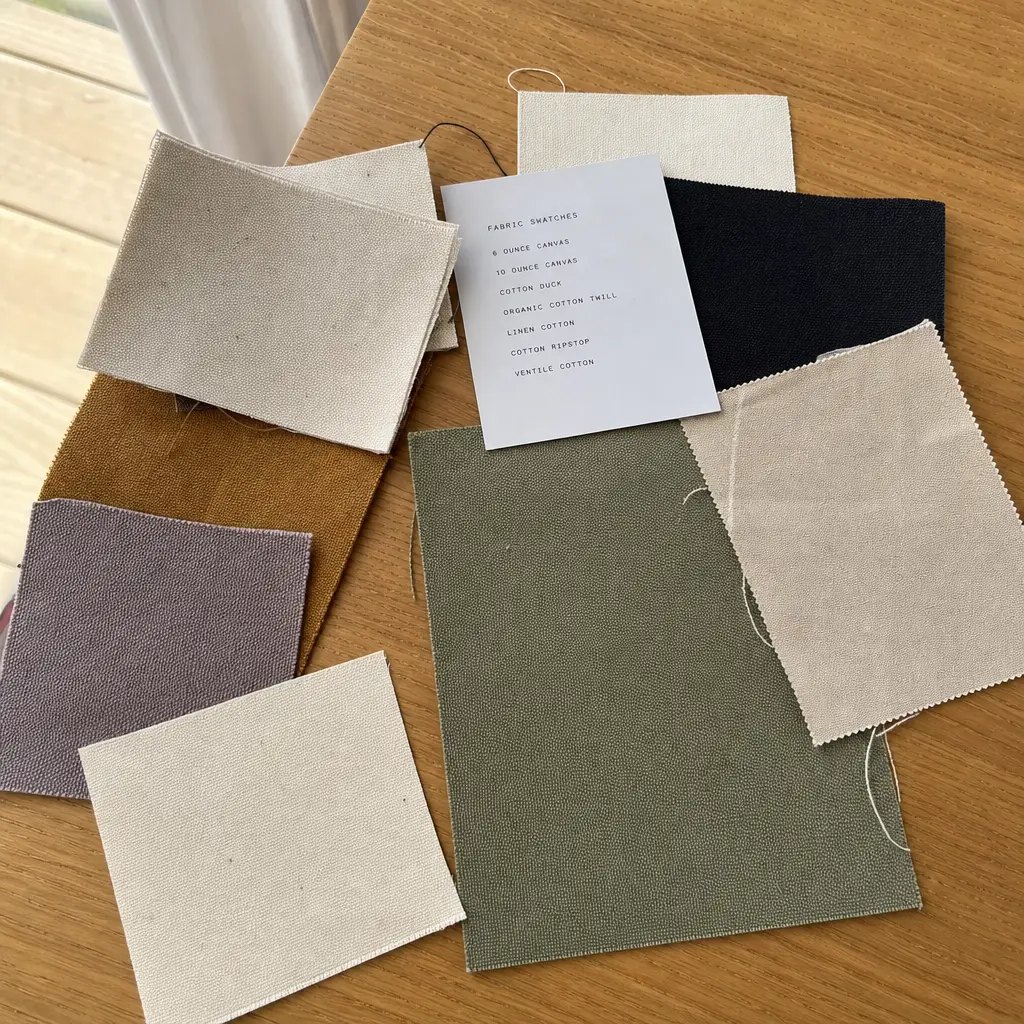
Fabric weight is the single most important spec for cotton drawstring pouches. For skincare brands, 140–160 GSM unbleached cotton is the sweet spot. Below 130 GSM, the fabric feels flimsy and may tear at the drawstring channel when pulled tight. Above 180 GSM, the pouch becomes stiff and harder to close, and the cost per unit jumps significantly.
When you receive a sample, don't just trust the spec sheet. Weigh the pouch on a calibrated gram scale. If the factory claims 150 GSM but the sample weighs 135 GSM, that's a red flag. Ask for a fabric swatch from the actual production roll, not the sample roll. Many factories use better fabric for samples and switch to cheaper stock for bulk production.
Request a fabric weight certificate from the mill for each production lot. Check GSM on at least three random pouches from the first production run. Accept ±5% tolerance; reject anything below 95% of target GSM. For example, a 150 GSM spec must weigh at least 142.5 GSM.
- Request a fabric weight certificate from the mill for each production lot.
- Check GSM on at least three random pouches from the first production run.
- Accept ±5% tolerance; reject anything below 95% of target GSM.
Drawstring Material and Channel Design: Where Most Pouches Fail
The drawstring is the most stressed component of a pouch. A 4–5 mm cotton cord is the standard for skincare pouches. Thinner cords (3 mm) slip out of the channel or break under tension. Polyester cord may look similar but feels slippery and cheap against natural cotton. Always specify that the cord material matches the pouch fabric—cotton cord on cotton pouch.
The channel width must be 12–15 mm when folded. If the channel is too narrow, the cord binds and customers struggle to close the pouch. Too wide, and the cord bunches unevenly. Measure the channel with a caliper on every sample. Also check that the channel is stitched with a double needle—single-needle channels unravel after 20–30 openings.
Run a 50-cycle open-close test on every sample. The cord must not slip out or fray. Check that the cord ends are heat-sealed or whipped to prevent unraveling. Ask the factory for their drawstring pull force test result—minimum 15 N is standard. Test on 5 pouches per lot.
- Run a 50-cycle open-close test on every sample. The cord must not slip out or fray.
- Check that the cord ends are heat-sealed or whipped to prevent unraveling.
- Ask the factory for their drawstring pull force test result—minimum 15 N is standard.
Print Method Selection: Screen Print vs. Woven Label vs. Heat Transfer
For cotton drawstring pouches, water-based screen print is the most durable and cost-effective option for orders of 500–2,000 pieces. The ink bonds with the cotton fibers rather than sitting on top, so it won't peel or crack after multiple washes. Heat-transfer prints are cheaper but fail quickly on cotton—the plastic layer lifts after a few washes, especially in humid bathroom environments.
Woven labels are a premium alternative that adds $0.08–$0.15 per pouch but eliminates print adhesion risk entirely. They're ideal for brands that want a sewn-in label that looks like part of the fabric. However, woven labels require a longer lead time (add 5–7 days) and a higher MOQ (usually 1,000 pieces per label design). For small test runs, screen print is the practical choice.
Always request a print adhesion test (cross-hatch tape test per ASTM D3359) on the production sample. If using heat transfer, specify that the transfer must be tested on the actual cotton fabric—not on a test swatch. For woven labels, confirm the label is sewn into the side seam, not attached as a hang tag that can be removed.
- Always request a print adhesion test (cross-hatch tape test per ASTM D3359) on the production sample.
- If using heat transfer, specify that the transfer must be tested on the actual cotton fabric—not on a test swatch.
- For woven labels, confirm the label is sewn into the side seam, not attached as a hang tag that can be removed.
Stitching and Seam Allowance: The Hidden Cost of Poor Construction
A cotton drawstring pouch is only as strong as its seams. The standard for bulk orders is double-needle stitching on the top hem and bottom seam, with a seam allowance of 8–10 mm. Single-needle stitching saves the factory about $0.02 per pouch but increases the risk of seam failure by 40% in our experience. For pouches that will hold glass jars or heavy samples, double-needle is non-negotiable.
Check stitch density: minimum 8 stitches per inch (SPI). Fewer stitches mean weaker seams. Also inspect the side seam where the two fabric panels meet. The seam should be flat and not twisted. A twisted seam indicates poor alignment during cutting, which can cause the pouch to pucker when filled. Reject any pouch with a twisted side seam—it's a sign of rushed production.
Measure seam allowance at three points on each sample pouch. Reject if any point is below 6 mm. Count stitches per inch using a magnifying glass or stitch gauge. Below 8 SPI is a fail. Check that the drawstring channel is stitched with a separate double-needle pass, not just the top hem stitch.
- Measure seam allowance at three points on each sample pouch. Reject if any point is below 6 mm.
- Count stitches per inch using a magnifying glass or stitch gauge. Below 8 SPI is a fail.
- Check that the drawstring channel is stitched with a separate double-needle pass, not just the top hem stitch.
Sample Approval Workflow: From Print Proof to Production Sample
The sample approval process is where most mistakes happen. Start with a digital print proof to confirm logo placement and colors. Then request a physical sample—not the first sample the factory sends, but a sample cut from the actual production fabric and printed with the production method. Compare this sample against your approved golden sample under D65 daylight.
Set a sample approval deadline of 7–10 business days after the print proof is signed off. Rushed samples (under 5 days) often have misaligned prints or uneven stitching because the factory skips QC steps. If the factory cannot meet the sample timeline, expect delays in bulk production too. Use the sample approval as a test of the factory's reliability.
Keep a physical golden sample locked in your office. Use it to compare every production sample. Take photos of the approved sample with a ruler and color card for reference. Do not approve a sample that has any deviation from spec—even small issues will multiply in bulk.
- Keep a physical golden sample locked in your office. Use it to compare every production sample.
- Take photos of the approved sample with a ruler and color card for reference.
- Do not approve a sample that has any deviation from spec—even small issues will multiply in bulk.
Packing and Labeling Standards for Skincare Distribution Channels
How your pouches are packed affects both cost and brand perception. For bulk distribution to retailers or subscription boxes, pouches should be packed flat in polybags with an insert card to prevent creasing. Loose packing leads to folded pouches that look wrinkled when opened. For retail-ready display, pouches can be folded and banded with a branded belly band—but this adds $0.05–$0.10 per unit.
Specify that each polybag must include a moisture-absorbing silica gel pack if the pouches will be shipped by sea freight. Cotton absorbs humidity during ocean transit, and mold can develop inside sealed bags. Also confirm that the outer carton is labeled with your PO number, SKU, and quantity. Mismatched labels cause delays at your warehouse and can result in chargebacks from retailers.
Request a packing photo from the factory before shipment to verify pouch orientation and insert card placement. Specify that polybags must be made of recyclable LDPE, not PVC, to meet sustainability requirements. Include a packing tolerance clause: ±5% over/under is acceptable, but any shortage must be refunded at the unit price.
- Request a packing photo from the factory before shipment to verify pouch orientation and insert card placement.
- Specify that polybags must be made of recyclable LDPE, not PVC, to meet sustainability requirements.
- Include a packing tolerance clause: ±5% over/under is acceptable, but any shortage must be refunded at the unit price.
Lead Time and Schedule Risk: What to Expect from a Reliable Factory
A standard lead time for wholesale cotton drawstring pouches with custom print is 30–45 days from sample approval. This includes fabric sourcing (7–10 days), cutting and sewing (10–14 days), printing (5–7 days), and final QC and packing (5–7 days). Any factory that promises 20 days for a first order is likely cutting corners on fabric curing or skipping QC steps.
The biggest schedule risk is fabric availability. If your chosen GSM or color is not in stock, the factory must order from the mill, adding 7–10 days. Ask your supplier to confirm fabric stock before you place the order. Also build in a 5-day buffer for final inspection and shipping documentation. A realistic timeline protects you from missed launch dates.
Get a written production schedule with milestone dates: fabric arrival, cutting start, print start, QC, packing. Ask for weekly progress photos during production—not just a status email. Include a liquidated damages clause in your PO for delays beyond the agreed lead time.
- Get a written production schedule with milestone dates: fabric arrival, cutting start, print start, QC, packing.
- Ask for weekly progress photos during production—not just a status email.
- Include a liquidated damages clause in your PO for delays beyond the agreed lead time.
Landed Cost Comparison: Why the Cheapest Quote Is Usually the Most Expensive
When comparing supplier quotes, look beyond the unit price. A pouch quoted at $0.45 FOB may end up costing $0.68 landed after freight, insurance, duties, and inspection fees. Meanwhile, a $0.55 FOB quote from a factory with better QC might land at $0.75 but with zero defect rate. The $0.10 difference per pouch is worth it if it saves you from a 5% defect rate that costs $0.30 per pouch in returns and handling.
Build a simple landed cost spreadsheet that includes: FOB price, ocean freight per unit, insurance (0.5% of cargo value), import duty (check your country's HS code for cotton bags, typically 6305.20), and third-party inspection cost. Then add a 2% defect allowance. Compare quotes on total landed cost, not FOB price. A factory that offers a slightly higher FOB but includes free sample shipping and a pre-shipment inspection report may be the better value.
Request a full landed cost estimate from each supplier, including freight and duties. Factor in the cost of a third-party inspection (typically $300–$500 per shipment). Remember that a 5% defect rate on 10,000 pouches means 500 pouches to replace—at your cost.
- Request a full landed cost estimate from each supplier, including freight and duties.
- Factor in the cost of a third-party inspection (typically $300–$500 per shipment).
- Remember that a 5% defect rate on 10,000 pouches means 500 pouches to replace—at your cost.
Final Inspection and AQL Standards: How to Accept or Reject a Shipment
Before your shipment leaves the factory, a final inspection must be performed using AQL (Acceptable Quality Limit) sampling. For cotton drawstring pouches, use AQL 2.5 normal level II with zero critical defects, 2.5 major defects, and 4.0 minor defects. Critical defects include missing drawstring, torn fabric, or print that is illegible. Major defects include misaligned print, loose stitching, or incorrect color.
You can either hire a third-party inspection company or train your factory's QC team to use your checklist. If you trust the factory's QC, request their inspection report and photos before shipment. If you want full control, book a third-party inspector for $300–$500 per day. The cost is small compared to the risk of receiving 10,000 pouches that don't meet your brand standards.
Define critical, major, and minor defects in your PO so there is no ambiguity. Request that the inspector takes photos of every defect found during the inspection. If the defect rate exceeds AQL limits, you have the right to reject the shipment or ask for a discount (typically 10–20% off invoice).
- Define critical, major, and minor defects in your PO so there is no ambiguity.
- Request that the inspector takes photos of every defect found during the inspection.
- If the defect rate exceeds AQL limits, you have the right to reject the shipment or ask for a discount.
Specification comparison for buyers
| Spec decision | Recommended option | When it fits | Buyer risk to check |
|---|---|---|---|
| Fabric weight (GSM) | 140–160 GSM unbleached cotton | Everyday skincare samples, sachets, or travel kits | Below 130 GSM pouches look flimsy and may tear at the drawstring channel; weigh sample on calibrated scale |
| Drawstring material | Matching cotton cord, 4–5 mm diameter | Brands that want a natural, cohesive look | Thinner cord (3 mm) slips out of the channel; polyester cord feels cheap against cotton; test pull force ≥15 N |
| Print method | Screen print with water-based ink | Short-run orders (500–2,000 pcs) with simple 1–2 color logos | Heat-transfer prints peel after 3–5 washes; avoid plastisol on cotton; cross-hatch test per ASTM D3359 |
| Stitch type | Double-needle hem at top and bottom | Any pouch that will hold heavier items like glass jars | Single-needle hems unravel after repeated opening and closing; minimum 8 stitches per inch |
| Drawstring channel width | 12–15 mm (folded) | Standard for 4–5 mm cord | Narrower channels (<10 mm) cause cord binding; wider channels look bulky; measure with caliper ±1 mm |
| Seam allowance | 8–10 mm | All bulk orders | Less than 6 mm seam allowance increases fraying risk at side seams; measure at three points per pouch |
| Packing method | Bulk polybag with insert card | Retail-ready display or subscription box insertion | Loose packing leads to creases; no insert card means pouches collapse in transit; include silica gel for sea freight |
| Sample approval lead time | 7–10 business days after print proof | Any order with custom print or woven label | Rushed samples (<5 days) often have misaligned prints or uneven stitching; keep golden sample for comparison |
| MOQ logic | 500 pcs per color per print | First-time orders without existing stock | Lower MOQs (100 pcs) usually mean higher per-unit cost or limited color options; woven label MOQ typically 1,000 pcs |
Buyer checklist before sampling
- Confirm fabric GSM matches spec sheet—weigh a sample on a calibrated gram scale; reject if more than 5% below target (e.g., 150 GSM spec must weigh ≥142.5 GSM).
- Run a drawstring pull test: open and close the pouch 50 times. Cord must not slip out of the channel or fray at the ends. Measure pull force: minimum 15 N.
- Check print adhesion with a cross-hatch tape test (ASTM D3359). No more than 5% ink removal allowed. For heat transfer, test on actual cotton fabric.
- Measure seam allowance at three random pouches per production lot. Reject if any seam is below 6 mm. Use a stitch gauge to confirm minimum 8 stitches per inch.
- Inspect stitch density: minimum 8 stitches per inch on hems and side seams. Loose stitching will fail under load. Check side seam for twisting.
- Verify drawstring channel width with a caliper. Must be within ±1 mm of spec (e.g., 13 mm target allows 12–14 mm). Narrow channels cause returns.
- Perform a color fastness rub test (dry and wet) on dyed or printed areas. Grade 4 or higher on the grey scale per AATCC 8.
- Check packing: pouches must be flat, not folded, with an insert card if specified. No loose cords or missing labels. Polybags must be recyclable LDPE.
- Review final inspection report from factory—must include AQL 2.5 normal level II sampling with zero critical defects. Request photos of any defects found.
- Request a pre-shipment sample from the production run, not the initial sample. Compare against approved golden sample under D65 daylight.
Factory quote questions to send
- What is your standard fabric GSM tolerance? Do you allow ±5% or do you guarantee exact weight? Can you provide a mill certificate for each lot?
- What is your drawstring cord source? Is it the same cotton quality as the pouch body? Do you have a pull force test result (minimum 15 N)?
- Do you include a pre-shipment inspection report from a third-party lab or your own QC team? What AQL level do you use?
- What is your policy on print misregistration? At what point do you reprint or offer a discount? Do you perform cross-hatch adhesion tests in-line?
- How do you handle drawstring channel width variation? Do you have a go/no-go gauge? What is your acceptable tolerance (±1 mm)?
- What is your standard lead time from sample approval to shipment? What causes delays (e.g., fabric stock, print curing)?
- Can you provide a landed cost estimate including freight, duties, and insurance for my port? Break down FOB vs. total cost.
- What is your MOQ for a second colorway after the initial order? Is there a price break at 1,000 pcs? At 5,000 pcs?
- Do you offer woven labels as an alternative to printing? What is the cost difference per 1,000 pouches? Lead time impact?
- What packing options do you offer for retail-ready vs. bulk distribution? Insert card cost per piece? Silica gel packs included for sea freight?
Quality-control points to confirm
- Fabric weight verification: random sample from each production roll, weighed on calibrated scale. Accept ±5% of target GSM.
- Drawstring pull force test: minimum 15 N force before cord slips or breaks (internal factory standard). Test on 5 pouches per lot.
- Print adhesion cross-hatch test: performed on first article and every 500th piece during production. Per ASTM D3359, <5% ink removal.
- Seam strength test: side seam must withstand 10 kg load without tearing (stitch pull test). Test on 3 pouches per lot.
- Color fastness to rubbing: dry and wet crocking test per AATCC 8, minimum grade 4 on grey scale.
- Dimensional tolerance: pouch width and height within ±3 mm of spec; channel width within ±1 mm. Measure with caliper.
- Visual inspection under D65 daylight lamp: no stains, loose threads, or misaligned prints. 100% inspection for critical defects.
- Packing integrity check: pouches flat, no creases, insert card present, polybag sealed correctly. Silica gel pack included for sea freight.