Why These Pouches Fail in Practice
Wholesale cotton drawstring pouches for university bookstores quality inspection checklist work is rarely about exotic defects. The real problems are usually plain: the pouch is thinner than expected, the finished size is off, the logo lands in the wrong place, the cord snags in the channel, or cartons arrive without usable labels. Each of those errors creates a cost that shows up after purchase order approval, not during the quote stage: receiving delays, local sorting labor, missed event dates, complaints from licensed merchandise teams, or a return process nobody budgeted for.
University bookstore programs also move across several use cases at once. A pouch sold on the retail wall needs a cleaner finish than a pouch used once inside an orientation kit. A department giveaway may tolerate lower fabric weight, while an alumni gift needs a firmer hand feel and better print registration. The product must be defined by its use, not by a generic cotton pouch description that leaves the factory to guess the details.
That is why the best procurement files move away from broad RFQ language and into measurable controls. Once the order names fabric weight, finished size, print method, stitch construction, packing format, and inspection rules, the supplier can quote against a real standard instead of interpreting the request from memory or from another customer’s spec sheet.
- Treat the pouch like retail merchandise if it will sit on a bookstore shelf or be handled by students.
- Separate use case from decoration; a storage pouch and a gift pouch do not need the same spec.
- Keep one approved physical sample on the buyer side and one on the factory side.
- Use the same language in the purchase order, sample sheet, and inspection checklist.
- Do not release bulk cutting until the real contents, artwork, and packing format are confirmed.
Define the Use Case Before You Price Anything
The right pouch size depends on the contents it has to hold at the moment of sale or packing. A pouch for earbuds, pins, bookstore gift cards, or stationery can use a narrower opening and lighter body. A pouch for dorm kits, folded apparel, lab accessories, or bundled welcome packs needs more internal volume, a stronger channel, and a wider mouth so staff can pack it without forcing the contents through the opening.
Finished size matters more than cut size. Cotton shrinks, seam allowance consumes width, and the folded drawstring channel removes usable height. If a supplier quotes only 20 x 30 cm, one factory may mean cut panel size and another may mean the final sewn dimension. That difference can decide whether the product stack fits, whether the pouch closes flat, and whether the logo stays centered in the visible panel.
The fastest way to remove ambiguity is to test the sample with the actual contents. Put the thickest expected bundle inside the pouch, close it, and check whether the opening narrows too much, whether the side seams distort, and whether the top panel still looks balanced. If staff will pack hundreds or thousands of units, also check hand speed. A pouch that closes slowly may be technically acceptable but operationally expensive.
- State flat finished width, flat finished height, usable opening width, top channel depth, and cord length after knotting.
- Use a realistic tolerance: plus or minus 0.5 cm for smaller pouches and plus or minus 1 cm for larger pouches is a practical starting point.
- Test with the actual kit contents before approval, not with a random object that only matches the size loosely.
- Confirm whether the pouch must stand, fold flat, hang on a peg, fit into another box, or be counted quickly in bundles.
- Ask the supplier to measure samples the same way final inspection will measure bulk goods: laid flat, smoothed by hand, and not stretched.
Fabric Weight, Cotton Shade, and Opacity
Most university bookstore cotton drawstring pouches land in the 5 oz to 7 oz range, roughly 170 to 240 GSM depending on weave and finishing. A 4 oz style may be fine for a one-time event insert, but it often looks thin, wrinkles quickly, and can feel too promotional for campus retail. An 8 oz or heavier pouch feels more substantial and may suit premium merchandise, but it adds fabric weight, raises freight, and can make the drawstring stiffer.
Natural cotton is popular because it fits a simple campus look and often aligns with sustainability language. The catch is that natural is not a single color. It can move from warm cream to grey-beige across lots, mills, and seasons. Bleached cotton improves print contrast and makes bright school colors cleaner. Dyed cotton creates a more deliberate retail look, but it adds a lab dip step, more shade control, and usually a slower approval path.
Control starts with the fabric spec, not the quote line. Ask for both oz and GSM, request the actual swatch, and keep a physical reference for reorder comparisons. If the pouch is intended to carry visible merchandise or printed inserts, check opacity with the real contents under normal retail lighting. A fabric that looks acceptable flat can become much more transparent once it is stuffed.
- Use 5 oz cotton for low-cost bookstore pouches, light stationery kits, and simple one-color campus prints.
- Use 6 oz to 7 oz cotton when the pouch will be reused, sold as merchandise, or packed with heavier contents.
- Hold GSM within plus or minus 5 percent of the approved spec, or within 10 GSM, whichever is stricter.
- Require lab dip approval for dyed cotton and keep the approved shade sample tied to the PO number.
- Avoid mixing natural cotton lots inside one visible retail program if the pouches will be displayed together.
Print Method, Artwork Rules, and Color Control
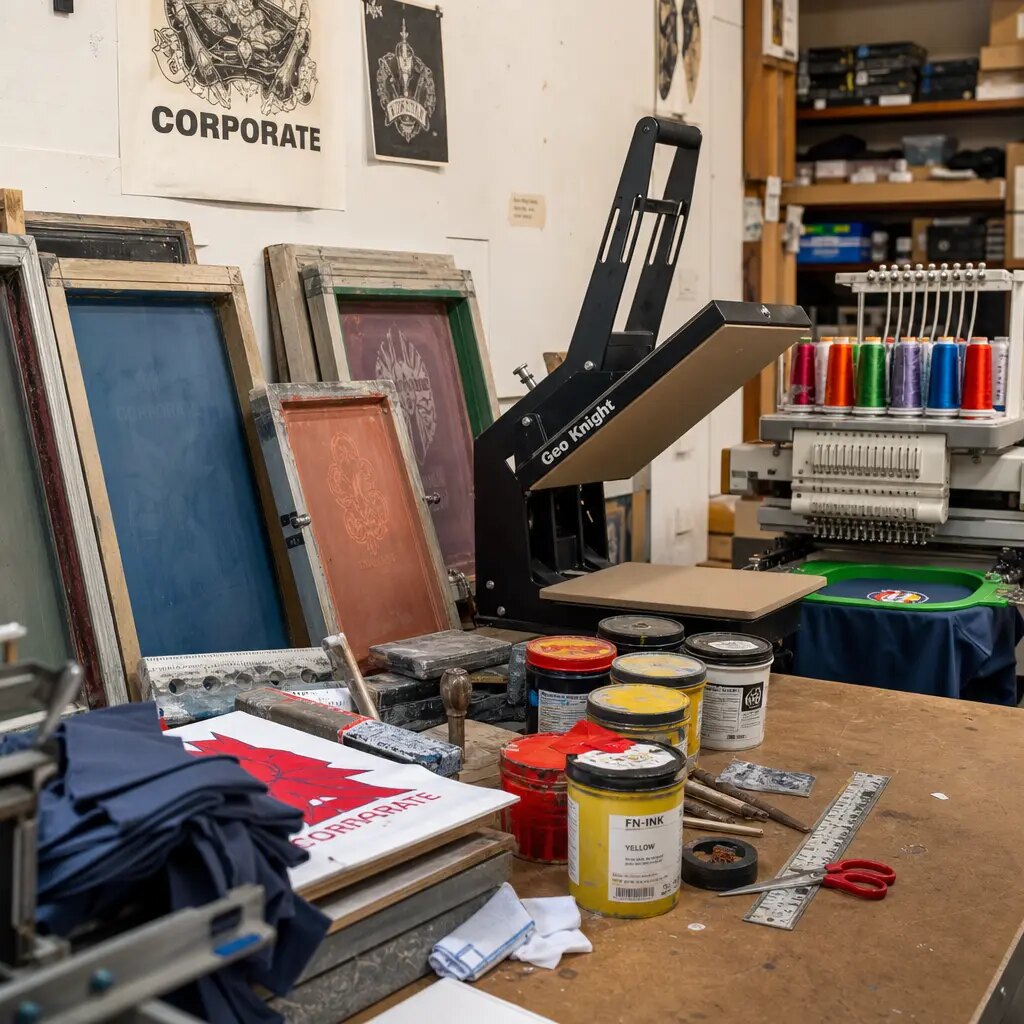
University marks often have strict color and spacing rules, so the print decision should be made with the artwork in hand, not from a generic product page. For most cotton drawstring pouches, screen print is the safest option for one-color, two-color, or three-color artwork. It gives strong opacity on cotton, keeps cost predictable at volume, and works well on flat pouch panels. The downside is setup: each color needs a screen, and fine lines can fill in if the art is reduced too much.
Heat transfer is useful when the art includes gradients, small type, or multiple colors that would make screen setup too expensive. Digital print can also work for complex graphics, but both methods need attention on cotton texture. The buyer should judge edge feel, registration, and adhesion on the actual fabric. A clean digital proof does not tell you how the art will look after the ink meets woven cotton.
The most useful approval step is a strike-off on the actual pouch fabric. That sample should show color, placement, edge sharpness, and the effect of the chosen process on the specific cotton shade. For small text, trademark symbols, and fine lines, set a minimum readable size before production. If the logo has more than one color, define the maximum registration shift in millimeters so the factory knows where the line is.
- Provide vector artwork with Pantone references, not a low-resolution file from an email chain.
- Set a minimum line thickness and minimum text size before the factory starts sampling.
- Require a strike-off for official school colors and any artwork with small text.
- Define print position from fixed edges after sewing, not from an unsewn flat panel.
- A practical position tolerance is plus or minus 3 mm for small logos and plus or minus 5 mm for larger artwork.
- Use the approved strike-off as the reference for bulk inspection, not only the digital proof.
Construction Standards: Seams, Channel, and Cord
A pouch that looks good on a proof can still fail if the sewing is loose. For bookstore use, the top channel should usually be double-folded so raw edges are enclosed. Side seams should be lockstitched, trimmed cleanly, and reinforced with back-tacks where the load will concentrate. The cord should move through the channel without snagging and should close the pouch evenly without pulling the opening to one side.
The useful specs are simple and measurable. For a 5 oz to 7 oz cotton pouch, a channel depth of about 2 to 2.5 cm is a practical starting point. Seam allowance around 6 to 8 mm is common, and stitch density around 7 to 9 stitches per inch is generally enough for this type of product. Cord diameter and knot size matter too; if the cord is too thin, it can feel weak, and if it is too thick, it can drag inside the channel.
Durability should match the use case, but the pouch still needs to survive packing, opening, closing, and basic handling without seam failure. A simple receiving screen is to open and close the sample 10 times, then pull the cord firmly and inspect the side seams, channel opening, and knots. If the pouch will be sold at retail, the closure should still feel smooth after that quick abuse test.
- Specify double-fold top channel construction for any pouch that will be reused or sold as retail merchandise.
- Define seam allowance, stitch density, back-tack locations, thread color, and trimming standard in the PO.
- Check that the cord slides smoothly without twisting, bunching, or pulling unevenly to one side.
- Inspect cord material, diameter, color, length after knotting, and knot security.
- Treat open seams, missing cords, and unusable closure as major defects unless the program calls for stricter treatment.
- If you use a handheld scale for pull testing, define the force in the purchase order before bulk production starts.
Quote Normalization and MOQ Traps
The lowest unit price is not a useful number until the quote has been normalized. A bag quoted on 4 oz stock fabric cannot be compared directly with a bag quoted on 6 oz cotton. A price that excludes screen setup, lab dip, sample courier, carton marking, or export cartons is not cheaper in practice if those items are still required before shipment. For campus programs, the hidden cost is usually not the pouch body itself. It is the work around the pouch body.
MOQ also shifts with the level of customization. A plain natural pouch with a single-color logo can often move at a few hundred pieces. Custom dye, woven labels, retail hangtags, barcode stickers, or multiple artwork versions usually push MOQ up because each step adds setup time and a separate quality checkpoint. If the quote looks unusually low for a highly customized pouch, that usually means some of those steps were left out of the price or will be handled with stock materials that may not match the approved sample.
The cleanest way to compare suppliers is to ask for the same spec in the same table. Keep the finished size, fabric weight, print count, cord spec, packing method, and inspection standard fixed, then compare quantity breaks and extra charges side by side. Once the apples are actually apples, the real sourcing decision becomes easier.
- Ask for unit price at two or three quantity breaks using the exact same pouch specification.
- List screen setup, sample charges, lab dip charges, barcode labeling, woven labels, hangtags, and special packing as separate line items.
- Ask which changes increase MOQ: fabric color, fabric weight, cord color, woven label, and individual packing.
- Compare carton dimensions, pieces per carton, net weight, and gross weight to understand freight impact.
- Check whether the quote is based on stock fabric or a custom fabric purchase.
- Evaluate supplier responsiveness to technical questions, not only the speed of the first quotation.
Sample Approval Should Prove the Production Method
A sample is only useful if it matches the quoted production path. A showroom sample made from similar cotton is helpful for discussion, but it is not enough for approval. The pre-production sample should use the quoted fabric weight, actual cord, intended print method, approved logo size, final seam construction, and planned packing method if the packaging affects presentation or carton count.
Approving the sample should feel more like a controlled inspection than a visual sign-off. Measure the pouch flat, check the opening, pack it with the real contents, close it repeatedly, inspect the print against the approved reference, and look for loose threads, stains, odor, or channel distortion. If there are multiple artwork versions, do not approve one version and assume the rest will behave the same. Each version needs the same production method and the same record.
Keep the approval trail physical as well as digital. Retain at least two physical reference samples: one at the buyer side and one at the factory side. The record should include finished size, GSM, shade reference, print position, print color target, cord specification, channel width, stitch density, packing method, and carton marks. When a reorder comes later in the semester, that sample file is what keeps the new lot from drifting.
- Reject a sample if the fabric is only similar to the bulk fabric or if the logo is only a mockup.
- Measure the sample after opening and closing it several times so the channel and cord have settled.
- Check that the cord cannot slip back into the channel during normal handling.
- Rub the print with a clean cloth and confirm the chosen method does not shed or smear under the agreed test.
- Photograph the front, back, seams, channel, cord knots, print close-up, and packing method.
- Do not release bulk cutting until size, fabric weight, artwork placement, and use-case fit are approved in writing.
Final Inspection, AQL, and Practical Test Loads
Final inspection should cover more than the logo. Cotton drawstring pouches can fail on shade, stains, holes, broken stitches, skipped seams, twisted cords, wrong print position, incorrect artwork, bad carton counts, and mixed versions inside the same shipment. Because bookstore receiving teams often sort by SKU, season, and event date, a packing mistake can be just as damaging as a sewing defect.
A workable structure is ANSI or ISO style sampling at general inspection level II, with zero tolerance for critical defects and explicit AQL levels for major and minor defects. A common starting point is 0 for critical, 2.5 for major, and 4.0 for minor. For lot size, use a practical floor rather than a token check: inspect at least 20 pieces for small lots under 500 units, about 32 to 50 pieces for mid-size lots, and about 80 to 125 pieces for larger lots, taken from at least 5 cartons and from different positions in each carton.
The defect definitions need to be written before the inspection starts. Critical defects include wrong university mark, unauthorized artwork, mold, contamination, or any safety issue. Major defects include wrong finished size beyond tolerance, missing cord, unusable closure, open seam, serious misregistration, heavy stain, wrong fabric weight, or carton quantity mismatch. Minor defects can cover loose threads, light wrinkles, and small fabric slubs when they fall within the approved sample character. A practical rub test is 50 dry rubs and 10 damp rubs, and a simple pull screen should show no seam opening, knot slip, or channel tear.
- Check finished size, usable opening, top channel width, and cord length against the approved specification.
- Verify GSM from bulk fabric or retained cutting panels when practical, especially if quotes differed by fabric weight.
- Inspect print color, opacity, position, registration, edge quality, and adhesion against the strike-off.
- Open and close random pieces to test cord movement, knot security, and channel stitching.
- Count bundles and cartons, then compare the carton marks against the PO, SKU, artwork version, and quantity.
- Photograph any critical or major defect with a ruler or reference point so rework decisions are clear.
- Require replacement, repair, resorting, or buyer approval before shipment when major defect levels exceed the agreed limit.
Packing, Cartons, and Campus Receiving
Packing is not a back-end detail. It determines whether campus receiving can count, store, and distribute the pouches without adding labor. For most wholesale cotton drawstring pouches, bulk bundles of 25 or 50 pieces are enough. That format keeps cost down, limits packaging waste, and makes it easy to count by bundle. Individual polybags make sense only when each pouch must stay clean for shelf sale, needs a barcode on every unit, or is part of a premium gift set.
Carton data should be part of the quote. Cotton pouches are light, but poor packing still creates expensive freight and handling. Ask for carton size, gross weight, net weight, pieces per carton, bundle format, and carton mark layout. If the bookstore uses warehouse scanning, define the SKU label position before sealing the cartons. If multiple artwork versions are in one order, separate them by inner bundle and outer carton mark so the receiving team does not have to open everything to sort the shipment.
Moisture protection should match the route. Sea freight or humid storage may justify an outer liner or desiccant plan, but full individual polybags are often more packaging than the product needs. The goal is to keep the fabric clean, dry, and easy to count without turning a simple pouch into a fragile retail package that slows receiving down.
- Use inner bundles with count labels when multiple artwork versions, sizes, or fabric colors ship together.
- Avoid over-compressing natural cotton if deep creases will hurt retail appearance or require local steaming.
- Specify moisture protection for humid routes, but avoid unnecessary individual plastic when bulk protection is enough.
- Keep master carton weight practical for manual handling at campus receiving docks.
- Require carton marks to show PO number, SKU, artwork version, quantity, carton number, and destination if multiple locations are involved.
- Ask for a final carton list before shipment so receiving teams can plan storage and distribution.
Lead Time, Reorders, and Change Control
A reliable lead time is a chain of smaller steps, not one number on a quote sheet. For campus orders, the schedule should break into artwork review, sample making, sample courier, sample approval, material preparation, printing, sewing, trimming, packing, final inspection, and delivery to port or forwarder. If the supplier only gives a single production time, there is no easy way to see where the schedule can slip.
The biggest schedule risks are late artwork approval, custom dyed cotton, repeated strike-offs, multiple department logos, and packing changes after production begins. One way to cut risk is to standardize the pouch body and vary only the artwork or the simple label, rather than changing fabric, cord, and packing on every department order. The more variables that change at once, the more likely the order is to drift away from the approved sample.
For reorders, keep a clean file with the approved sample photos, fabric weight, cord spec, print file, carton marks, and the last inspection report. Any change in fabric lot, print process, cord material, or packing method should require buyer approval before bulk production starts. Direct factories usually work best for repeat programs because the process chain is shorter. Trading companies can help when the bookstore is bundling unrelated products, but the order needs tighter proof that the actual factory will follow the approved standard.
- Reserve extra days for university brand approval before sample printing starts.
- Do not release bulk fabric cutting until finished size, fabric weight, and artwork placement are approved.
- Place custom dyed cotton orders earlier than natural or bleached cotton orders because lab dips and dyeing add approval risk.
- Schedule final inspection with enough time for rework, replacement, or resorting before shipment.
- Build a reorder file with pouch size, fabric GSM, cord spec, print method, packing, carton dimensions, and approved sample photos.
- Confirm whether lead time starts after deposit, artwork approval, sample approval, or material availability.
Specification comparison for buyers
| Spec decision | Recommended option | When it fits | Buyer risk to check |
|---|---|---|---|
| Fabric weight for bookstore pouches | 5 oz to 7 oz cotton, about 170 to 240 GSM, with shrinkage stated on the spec sheet | Retail merchandise, alumni gifts, orientation kits, dorm welcome packs, and reusable campus storage | Compared with a 4 oz stock pouch, this range usually adds more body and opacity but also adds fabric weight, freight cost, and a slightly stiffer closure; too-light fabric can look see-through, while too-heavy fabric can slow packing and make the drawstring feel rigid |
| Finished size control | Quote and inspect finished size after sewing, not only cut size; set a tolerance by pouch size and use case | Any pouch that must hold a fixed kit, fit inside a box, or sit neatly on a shelf | Cut-size quotes can miss usable volume by 1 to 2 cm after seams and the channel are added; set a finished-size tolerance such as plus or minus 0.5 cm for smaller pouches and plus or minus 1 cm for larger pouches |
| Construction method | Double-fold top channel, lockstitched side seams, clean trimming, and secure back-tacks at stress points | Repeated handling, resale, and kit assembly where the pouch is opened and closed many times | Single-fold channels and weak back-tacks are common first-receipt failures; the small extra sewing time is usually worth it because it lowers seam opening and cord snag risk |
| Print method | Screen print for one to three solid university colors; transfer or digital only when the art requires it | Most school marks, mascots, department names, and event graphics on cotton | Screen print is usually the lowest-risk option for simple art, but small text and fine lines can fill in; transfer and digital methods handle detail better but can add edge feel, peel risk, or higher per-piece cost |
| Color route | Natural or bleached cotton for faster lead time; dyed cotton only with lab dip approval and recorded tolerance | Natural suits campus sustainability messaging; bleached improves contrast; dyed supports premium retail assortments | Natural shade varies by lot; dyed lots can vary between reorders unless the shade, lab dip, and roll reference are locked down before bulk cutting |
| MOQ logic | 300 to 500 pieces for simple natural cotton styles; higher MOQ for custom dye, woven labels, or individual packing | Pilot bookstore programs, orientation events, and reorderable house styles | Very low MOQ quotes often hide setup fees, stock-fabric limits, or simplified inspection support; compare the full landed cost, not just unit price |
| Packing method | Bulk pack by carton with inner bundles of 25 or 50; add barcode labels only when receiving or retail sale requires it | Wholesale receiving, multi-campus distribution, and kit assembly | Individual polybags add material, labor, and carton volume; they should be used only when the pouch is sold as a clean shelf item or needs unit-level scanning |
| Inspection level | Final random inspection using an agreed AQL, with critical defects at zero tolerance and major/minor levels written in advance | Repeat orders, licensing programs, and multi-department bookstore programs | Skipping measurement, rub testing, pull testing, and carton count checks can create rework after arrival; the order should name the sample size, defect classes, and pass/fail rules before production starts |
| Sourcing route | Direct factory for repeat custom programs; trading company only when bundling many unrelated products | Programs that need the same fabric, logo, size, and packing every semester | Intermediaries may switch workshops unless the approved sample, material spec, and inspection rules are written into the order and verified against production records |
Buyer checklist before sampling
- Define the use case first: retail sale, orientation kit, department giveaway, alumni gift, dorm welcome pack, lab accessory pouch, or outer packaging for another item.
- Specify finished size after sewing, not only cut size; include width, height, usable opening width, top channel depth, and acceptable tolerance.
- State cotton weight in both oz and GSM so suppliers cannot quote by local terminology alone.
- Request a physical swatch or pre-production sample showing the actual cotton shade, hand feel, opacity, shrinkage, and print behavior.
- Provide official university artwork as vector files with Pantone references, minimum line thickness, clear space rules, and approved logo placement.
- Confirm print method, ink type, rub resistance expectation, registration tolerance, print area, and whether a strike-off is required before production.
- Define stitching requirements: double-fold channel, seam allowance, lockstitch density, back-tack points, thread color, trimming standard, and loose-thread allowance.
- Approve cord material, diameter, color, length after knotting, knot method, closure smoothness, and whether the cord must pass a basic pull test.
- List packing format by pieces per bundle, bundles per carton, carton strength, carton marks, SKU labels, barcode format, and whether artwork versions must be separated.
- Set inspection rules before production: sample approval, in-line check timing, final AQL level, defect categories, measurement method, photo reporting, and rework responsibility.
Factory quote questions to send
- What exact cotton fabric weight will you use in both oz and GSM, and is the fabric stock greige, natural, bleached, pre-shrunk, or dyed to order?
- What finished pouch size will you guarantee after sewing, and what tolerance will you hold for width, height, opening width, and channel depth?
- How much shrinkage should we expect, and is that number based on fabric testing, prior orders, or a supplier assumption?
- Which print method do you recommend for our artwork, what ink or transfer type will be used, and what is the maximum printable area on this finished size?
- Can you provide a strike-off on the actual pouch fabric before bulk production, especially for school colors and small text?
- What is your MOQ for this exact pouch with our logo, and which changes would increase MOQ: fabric color, fabric weight, cord color, woven label, barcode label, or individual packing?
- How many days are needed for artwork review, sample making, sample courier, pre-production approval, bulk material prep, printing, sewing, final inspection, and delivery to port or forwarder?
- What packing do you quote by default, including pieces per inner bundle, pieces per carton, carton size, net weight, gross weight, carton strength, and carton mark format?
- Are print setup, screen charges, lab dip, sample courier, barcode labeling, inspection support, export carton cost, and rework after failed inspection included or listed separately?
- Will bulk production follow the approved sample from the same fabric weight, cord specification, print method, and packing method, and how will substitutions be controlled if stock changes?
Quality-control points to confirm
- Finished size should be checked against a written tolerance before bulk cutting; many bookstore complaints start when the pouch is too small for the intended contents or too shallow at the opening.
- Fabric GSM should be verified from the actual bulk fabric, not only from a supplier purchase note or roll label. Hold the result within plus or minus 5 percent of the approved spec, or within 10 GSM, whichever is stricter.
- Cotton shade should be checked under consistent light because natural cotton can shift from warm cream to grey-beige between lots. Small shade movement is normal; visible lot mismatch across the same order is not.
- Fabric defects should be rated by severity and placement; stains, oil marks, holes, and heavy slubs on the logo face are more serious than minor irregularity on the back panel.
- Print color should be compared with the approved strike-off and Pantone target while allowing for cotton absorption and the chosen ink method.
- Print adhesion should pass an agreed rub or tape test for the chosen method. A practical screen-print screen is 50 dry rubs and 10 damp rubs with no visible flaking or color transfer that marks the cloth.
- Print position should be measured from fixed edges after sewing, not estimated from a flat mockup, because the channel and seams change usable panel space. A practical tolerance is plus or minus 3 mm for small logos and plus or minus 5 mm for larger art.
- Top channel stitching should be straight enough that the cord slides smoothly without snagging, twisting, bunching, or pulling the opening to one side.
- Side seam strength should be checked with a light pull test and visual inspection for skipped stitches, broken threads, open seams, and weak back-tacks. If a handheld scale is used, define the pull force in the PO before production.
- Cord length should be consistent after knotting so the pouch closes fully without long uneven tails or cords disappearing into the channel.