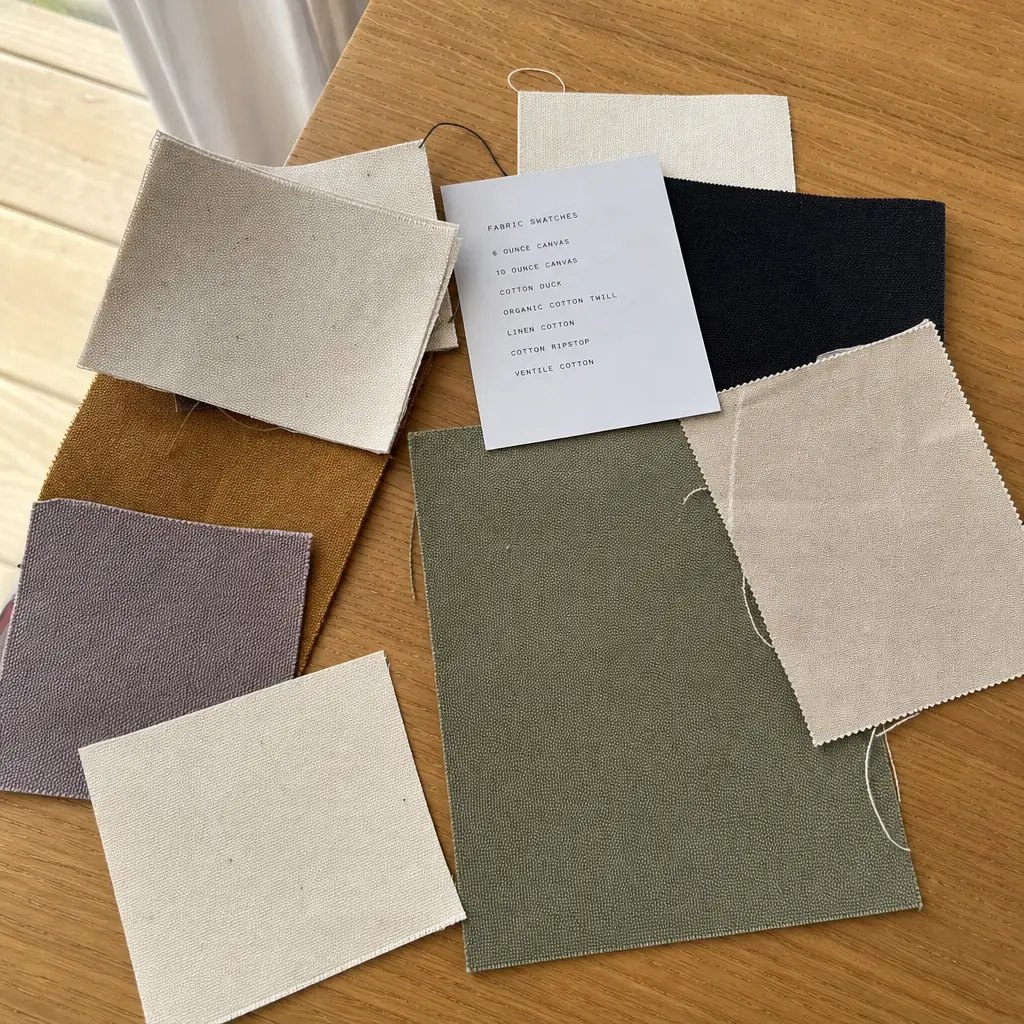
Why print proofing matters on cotton drawstring pouches
For wholesale cotton drawstring pouches, the biggest sourcing mistake is treating the print as decoration instead of a production variable. On a simple pouch, the logo usually looks small, but the production risk is not small: fabric absorbs ink differently, the cord channel can distort the front panel, and a layout that looks clean on screen can shift once the pouch is sewn and filled.
Tech startups and brand teams often buy pouches as launch packaging, accessory kits, onboarding sets, or event giveaways. Those use cases sound simple, but they create different acceptance standards. A pouch that only has to hold a cable set can tolerate a lighter fabric than a pouch used for retail resale; a pouch that travels inside another package can use bulk packing, while a pouch sold at retail usually needs cleaner folding and tighter print control.
- Set the use case first: storage, retail packaging, gift set, or protected transit.
- Treat print placement and fabric choice as linked decisions, not separate line items.
- Plan for the finished pouch, not the flat fabric panel shown in artwork.
Choose the pouch spec before you request quotes
Cotton drawstring pouches are priced by more than just size. Fabric weight, weave density, dye state, cord construction, and stitching labor all move the quote. For most buyers, the practical range is 120-140 GSM cotton when you need a balanced cost and appearance. Below that, the pouch can look thin and may telegraph the contents. Above that, the pouch starts to feel more premium but also increases material cost and can reduce flexibility for tight bundles.
Color choice also changes the quote logic. Unbleached cotton can be easier to source and can hide small handling marks, but it may not give the cleanest background for light logos. Bleached white cotton usually improves print contrast, but it can show dirt faster during packing and transit if the supplier's warehouse handling is poor. If you need a colored pouch, ask whether the color is stock-dyed or custom-dyed, because custom shade control can become the hidden lead time driver.
- Use 120-140 GSM for most branded startup kits and retail-adjacent pouches.
- Specify finished size in millimeters, not just broad size bands.
- Call out cotton color, cord color, and whether natural shade variation is acceptable.
Print method decisions that affect proofing
The print method should follow the artwork, not the other way around. If the logo is one or two solid colors with bold shapes, screen printing is often the most stable route for wholesale cotton drawstring pouches. It delivers strong opacity and consistent repeatability, especially when the design is placed on a flat front panel with enough margin from seams and the drawcord channel. If the artwork includes fine gradients, detailed line work, or color transitions, the supplier may push digital or transfer methods, but those need tighter proof approval because the same graphic can look different once it hits woven cotton.
Print proofing should include the exact fabric, not just a mockup on a white background. Ask for a strike-off or pre-production sample that reflects the actual pouch material, closure, and print position. That is where problems show up: logo scale that looked fine on a PDF may look too small on an actual pouch; a dark print on natural cotton can be softer than expected; and a logo too close to the seam can wrap or warp after sewing.
- For simple logos, prioritize screen print and ask about ink opacity and cure method.
- For detailed art, demand a real fabric strike-off before bulk approval.
- Verify print size against the finished pouch, not against the flat artwork file.
Use a comparison table to separate real suppliers from weak quotes
A useful quotation is one that lets procurement compare like for like. When quotes vary on fabric weight, print setup, and packing format, unit price alone becomes misleading. The same pouch can look cheap in one quote simply because the supplier left out the setup fee, used a lighter fabric, or quoted bulk packing instead of retail folding. That is why buyer teams should normalize supplier quotes by the full spec, not just the headline number.
When comparing supplier options or sourcing routes, look at where each step happens. Factory-direct suppliers usually give better coordination between sewing and printing, while traders or multi-stop sourcing routes can be easier to manage for mixed product programs but sometimes weaken accountability when print quality slips. The right route depends on how much control you need over sample approval, rework, and lead time.
- Compare quotes on the same pouch size, GSM, print method, and packing format.
- Separate unit price from setup, sample, carton, and freight assumptions.
- Ask whether the supplier prints in-house or outsources the print stage.
Approval criteria for samples and strike-offs
A sample is not just a visual reference; it is the production contract in physical form. Approve the pouch only after you verify the front panel size, seam balance, cord action, and print placement on the same material that will be used in mass production. If the sample is made from a different cloth weight or from a different print process, it can hide the exact defects that show up later in the order.
Good sample approval also needs measurable criteria. Write down the acceptable variance for finished size, the allowable shift in print position, and the acceptable shade range if cotton is undyed or lightly bleached. If the pouch will be packed with tech accessories, test a sample loaded to real use weight so you can see whether the string cinches properly and whether the pouch opens and closes cleanly after repeated pulls.
- Approve against the exact fabric and the exact print method.
- Check the opening, string pull, seam straightness, and logo placement together.
- Load the pouch with the real product set before final sign-off.
How MOQ logic works for wholesale cotton drawstring pouches
MOQ on cotton drawstring pouches is usually driven by fabric setup, print setup, cutting efficiency, and packing labor. If the pouch uses standard fabric and a simple one-color logo, the MOQ can stay relatively flexible. If the order introduces multiple print colors, custom fabric shade, special cord ends, or retail packaging, the supplier may need a higher minimum because each added variable slows the line or creates extra waste.
Buyers should avoid asking for an all-in MOQ without clarifying what counts as a separate line item. One size plus one print color may be fine at a modest quantity, but if the launch includes three sizes and two logo colors, each combination can behave like a separate SKU. A better RFQ is one that shows the supplier the total quantity by SKU and then asks whether production can be combined on shared fabric or shared printing runs.
- Break MOQ by size, print color, and packaging variation.
- Ask whether the supplier can combine orders across SKUs to lower fabric waste.
- Expect custom dye, multiple print passes, and retail packing to raise MOQ pressure.
Packing, labeling, and carton details that prevent damage
Packing is often where a good pouch order gets downgraded before it leaves the factory. Cotton pouches wrinkle easily, and print can scuff if the bags are packed too tightly or rubbed against rough inner cartons. For export shipments, ask how many pouches go into each polybag, whether moisture control is needed, and whether the cartons will be lined or protected for long transit. If the order is retail-facing, folding method matters too; a sloppy fold can make the print appear off-center even when the sewing is correct.
Labeling should be specified early. Buyers often wait until after sample approval to mention barcode stickers, inner-carton marks, or assortments by size. That creates last-minute cost additions and packing errors. Put the labeling instructions in the quotation stage so the factory can quote the real labor. If the pouch is going to distributors, include carton count, net weight, gross weight target, and any palletization rule so the warehouse team can receive the goods without rework.
- Specify polybag count, desiccant use, and carton lining if needed.
- Lock barcode, SKU, and carton mark requirements before production starts.
- Confirm whether the final packing is bulk, folded retail-ready, or mixed.
Lead time risk comes from proofing delays, not sewing time
For many pouch orders, the sewing itself is not the slowest step. The schedule usually slips when artwork files are incomplete, print placement is changed after the first proof, or the supplier needs to reorder fabric because the first sample used a stock lot that is not reserved for mass production. A clean production calendar should start only after the supplier confirms fabric availability, print readiness, and sample approval timing.
The buyer should ask for a lead-time breakdown by stage: fabric reservation, sample or strike-off, bulk sewing, printing, packing, and outbound booking. This makes schedule risk visible. If a supplier quotes a short lead time but cannot explain where the time is spent, the order may still be vulnerable to delay if the print proof gets rejected or the final carton spec changes.
- Get lead time broken into sample, bulk, packing, and dispatch stages.
- Confirm fabric reservation before approving the final schedule.
- Treat artwork revisions after sample approval as a schedule risk, not a small edit.
Landed-cost comparison buyers should run before award
The cleanest way to compare suppliers is to calculate the landed cost per usable pouch, not the ex-factory unit price. A low quote can become expensive when you add setup fees, re-sample charges, carton volume, air freight due to a missed deadline, or rework from print rejection. For procurement teams, the real job is to estimate what reaches the warehouse in sellable condition and on time.
When you compare landed cost, include the likely waste factor. A supplier that delivers 3 percent defects may still look cheaper on paper than a supplier that delivers perfect pouches, but the second supplier can win if the first one creates sorting labor or replacement shipments. For branded tech kits, consistency is part of the product. If the pouch is part of the user experience, a slightly higher quote can be the lower total cost once damage and delays are counted.
- Add sample fees, setup, packing upgrades, and freight assumptions to the quote.
- Use a defect allowance when comparing the true cost per accepted pouch.
- Do not award on ex-factory price alone if the launch date is fixed.
Specification comparison for buyers
| Spec decision | Recommended option | When it fits | Buyer risk to check |
|---|---|---|---|
| Fabric weight | 120-140 GSM unbleached or bleached cotton | Retail packaging, tech kits, event giveaways that need a better hand feel | Too light can show contents and distort print; too heavy raises unit cost and slows drying after washing |
| Print method | 1-2 color screen print or water-based print for simple logos | Most startup branding where artwork is flat, bold, and repeatable | Fine lines may close up; confirm ink opacity, registration tolerance, and cure rub resistance |
| Pouch size | Sized to the actual product set with 5-10 mm seam allowance margin | When the pouch holds a charger, cable kit, swag bundle, or sample set | If the opening is too tight, users force the cord and damage the seam; if too loose, the product shifts and looks cheap |
| Drawcord construction | Double-cord with reinforced channel and knotted ends | Higher perceived value and fewer breakage complaints | Single cord can twist and pull unevenly; inspect channel stitching and cord abrasion |
| MOQ route | One stock fabric/color base with print variation | When artwork changes often or the launch is still testing | Multiple SKUs can push MOQ up; ask whether each print color, size, or packaging variant counts separately |
| Sampling route | Pre-production sample plus print strike-off or digital layout proof | When artwork placement, logo size, or fabric shade matters | A flat proof is not enough; verify actual print on the exact fabric and closure style |
| Packing method | Bulk inner polybags with carton packing list, or retail-ready inserts if needed | Bulk importers, distributors, or retail buyers with their own packing flow | Loose packing can crease print or contaminate fabric; retail-ready packing raises labor and carton volume |
| Supply route | Factory-direct with in-house sewing and printing | Best when you need tighter control over sample, print, and lead time | If printing is outsourced, communication gaps can delay approvals and weaken color control |
| Lead time driver | Base schedule from approved sample plus print plate/artwork readiness | When launch dates are fixed and artwork is already finalized | Late artwork changes, missing Pantone targets, or carton spec changes can add days or weeks |
Buyer checklist before sampling
- Confirm pouch use case, fill weight, and target finished size before asking for quotes.
- Send vector artwork, Pantone targets if needed, and a clean placement drawing with print size in millimeters.
- Specify fabric weight, color, cord style, seam reinforcement, and whether the pouch will be washed or reused.
- State your MOQ expectation by size, print color count, and packaging format so suppliers do not quote mismatched quantities.
- Request one pre-production sample on the exact fabric and print method, not only a PDF proof.
- Define acceptance limits for print placement, shade variation, stitch quality, and cord pull strength.
- Lock packing details early: quantity per polybag, carton count, carton markings, and any barcode or insert requirements.
- Ask the supplier to separate unit price, sample fee, plate/setup fee, and carton/packing charges in the quotation.
Factory quote questions to send
- What fabric weight, yarn count, and finish are you quoting for the pouch body?
- Is the quoted price based on stock fabric or a custom-dyed fabric lot?
- What is the print method, how many colors are included, and what are the setup charges?
- Can you make the pouch size to our exact finished dimensions, and what tolerance do you hold?
- What is the MOQ by size, print color, and packaging specification?
- Will the sample be made on the same sewing line and print process as mass production?
- How do you pack the pouches for shipment, and what is the carton count and carton weight limit?
- What lead time applies after sample approval, and what delays would change that schedule?
Quality-control points to confirm
- Fabric GSM matches the agreed spec within the supplier's stated tolerance and feels consistent across the lot.
- Print placement is centered or positioned within the approved artwork window, with no visible skew on finished pouches.
- Ink coverage is even, with no pinholes, smudging, tackiness, or color shift after dry rub testing.
- Cord pulls smoothly through the channel without fraying, bunching, or uneven tension at one side.
- Stitching at side seams, bottom seams, and channel ends is straight, secure, and free from skipped stitches.
- Finished size, opening width, and cord drop meet the approved sample and packing expectations.
- Polybag and carton packing protect the print surface and keep the goods clean, dry, and countable.
- Carton markings, SKU labels, and quantity count match the purchase order and packing list exactly.