Why hotel retail pouches fail when buyers only buy on price
Wholesale cotton drawstring pouches for hotel retail look simple, but they fail in predictable ways: thin fabric that feels cheap at the point of sale, weak drawcord channels that tear after a few guest uses, and branding that looks fine in a sample but breaks down after bulk production. Hotel retail buyers are not just purchasing a pouch; they are purchasing a small branded item that has to survive handling, shelf display, and guest perception in one piece. If the pouch is part of a gift shop line, amenity set, or in-room retail assortment, the product also has to fit the hotel’s image standard, not just its price target. The biggest sourcing mistake is treating these pouches like a generic commodity. A hotel gift shop pouch has to balance appearance, hand feel, unit cost, and pack efficiency. A few grams of fabric difference, one extra stitch row, or a lower-grade print method can change both the customer impression and the complaint rate. Buyers often focus on the unit price because it is easy to compare, but the real cost includes returns, repacking time, lost shelf appeal, and the risk that the pouch does not match the rest of the hotel’s branded merchandise program. For procurement teams, the first job is to define the use case. A pouch used for soap, tea, key cards, and small accessories can be lighter and more flexible. A pouch that is sold as a keepsake or premium retail item needs cleaner seams, a better print face, and more consistent structure. The more the pouch is expected to do visually, the more you should inspect fabric body, stitching, and logo finish before you award the order. On a retail shelf, the pouch competes with other tactile products. If the cotton feels limp, shows contents too easily, or has loose trimming, guests notice immediately. Price-only buying also creates false savings during replenishment. Suppose the first carton looks acceptable but the second production lot comes in with slightly thinner fabric, a looser top channel, or off-center branding. The receiving team may still accept the shipment, but the property then inherits inconsistent stock that is harder to merchandise and harder to reorder against. That is why hotel buyers should treat the inspection checklist as part of sourcing strategy, not just as a warehouse formality. The checklist protects brand consistency, helps compare suppliers on equal terms, and gives you a defensible basis for rejecting a weak lot before it reaches the guest-facing environment.
- A pouch that feels soft but too thin often wrinkles badly and shows contents through the fabric.
- A pouch that is overbuilt with heavy GSM may raise cost and freight without improving shelf appeal.
- Brand damage usually starts with small defects: crooked logo, uneven cords, or poor carton packing.
- Retail buyers should define the pouch’s end use before asking for price.
- The approved sample should represent the actual look, hand feel, and filling behavior of the bulk lot.
Start with the right fabric spec, not just the word cotton
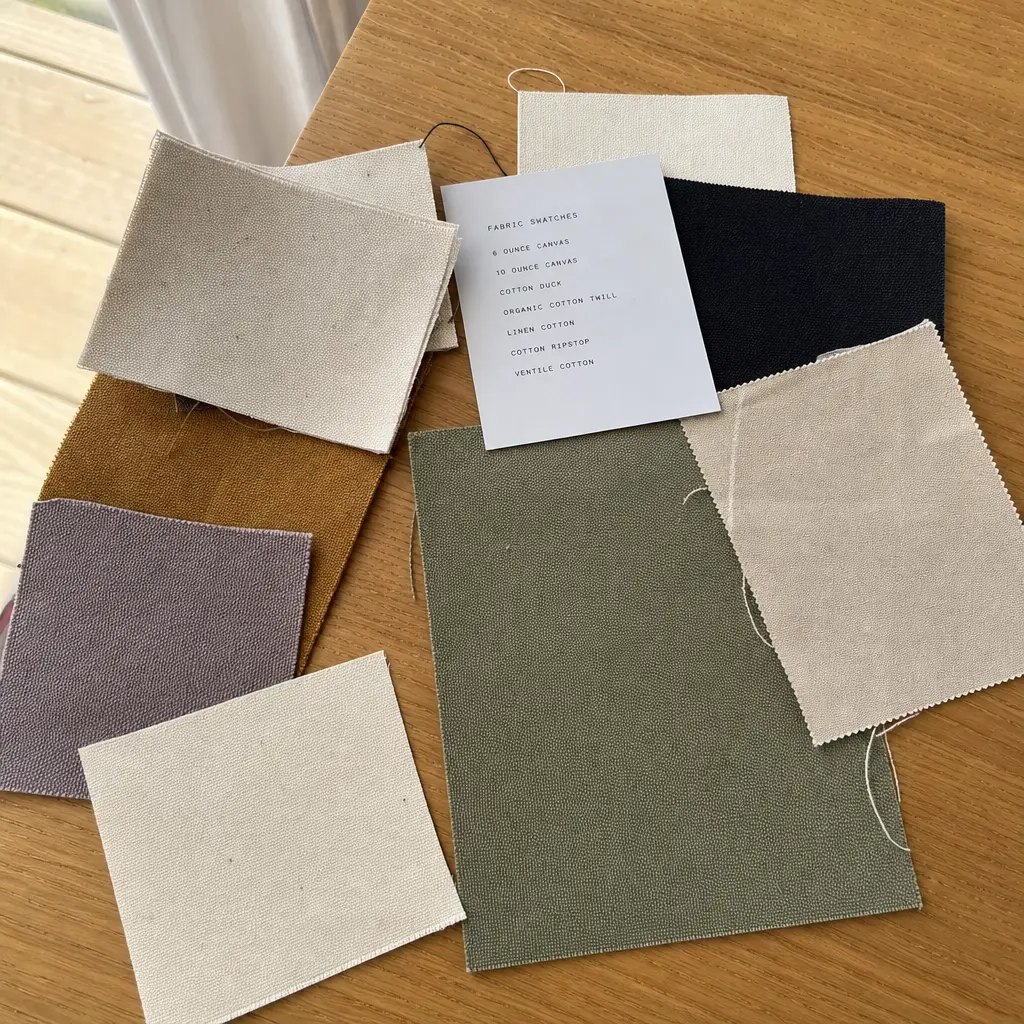
For hotel retail, the most practical fabric range is usually 120–140 GSM cotton for a standard small pouch, with 100–110 GSM only for very light promotional use and 150 GSM or above when the pouch must feel more premium and hold structure. GSM alone is not enough. The weave quality, yarn consistency, and post-sew finish matter because a loose weave can look irregular even if the weight is technically correct. If the fabric is too open, the pouch may reveal the product inside, which reduces perceived value and can expose color variation in the contents. When you send an RFQ, specify the finished look you want. If the pouch should hide contents, support a logo well, and feel retail-ready, ask for a tighter weave and a sample photo under natural light. If the pouch is for amenities or lightweight accessories, a softer muslin-style body may be acceptable, but you should then set a stricter print bleed limit and inspect shrinkage after pressing. Buyers should also ask whether the supplier measures GSM before or after washing, printing, or finishing, because the answer affects how much usable weight remains in the final product. Fabric handling matters in hotel environments. Natural cotton can pick up lint, show storage marks, or vary slightly in shade between production lots. That does not make it unsuitable, but it means the procurement spec should include acceptable shade variation, surface cleanliness, and defect limits such as no visible weave holes, stains, oil marks, or thick slubs on the front panel. If the pouch is meant to sit beside premium toiletries or branded accessories, a few visible fabric defects can make the entire display look less curated. Buyers should also check whether the supplier is quoting raw cotton or a finished fabric with pre-shrinking. If shrink control is not managed, the pouch may change dimensions after steam pressing or after the guest handles it. For a drawstring pouch, even a small shrink can affect the opening width and the alignment of the cord channel. That is why a proper sample review should include both flat measurements and a check of how the pouch behaves after being filled and drawn closed.
- Use 120–140 GSM as a common retail baseline for a balanced hand feel.
- Ask for pre-shrunk or controlled-shrink fabric if the pouch will be washed or handled repeatedly.
- Request a fabric swatch with measured GSM and note whether the weight is before or after printing.
- Define acceptable shade variation if repeat orders must match previous lots.
- Reject visible weave holes, stains, oil spots, and heavy slubs on the customer-facing side.
Choose the print method based on guest use, not just artwork
The best print method depends on how the pouch will be used. For a simple hotel logo with one or two colors, screen printing is usually the most cost-efficient and durable route. It gives solid coverage on cotton and holds up well if the pouch is sold in retail or reused. For more detailed branding or repeated abrasion, a woven label sewn onto the side seam or front panel can outperform a printed logo in long-term appearance. The correct choice depends on whether the pouch is expected to be opened occasionally, handled daily, or kept as a branded souvenir. Heat transfer and low-cost digital methods may look acceptable on a sample but can become weak points during production. On natural cotton, they may show edge lift, inconsistent color density, or a plastic-like surface that reduces the retail value. If the artwork is small and the order volume is stable, a woven label or a clean embroidered mark can be a better brand investment than chasing the lowest print price. However, embroidery on lightweight cotton needs to be carefully tested, because a dense stitch count can pull the fabric and distort the pouch body. The practical question is not which decoration method is “best” in general. It is which method will preserve legibility and finish after normal hotel handling, storage, and guest use. If the pouch is sold as a gift shop item, buyers should ask the supplier to show the same logo method on a finished pouch, not only on a flat print swatch. Print placement relative to the seam, the opening, and the drawcord channel should also be measured. Even a good print can look amateurish if it sits too close to a seam or too high on the body. For procurement, the artwork file should be locked before sampling starts. Ask for Pantone reference matching if exact brand color matters, and confirm whether the ink is water-based, plastisol, or another system. Then inspect at least one sample under the same lighting used in the retail environment. Natural cotton often looks different under warm lobby lighting than it does in a production room. A print that seems acceptable under daylight can appear dull in a hotel shop unless the contrast and placement were planned correctly.
- Screen print: best for simple logos, strong color, and lower setup complexity.
- Woven label: best for a premium retail look and repeat use.
- Embroidery: useful on thicker fabrics, but can distort lightweight cotton if the thread density is too high.
- Ask the supplier to provide a finished sample with the exact logo method, not just a flat artwork proof.
- Confirm print bleed, reverse-side strike-through, and color match tolerance before bulk release.
Use a supplier comparison that reflects how the pouch will be sourced
Not every sourcing route gives the same level of control. A direct factory quote gives you better visibility on fabric GSM, stitch construction, and packing, but it requires the buyer to manage sample approval more carefully. A trading company may simplify communication, yet it can hide the actual mill or sewing workshop, which makes quality accountability harder when the buyer needs a correction after pilot approval. For buyers managing hotel retail assortments, that difference matters because reorders, packing consistency, and defect responsibility all become more important once the item is on sale. For hotel retail buyers, the best route depends on order stability. If you are testing a new pouch line, a stock-fabric plus custom logo program usually gives the fastest and safest launch. If the program is stable and the pouch is part of a recurring assortment, direct factory sourcing becomes more valuable because it allows tighter control over cost, carton dimensions, and reorders. In either case, do not let the supplier talk only about price per unit. Ask how they manage incoming fabric checks, cutting accuracy, and in-line sewing inspection, because those controls determine whether the bulk lot matches the sample. A useful comparison also separates what is standard from what is optional. Some suppliers quote unit price excluding sample development, print setup, carton marks, barcode labels, or individual polybagging. Others bundle more of those services into a higher-looking price. Without the same scope, the quote comparison is misleading. Procurement buyers should request a line-by-line quote so they can see where the real cost sits: fabric, print, labor, packing, and export preparation. The supplier route should also match your internal approval process. If your hotel chain requires artwork signoff, product testing, and packaging review before release, a direct factory with a sample room is often easier to manage. If your team is buying a broad range of accessories and wants one contact for multiple categories, a trading route may reduce coordination work. Either way, the supplier should be able to explain who physically sews the pouch, who inspects the cartons, and who is responsible if the production lot fails on arrival.
- Direct factory: stronger control, better technical communication, more useful for repeat programs.
- Trading route: can be easier for mixed-category buying, but compare actual production source and QC responsibility.
- Stock-fabric customization: lower MOQ and faster lead time for launch testing.
- Ask whether sample development is handled in-house or by an outside workshop.
- Request clarity on who signs off incoming fabric, printing, and final packing.
Comparison table interpretation: what the buyer should actually decide
The right decision is not which option sounds best on paper. It is which combination of fabric, print, packing, and source route matches your hotel retail shelf price and replenishment plan. For example, a premium amenity pouch that sits at the front of a gift shop may justify 140 GSM cotton and a woven label, while a room-drop pouch for accessory sets may be better served by 120 GSM screen print and bulk packing. A buyer who only compares headline prices can easily choose a pouch that is under-specified for the product’s actual role. When you compare supplier quotes, keep the unit price in context. A lower quote can hide a lighter GSM, smaller print area, reduced stitch density, or less precise carton packing. Those hidden compromises show up later as customer complaints, higher receiving labor, or rejected lots. The comparison table should therefore be read as a decision matrix: what level of presentation, durability, and replenishment simplicity does each option give you? Not every hotel needs the same spec, but every hotel needs a spec that is intentionally chosen. Look for quote differences that imply a different production model. If one supplier offers stock fabric, one offers custom dyed fabric, and one includes individual bagging, the prices are not directly comparable until the scope is aligned. A strong procurement process identifies the minimum acceptable spec first, then seeks the lowest fully compliant price. That approach is more reliable than seeking the cheapest quote and trying to “upgrade” it later. It also helps to define the acceptable range for each specification. For example, a buyer may accept 120–130 GSM as long as the weave is tight and the print is clear. Or they may accept bulk packing but require retail-ready hang tags on the first launch. These are practical trade-offs, but they should be written in advance. Otherwise, each supplier will optimize the quote differently and the result will be inconsistent samples, extra revisions, and unnecessary delay in the procurement cycle.
- Compare quotes on the same finished size and same GSM basis.
- Ask whether the quoted price includes printing, label sewing, individual packing, and outer carton marks.
- Treat “slight variation acceptable” as a red flag unless you define exact tolerances.
- Separate mandatory requirements from optional upgrades before you request pricing.
- Use the comparison table to decide fit-for-purpose, not just cheapest unit cost.
Set acceptance criteria before the sample moves into bulk production
The sample stage should not be a visual yes-or-no exercise. A sample that looks good on a desk may still fail in production if the seam allowance is too narrow, the drawcord channel twists, or the logo shifts after pressing. A good sample approval includes dimensions, weight, artwork placement, and a quick pull test on the cord channel. If a supplier is unwilling to measure the sample, they are leaving the production lot open to interpretation, which creates avoidable risk later. For hotel retail pouches, approval should also cover how the bag looks when filled. The pouch should close smoothly, hold shape without puckering, and maintain logo visibility when the drawcord is pulled. If the pouch is meant to hold toiletries, accessories, tea, or welcome items, test it with a representative load rather than leaving it empty on the table. An empty pouch can hide awkward proportions, weak drape, or a side seam that twists when the product is inserted. The signoff process should be documented in writing. Include the approved artwork file, the measured finished size, the seam allowance, the cord length, the channel height, and any packaging requirements. If the production sample differs from the signoff sample, the buyer needs a clear basis to stop shipment or request rework. For branded hotel retail items, ambiguity is expensive because the item is both a product and a representation of the property’s standards. Good sample approval also means checking repeatability. Ask the supplier to provide multiple samples from the same batch. Measure each one and compare the results. If the measurements vary too much at the sample stage, the bulk lot is unlikely to tighten up on its own. Many inspection issues start with poor sample discipline, not with final production. The earlier the buyer identifies that drift, the easier it is to correct before material is cut and labor is committed.
- Measure finished width and height on at least three sample pieces.
- Check print alignment against seam lines and top edge.
- Pull-test the drawcord channel several times before signing off.
- Approve how the pouch looks both empty and filled with representative contents.
- Record the approved sample as the reference for any future dispute or reorder.
Build the inspection checklist around measurable defects
A useful quality checklist tells the factory exactly what must be measured, not just what should look nice. For drawstring pouches, the most common inspection failures are uneven size, weak channels, loose stitching, inconsistent cord length, and logo defects. These are all easy to define if the buyer writes acceptance criteria into the RFQ and sample approval record. The goal is to make inspection objective: pass or fail based on agreed dimensions and condition, not on one inspector’s personal preference. When running pre-shipment inspection, focus on repeatability. One good sample is not enough. Check random pieces from the top, middle, and bottom of the carton stack so you can see whether quality is drifting during production. A factory may produce excellent first-off samples but lose consistency when operators move from sampling to bulk sewing. This is especially relevant when the order includes multiple sizes, print versions, or colorways, because operators can mix components or apply inconsistent folding and packing methods. Measure the following items consistently: finished width, finished height, top opening width, drawcord length, and the location of the print relative to the top seam. Then inspect stitch quality under good lighting. Look for skipped stitches, uneven seam allowances, loose thread tails, and needle damage. A good inspection sheet should also record the quantity checked, the number of defects found, and whether the lot passed, passed with rework, or failed. If you do not record the defect type and location, you cannot fix the real problem at the factory level. For hotel retail buyers, cleanliness is part of quality. Cotton pouches can pick up lint, dust, or storage odor during packing and transit. That means inspection should include odor check, stain check, and carton condition, not only sewing quality. If the pouch is meant for guest-facing retail, even a technically acceptable product may still be rejected by the hotel if it arrives with musty odor or dirty carton edges. Quality control should therefore combine textile checks with packaging hygiene.
- Measure size tolerance, print placement, and drawcord length on random units.
- Inspect inner seams for loose thread trim and broken stitches.
- Check cartons for quantity accuracy and correct size separation.
- Record defect counts and locations so suppliers can correct the root cause.
- Include odor, stain, and dust control in the final inspection.
Packing details matter more than most buyers expect
Packing is not an afterthought. Hotel retail pouches often move through multiple hands before they reach the guest: factory packout, freight handling, warehouse receiving, merchandising, and possibly gifting or resale. If the pouch is poorly packed, you can lose time and money even when the sewing quality is acceptable. Mixed sizes in the same carton, unlabeled bundles, and weak outer cartons create avoidable receiving disputes. That is why pack specification belongs in the PO, not in a side email. The most practical format for wholesale is usually bulk packing by size and print version, with clear carton marks, count sheets, and optional barcode labels. If the hotel wants shelf-ready or retail-ready units, then individual polybagging or tagged packing may be needed, but this should be priced separately because it increases labor and carton volume. Buyers should also ask whether the carton count is exact or approximate. A factory may be willing to overpack if the size is soft, but overstuffing can crush product shape and make receiving counts unreliable. Carton dimensions matter for freight and backroom handling. A good carton is not just strong; it is optimized to protect the pouch from compression without wasting space. Ask the supplier for gross weight, net weight, and carton dimensions before order confirmation. If the pouch is for retail replenishment, the carton should be easy to open, count, and reseal. If it is for distribution to multiple properties, separation by SKU, size, and print version becomes even more important because mistakes scale quickly across a chain. For hotel retail programs, pack labeling should be simple and standard. The outer carton should clearly show size, quantity, color, SKU, PO number, and country of origin if required. If the hotel uses barcode receiving, confirm whether the barcode is on the inner pack, the outer carton, or both. The more complete the packing information, the less time the warehouse spends checking and correcting inbound goods.
- Keep size/color variants separated and labeled in every carton.
- Confirm whether carton dimensions are optimized for export or for shelf replenishment.
- If individual packing is required, specify bag type, sealing method, and label location.
- Request gross weight and carton dimensions before final approval.
- Avoid mixed cartons unless the receiving team has explicitly approved that format.
Lead time risk comes from fabric booking and approval delays
Lead time for wholesale cotton drawstring pouches is usually determined more by approval flow than by sewing itself. If the supplier has stock fabric, the order can move quickly once artwork and dimensions are approved. If fabric needs to be dyed, woven, or specially finished, the timeline expands immediately. The buyer should separate sample time, raw material booking, production, inspection, and shipping when comparing suppliers. Without that breakdown, one supplier’s “20-day lead time” may be very different from another supplier’s. A common mistake is assuming that a low-MOQ quote also means fast production. In practice, lower MOQ often means the factory is using available stock, which is good for speed but can create color variation between lots. For recurring hotel retail programs, ask whether the supplier can reserve the same fabric base for reorder stability. If the hotel expects seasonal replenishment, lot consistency can matter more than shaving a few days off the first order. Approval timing is another hidden risk. If the hotel has a multi-step brand review, ask the factory how long they can hold raw material while waiting for signoff. Some suppliers can pause after sample approval; others cannot. If the buyer does not manage approvals efficiently, the supplier may schedule the order late, or the factory may switch to another lot of fabric that is close but not identical. That can affect shade, hand feel, and print performance. The safest approach is to ask for a production calendar with milestones. The calendar should show sample submission, sample approval deadline, fabric booking, cutting start, sewing completion, packing completion, inspection date, and ship date. Once the schedule is visible, the buyer can see which delays are controllable and which are not. For hotel operations, that visibility helps align launch dates, promotional windows, and inventory replenishment planning.
- Sample approval delays often affect the final ship date more than sewing capacity.
- Custom colors and custom fabric finishes add risk to the schedule.
- Reorder stability is more important than a one-time fast quote for ongoing retail SKUs.
- Ask the supplier to separate sample, material, production, inspection, and shipping windows.
- Low MOQ often trades off against lot consistency unless the fabric is stock-supported.
What a strong RFQ should say for this pouch category
A good RFQ removes guesswork. State the finished size, target GSM, print method, logo artwork format, packing requirements, and inspection standard. If you want the supplier to quote accurately, include whether the pouch is for retail resale, amenity kits, or welcome-pack inserts, because the expected finish and handling requirements are different. The more specific the use case, the easier it is for suppliers to recommend a fit-for-purpose construction rather than defaulting to their cheapest standard model. The RFQ should also force quote transparency. Ask for unit price, setup cost, sample cost if any, tooling or plate charge, packing charge, carton size, and the lead time split. That way you can compare suppliers on landed-cost logic instead of comparing only the headline ex-works price. If a supplier quotes a low base price but adds charges later for print setup, label stitching, or individual polybags, the apparent bargain may disappear quickly. Include a clear tolerance note in the RFQ. For example: finished size tolerance, print shift tolerance, acceptable cord length range, and allowable shade variation. If your hotel brand is sensitive to presentation, ask for a pre-production sample and a production photo approval before bulk sewing. This prevents the supplier from interpreting the order too loosely and gives the buyer a document trail if final goods deviate from what was approved. Finally, make the RFQ easy to quote consistently. Attach a tech pack or specification sheet with artwork placement diagrams, measurement points, and pack format sketches. If multiple pouches are part of the same program, create one page per SKU so the supplier does not mix specs. Clean RFQs save time, reduce revisions, and produce better apples-to-apples comparisons.
- State the intended use: retail shelf, welcome kit, amenity set, or gift packaging.
- Request price by size and print color so you can compare options cleanly.
- Ask for carton quantity and gross weight to estimate freight correctly.
- Attach artwork placement diagrams and measurement points.
- Define tolerances so the supplier is quoting the same product you expect to receive.
Specification comparison for buyers
| Spec decision | Recommended option | When it fits | Buyer risk to check |
|---|---|---|---|
| Fabric weight | 120–140 GSM cotton for retail-ready feel | Hotel gift shops, amenity packaging, premium room drops, small accessory sets | Too light looks flimsy; too heavy can reduce foldability and raise freight weight |
| Fabric construction | Plain weave or fine muslin with tight, even yarn count | When appearance matters more than abrasion resistance | Loose weave can show print bleed, uneven shrinkage, and weak body shape |
| Print method | 1–2 color screen print for simple logos; woven label for long-life branding | When the pouch is reused by guests or sold as a keepsake | Heat transfer and low-grade digital print can crack, peel, or look inconsistent on natural cotton |
| Closure style | Cotton drawcord with reinforced channel, knotted ends or clean heat-cut ends only if approved | Retail kits, small accessories, jewelry, soaps, tea, and welcome packs | Weak channel stitching causes tearing after repeated opening; loose cord ends can fray in transit |
| Size strategy | Standardized 3–4 core sizes instead of many custom sizes | Multi-SKU hotel retail programs and repeat replenishment | Too many sizes increase MOQ pressure, carton complexity, and stock risk |
| MOQ route | Use factory stock fabric with custom logo first; custom fabric only for stable programs | Pilot orders, seasonal launches, or hotels testing SKU performance | Custom fabric raises lead time and minimums; stock-based offers can hide color variation between lots |
| Packing method | Bulk packed with size/color separation, barcode sticker, and carton count sheet | Wholesale distribution and retail backroom handling | Loose mixed packing creates receiving errors and slows store-level counting |
| Inspection standard | AQL-based pre-shipment inspection with measured tolerances and logo placement limits | Any branded hotel retail order above sample-stage volume | Without measurable criteria, suppliers may pass visually acceptable but inconsistent lots |
| Supplier route | Direct factory with sample room and export packing experience | When the buyer needs control of GSM, print, and carton build | Trading routes may be faster on paper but can conceal the actual production source and QC responsibility |
Buyer checklist before sampling
- Fabric GSM specified with acceptable tolerance range, not just 'cotton' or 'natural cotton'.
- Exact pouch size, drawcord length, and finished opening width approved against a physical sample.
- Print method, logo size, color reference, and placement distance from seam written into the PO.
- Stitching density, seam allowance, and top-channel reinforcement defined for the factory.
- Packing format confirmed: unit count per polybag/carton, label type, and master carton mark format.
- Lead time split into sample approval, material booking, production, inspection, and shipping windows.
- Carton drop and compression expectations checked if pouches will travel through hotel distribution or export freight.
- Pre-production sample signed off with measured tolerances, not just visual approval.
- Artwork file version, Pantone reference, and reverse-side print bleed expectation confirmed in writing.
- Inspection responsibility assigned: in-house, third-party, or supplier self-inspection with photo report.
Factory quote questions to send
- What cotton GSM is quoted, and what tolerance do you allow at incoming fabric inspection?
- Is the price based on stock fabric or custom woven/knitted fabric, and what changes if we approve a different color?
- Which print method is included in the quote, how many colors are covered, and what is the setup charge?
- What is your MOQ by size, print color, and carton configuration?
- Can you share the cutting size, finished size, seam allowance, and drawcord specification before sample approval?
- What is your standard packing format, and can you provide carton measurements and gross weight estimate?
- What is the normal sample timeline, production timeline, and earliest ship date after approval?
- What inspection standard do you use before shipment, and can you support third-party inspection?
- Do you provide pre-production fabric swatches and a sewn size sample before bulk cutting?
- If we reorder, can you lock the same fabric lot or closest matching shade for continuity?
Quality-control points to confirm
- Fabric GSM within the agreed tolerance and no visible thin spots, slubs, or weave holes in the body panel.
- Finished size within tolerance on width and height after sewing and pressing, with consistent pouch depth.
- Drawstring channel stitched straight, secure at both ends, and strong enough to resist pull testing without seam opening.
- Logo placement centered or positioned per artwork sheet, with no color shift, blurred edges, or strike-through on the reverse side.
- Stitch count even, no skipped stitches, no loose threads longer than the agreed trim standard, and no needle damage through the fabric.
- Drawcord length, knot style, and end finish consistent across the lot; no fraying or uneven cord tension.
- Cartons packed to the declared quantity, with correct size separation, barcode labels, and no crushed corners from overstuffing.
- Spot-check odor, stains, and dust control, especially for hotel retail SKUs that reach guests in clean-room-like settings.
- Seam allowance consistent between left and right panels so the pouch hangs evenly when filled.
- Fabric hand feel and drape checked against the approved sample under natural light and indoor retail lighting.