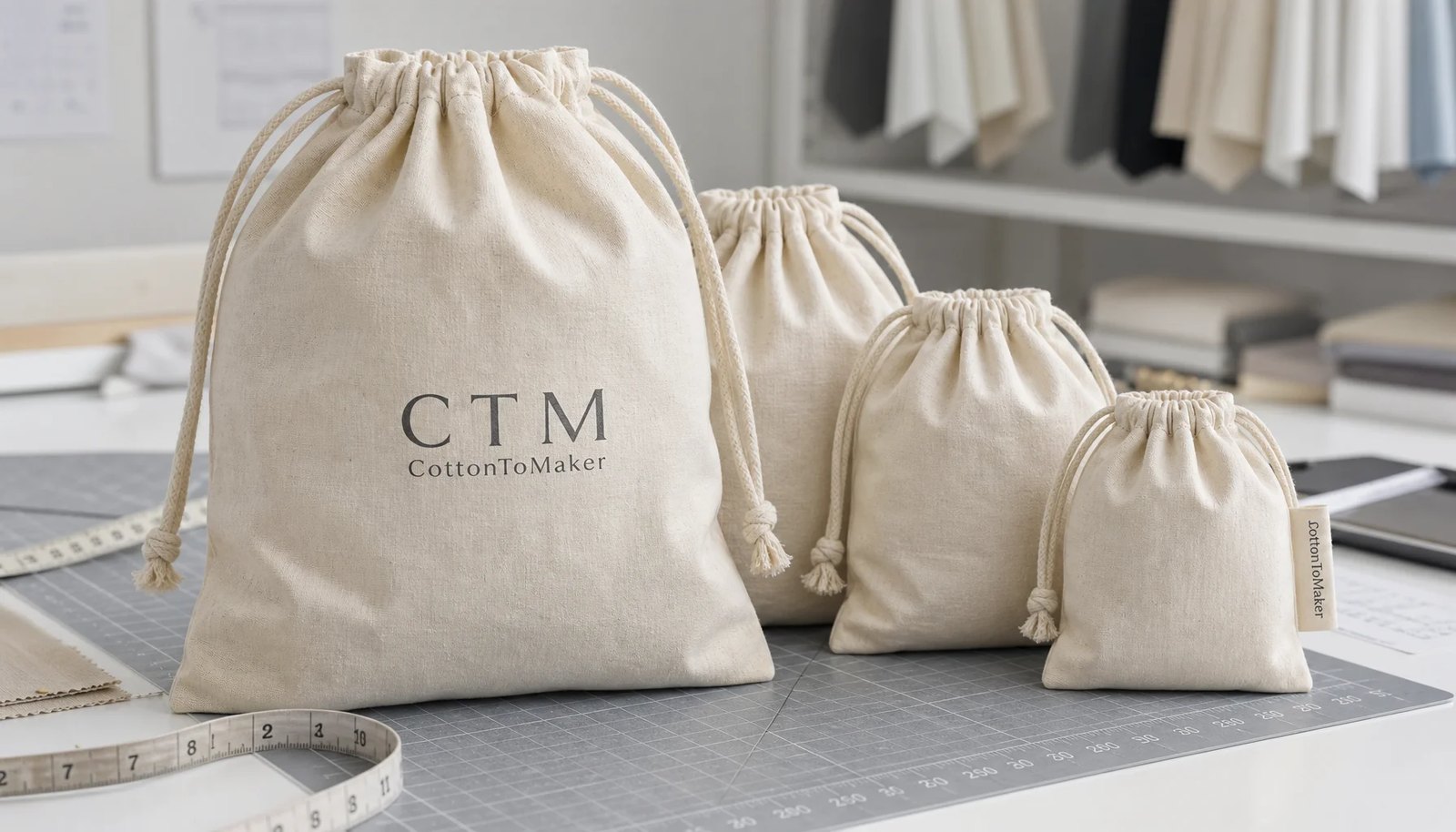
Why hotel retail pouches need more than a photo approval
Cotton drawstring pouches are often treated as simple packaging, but hotel retail buyers know they sit directly in front of the guest. The pouch may carry a spa product, candle, amenity kit, minibar gift, jewelry item, or branded welcome set. If the cord jams or the logo cracks, the issue does not look like a small packaging flaw. It looks like a brand quality problem.
The practical goal is not to over-engineer every pouch. A soap pouch and a glass-bottle pouch should not share the same cost structure. The goal is to define the use case, approve the right construction, and run a short durability checklist before bulk cutting. That is where many preventable failures are caught: weak back-tacks, tight channels, poor print curing, undersized bodies, or cartons that crease the logo panel.
- Use a written checklist for any pouch attached to a paid retail item or premium guest experience.
- Test with the product inside, not only with an empty sample.
- Keep one sealed sample with the buyer and one with the supplier before bulk production.
- Record pass/fail criteria before the factory buys fabric or prints panels.
Start with the item the pouch must carry
The fastest way to improve an RFQ is to describe the load. A pouch for a 60 g soap bar has different risk from a pouch holding two glass skincare bottles. Send the supplier the product weight, dimensions, shape, retail insert, and display method. If the item has square corners or a cap that catches fabric, mention it. If the pouch will hang on a peg or sit in a spa boutique drawer, say so.
Finished size should be based on insertion and removal, not only on the product's flat dimensions. Cotton has thickness, seams take space, and the drawstring channel reduces usable height. For rigid products, add clearance so corners do not strain the side seams. For soft items, check whether the pouch looks full and premium rather than loose and wrinkled.
- For light soaps, jewelry, or dust-bag use, lighter cotton may be sufficient if reuse expectations are low.
- For spa jars, bottles, candles, slippers, or premium kits, review midweight cotton or canvas and test the filled pouch.
- For boxed products, confirm the mouth opening is wide enough for easy packing by staff.
- For shelf retail, check front-panel flatness so the hotel logo is not distorted when filled.
Fabric choices: muslin, canvas, dyed cotton, and recycled cotton
Cotton pouch terminology can be vague. One supplier's “cotton bag” may be light muslin; another may quote canvas. GSM and ounces help, but they do not tell the full story. Weave density, finishing, shrinkage behavior, and handfeel all affect whether the pouch feels appropriate for hotel retail.
Midweight cotton is often a balanced choice, while canvas gives stronger structure for heavier products. Natural cotton supports a relaxed wellness look, but buyers should define what level of seed specks or fiber variation is acceptable. Dyed cotton can match a brand palette but adds lab dip approval, dye-lot control, and potential shade variation. Recycled cotton may be suitable when sustainability documentation is available, but it should be tested for strength and consistency rather than assumed equivalent.
- Ask for an actual swatch, not only a fabric name.
- Treat 180-260 GSM or 6-8 oz references as starting points, then verify by sample and load test.
- Define acceptable natural-fiber marks separately from stains, holes, oil marks, or dark specks on the logo area.
- If color is critical, approve a lab dip and keep a signed shade reference for inspection.
Cord, channel, and seam details that decide daily usability
Guests interact with the drawcord first. A cord that feels too thin, frays quickly, or catches in a tight channel can make an otherwise good pouch feel cheap. Cotton cord has a natural appearance; polyester or blended cord can move smoothly and hold color well. The right choice depends on brand brief, product weight, and closure feel.
The channel opening is the main stress point. When a guest pulls at an angle, the stitching near the opening takes concentrated force. Back-tacking is a small detail but should be specified. Also check channel height against cord diameter. A thick cord in a narrow channel may pass a still-photo review and then fail after carton compression.
- Specify cord diameter, such as 4 mm, 5 mm, or 6 mm, instead of saying “standard cord.”
- Confirm one-cord or two-cord closure and the acceptable cord length after closing.
- Require back-tacks at both channel openings and reject skipped stitches in that area.
- Check cord ends: knot, stitched end, metal tip, plastic tip, or unfinished end depending on price point and safety needs.
- Open and close the sample repeatedly after it has been folded as packed.
Logo durability: screen print, transfer, embroidery, or label
Most hotel retail pouches use screen printing for solid logos because it is practical and repeatable. The result depends on ink selection, curing, fabric texture, and artwork detail. A fine serif logo that prints sharply on paper may break up on coarse cotton canvas. A heavy ink layer can crack when folded through the print area.
Heat transfer can work for fine detail or multicolor art, but buyers should test film feel, edge lift, and cracking. Embroidery can add perceived value on heavier cotton, but it may pucker light fabric. Woven labels or side labels keep the main panel clean, though placement matters if the label seam touches the product inside or twists the side seam.
- Approve the printed strike-off on the final fabric, not on a substitute material.
- Define logo size, placement tolerance, color reference, and whether slight texture show-through is acceptable.
- Run dry rub, damp rub, and fold tests before bulk print approval.
- For transfers, bend the print edge after 24 hours and check lifting.
- For embroidery, inspect puckering, backside threads, and whether the pouch still closes smoothly.
A test-ready durability checklist for sample approval
Not every pouch order requires laboratory testing, but every hotel retail pouch should pass a basic handling test before bulk production. The test should be simple enough for procurement, supplier QC, or a third-party inspector to repeat, and specific enough that a result can be recorded without argument.
Use final materials whenever possible. If a test is performed on a development sample made with substitute fabric or cord, mark it as informational only. The pre-production sample should receive the formal pass/fail check. The buyer or designated QC person should record date, sample quantity, result, photos of any damage, and the decision to approve, revise, or retest.
- Sample size: test at least 5 pre-production pieces per SKU for functional checks; measure at least 13 pieces per SKU during final inspection unless your AQL plan requires more.
- Cord cycling: open and close each tested pouch 50 cycles; pass if no channel seam opens, cord breaks, severe fraying appears, or closure becomes difficult.
- Cord pull: apply firm manual pulls at both openings 10 times per side; pass if back-tacks hold and cord does not slip through unintentionally.
- Load lift: fill with actual product weight plus an agreed 25-50% handling margin; lift by cord and by pouch body 10 times each; pass if seams, corners, and channel remain intact.
- Dry rub: rub the logo 30 strokes with a clean white cotton cloth; pass if there is no obvious ink transfer, peeling, or logo damage visible under normal light.
- Damp rub: repeat 20 strokes with a slightly damp cloth when the pouch may be used in spas, bathrooms, humid storage, or beach properties.
- Fold test: fold as packed for 24 hours, then open and inspect the logo; pass if there is no serious cracking, blocking, or permanent cord mark across the print.
- Fit test: insert and remove the real product 10 times; pass if staff can pack it without forcing and corners do not strain the seams.
- Shrinkage check: if washing, steaming, or humid finishing is expected, measure before and after the agreed exposure; pass only if the pouch still fits the product and stays within the PO tolerance.
- Carton check: pack one inner bag and one carton as proposed; pass if counts are correct, logo panels are protected, and no heavy compression creates unacceptable creasing.
Sample sequence: separate appearance approval from production approval
A polished development sample can still be risky if it is not made from bulk materials. For hotel programs, the sample process should move in stages: fabric swatch, logo strike-off, fit sample, pre-production sample, and packed sample when retail presentation matters. This sequence is not bureaucracy; it prevents the factory from cutting thousands of panels before size, fabric, and print behavior are known.
The sealed sample becomes the reference for inspection. Photograph the front, back, channel opening, inside seam, cord end, logo position, label, and packing fold. If the buyer accepts natural cotton specks or a small hand-cut tolerance, note it. If dark marks near the logo are not acceptable, note that too. Clear sample records make final inspection faster and reduce subjective debate.
- Fabric swatch confirms weight, weave, color, handfeel, and shade variation.
- Printed strike-off confirms artwork scale, ink behavior, curing, and color.
- Fit sample confirms the product can be inserted, removed, and displayed correctly.
- Pre-production sample confirms final materials and construction before bulk cutting.
- Packed sample confirms fold method, inner bag count, barcode or hangtag placement, and carton presentation.
MOQ and quote comparison without hiding the real cost
MOQ is shaped by fabric availability, dyeing, cutting efficiency, print setup, cord procurement, labeling, and packing. A low MOQ may be realistic for natural stock cotton with one logo. It becomes less realistic when the order needs custom dyed fabric, multiple sizes, several hotel logos, color-matched cords, or retail barcode packing by destination.
When comparing quotes, ask what is included rather than asking only for the lowest unit price. Two suppliers can quote the same pouch size while using different fabric weights, seam allowance, stitch quality, print method, packing density, and inspection standards. The cheaper pouch may shift cost to the buyer through repacking, steaming, returns, or delayed approval.
- Separate MOQ by fabric, color, size, artwork, label, and packing style.
- Ask whether sizes can share one fabric lot and print setup.
- Confirm setup charges for screens, lab dips, artwork adjustment, samples, and third-party inspection.
- Request carton dimensions and gross weight early because landed cost can change the comparison.
- Avoid changing fabric or print method after sample approval unless you are willing to retest.
Packing, cartons, and warehouse receiving controls
Packing is part of durability. Cotton can crease, absorb odor, collect lint, and show cord pressure marks. Flat packing is usually safer for printed pouches, especially when the logo panel must look clean at retail. Folding can be acceptable for small pieces, but the fold line should not run through a heavy print or heat transfer.
Hotel groups and distributors should define receiving needs before production. Inner bags by SKU, store allocation, or size can save warehouse time. Carton marks should match the purchase order and destination plan. If hangtags, inserts, tissue, or barcode labels are included, test them in the packed sample because they change carton pressure and presentation.
- Use inner bags by SKU, size, color, or destination when orders ship to multiple hotel locations.
- Avoid fresh print surfaces touching each other if ink blocking is possible.
- Do not approve vacuum packing unless creasing is acceptable for the final retail use.
- Request moisture control for long sea shipments or humid seasons.
- Verify carton mark, quantity, gross weight, and mixed-SKU prevention during final inspection.
Lead time and responsibility: keep the production plan realistic
The slowest parts of a pouch order are often not sewing. Delays usually come from missing artwork files, unclear Pantone references, late product dimensions, lab dip revisions, print strike-off rejection, or packing changes. A realistic timeline separates sample approval from bulk production instead of treating them as one step.
Responsibility should also be clear. If the supplier performs in-house QC, ask for the test record. If the buyer performs approval testing, share the result with the supplier before bulk release. If a third-party inspector is used, give them the sealed sample, PO tolerances, defect classification, and carton requirements. A durability checklist only works when someone owns the record.
- Freeze artwork before screen making or transfer production.
- Approve fabric, cord, print, and packed sample before bulk cutting.
- Assign who records durability tests: buyer, supplier QC, or third-party inspection team.
- Keep the previous swatch, sealed sample, carton label, and test notes for repeat orders.
- When reordering, confirm whether the same fabric lot or equivalent fabric is available before promising delivery.
Specification comparison for buyers
| Material or supplier choice | Best use in hotel retail | Tradeoff to price and test | Buyer risk to control |
|---|---|---|---|
| Light cotton muslin, about 120-160 GSM | Soap bars, jewelry, dust bags, small amenity items, low-load packaging | Lower unit cost, soft handfeel, easy folding; less structure and lower tear resistance than canvas | May look thin under bright retail lighting; confirm opacity, seam allowance, and whether the logo distorts after printing |
| Midweight cotton, about 160-220 GSM | Spa kits, reusable guest packaging, small accessories, minibar gifts, lighter retail bundles | Balanced cost and durability for many hotel programs; usually easier to sew cleanly than very heavy canvas | Do not rely on GSM alone; approve actual handfeel, weave density, shrinkage behavior, and seam strength |
| Cotton canvas, about 6-8 oz or similar | Candles, glass jars, bottles, slippers, premium gift sets, pouches expected to be reused | Stronger presentation and better perceived value; higher fabric cost and more bulk in cartons | Small pouches can feel stiff; test cord movement, channel width, fold marks, and print cracking on the real fabric |
| Dyed cotton or custom Pantone shade | Brand-color retail collections, spa lines, seasonal hotel merchandise | Better brand alignment than natural cotton; requires lab dip, dye lot control, and longer approval time | Shade variation between lots can cause mixed-carton issues; define acceptable color tolerance and keep a reference swatch |
| Natural or unbleached cotton | Eco-style hotel packaging, neutral luxury branding, beach resorts, wellness products | Often simpler to source and repeat than custom dye; natural seed specks may fit the look | Natural does not mean defect-free; define limits for stains, dark specks near logo, odor, holes, and uneven panels |
| Recycled cotton blend | Sustainability-led retail programs where recycled content is part of the brief | Can support a lower-impact story when documentation is available; handfeel and color consistency may vary | Ask what recycled content is claimed, what certification or documentation is available, and whether strength differs from virgin cotton |
| Screen print on cotton | Solid hotel logos, one- or two-color marks, repeat programs | Practical cost and good repeatability when ink and curing are controlled | Approve a strike-off on final fabric; test dry rub, damp rub, folding, and ink cracking before bulk release |
| Heat transfer or label branding | Fine artwork, gradients, small text, QR codes, or subtle side branding | Can handle detail that screen print may lose; may feel less natural on soft cotton | Check edge lifting, film cracking, label seam irritation, and whether the branding survives carton compression |
| Direct factory sourcing | Repeat hotel programs with controlled fabric, print, packing, and inspection needs | More direct technical communication and clearer rework responsibility when the factory owns production | Requires stronger RFQ discipline from the buyer; confirm the factory can document tests and keep sealed samples |
Buyer checklist before sampling
- Define the pouch use case: paid retail packaging, in-room amenity, spa kit, candle bag, jewelry pouch, laundry item, wine accessory, or reusable guest gift.
- Send the actual product dimensions and filled weight, including sharp corners, glass containers, hangtags, inserts, or boxed items that may stress seams.
- Specify finished size after sewing, not cutting size; include width, height, gusset if any, channel height, and size tolerance.
- State fabric type, approximate weight, color standard, handfeel target, and whether natural seed specks or recycled-fiber variation are acceptable.
- Request a fabric swatch and, for dyed cotton, a lab dip or shade reference before sample approval.
- Specify cord material, diameter, color, cord end finish, number of cords, and whether the channel must close smoothly after folding and packing.
- Require channel back-tacking at stress points and define whether inside seams are lockstitched, overlocked, or otherwise finished.
- Approve logo method, artwork size, placement tolerance, ink or transfer type, curing method, and any label placement before bulk printing.
- Use a pre-production sample made with final fabric, cord, stitching, print, label, and packing fold before authorizing bulk cutting.
- Run and record practical durability checks: cord cycling, logo rub, load lift, seam inspection, fold test, shrinkage check if washing or steaming is expected, and carton packing review.
Factory quote questions to send
- What exact fabric are you quoting: cotton type or blend, GSM or oz, weave, finish, color process, and whether it is natural, bleached, dyed, or pre-shrunk?
- Can you provide a fabric swatch and, if applicable, recycled-content documentation, dye lab dip, or previous bulk shade reference?
- What finished size tolerance can you hold for this pouch, measured at top width, body width, height, channel height, and gusset?
- What drawcord material, diameter, color, and end treatment are included in the price?
- How is the channel sewn, and will stress points at both openings be back-tacked?
- Which logo method is included, and what durability checks do you normally run for rub resistance, wash or damp handling, folding, and print cracking?
- What MOQ applies separately to fabric, dyed color, cord color, size, logo artwork, label, and packing style?
- Which sample stages are included: fabric swatch, print strike-off, fit sample, pre-production sample, sealed production sample, and packed sample?
- Who records sample test results: your QC team, our buyer team, or a third-party inspector, and can those results be attached to the production approval?
- What is your lead time for material preparation, sample making, print approval, sewing, trimming, inspection, packing, and shipment after deposit and artwork approval?
Quality-control points to confirm
- Fabric weight checked against the approved swatch before cutting; record the measured GSM or oz result and the allowed tolerance agreed in the PO.
- Finished size measured flat on a minimum of 13 pieces per SKU during pre-shipment inspection, or more if the buyer's AQL plan requires it.
- Cord pull and closure cycling performed on at least 5 pieces per SKU from pre-production or pilot output; record number of cycles, failures, and photos of stress points.
- Channel openings checked for back-tack presence, skipped stitches, broken threads, narrow channel width, cord jamming, and uneven cord length.
- Load test performed with the actual product weight plus an agreed handling margin, commonly 25-50% for retail handling; record whether seams, corners, and channel remain intact.
- Print dry rub and damp rub checked on the approved logo area with a clean white cloth; record stroke count, visible transfer, cracking, peeling, or color change.
- Fold and compression check performed using the intended packing fold; inspect print blocking, permanent crease through logo, cord pressure marks, and panel distortion.
- Shrinkage or steaming check used only when relevant to the product: measure before and after the agreed wash, steam, or humidity exposure and confirm the pouch still fits the product.
- Logo placement measured from top edge and side seam against approved artwork; note tolerance by millimeter rather than accepting visual alignment only.
- Fabric appearance inspected for stains, holes, dark specks in logo area, odor, uneven dye, oil marks, loose lint, and unacceptable slubs according to defect class.