Start With the Hotel Retail Packing Route
Wholesale cotton drawstring pouches for hotel retail are simple products, but they become difficult to manage when the RFQ only says “cotton pouch with logo.” In a B2B purchase, the pouch is not just a sewn item. It is also a retail package, a storage unit, a branded guest touchpoint, and a cartonized SKU that must move through receiving, warehousing, replenishment, and sometimes multiple hotel properties. A good carton packing plan starts with the route the goods will follow after leaving the sewing line.
The same pouch can require different specifications depending on whether it is used for a spa oil set, jewelry card, amenity kit, minibar gift, resort souvenir, or boutique retail item. A pouch used behind the scenes for room amenities may only need counted inner packs and efficient cartons. A pouch sold at a hotel gift shop may need cleaner folding, better fabric opacity, a scannable barcode, stronger logo consistency, and carton packing that protects the retail face. If these expectations are not written before quoting, suppliers will make different assumptions and the lowest unit price may not represent the lowest landed cost.
Procurement teams should map the handling route before requesting prices: factory packing table, export carton, pallet or courier handover, forwarder warehouse, importer receiving, hotel central warehouse, property storeroom, and retail display. Each step creates a requirement. For example, courier replenishment may need smaller cartons with stronger sealing, while palletized sea freight may allow larger carton quantities but needs compression control. A distributor supplying several hotel properties may need SKU-level carton marks so warehouse staff do not open cartons to identify logos.
- Define the use case first: retail sale, amenity distribution, gift packaging, event kit, or multi-property replenishment.
- Identify who will handle cartons after arrival: importer, distributor, hotel warehouse, spa team, retail store, or third-party fulfillment center.
- Decide whether the pouch must arrive shelf-ready, backroom-ready, assembly-ready, or only bulk-packed for later kitting.
- List SKU variables before quoting, including size, fabric, cord, logo, barcode, label, inner pack, carton mark, and destination property.
Choose Fabric GSM Before Comparing Unit Prices
Fabric is the largest specification variable in wholesale cotton drawstring pouches. Buyers often receive very different unit prices because one supplier assumes lightweight natural cotton while another quotes heavier cotton canvas. To make quotes comparable, the RFQ should state fabric weight in both ounces and GSM, and should describe the intended presentation level. For many hotel retail pouches, 5 oz to 6 oz cotton, roughly 140-170 GSM depending on construction, is a practical starting point. It gives better opacity and handfeel than very light cotton without making cartons unnecessarily heavy.
A lighter 4 oz cotton can work for cost-sensitive amenity distribution or single-use packaging, but it may show dark product edges, wrinkle heavily, and look less substantial on a retail shelf. Heavier 7 oz to 8 oz cotton canvas provides a more structured and premium feel, especially for candles, jars, glass bottles, or boutique resort gifts, but it increases fabric cost, carton gross weight, and freight cost. When goods ship by air for an opening deadline or by courier for replenishment, this weight increase matters.
Fabric color also affects sourcing and QC. Natural cotton usually gives the simplest MOQ and fastest approval route, but it can show small slubs, seed flecks, and shade variation. Bleached cotton may look cleaner for retail, but stains and handling marks are more visible. Dyed cotton requires color approval, rubbing checks, and lead time for dyeing or stock matching. If a hotel brand requires a specific resort color, the buyer should request a lab dip or fabric swatch and confirm whether the factory is quoting stock fabric or custom-dyed material.
- Economy amenity use: 4 oz to 5 oz cotton when low cost is more important than opacity or structured handfeel.
- Standard hotel retail use: 5 oz to 6 oz cotton for spa goods, souvenir items, gift cards, amenity sets, and light accessories.
- Premium retail use: 7 oz to 8 oz canvas when the pouch is part of the perceived product value or must hold heavier goods.
- Color-sensitive programs: request swatches or lab dips and test rubbing before approving dyed cotton or dyed drawcords.
- Quote comparison rule: never compare prices unless GSM, fabric finish, pouch size, print method, and packing method are the same.
Define Size, Fit, and Construction in Measurable Terms
Pouch size should be quoted as finished size measured flat after sewing, not only as fabric cutting size. Cutting size includes seam allowance, folding at the drawstring channel, and shrinkage behavior, so it is not the dimension the hotel retail team will see. If the pouch holds a known product, provide product width, height, depth, weight, and required clearance instead of estimating a flat pouch size. A rigid box, glass jar, soap bar, or jewelry card may require different clearance even if the nominal pouch size looks similar.
Small size changes can also change carton efficiency. A 10 x 15 cm pouch, 15 x 20 cm pouch, and 20 x 30 cm pouch may use similar sewing steps, but fold method, inner pack count, carton quantity, and dimensional weight can be very different. When the pouch includes a hangtag, barcode, or retail label, the folding direction must protect the label and keep the front print visible or at least undamaged. If the pouch will be loaded with products at the hotel or by a co-packer, the opening must be wide enough for fast assembly, not merely tight enough to hold the product.
Construction choices should match the expected handling level. A single drawcord is economical and suitable for basic amenity packaging. Double drawcords open and close more evenly and usually feel more retail-ready. Cotton rope gives a stronger handfeel, while flat tape can look clean but may need wider channel space. For heavier contents, side seam stress points and bottom seams should be reinforced. A pouch that looks fine empty can fail when repeatedly opened by guests or when packed with a compact heavy item.
- State finished width and height measured flat after sewing, excluding cord length and excluding any hangtag.
- Provide product dimensions and weight when the pouch must fit a rigid item, bottle, candle, box, or assembled kit.
- Use a practical size tolerance, commonly +/-5 mm for standard small pouches unless a fixture or insert needs tighter control.
- Confirm single drawcord, double drawcord, rope, flat tape, self-fabric cord, cord diameter, knot type, and cord-end finish.
- Add reinforcement for heavier contents, frequent opening, reusable hotel retail packaging, or products with sharp corners.
Select Branding Method by Risk, Not Habit
Branding is one of the most common causes of quote confusion. A supplier cannot accurately price a logo from an artwork file alone. The RFQ should include logo size, number of print colors, print side, print position, Pantone reference, and whether the logo must pass rubbing or washing checks. A small one-color logo on one side is not comparable to a large two-sided design with tight Pantone matching. For hotel retail, the logo is often part of the guest experience, so crooked placement, weak edges, and stiff ink can create a poor impression even when sewing quality is acceptable.
Screen printing is usually the strongest default choice for solid hotel logos, spa marks, resort icons, and repeat wholesale programs. It is cost-efficient at volume and can be durable when ink, curing, and fabric compatibility are controlled. However, large ink coverage on lightweight cotton can change handfeel, and poor curing may cause rubbing or transfer. Buyers should ask for a print strike-off on the actual production fabric, not only a digital mockup.
Heat transfer can solve certain problems, such as gradients, detailed multicolor artwork, or small seasonal runs, but it must be tested for stiffness, cracking, edge lifting, and wash behavior. Embroidery can look premium on heavier fabric, but on small light pouches it can pull fabric out of shape and add cost. Woven labels, side seam labels, and kraft hangtags are often better for a subtle natural look, but they introduce their own MOQ, placement, barcode, and packing requirements. The safest approach is to choose the branding method based on the logo risk and retail standard, not on what was used for a different product.
- Use screen print for solid one- or two-color hotel logos, spa marks, resort icons, and repeat retail programs.
- Use woven labels when the buyer wants subtle branding and a natural unprinted pouch surface.
- Use heat transfer only after approving handfeel, edge durability, cracking resistance, and appearance on the actual cotton.
- Avoid placing artwork across seam ridges, near the drawstring channel, or where folds will rub the print during carton compression.
- Ask the supplier to quote setup charges, run charges, extra color charges, second-side printing, and strike-off sample cost separately.
Build MOQ Around Shared Materials and SKU Control
MOQ is not just the number of pouches on the purchase order. It is affected by fabric purchasing, dye lots, cutting efficiency, print setup, cord stock, label MOQ, barcode application, and packing labor. A hotel group may want several property logos, multiple pouch sizes, and different retail assortments, but each split increases operational risk. The most efficient MOQ strategy is usually to standardize the base pouch and customize only the final branding where possible.
For example, one natural cotton fabric, one cord type, one or two finished sizes, and separate one-color screen prints can be much easier to manage than five dyed fabrics, several cord colors, and multiple label formats. If each hotel property needs its own logo, the factory should separate print strike-offs, production bundles, inner packs, and carton marks by SKU. This reduces the risk of mixed logos and makes warehouse receiving faster. When the supplier says an order can be split, procurement should ask exactly how the split will be controlled on the production floor and packing line.
Small lots can create hidden costs even when the supplier accepts them. Each logo version may require artwork checking, screen setup, machine adjustment, line clearance, counting, and separate packing. If the buyer only negotiates a blended unit price, these operational costs may appear later as setup charges, longer lead time, or quality inconsistency. A clear quote should show MOQ per size, per fabric color, per logo, and per packing type. This allows the buyer to decide whether the commercial benefit of extra SKU variety is worth the cost and risk.
- Lowest-risk structure: one fabric weight, one body color, one cord type, one or two sizes, and several logo prints.
- Higher-risk structure: multiple dyed fabrics, custom cords, several sizes, different hangtags, and mixed barcode formats.
- Efficient approval path: approve one base pouch sample, then approve separate print strike-offs for each property logo.
- Warehouse-friendly packing: keep each logo and size in separate inner packs and separate master cartons unless mixed cartons are explicitly required.
- RFQ control point: ask for MOQ and surcharge by size, fabric color, logo version, label version, and packing method.
Create the Carton Packing Plan Before Production
Carton packing should be decided before bulk production begins, not after sewing is complete. Cotton pouches are flexible, so a factory can compress them heavily or pack them loosely depending on space, labor, and carton availability. Both choices can create problems if the buyer has not set a standard. Overfilled cartons may crush lower layers, bend hangtags, transfer ink, or crease the pouch front. Underfilled cartons waste freight space and may collapse during stacking. Loose bulk packing may save cost, but it often causes counting disputes and extra receiving labor.
For hotel retail, inner packing is often the difference between a smooth receiving process and a repacking project. Inner packs of 25, 50, or 100 pieces allow warehouse staff and hotel teams to count quickly, replenish retail shelves, and separate SKUs without opening every pouch. The inner pack method can be a clear polybag, recycled polybag, kraft paper band, carton divider, or other agreed format. The right choice depends on whether the pouch must stay dust-free, avoid plastic, remain barcode-visible, or move directly into a retail backroom.
The master carton plan should include pieces per carton, carton dimensions, maximum gross weight, net weight, board strength, sealing method, and shipping marks. A gross weight target under about 15-18 kg is generally easier for handling and helps reduce crushing risk, though the exact limit should reflect the buyer’s warehouse rules and shipping method. Carton marks should include item code, pouch size, fabric color, logo version, quantity, gross weight, net weight, carton number, and purchase order reference. If the shipment includes multiple properties or SKUs, carton marks must be clear enough that warehouse staff can identify goods without opening cartons.
- Set inner pack count, such as 25, 50, or 100 pieces, and require each inner unit to be counted and sealed consistently.
- Set master carton count, maximum gross weight, carton dimensions, board strength, sealing tape method, and carton mark layout.
- Protect retail presentation by approving fold direction, print-to-print contact, hangtag position, barcode visibility, and compression level.
- Avoid mixed cartons unless the buyer provides a written mixed-carton ratio and the supplier labels each inner pack clearly.
- Request photos of the open packed carton, sealed carton mark, carton scale weight, and staged shipment before final release.
Use Samples to Lock Product and Packing Standards
A loose pre-production sample is necessary but not sufficient for hotel retail pouch approval. It can show fabric, stitching, drawcord, logo placement, and handfeel, but it does not prove that the goods will arrive in saleable condition. A packing sample or packed carton photo shows how the pouch is folded, how inner packs are counted, whether barcodes stay visible, whether prints rub against each other, and whether cartons are overfilled. For larger or first-time orders, a packed carton sample or at least a detailed open-carton photo is a practical control point.
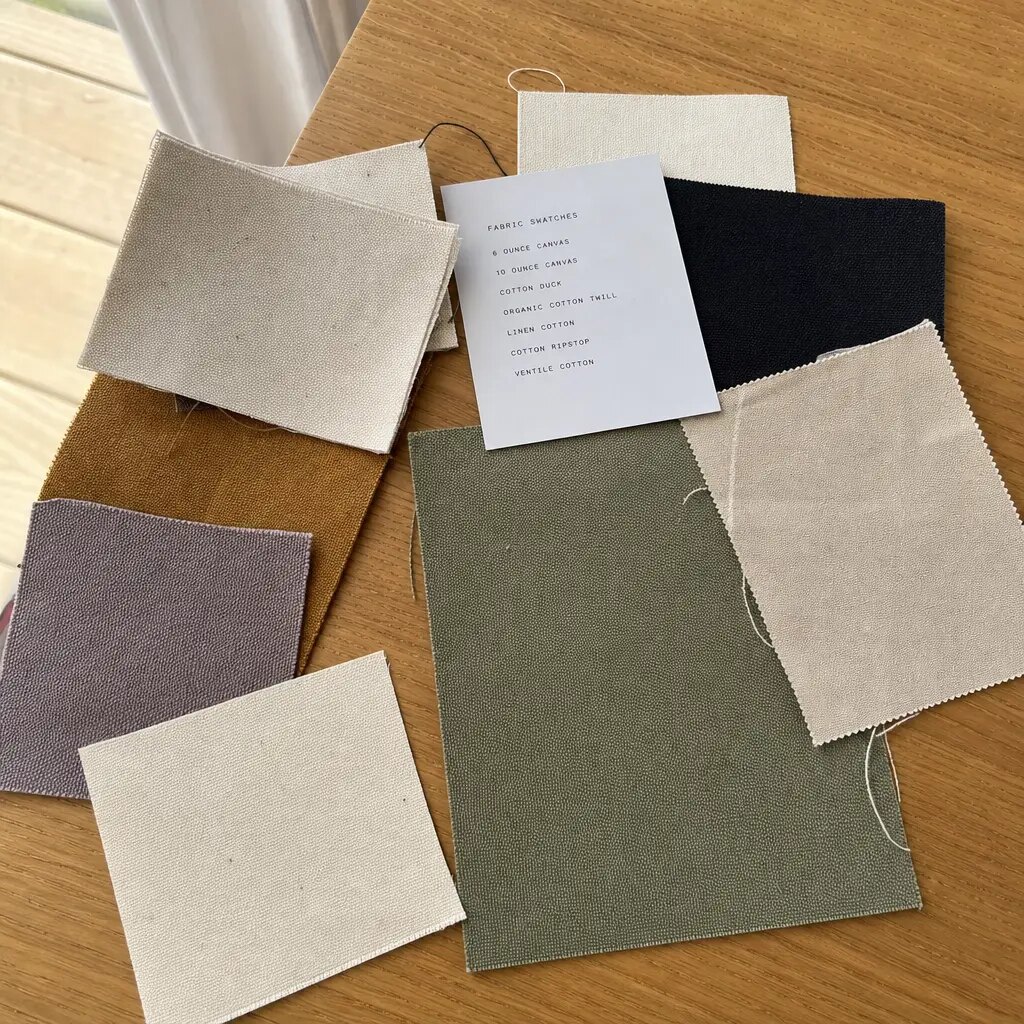
The sample process should move in stages. A fabric swatch confirms weight, color, texture, and handfeel before the buyer spends time on full sample approval. A print strike-off confirms ink color, edge sharpness, opacity, and print feel on the actual fabric. A pre-production sample confirms size, construction, drawcord, label placement, and logo position. A packing sample confirms fold method, inner pack format, carton quantity, and carton marks. When all four are aligned, bulk production has a clear reference.
Approved samples should be retained and protected. One sealed approval sample should remain with the buyer or inspection team, and the factory should keep an identical reference. If the supplier changes fabric lot, drawcord stock, ink, curing process, label supplier, fold method, inner bag, or carton size after approval, the buyer should be notified before mass packing. Natural cotton can vary by lot, but variation must stay within the agreed standard. Without a sealed reference, disputes become subjective and difficult to resolve before shipment.
- Approve a fabric swatch before full sampling when GSM, color, opacity, or handfeel is important to the hotel retail presentation.
- Approve a print strike-off before bulk printing when Pantone color, logo sharpness, ink coverage, or rubbing resistance matters.
- Approve a pre-production sample for finished size, sewing, drawcord, logo position, label placement, and product fit.
- Approve a packing sample, inner pack photo, or packed carton photo before the factory completes mass packing.
- Keep one sealed approved sample for inspection comparison and one working sample for brand, retail, or warehouse review.
Set QC Thresholds Inspectors Can Measure
Quality control instructions should be measurable. Phrases such as “good quality,” “nice stitching,” or “clean logo” leave too much room for interpretation. A better inspection brief defines finished size tolerance, print position tolerance, stitch condition, cord function, stain limits, odor condition, packing count, and carton requirements. The inspector should be able to open cartons, select samples, measure pouch dimensions, pull drawcords, rub the print, check labels, verify counts, weigh cartons, and photograph defects.
For cotton drawstring pouches, visual defects matter because the pouch may sit on a hotel retail shelf or be handed directly to a guest. Stains, oil marks, mildew odor, dirty fold lines, crooked logos, mixed cord colors, and loose threads are not minor if the pouch is part of a premium spa or boutique retail experience. At the same time, natural cotton may include small slubs, seed flecks, and texture variation. The buyer should distinguish acceptable natural fabric character from rejectable contamination, holes, broken yarns, or defects in the logo area.
QC should also cover function. Drawcord channels should open and close smoothly. Cord ends should not pull through the channel during normal use. Seams should not split when the pouch is filled with the intended product. Print should not rub off easily after proper curing. Cartons should match the agreed quantity and marks. If the buyer uses AQL inspection, the defect list should classify critical, major, and minor defects before inspection day. For example, mixed logos, wrong size, wrong fabric weight, severe stains, and short counts are usually more serious than a small thread tail that can be trimmed.
- Measure finished width and height flat, commonly against +/-5 mm tolerance for standard small and medium pouches.
- Check logo placement from a defined reference point, such as center line, bottom seam, side seam, or drawstring channel.
- Test cord function by opening and closing selected samples several times and checking channel stitching, cord fray, and knot security.
- Inspect fabric and print under consistent light for stains, holes, oil marks, print skips, color deviation, and defects in visible retail areas.
- Verify inner pack counts and random master carton counts before release, especially when several logos or sizes are produced together.
- Photograph representative defects, measurement results, open carton layout, carton marks, and staged finished quantity for shipment records.
Compare Quotes by Total Landed Handling Cost
A low unit price is only useful when the quote includes the same assumptions as competing offers. For wholesale cotton drawstring pouches, the main cost drivers are fabric weight, pouch size, drawcord type, print method, number of colors, logo size, MOQ split, label requirement, inner packing, carton strength, inspection support, and lead time. If one quote includes individual barcode labels and counted inner packs while another assumes loose bulk packing, the unit prices are not comparable.
Hotel retail buyers should ask for line-item visibility. The quote should separate base pouch cost, printing setup, printing run cost, label or hangtag cost, barcode application, individual packing, inner pack, master carton, sample charges, and any below-MOQ surcharge. This does not mean every supplier will price each component the same way, but it forces assumptions into the open. It also helps the buyer decide which features add value and which features are unnecessary for the use case.
Total cost should include receiving labor and rework risk, not only factory price. Loose bulk pouches may save a small amount at the factory but create labor cost when the importer must count, relabel, sort, or repack. Oversized cartons may reduce carton count but increase dimensional weight or cause warehouse handling issues. Heavier fabric may improve perceived value but raise air freight cost. For fixed hotel launch dates, the cost of delay can be more damaging than the difference between two pouch unit prices. A quote comparison sheet should therefore include product cost, packing cost, freight impact, approval lead time, and inspection readiness.
- Request separate pricing for pouch body, print setup, print run, label or barcode, individual packing, inner packing, carton, samples, and surcharge items.
- Compare quotes only after matching GSM, finished size, cord type, logo method, logo size, number of colors, and packing standard.
- Ask for estimated carton dimensions and gross weight before freight quoting, especially for air shipment or courier replenishment.
- Include receiving labor risk when choosing between loose bulk packing, counted inner packs, and retail-ready individual packing.
- Treat unclear quotes as incomplete until the supplier confirms what is included and what will be charged separately.
Protect Lead Time Before Hotel Launch Dates
Hotel retail programs often connect to fixed dates: property openings, spa launches, holiday programs, loyalty campaigns, conferences, wedding season, or gift shop resets. The pouch may be easy to sew, but delays often occur before sewing starts. Artwork approval, fabric swatch approval, dyeing, print strike-off, label confirmation, barcode data, packing instruction, carton mark approval, deposit payment, and inspection booking can all affect the timeline. A realistic schedule separates approvals from bulk production.
Late changes are a major schedule risk. Adding another hotel logo, changing cord color, switching from natural cotton to dyed cotton, adding barcode labels, or changing from bulk packing to individual packing can reset material planning and packing work. Procurement should freeze specifications before cutting starts. If the buyer must keep flexibility for multiple properties, the supplier should know the possible SKU split early so screens, labels, carton marks, and packing areas can be prepared.
Lead time planning should include inspection and rework time. If carton counts are wrong, prints are not cured, barcodes are misplaced, or cartons exceed the gross weight limit, the factory may need time to repack or rework goods. Shipping preparation also depends on final carton dimensions and weights. Freight forwarders need accurate carton data for booking, especially for air freight, LCL shipment, or courier delivery. For launch-critical hotel retail orders, procurement should set internal deadlines for final artwork, sample approval, packing approval, and shipment release rather than relying on one broad production date.
- Separate sample timing from bulk timing: swatch, print strike-off, pre-production sample, and packing approval each need buyer response time.
- Freeze final artwork, Pantone references, logo size, label data, barcode files, carton marks, and packing method before material cutting.
- Build in rework time after inspection for count errors, print issues, wrong labels, packing defects, or carton mark corrections.
- Confirm carton dimensions and gross weight early so freight booking is based on realistic packed goods data.
- For fixed launch dates, ask the supplier for a milestone schedule covering material, printing, sewing, packing, inspection, and shipment handover.
Specification comparison for buyers
| Procurement decision | Recommended specification | Best-fit hotel retail use | Acceptance risk to control |
|---|---|---|---|
| Fabric weight | 5 oz to 6 oz cotton, roughly 140-170 GSM, for most small retail pouches | Spa items, room amenities, gift shop accessories, small souvenir goods, jewelry cards | Fabric below 120 GSM may look transparent, wrinkle heavily, expose product edges, and reduce perceived retail value |
| Premium fabric option | 7 oz to 8 oz cotton canvas when structure and handfeel are more important than freight weight | Boutique resort gifts, premium spa kits, candle or glass jar packaging, loyalty welcome gifts | Heavier canvas increases unit cost, carton gross weight, dimensional weight, and may need larger carton planning |
| Finished size tolerance | +/-5 mm for common small and medium pouches unless the product insert requires tighter control | Hotel retail shelves, barcode label placement, amenity kit assembly, distributor replenishment | Tight tolerance without shrinkage and cutting controls can create avoidable rejections or production delays |
| Drawcord construction | Double cotton drawcord or 3-5 mm cotton rope with reinforced channel stitching for reusable retail pouches | Guest-purchased pouches, reusable spa packaging, souvenir sets, heavier contents | Thin cords may cut into the channel; dyed cords can migrate color; loose knots can pull through the channel |
| Logo method | Screen print for solid one- or two-color logos; woven label for subtle premium branding; heat transfer only after approval testing | Hotel logos, resort identity systems, spa ranges, seasonal gift packaging | Large ink coverage can stiffen cotton; heat transfer can crack or lift; embroidery can distort small light pouches |
| MOQ strategy | Standardize one fabric, one body color, one cord, and one or two sizes, then split by logo where needed | Multi-property hotel groups, distributors, seasonal launches, first purchase orders | Too many small splits create setup cost, mixed SKU risk, longer packing time, and unclear quote comparisons |
| Inner packing | Counted inner packs of 25, 50, or 100 pieces using polybag, kraft band, or carton divider as agreed | Retail backroom handling, hotel store replenishment, importer receiving, stock counting | Loose bulk packing may reduce cost but increases creasing, counting disputes, barcode relabel work, and receiving time |
| Master carton plan | Set pieces per carton, maximum 15-18 kg gross weight, carton dimensions, board strength, sealing method, and marks | Sea freight, air freight, courier replenishment, palletized hotel retail goods | Oversized cartons crush lower layers, raise dimensional freight cost, and slow warehouse receiving |
| Sample evidence | Material swatch, print strike-off, pre-production sample, inner pack photo, and packed carton photo before shipment | New supplier qualification, new logo program, first hotel retail order, packing method change | Loose product photos do not prove count accuracy, fold direction, carton compression, barcode placement, or shipping mark compliance |
Buyer checklist before sampling
- Define the commercial use first: amenity packaging, spa retail, gift shop merchandise, minibar accessories, room welcome gifts, or souvenir sales.
- List every SKU before quoting, including pouch size, fabric color, cord color, logo version, label type, barcode need, and carton mark requirement.
- Specify finished size measured flat after sewing, not only cutting size, and state the accepted tolerance after stitching and drawcord channel folding.
- Confirm fabric weight in both oz and GSM, plus whether the cotton is natural, bleached, dyed, washed, pre-shrunk, organic, recycled, or standard stock cotton.
- Provide artwork size, logo position, print side, Pantone reference, file type, and whether the logo must pass dry rub, wet rub, or light wash checks.
- Decide whether the pouch needs individual packing, paper banding, hangtag, barcode label, care label, country-of-origin label, or only counted inner packs.
- Set inner pack count, master carton count, maximum gross weight, target carton dimensions, carton board strength, sealing method, and shipping mark format in the RFQ.
- Require the supplier quote to separate pouch cost, print setup, print run charge, label or barcode cost, inner packing cost, carton cost, sample charge, and inspection support.
- Request a physical sample using the actual fabric, drawcord, print method, logo placement, folding method, and any retail label before bulk approval.
- Keep one approved sample sealed for inspection comparison and one working sample for hotel retail, warehouse, or brand team review.
Factory quote questions to send
- What is the exact fabric weight in GSM and oz, what weave or construction is quoted, and is it stock cotton or custom prepared fabric?
- Is the quoted cotton natural, bleached, dyed, washed, pre-shrunk, organic, recycled, or standard conventional cotton, and can you provide a fabric swatch before sampling?
- What finished pouch size tolerance is included after sewing, and have you allowed for seam allowance, drawstring channel fold, and fabric shrinkage?
- Which drawcord material, diameter, color, cord-end treatment, and channel stitch construction are included, and can dyed cords be checked for color migration?
- Which print method is included, what is the maximum print area, how many print colors are priced, and what surcharge applies for a second side or larger logo?
- Can you provide a print strike-off on the actual production fabric before bulk printing, and what Pantone or physical sample tolerance will be used for approval?
- What is the MOQ per size, per fabric color, per logo design, per label type, and per packing method, and what surcharge applies below normal MOQ?
- If we split one order across multiple hotel properties or logo versions, how will you prevent mixed logos during sewing, packing, and carton loading?
- How many pieces are packed per inner unit and per export carton, and what are the estimated carton dimensions, net weight, and gross weight?
- Does the quote include individual polybags, recycled polybags, paper bands, kraft sleeves, hangtags, barcode labels, care labels, country-of-origin labels, or only bulk packing?
Quality-control points to confirm
- Fabric GSM should match the approved sample within the agreed production tolerance, with no obvious thin bands, holes, stains, oil marks, mildew odor, or serious slubs in logo areas.
- Finished pouch width and height should remain within the agreed tolerance, stay reasonably square when measured flat, and allow the intended product to fit without forcing seams.
- Drawstring channels must open and close smoothly, with no skipped stitches, broken seams, blocked channels, sharp cord ends, fraying, or cord ends pulling out under normal hand force.
- Side seams and bottom seams should be secure, with reinforcement or sufficient stitch density for heavier products such as candles, glass jars, small bottles, or metal souvenirs.
- Logo position should follow the approved layout, with print distance from seams and center line checked against a measurement tolerance, not judged only by eye.
- Logo color should be compared with approved strike-off, Pantone reference, or sealed sample under consistent lighting, allowing only the agreed production variation.
- Print adhesion, curing, dry rubbing, and wet rubbing should be checked on the actual production fabric, especially for dark inks, large coverage, natural cotton, and dyed cotton.
- Pouches should be free from mixed sizes, mixed logos, mixed cord colors, loose threads, needle damage, metal contamination, and dirt from the packing area.
- Inner packs should be counted and sealed consistently, with random verification that each inner unit contains the agreed quantity and SKU.
- Master cartons should be checked for correct carton count, carton dimensions, gross weight, shipping marks, carton number sequence, sealing method, and board condition.