Why logo placement must be a production dimension
For hotel retail, a cotton drawstring pouch is not only a container. It is often the first branded surface a guest sees on a spa shelf, minibar gift, slipper set, candle, or welcome kit. A pouch can be sewn correctly and still fail brand review if the logo sits inside the gathered drawstring zone, drifts toward a side seam, wraps around a cylindrical product, or disappears under a packing crease.
The practical issue is that cotton does not behave like a flat digital mockup. The channel gathers when the cord is pulled. The front panel curves after filling. Side seams can pull inward. Natural cotton may wrinkle during packing. Because of this, logo placement should be specified as a measurable production requirement, not as a note saying “centered on front.”
A good RFQ for wholesale cotton drawstring pouches for hotel retail should define the reference point, print size, no-print zones, tolerances, sample approval path, and inspection method. A useful placement line might read: logo centered on front panel; logo width 70 mm; top of artwork 50 mm below drawstring channel seam; minimum 20 mm from side seams; vertical tolerance ±5 mm; horizontal tolerance ±3 mm. That turns subjective brand feedback into something a factory and inspector can check.
- Measure from finished sewn edges or the drawstring channel seam, not from cut panels.
- Approve the logo on a flat pouch and again on a filled, cinched pouch.
- Keep one signed production sample with the factory and one with the buyer or inspector.
- Use numeric placement tolerances so incoming QC is not based only on opinion.
- Create separate placement rules for each pouch size in a multi-size program.
Start with the product going inside the pouch
The right pouch size and logo position depend on the fill item. A soap duo, bath salt tube, glass candle, essential oil bottle, slipper pair, folded towel, and VIP gift set all create different filled shapes. Round items reduce the visible flat front because the fabric wraps around the curve. Tall items may push the logo downward visually once the top is cinched. Soft goods compress unevenly and can make the pouch look different from unit to unit.
For hotel retail, the pouch should usually close without force. If it is too tight, hotel staff or a kitting vendor spends more time filling, side seams are stressed, and the front logo may wrinkle. If it is too loose, the item can look unfinished on shelf. The best test is a physical fit sample with the real product. If the product is not ready, send the supplier dimensions, weight, photos, and intended orientation.
Display format also matters. A pouch standing upright on a hotel shop shelf may need the logo slightly lower than a pouch shown flat in a gift box. A hanging pouch may expose more upper panel. A pouch placed inside a rigid gift box may need the logo to avoid a predictable fold line. These small decisions are easier to solve during sampling than after a bulk shipment has been printed.
- For candles and bottles, test the curved filled shape before approving artwork position.
- For slippers and textiles, test the largest folded version, not the neatest sample fold.
- For heavy items, verify fabric weight, bottom-corner strength, and seam security.
- For local kitting, check filling speed and closure resistance with hotel staff in mind.
- For gift sets, test the worst-case combination in the assortment.
Finished size, capacity, and tolerances
A common sourcing mistake is comparing pouch sizes without confirming the measurement basis. The quote should state finished outside dimensions measured flat after sewing. Cut-panel size is different because seam allowance, the folded drawstring channel, pressing, and fabric relaxation reduce the final pouch. If a supplier quotes 200 x 300 mm, the buyer should confirm whether that is the finished flat size or the cut fabric size.
For many small and medium cotton drawstring pouches, ±5 mm on finished width and height is a practical commercial tolerance. Larger pouches may use ±10 mm. If a product fit is tight, do not rely on a general tolerance. Either increase the pouch size, approve the smallest acceptable size, or agree to tighter inspection criteria before the purchase order is released.
Capacity still needs a physical test. Cotton pouches do not have fixed volume like rigid cartons. Fabric weight, weave, side seam allowance, bottom construction, channel depth, and cord thickness all affect usable space. A blank fit sample is often the fastest way to confirm whether the item enters easily, closes cleanly, and leaves the logo readable.
- Specify finished outside dimensions in millimeters, measured flat after sewing.
- State whether the pouch is measured relaxed, pressed flat, or lightly tensioned.
- Measure channel width separately because narrow channels make cords hard to pull.
- Measure cord length after knotting so both sides look consistent when cinched.
- If fit is critical, approve the smallest acceptable sample before bulk production.
Fabric GSM, weave, and cotton finish choices
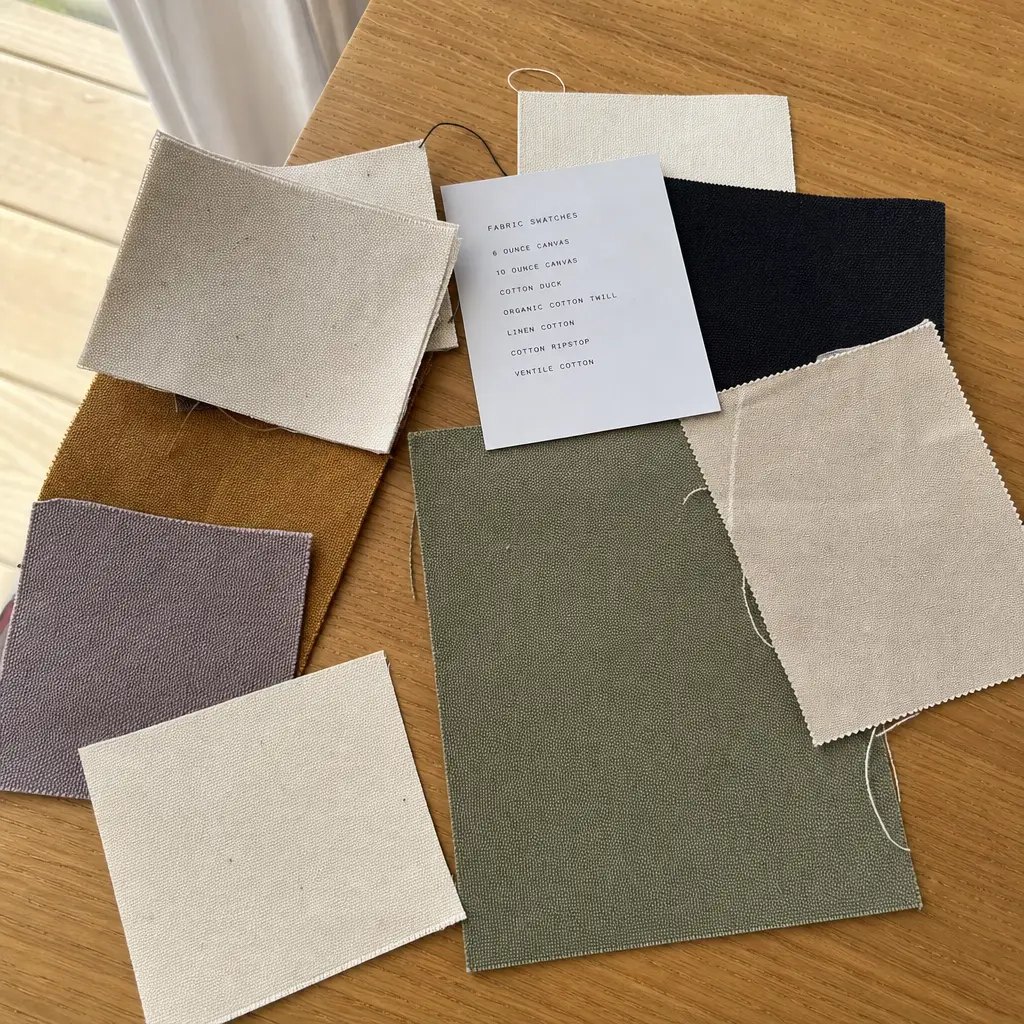
The word cotton is too broad for procurement. Cotton pouches can be lightweight muslin, plain weave cotton, twill, or canvas. For many hotel retail programs, 6 oz to 8 oz cotton canvas, roughly 200-270 GSM, is a balanced range. It has better opacity and shelf presence than thin promotional cotton, while still being flexible enough to cinch in most pouch sizes.
Lighter 110-140 GSM cotton can work for basic amenity bags, soap sleeves, or dust pouches where cost and easy closure matter more than structure. Midweight 160-190 GSM fabric can suit spa samples, welcome packs, and lighter retail products. Heavy 300 GSM canvas can feel premium, but it may create bulky channels, increase shipping weight, and make small pouches harder to close.
Color and finishing should be written into the spec. Natural unbleached cotton may show seed flecks and lot variation. Bleached white gives a cleaner print background but a less natural look. Dyed fabric needs lab dip approval, shade tolerance, and usually more lead time. If the hotel wants organic, recycled, or OEKO-TEX related claims, documentation must be requested before order confirmation and should match the actual material being supplied.
- 110-140 GSM: light amenity, dust, or low-cost packaging; watch transparency.
- 160-190 GSM: flexible midweight option for small retail and spa items.
- 200-270 GSM: practical hotel retail range for better handfeel and print surface.
- 300 GSM+: premium feel, but check channel bulk, sewing quality, and freight weight.
- For certified cotton, confirm certificate scope, transaction documents, and labeling rules.
Logo placement rules for filled and cinched pouches
For many medium hotel retail pouches, a safe starting point is to center the logo horizontally and place the top of the artwork about 40-55 mm below the drawstring channel seam. This keeps the mark out of the main gathering zone. The number is not universal. Small pouches may need less clearance, while thick cords, bulky products, or large pouches may need more.
Side-seam margins protect the artwork from distortion. A minimum 20 mm clear margin from side seams is a useful starting point for screen-printed logos. More margin may be needed for cylindrical products, large artwork, thick canvas, or pouches that curve strongly when filled. Avoid placing the logo too low as well, because the base can crease, bulge, or be hidden when the pouch stands upright.
The placement rule should be written in inspection language. For example: top of artwork 50 mm below channel seam; logo width 70 mm; centered on front panel; horizontal center tolerance ±3 mm; vertical placement tolerance ±5 mm. If the supplier proposes a wider tolerance, approve it before sampling. For multi-property hotel programs, use the same base placement rule but approve each artwork version because word length and logo shape can change visual balance.
- Do not place artwork inside the drawstring gathering zone.
- Keep logo clear of side seams, bottom folds, label insertions, and expected packing creases.
- Use the channel seam as the vertical reference point unless another point is clearly stated.
- Approve placement on the intended filled shape, not only on a flat empty pouch.
- For screen printing, consider a simple placement jig for repeat runs or multiple logos.
Branding method and artwork preparation
Screen printing is usually the most efficient branding method for one-color or two-color hotel logos on cotton drawstring pouches. It works well for property names, spa marks, monograms, and simple retail graphics. Water-based ink can give a softer handfeel, while higher-opacity systems may be needed for light ink on dark cotton. The buyer should approve a strike-off on final fabric before bulk production.
Fine artwork needs special review. Cotton texture can break thin lines, fill small counters, and soften small serif text. As a practical starting point, lines below about 0.4 mm should be tested carefully. Hotel crests, destination names, and taglines may need simplification or enlargement. Provide vector artwork in AI, EPS, or editable PDF format with Pantone references and final print size in millimeters.
Embroidery, woven labels, and sewn cotton labels can work well for premium hotel retail but must be specified early. Embroidery is better on heavier fabrics and simpler marks; dense stitch areas may pucker thin cotton. Woven side labels need fold type, label size, seam insertion point, and label MOQ. Sewn cotton labels should be checked for edge finish, shrinkage, and readability after sewing.
- Screen print: best for clean one-color or two-color logos at wholesale quantities.
- Embroidery: premium texture, but confirm stitch count, backing, and pucker risk.
- Woven side label: subtle branding, but label MOQ and seam insertion must be planned.
- Sewn cotton label: natural look, but inspect fraying, alignment, and small text clarity.
- Heat transfer: test adhesion, handfeel, and compatibility with cotton before approval.
MOQ split logic for hotel groups and distributors
MOQ is not only about the number of pouches sewn. It is shaped by fabric purchase quantity, dye lots, cord sourcing, print setup, label production, packing style, and production changeover. A hotel group may want 300 pieces per property logo, while the supplier may need a larger base quantity to purchase fabric and run sewing efficiently.
The usual solution is to standardize the base pouch and split only the logo where possible. Several properties can share the same natural cotton fabric, finished size, cord, channel construction, and packing method, then use different printed property names. The supplier may still charge separate screens or strike-offs per artwork, but fabric cutting and sewing become easier to consolidate.
Ask for a quote matrix rather than a single blended unit price. The matrix should show quantity tiers, setup charges per logo, MOQ by fabric color, MOQ by cord color, label costs, sample fees, packing costs, Incoterm, lead time, carton data, and whether mixed logo production is allowed in one lot. This makes it easier to decide whether to reduce SKU count, phase production, or standardize for replenishment.
- Lowest complexity: one size, natural cotton, standard cord, one print color, bundle packing.
- Higher complexity: dyed fabric, custom cord, woven label, retail sleeve, and multiple pouch sizes.
- Each logo version may need its own screen, strike-off, SKU label, and carton mark.
- Do not mix property logos in cartons unless inner bundles and labels make separation clear.
- Use one base pouch approval and separate artwork approvals for multi-logo programs.
Sampling path and approval sign-off
A digital proof is useful for layout discussion, but it does not prove fit, closure, print behavior, or shelf appearance. Start with a blank fit sample to confirm finished size, fabric handfeel, cord movement, seam construction, and product fit. This step can prevent paying for print setup on the wrong pouch size.
After fit approval, request a printed pre-production sample or strike-off using final fabric, final cord, final logo method, final logo size, and final placement. If custom dyed fabric is not yet available, the sample should clearly state what material is substituted and what still requires approval. For light ink on dark cotton, large ink coverage, fine lines, or crests, check opacity, edge quality, curing, handfeel, and obvious rubbing.
The sign-off should be more than an email saying “approved.” Record finished size, tolerance, fabric GSM, fabric color standard, cord details, logo size, logo placement, print color, print method, packing format, carton label rule, and approved sample date. Ask the supplier for photos of the approved sample flat, filled, cinched, front, back, inside channel, cord ends, label area, and packed condition.
- Approval fields should include buyer name, supplier name, sample date, version number, and PO reference.
- Keep a sealed or signed production sample for factory use and inspection comparison.
- Approve each artwork version separately when property logos differ.
- Do a simple rub check on cured print using a clean white cloth.
- Reject bulk production release if only a digital mockup has been approved.
Packing, carton planning, and warehouse receiving
Packing is part of the specification. Cotton pouches can collect dust, absorb odor, wrinkle, or show compression marks if packed carelessly. Loose bulk packing may reduce cost, but inner bundles of 50 or 100 pieces often make receiving, counting, inspection, and local kitting easier. Individual retail packing may be needed for resale, but it adds labor, material, volume, and waste.
Carton planning should be included in the quote: pieces per carton, carton dimensions, gross weight, net weight, total carton count, and carton mark format. For multiple hotel logos or property-specific SKUs, carton marks should identify PO number, SKU, logo version, pouch size, fabric color, quantity, destination, and carton number. Avoid mixed cartons unless each inner bundle is clearly labeled.
Retail data also needs approval. Barcode stickers, hang tags, belly bands, paper sleeves, and carton labels should be checked before bulk packing. A pouch can be physically correct but still fail receiving if the barcode is wrong or the carton mark does not match the purchase order. If the hotel wants plastic-reduced packing, discuss paper bands, glassine, or carton-only bundles while still protecting the pouches from dust and moisture.
- Specify loose bulk, inner bundle, individual bag, paper band, hang tag, or retail sleeve.
- Request packing photos before shipment for multi-SKU or barcode programs.
- Do not allow heavy creases across the logo if pouches must go directly to retail display.
- Use carton labels that match the PO, SKU list, destination, and packing list exactly.
- Plan carton weight and cube early because heavier canvas changes landed cost.
QC checkpoints and defect classification
Quality control should focus on the failures that matter for hotel retail: wrong size, poor fit, bad logo placement, weak print, defective cords, loose seams, dirty fabric, and packing errors. These issues affect brand presentation and warehouse usability more than minor cosmetic variation in natural cotton. The inspection checklist should be based on the approved sample and the measurable specification.
For inspection, define the sampling plan and AQL before production. Many buyers use general inspection levels and classify defects as critical, major, or minor. Critical defects may include wrong logo, unsafe contamination, or unusable product. Major defects may include logo outside tolerance, poor print adhesion, open seams, incorrect size affecting fit, wrong cord, wrong barcode, or mixed SKUs. Minor defects may include small cosmetic marks within an agreed limit.
Inspection should include flat measurement and functional testing. Pull the cords, open and close the pouch, fill sample units with the intended product or dummy item, check the logo when cinched, inspect seams and cord ends, and verify packing labels. For retail programs, inspect units after they are packed because compression, folding, or incorrect inner bundles can create problems that are not visible on the sewing line.
- Measure finished size, channel width, cord length, logo size, and logo placement against the PO.
- Check logo visibility on filled and cinched units, not only empty pouches.
- Classify wrong logo, wrong SKU label, and mixed property cartons as major or critical depending on program risk.
- Check print rubbing, curing, misregistration, embroidery puckering, and label alignment.
- Verify carton count, inner quantity, barcode, carton marks, gross weight, and packing list before shipment.
Specification comparison for buyers
| Specification choice | Typical range or option | Best fit for hotel retail | MOQ and cost impact | Inspection risk to control |
|---|---|---|---|---|
| 110-140 GSM cotton muslin or plain weave | Lightweight cotton, often used for low-cost dust bags or basic amenity packaging | In-room amenity pouches, soap sleeves, small dust bags, lightweight minibar gifts where opacity is not critical | Lower material cost and freight weight; usually easier to sew and cinch; may allow lower MOQ if fabric is stock | Transparency, weak shelf presence, print bleed-through, embroidery puckering, and seams stressed by heavy products |
| 160-190 GSM plain cotton or light canvas | Midweight fabric with better opacity than muslin but still flexible | Spa samples, small retail sets, soft goods, slippers, and welcome packs that need better handfeel without heavy bulk | Moderate cost; usually good for standard screen print; dyed fabric or custom cord can still raise MOQ | Logo distortion if filled tightly, uneven print on textured fabric, and variable shrinkage if washed or softened |
| 200-270 GSM cotton canvas, about 6-8 oz | Balanced hotel retail range with stronger handfeel and better print surface | Hotel shop merchandise, wellness kits, resort retail, candle pouches, bottle sets, and reusable guest packaging | Higher material cost than light cotton but often worth it for retail presentation; freight weight increases slightly | Channel must be wide enough for smooth cinching; inspect print curing, seam bulk, and bottom-corner strength |
| 300 GSM and above, about 10 oz+ canvas | Heavy premium canvas with a structured feel | Premium boutique retail, durable dust bags, high-value gift sets, or heavier products where the pouch is part of the product experience | Higher unit cost, carton weight, and shipping volume; small sizes may be harder to produce cleanly | Bulky channel, hard closure, thick seam allowances, needle marks, and inconsistent logo position if fabric shifts during printing |
| One-color screen print | Solid logo using water-based, pigment, or approved ink system | Most hotel logos, property names, spa marks, and simple retail branding | Efficient for medium and larger runs; setup usually by screen or artwork; good for splitting property logos on one base pouch | Fine lines under about 0.4 mm, small serif text, ink opacity on dark fabric, rubbing, and placement drift |
| Two-color screen print | Two registered colors on final fabric | Hotel crest plus wordmark, destination retail line, or logo plus small accent color | Additional screen/setup cost; slower production; more strike-off review needed | Misregistration, color shift on natural cotton, uneven curing, and inconsistent print coverage |
| Embroidery | Thread logo on suitable heavier fabric, usually simpler artwork | Premium tactile branding, monograms, small marks, or tone-on-tone hotel retail | Cost depends on stitch count and thread changes; may need higher fabric weight; slower than print | Puckering, dense stitch areas, loose threads, wrong backing, and poor readability of small lettering |
| Woven or sewn label | Side label, front patch, or sewn cotton label inserted or stitched to pouch | Subtle branding, retail collections, private-label hotel programs, or designs avoiding large front prints | Label MOQ and setup can be separate from pouch MOQ; insertion adds sewing time | Wrong fold type, label crooked after cinching, seam insertion error, fraying, and mixed labels across SKUs |
| Standardized base pouch with split logos | Same size, fabric, cord, packing; different printed property logos | Hotel groups, distributors, multi-property retail, and phased replenishment | Can reduce fabric and sewing MOQ pressure while still requiring setup or strike-off per logo | Mixed cartons, wrong logo counts, unapproved artwork version, and inspection sampling not separated by SKU |
Buyer checklist before sampling
- Define the hotel use case: retail resale, spa kit, in-room amenity, slipper pouch, candle bag, minibar gift, VIP welcome pack, dust bag, or local kitting pouch.
- List the exact product dimensions that must fit inside, including width, height, depth, diameter for round items, product weight, and whether the pouch must close fully.
- State the intended display format: lying flat, standing on a shelf, hanging, inside a gift box, handed out at check-in, or filled by hotel staff after import.
- Quote finished outside dimensions in millimeters, measured flat after sewing, not cut-panel size or approximate capacity.
- Set size tolerance: commonly ±5 mm for small and medium pouches, ±10 mm for larger pouches, or tighter if product fit is critical.
- Specify fabric type and weight in GSM or oz, including weave such as muslin, plain weave, twill, or canvas.
- Define color standard: natural unbleached, bleached white, black, Pantone-dyed fabric, approved lab dip, or buyer-provided swatch.
- Confirm if fabric must be washed, softened, pre-shrunk, organic-certified, OEKO-TEX certified, recycled-content, or conventional cotton without certification claims.
- Choose cord material, diameter or tape width, color, knot style, and cord-end finish such as raw-cut, knotted, stitched, taped, or hardware-finished.
- Give logo size in millimeters, placement reference point, no-print margins, color target, print method, and approval requirement for a strike-off on final fabric.
Factory quote questions to send
- Is the quoted pouch size the finished outside dimension measured flat after sewing, and what tolerance applies to width, height, bottom fold, channel width, cord length, and logo placement?
- What fabric construction is quoted in GSM or oz, and is it muslin, plain weave, twill, canvas, greige, washed, softened, pre-shrunk, dyed, bleached, or natural unbleached cotton?
- Is the fabric stock or custom? If custom dyed or certified, what MOQ, lab dip timing, certification documents, and shade tolerance apply?
- What is the recommended usable print area for this pouch size after allowing for the drawstring channel, side seams, bottom fold, and filled shape?
- What logo placement do you recommend for the intended product when the pouch is filled and cinched, and what vertical and horizontal placement tolerance can you hold?
- Which branding method is included in the price, and how many colors, screens, stitches, woven labels, printed labels, or setup charges are included?
- For screen printing, what ink type is quoted, how is it cured, and what limits apply to minimum line width, small text, halftones, and ink coverage?
- Can you provide a printed strike-off on the final fabric and final ink before bulk production, with photos of the pouch flat, filled, cinched, and packed?
- For embroidery, what stitch count, thread type, backing, and fabric weight do you recommend to reduce puckering?
- For woven or sewn labels, what label size, fold type, seam insertion point, label MOQ, and label placement tolerance are included?
Quality-control points to confirm
- Finished pouch size measured flat after sewing, using the agreed method: relaxed, pressed flat, or lightly tensioned by hand.
- Width, height, bottom fold, and drawstring channel checked against agreed tolerance, commonly ±5 mm for small and medium pouches unless otherwise specified.
- Logo placement measured from fixed finished references such as side seams and channel seam, not judged only by visual centering or digital mockup.
- Logo print size measured in millimeters, with horizontal and vertical placement deviation recorded against the approved sample.
- Logo visibility checked on a filled and cinched pouch using the intended product or an agreed dummy product of similar size and weight.
- Print color checked against approved strike-off or Pantone target under consistent lighting, with natural cotton shade variation considered.
- Print adhesion and rubbing checked after curing, especially for dark inks, high-coverage logos, dyed fabric, and retail-facing units.
- Logo detail checked for broken fine lines, filled counters, uneven ink coverage, misregistration, embroidery puckering, loose threads, or label misalignment.
- Drawstring channel width checked for smooth cord movement without twisting, snagging, excessive friction, or uneven gathering.
- Cord material, color, length after knotting, diameter or tape width, knot style, and cord-end finish checked against specification.