1. Start with the coffee packaging job
A cotton drawstring pouch is not one standard item for every coffee roaster. The same style may be used to hold 50 g tasting samples, wrap a sealed 250 g retail bag, group subscription inserts, present a mug-and-beans gift set, or serve as a reusable brand pouch at an event. Each job puts different stress on the fabric, cord channel, seams, and logo.
The quickest way to avoid wrong quotes is to describe the filled use case before asking for a unit price. A flat sachet and tasting card may work in lighter cotton. A pouch holding a gusseted coffee bag, scoop, and card needs more internal room, stronger seams, and a cord that closes without forcing the top channel. If the pouch must sit on a retail shelf, filled appearance matters as much as flat size.
Procurement should also define the handling route. A pouch packed by hand for a local event has different risk than one sent to a co-packer, re-cartoned by a distributor, and handled by retail staff. More touchpoints mean more abrasion, more cord pulls, and more opportunity for carton count errors.
- State the use case in the RFQ: sample pouch, retail wrapper, subscription insert, gift set, event giveaway, or reusable pouch.
- Provide the filled product weight and dimensions, not only the pouch size.
- Test with the real coffee bag or accessory set before approving bulk production.
- Decide whether the pouch must look premium empty, filled, or both.
2. Build a quote-ready pouch specification
Suppliers cannot quote consistently from a phrase such as “small cotton coffee pouch.” One supplier may assume 120 GSM stock cotton, another may quote 160 GSM, and a third may include a different print method or packing format. The price comparison becomes unreliable because each quote is built on a different product.
A useful spec sheet should include finished width and height, usable internal dimensions, fabric GSM, fabric construction, color, cord material, cord length, top hem style, seam construction, print method, print size, print location, label needs, packing method, carton quantity, and inspection requirements. For repeat orders, include the approved sample reference or previous lot number.
Identify critical dimensions separately. If the pouch wraps a gusseted 250 g coffee bag, usable internal width and closure height may matter more than exterior height. If the pouch is a tasting kit, the bottom seam and side seam strength may be critical because the contents create hard corners. If the pouch is a retail display item, logo centering and clean fabric shade become key acceptance points.
- Quote from one written spec so supplier pricing is comparable.
- Define finished size and usable internal space separately.
- State the print position in centimeters from the pouch edges.
- List packing and carton requirements in the same RFQ as the pouch spec.
- Ask every supplier to disclose substitutions or assumptions.
3. Choose fabric weight for the actual load
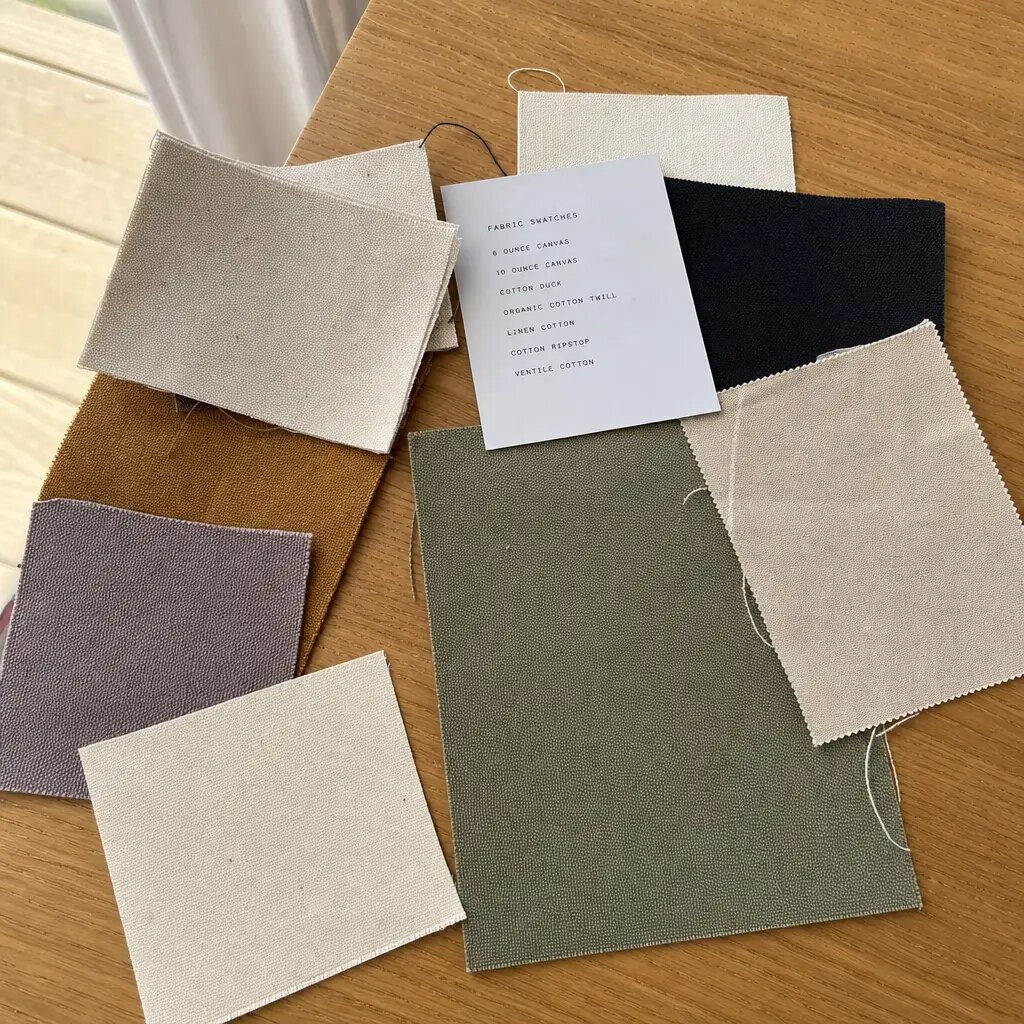
Fabric GSM affects durability, appearance, sewing behavior, cost, and freight volume. For coffee pouch programs, 100-120 GSM is typically used for light promotional items or low-touch samples. It is cost efficient, but it can look thin when filled and may show the shape of the contents. Around 140-160 GSM is often the practical middle for retail, subscription, and gift packaging because it gives better opacity and seam support without moving into a heavy canvas feel.
Heavier 170-180 GSM cotton or canvas-style cloth can be appropriate when the pouch is part of a premium reusable set. The tradeoff is that heavier fabric can increase unit cost, carton size, sewing time, and sometimes closure resistance. A thick pouch that does not gather neatly at the mouth can frustrate packing staff even if it feels premium in hand.
Do not evaluate GSM alone. Weave tightness, yarn quality, finishing, and washing can change how the pouch performs. Natural unbleached cotton may also vary in shade. If repeat shipments must match, ask the factory how it controls fabric lots and whether the approved sample represents stock fabric or a custom batch.
- 100-120 GSM: lightweight inserts, event handouts, or short-life promotions.
- 130-140 GSM: cost-sensitive programs that still need reasonable handling strength.
- 140-160 GSM: common choice for coffee subscriptions, sample kits, and retail pouches.
- 170-180 GSM+: premium reusable pouches or heavier gift sets.
- Confirm whether GSM is measured before finishing, after finishing, or on the finished pouch.
4. Engineer seams, top hem, and cord channel
Many pouch failures start at the mouth of the bag. The drawstring channel is pulled repeatedly during filling, closing, reopening, and customer reuse. If the channel is too narrow, stitching is inconsistent, or the cord is rough for the fabric, the top hem may bunch, tear, or stop sliding smoothly.
Cord selection should match the pouch size and expected use. Cotton cord supports a natural look. Braided cord may improve strength and reduce fraying depending on construction. Very thin cord can cut into the channel under tension. Very thick cord may look better but can be hard to pull through a small hem. The test should be performed while the pouch is filled because tension changes when the mouth is gathered around a coffee bag.
Seams also need written definition. Ask for seam allowance, stitch density, thread type if relevant, top hem width, and how the side and bottom seams are finished. A sample with loose threads, skipped stitches, open corners, or puckering near the channel is not a cosmetic issue; it is a production risk.
- Check closure with the actual filled product inside.
- Inspect top channel ends for secure stitching and no open stress points.
- Pull both cords evenly and confirm the mouth closes without excessive force.
- Check side and bottom seams after a light shake test.
- Reject samples with thread nests, skipped stitches, needle damage, or loose seam starts.
5. Select a logo method that can survive handling
Coffee branding often depends on a simple, clean logo, but print durability depends on fabric texture, ink, curing, placement, and abrasion. Screen printing is practical for many one- to three-color coffee logos and can be cost effective at volume. It still needs testing on the finished pouch, not only on a flat swatch.
Fine type, thin lines, badges, or artwork with small texture may perform better as a woven label or sewn patch. Heat transfer may work for certain designs but should be checked for cracking, edge lift, and hand feel on cotton. Embroidery can look premium, but on smaller pouches it may distort fabric or create stiffness if the stitch area is dense.
Artwork should stay away from folds, seams, and the drawstring channel unless the design is intentionally placed there. A logo that looks centered on an empty pouch may curve or tilt after the pouch is filled. Approve the printed sample both flat and packed with the real coffee product.
- Use screen print for simple solid marks and controlled volume cost.
- Use labels or patches for fine detail on textured fabric.
- Keep critical artwork out of high-bend and high-rub zones.
- Measure logo placement from the top and side edges.
- Run rub testing on the finished pouch surface after printing and curing.
6. Use quantitative durability tests before bulk approval
Durability testing should be simple enough for routine procurement but specific enough to catch failures. A practical plan includes measurement, internal fit, seam inspection, closure cycles, cord pull, load hold, print rub, filled appearance, and packing review. These tests should be performed on the pre-production sample and repeated on random bulk samples before shipment.
For sampling, test more than one pouch when possible. For a normal pre-production review, 5 samples can reveal obvious variation. For a launch order, heavy gift set, or first order with a new supplier, 10 samples provide better confidence. Bulk inspection should follow the buyer’s AQL plan or another written sampling method agreed before production.
Suggested internal protocols can be adjusted to the pouch size and use case. Open and close each pouch 50 cycles for light programs and 100 cycles for reusable or retail-facing programs. Load each pouch with 1.25 times the intended filled weight for 30 minutes, then inspect seams and the channel. For a 250 g coffee bag plus inserts weighing 350 g total, test at roughly 440 g. Rub the printed area 20 dry strokes with a clean white cotton cloth; for moisture risk, add 10 light damp strokes. Pass criteria should be written: no open seams, no channel tear, no cord pullout, no visible ink transfer beyond the agreed limit, and dimensions within approved tolerance.
- Sample size: test 5-10 pre-production samples when available.
- Closure cycles: 50 cycles for light use; 100 cycles for reusable or retail-facing use.
- Load hold: 1.25x intended filled weight for 30 minutes, followed by seam and channel inspection.
- Print rub: 20 dry rub strokes; add 10 light damp rub strokes if moisture exposure is likely.
- Pass/fail: no seam opening, no channel tearing, no knot failure, no major cord fray, no unacceptable print transfer.
- Record results with photos, measurements, sample date, and supplier reference.
7. Control sample approval and golden samples
A pre-production sample should represent the bulk pouch, not just the style. Early sizing mockups are useful, but the final approval sample should use the same or equivalent fabric weight, actual cord, intended seam construction, approved print method, and realistic packing concept. A blank stock pouch with a printed paper logo is not enough for production release.
Sample review should include procurement, packaging, brand, and warehouse stakeholders if the order is important. The packaging team may catch fit issues. The warehouse team may notice bundling or carton problems. The brand team may focus on logo placement, fabric shade, and filled appearance. Review the sample under normal light, flat and filled.
Keep one approved sample sealed and labeled with supplier name, date, size, fabric GSM, cord spec, print method, color, PO or sample number, and version. Photograph the front, back, seams, cord, print, inside, and packed view next to a ruler. This reference reduces debate during bulk inspection and repeat orders.
- Approve size, fabric, cord, seam, print, and filled appearance together.
- Do not approve a sample if the supplier says defects will simply improve later without a corrected sample.
- Keep a golden sample for every size, color, and artwork version.
- Use the golden sample for first-lot comparison and repeat-order control.
- Document approved deviations in writing before the PO is finalized.
8. Compare suppliers on controlled landed cost
The lowest pouch price may hide a thinner fabric, weaker cord, looser inspection, or cheaper packing. For fair comparison, ask every supplier to quote the same spec and list any deviations. The RFQ should also ask for MOQ, price breaks, sample charges, setup fees, lead time, carton quantity, carton dimensions, and gross weight.
MOQ varies for legitimate reasons. Stock natural cotton may support lower minimums. Custom dyed fabric, special cord colors, labels, patches, or multi-color prints can raise MOQ and extend lead time. Printing setup, cutting waste, sewing line changeover, and carton customization also affect price tiers.
Procurement should compare total controlled cost: product cost, sampling cost, freight volume, receiving labor, inspection effort, and risk of rework. A pouch that arrives with inconsistent carton counts or rub-off printing may cost more than a slightly higher unit price from a supplier with better process control.
- Request price tiers at trial, reorder, and annual forecast quantities.
- Ask whether sample cost is separate, refundable, or credited to bulk order.
- Compare carton dimensions and gross weight, not only unit price.
- Ask the supplier to identify in-house versus outsourced processes.
- Require written confirmation of all substitutions before production.
9. Set packing and carton standards early
Packing affects wrinkles, dust control, count accuracy, receiving speed, and freight. Cotton pouches may be flat-packed, folded, tied, banded, inner-bagged, poly-bagged, or packed loose. Each choice has tradeoffs. Flat packing can reduce volume but may crease. Bundles improve counting but add labor. Individual polybags protect from dust but may conflict with sustainability goals and slow unpacking.
Coffee roasters with multiple seasonal blends, subscription drops, or retail SKUs should avoid unclear mixed cartons. If mixed cartons are necessary, the mix ratio and label must be approved. Carton marks should show SKU, size, color, logo version, quantity, PO number, and lot number. Receiving teams should not have to open and recount every carton because marks are incomplete.
Cotton can absorb odor and moisture, so cartons should be dry, clean, and suitable for the route. Depending on shipping conditions, buyers may request an inner liner, moisture protection, or storage instructions. The goal is not excessive packaging; it is to prevent mildew odor, stains, carton collapse, and receiving disputes.
- Define inner bundle count and master carton quantity in the PO.
- Require carton photos before shipment: closed carton, carton mark, and open carton view.
- Avoid mixed cartons unless mix details are approved and printed on the label.
- Confirm whether pouches are flat, folded, bundled, tied, or individually packed.
- Audit carton count and SKU labeling during pre-shipment inspection.
10. Manage lead time by mapping production handoffs
Lead time is more than sewing time. A cotton pouch order may include fabric sourcing, finishing, cutting, printing, curing, sewing, trimming, inspection, bundling, carton packing, and export preparation. If printing, labels, dyeing, or carton supply are outsourced, the schedule depends on additional vendors.
The production clock should start after sample approval, not after the first inquiry. Build time for artwork review, sampling, sample shipping, corrections, bulk production, inspection, packing, and freight. If the pouch is tied to a seasonal roast, holiday gift set, trade show, or subscription shipment, freeze artwork and packing earlier than the launch calendar suggests.
Late changes create the highest risk. Revising the pouch size after cutting, changing print color after screens are prepared, or altering carton quantities after packing has started can delay the order and create extra cost. Use clear approval gates for artwork, sample, bulk start, first-lot review, inspection, and shipment.
- Ask for a process map showing in-house and subcontracted steps.
- Treat sample approval as the real production start date.
- Build in one correction cycle for first-order sampling.
- Freeze size, GSM, cord, artwork, and packing before materials are cut.
- Request first-lot photos for time-sensitive or remote orders.
Specification comparison for buyers
| Buying decision | Practical specification | Coffee packaging use case | Inspection method | MOQ or lead-time impact |
|---|---|---|---|---|
| Fabric weight | 100-120 GSM cotton | Event giveaways, light sample sachets, low-touch promotional inserts | Check opacity, seam stress after filling, and fabric tears at corners | Usually lower cost and easier MOQ if stock fabric is available |
| Fabric weight | 140-160 GSM cotton | Most coffee sample kits, subscription inserts, retail pouches, and gift packaging | Verify GSM against agreed tolerance, compare hand feel to approved sample, test filled appearance | Balanced cost; may still be available from stock depending on color |
| Premium fabric | 170-180 GSM or heavier cotton/canvas-style cloth | Reusable customer pouches, premium holiday sets, heavier accessories | Run closure cycles because heavier fabric can resist gathering at the mouth | Higher unit cost, larger carton volume, longer sewing time |
| Cord and closure | Cotton cord or braided cotton/poly cord matched to channel width | Pouches opened by fulfillment staff, retailers, or consumers | Perform 50-100 open/close cycles and pull-test knots and channel seams | Special cord colors or diameters may raise MOQ |
| Top hem and channel | Wide, even cord channel with clean stitching and no tight spots | Any pouch that must close smoothly around a filled coffee bag | Check mouth closure when packed; inspect for bunching, skipped stitches, and channel tearing | More sewing control may add time but reduces closure complaints |
| Seam construction | Consistent seam allowance, secure side and bottom seams, trimmed threads | Coffee bags, scoops, tasting cards, mugs, jars, or bundled gifts | Load-hold and shake test using real packed weight; inspect seam openings | Reinforced seams can affect price but are useful for heavier sets |
| Logo method | Screen print for simple artwork; woven label or patch for fine detail | Retail-facing coffee branding, tasting kits, seasonal promotions | Dry rub and light damp rub on finished pouch, not only on flat fabric | More colors, labels, or patches increase setup cost and lead time |
| Sample approval | Pre-production sample made with actual fabric, cord, seam, print, and packing concept | Any repeat program or customer-facing launch | Measure, fill, cycle, rub, photograph, and retain a sealed reference sample | Adds calendar time but prevents bulk disputes |
| Packing standard | Defined inner bundles, carton quantity, carton marks, and moisture-control plan | Multi-SKU coffee programs, subscription drops, warehouse receiving | Audit carton count, SKU labels, lot marks, and open-carton photos before shipment | Custom packing can add labor; unclear packing creates receiving cost |
Buyer checklist before sampling
- Define the pouch job first: loose sample, sealed coffee bag wrapper, subscription insert, tasting kit, retail gift pouch, event giveaway, or reusable customer pouch.
- Record the actual filled item dimensions and weight, including coffee bag gussets, tasting cards, scoops, jars, mugs, or accessories.
- Lock finished width, finished height, usable internal space, fabric GSM, cotton construction, fabric color, cord material, cord length, top hem style, seam build, and logo method before quote comparison.
- Ask suppliers to quote the same packing plan: flat-packed, folded, bundled, tied, inner-bagged, poly-bagged, or loose packed.
- Require a pre-production sample with the intended fabric weight, cord, print method, stitching, logo placement, and realistic filled size.
- Test at least 5-10 pre-production samples when available, not just one display sample, especially for a launch order or heavy gift set.
- Set pass/fail criteria for dimensions, seam appearance, stitch consistency, cord function, print rub, cleanliness, odor, and carton count before bulk production.
- Tie dimensional tolerances and defect classifications to the buyer’s AQL plan or written inspection standard instead of relying on general factory language.
- Keep a sealed approved sample for each size, color, and print version; compare bulk production against that sample.
- Require carton marks showing SKU, size, color, logo version, quantity, PO number, and production lot or batch.
Factory quote questions to send
- What exact finished width and height are quoted, and what tolerances can your factory reliably hold under our inspection plan?
- What is the usable internal space after seams and the drawstring channel are accounted for?
- What fabric construction, GSM, color, and finishing state are included: greige, finished, washed, unwashed, dyed, bleached, or natural unbleached?
- Is the cotton conventional, organic, recycled blend, or another material claim, and what documentation can be provided if we need that claim on file?
- What seam allowance, stitch density, top hem width, and cord channel design are included in the price?
- What cord material, diameter, length, color, knot style, and cut-end treatment are quoted?
- Which logo method is included: screen print, heat transfer, woven label, sewn patch, embroidery, or another decoration?
- How many print colors are included, what is the safe print area, and how far should artwork stay from the hem, side seam, and bottom fold?
- Can you make a pre-production sample using the same fabric, cord, stitch construction, print method, and packing standard as bulk?
- What are the MOQ, price breaks, setup fees, sample cost, sample lead time, production lead time, and packing lead time at this exact spec?
Quality-control points to confirm
- Fabric GSM should be checked against the agreed PO tolerance and supplier capability; common cotton tolerances may be around plus or minus 5-8 percent, but the buyer should define the requirement.
- Finished width, finished height, cord length, and print placement should be inspected using the buyer’s approved tolerance and AQL plan, not assumed as universal standards.
- Usable internal fit should be tested with the actual coffee product because the top channel, seam allowance, and fabric stiffness reduce practical capacity.
- Side seams, bottom seams, and top hems should have no open seams, skipped stitches, needle cuts, loose thread nests, severe puckering, or weak starts and stops.
- Cord function should be checked with repeated opening and closing; there should be no channel tearing, cord fraying, knot failure, or closure jamming.
- Cord length should be consistent enough for easy tying and retail appearance; short cords slow packing, while overlong cords tangle during bundling.
- Print placement should match the approved artwork position and should not drift into folds, seams, or drawstring channels unless approved.
- Print durability should be checked on the finished pouch with dry rub and, when relevant, light damp rub testing to identify ink transfer, cracking, or weak curing.
- Load performance should be tested using the intended filled weight and shape, with inspection after hanging, holding, or shaking according to the buyer’s test plan.
- Fabric cleanliness should be checked for stains, oil marks, dust, odor, mildew risk, discoloration, mixed fibers, and foreign matter before packing.