Start With the Finished Bag
For university bookstore procurement, a cotton drawstring backpack is not just a flat branding surface. The top gathers, the front panel bends around books and apparel, the bottom corners carry cord tension, and the bag may be folded tightly for shelf display. A logo that looks centered on a mockup can sit too high once the channel is cinched or too low once the bag is stacked in cartons.
Start the RFQ with the finished size and construction. Common bookstore sizes include 34 x 42 cm and 35 x 45 cm, but safe logo space depends on channel height, seam allowance, bottom construction, corner anchor style, and fabric weight. Any print-area numbers should be treated as examples until the factory confirms them from the actual production pattern.
The sales channel should shape the standard. A retail SKU needs clean folded presentation and scannable labeling. Orientation stock needs fast counting, clear carton marks, and a logo that stays readable when worn. Department merchandise may require version control across several designs. The bag can share the same base spec, but approval details should match how the item will be received, displayed, and used.
- Request finished dimensions, not only cut-panel dimensions.
- Review the sample flat, cinched, lightly filled, folded, and stacked.
- Measure from sewn side seams, finished drawcord channel, and bottom seam.
- Keep a placement diagram with the PO for reorders.
- Confirm whether the bag is retail merchandise, event stock, online inventory, or giveaway stock.
Choose Fabric by Use Case
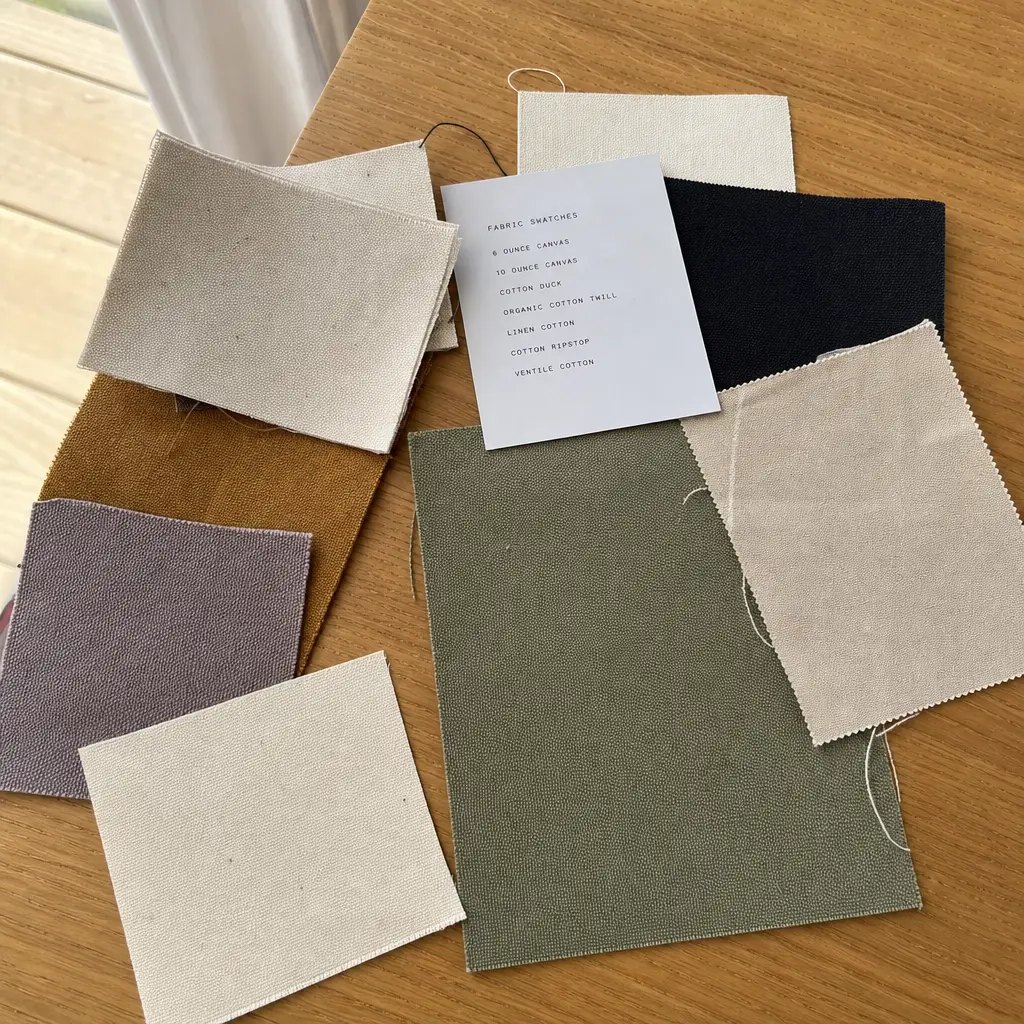
Fabric weight affects retail feel, print clarity, sewing strength, carton weight, freight cost, and the way the backpack hangs when worn. For many bookstore programs, 180-240 GSM cotton or 6-8 oz cotton canvas is a practical range. It is sturdier than very light promotional cotton without making every carton expensive to move.
Lighter cotton, such as 120-150 GSM, may be acceptable for low-cost handouts, but it can look thin and may distort under a large print. If the backpack is sold as merchandise, buyers usually need a more substantial hand feel. Heavier cotton, such as 260-300 GSM or 10 oz canvas, can work for premium programs, but it often needs stronger cord, reinforced anchors, adjusted stitch settings, and lower carton quantities.
Color is part of the fabric decision. Natural cotton can show seed flecks and a warmer base tone. Dyed cotton can support school colors, but dark shades often need an underbase for light logos. For licensed marks, approve color on the actual fabric, not only on a screen proof.
- 120-150 GSM: low-cost promotional use with higher transparency risk.
- 180-240 GSM: balanced bookstore range for retail and orientation programs.
- 260-300 GSM: firmer hand feel with higher cost and carton weight.
- Natural cotton: approve acceptable seed flecks and base shade variation.
- Dyed cotton: confirm lab dip, stock shade, colorfastness, and underbase need.
Match Decoration to Artwork
Screen printing is usually the most efficient choice for wholesale cotton drawstring backpacks with one to three solid school colors. It is repeatable, cost-effective, and durable when ink type, underbase, mesh, and curing are controlled. It is a strong fit for bookstore logos, campus marks, and simple orientation artwork.
Transfers are useful when the artwork has gradients, sponsor names, small type, or many department versions. They can hold detail, but buyers should check edge feel, gloss, flexibility, cracking, and whether the transfer makes the front panel feel stiff. A large transfer on soft cotton may not match the intended product feel.
Embroidery can look premium, but it is not ideal for every cotton backpack. Dense stitching can pucker flexible cotton, especially on a large crest or mascot. It works better for small marks, patches, or higher-price programs where decoration size is controlled.
- Use screen print for solid logos and repeatable wholesale runs.
- Use water-based ink only after opacity and wash behavior are tested on the chosen fabric.
- Use plastisol or another opaque system carefully on dark cotton, with curing checks.
- Use transfer decoration for full-color art, many versions, or small text.
- Use embroidery or patches for small premium marks, not large flexible front graphics.
Make Placement Measurable
A logo placement guide should be a production instruction. The factory needs artwork size, top margin, horizontal centerline, bottom clearance, and measurement references. Without this, small shifts during cutting, printing, sewing, and pressing can become visible when backpacks are displayed side by side.
For standard centered front prints, a tolerance such as +/-5 mm is often practical if the supplier confirms capability. Very small artwork may require tighter visual control, while oversized casual graphics may allow more. The PO should state that measurements are taken after sewing and pressing because that is the product the bookstore receives.
Many backpacks are printed on cut panels before sewing. A panel can be printed correctly, then shift slightly after seam take-up. For licensed university marks, final sewn-bag appearance should be the approval standard. Ask the supplier how it aligns artwork to pattern and how final QC checks placement.
- State artwork width and height in millimeters.
- Define distance from finished drawcord channel to top of print.
- Define horizontal centering from sewn side seams or finished centerline.
- For tall artwork, define bottom margin from the finished bottom seam.
- Use the same placement method for sample review, inspection, and reorders.
Control Labels and Barcodes
The front logo is only one part of a bookstore-ready backpack. A retail program may include a woven side label, inside care label, hang tag, barcode sticker, price label, polybag warning, and carton mark. These items enter production at different stages, so late approval can delay sewing, packing, or shipment.
Side labels should be approved before sewing. Confirm size, fold type, insertion side, seam allowance, and whether small type is readable when woven. Inside labels may need fiber content, care instructions, country of origin, importer information, or internal SKU data, depending on the buyer’s market and policy.
Barcodes are operational controls. Confirm barcode type, SKU, size, placement, and whether the code must scan through a polybag. If similar navy, black, or natural bags have different department logos, barcode and carton-mark accuracy becomes as important as print quality.
- Front logo: approve scale, color references, method, position, and tolerance.
- Side label: confirm size, fold, seam allowance, insertion side, and readability.
- Inside label: verify required product and compliance text.
- Hang tag: define attachment method, product name, price field, and version data.
- Barcode: scan the sample and match it to SKU, color, logo version, and packing.
- Carton mark: match PO, department, quantity, destination, and SKU.
Quote MOQ by Version
Factories plan production by version, not simply by total quantity. Body color, logo design, print colorway, side label, hang tag, barcode SKU, and packing method can each create setup or sorting work. A 3,000-piece order with one natural body and one logo is not the same as 3,000 pieces split across six departments and three body colors.
Efficient custom cotton drawstring backpack production often begins around 500-1,000 pieces per body color and logo version, but that range depends on fabric availability, decoration, and factory capacity. Stock blank backpacks may support smaller runs, though they give the buyer less control over GSM, shade, cord, reinforcement, and label placement.
Ask suppliers to quote scenarios before locking the buy. Compare one design on one body color, three department designs on one body color, and several designs across multiple colors. The buyer can then decide whether versioning is worth the extra setup, sample, sorting, and barcode control.
- Quote MOQ per body color, not only total units.
- Quote setup per logo, screen, transfer artwork, label, and hang tag.
- Group department versions around shared body colors when possible.
- Expect custom-dyed fabric to carry higher MOQ and longer lead time.
- Separate unit price from setup, packing, and freight assumptions.
Separate the Cost Drivers
Two supplier quotes may look close while covering different products. One may include a thin natural cotton bag, one-color print, and bulk packing. Another may include heavier dyed cotton, reinforced corners, woven label, care label, hang tag, barcode sticker, individual packing, SKU sorting, and inspection support. Procurement needs the quote broken into real cost drivers.
Base bag cost depends on finished size, fabric weight, body color, cord type, cord thickness, corner construction, and sewing complexity. Decoration cost depends on print method, print size, colors, setup, underbase, transfer film, ink, and curing. Branding cost includes labels, patches, hang tags, barcode stickers, and extra handling for licensed artwork approvals.
Packing and logistics should not be buried. Individual polybags protect the item and help ecommerce fulfillment, but they add labor, material, and carton volume. Bulk packing saves cost but may increase wrinkles and receiving time. Freight terms such as EXW, FOB, CIF, DDP, and domestic delivery should be compared with the same assumptions.
- Base bag: size, GSM, body color, cord, reinforcement, and sewing.
- Decoration: method, colors, print size, screens, transfers, underbase, and curing.
- Branding: side labels, care labels, patches, hang tags, and barcodes.
- Packing: bulk pack, polybag, belly band, inner carton, master carton, and sorting.
- Logistics: freight term, palletization, inspection, trucking, and destination charges.
Use Samples as Control Tools
A digital proof can approve layout, but it cannot prove that the backpack works. The pre-production sample should show actual fabric shade, print opacity, hand feel, cord closure, label placement, barcode scan, fold behavior, and overall retail presentation. For licensed marks, do not rely on a substitute sample if the bulk order will use different fabric or decoration.
Measure the sample and record the results. Photograph it flat, cinched, lightly filled, folded, and stacked. Check whether the print cracks, lifts, transfers, or creases across important artwork. Pull the cords, inspect the lower anchors, scan the barcode, and confirm the hang tag does not tangle with the drawcord.
Revision comments should be measurable. Replace vague notes such as move logo down with a new top-margin dimension. Replace color is off with a Pantone, swatch, or approved sample reference. Specific sample comments reduce back-and-forth and create a better inspection standard.
- Confirm fabric weight against the quoted production spec.
- Measure finished size and logo placement from sewn references.
- Check print adhesion, transfer edge lift, cracking, and hand feel.
- Review cord length, knot security, channel movement, and corner reinforcement.
- Scan barcode and verify SKU, logo version, body color, label, and packing mockup.
Set QC Before Production
Quality control belongs in the PO before cutting, printing, and sewing begin. Bookstore shipments can fail for preventable reasons: wrong logo height, dirty fabric, loose threads, weak cord anchors, incorrect barcodes, mixed SKUs, or cartons that are too heavy for receiving. Inspection should cover both the product and the operational details.
For the bag itself, define checks for finished size, fabric shade, fabric defects, seam strength, cord pull, corner reinforcement, print adhesion, print position, and trimming. A common finished-size tolerance might be +/-10 mm, and a common centered-logo tolerance might be +/-5 mm, but both should be confirmed with the factory and the approved sample.
Packing QC is equally important when multiple departments or events share similar bags. Carton checks should confirm body color, logo version, barcode, hang tag, quantity, packing list, and carton label. Approved mixed cartons are fine when intentional; accidental mixing creates receiving delays and inventory errors.
- Inspect finished size against sample and PO tolerance.
- Inspect logo centerline, top margin, scale, and color.
- Reject missing ink, smears, severe pinholes, underbase show-through, and wrong artwork.
- Check seam closure, loose threads, bottom corners, and cord anchors.
- Verify barcode, SKU, department, quantity, packing list, and carton mark.
- Review shade consistency across cartons, especially for dyed cotton or multiple fabric lots.
Plan Packing by Destination
Packing is a sourcing decision, not a last-minute line item. A bookstore retail SKU may need neat folding, hang tags, visible barcodes, and cartons separated by SKU. An orientation event may need bulk cartons sorted by department or campus location. Ecommerce fulfillment may need individual protection and a consistent fold size.
Individual polybags protect cotton from moisture, dust, and handling marks, but some universities prefer reduced plastic. Paper belly bands, kraft sleeves, or no individual bag can work if the receiving team accepts more wrinkles and the print is not damaged by carton pressure. Put plastic-reduction rules in the RFQ before the factory builds the quote.
Carton planning should reflect fabric weight and receiving limits. Heavy cotton packed too densely can make cartons awkward to move and can crease the print. Define pieces per carton, gross weight limit, carton dimensions, moisture protection, carton marks, and whether cartons must be sorted by delivery location.
- Retail shelf: individual fold, hang tag or barcode, clean presentation, carton by SKU.
- Event handout: bulk pack by design, department, location, or delivery sequence.
- Online fulfillment: protective packing, scan-ready barcode, consistent fold, and low wrinkle risk.
- Plastic reduction: discuss paper band, kraft sleeve, recycled-content polybag, or buyer rules.
- Carton control: define pieces per carton, gross weight, dimensions, moisture liner, and label format.
Specification comparison for buyers
| Spec decision | Recommended option | When it fits | Buyer risk to check |
|---|---|---|---|
| Logo placement | Front center panel measured from finished sewn references. On common 34 x 42 cm or 35 x 45 cm bags, a supplier may propose a safe print area around 220 x 260 mm or 240 x 280 mm, but it must be confirmed from the actual pattern. | Retail bookstore SKUs, orientation kits, department merchandise, alumni events, campus tours, and licensed school marks that must stay readable when folded, cinched, stacked, or worn. | Artwork too high can enter the gathered channel. Artwork too low can crease at the bottom fold or sit near cord-anchor stress points. |
| Fabric weight | 180-240 GSM cotton or 6-8 oz cotton canvas for most bookstore programs; heavier 260-300 GSM or 10 oz canvas for premium items when cost and carton weight allow. | 500-5,000 piece programs balancing retail hand feel, print stability, freight cost, and normal student use. | Quotes that only say cotton may hide a thin promotional fabric. Heavier canvas may require upgraded cord, stronger anchors, and fewer pieces per carton. |
| Decoration method | Screen print for 1-3 solid colors; transfer for full-color artwork or many versions; embroidery or patches for small premium marks. | School logos, department names, mascot graphics, orientation art, alumni marks, and licensed brand programs with controlled approvals. | Check opacity, Pantone match, curing, transfer edge lift, embroidery puckering, and small text readability on the actual fabric. |
| MOQ structure | Quote by body color, logo design, print colorway, label version, barcode SKU, and packing method, not only total order quantity. | Bookstore seasonal buys, multi-department programs, distributor orders, and reorderable SKUs. | A large total order split into many versions can create setup charges, sorting labor, shade variation, barcode complexity, and mixed-carton risk. |
| Sample approval | Pre-production sample using the intended fabric, body color, cord, print process, label set, fold, barcode, and representative carton mark. | Licensed marks, retail sale, custom-dyed cotton, private label details, ecommerce fulfillment, and repeat programs. | Photo approval can miss print hand feel, logo skew, cord pull, label placement, fabric shade, and barcode scan issues. |
| Packing plan | Bulk pack, individual polybag, paper belly band, or SKU-sorted cartons based on retail, event, or fulfillment use. | Bookstore shelves, online orders, orientation handouts, department distribution, and campus delivery points. | Poor packing can cause wrinkles, receiving delays, wrong barcode application, heavy cartons, or mixed designs in the wrong location. |
Buyer checklist before sampling
- Define finished backpack size, fabric GSM or ounce weight, body color, cord material, cord diameter if available, corner reinforcement, seam construction, and intended channel: retail sale, online fulfillment, orientation stock, event handout, or department distribution.
- Provide vector artwork with Pantone or brand color references, university licensing instructions, maximum print size, approved logo scale, and a placement diagram measured in millimeters.
- Specify logo placement from finished sewn references: distance from drawcord channel to top of print, horizontal centering from side seams, and bottom margin for tall artwork.
- Choose decoration by artwork: screen print for solid school marks, transfer for full-color or versioned graphics, embroidery or patches only where the decoration size suits flexible cotton.
- Confirm approvals needed for front logo, side woven label, inside care label, hang tag, barcode sticker, polybag warning, carton mark, and department assortment.
- Require a pre-production sample with intended production materials and the same placement method, not a substitute sample made only for speed.
- Quote MOQ and price by body color, logo version, print colorway, label version, packing method, and SKU.
- Request cost separation for blank bag, decoration, setup, labels, hang tags, barcodes, packing, cartons, sample fees, inspection support, palletization, trucking, and freight terms.
- Define QC criteria for finished size, logo position, print color, print adhesion, seam strength, cord pull, shade tolerance, loose threads, fabric defects, label placement, barcode accuracy, and carton labels.
- Set packing rules for fold size, barcode position, carton quantity, gross weight limit, carton dimensions, moisture protection, carton marks, and sorting by SKU, department, event, or delivery location.
Factory quote questions to send
- What exact fabric weight are you quoting in GSM or ounces, and is it stock cotton, greige fabric to be dyed, organic cotton, recycled-content cotton blend, or custom woven fabric?
- What is the finished bag size, what finished-size tolerance applies, and what safe print area remains after the drawcord channel, side seams, bottom seam, and cord anchors are sewn?
- Which print method is included, how many colors are included, what ink or transfer type will be used, and what are the setup charges per logo, screen, or transfer artwork?
- For dark or dyed cotton, will the logo require an underbase, and how will you control opacity, Pantone match, curing, and hand feel on the final fabric?
- What is the MOQ per body color, logo design, print colorway, label version, hang tag version, barcode SKU, and packing format?
- Can the pre-production sample be made with the intended production fabric, body color, cord, print process, side label, care label, fold, barcode, and representative carton mark?
- What logo placement tolerance will your QC team inspect, and will measurements be taken from finished sewn side seams, finished drawcord channel, and finished bottom seam?
- How will you test seam strength, cord pull, print adhesion, curing, transfer edge lift, colorfastness, shrinkage, fabric shade, loose threads, barcode accuracy, and carton labeling before shipment?
- What is the lead time after sample approval, which steps are on the critical path, and what buyer approvals or supplier materials can delay the schedule?
- Are cartons packed by SKU, body color, department, event, delivery location, or approved mixed assortment, and what carton dimensions, gross weight, pieces per carton, and carton markings are expected?
Quality-control points to confirm
- Finished bag width and height should match the approved sample and PO tolerance. A common target is +/-10 mm, but the buyer and factory should confirm what is realistic for the pattern and fabric.
- Logo centerline should align with the finished bag centerline. For standard front prints, +/-5 mm is often used as a working tolerance when the factory confirms capability.
- Top of artwork should remain below the gathered drawcord zone when the backpack is pulled closed; review the sample flat, cinched, lightly filled, folded, and stacked.
- Pantone or brand color should be checked against an approved physical sample on the actual cotton body color, especially for natural, black, navy, maroon, forest green, or custom-dyed fabric.
- Screen print should pass light rub and tape checks after curing; the print should not crack during normal folding for retail packing.
- Heat transfer edges should be checked for lifting, gloss mismatch, heavy hand feel, adhesive bleed, and cracking after folding and manual flexing.
- Embroidery or patch decoration should be checked for puckering, backing irritation, loose threads, skipped stitches, and distortion on the flexible cotton panel.
- Cord length should be even left to right, with no frayed ends, broken knots, sharp tips, or slipping through the channel during manual pull testing.
- Bottom corners and cord anchor points should be reinforced with bar tacks, folded channel stitching, or fabric patches appropriate to fabric weight and expected load.
- Fabric should be free of major stains, holes, oil marks, weaving defects, unacceptable shade variation, and excessive seed flecks beyond the approved natural-cotton standard.