The Bookstore Buying Problem
Wholesale cotton drawstring backpacks for university bookstores sit in a difficult middle ground. They are simple enough to be treated like promotional bags, but visible enough to be judged like retail merchandise. A student may buy one because it carries the campus logo, then use it for a bottle, hoodie, tablet, lab manual, or game-day gear. That means the product has to look clean on the shelf, scan correctly at receiving, and survive practical use beyond the first event.
The common procurement mistake is comparing quotes from a thumbnail photo and a unit price. Two suppliers can both write cotton drawstring backpack, yet one quote may be based on 6 oz cotton, basic side seams, stock cord, and bulk packing, while another includes 10 oz canvas, bar-tacked cord points, individual retail packing, barcode labeling, and a pre-production sample. Those are not comparable offers.
A stronger RFQ controls the product before price negotiation starts. It should name the fabric weight, finished size, cord system, print method, logo placement, reinforcement, labels, packing, inspection plan, and production timeline. For B2B procurement buyers, the goal is not to overcomplicate a simple item. The goal is to remove ambiguity so the supplier cannot meet the letter of a vague quote while missing the bookstore's operational needs.
- Best use: campus stores, orientation programs, alumni events, athletics merchandise, department retail programs, student organization fundraisers.
- Main sourcing risk: a low quote based on thin fabric, weak cord attachment, poor print opacity, or bulk packing that does not support retail receiving.
- Inspection focus: fabric weight, finished measurements, print accuracy, seam strength, drawcord function, labeling, carton sorting, and odor control.
- RFQ goal: make every supplier quote comparable before sampling, so procurement can evaluate true landed cost per sellable unit.
Define The Product Before The RFQ
Before asking for pricing, the buying team should decide what the backpack is meant to do. A welcome-week giveaway can tolerate a lighter specification than a full-price bookstore SKU. A bookstore retail item also needs better shelf presentation, tighter logo placement, and cleaner packaging than a one-day event bag. Procurement should document the intended retail price point, expected use, logo version count, and receiving requirements before sending the request to factories.
Finished size matters more than many buyers expect. A bag that looks standard in a photo may be too narrow for a folder, too short for a sweatshirt, or too shallow after the top channel is pulled closed. Ask suppliers to quote a finished size such as 35 x 45 cm or 14 x 18 inches, and state whether a bottom gusset is required. If the bookstore expects the backpack to carry a 13-inch laptop sleeve or full-size textbook, that needs to be tested with the sample, not assumed from the product name.
The specification should also define the selling context. Will the bag hang from a peg, sit folded in a bin, ship in ecommerce orders, or be packed into orientation kits? That answer affects hangtag placement, barcode location, folding method, and whether individual packaging is necessary. A product that is easy for the factory to bulk pack may be frustrating for the campus store to count, scan, and merchandise.
- Set a target finished size and tolerance before pricing, not after the first sample arrives.
- Name the expected contents so the supplier understands load requirements and reinforcement needs.
- Decide whether the item is a retail SKU, orientation kit item, alumni gift, department order, or mixed-use program.
- Confirm whether the bookstore needs individual barcode labels, hangtags, care labels, and country-of-origin labels.
- Ask for photos or drawings showing the front panel, top channel, lower cord points, label placement, and packed unit.
Fabric Weight And Cotton Specification
Cotton drawstring backpacks are usually quoted in ounces per square yard, GSM, or both. For bookstore retail, 8 oz to 10 oz cotton canvas is often the balanced range. It feels more substantial than a thin giveaway bag, accepts screen print cleanly, and still gathers at the top without excessive stiffness. A 6 oz fabric can work for a budget orientation item, but it should be treated as a lower-duty choice and reinforced carefully at stress points.
A premium bookstore version may use 10 oz to 12 oz canvas. The added weight improves hand feel and shelf presence, but it also increases freight, sewing bulk, and drawcord resistance. Heavy canvas can make the top channel bunch unevenly, especially when the channel is narrow or the cord is too soft. Do not approve a premium fabric only from a swatch. Review a finished backpack using the actual channel construction and cord.
Cotton type and finish also affect the final product. Natural cotton may show flecks, seed specks, or shade variation, which can suit a natural merchandise program but may interfere with fine logo details. Bleached cotton provides cleaner contrast but can feel less organic. Dyed cotton creates shade matching questions and may have higher MOQs. If the university has sustainability or restricted-substance requirements, ask for supporting documentation early, because those requirements can change fabric sourcing and lead time.
- 6 oz, about 200 GSM: suitable for lower-cost events and welcome kits, but inspect seam slippage and print show-through.
- 8 oz, about 270 GSM: a practical retail starting point for university bookstore cotton backpacks.
- 10 oz, about 340 GSM: stronger body, better perceived value, and often the safest mid-premium choice.
- 12 oz, about 410 GSM: premium feel, but verify closure, sewing bulk, carton weight, and freight impact.
- Natural cotton: expect visible flecks unless the standard says otherwise; approve the look against the printed logo.
- Dyed cotton: confirm shade tolerance, colorfastness expectations, MOQ, and whether cords are dyed to match or contrast.
Construction Details That Prevent Returns
The highest failure area is usually the lower side corner where the drawcord becomes a shoulder strap. If the cord is only caught inside a basic side seam, the load can pull the stitching open. Better construction spreads force through reinforced triangular tabs, folded fabric patches, bar-tacks, or eyelets. For cotton bookstore backpacks, stitched fabric reinforcement often fits the natural-material look better than shiny metal hardware, but either method must be tested.
The top channel is another functional risk. It should be wide enough for the selected cord and sewn evenly so the bag opens and closes smoothly. If the channel is too tight, students pull harder, which stresses the seam and causes uneven cord length. If it is too loose or poorly aligned, the top can look wavy and unfinished. The sample should be opened and closed repeatedly with realistic contents inside the bag.
Internal finishing matters for retail quality. Overlocked seams reduce fraying cotton fibers, and clean trimming prevents loose threads from catching on notebooks, bottles, or hangtags. Stitch density should be specified instead of described as strong stitching. A common target is 8-10 stitches per inch, but the final requirement should match fabric weight and construction. Stress points need back-tacks or bar-tacks that are visible and consistent across the production lot.
- Use reinforced lower cord points for any bag expected to carry books, bottles, or apparel.
- Specify stitch density, seam allowance, overlock finish, and back-tack points in the RFQ.
- Match cord diameter to channel width; a thick cord in a narrow channel will bind.
- Avoid very thin cords on heavier canvas because they can cut into the fabric corner under load.
- Inspect inside seams, not only the front panel, because hidden fraying often becomes the first user complaint.
- Ask the factory whether reinforcement is included in the quoted price or treated as an upgrade.
Logo Decoration And Color Control
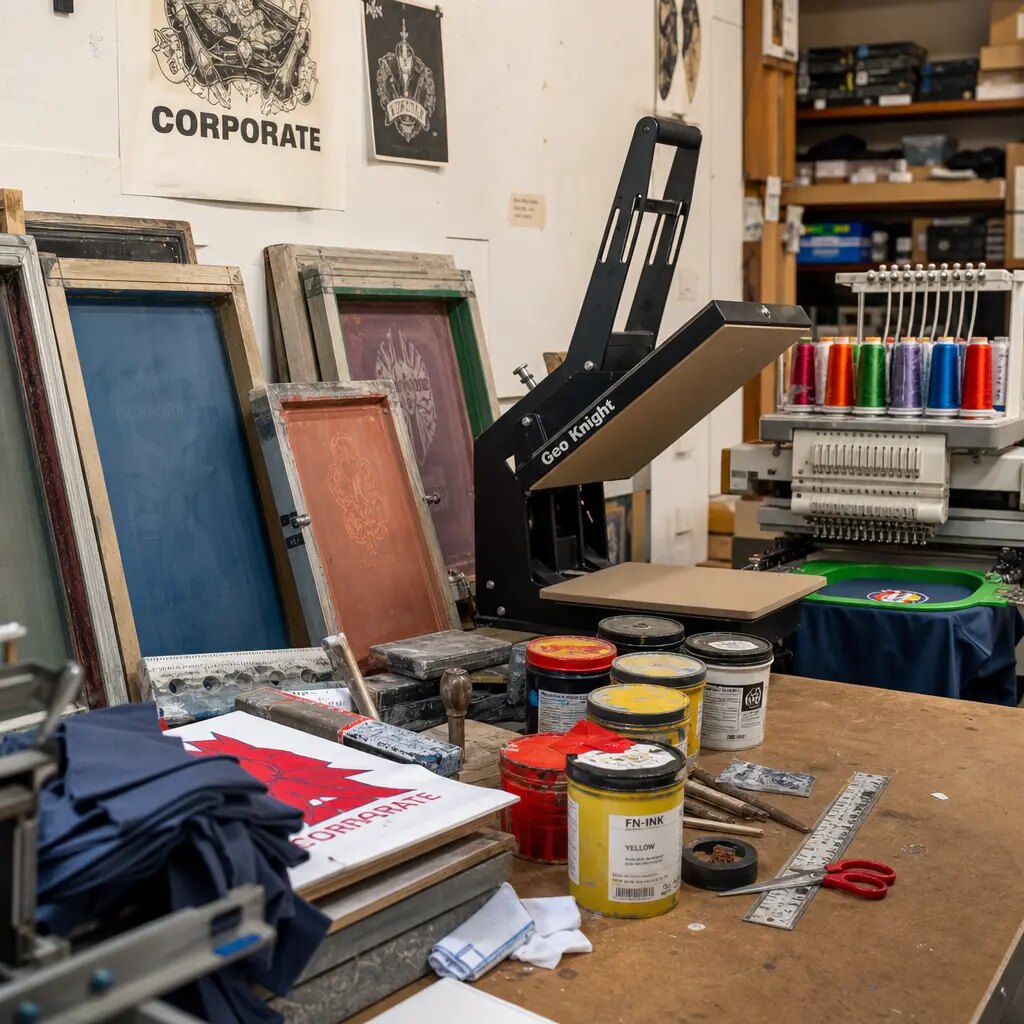
Most university bookstore logos use solid colors, mascot marks, department names, or event graphics, so screen printing is usually the practical default. It gives good opacity on cotton, handles repeat orders well, and keeps unit cost reasonable at volume. The print quote should state number of colors, print size, print position, ink type if relevant, and whether setup charges are included. A one-color front print and a two-color mascot print are different cost structures.
Heat transfer can be useful for gradients, full-color designs, small runs, or many department logos under one buying program. The procurement risk is hand feel, edge durability, and long-term adhesion. Embroidery can look premium, but it adds cost and may pucker lighter cotton. For drawstring backpacks, embroidery also needs backing that will not scratch contents or feel bulky through the fabric.
Color approval should happen on the actual cotton, not only on a monitor, paper proof, or coated PMS book. Natural cotton changes perceived ink color, and textured canvas can reduce sharpness in small text. Ask for a strike-off or decorated sample when the logo is important to brand standards. The approval should include print placement tolerance, usually measured from side seams, top edge, or centerline, and should define what counts as off-center.
- Screen print: best for bold university marks, repeat orders, and cleaner PMS control at volume.
- Heat transfer: useful for detailed artwork or small mixed designs; inspect edge adhesion and hand feel.
- Embroidery: premium option, but test puckering, backing comfort, and cost impact before approval.
- Print tolerance: define placement tolerance, commonly within 3 mm for centered front logos.
- Opacity check: inspect light ink on natural or dark cotton under consistent lighting.
- Durability check: rub, fold, and lightly scratch the printed area after curing before approving bulk.
MOQ, Price Breaks, And Quote Comparability
MOQ is rarely one simple number for wholesale cotton drawstring backpacks. The real minimum depends on fabric color, fabric weight, print design, cord color, label package, and packing method. A supplier may say the MOQ is 1,000 pieces, but that may mean 1,000 pieces in one fabric color with one logo. If the bookstore wants four department logos at 250 pieces each, the factory may need separate screens, separate print runs, extra sorting, and additional carton labeling.
Procurement buyers should ask suppliers to break out the price logic. Request pricing for the base bag, decoration, setup charges, label or hangtag costs, packing method, and any low-quantity surcharge. This prevents a quote from looking attractive at first and then growing after artwork is submitted. It also helps the buyer compare a direct factory quote against a trading company quote without missing hidden charges.
Repeat order planning is part of MOQ control. If the bookstore expects to reorder before orientation or homecoming, ask the supplier what will remain stable: fabric source, print screens, cord color, label format, and carton markings. A good reorder file should include the approved sample, artwork version, PMS reference, measurement chart, packing instruction, and inspection standard. Without that file, a repeat order can drift even when placed with the same supplier.
- MOQ by fabric color: dyed cotton often requires a higher minimum than natural cotton.
- MOQ by print design: each logo version may need separate setup, inspection, and carton sorting.
- MOQ by cord color: custom dyed cords can create a separate minimum or surcharge.
- MOQ by packing: individual retail bags, hangtags, and barcode labels add handling time and cost.
- Price break review: compare 500, 1,000, 2,500, and 5,000 pieces only after the spec is identical.
- Reorder planning: keep one signed approved sample with the buyer and one with the factory.
Sample Approval That Actually Tests Production
A pre-production sample should not be treated as a visual mockup. For wholesale cotton drawstring backpacks, it should prove the actual material, construction, decoration, labeling, and packing assumptions. The sample should use the quoted fabric weight, actual cord type, final print method, intended label position, and intended folding method. If the supplier uses available sample-room material, mark it as a reference sample only and do not release bulk production from it.
The sample review should be practical. Load the backpack with realistic campus contents, pull the cords open and closed, inspect the lower corners, and look inside the seams. Fold the printed area, rub it with a dry white cloth, and check whether natural cotton slubs affect logo readability. Measure the width, height, channel position, cord length, and print placement. A sample that photographs well but fails handling is not ready for production.
Sample approval should also lock commercial details. Confirm whether the approved sample matches the quoted price, or whether changes such as heavier fabric, extra bar-tacks, wider cord, or individual packing increase cost. Procurement should record approvals in writing so the factory, importer, and bookstore team are working from the same standard. This is especially important when multiple campus stakeholders approve artwork but procurement owns the purchase order.
- Measure finished width, height, bottom gusset if any, cord length, and logo placement from fixed reference points.
- Weigh the fabric or request a GSM test report for the actual production cloth.
- Check whether the top closes evenly or leaves an awkward gap when lightly filled.
- Confirm label position, care label content, country of origin, hangtag hole, barcode placement, and folding method.
- Review the approved sample against the quote to catch cost changes before bulk production.
- Keep approval records for fabric shade, cord color, print colors, measurements, labels, and packing.
Quality Inspection Checklist For Bulk Orders
Final inspection should separate critical, major, and minor defects before the order ships. Critical defects include mold, severe contamination, unsafe sharp hardware, wrong logo, wrong university mark, or shipment of the wrong SKU. Major defects include open seams, broken stitches, badly off-center print, severe shade mismatch, wrong fabric weight, missing labels, incorrect packing, or drawcords that do not function. Minor defects may include small loose threads or slight natural cotton slubs within the approved standard.
AQL levels depend on buyer policy, but the standard must be agreed before production starts. For bookstore retail, inspection should cover both function and presentation. A bag can pass a quick front-view check and still fail when the drawstring jams, the cord pulls out, the print cracks, or the carton contains mixed department logos without clear separation. The inspection plan should include product checks, measurement checks, packing checks, and carton count verification.
Quality control should begin before final inspection when possible. Ask for production photos at fabric inspection, cutting, printing, sewing, trimming, and packing. These photos do not replace third-party inspection, but they can catch obvious problems early. For example, an off-center print layout or wrong cord color is cheaper to correct before thousands of pieces are sewn and packed.
- Fabric: verify weight, shade, stains, holes, weaving faults, unacceptable slubs, odor, and dampness.
- Size: measure finished dimensions against the approved tolerance and record out-of-tolerance pieces.
- Print: inspect PMS match, registration, opacity, curing, cracking, tackiness, rub resistance, and placement.
- Sewing: check stitch density, skipped stitches, open seams, loose back-tacks, overlock, and needle damage.
- Function: open and close cords repeatedly; test lower cord attachment with moderate pulling force.
- Labels: verify barcode, SKU, color name, care label, country of origin, hangtag, and price ticket if required.
- Packing: count units, verify inner packs, inspect carton marks, compare carton contents to the packing list.
- Documentation: record defect photos, sample size, carton numbers checked, measurement results, and corrective action.
Packing, Labeling, And Retail Receiving
University bookstores often receive many seasonal items at the same time, so packing quality affects more than product presentation. Poor carton marking can slow receiving, create inventory errors, and delay shelf placement. The RFQ should state whether each backpack needs an individual polybag, recycled paper band, hangtag, barcode sticker, price ticket, size or color label, and inner pack label. If the buyer wants reduced plastic, the supplier still needs a method to protect cotton from carton dust and moisture during transit.
One SKU per carton is usually the cleanest option for bookstore receiving. It makes counting faster, reduces wrong-shelf placement, and simplifies shortage claims. If mixed cartons are necessary, the buyer should require inner separation, a packing map, and carton labels showing every SKU inside. Mixed cartons may reduce freight handling slightly, but they can create labor cost and receiving confusion if not controlled.
Carton planning also affects landed cost. Heavy canvas backpacks can make cartons dense, while bulky cords can waste space if folded poorly. The packing list should identify quantity per carton, carton dimensions, gross weight, net weight, SKU, color, logo version, purchase order number, and carton sequence. Barcode readability should be checked after packaging is applied, because a barcode placed under a fold or textured paper band can fail at the receiving desk.
- Use one SKU per carton when receiving speed and inventory accuracy are more important than carton optimization.
- For mixed cartons, require inner separation, a visible packing map, and carton labels listing each SKU and quantity.
- Limit carton weight to a level the receiving team can handle safely and consistently.
- Confirm barcode readability after polybag, paper band, hangtag, or price-ticket application.
- Add moisture protection for ocean shipments, especially with natural cotton fabric.
- Require carton marks to include PO number, SKU, color, logo version, quantity, carton number, gross weight, and destination if needed.
Lead Time And Production Risk
The production clock should start only after artwork, sample, fabric, labels, packing, and deposit are approved. A custom cotton backpack schedule may include fabric preparation, fabric inspection, cutting, printing, curing, sewing, trimming, final inspection, packing, and export booking. Delays often happen at artwork approval, fabric dyeing, print color correction, barcode label confirmation, and carton booking. These risks are manageable when the RFQ requests a dated schedule rather than a vague delivery promise.
Campus selling seasons create fixed deadlines. Orientation, move-in week, homecoming, graduation, and holiday retail windows leave little room for late shipment. If an order uses custom dyed fabric, several department logos, special hangtags, or individual barcode labels, build extra approval time into the purchase plan. Every extra artwork version adds coordination work, even when the physical backpack is the same.
Shipping decisions should be made from carton dimensions and gross weight, not only from unit count. Cotton canvas can be weight-sensitive, while bulky packing can become volume-sensitive. Ask for estimated carton CBM before choosing air, courier, sea, or consolidated freight. Procurement should also clarify who is responsible for export documents, carton markings, inspection scheduling, and replacement timing if defects are found.
- Sample time: depends on fabric availability, print method, label components, and artwork readiness.
- Bulk production time: starts after approved sample, approved packing, and deposit, not after the first inquiry.
- Print curing time: should not be compressed, especially for heavy ink coverage or heat transfer work.
- Label approval: barcodes, hangtags, and price tickets can delay finished goods if provided late.
- Inspection timing: schedule final inspection before the shipping window becomes too tight for corrective action.
- Shipping plan: compare air, sea, courier, and consolidation only after carton dimensions and gross weight are known.
Specification comparison for buyers
| Spec decision | Recommended option | When it fits | Buyer risk to check |
|---|---|---|---|
| Main fabric weight | 8 oz to 10 oz cotton canvas, about 270-340 GSM | Daily campus retail use, bookstore logo programs, orientation merchandise, student organization sales | Too light can look promotional; too heavy can raise freight cost and make the drawcord closure stiff |
| Budget fabric choice | 6 oz cotton, about 200 GSM, with reinforced lower corners | Welcome kits, short-term event sales, low retail price points, bulk giveaways tied to admissions or orientation | Inspect seam slippage, print show-through, fabric skew, and shrinkage before approving bulk |
| Premium bookstore version | 10 oz to 12 oz canvas, about 340-410 GSM, with inside overlock and wider cord channel | Higher-margin campus merchandise, alumni gift sets, limited-edition bookstore collections | Confirm drawstring movement after washing, after print curing, and after loading with realistic contents |
| Logo decoration | Screen print for solid university marks; heat transfer for gradients, full-color art, or small runs | Most bookstore logos, mascot graphics, department marks, orientation designs, event artwork | Match PMS color on actual cotton, not only on a digital proof or coated paper reference |
| Cord system | Cotton cord 6-8 mm or flat cotton tape with bar-tacked bottom loops | Comfortable wear, natural-material positioning, retail-grade construction | Cord fraying, uneven cord length, weak attachment at lower side seam, and narrow channels that bind |
| Internal finish | Overlocked seams with 8-10 stitches per inch and back-tack at stress points | Bookstore SKUs expected to handle books, bottles, apparel, tech accessories, and repeated daily use | Loose threads inside the bag can be missed if inspection only checks the outer face |
| Labeling and compliance | Care label, country-of-origin label, SKU barcode, hangtag, and carton mark aligned to the purchase order | Retail receiving, inventory scanning, campus store planograms, online order fulfillment | Wrong labels can create receiving delays even when the product itself is acceptable |
| Packing method | Individual polybag or paper band by SKU, export carton with size, color, logo, PO, and carton count markings | Retail receiving teams need clean counting, fast shelf allocation, and reduced handling damage | Mixed colors or designs in cartons without a packing map slow receiving and create shortage disputes |
| Production route | Direct factory for custom fabric, print control, and repeat orders; trading company for mixed low-volume assortments | Direct factory suits controlled bookstore programs; trader suits assortment tests with several campus items | Compare sample accuracy, communication speed, inspection accountability, and who owns corrective action if goods fail |
Buyer checklist before sampling
- Define the finished backpack size, usable capacity, and target contents such as a laptop sleeve insert, textbook, water bottle, folded hoodie, or orientation packet.
- State cotton type, fabric weight in both oz and GSM, shrinkage tolerance, and whether natural, dyed, bleached, organic, recycled-content, or conventional cotton is required.
- Specify finished measurements, acceptable tolerance, cord length, channel width, bottom gusset if any, and whether measurements are taken flat or after light steaming.
- Provide logo artwork in vector format and specify print size, placement, PMS colors, ink opacity expectations, and acceptable color tolerance on actual cotton fabric.
- Set seam requirements including stitch density, overlock finish, reinforced lower corners, bar-tacks at cord attachment points, and back-tack at the top channel openings.
- Confirm whether care label, country-of-origin label, hangtag, barcode sticker, price ticket, inner pack label, and carton label are included in the quoted price.
- Approve a pre-production sample using actual bulk fabric, actual cord, actual print method, final label placement, and final packing components.
- Confirm MOQ by fabric color, print design, cord color, fabric weight, and packing format, because each change can create a separate production lot or setup charge.
- Require carton packing details including units per carton, gross weight, net weight, carton dimensions, SKU labels, barcode labels, carton sequence, and any drop-test requirement.
- Set AQL level, defect classification, measurement tolerance, and inspection sampling plan before production starts, not after the goods are finished.
Factory quote questions to send
- What exact fabric weight will be used, in both oz and GSM, and what tolerance should be expected after dyeing, washing, printing, and finishing?
- Is the quoted fabric greige cotton, natural cotton, bleached cotton, dyed cotton, recycled cotton blend, organic cotton, or canvas with chemical finishing?
- What finished backpack size is included in the quote, and are dimensions measured flat before sewing, flat after sewing, or after final pressing and packing?
- What cord material, diameter, weave, length, and color are quoted, and is the cord custom dyed or selected from available stock colors?
- Which print method is quoted, how many colors are included, what print area is included, and what setup, screen, film, or artwork charges apply?
- Will the pre-production sample use actual bulk fabric, actual bulk cord, actual label components, and the final decoration method, or only available sample-room material?
- What seam reinforcement is included at the lower cord corners, top channel openings, side seams, and any bottom gusset or patch area?
- What shrinkage, colorfastness, print rub, seam strength, or needle detection tests can be arranged if required by the bookstore or university procurement policy?
- How many pieces are packed per inner pack and per export carton, what is the estimated carton size and weight, and can cartons be labeled by bookstore SKU?
- Can the supplier pack one SKU per carton, and if not, how will mixed-SKU cartons be separated, counted, and marked for receiving?
Quality-control points to confirm
- Fabric weight should be verified by cutting a measured sample and weighing it, or by reviewing a reliable fabric test report, not judged by hand feel only.
- Finished size should stay within the approved tolerance, commonly plus or minus 1 cm for width and height unless a tighter retail tolerance is agreed.
- Print placement should be centered within the approved tolerance, commonly plus or minus 3 mm for retail-grade logo work on a front panel.
- PMS color should be checked under consistent lighting on actual cotton fabric, because natural cotton shade and fabric texture change perceived ink color.
- Print curing should be checked with rub, fold, and adhesion review, especially for heavy ink coverage, heat transfer edges, or dark ink on natural cotton.
- Seams should show consistent stitch density, no skipped stitches, no open seams, no needle cuts, and no loose back-tack at stress points.
- Drawstrings should run smoothly through the top channel and remain even after opening and closing the bag several times with light contents inside.
- Lower cord attachment should resist a practical pull test without seam tearing, stitch popping, fabric distortion, cord slipping, or eyelet deformation if eyelets are used.
- The backpack should be free of oil marks, needle stains, unacceptable fabric slubs, holes, mildew odor, damp packing, excessive lint, and loose threads.
- Labels should match the purchase order, including care label, country of origin, barcode, hangtag, price ticket, SKU code, color name, and logo version.