Define the Buying Use Case First
Cotton drawstring backpacks are simple products, but they are not all bought for the same job. A bag for a one-day conference giveaway can be lighter, cheaper, and bulk packed. A bag for an employee onboarding kit may need stronger cotton, better cord comfort, cleaner packing, and more consistent branding. A recruiting event bag, developer conference pack, customer gift, and retail add-on each create different requirements for fabric weight, stitching, logo durability, and carton handling.
Start the RFQ with the business purpose instead of a generic product name. Tell the supplier what will go inside the bag, how long the recipient is expected to use it, and whether the bag supports a fixed event date. This keeps the factory from quoting the lowest basic version when the real need is a more durable branded item. It also lets procurement separate must-have specifications from optional upgrades.
For repeat programs, add annual volume expectations and reorder frequency. If the same cotton drawstring backpack will be used every quarter for new hires or channel events, fabric repeatability and stable print color matter more than a one-time promotional buy. If the project is a single event with a hard deadline, stock material and simpler decoration may be the better commercial decision.
- State the use case: conference giveaway, onboarding kit, recruiting event, customer gift, developer conference, or retail bundle.
- List expected contents such as hoodie, notebook, bottle, charger, cables, stickers, or printed insert.
- Identify whether the order is one-time, seasonal, or a repeatable procurement SKU.
- Separate must-have requirements from upgrades the supplier can quote as alternates.
- Tell suppliers if late delivery would make the order unusable for the event.
Specify Cotton Fabric Without Ambiguity
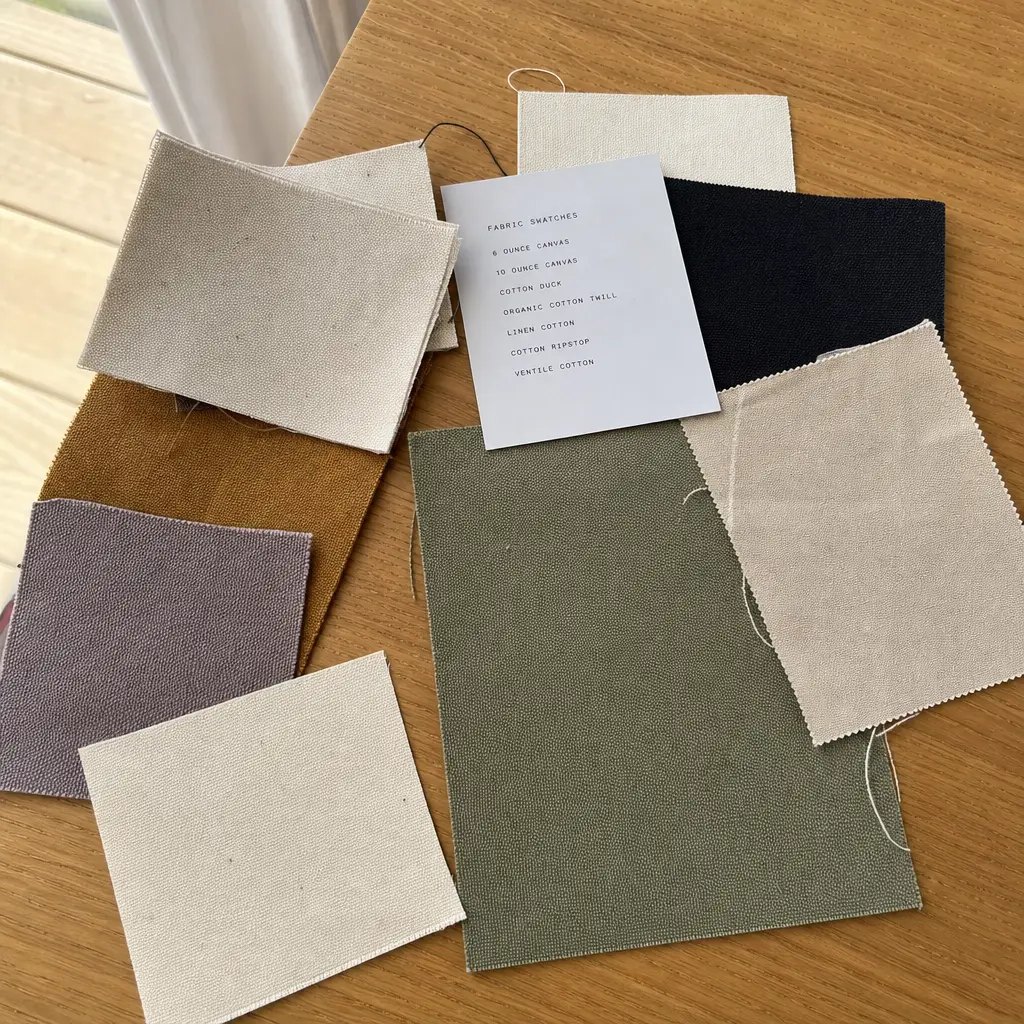
Fabric drives both cost and perceived value. Buyers often receive quotes using mixed terms such as 5 oz cotton, 200 GSM canvas, natural cotton, dyed cotton, or cotton blend. Those descriptions are not interchangeable. A useful RFQ should state the desired fabric weight, weave, color, and finish, then ask suppliers to confirm the actual weight after dyeing or finishing.
For light event use, 4 oz to 5 oz cotton may be acceptable when the bag carries paper materials, a T-shirt, or small giveaway items. For startup merch that may carry bottles, notebooks, chargers, or apparel, 6 oz to 8 oz cotton or cotton canvas is usually a safer range. Heavier fabric improves hand-feel and print appearance, but it can increase unit cost, carton weight, and freight cost.
Natural cotton can include shade variation, seed flecks, and small slubs. Some buyers like this look because it feels less synthetic; others see it as inconsistent. Bleached or dyed cotton gives a cleaner appearance, but introduces dye-lot control and possible MOQ changes. If brand color is important, ask whether the supplier is using stock fabric or custom dyeing, and confirm the acceptable color tolerance before ordering.
- Request both ounce and GSM references where possible, for example 6 oz or approximately 200 GSM.
- Ask whether the quoted GSM is before or after finishing, dyeing, or washing.
- Clarify whether natural flecks, slubs, and shade variation are acceptable.
- Ask if fabric is stock, mill-program, or custom dyed to order.
- Quote organic or recycled cotton as separate options with any available documentation requirements.
Control Size, Cord, and Construction
Small construction details determine whether the finished bag feels useful or disposable. The RFQ should specify finished dimensions, not only cut panel size. A 34 x 42 cm bag may be fine for a lightweight event pack, while a 38 x 45 cm bag is more practical for hoodies, notebooks, or mixed onboarding contents. Larger dimensions change fabric consumption, carton count, and freight assumptions.
Cord quality is another area where low quotes can hide compromises. Thin cord reduces cost but can feel uncomfortable and increase stress at the bottom corners. Thicker round cotton cord or flat cotton tape feels more substantial and distributes weight better. State the cord material, diameter or width, color, length, and finishing method. If the cord must match the fabric or brand color, do not leave that to assumption.
Reinforcement should match the intended load. Bottom corners carry concentrated stress because they anchor the cord and support the packed contents. For heavier kits, ask for bartacks, reinforcement patches, or stronger seam construction. Labels, side tags, hang loops, or care labels should be included in the original RFQ because they affect sewing steps and sometimes MOQ.
- Specify finished size, measured flat, with a tolerance such as +/- 1 cm.
- State whether measurements include the drawstring channel or fold-over top.
- Define cord type, diameter or tape width, color, and drawcord length.
- Require reinforced corners or bartacks for bottles, notebooks, chargers, or heavier kits.
- Clarify seam finish: lockstitch, overlock, double stitching, reinforcement patch, or bound seams.
- Include side labels, care labels, woven tags, or hang loops before sampling begins.
Choose Decoration by Artwork and Use
Screen printing is usually the best value for clean startup logos, icon marks, and one to three solid colors. It is efficient for larger quantities and works well on cotton when the artwork is not too fine. The RFQ should specify print size, placement, color count, Pantone references, and whether the print is on one side or both sides. A phrase like 'logo included' is not enough for accurate comparison.
Cotton fabric affects print appearance. Natural cotton may mute bright colors, and dark dyed cotton may need an underbase for opacity. An underbase can change cost, curing time, and hand-feel. If the artwork includes gradients, small type, detailed illustrations, or QR-style elements, ask whether heat transfer is safer than screen printing. Heat transfer can reproduce detail, but it must be tested for adhesion and surface feel on the actual cotton.
Avoid approving decoration from a digital mockup alone. A strike-off on production fabric shows color, opacity, edge sharpness, registration, cracking risk, and hand-feel. For launch-critical orders, this approval checkpoint prevents costly rework after bulk printing begins.
- Use screen printing for solid-color logos and simple front-panel branding.
- Use heat transfer for gradients, full-color artwork, or very fine details.
- Provide vector artwork, Pantone colors, print size, and placement from fixed seams.
- Ask whether dark fabric needs an underbase and how it affects cost and feel.
- Approve a strike-off on actual production fabric before bulk decoration.
Compare MOQ and Price Breaks Properly
MOQ depends on more than factory preference. It can be driven by fabric availability, dye-lot minimums, cutting efficiency, printing setup, sewing line planning, label sourcing, and packing labor. Stock natural cotton with a standard size and one-color print usually supports lower trial quantities than custom dyed fabric, special cord, woven labels, two-sided print, or individual retail packing.
Procurement teams should request price breaks instead of one number. A startup may begin with 500 or 1,000 pieces for a campaign, but repeat volumes may justify a better specification or a lower unit cost. Ask suppliers to quote the same specification at several quantities and show which costs are one-time setup charges versus recurring unit costs.
The lowest unit price is often based on a different assumption. One quote may exclude screen charges, sample courier fees, barcode labels, carton upgrades, or inland freight. Another may assume lighter fabric, a smaller print, or bulk packing. Require line-item pricing so internal stakeholders can compare true landed impact instead of reacting only to the unit price.
- Ask for quantity breaks at practical levels such as 500, 1,000, 3,000, and 5,000 pieces.
- Request base and upgraded versions if the team is choosing between standard and premium specs.
- Separate unit cost, sample cost, setup charge, label cost, packing cost, and inland freight.
- Ask which spec change increases MOQ most and which increases unit cost most.
- Confirm quote validity and the Incoterm used for the price.
Use One RFQ Format for Every Supplier
A structured RFQ prevents suppliers from quoting different products under the same name. The document does not need to be long, but it should make the baseline clear: finished size, fabric, color, cord, reinforcement, logo, label, packing, quantity, inspection, commercial term, and delivery requirement. If alternatives are welcome, ask suppliers to quote them separately instead of replacing the requested specification.
For B2B buyers, logistics data belongs in the first quote. Carton quantity, carton dimensions, gross weight, and packing method affect freight, warehouse receiving, and event handling. A cheaper ex-factory bag can become less attractive if it ships in inefficient cartons or requires urgent air freight because lead time was misunderstood.
Commercial terms also need clarity. State whether you want EXW, FOB, CIF, DDP, or another basis used by your logistics team. Incoterm choices change what is included in the price, so comparing EXW from one supplier with FOB from another can distort the decision. If your company uses a forwarder, tell the factory early so export handover and documentation are planned correctly.
- Send the same RFQ file to every supplier.
- Ask for the requested spec and any recommended alternate spec as separate quote lines.
- Require assumptions, exclusions, setup charges, sample charges, and quote validity.
- Request carton count, carton size, gross weight, and carton marks at quote stage.
- Clarify Incoterm, payment structure, production location, and handover point.
Approve Samples in a Risk-Based Sequence
Sampling should reduce risk step by step. Begin with fabric swatches or blank samples so the team can judge weight, texture, color, and perceived value before looking at logo artwork. If choosing between 5 oz, 6 oz, and 8 oz cotton, physical samples are more useful than photos because hand-feel and opacity are hard to judge remotely.
After fabric approval, request a logo strike-off on actual production fabric at the intended size. This confirms print method, color, coverage, and surface feel. Then approve a pre-production sample that combines final fabric, cord, construction, logo, labels, and packing. Measure it rather than relying only on photos. Width, height, cord length, print placement, fold method, barcode position, and label placement should all match the written spec.
Keep a sealed approval sample with the buyer, factory, or inspection team. If a detail changes after approval, such as logo size, cord color, packing material, or label wording, update the written production file before cutting or printing bulk goods.
- Review material or blank samples before approving decoration.
- Approve a strike-off on actual fabric and at final logo size.
- Measure the pre-production sample against the RFQ tolerances.
- Approve fold method, barcode, hangtag, carton marks, and packing at sample stage.
- Keep a sealed approval sample for final inspection comparison.
Set QC Standards Before Production
Quality control works best when acceptance criteria are written before production starts. For cotton drawstring backpacks, the main checks are fabric weight, finished dimensions, print appearance, logo placement, seam strength, cord length, cord security, stains, shade consistency, carton count, and packing accuracy. These points should be shared with the supplier and any third-party inspector.
Measurable tolerances reduce arguments. GSM should be verified by cutting and weighing a measured sample. Finished size should be measured from defined points. Logo placement should be measured from fixed seams and center line. Print color should be checked against the approved strike-off or Pantone reference under consistent lighting. Natural cotton variation should be defined clearly so acceptable flecks are not confused with stains or weaving defects.
Construction checks need practical testing, especially for onboarding kits or event bundles with heavier contents. Inspectors should review bottom corners, bartacks, channel stitching, side seams, cord knots, and loose threads. A simple load test using the intended contents can reveal corner strain that is invisible on an empty bag.
- Set tolerances for size, GSM, print placement, drawcord length, and carton quantity.
- Define critical, major, and minor defects before inspection.
- Check seam stress points instead of relying only on front-panel appearance.
- Use a practical load test for bottles, notebooks, chargers, or mixed kits.
- Align factory QC, buyer approval sample, and third-party inspection criteria.
Plan Packing for the Downstream Workflow
Packing affects cost, freight volume, warehouse labor, and how quickly internal teams can use the bags. Bulk packing is usually best for event distribution, distributor stock, or simple internal allocation. Individual packing is useful when bags need clean storage, direct fulfillment, barcode scanning, retail presentation, or insertion into employee kits. It should be specified because it adds labor, materials, and carton volume.
Ask for pieces per carton, folded dimensions, carton size, net weight, gross weight, carton marks, and pallet requirements if applicable. Overweight cartons can create receiving problems. Underfilled cartons may cause product movement and wrinkling. If the goods move through long ocean transit or humid lanes, ask whether liner bags or moisture-control measures are recommended for the route and season.
Kitting operations benefit from consistency. If another warehouse will scan, open, or insert the backpacks into boxes, specify fold method, barcode orientation, label position, and bundle count. Small packing details can create large manual handling costs when thousands of units arrive inconsistently packed.
- Use bulk packing for low-cost event distribution and fast unpacking.
- Use individual packing only when it supports hygiene, fulfillment, retail display, or barcode control.
- Set carton gross-weight limits based on receiving rules.
- Define carton marks: PO, SKU, color, quantity, net weight, gross weight, and destination.
- Specify fold method and barcode position if the bags feed a kitting line.
Build the Schedule Backward
Startup merch orders are often tied to fixed dates: launches, conferences, recruiting fairs, sales meetings, hackathons, or onboarding cycles. Build the schedule backward from the in-warehouse date, not from a hopeful production start date. Ask the supplier to show milestones for artwork approval, sample making, material booking, printing, sewing, packing, inspection, and handover.
Many delays happen before mass production starts. Late artwork, unresolved fabric color, label changes, and repeated sample revisions can consume the buffer needed for stable production. Custom dyed fabric adds color approval and mill scheduling risk. If timing is tight and exact fabric color is not essential, stock cotton may be the safer choice.
Clarify what the delivery date means. Ex-factory date, FOB handover date, destination port arrival, warehouse delivery, and event venue delivery are different milestones. The cheapest bag price is not helpful if the order later needs air freight to recover a missed schedule. Ask the supplier which milestone is most likely to move so contingency time is placed where it matters.
- Plan from the required in-warehouse or event-use date.
- Break the timeline into artwork, sampling, material, production, QC, and shipping handover.
- Use stock fabric when time is tight and custom color is not essential.
- Reserve inspection before final packing is complete on critical orders.
- Confirm whether the quoted date is ex-factory, FOB, destination arrival, or final delivery.
Specification comparison for buyers
| Supplier quote scenario | Likely cost position | Lead-time impact | Risk tradeoff to verify |
|---|---|---|---|
| Stock natural cotton bag plus one-color logo | Lowest for simple startup event orders because fabric, size, and cord are already standardized | Usually fastest when blank stock is available and domestic or factory printing capacity is open | Confirm actual fabric weight, finished size, cord quality, and whether future reorders will match the same blank bag |
| Custom size with stock cotton fabric | Moderate increase from extra cutting, sewing setup, and possible lower fabric yield | Adds development and sampling time, but avoids custom dyeing delays | Check finished-size tolerance, carton efficiency, and whether the supplier prices the same size at repeat-order quantities |
| 6 oz to 8 oz cotton canvas with reinforced corners | Higher than lightweight promo bags, but often better for onboarding kits or heavier inserts | May require fabric booking if the weight or color is not in regular use | Verify GSM after finishing, seam strength, load test method, carton gross weight, and shoulder comfort with the selected cord |
| Custom dyed fabric and matched drawcord | Higher because dye lots, color approval, and material minimums affect MOQ | Longer, especially when lab dips, dyeing, or cord matching are required before cutting | Confirm Pantone tolerance, shade variation rules, minimum dye lot, repeatability by reorder, and whether the delivery date can absorb color approval delays |
| Multi-color heat transfer or large coverage print | Higher than one-color screen print due to transfer setup, material, and application labor | Adds artwork proofing and strike-off approval time before bulk decoration | Test adhesion, cracking, hand-feel, edge sharpness, and opacity on actual production cotton, not a smooth substitute fabric |
| Individual packing with barcode, hangtag, or kit-ready fold | Higher from packing labor, materials, carton volume, and labeling control | Adds packing-line time and may slow inspection if each unit must be opened or scanned | Confirm barcode readability, fold method, polybag or paper specification, carton count, packaging compliance, and warehouse weight limits |
Buyer checklist before sampling
- Define the finished backpack size, measured flat after sewing, with tolerance such as +/- 1 cm.
- State the cotton fabric clearly: weight, weave, color, finish, and whether natural flecks or slubs are acceptable.
- List the intended contents and approximate load so the supplier can recommend fabric, seam, cord, and reinforcement strength.
- Provide vector artwork with Pantone colors, print size, print position from fixed seams, and preferred decoration method.
- Request quantity breaks for trial order, event order, and repeat-order volumes instead of only one MOQ price.
- Ask for separate line items for fabric, printing, labels, packing, sample cost, setup charge, cartons, and inland freight.
- Confirm sample sequence: material swatch or blank sample, logo strike-off, pre-production sample, and sealed approval sample.
- Specify construction details including cord diameter or tape width, corner reinforcement, bartacks, seam finish, label position, and drawcord length.
- Define packing by use case: bulk pack, individual pack, paper band, hangtag, barcode label, master carton count, carton weight limit, and pallet needs.
- Set QC criteria for GSM, finished size, print placement, color, seam strength, stains, broken stitches, load test, carton quantity, and carton marks.
Factory quote questions to send
- Which cotton fabric options are available for this bag, and what are the actual GSM or ounce weights after finishing?
- Is the quoted fabric stock natural cotton, bleached cotton, dyed cotton, organic cotton, recycled blend, or custom sourced material?
- What MOQ applies to this exact combination of size, fabric, color, cord, print, label, and packing?
- Which specification change would increase MOQ the most, and which change would increase unit cost the most?
- Can you quote price breaks for 500, 1,000, 3,000, and 5,000 pieces, with the same specification and Incoterm?
- Which print method do you recommend for our artwork, and what are the setup charges, color limits, print size limits, and curing requirements?
- Can you provide a logo strike-off on actual production fabric before we approve the pre-production sample?
- What finished size tolerance, GSM tolerance, drawcord length tolerance, and print placement tolerance will you accept in writing?
- How are the bottom corners reinforced, and what seam or bartack method do you use for bags carrying bottles, notebooks, or chargers?
- How many pieces are packed per carton, what are estimated carton dimensions and gross weight, and can cartons meet our warehouse handling limit?
Quality-control points to confirm
- Fabric GSM should be checked by cutting and weighing a measured sample, not judged by hand-feel only.
- Finished width, height, and drawcord length should match the approved sample within the written tolerance.
- Print color should be compared with the approved Pantone reference or signed strike-off under consistent lighting.
- Logo placement should be measured from fixed seams and center line, not judged only from product photos.
- Corner stitching, cord channel stitching, and side seams should show no skipped stitches, broken thread, open seams, or loose bartacks.
- Drawcord ends should be knotted, secured, and finished according to the approved sample.
- Natural cotton should be checked for excessive seed marks, weaving slubs, stains, oil spots, holes, and unacceptable shade variation.
- Random packed pieces should pass a practical load test based on the buyer’s intended kit contents.
- Bulk packed cartons should match the packing list quantity, carton marks, carton dimensions, and agreed gross weight.
- Retail or kitting orders should have barcode, hangtag, insert, fold method, and packaging warning text checked before final sealing.