Why cotton drawstring backpacks need a procurement checklist
Wholesale cotton drawstring backpacks look like a low-risk category because the shape is simple: a flat cotton body, a drawcord channel, two cords, and a printed logo. For procurement teams, the risk is not the complexity of the pattern; it is the number of small choices that suppliers can interpret differently. Fabric weight, seam allowance, reinforcement, cord material, decoration method, label content, packing format, and claim evidence all change the unit price and the risk profile.
Eco apparel brands have an additional issue: the bag often sits next to garments that already carry sustainability messaging. If the backpack is described as organic, recycled, low-impact, plastic-free, reusable, or retail-ready, the supplier must be able to support that language with documents and production controls. A generic cotton bag with a nice photo is not enough.
The purpose of this supplier compliance checklist is to make quotes comparable before the purchase order is placed. It helps buyers separate true manufacturing capability from sales language, and it reduces late changes after sampling, testing, or final inspection.
- Treat the backpack as a finished branded article, not just a cotton pouch with cords.
- Compare suppliers on spec, evidence, QC discipline, packing, and landed cost together.
- Require lot-specific documents when the product carries organic, recycled, restricted-substance, or retail compliance claims.
Start with the end use, then lock the technical spec
The first RFQ decision is the intended use. A thin event giveaway can be acceptable at 120-140 gsm if it will carry light items for a short period. A retail accessory, apparel packaging bag, staff kit, or merchandise item usually needs a stronger fabric, often around 160-200 gsm, plus better reinforcement. If the brand expects the bag to carry shoes, catalogs, folded apparel, or multiple items, include a practical load expectation rather than relying on the supplier’s default.
Dimensions also need to be finished dimensions, not cutting dimensions. Cotton can shrink during processing, and sewing can vary by operator. A useful spec sheet states finished width and height, tolerance, top hem width, seam allowance, cord length, cord diameter, label placement, print placement, and packing fold. If the supplier is expected to match an existing product, send a physical sample or a measured tech pack.
Avoid asking several factories to quote a vague 'natural cotton drawstring bag.' One supplier may quote 120 gsm plain cotton, another 180 gsm canvas, and another a blended fabric with polyester cord. Those quotes are not comparable. Lock the base spec first, then allow suppliers to offer cost-saving alternates separately.
- Use finished size with tolerance, for example +/-5 mm or another buyer-approved range.
- State fabric GSM and acceptable tolerance, commonly +/-5% unless the program requires tighter control.
- Define cord type: cotton cord, polyester cord, recycled polyester cord, flat tape, round cord, or braided cord.
- Specify whether the bag needs reinforced bottom corners, bar-tacks, eyelets, double drawcords, or a sewn-in brand label.
Name the compliance standards instead of asking for certificates generally
A common sourcing mistake is asking, 'Do you have certificates?' That question produces broad sales attachments that may not apply to the order. Procurement teams should name the compliance framework they need, then check whether the certificate scope, supplier name, product category, expiry date, and transaction documents match the actual backpack program.
For organic cotton claims, ask whether the supply chain is certified under GOTS or OCS and whether a transaction certificate can be issued for the lot. GOTS is broader because it covers organic textiles and processing requirements; OCS focuses on verifying organic content through the chain of custody. For recycled cotton claims, ask about GRS or RCS, again with transaction evidence where applicable. If the supplier cannot connect the claim to the finished lot, do not print the claim on the product page or hangtag.
Restricted-substance control depends on the destination market and buyer policy. OEKO-TEX Standard 100 can be useful for textile safety screening when the certificate scope covers the relevant material category. For goods sold into the EU, REACH considerations may apply. For children’s products or youth promotions in the United States, CPSIA requirements may be relevant, especially if the product is intended for children rather than general adult use. Many apparel brands also maintain their own RSL or MRSL, so the supplier should confirm whether inks, dyes, labels, coatings, and trims can meet those rules.
- Check certificate holder, scope, product category, facility name, issue date, and expiry date.
- Ask for transaction certificates for GOTS, OCS, GRS, or RCS claims where the claim is used commercially.
- For chemical safety, ask about OEKO-TEX Standard 100, REACH, CPSIA where relevant, and the buyer’s RSL.
- Do not approve eco claim language until document scope and lot traceability are verified.
Request test reports that match the actual risk points
Testing should be selected for the way the bag will be sold and used. A reusable retail backpack needs more verification than a one-day event giveaway. At minimum, buyers should consider fiber composition, fabric weight, dimensional stability, colorfastness, seam strength, cord security, print durability, and restricted substances. Not every program needs every lab test, but every program needs a written test plan before production.
Useful textile test references include ISO 105-X12 or AATCC 8 for colorfastness to rubbing, ISO 105-C06 or AATCC 61 for colorfastness to washing when laundering is relevant, ISO 6330 or AATCC 135 for dimensional change after laundering, and ASTM D1683 for seam strength on woven fabrics where applicable. For print durability, the supplier or lab may use rubbing, tape adhesion, or wash-related methods depending on the ink system and buyer requirement. The important point is to define the method and pass criteria before the order is made.
For a basic natural cotton bag with dark print, the highest risks may be print cracking, shade variation, odor, and weak seams. For dyed cotton, add colorfastness and shade control. For black fabric with white print, add print opacity and rub transfer. For metal eyelets, check corrosion risk and restricted substances where relevant. Testing is not a box-ticking exercise; it should follow the construction and the claim.
- Match tests to risk: natural cotton, dyed cotton, dark print, metal trims, washable claim, or children’s use.
- Ask whether reports are from ISO 17025-accredited laboratories when formal compliance evidence is needed.
- Require new testing if existing reports are expired, out of scope, from another material, or not tied to the supplier’s production.
- Agree pass criteria before bulk production, not after a failed final inspection.
Compare quotes with quantified commercial decision criteria
Unit price alone is a weak comparison tool. A low quote can exclude print screens, labels, packing labor, testing, carton upgrades, inland transport, or export documents. Procurement teams should force every supplier to quote the same structure and then compare landed cost per usable unit. This matters because a $0.03 saving on sewing can be erased by repacking, failed inspection, or missing barcode labels.
Create price breaks at realistic quantities such as 500, 1,000, 3,000, and 5,000 units. Ask for MOQ by fabric color and decoration method, not only by total order. A 3,000-piece order split into six colors may behave commercially like six 500-piece orders. If the base fabric is stock ecru cotton, MOQ can be lower. If the fabric is custom dyed, custom woven, organic-certified, recycled-certified, or color-matched, the supplier may need higher minimums.
Also compare tolerances and service levels. A supplier that includes a PP sample, print strike-off, carton mockup, and final inspection support may look more expensive but reduce operational risk. A supplier that quotes only the bag may be cheaper until the buyer adds the missing work. The comparison table should include cost, evidence, lead time, and failure cost.
- Quote line items separately: fabric, cutting, sewing, print, trims, labels, packing, testing, inland handling, and export paperwork.
- Ask for setup charges separately from unit cost: screens, embroidery digitizing, plates, label tooling, or carton artwork.
- Compare landed cost after cartons, freight assumptions, inspection fees, and repacking risk are considered.
- Use price breaks and color-split logic to expose whether the MOQ fits the real order plan.
Control print and decoration before the sample becomes subjective
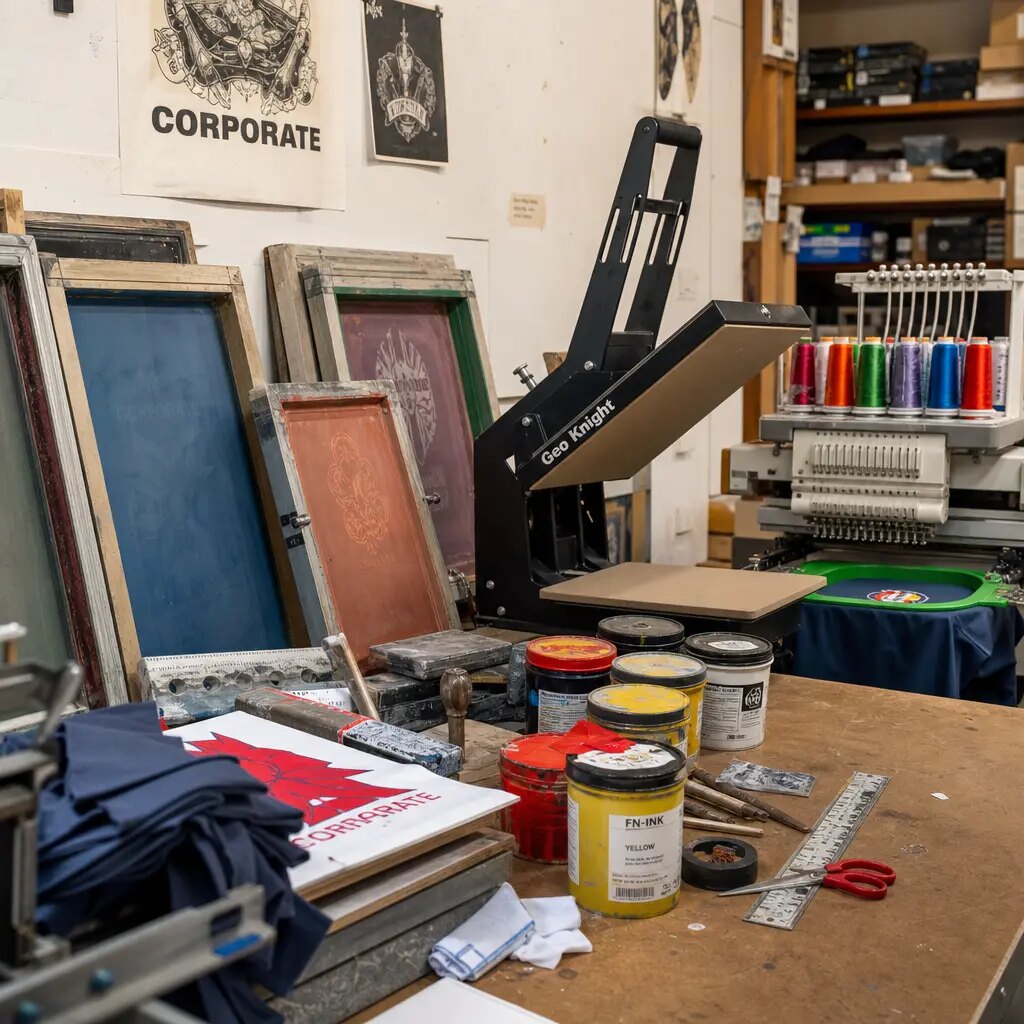
Decoration drives both appearance and failure risk. Screen printing is usually the most efficient option for simple logos, bold artwork, and repeat runs. Multi-color screen printing increases setup and registration control. Heat transfer can support fine detail or short runs, but buyers should check edge lifting, cracking, and feel on flexible cotton. Embroidery looks premium, yet it adds cost, needle penetration, thread bulk, and stiffness; it may not be suitable for light cotton fabric.
The RFQ should state print method, number of colors, artwork size, placement, Pantone target, acceptable placement tolerance, and whether the artwork is printed before or after sewing. Printing after sewing can create placement challenges near seams or folds. Printing before sewing can improve flatness but requires cutting and sewing controls so the print lands correctly on the finished bag.
Ask for a strike-off before the PP sample when color or opacity matters. On natural cotton, ink can absorb unevenly. On dark cotton, light ink may need underbase or multiple passes. If the bag is marketed as washable or reusable, include a print durability check. A beautiful sample is not enough if the bulk print flakes, bleeds, or transfers in cartons.
- Use screen print for scalable logo programs and bold graphics.
- Use heat transfer only after checking flex durability and handfeel on the selected fabric.
- Use embroidery when the brand accepts higher cost, stiffer handfeel, and needle-hole impact.
- Approve strike-off color, opacity, edge quality, and placement before bulk printing.
Set sample approval gates that the factory can follow
Sample control is the bridge between the RFQ and bulk production. A sales sample proves what the supplier can present; a pre-production sample proves what the factory intends to make. Procurement teams should not release bulk production until the PP sample is made from intended fabric, intended cord, intended label, intended decoration, and intended packing format or an approved equivalent.
The approval record should be more specific than 'sample approved.' Measure the sample, photograph key areas, record fabric GSM, confirm print placement, check cord length, pull the drawcord channel, inspect bottom reinforcement, and review odor or stains. If any detail is approved with a deviation, write it down and state whether it applies to bulk. Otherwise, the factory may treat the deviation as acceptable.
For large or repeat orders, add a first-piece approval after bulk production starts. This is a production-line sample taken from actual bulk fabric and operators. It catches issues such as changed thread color, weak bar-tacks, incorrect cord length, or print placement drift before thousands of units are completed.
- Approve lab dip or fabric swatch when color is controlled.
- Approve print strike-off when artwork color, opacity, or registration matters.
- Approve PP sample before cutting bulk fabric.
- Approve first-piece sample before full-line production continues.
- Keep a signed gold sample and a photo record for the supplier, inspector, and buyer file.
Define QC inspection with AQL, defects, and practical load checks
Quality control for cotton drawstring backpacks should be clear enough for a third-party inspector or factory QC supervisor to apply consistently. Use an inspection plan such as ANSI/ASQ Z1.4 or ISO 2859-1 sampling, commonly General Inspection Level II for final random inspection unless the buyer specifies otherwise. Agree AQL limits before production. Many buyers use tighter limits for critical defects and moderate limits for major and minor defects, but the exact numbers should match brand risk and retail channel requirements.
Classify defects in writing. Critical defects may include unsafe sharp metal, contamination, wrong fiber claim, illegal labeling, or severe chemical odor. Major defects may include open seams, missing labels, wrong print, large stains, broken cords, wrong carton marks, or dimensions outside tolerance. Minor defects may include small loose threads, minor print specks, or slight cosmetic variation within agreed limits.
Add a practical load check. For light promo use, a simple static hang test with 3-5 kg may be enough if the buyer agrees. For retail use, set a stronger target that reflects actual expected contents. The test should specify weight, duration, and pass criteria, such as no seam opening, no cord breakage, and no reinforcement failure. This is not a substitute for lab testing where required, but it is a useful production-level screen.
- Use a written AQL plan and define critical, major, and minor defects.
- Inspect material, cutting, printing, sewing, trimming, packing, and carton marks as separate checkpoints.
- Include practical pull and load checks for cords, drawcord channel, and bottom corners.
- Do not ship until final inspection results, carton audit, and corrective actions are documented.
Make packing and labeling part of compliance, not an afterthought
Packing affects receiving accuracy, freight cost, moisture risk, and the customer’s first impression. A bulk-packed natural cotton bag may be right for low-waste apparel distribution. Individual polybags may be required for e-commerce or retail handling. Paper bands can support a lower-plastic presentation, but only if the warehouse and retailer accept the format. The supplier’s default packing should not decide the channel requirement.
Define fold size, units per inner pack, master carton quantity, carton dimensions, gross weight, carton marks, barcode placement, SKU separation, and whether hang tags or care labels are attached. If the product is sold as a textile article, labeling may need fiber content, country of origin, and care information depending on destination market. If the bag is used only as packaging, requirements may differ, but the buyer should confirm internally before removing labels.
Moisture control is especially important for cotton. Cotton can absorb odor and humidity in transit. Ask about carton strength, dry storage, container loading, desiccants where justified, and whether bags are packed only after print is fully cured. Overpacking can create creases and print transfer; underpacking can crush cartons and create unstable pallets.
- Choose bulk pack, paper band, individual bag, or retail-ready pack based on the sales channel.
- Confirm label content: fiber, origin, care, SKU, barcode, claim language, and hangtag wording.
- Set carton gross weight target, often under a warehouse-handling limit agreed by the buyer.
- Use moisture protection when shipping lane, season, or storage conditions justify it.
Build the RFQ packet and supplier scorecard around evidence
A strong RFQ packet saves time because it gives every supplier the same starting point. Include the technical spec sheet, artwork file, order quantity by color, target delivery date, packing requirements, destination, compliance standards, testing expectations, and approval process. If the brand wants to use organic, recycled, reusable, plastic-free, or low-impact wording, include the exact wording for supplier review.
When quotes return, score them on more than price. Useful scorecard fields include unit cost, setup cost, MOQ fit, documented compliance, sample quality, lead time realism, production capacity, QC plan, packing capability, communication speed, and willingness to support third-party inspection. Do not award the order to a supplier that cannot explain how the sample will become bulk production.
Finally, keep the procurement file organized. Store the approved spec, signed sample photos, artwork approval, lab reports, certificates, transaction documents, inspection report, carton photos, and shipment sample record. For replenishment orders, this file becomes the fastest way to prevent drift in fabric weight, print color, cord quality, and packing.
- Send one complete RFQ packet instead of scattered messages.
- Score suppliers on evidence quality, not only ex-factory price.
- Require the supplier to name critical path items and document owners.
- Keep all approvals and reports in one file for reorders and claims review.
Specification comparison for buyers
| Supplier option | What to verify | Commercial advantage | Buyer risk to control |
|---|---|---|---|
| Direct sewing factory | cord material proof, reinforcement close-ups, load-test photos, approved sample tag, and bulk-line first-piece record | Better sample-to-bulk control and faster production feedback | May be weaker on export paperwork or branded packing unless checked early |
| Trading company | Factory name, production photos, trim-source proof, and who owns QC decisions | Can coordinate small mixed orders and extra services | Markup can hide real factory capability and slow defect decisions |
| Specialized bag workshop | cord diameter, eyelet or reinforced channel, bottom corner reinforcement, seam allowance, bar-tack position, and load target | More practical for detailed construction, trims, and repeat programs | Capacity may be limited during peak seasons |
| Low-price general supplier | 6-10 oz cotton canvas, 210D polyester, rPET, or blended cotton with shrinkage and colorfastness expectations set before sampling | Useful for simple promotional runs with loose specs | Material downgrades, weak packing, and vague inspection scope can erase savings |
| Retail-ready supplier | fold direction, cord protection, bundle count, carton compression, moisture bag, and retail label position | Can handle labels, SKU separation, carton marks, and receiving rules | Higher unit cost must be compared against reduced warehouse work |
| Compliance-focused supplier | Fabric records, labeling review, test plan, and production traceability | Safer for retail programs and repeat brand orders | Documentation claims need evidence, not only sales language |
| Local sample room plus bulk factory | Signed sample, bulk factory handoff, first-piece photos, and deviation owner | Good for complex branding before large production | Sample room quality may not match bulk line unless handoff is controlled |
Buyer checklist before sampling
- Define end use first: giveaway, retail resale, packaging insert, staff kit, or merchandise line extension.
- Lock finished dimensions with tolerance, target fabric GSM, weave, color, shrinkage allowance, and cord type before comparing quotes.
- Specify construction: top hem, drawcord channel, seam allowance, bottom reinforcement, bar-tack position, label placement, and cord-end finish.
- State print method, artwork size, number of colors, Pantone target, placement tolerance, and whether a strike-off is required.
- Require a document package tied to the actual order, not generic sales certificates.
- For organic cotton claims, request GOTS or OCS scope certificate plus transaction certificate where applicable.
- For recycled cotton claims, request GRS or RCS scope certificate plus transaction certificate where applicable.
- For restricted substances, ask whether testing will follow OEKO-TEX Standard 100, REACH, CPSIA where relevant, or buyer-specific RSL requirements.
- Ask for quoted line items for fabric, cutting, sewing, printing, labels, packing, testing, inland handling, and export documentation.
- Confirm MOQ by fabric color, print design, and packing format; do not assume one MOQ covers split colorways.
Factory quote questions to send
- What is the exact fabric composition, weave, GSM, color, shrinkage allowance, and fabric source used in this quote?
- Is the cotton conventional, organic, recycled, or blended, and which claim documents can be tied to this order lot?
- Can you provide current GOTS, OCS, GRS, RCS, OEKO-TEX, REACH, CPSIA, or buyer RSL evidence where applicable, including scope and expiry dates?
- Which tests are already available, and which must be newly arranged for this order: fiber composition, colorfastness to rubbing, colorfastness to washing, dimensional change, seam strength, print adhesion, or restricted substances?
- Is the print price based on one color and one location, or the full artwork, color count, print area, and registration requirement in our file?
- What is the MOQ by fabric color, cord color, print design, and packing format, and what price step applies at 500, 1,000, 3,000, and 5,000 units?
- Does the quote include woven labels, side labels, hang tags, care labels, country-of-origin labels, barcode stickers, inner packing, and master cartons?
- What sample stages do you provide: sales sample, strike-off, lab dip, pre-production sample, first-piece sample, and shipment sample?
- What tolerances do you propose for finished size, print placement, print color, cord length, fabric GSM, and carton quantity?
- What AQL plan and inspection level do you normally use for this product, and can a third-party inspection company inspect before shipment?
Quality-control points to confirm
- Confirm incoming fabric GSM with a calibrated scale and fabric sample record; reject fabric outside the agreed tolerance, commonly +/-5% unless otherwise approved.
- Measure finished width, height, top hem width, cord length, and print placement against the approved spec sheet using defined tolerances.
- Inspect seam allowance, stitch density, skipped stitches, loose threads, seam puckering, needle damage, and open seams on all load-bearing areas.
- Check bottom corner reinforcement, bar-tacks, eyelets if used, and drawcord channel security with practical pull checks.
- Run a simple static load check aligned with intended use, such as 3-5 kg for light promo bags or higher if the buyer approves a retail carry target.
- Review print strike-off and bulk print for color, registration, opacity, cracking, flaking, edge bleeding, and placement drift.
- Perform dry and wet rub checks where relevant, referencing ISO 105-X12 or AATCC 8 if formal colorfastness testing is required.
- Check dimensional change after laundering when the product will be sold as reusable or washable; reference ISO 6330 or AATCC 135 if formal testing is required.
- Reject visible odor, mildew, oil stain, rust mark, water stain, shade mismatch, insect contamination, or foreign matter.
- Verify label content, country-of-origin marking, fiber content, care wording, barcode readability, SKU separation, and carton marks before shipment.