Start With the Box, Not the Bag
Subscription box programs fail when the bag is specified in isolation. A cotton drawstring backpack has to fit the product mix, the box cavity, and the packing flow at the fulfillment center. If the bag is too large, it wastes void space and creates ugly carton bulge. If it is too small, the contents get packed too tightly and the cotton paneling can deform before the customer even opens the box. The right buying question is not simply what size the factory can make. It is what size will pack cleanly, stack cleanly, and arrive looking intentional.
Start the brief with the actual box dimensions, the heaviest item inside, and the level of merchandising you expect from the bag. A lightweight promo insert can tolerate a thinner bag and a softer hand. A premium subscriber gift needs more body, cleaner print, and a better fold. When the pack-out is known early, the factory can recommend a cut size that reduces wasted fabric, improves carton density, and avoids a custom redesign later in the project.
- Give the factory the internal box size, not only the outer carton size.
- State the expected fill weight and whether the bag will carry sharp or rigid items.
- Clarify whether the backpack is a primary product or a secondary insert with lighter handling requirements.
Choose a Cotton Spec That Survives Repacking
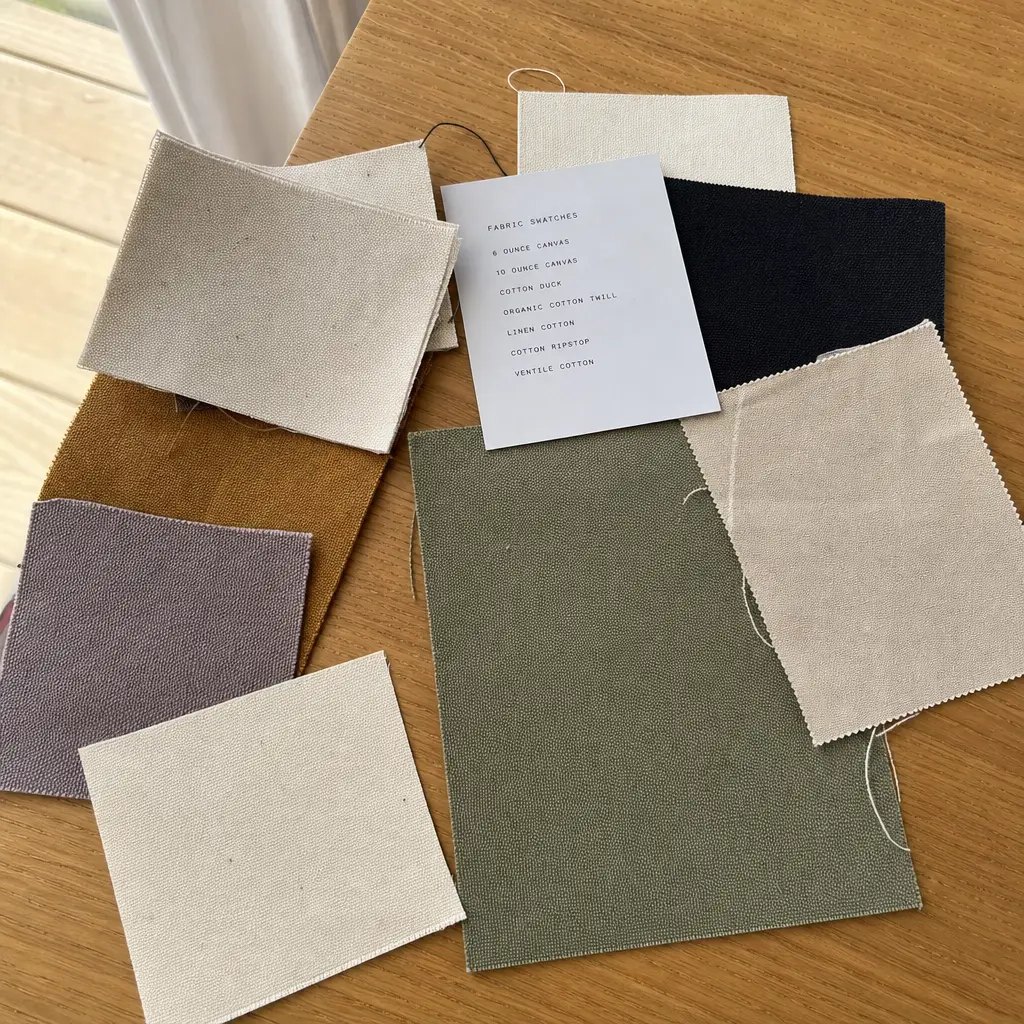
For wholesale cotton drawstring backpacks, fabric weight is the first real quality decision. Lightweight muslin in the 120 to 180 GSM range can work for small gifts or soft goods, but it will not hide contents well and can look underbuilt if the bag is meant to feel premium. A 200 to 260 GSM twill or canvas usually gives better shape, less show-through, and more reliable print results. If the bag is expected to be reused outside the box, consider a heavier spec and test the cord tunnel and side seams under load rather than relying on a flat swatch approval.
Print method should follow the spec, not lead it. Simple logos on a stable cotton body usually favor screen print because the ink lays flatter and the result is easier to repeat across production. Multi-color art, gradients, or short-run campaigns can justify heat transfer or another decoration route, but you should test fold lines, rub resistance, and image clarity after the bag is stuffed and compressed. Do not overbuy decoration complexity if the bag will live inside a subscription box and be handled once. Spend on fabric hand feel, seam strength, and a clean logo position first.
- 120 to 180 GSM: acceptable for lightweight inserts, samples, or low-load promo use.
- 200 to 260 GSM: a practical middle range for most subscription box programs.
- Above 260 GSM: better shape and resale feel, but expect higher material weight and possible freight impact.
Where MOQ Actually Comes From
Most buyers negotiate the wrong number. The factory may quote a bag MOQ, but the real floor is often set by the fabric roll, the dye lot, the print screen count, the carton pack, or even the cord and label sourcing. A factory can sometimes make 5,000 bags, but only if the same cloth, same artwork, and same packing pattern are used efficiently. Change all three at once and the effective MOQ can jump fast. That is why a clean RFQ matters more than a hard bargain on the first call.
The best way to reduce MOQ is to remove setup variation that does not add customer value. Keep one body color, one logo placement, one cord style, and one carton pattern if you want the factory to use standard line conditions. If you need more flexibility, separate the project into a pilot run and a replenishment run. The pilot proves artwork, size, and packing. The follow-on order gives you leverage because the process is already stabilized and the factory is not pricing in development risk.
- Fabric MOQ is often tied to dye lot and roll width, not only the bag count.
- Decoration MOQ can change if you add a second color, a second placement, or a different print technique.
- Packing MOQ can rise when the carton pack becomes inefficient or requires manual repacking.
Compare Supplier Routes Before You Negotiate
A direct factory is usually the cleanest route when the program is repeatable. You get better visibility into fabric sourcing, stitch construction, print setup, and packing labor, which makes it easier to compare one quote against another. A trading company can still be useful when your team needs speed, language support, or broader market coverage, but the quote has to be stripped down so you can see which steps are actually happening in the factory and which are being marked up. For subscription boxes, the supply path matters because a hidden handoff can become a schedule problem at peak season.
Sourcing route should match internal capability. If your team can manage artwork, approval, and freight directly, go closer to the source and force a line-item quote. If you need less coordination burden, a reputable agent or regional supplier can simplify the process, but you should pay for that convenience knowingly. The decision is not just about unit price. It is about whether the supplier can support the same spec twice, with the same fabric hand, the same print clarity, and the same carton count, without surprise substitutions.
- Direct factory: strongest control over material and process, but requires clearer RFQ discipline.
- Trading company: easier coordination, but you must verify the underlying factory MOQ and setup cost.
- Regional supplier: better for speed and lower transit risk, but usually less competitive on ex-factory cost.
Write an RFQ That Forces Comparable Quotes
A useful RFQ gives the factory enough detail to price the same thing every time. Include finished size, fabric GSM, weave type, color, print method, logo placement, cord type, stopper style, fold method, and carton pack. If you leave out any one of those items, every supplier will make a different assumption and your quote comparison will be noise. For subscription box work, the biggest mistake is asking for a bag price without the packing method. A bag that is cheap at the mill can become expensive when it needs individual polybags, barcode labels, or hand folding to fit the box program.
Separate the commercial items from the product items. Ask for the unit price, sample charge, tooling or screen cost, lead time after approval, and incoterm assumptions. Then ask for a second quote on the same base bag with only one variable changed, such as print color or pack count. That shows you where the real cost sensitivity sits. A factory that can explain the cost steps clearly is usually safer than one that only gives a single lump price with no material detail.
- Include finished dimensions and a reference sample photo or tech pack.
- State whether the quote should include inner packing, barcode labeling, and outer carton marking.
- Ask for separate pricing on blank, one-color print, and multi-color print versions.
Approve the Sample Like a Production Run
The sample stage should prove more than the artwork. A sales sample or hand sample can hide problems that will show up when the machine line runs at speed. Look at stitch spacing, top edge symmetry, cord tunnel alignment, and how the bag closes once it is filled. The logo should stay readable after the fabric is folded, stuffed, and unpacked. For a subscription box program, the sample must also survive the packing motion, because a bag that looks fine on a table may collapse or wrinkle badly once it is inserted into the shipper.
Treat the approved sample as the production standard. If the sample uses a different cord, a different hem allowance, or a cleaner hand-finished edge than the actual order, it is not a real reference. Keep one signed golden sample, one photo record, and one written spec sheet with tolerances. That is the only way to stop disputes when production starts. If the factory pushes a substitute material, compare it against the approved sample under the same lighting and the same folding pattern before you accept it.
- Check the sample after it has been folded and re-opened several times.
- Pull the drawcord repeatedly to make sure the tunnel does not distort.
- Compare the sample against the box fill so the final pack looks intentional, not stuffed.
Packing Rules for Subscription Box Fulfillment
Packing is not an afterthought in a subscription program. The way the drawstring backpack is folded and packed changes carton count, labor time, and the final presentation. Bulk packed bags save material and often lower the unit cost, but they may need repacking at the fulfillment center. Individual polybags protect print and dust appearance, yet they add plastic, labor, and carton volume. If the bag is not sold as a standalone retail item, the simplest pack that still protects the cotton surface is usually the best operational choice.
The carton plan should support the subscription box workflow, not fight it. Ask the factory for the folded size, the bag count per inner pack, the outer carton dimensions, and the gross weight before you place the order. That lets your 3PL or fulfillment team check pallet fit and receiving time in advance. If you plan to insert cards, tissue, or other components, build that into the pack spec now. The hidden cost in soft goods is often labor, not the bag itself.
- Bulk pack is efficient when the fulfillment center can handle final insertion.
- Individual polybagging makes sense when the customer receives the bag as a finished gift item.
- Keep the carton count consistent so receiving teams do not have to re-count every case.
Lead Time, Reorder Logic, and Landed Cost
A realistic lead time for cotton drawstring backpacks has several blocks: artwork approval, material booking, sampling, production, inspection, and transit. The calendar can move quickly if the bag uses stock fabric and standard print, but every custom choice adds risk. If your subscription box has a fixed ship date, build a buffer for sample revision and freight delays. Do not schedule the customer launch on the assumption that the first sample will pass and the first production run will ship without adjustment. That is not a procurement plan; it is a guess.
Landed cost is where many buyers misread the quote. Cotton bags are light but bulky, which means freight can matter as much as the factory price. Packaging choice, carton size, and compression all affect the cube. A cheaper ex-factory quote can lose once you add oversized cartons, extra polybags, air freight for schedule recovery, or a second inspection visit. For recurring programs, model the reorder cost as well. The best supplier is not only the one that is cheapest on the first PO. It is the one that can repeat the same spec without rework.
- Track ex-factory cost, packing cost, freight, duty, inspection, and receiving labor separately.
- Use a realistic transit buffer for peak-season congestion and customs delay.
- Reorder pricing should be tested on the exact same spec, not on a revised prototype.
Negotiation Tactics That Lower MOQ Without Breaking Quality
The cleanest MOQ negotiation starts with standardization. Keep the same bag size, one fabric weight, one logo position, and one packing pattern. Then ask the factory which item is creating the hard floor. If it is the print screen, reduce color count. If it is fabric minimum, stay on a standard cloth width. If it is carton packing, accept a more efficient count per case. The point is to lower setup friction, not to force the supplier into a loss-making quote that later gets recovered through weak quality or schedule slips.
You can also negotiate on time and commitment instead of squeezing the first order only. A factory is more willing to support a smaller pilot if it sees a second order path, even if the second order is only forecasted. Another practical lever is partial pre-buy of raw material or a deposit against reserved cloth. That can reduce risk on both sides. What you should not trade away is the structural spec that makes the bag work: enough GSM to hold shape, enough stitch strength to carry the load, and enough print durability to survive folding and handling.
- Standardize the base bag before asking for a smaller first run.
- Use a pilot plus replenishment plan instead of forcing every order to be custom.
- Offer a forecast or material reservation if the factory is holding fabric for you.
Specification comparison for buyers
| Spec decision | Recommended option | When it fits | Buyer risk to check |
|---|---|---|---|
| Direct cut-and-sew factory | Best when you can repeat the same bag spec for multiple runs and want control over GSM, print, and packing | Recurring subscription box programs with stable demand | MOQ may be driven by fabric dye lot, print screens, or carton pack multiples rather than bag count |
| Trading company or sourcing agent | Best when you need market access across several factories and want one quote stream | Teams without in-house Asia sourcing or artwork coordination | The agent margin can hide the real factory MOQ and make late changes costly |
| Stock blank bag plus local decoration | Best for a fast launch or a small pilot box | Short lead times and uncertain demand validation | The base bag may not match your target GSM, size, or color consistency on reorder |
| Fully custom size and construction | Best when the bag must fit a box cavity or a premium merch standard | Brands with strict dimensional requirements or resale plans | Tooling, pattern approval, and setup work raise the effective MOQ |
| Regional supplier near your market | Best when transit risk matters more than the lowest factory price | Reorders that must land quickly | Higher unit cost can hide savings if freight, duty, and inventory days are not modeled |
| Mixed sourcing route | Best when one factory makes the bag body and a local partner handles labeling or final pack | Programs that phase in volume by season | Two vendors can create responsibility gaps on defects and schedule slips |
| Small sample house or workshop | Best for prototype validation and design sign-off | Early-stage development and fit testing | Sample quality may not match production machinery or finishing methods |
| Large-volume factory with in-house print and packing | Best for a stable program that needs fewer handoffs | Forecasted subscription box runs with consistent artwork | Verify whether packaging labor is truly in-house or subcontracted |
Buyer checklist before sampling
- Lock the finished size first, then fit the bag to the box and the product load.
- Specify fabric weight or GSM, weave, and whether the cotton should be bleached, unbleached, or dyed.
- Choose one print method and define the artwork coverage, placement, and color count.
- State the cord type, cord length, stopper style, and whether you want sewn or knotted ends.
- Define carton pack, inner pack, and whether the bags ship bulk, folded, or polybagged.
- Request a pre-production sample, a size-tolerant production sample, and a signed golden sample.
- Ask for a quote that separates bag price, decoration, sample charge, tooling, and freight assumptions.
- Confirm the replenishment MOQ, not only the first-run MOQ, if you plan to reorder.
Factory quote questions to send
- What is the MOQ by fabric GSM, color, and print method?
- Is the MOQ driven by the bag body, the print setup, the cord, or the carton pack?
- Can you quote the same bag as blank, one-color print, and multi-color print on separate lines?
- What size tolerance do you hold on the finished bag, and what is your accepted seam tolerance?
- What sample stages do you provide, and what are the sample charges at each stage?
- What is the standard lead time after artwork approval and deposit?
- What carton pack, outer carton size, and gross weight do you recommend for subscription box fulfillment?
- Which cost items are excluded from the unit quote, such as tooling, labeling, or inland freight?
- Can you support mixed color orders or mixed SKU packing to reduce the first-run MOQ?
Quality-control points to confirm
- Fabric GSM matches the approved swatch within the agreed tolerance and does not feel materially thinner in hand.
- Finished bag dimensions, cord length, and label placement stay within the approved size spec.
- Stitching is even, the side seams are straight, and stress points have reinforcement where the cords enter the tunnel.
- Print registration is clean, the logo is centered as approved, and the ink coverage has no pinholes or major banding.
- The drawcord slides smoothly, closes fully, and does not fray after repeated pulls.
- The bag holds a typical subscription-box fill without seam distortion or top-edge collapse.
- Folded packing is consistent so carton count and box cube stay stable across the shipment.
- Aged, rubbed, or handled samples do not show unacceptable cracking, flaking, or shade drift.