Start with the skincare kit, not the backpack catalog
The right material for wholesale cotton drawstring backpacks depends first on what the skincare brand will put inside. A backpack used for a flat leaflet, face mask sachet, and mini tube does not need the same fabric as a bag holding three glass jars, a cleanser bottle, and a rigid gift box. If procurement starts from a supplier's standard backpack size without testing the loaded kit, the bag may look acceptable empty but weak, distorted, or hard to close after packing.
For a useful RFQ, list the product set dimensions and target loaded weight. Include the largest carton size, whether items are boxed or loose, and whether the bag will be carried as a backpack or mainly used as secondary packaging. A drawstring backpack puts stress on the top channel, side seams, and bottom corners. Skincare products often concentrate weight in small hard points, so fabric weight and reinforcement matter more than for apparel samples or paper inserts.
- For light promotional inserts below 500 g, 6-7 oz cotton may be acceptable if the bag is not positioned as premium.
- For most boxed skincare sets around 800 g to 1.5 kg, 8-10 oz cotton canvas is a safer starting point.
- For glass jars, candles, or refill bottles above 1.5 kg, specify reinforced seams and test the packed sample before confirming fabric.
- For retail display use, consider whether the bag must stand neatly, hang on a peg, or fold inside another shipper.
Fabric weight: how GSM changes feel, strength, and freight
Cotton drawstring backpacks are often quoted in ounces, while some buyers use GSM. As a practical range, 5 oz cotton is about 170 GSM, 6 oz is about 200 GSM, 8 oz is about 270 GSM, 10 oz is about 340 GSM, and 12 oz is about 400 GSM. These are approximate because weave and finishing affect the actual hand feel. For skincare buyers, 8 oz and 10 oz are usually the commercial middle ground: strong enough for gift sets, still foldable, and not too expensive to ship.
Going heavier is not automatically better. A 12 oz backpack can look premium, but the drawstring mouth may not close smoothly, carton volume increases, and the bag may feel stiff on the shoulder. Going lighter can reduce the unit price, but it may show product corners, wrinkle during packing, and look like a low-value giveaway. The most useful comparison is not only price per piece; compare loaded appearance, seam behavior, print sharpness, and carton cube.
- 6 oz cotton: suitable for flat samples, event handouts, and very light trial kits.
- 8 oz cotton: good balance for boxed skincare kits and higher-volume campaigns.
- 10 oz cotton: better for premium gift-with-purchase sets and heavier retail bundles.
- 12 oz cotton: use when structure is part of the brand presentation and freight impact is acceptable.
Natural, bleached, or dyed cotton: the brand look has production consequences
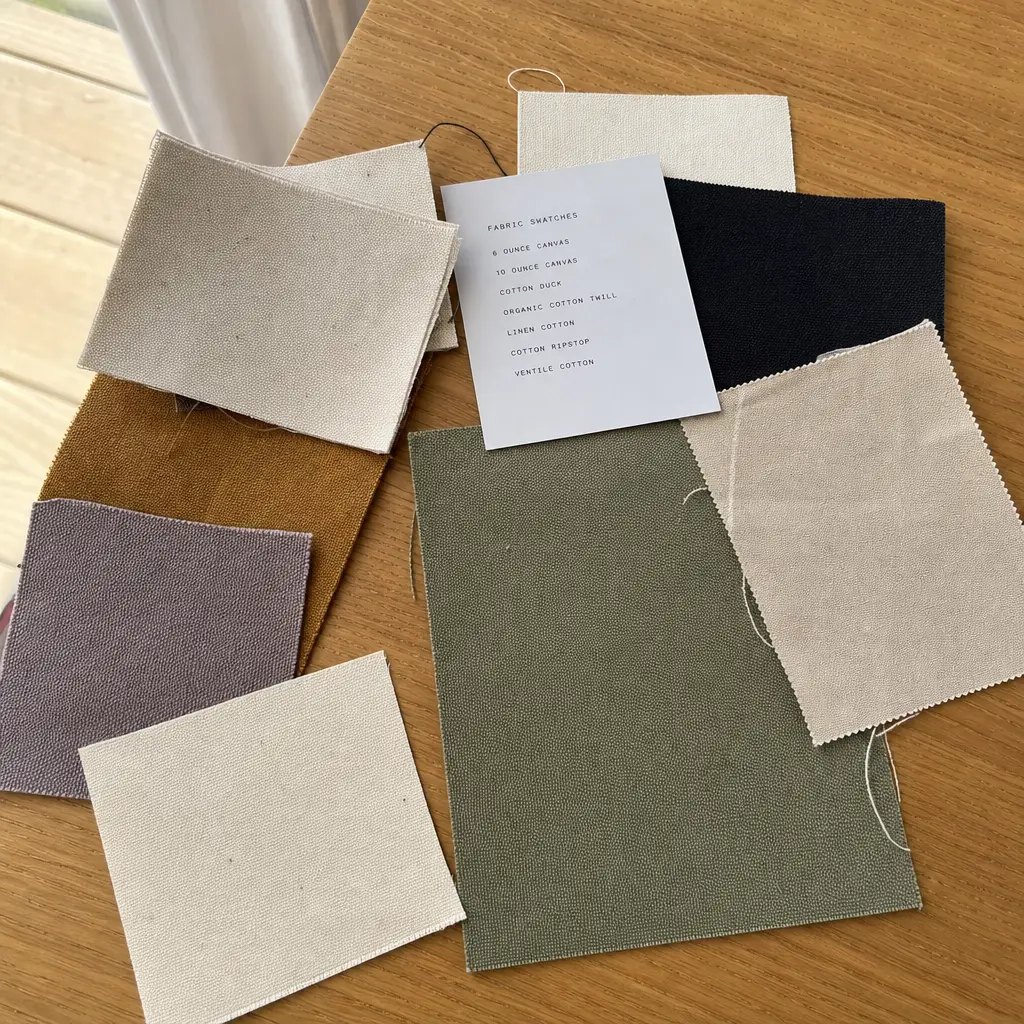
Natural unbleached cotton is popular for clean beauty and spa brands because it gives a low-impact, understated look. Buyers should remember that natural cotton is not a perfectly uniform cream color. Seed flecks, yarn variation, and shade changes between lots are normal unless the specification is tightened and the supplier selects cleaner fabric. If the front logo area must look very clean for retail photography, request actual fabric swatches from the expected production lot.
Bleached white cotton gives a cleaner background for pastel skincare logos, but it shows dirt and handling marks more easily during sewing and packing. Dyed cotton can match a brand campaign color, yet it introduces dye lot MOQ, colorfastness testing, and potential rubbing risk. Dark dyed backpacks packed with white cartons, labels, or light gift boxes should be tested for dry and wet rubbing before mass production, especially if the bags may move during sea freight or warehouse handling.
- Natural cotton works well with black, brown, forest green, terracotta, and muted brand graphics.
- Bleached white improves print contrast but needs cleaner sewing and individual protection if retail appearance matters.
- Dyed cotton should be approved by lab dip or strike-off before bulk fabric is purchased.
- For strict brand color matching, define acceptable shade tolerance rather than using a photo reference only.
Construction details that protect jars, tubes, and retail cartons
The material selection is only half the decision. A good 10 oz fabric can still fail if the top channel is narrow, the side seam is weak, or the bottom corner reinforcement is missing. For drawstring backpacks, the cords act as both closure and shoulder straps. When the user pulls the cords, force concentrates at the channel ends and lower corners. These points need controlled sewing, not just heavier fabric.
For skincare sets, specify a double-fold top channel, clean cord exit points, and reinforced lower corners. Reinforcement may be bartack, box stitch, or repeated backstitch depending on the design. If the backpack will carry glass jars, request a loaded hang test using your target weight. The test does not need to be complicated: load the sample, close the cords, hang for a defined time, then inspect seam opening, fabric distortion, and cord slippage.
- Top channel width should allow the selected cord to slide without cutting into the fabric.
- Side seams should be even, with no skipped stitches or puckering around the channel.
- Bottom corners should be reinforced because they take the pull from shoulder carrying.
- For loose glass products, consider an inner divider, lining, or a separate protective carton instead of relying only on the backpack.
Cord choice changes both user feel and packing efficiency
Cotton rope is a common choice for skincare brands because it matches the natural fabric story and feels better than thin polyester cord. A 5-7 mm cotton rope usually suits 8-10 oz canvas. It looks substantial in photos and is comfortable enough for short carrying. The downside is bulk: rope increases carton volume, and if the knot is large, the packed bag may not lie flat in a gift box or mailer.
Flat cotton tape is another option when the backpack needs to fold cleanly or sit inside a skincare shipper. It spreads pressure better on the shoulder and can reduce tangling during packing. Polyester cord is cheaper and more color-consistent, but it can weaken a natural brand presentation unless intentionally specified. Whatever the material, define cord length, diameter or width, color, and end treatment. Fraying rope ends are a common small defect that becomes very visible in retail handling.
- Cotton rope: best for natural look and premium hand feel, but higher packing bulk.
- Flat cotton tape: practical for mailer kits, retail folding, and shoulder comfort.
- Polyester cord: useful for exact colors and lower cost, but less aligned with natural cotton positioning.
- End treatment: knotting is simple, stitching is cleaner, metal tips add cost and may not fit natural skincare branding.
Printing on cotton canvas: select the method before pricing the MOQ
For most cotton drawstring backpacks, water-based screen printing is the safest method for simple skincare logos, ingredient messages, QR codes with enough size, and one to three solid colors. It penetrates the cotton surface better than heavy plastisol and keeps a softer touch. On natural canvas, however, light ink can lose brightness because the fabric is not a smooth white paper. A white logo on natural cotton needs a strike-off before mass approval.
Heat transfer and digital printing are useful for low MOQ campaigns, gradients, small artwork changes, or seasonal sets. They also help when the artwork has many colors that would make screen printing expensive. The tradeoff is hand feel, wash resistance, and edge behavior on textured fabric. Embroidery is possible but less common for large skincare campaign bags because it adds cost, can pucker lighter fabric, and may not suit fine lettering.
- Screen print: strongest commercial choice for simple logos and repeat wholesale orders.
- Digital print: useful for complex artwork, but test sharpness on the actual weave.
- Heat transfer: good for short runs and color detail, but check adhesion and hand feel.
- Embroidery: premium for small marks, not ideal for large filled areas or fine ingredient text.
MOQ logic: why the cheapest quote may not be the best sourcing route
MOQ for wholesale cotton drawstring backpacks is not only a number of finished bags. It is affected by fabric availability, dyeing, cord color, printing setup, label making, packing method, and factory line efficiency. A natural cotton backpack with one-color screen print can often be produced at lower quantities than a custom-dyed cotton backpack with custom rope, woven side label, individual barcode sticker, and retail carton separation.
When comparing supplier quotes, separate stock-material options from custom-material options. A distributor holding blank stock may quote fast delivery, but size, GSM, and print area may be limited. A cut-and-sew factory can control material and construction better, but needs time for fabric purchasing and sample approval. An importer should compare total landed cost and risk, not only FOB unit price.
- Stock blank route: faster for simple campaigns, fewer customization choices.
- Factory cut-and-sew route: better specification control, longer development schedule.
- Custom dyed route: strongest brand color control, higher MOQ and shade approval work.
- Retail packing route: adds labor and carton planning, but reduces warehouse repacking later.
Sample approval sequence that prevents expensive rework
A photo of a sample is not enough for this product. Cotton weight, stiffness, cord feel, print opacity, and closing behavior must be handled physically. For a skincare launch, a practical sequence is material swatch, print strike-off, blank construction sample if size is new, then pre-production sample using actual fabric, cord, logo, label, and packing. Skipping the strike-off is risky when using light ink, dyed fabric, or fine text.
The pre-production sample should be loaded with the actual skincare kit. Close the cords fully, carry it, place it inside the intended carton, and leave it packed overnight. This reveals problems that are not visible on an empty bag: drawcord knots pressing into cartons, fabric staining light packaging, bag too small after closure, logo hidden by the gathered top, or product corners showing through the front panel.
- Approve fabric by weight, color, weave, and hand feel, not by color photo only.
- Approve print by size, placement, opacity, edge sharpness, and rub resistance.
- Approve construction by loaded fit, seam strength, cord movement, and finished dimensions.
- Approve packing by fold method, bag orientation, bundle count, carton size, and carton marks.
Packing and carton planning for skincare distribution
Packing choice has a direct effect on cleanliness and retail presentation. Bulk bundle packing is economical and reduces plastic, but the bags can rub against each other during transport. This may be acceptable for event giveaways but risky for white or pastel bags used in retail displays. Individual polybags, paper bands, or grouped inner bags protect appearance but increase labor, material use, and carton volume.
For importers and retail buyers, carton data should be part of the quote stage. Ask for pieces per carton, carton dimensions, gross weight, and whether the carton can pass normal warehouse handling. Cotton backpacks are soft goods, but drawcord knots and thick fabric create uneven compression. If cartons are overpacked, front panels may arrive creased and prints may show pressure marks. If cartons are underfilled, freight cost rises.
- Use bulk bundles for low-cost event use where minor creasing is acceptable.
- Use individual recycled polybags or protective paper wrapping for light-color retail presentation.
- Separate SKUs by carton if different logos, colors, or campaign markets are involved.
- Define carton marks early: PO number, SKU, color, quantity, gross weight, net weight, and destination if needed.
Lead time and schedule risks buyers should build into the RFQ
Lead time depends on the sourcing route. A standard natural cotton backpack with simple printing may move quickly after artwork approval, while custom dyed fabric, custom woven labels, or special packing can extend the schedule. Peak season, fabric mill availability, and inspection rework also affect timing. A supplier quote that gives only one delivery date without conditions is not enough for a retail launch calendar.
A better RFQ asks for a staged schedule: artwork review, sample making, sample transit, approval deadline, material booking, cutting, printing, sewing, final inspection, packing, and export handover. This makes risk visible. If the skincare campaign has a fixed shelf date or influencer mailer date, protect the schedule by approving strike-offs early and avoiding last-minute changes to logo size, cord color, or packing style.
- Artwork delay usually affects printing screens and sample making first.
- Custom dyed fabric can add lab dip and bulk dye approval time.
- Woven labels may require a separate accessory lead time.
- Individual packing and barcode work slows the final packing stage.
- Inspection failure can add rework time, especially for stains, print defects, or size variation.
Specification comparison for buyers
| Spec decision | Recommended option | When it fits | Buyer risk to check |
|---|---|---|---|
| Main fabric weight | 8 oz to 10 oz cotton canvas, roughly 270-340 GSM | Most skincare gift sets, discovery kits, retail-with-purchase bags, and event backpacks where the bag must feel substantial but still fold for packing | Under 7 oz can show jar corners and feel promotional; over 12 oz increases freight volume and may feel too stiff for drawstring closure |
| Cotton type | Natural unbleached cotton or dyed cotton with colorfastness test | Clean beauty, spa, natural skincare, and refill programs that want a low-ink, soft-touch appearance | Natural cotton has seed flecks and shade variation; dyed cotton needs rubbing and migration checks against light cartons and labels |
| Bag structure | Single-layer body with double-fold top channel and reinforced stress points | Standard wholesale campaigns where cost, folding, and lead time matter | Thin top channels tear when rope is pulled hard; bottom corners need bartack or backstitch reinforcement for heavier jars |
| Lining option | Unlined for dry cartons; optional lightweight cotton lining for premium sets | Unlined suits boxed skincare; lined suits loose bottles, glass jars, and retail displays where inside appearance is visible | Lining adds sewing time, cost, and bulk; if not preshrunk, inner and outer fabrics can wrinkle differently after steaming or washing |
| Drawcord material | Cotton rope 5-7 mm or flat cotton tape depending on weight target | Cotton rope gives a natural premium look; flat tape packs flatter for mailer kits and reduces shoulder pressure | Polyester cord may look cheaper or conflict with natural positioning; rope ends must be knotted, tipped, or stitched to avoid fraying |
| Print method | Water-based screen print for simple logos; heat transfer or digital print for gradients and small color runs | Screen print is reliable for 1-3 color brand marks and slogans; transfer/digital works for tonal artwork or low MOQ launches | Heavy ink can crack on ribbed canvas; pale ink on natural cotton needs strike-off approval because seed flecks and weave texture reduce opacity |
| Internal packaging | Each bag folded in a master polybag bundle, or individual recycled polybag for retail handling | Bundle packing lowers cost and plastic use; individual packing protects light colors and printed panels during distribution | Loose bulk packing can cause dust, compression marks, and print abrasion; individual packaging increases labor and carton count |
| MOQ logic | MOQ based on fabric color, print setup, and cord color, not only bag quantity | Natural stock fabric with one-color print can start lower; custom-dyed fabric or custom cord normally requires higher MOQ | Comparing quotes by unit price only hides dye lot minimums, print screen charges, and leftover fabric charges |
| Sample approval | Pre-production sample using actual GSM, cord, print ink, and packing method | Necessary before orders for launch kits, retail chain distribution, influencer mailers, or gift-with-purchase promotions | A showroom sample may use different fabric and sewing; approve a written spec sheet plus physical sample, not photos only |
Buyer checklist before sampling
- Define what the backpack will carry: empty promotional insert, boxed skincare set, glass jar kit, travel-size bottles, or retail purchase bundle.
- Set a target loaded weight and share the size and weight of the heaviest product set with the factory.
- Choose fabric weight by function: 6-7 oz for light inserts, 8-10 oz for most skincare gift sets, 12 oz only when a structured premium feel is required.
- Decide whether natural seed flecks are acceptable on front panels and whether the brand requires bleached white, dyed color, or unbleached cotton.
- Specify finished size with tolerance, not only flat cutting size; include usable capacity after drawcord closure.
- State cord type, cord diameter or tape width, cord color, and cord-end treatment.
- Provide logo artwork in vector format and define Pantone colors, print size, placement, and allowed position tolerance.
- Request a print strike-off on the selected fabric before approving mass production for light inks, metallic effects, gradients, or dark dyed cotton.
- Decide packing format: bulk bundle, individual bag, inner carton split, or retail-ready barcode labeling.
- Include inspection standards for seam strength, print adhesion, colorfastness, stains, needle holes, and carton drop or compression risk.
Factory quote questions to send
- What exact cotton fabric do you quote: oz, GSM, weave, natural or bleached, and whether it is stock or custom dyed?
- What is the finished bag size tolerance after sewing, and what is the recommended maximum product weight for this construction?
- Which reinforcement method is included at the bottom corners, cord exit points, and top channel ends?
- Is the drawcord cotton rope, cotton tape, polyester cord, or blended cord, and what diameter or width is included in the price?
- Which print method is quoted, how many colors are included, and are screen setup or digital setup fees charged separately?
- Can you provide a print strike-off on the actual fabric before the pre-production sample?
- What is the MOQ for natural cotton, dyed cotton, custom cord, woven label, and individual packing if each option is selected?
- What sample types are available: material swatch, blank sample, print strike-off, pre-production sample, and sealed packing sample?
- What lead time applies after artwork approval and deposit, and what items can extend it: fabric dyeing, label weaving, peak season, or inspection rework?
- How many pieces per export carton, what are the carton dimensions and gross weight, and can carton packing be adjusted for our warehouse limits?
Quality-control points to confirm
- Fabric GSM measured against approved swatch, with tolerance agreed before production.
- Finished bag size measured flat, including width, height, and top channel position.
- Drawcord length and symmetry checked after full closure; cords should not slip inside the channel.
- Bottom corner reinforcement checked by pulling the cord and loading sample weight for a short stress test.
- Print placement measured from top and side edges, with agreed tolerance such as ±5 mm for standard orders.
- Print adhesion checked by tape test or rub test suitable for the ink system.
- Dyed fabric checked for dry and wet rubbing, especially for black, navy, green, terracotta, and other saturated brand colors.
- Light color bags checked for oil marks, dirt, needle stains, dark yarn contamination, and carton dust.
- Cord ends checked for fraying, knot consistency, stitching, or tipping according to specification.
- Packing checked for correct count per inner bundle, polybag type, carton strength, carton marks, and barcode or SKU separation.