Start With the Use Case, Not the Bag
Trade show buyers do not need a generic gym sack. They need a bag that can hold catalogs, sample kits, brochures, and small giveaways, survive all-day booth traffic, and still look clean when it reaches the customer. Your RFQ should say exactly how the bag will be used: what goes inside, how much it weighs, whether it is handed out at registration or inside the booth, and whether the bag must sit flat in a carton for retail or show distribution.
The most common sourcing mistake is asking for a price on a cotton drawstring backpack without defining the event use case. Suppliers then quote different cloth weights, different seam constructions, and different packing formats, which makes the quotes impossible to compare. Lock the end use first, then ask for pricing on the same assumption set so the supplier cannot hide a weaker spec behind a lower number.
- State the target load weight instead of saying the bag is for "giveaways".
- Specify whether the bag will carry flat printed pieces, boxed samples, or heavier promo items.
- Tell the supplier if the bag must be folded for carton packing or kept open for retail display.
- Identify whether the order is for one event, a tour of events, or a repeat replenishment program.
Fabric and Build Choices That Change the Quote
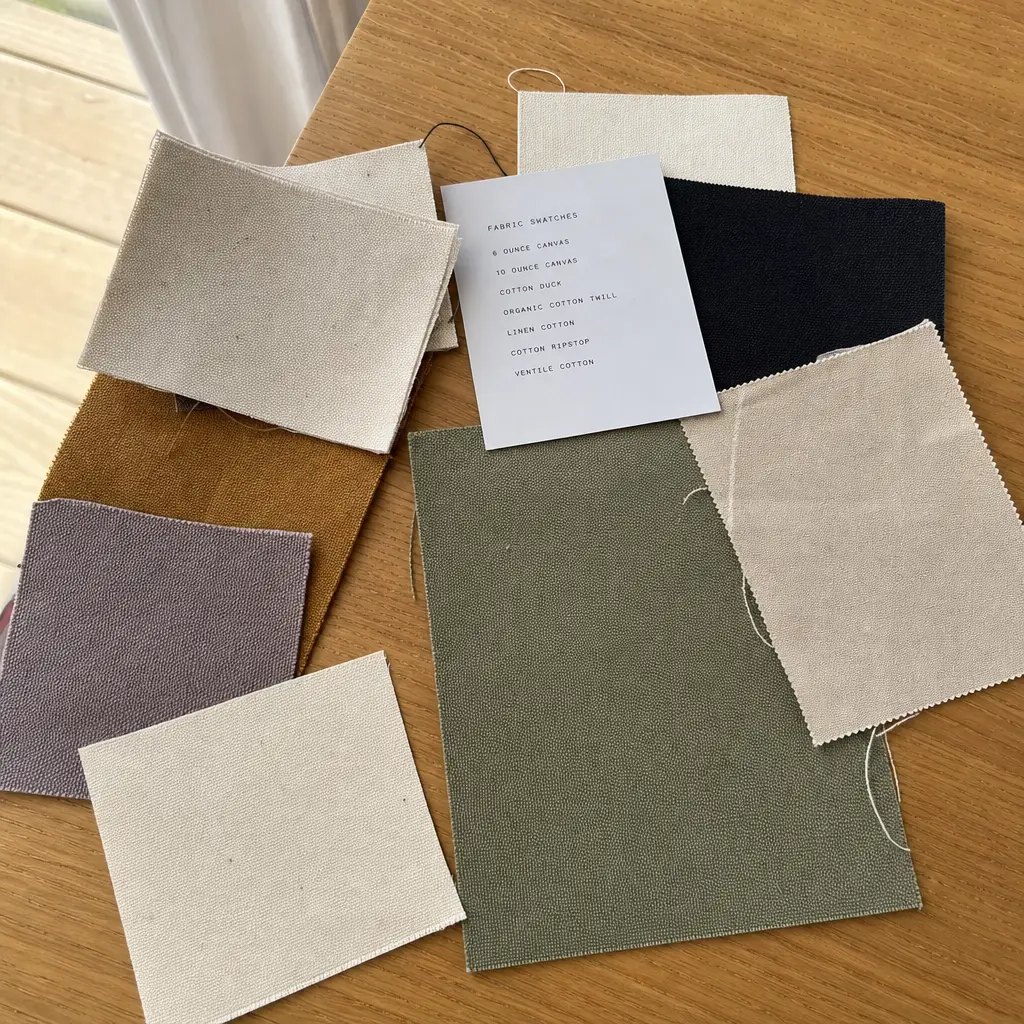
Cotton drawstring backpacks are usually priced by a mix of fabric weight, construction, and finishing. For trade show use, 8 oz / 240-260 gsm cotton canvas is often the most practical middle ground because it feels substantial without turning the bag into a premium retail item. A 5 oz bag is lighter and cheaper, but it is better for flyers and low-load handouts. A 10 oz bag looks and feels heavier, which can be useful for a higher-end brand program or for carrying denser sample kits.
GSM alone is not enough to control the quote. Ask the factory to define weave density, shrinkage expectation, and whether the cloth is natural, bleached, or dyed. Construction also matters: reinforced corners, double-needle seams, a stronger cord channel, and a cleaner eyelet finish all affect both durability and labor. If the bag will carry catalogs or a boxed product sample, ask for lower-corner reinforcement or a boxed stitch at stress points instead of waiting for bags to fail at the event.
- Use 5 oz / 170 gsm for light handouts and low-cost campaigns.
- Use 8 oz / 240-260 gsm for the most balanced trade show spec.
- Use 10 oz / 340 gsm when the bag needs a heavier hand feel or stronger perceived value.
- Confirm whether the factory uses sewn eyelets, metal eyelets, or a stitched cord channel, because each option changes cost and durability.
Print Method, Artwork, and Color Control
For most wholesale cotton drawstring backpack orders, screen print is the default when the logo is simple and the quantity is stable. It handles one to three solid colors well, gives clean coverage on cotton, and is usually the easiest method to price at volume. Digital transfer or heat transfer is better when the order is small, the artwork changes late, or the design includes more detail than a flat screen can hold. The tradeoff is that transfers can feel different on the hand and may not age the same way as a direct print, so the buyer should test the method on the actual fabric weight before signing off.
Ask where the logo sits relative to the top seam, cord channel, and side edge, not just whether it is centered on the front panel. A flat mockup can look correct while the real bag shifts once filled and pulled closed. For small text, thin lines, or fine symbols, request a strike-off on the exact production fabric because coarse cotton can make sharp edges look broken. If brand color matters, give the supplier a Pantone reference and ask them to confirm the match on the production cloth, not on a smooth paper proof.
- Send vector artwork, not a screenshot or low-resolution image.
- Define the exact print size in millimeters or centimeters.
- State whether both sides need decoration or only one side.
- Set a minimum line thickness for small copy so the print remains readable on woven cotton.
- Approve the decoration on the same fabric weight that will be used in bulk.
MOQ Logic and the Real Price Break
MOQ for cotton drawstring backpacks is usually driven by cloth width, cutting efficiency, print setup, and packing method rather than by the bag alone. A factory may accept a small pilot order, but the real price break often appears at 1,000 or 3,000 pieces because the screen setup, material waste, and labor are spread across more units. That is why buyers should ask for tiered pricing at several quantities instead of accepting one flat price that hides the economics of the run.
Do not compare a low-MOQ quote against a standard factory quote unless the print method and packing format are the same. A lower number can hide thinner fabric, fewer stitches, a one-side logo instead of a two-side logo, or bulk packing without polybags. Ask for a line-item quote that separates fabric, stitching, print setup, labels, polybags, cartons, and freight terms. Then compare landed cost, not just the unit price printed on the first line.
- Request price tiers at 500, 1,000, 3,000, and 5,000 pieces if the order could scale.
- Ask whether setup fees are one-time or recurring if you reorder the same artwork.
- Confirm if sample charges will be deducted from bulk or treated as a separate cost.
- Check for overrun and underrun policy, since some factories price tightly but ship within a production tolerance.
Which Supplier Route Fits Your Order
The comparison table in this guide is built around sourcing routes, not just spec fields, because the wrong supplier type causes most RFQ confusion. A direct factory is usually best when you control the artwork, quantity, and production timing. A trading company can be useful when you need one contact to coordinate multiple product lines or export paperwork. A regional promotional supplier can be faster when the deadline is fixed and the quantity is modest.
Match the supplier route to the real risk in your program. If the order needs retailer onboarding documents or internal vendor approval, the supplier has to show material traceability and inspection evidence. If the event is close and the bag is only a handout, speed and consistency may matter more than squeezing a few cents out of the quote. The right route is the one that reduces rework, not the one that sounds cheapest in an email.
- Use a direct factory when the spec is stable and you want the cleanest production control.
- Use a trading company when you need one PO to cover multiple items or multiple factories.
- Use a local supplier when speed matters more than exact factory cost structure.
- Use a factory with in-house print if color control and repeatability matter.
Evidence to Request Before Sample Approval
A sample is not a display piece. It is the working reference for the bulk order. Before approval, compare the bag against the spec sheet for fabric hand feel, stitch density, cord finish, logo placement, bag opening, and finished dimensions. If the sample is close on cloth weight but off on print size or cord length, stop there. Once production starts, small deviations become expensive to correct across the whole batch.
You also need to know whether the sample uses the same materials as the real order. Some suppliers prepare a neat sample with better cloth, better print, or hand-finished trimming that is not realistic in mass production. For cotton bags, the common traps are shrinkage after cutting, logo distortion after stitching, and puckering in the cord channel. Make the approval note specific enough that the factory can repeat it without interpretation.
- Keep one sealed golden sample and label it with the approved date.
- Record front, back, side, and inside photos of the approved sample.
- Write down any acceptable tolerance on logo position and bag size.
- Confirm that the approved sample uses the same cloth, print method, and cord as bulk production.
QC Thresholds That Matter on a Drawstring Backpack
Trade show buyers often focus too much on appearance and too little on tolerance stack-up. A bag can look fine on a single sample but fail in bulk when the cut size drifts short and the cord is slightly thin, which makes the top opening uneven. Set clear acceptance thresholds for the finished size, print alignment, seam strength, and carton count before production begins. That gives the factory an objective target and gives your inspector a simple pass-or-fail standard.
Do not ask for perfection. Ask for measurable consistency. Define whether a few millimeters of shift in logo placement are acceptable, whether loose threads are allowed if they are trimmed before packing, and whether the mouth of the bag must sit square when empty. These small decisions matter because they prevent every minor issue from turning into a production dispute. QC should protect the event deadline and the brand image at the same time.
- Measure finished size on random cartons and compare it to the approved sample.
- Verify print sharpness, opacity, and placement on the actual cotton surface.
- Pull test the cord knots, the cord channel, and the lower corners.
- Inspect for stains, oil marks, needle damage, and visible weave defects.
- Check carton labels, carton counts, and ship marks before the order leaves the factory.
Packing for Trade Show Delivery
Packing is where many RFQs fall apart because the buyer assumes the factory will use the right format automatically. Trade show orders often need retail-style polybags, count-by-booth packing, mixed-color cartons, barcode labels, or carton marks for multiple ship-to points. If the show team will open cartons on site, the packing plan matters almost as much as the bag itself. A good bag in the wrong carton format still creates work at the venue.
State whether the backpacks should be packed flat, folded with insert cards, or bulk packed in master cartons. Cotton is sensitive to moisture and dirt, so ask for clean polybags and, if needed, desiccants for humid routes. Also confirm carton size and gross weight if the shipment goes by air. Small differences in carton dimensions can change freight enough to erase any savings from a cheaper unit price.
- State the number of pieces per inner bag and per carton.
- Specify whether cartons need side marks, barcode labels, or booth identifiers.
- Ask for palletization only if your warehouse or freight forwarder requires it.
- Tell the supplier if mixed-color packs are allowed or if each carton must be color-sorted.
Lead Time, Landed Cost, and Final Quote Comparison
The right quote is the one that survives production, not the one with the lowest starting number. Compare sample lead time, bulk lead time after deposit, artwork freeze date, and whether the factory can hold the same fabric lot for a repeat order. A supplier that says 18 days but needs artwork finalized in 24 hours is not actually faster if your internal approval cycle takes a week. The calendar matters as much as the price.
Build your comparison sheet around landed cost and schedule risk. Include freight, duties, local receiving, carton rework, and any rush fee. Then compare how complete the quote is. A supplier that includes packing, overrun policy, and pre-shipment photo evidence can be more reliable than one that only gives a low unit price and leaves the rest blank. For event buyers, the cheapest quote only matters if it arrives on time, in the right carton count, and with the logo where the booth team expects it.
- Compare total landed cost, not only ex-factory price.
- Separate sample timing from bulk timing so the event date is not exposed.
- Check whether quote completeness includes packing and inspection details.
- Use the same spec sheet across all suppliers so the comparison is meaningful.
Specification comparison for buyers
| Spec decision | Recommended option | When it fits | Buyer risk to check |
|---|---|---|---|
| 500-1,000 pcs with one simple logo | Direct factory with in-house screen print | Pilot giveaways, first-time event orders, or a small booth program with stable artwork | Screen setup and small-run labor can move the quote if you change art after pricing |
| 1,000-5,000 pcs for repeat events | Direct cut-and-sew factory with locked fabric lot | Annual trade show calendars, reorders, or distributor programs that need repeatability | Confirm the same GSM, cord lot, and print ink on reorders, not just the same SKU name |
| Multiple SKUs or mixed bag programs in one PO | Trading company coordinating one production flow | When procurement wants one invoice, one export set, and bundled sourcing across product types | Verify they control the final inspection and carton labels, not only the purchase order |
| Tight deadline and artwork still changing | Regional promotional supplier or local decorator | Short lead events, urgent booth handouts, or programs where speed beats unit cost | Higher landed cost and weaker control over cotton grade, stitching, and consistency |
| Pantone-sensitive branding on natural cloth | Factory with calibrated screen print and strike-off approval | Brand teams that care about exact logo color, placement, and repeatability | Approve print on the actual production fabric, not on a smoother sales sample |
| Retailer onboarding or compliance paperwork | Factory with material traceability and inspection documents | Orders that need vendor setup files, carton traceability, or documented QC | Check that the reports match the exact cloth, print method, and production lot |
| Mixed ship-to addresses or booth kitting | Factory offering carton labeling and pick-and-pack | Distributor allocations, show services, or multi-location delivery plans | Confirm carton counts, label format, and handling instructions before bulk packing starts |
| Art will likely change late | Supplier with digital proofing and flexible decoration flow | Marketing is still finalizing copy or the logo layout may shift after quote | Do not lock in a screen-only process before art freeze if revisions are likely |
Buyer checklist before sampling
- Lock finished bag size, fabric type, and target GSM before asking for a price.
- State whether the cloth should be natural, bleached, dyed, or washed.
- Specify logo placement, maximum print size, print colors, and whether both sides need decoration.
- Give the intended load weight and what will be carried inside the bag at the event.
- Confirm cord type, cord diameter, and whether you want a stopper or a plain closure.
- Define packing count per polybag and per carton, plus any barcode or retail label requirement.
- Include ship-to country, incoterm, and whether freight must be quoted separately.
- Request tiered pricing at several quantities so you can see the real price break.
- Ask for sample lead time, production lead time, and shipping lead time as separate numbers.
- Set acceptable overrun, underrun, and defect thresholds before production starts.
Factory quote questions to send
- What fabric construction and finished GSM are you quoting, and does that match the production cloth or only the sample cloth?
- Is the decoration screen print, digital transfer, embroidery, or another method, and what is included in the unit price?
- What setup charges apply per color, per side, or per design, and are they one-time or recurring?
- What is the MOQ by color and by artwork version, not just the total order quantity?
- Can you quote the same backpack in natural cotton, bleached cotton, and dyed cotton so we can compare landed cost?
- What is the sample fee, what does the sample include, and can any sample charge be credited to bulk production?
- What inner packing, carton size, and carton count per case do you propose for this order?
- What are your production lead time and approval milestones after artwork confirmation and deposit?
- What overrun or underrun policy applies, and how many spare pieces do you normally allow?
- Which documents can you provide for material traceability, inspection, and packing verification?
Quality-control points to confirm
- Measure finished size on random cartons and compare it to the approved spec sheet and sealed sample.
- Verify fabric weight, weave density, and hand feel against the approved production sample.
- Check print placement, print size, ink opacity, and edge sharpness on the actual cotton fabric.
- Pull test cord knots, cord channel seams, and lower corner stress points for basic strength.
- Inspect the cord channel for puckering, skipped stitches, loose threads, and frayed cord ends.
- Check color consistency across cartons and between production lots if the order is split.
- Reject bags with stains, oil marks, needle damage, or visible fabric defects in the main panel.
- Count pieces per carton and verify that carton marks, barcode labels, and ship marks are correct.
- Confirm that individual polybags, desiccants, and moisture protection are packed as specified.
- Keep one sealed golden sample and photo record for dispute resolution and reorder control.