Buying Problem
Natural grocers usually buy cotton drawstring backpacks for store openings, loyalty programs, staff kits, sampling events, reusable gift packaging, or private-label merchandise. The buying problem is not simply finding a low price. The real issue is building a bulk pricing plan that protects the brand image while keeping the unit cost, carton volume, delivery schedule, and reorder process under control.
A cotton drawstring backpack looks simple, but quote gaps appear quickly when suppliers assume different fabric weights, cord types, print methods, and packing standards. One supplier may quote a light 120 GSM cotton bag with thin polyester cord and bulk packing. Another may quote 8 oz canvas with cotton drawcords, reinforced corners, and individual barcode packing. Both quotes may say cotton drawstring backpack, but they are not commercially comparable.
- Use one controlled specification sheet before collecting prices.
- Separate promotional giveaway quality from resale merchandise quality.
- Price by quantity tier, print design, packaging format, and shipping term.
- Treat fabric weight, cord strength, and print method as cost drivers, not minor details.
Core Specification
For natural grocery buyers, the most practical starting point is a natural cotton backpack around 34 x 42 cm or 35 x 45 cm, with a drawstring top and cord shoulder straps. That size is large enough for produce bags, brochures, small pantry items, or sampling kits without feeling oversized for daily use. If the backpack will carry heavier items such as glass bottles or books, the construction needs reinforcement and a stronger fabric than a basic event giveaway bag.
Fabric weight should be stated in oz or GSM, and preferably both. A light cotton backpack may be around 120-150 GSM, often used for low-cost promotions. A stronger cotton canvas option may be 6 oz to 8 oz, roughly 200-270 GSM depending on construction. For resale or higher-value grocery membership packs, 8 oz cotton canvas gives a more stable hand feel and better print surface, but it increases unit cost, carton weight, and freight cost.
- Entry promotional option: 120-150 GSM cotton, suitable for short campaigns and light contents.
- Mid-range grocery option: 180-220 GSM cotton or light canvas, better for repeated customer use.
- Premium or resale option: 6 oz to 8 oz cotton canvas, stronger hand feel and cleaner presentation.
- Common size range: 34 x 42 cm to 35 x 45 cm, adjusted for intended load and store display method.
- Reinforcement: bar tack or extra stitching at cord exits and lower corners when load is above basic flyer use.
Fabric Cost Logic
Fabric is usually the largest material cost in a cotton drawstring backpack. A move from light cotton to 8 oz canvas can change the quote more than a small logo size change. Natural unbleached cotton is often cost-effective and fits natural grocer positioning, but the buyer should allow shade variation unless the fabric is dyed or controlled to a stricter standard. If the bag is sold at retail, shade consistency matters more than it does for a one-day giveaway.
Organic cotton, recycled cotton, and certified material requests require earlier planning. These options can affect MOQ because the factory may need to purchase fabric in full rolls or meet mill minimums. Buyers should avoid asking for many fabric alternatives in one vague RFQ. It is better to request two clear price levels, such as 150 GSM promotional cotton and 8 oz cotton canvas, then compare the commercial impact.
- Fabric roll MOQ can drive the real order MOQ, especially for dyed or certified material.
- Natural cotton may show seed flecks and shade variation; define what is acceptable.
- Dyed cotton needs lab dip approval and may add time before production cutting.
- Washed cotton feels softer but can shrink and distort dimensions if not controlled.
- Heavier fabric improves perceived value but increases freight weight and carton CBM.
Bulk Pricing Plan
A useful bulk pricing plan should show how the unit price changes when fixed costs are spread across more pieces. Screen setup, sample development, fabric sourcing, cutting setup, packing artwork, and export documentation do not scale in the same way as fabric consumption. This is why a 500 piece order may look expensive while a 3,000 or 5,000 piece order becomes more efficient.
For natural grocers, price tiers should match real demand planning instead of random round numbers. A regional chain may need 1,000 pieces for a launch, 3,000 pieces for several stores, and 10,000 pieces for an annual program. Distributors may need mixed cartons by customer, while brand owners may need one master design with several shipment dates. The quote should state whether tier pricing applies to one shipment or an annual forecast with call-off orders.
- Request price tiers at 1,000, 3,000, 5,000, and 10,000 pieces if the program may scale.
- Clarify whether pricing assumes one logo, one fabric color, one size, and one packing method.
- Separate sample cost, mold or screen cost, label cost, inspection cost, and freight estimate.
- Ask whether split shipments change the unit price or only the logistics cost.
- Define price validity, especially when cotton fabric or freight markets are moving.
Print Method
Screen printing is often the most economical method for cotton drawstring backpacks with one to three solid logo colors. It works well on natural cotton if the artwork is not too fine and the buyer accepts the slightly textured result caused by the fabric weave. For natural grocers using earthy logos, simple line art, store names, or campaign slogans, screen print is normally the first method to price.
Heat transfer and digital print can handle more colors or gradients, but they change the feel of the bag and may not match a plastic-free brand position. Embroidery looks durable but can pucker lighter cotton and costs more for large artwork. A woven side label is a good option when the buyer wants subtle branding or multiple bag colors under the same brand system. The print method should be chosen for use case, artwork style, and wash expectation, not only for unit price.
- Screen print: best for solid logos, larger runs, and controlled cost.
- Water-based ink: softer hand feel, often preferred for natural cotton positioning.
- Plastisol ink: stronger opacity on some fabrics, but heavier print hand.
- Heat transfer: useful for complex artwork, but test adhesion and hand feel.
- Embroidery: better for small premium marks, not large dense front graphics on light fabric.
- Woven label: useful for understated brand identity and easier repeat production.
MOQ and Order Splits
MOQ is rarely only a sewing line number. It is connected to fabric roll usage, dye lot, cord purchasing, print setup, cutting efficiency, and packing labor. A factory may accept 500 pieces of a standard natural cotton backpack, but the quote may carry a higher unit price because setup time is spread across fewer pieces. For dyed fabric, custom cord color, or special labels, the practical MOQ can increase.
Buyers often create avoidable cost by splitting one program into too many designs. Five store logos at 500 pieces each may cost more than one shared regional logo at 2,500 pieces. If store-level branding is required, consider a standard printed backpack with a removable hangtag, carton label, or small sticker applied locally. This keeps the sewing and printing run efficient while preserving some local merchandising flexibility.
- One fabric color plus one logo is the cleanest way to reach efficient MOQ.
- Multiple print designs should be priced as separate setup lines, even if total quantity is high.
- Custom dyed fabric should be planned with fabric mill MOQ, lab dip time, and shade approval.
- Custom cord color may require its own MOQ or surcharge.
- A shared master backpack plus store-specific hangtag can reduce production complexity.
Sample Approval
A proper approval path prevents most cotton backpack disputes. The first sample step should confirm fabric hand feel, finished size, drawcord function, and seam construction. The print strike-off should be made on the same fabric type as the bulk order, because ink color and edge clarity look different on paper, 120 GSM cotton, and 8 oz canvas. A buyer should not approve logo color only from a digital rendering.
The pre-production sample should be treated as the contract reference. It needs the final fabric or approved substitute, final drawcord, final print size, final packing style, and all labels. If a factory cannot provide a complete pre-production sample before bulk cutting, the buyer should at least approve a complete construction sample and a separate production fabric swatch. Keep one signed or sealed sample at the factory and one with the buyer or inspection agent.
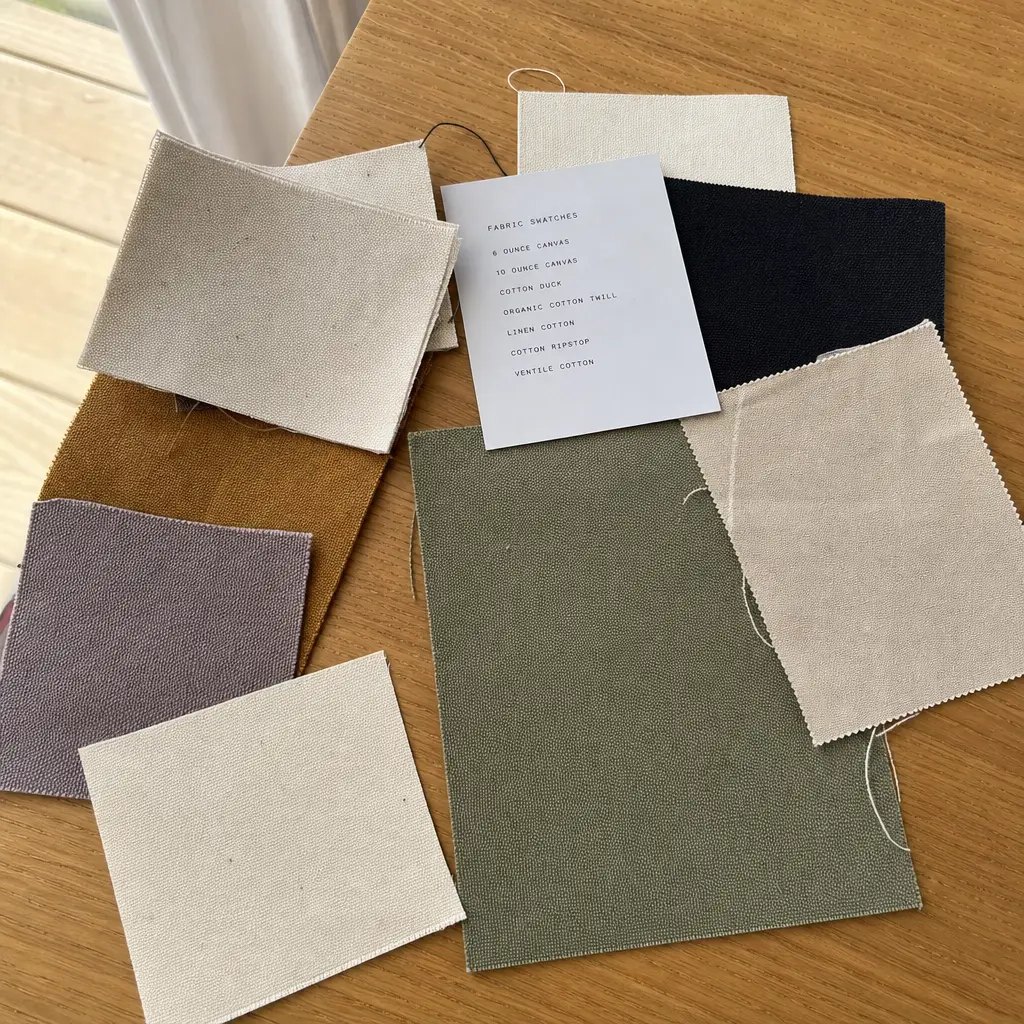
- Fabric swatch approval: shade, weight, weave, hand feel, and visible cotton specks.
- Print strike-off approval: ink color, print size, position, edge clarity, and rub resistance.
- Construction sample approval: finished dimensions, seam allowance, cord channel, stress points.
- Packing sample approval: fold method, inner pack, barcode, hangtag, carton mark.
- Bulk reference sample: sealed and used by QC during inline and final inspection.
QC Thresholds
Cotton drawstring backpacks should be inspected for function, appearance, and count accuracy. A bag can look acceptable in a photo but fail in use if the cord tears the corner seam or the channel stitching is too weak. Natural grocery programs often involve public-facing campaigns, so inconsistent logo placement, stains, or poor folding can create store-level complaints even when the bag is technically usable.
Set acceptance criteria before production. Finished size tolerance, print position tolerance, stitch density, loose thread standard, stain classification, and carton quantity tolerance should be written in the PO or inspection checklist. For third-party inspection, many buyers use general AQL sampling, but the defect list must be product-specific. Critical defects include unsafe contamination, mold, wrong artwork, and missing required labels. Major defects include broken drawcords, wrong size beyond tolerance, severe stains, open seams, and badly misplaced print.
- Finished size: commonly within plus or minus 1 cm unless tighter tolerance is agreed.
- Print position: define allowed shift from center or from top edge before production.
- Stitching: no open seams, skipped stitches at stress points, or loose cord channel seams.
- Drawcord function: cord slides evenly and supports the intended light load.
- Appearance: no oil stains, mold, heavy slubs, obvious dirt, or mixed fabric shades in one carton.
- Count accuracy: carton quantity and inner packing quantity must match the packing list.
Packing and Freight
Packing affects cost more than many RFQs show. Bulk packing in master cartons is cheapest, but it may not work for retailers that need clean store distribution or barcode receiving. Individual polybags add material and labor, and some natural grocers prefer paper bands, kraft sleeves, or plastic-free bulk packing. The buyer should decide this early because packing format changes carton quantity, CBM, labor time, and sometimes moisture protection.
Freight comparison should use carton data, not only unit price. A heavier 8 oz cotton canvas backpack may still be a good product choice, but the landed cost must include gross weight, carton dimensions, duty basis, inspection cost, and destination handling. For importers comparing suppliers, request estimated carton size and gross weight per 1,000 pieces at the quote stage. Even an approximate CBM helps prevent a low FOB quote from becoming expensive after booking.
- Bulk pack: lowest cost, suitable for events or warehouse repacking.
- Individual polybag: cleaner handling, but may conflict with plastic reduction goals.
- Paper band or kraft sleeve: better retail presentation, higher packing labor and material cost.
- Carton marks: include item number, PO number, quantity, gross/net weight, destination, and barcode if needed.
- Moisture control: use dry cartons and suitable warehouse handling for natural cotton goods.
- Landed cost: compare unit price plus freight, duty, inspection, receiving, and repacking.
Lead Time Risk
Lead time should be broken into approval time and production time. A supplier may quote 25-35 days, but that often starts after deposit, final artwork, fabric confirmation, and sample approval. If the buyer delays artwork approval or changes print size after the strike-off, the factory schedule moves. For natural grocers planning seasonal promotions, opening dates, or holiday campaigns, the calendar must include decision time, not only factory sewing time.
The highest schedule risks are custom fabric, dyed color, complex artwork, delayed sample feedback, and late packing changes. Reorders are faster when the buyer keeps the same size, fabric, cord, print method, and packing format. A well-managed annual program should keep the approved sample and quote structure active, then adjust only quantity and delivery date when possible.
- Allow time for fabric swatches before committing to natural, dyed, recycled, or organic cotton.
- Approve print strike-off before bulk printing, especially for brand green, brown, black, or cream tones.
- Freeze packing before carton production and barcode label printing.
- Book inspection before the final production week to avoid shipping delay.
- For repeat orders, reference the previous approved sample, PO number, and inspection report.
Specification comparison for buyers
| Spec decision | Recommended option | When it fits | Buyer risk to check |
|---|---|---|---|
| Direct factory bulk order | Use for stable 2,000-20,000 piece programs with repeat seasonal demand | Best for natural grocers, distributors, and private labels that can approve one master spec and reorder by store count | Low unit price can hide weak sampling discipline; require sealed sample, fabric GSM record, print strike-off, and carton packing details before deposit |
| Trading company consolidation | Use when backpacks ship with other reusable bags or mixed promotional items | Useful for importers building one container or retailers needing multiple categories under one invoice | Supplier may not control sewing line directly; request factory name, production photos, pre-shipment inspection access, and component traceability |
| Domestic wholesaler stock blanks | Use for urgent small batches with local decoration | Fits 100-800 piece events, store openings, and last-minute campaigns where speed matters more than unit cost | Limited color and fabric weight choices; blank backpack dimensions may shift between stock lots |
| Cut-and-sew custom production | Specify fabric GSM, drawcord material, seam allowance, reinforcement, print size, and packing | Best for branded retail merchandise or loyalty programs where bag feel and durability affect customer perception | A vague RFQ will create quote gaps; every supplier may price a different bag unless the tech pack is controlled |
| Single large PO pricing | Negotiate one tier for the full quantity with all materials purchased together | Works when artwork, color, and delivery window are fixed | Overbuying can create storage cost and obsolete branding; compare against split shipment and reorder options |
| Tiered annual pricing plan | Set pricing at 1,000, 3,000, 5,000, and 10,000 pieces with validity period | Useful for grocery chains allocating quantities by region or quarter | Fabric and labor changes can affect validity; define whether prices include same artwork, same size, and same packaging |
| Factory sample approval route | Approve fabric swatch, print strike-off, pre-production sample, then bulk reference sample | Appropriate when logo color, natural cotton shade, and stitch quality must stay consistent | Skipping strike-off approval often causes print color disputes after mass production |
| Landed-cost sourcing route | Compare EXW, FOB, CIF, and delivered cost using the same carton CBM and gross weight | Needed by importers and distributors comparing Asian factory quotes with local supply | A cheaper FOB unit price may lose advantage if carton volume, repacking, duties, or inspection cost are higher |
Buyer checklist before sampling
- Define the backpack size in finished dimensions, not flat fabric cut size; common adult promotional sizes are around 34 x 42 cm, but grocery use may need stronger corners and a slightly wider opening.
- State fabric construction and weight clearly, such as 6 oz cotton, 8 oz cotton canvas, or 120-280 GSM cotton, and require tolerance on finished GSM.
- Decide whether the bag must be natural unbleached cotton, dyed cotton, recycled cotton blend, or organic cotton; each choice changes cost, shade consistency, and lead time.
- Specify drawcord type, diameter, color, and whether the cord is cotton, polyester, or blended; cord cost and abrasion resistance affect both quote and user feel.
- Include print size, number of print colors, print location, Pantone references, and whether artwork can accept minor natural-fabric ink variation.
- Require reinforcement details at the cord exit points or bottom corners if the backpack will carry grocery samples, produce, books, or glass jars.
- Request MOQ by fabric color and print design, not only by total order quantity; split designs can push the order below efficient production levels.
- Confirm packing method, pieces per polybag or paper band, carton quantity, carton size, gross weight, and whether retail barcode labels are required.
- Build the approval schedule into the PO: fabric swatch, print strike-off, pre-production sample, production start, inline inspection, final inspection, shipment booking.
- Compare quotes on the same Incoterm, same carton data, same payment terms, and same inspection responsibility before choosing the lowest unit price.
Factory quote questions to send
- What fabric weight and construction are included in your quote, and what GSM tolerance will you accept during inspection?
- Is the quoted fabric greige, washed, bleached, dyed, recycled, or organic cotton, and can you provide a fabric swatch from the production lot before cutting?
- What is the MOQ for one size, one fabric color, and one print design, and how does pricing change at 1,000, 3,000, 5,000, and 10,000 pieces?
- Which print method are you quoting for our logo size and color count: screen print, heat transfer, digital print, embroidery, woven label, or another method?
- What drawcord material, cord diameter, and reinforcement method are included, and have you allowed extra stitching at stress points?
- How many pieces are packed per inner bag and master carton, and what are the estimated carton dimensions, gross weight, and CBM per 1,000 pieces?
- What sample steps are included in the timeline, and what cost applies for sample making, print strike-off, courier, and sample revision?
- What lead time starts after deposit and artwork approval, and what lead time starts only after pre-production sample approval?
- Can your factory support third-party inspection against AQL, and which defects do you classify as critical, major, and minor for cotton drawstring backpacks?
- Does the quote include hangtags, barcode labels, carton marks, moisture control, export packing, customs documents, and any retail compliance packaging?
Quality-control points to confirm
- Finished size tolerance should be agreed before production, commonly within plus or minus 1 cm for width and height unless the buyer requires tighter retail presentation.
- Fabric weight should be verified by cutting and weighing fabric from the production lot, not only by relying on the supplier's quotation line.
- Natural cotton shade should be checked under consistent light because unbleached cotton can vary between creamy, gray, and yellow tones across fabric lots.
- Drawcords should pull smoothly through the top channel without tearing stitches, twisting heavily, or exposing raw edge threads.
- Stress points at bottom corners and cord attachment areas should pass a basic pull test suitable for the intended load.
- Screen print edges should be clean enough for the artwork style, with acceptable ink penetration and no heavy cracking after folding.
- Ink color should be compared to the approved strike-off on the same fabric, not to Pantone paper alone.
- Needle holes, skipped stitches, loose threads, oil marks, stains, fabric slubs, and broken drawcords should be classified in the inspection standard.
- Cartons should be dry, correctly marked, export suitable, and packed consistently so the buyer can verify count without repacking the shipment.
- Final inspection should include quantity count, dimension check, fabric appearance, print position, stitching, drawcord function, packing, carton marks, and barcode scan where applicable.