1. Why logo placement belongs in the procurement spec
Coffee roasters buy wholesale cotton drawstring backpacks for many practical reasons: cupping events, subscription inserts, retail gift sets, staff packs, trade show handouts, wholesale partner kits, or light merchandise. In all of those uses, the logo is expected to be seen. It should read clearly when the backpack is flat on a table, hanging from a peg, filled with coffee products, pulled closed, or worn over a shoulder. That is why logo placement should be treated as a production specification, not a final styling note.
A cotton drawstring backpack behaves differently from a coffee box, label, tin, or pouch. The panel is soft. The top gathers when the cords are pulled. Side seams can pull inward. The lower panel can sag around a 250 g or 340 g coffee bag, brew card, sample pouch, event badge, or cup. A mark that looks perfectly balanced in a flat digital proof may sit too high once the top channel closes, or disappear visually when the bag is packed.
For B2B procurement teams, the goal is not only attractive branding. The goal is repeatable production. Marketing can choose the look, but purchasing has to translate that look into measurements a factory can quote, sample, and inspect. The order should define finished dimensions, safe print area, artwork size, measurement origin, print method, tolerance, and packing fold before bulk starts. If those details are left open, logo placement becomes a matter of opinion during final inspection, which is too late and too expensive.
- Treat placement as a measurable specification with millimeter references.
- Approve the logo on the finished bag construction, not only on a flat digital mockup.
- Check the backpack flat, closed, filled, and folded before bulk approval.
- Use the approved sample as the reference for production and reorders.
- Write tolerance and defect limits into the PO or tech pack before bulk starts.
2. Start with use case, bag size, and real contents
Logo placement should follow the way the backpack will be used. A bag handed out with a flyer at a public tasting does not need the same construction or print position as a retail gift bag packed with coffee, a brew guide, and a cup. Before asking a supplier for a quote, decide whether the order is for a giveaway, staff item, resale merchandise, subscription insert, or partner-facing gift. That decision affects fabric weight, logo size, packing, acceptable defects, and budget.
Next, specify the bag by finished size in millimeters. Catalog words such as “standard,” “medium,” or “large” are not enough because factories use different patterns. A common range may include sizes around 300 x 400 mm or 350 x 450 mm, but the usable print area changes with channel depth, seam allowance, corner reinforcement, and cord construction. Ask the factory to confirm finished width, finished height, top channel depth, opening width, and lower corner style.
Then test the likely load. A low logo may look refined on an empty sample, yet sit in the bulging lower area after the backpack is filled. A high logo may look sharp when flat, then wrinkle when the drawcords close. For many medium cotton drawstring backpacks, a simple logo with the top of artwork roughly 80-120 mm below the finished top edge can be a useful starting point. It is not a universal rule. It is a sampling position to verify with the final size, final fabric, and actual contents.
- Write finished size in millimeters and include acceptable tolerance.
- List typical contents and approximate weight or bulk.
- Identify whether the bag is a giveaway, retail gift, resale item, or internal staff pack.
- Confirm the top channel depth before calculating logo position.
- Ask for a filled-sample photo if the backpack will carry coffee products or event materials.
3. Define the safe print zone before approving artwork
The front of a cotton drawstring backpack is not one uninterrupted printable rectangle. The top section includes the cord channel and gathers when closed. The side areas include seams and sometimes tension from stitching. The bottom area may fold, sag, or sit against the packed contents. If the logo crosses into any of those zones, the result can still pass a casual glance but fail brand expectations when the bag is used.
A practical way to avoid this is to ask for a marked safe print zone on the finished front panel. Exclude the top channel, reserve side clearance, and treat the bottom as a caution area if the bag will carry coffee or bulky materials. For many medium bags, buyers often start with at least 25-40 mm clearance from side seams for normal front-center printing. The exact safe distance depends on bag width, seam construction, logo size, and whether decoration happens before or after sewing.
Clear measurement language prevents most placement disputes. “Center the logo” sounds simple, but it leaves room for interpretation. State whether vertical placement is measured from the finished top edge to the top of the artwork, center of the artwork, or bottom of the artwork. For horizontal placement, use the finished front panel centerline or equal distance from both finished side seams. A mockup can support the instruction, but it should not replace the written measurement.
- Ask for a marked print-zone drawing on the finished bag size.
- Exclude the cord channel and gathered top area from the print zone.
- Keep artwork away from side seams, reinforcement points, and expected fold lines.
- Define vertical placement by top, center, or bottom of artwork.
- Define horizontal placement by finished panel centerline, not rough visual judgment.
4. Placement options that usually work for coffee roaster branding
For most wholesale cotton drawstring backpacks for coffee roasters, front-center placement is the safest and easiest to manage. It photographs well, reads quickly, and gives QC inspectors a clear reference point. It also suits many roaster logos: wordmarks, simple badges, cafe names, subscription campaign marks, or wholesale partner gift branding. If there is one primary logo, front center should usually be the first option tested.
Higher front-center placement can look clean, especially on an empty bag. The risk is the cord channel. When the user pulls the cords, the top panel gathers, and a logo too close to that area can wrinkle or be partly obscured. Lower placement has a more casual merchandise feel, but it can be hidden by bottom sag or by the shape of coffee products inside the bag. The sample should therefore be reviewed in real conditions, not just flat on a desk.
Corner placement, lower side marks, and small secondary branding can work when a roaster wants a subtle look. They are less reliable for primary recognition because wrinkles and seam pull become more noticeable. Back-panel placement is better for secondary information, partner marks, or optional QR codes. If a QR code is used, test the actual printed sample after closing and lightly wrinkling the bag. Small codes and fine text may fail on textured cotton even when the digital file is technically correct.
- Use front center for the highest visibility and simplest QC.
- Keep the primary logo below the cord channel and gathered area.
- Avoid very low placement if the bag will carry coffee bags or bulky retail items.
- Use corner branding only when subtle visibility is acceptable.
- Physically test QR codes and small text on the final fabric and print method.
5. Fabric GSM, cotton color, and construction change the print result
Fabric weight influences both presentation and print quality. A 140 GSM cotton backpack can be appropriate for high-volume promotional distribution, but it may wrinkle more easily and show more fabric texture through the print. A 160-180 GSM bag is often a balanced choice for coffee roaster gifts and light merchandise because it feels more substantial while still folding efficiently. A 200 GSM or heavier bag can feel more premium, but it can also increase material cost, freight weight, carton volume, and closure stiffness.
Construction details matter just as much as fabric weight. A deeper cord channel reduces the usable print area. Thick cotton cords gather the upper panel more aggressively than thinner cords. Metal eyelets, sewn corner tabs, bartacks, reinforced lower openings, gussets, or contrast panels all affect where a logo can sit cleanly. If the bag is not a simple flat-panel construction, do not let the supplier use a generic print template. Ask for a print-zone drawing based on the actual pattern.
Cotton color also changes the logo. Natural cotton is popular with coffee roasters because it fits craft, organic, and low-waste brand language, but it is not a bright white base. Black, dark brown, navy, and forest green usually create stronger contrast than pale beige, warm gray, or low-opacity white. On dyed cotton, the fabric shade can shift the final ink or transfer color. Approve decoration color on the actual cotton, not only from a Pantone book or screen proof.
- Use 140 GSM when cost and lightweight distribution are the priority.
- Use 160-180 GSM for many retail gift and merchandise programs.
- Use 200 GSM+ only after checking closure feel, folding, carton CBM, and decoration result.
- Confirm cord type, channel depth, seam allowance, and reinforcement before approving artwork.
- Approve print color on the actual cotton shade under consistent lighting.
6. Choose the print method around artwork risk, not habit
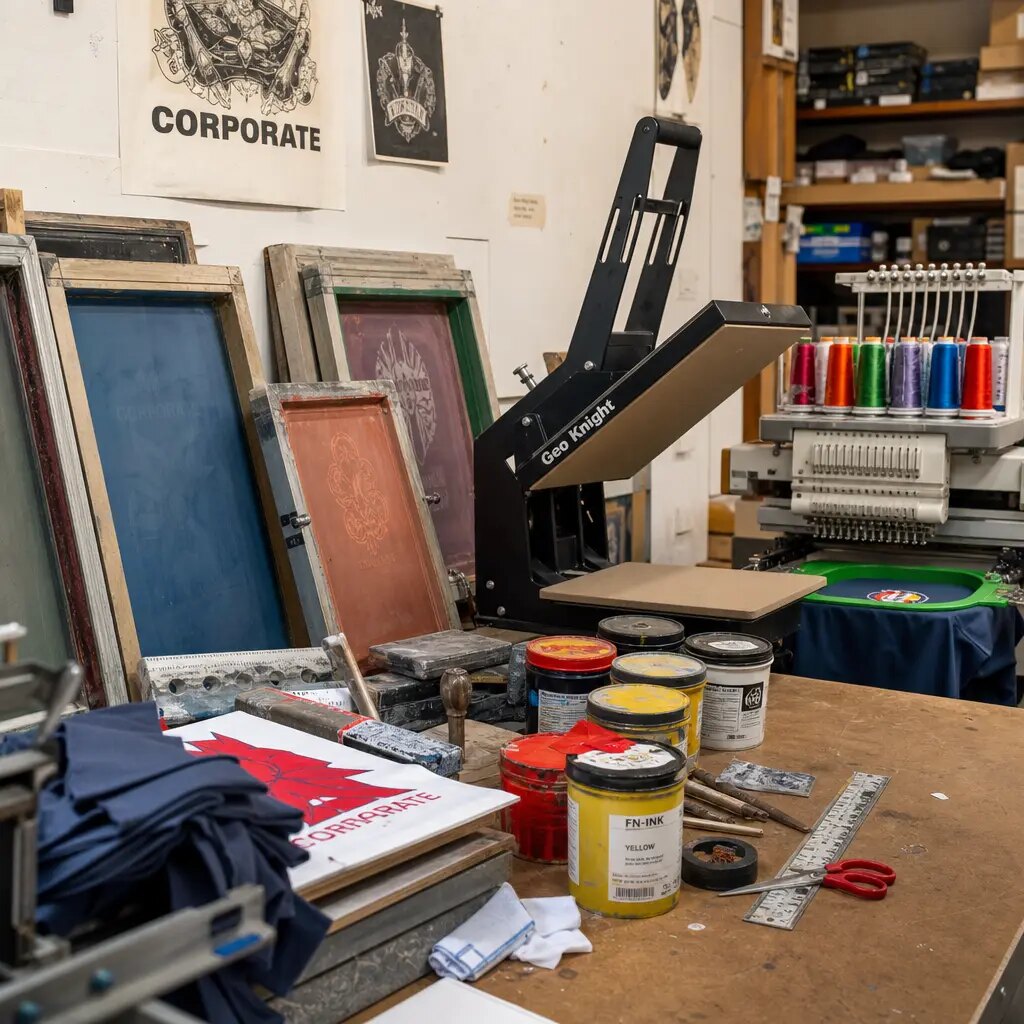
One-color screen printing is commonly the most practical choice for simple coffee roaster logos on cotton drawstring backpacks. It suits bold typography, icons, badges, and repeat orders. It also gives procurement teams a straightforward cost structure: number of colors, screen or setup charge, print size, and unit decoration cost. For a black or dark brown logo on natural cotton, it is usually the first method worth quoting.
Heat transfer can be useful for multi-color artwork, campaign graphics, gradients, or lower quantities where several screens are not efficient. The tradeoff is feel and fold behavior. A transfer may feel stiffer than screen print, and poor matching can lead to edge lift, bubbling, cracking, scorching, a visible transfer outline, or adhesion problems. If the backpack will be folded tightly for packing, ask to review a packed sample before approving bulk production.
Embroidery can look premium, but it is not automatically the best option. Dense stitching can pucker lighter cotton, distort the panel, and reduce clarity in fine text. It works better on heavier cotton and simpler marks with enough size to hold stitch detail. Buyers should ask about digitizing cost, thread color references, stitch count impact on price, backing method, and whether embroidery is completed before or after sewing. A stitched logo should be judged on the actual GSM, not on a generic embroidery sample.
- Choose screen print for simple logos, repeat orders, and strong cost control.
- Choose heat transfer only after testing adhesion, folding, and hand feel.
- Choose embroidery for premium positioning on suitable heavier cotton.
- Ask for minimum line thickness and minimum readable text height by method.
- Quote each method separately so setup, unit cost, and risk are visible.
7. Write an RFQ a factory can price without guessing
A good RFQ makes the supplier’s assumptions visible. For wholesale cotton drawstring backpacks, include the finished size, fabric GSM, cotton color, cord material and color, construction details, logo file, print method, print color, logo size, placement coordinates, tolerance, quantity, packing method, delivery term, and sample requirement. Without those details, two suppliers may quote very different products while appearing to answer the same request.
The placement instruction should read like a production note, not a design caption. For example: “Front panel, centered horizontally on finished bag; top of artwork 95 mm below finished top edge; logo width 100 mm; one-color black screen print; keep print clear of cord channel, side seams, lower reinforcement, and packing fold; placement tolerance ±5 mm from approved pre-production sample.” That sentence gives the merchandiser, print operator, sewing team, and QC inspector the same target.
Also clarify what happens if the sample needs revision. If the supplier follows the written spec and the buyer later changes the preferred position, the revision is usually a buyer change. If the supplier misses the agreed measurement, it should be treated as a supplier correction. This distinction matters because sample revisions affect cost and schedule. Measured drawings and dated approvals prevent unnecessary arguments.
- Attach vector artwork and a 1:1 placement drawing.
- State print method, color, logo width, and measurement origin.
- Request itemized costs instead of one blended unit price.
- Separate blank MOQ, decoration MOQ, and MOQ per logo version or color.
- Ask the factory to confirm the placement drawing before making the sample.
8. Sampling: review the real backpack, not the shortcut
A digital mockup is useful for internal discussion. It is not enough for bulk approval. It cannot show how ink sits on cotton, how natural fabric shade affects contrast, how the top channel gathers, or how the finished bag folds. A proper pre-production sample should use the final fabric weight, final cotton color, final construction, final logo size, final placement, and final decoration method. A blank sample plus a PDF proof leaves too many production risks open.
Sample review should imitate the actual job. Lay the backpack flat and measure the logo from the finished top edge and side seams. Pull the cords closed and check whether the artwork wrinkles or shifts visually. Add typical contents: a coffee bag, brew card, cup, apron, catalog, or event insert. Then fold the bag in the proposed packing method and check for creasing, scuffing, offset transfer, cracking, or a fold line through the logo. Take photos with a ruler visible so approval is based on evidence, not memory.
Avoid vague sample comments such as “move slightly lower” or “make it cleaner.” If something needs to change, write the new measurement, color target, line-weight concern, or defect correction clearly. For repeat orders, keep the golden sample, artwork revision, placement drawing, carton specification, and approval date together. Reorders are far easier when the supplier and buyer can return to the same reference set.
- Require final fabric, final construction, final artwork, and final print method.
- Measure the sample flat, closed, filled, and folded.
- Photograph placement with a ruler or measurement marks visible.
- Do not approve vague corrections without measurable instructions.
- Keep the golden sample and production records for reorders.
9. QC standards: decide what passes before production starts
Quality control should not depend on whether a backpack “looks good.” That phrase is too subjective for a bulk order. Define measurable checks before production: logo position, print size, color reference, print clarity, finished size, seam strength, cord function, fabric defects, packing count, and carton marking. The approved sample is the visual reference, while the tech pack and purchase order provide the measurement reference.
For a simple front-panel screen print, many buyers use a logo placement tolerance around ±5 mm vertically and horizontally from the approved measurement. Finished-size tolerance for soft cotton bags is often broader, such as ±10 mm, unless tighter control is agreed. These are practical examples, not automatic rules. If a project needs tighter placement, state it before the quote because it may require more setup control, slower inspection, and a higher reject risk.
Defect classification should be written before final inspection. Major defects may include the wrong logo, wrong color, severe off-center placement, unreadable text, heavy smudging, peeling transfer, broken cord, open seam, or an obvious stain on the front panel. Minor defects may include a small loose thread or a natural cotton slub within the approved standard. If AQL inspection is used, define critical, major, and minor categories in advance so the inspector is not interpreting brand expectations on the shipment date.
- Measure logo placement on finished bags, not only on cut panels.
- Check print defects by method: screen print, heat transfer, or embroidery.
- Inspect seams, cord channel, and finished size because they affect logo presentation.
- Define major and minor defects before final inspection.
- Tie inspection photos to carton numbers, batch numbers, or production dates when possible.
10. Packing, labeling, MOQ, lead time, and landed cost
Packing affects logo condition. Cotton backpacks can pick up lint, dust, cord abrasion, or carton rub marks if they are packed loosely. If printed faces are stacked too soon or folded through a heavy print area, the logo can scuff, offset, crack, or take a permanent crease. The purchase order should state fold direction, printed-face orientation, inner pack count, master carton count, carton marks, SKU labels, and whether mixed colors or logo versions are allowed in one carton.
Receiving accuracy is especially important for coffee roasters shipping to multiple cafes, distributors, events, or wholesale partners. Carton labels should identify item name, bag color, logo version, quantity, PO number, and destination when applicable. Inner packs of 10, 25, or 50 pieces may be convenient, but the best count depends on bag size, fabric weight, warehouse process, and downstream kitting needs. If the logo finish is sensitive, request packing photos before shipment.
MOQ and lead time should be broken into components. A supplier may have one minimum for sewing the blank bag and another economic minimum for screen printing, embroidery digitizing, heat-transfer setup, or logo-version changes. Multiple bag colors, seasonal campaign marks, or location-specific roaster logos can create separate setup charges. Lead time includes artwork review, sample production, sample shipping, internal approval, bulk cutting and sewing, decoration, curing or finishing, packing, inspection, inland freight, and export movement.
Compare landed cost, not just the first unit price. Ask for blank bag price, decoration price, setup fees, sample charges, revision fees, courier charges, packing and labeling fees, inland freight, export terms, palletization if needed, and documentation costs. For repeat programs, ask whether the supplier retains artwork files, placement drawings, screens, and production notes. A well-written logo placement guide pays off most clearly when the second and third orders match the first.
- Specify fold direction and avoid fold lines through sensitive logo areas where possible.
- Use inner pack and carton counts that match receiving needs.
- Label cartons by PO, SKU, logo version, color, quantity, and destination.
- Separate blank MOQ, decoration MOQ, setup charges, and color-change costs.
- Compare landed cost and reorder control, not only the first quoted unit price.
Specification comparison for buyers
| Spec decision | Recommended B2B option | When it fits | Buyer risk to control |
|---|---|---|---|
| Logo placement | Front center on the finished front panel; for many medium bags, start by testing artwork with the top edge 80-120 mm below the finished top edge, then confirm on a physical sample | Retail gifts, cupping event kits, staff packs, wholesale partner merchandise, coffee subscription inserts, and trade show handouts | Too high may enter the cord channel or gathered fabric; too low may be hidden by filled contents, bottom sag, or folding |
| Logo size | 70-120 mm wide for many one-color roaster marks on 300-380 mm wide bags; keep at least 25-40 mm from side seams unless the supplier confirms a different safe zone | Clean logos that must read at arm’s length without overwhelming the bag | Oversized art increases distortion, makes ±5 mm placement variation more visible, and may cross into seam puckering |
| Measurement rule | State whether vertical position is measured to artwork top, artwork center, or artwork bottom; state horizontal centering from the finished panel width | Any order with several suppliers quoting, several logo versions, or multiple internal approvers | Different factories may interpret the same mockup differently if the origin point is not written |
| Artwork setup | Vector AI/PDF/EPS, outlined fonts, approved color references, 1:1 scale drawing, Pantone/spot color or signed swatch where relevant | Repeat orders, multi-location coffee brands, private-label programs, distributor purchases | Screenshots, Canva exports, low-resolution PNGs, and unoutlined fonts can cause redraw delays and logo disputes |
| Print method | 1-color screen print for most simple coffee roaster logos; heat transfer for detailed short-run art; embroidery only on heavier cotton and simple marks | Screen print fits most repeat wholesale orders; heat transfer fits multi-color campaign art; embroidery fits premium merchandise | Fine text, gradients, distressed textures, and tight registration may fail on cotton texture without final-material sampling |
| Fabric weight | 140 GSM for low-cost promo; 160-180 GSM for balanced retail gift; 200 GSM+ for premium feel after closure and carton-volume checks | Coffee roasters needing cotton bags that feel intentional but still fold efficiently | Light fabric may look thin and show inconsistent ink coverage; heavy fabric raises cost, weight, carton CBM, and closure stiffness |
| Construction specification | Finished size, body width/height tolerance, top channel depth, cord diameter/material, side seam allowance, bottom corners, eyelets or reinforced openings, bartacks | Orders carrying coffee bags, brew cards, samples, cups, aprons, event badges, or catalogs | A logo approved on a flat panel can look off-center after sewing, closing, filling, or hanging |
| Tolerance target | For a simple front logo, request placement tolerance of ±5 mm from approved sample/drawing; finished size is often controlled at ±10 mm unless tighter control is agreed | Standard bulk cotton drawstring backpack programs | No written tolerance turns minor variation into subjective dispute; unrealistic tolerance raises reject risk and cost |
| Sampling route | Pre-production sample using final cotton color, GSM, construction, logo size, print method, placement, and packing fold; approve with measured photos | Any order where marketing approval, retail presentation, or reorder matching matters | Approving only a blank sample or digital mockup leaves print hand feel, shade contrast, seam alignment, and cord gathering unverified |
Buyer checklist before sampling
- Confirm the commercial use case first: retail gift, event kit, staff pack, subscription insert, resale merchandise, or wholesale partner pack.
- Define intended contents and approximate load: one 250 g coffee bag plus brew card, two sample bags, cup plus flyer, light apparel, event badge set, or another real packing scenario.
- Confirm finished bag size in millimeters, not only a catalog label such as small, medium, or large.
- Ask for usable printable panel dimensions after excluding the cord channel, side seams, bottom fold/sag area, eyelets, bartacks, and reinforcement points.
- Specify logo position by measurement origin: top of artwork, center of artwork, or bottom of artwork from the finished top edge.
- Specify horizontal position from the finished panel centerline or from left/right finished side seam; do not rely only on visual centering in a PDF mockup.
- Set logo width and height based on the finished printable panel; for many medium cotton drawstring backpacks, 70-120 mm logo width is a practical starting range for simple marks.
- State clearance requirements: commonly at least 25-40 mm from side seams and enough distance below the cord channel to avoid gathering, subject to actual bag construction.
- Provide vector artwork with outlined fonts, brand color references, minimum line thickness concerns, and any text that must remain readable.
- Confirm fabric GSM, cotton type or blend if applicable, body color, dyeing status, shrinkage/washing status, cord material, cord diameter, cord color, and reinforcement method.
Factory quote questions to send
- What finished bag size is included in the quote, and what finished-size tolerance will production follow?
- What fabric GSM is included, and what GSM tolerance or inspection method do you use for incoming cotton fabric?
- Is the fabric natural cotton, bleached cotton, dyed cotton, organic cotton, or a cotton blend, and is any certification included or excluded from the price?
- What are the top cord channel depth, side seam allowance, cord material, cord diameter, and reinforcement style at the lower corners or openings?
- What safe print area do you recommend on the finished front panel after excluding cord channel, seams, reinforcements, and bottom sag area?
- For our logo, will you measure placement from the finished top edge to the top of artwork, center of artwork, or bottom of artwork?
- Will the logo be printed before sewing or after sewing, and what placement tolerance can you hold on the finished backpack?
- Which decoration method is quoted: one-color screen print, two-color screen print, heat transfer, embroidery, or another method?
- What minimum line thickness and minimum text height can you reliably hold on the selected cotton GSM and print method?
- Are screen charges, plate charges, digitizing charges, color-change charges, setup fees, or logo-version fees included or separate?
Quality-control points to confirm
- Logo placement must match the approved drawing and pre-production sample, measured on the finished bag, not only on cut fabric.
- For a simple front-panel logo, a practical tolerance is often ±5 mm vertically and horizontally; write any tighter requirement before quote approval because it may affect process and cost.
- Finished bag size should have a written tolerance; many soft cotton bags use a practical range such as ±10 mm unless the buyer and factory agree to tighter construction control.
- Logo must remain clear of the top cord channel, gathered fabric, side seams, lower reinforcement points, eyelets, bartacks, and any fold line that hides or cracks the decoration.
- Print size must match the approved artwork scale within the agreed tolerance; avoid accepting artwork that was resized by the factory without written approval.
- Screen print edges should be sharp relative to the approved sample, with no obvious feathering, smudging, registration shift, ink skips, pinholes, offset transfer, or heavy ink buildup.
- Print color should be checked against the approved Pantone target, swatch, or signed sample under consistent lighting; natural cotton shade variation should be considered before approval.
- Heat-transfer logos should be checked for edge lift, bubbling, scorching, cracking, poor adhesion, transfer outline, and stiff hand feel after the planned packing fold.
- Embroidery should be checked for thread color, registration, backing visibility, loose threads, puckering, stitch density, and panel distortion on the selected GSM.
- Cotton fabric should be inspected for holes, stains, oil marks, shade bands, severe slubs outside the approved standard, and unacceptable contamination.