Why Carton Planning Matters for Liquor Retail Backpack Orders
For liquor retailers, distributors, and promotional buyers, the difficult part of buying wholesale cotton drawstring backpacks is usually not the silhouette. The challenge is making sure the product specification and the shipping carton plan work together. A bag that looks acceptable on a sample table can become expensive, hard to allocate, or prone to damage once thousands of units are folded, packed, stacked, and routed through a forwarder, importer warehouse, distributor DC, or store network.
This matters more in liquor retail because the backpack often sits in a gray zone between packaging and merchandise. It may be used as a loyalty reward, a gift-with-purchase, a tasting kit bag, or a branded accessory around bottle-related products. In all of those cases, buyers need a bag that looks substantial enough for retail presentation without turning into a freight-heavy item with poor carton efficiency.
In procurement terms, the decision is not just 'Which bag is cheapest?' It is 'Which bag spec delivers the right retail feel, supports the intended contents, packs efficiently, and arrives with manageable carton weight and clean presentation?' If the RFQ misses any of those points, quotes become difficult to compare and landed cost can move after production is complete.
A reliable buying process starts by treating fabric weight, finished size, cord type, print layout, fold method, pieces per carton, and carton strength as linked decisions. Once those are aligned early, the buyer can compare factories on meaningful data instead of general promises.
- Do not approve a cotton backpack order on unit price alone; compare product cost and shipping-carton efficiency together.
- Treat the bag as retail packaging or promotional merchandise, not as certified protective packaging for glass shipping.
- Ask for carton dimensions and gross weight before PO approval so freight and warehouse teams can review the plan.
- Include distributor or retailer receiving rules in the RFQ if the shipment will move directly into a chain or 3PL system.
Define the Real Use Case Before You Set the Spec
Many sourcing problems begin with an incomplete product description. 'Cotton drawstring backpack for liquor retail' is too broad. One buyer may want a soft event giveaway for brochures and coasters. Another may want a premium-feel gift bag that can briefly carry a bottle and branded accessories from store to car. Those are different products, and they should not be quoted on the same assumptions.
The intended contents determine the right starting point for fabric, size, and reinforcement. Common liquor-retail contents include tasting notes, corkscrews, shakers, apparel, coasters, stemless glasses, mini accessories, and gift inserts. Some programs also expect the backpack to hold a full wine or spirits bottle for a short carrying distance after purchase. If that possibility exists, the buyer should say so clearly instead of assuming the supplier will infer it.
It is also important to separate in-store carry from transit protection. A cotton drawstring backpack can help present a bottle-related purchase, but it is not a substitute for corrugated partitions, molded pulp, foam, or tested bottle shippers. Procurement teams should avoid wording that implies the backpack is responsible for parcel-shipping protection.
A strong RFQ names the use case, expected contents, likely weight range, and whether the bag is primarily judged on presentation, carrying strength, or cost efficiency. This gives the factory a better basis for recommending the correct fabric and packing plan.
- List the planned contents and estimated combined weight range per bag.
- State whether the bag may hold a bottle, and if so, whether the bottle is boxed, unboxed, or paired with inserts.
- Clarify if the priority is premium hand feel, event giveaway cost control, or mixed-store distribution efficiency.
- If the bag is for seasonal gifting, mention whether presentation on shelf or at checkout matters as much as transport.
- Tell suppliers whether the order is one national design or many regional/store versions.
Choose Fabric Weight and Finish With Procurement Accuracy
Fabric is one of the easiest places for quotes to look similar while delivering very different results. A spreadsheet line that says 'cotton bag' may hide a major gap between a light plain weave and a much sturdier canvas. For liquor retail programs, that gap affects both presentation and shipping-carton planning.
In most practical programs, 220-280 GSM or about 8 oz to 10 oz cotton canvas is the strongest starting range. It usually gives enough body to feel like a meaningful retail item without becoming excessively bulky in the carton. Lighter options can work for low-cost event handouts, but they can look limp, print less cleanly, and show sharp corners of inserted items. Heavier 12 oz fabric can improve perceived value, yet it reduces pcs per carton and raises gross weight quickly.
Buyers should also specify the fabric finish. Natural cotton supports craft, wine, and sustainability positioning, but it often includes seed flecks and slight shade variation. Bleached cotton looks cleaner and brighter for high-contrast logos, though it can highlight stains and handling marks. Dyed cotton opens stronger branding options but introduces shade consistency and rub-fastness risks, especially when dark colors contact paper inserts or natural labels.
To compare quotes fairly, use measurable language: fabric type, GSM or oz, color/finish, and any sustainability claims that must be documented. If recycled or organic cotton is required, ask what certification or transaction documents the supplier can provide rather than assuming all 'eco' wording means the same thing.
- Keep one measurement unit across quotations: either GSM or ounces, not a mix of both without conversion.
- Ask whether the quoted fabric is greige, natural, bleached, dyed, washed, or enzyme-finished.
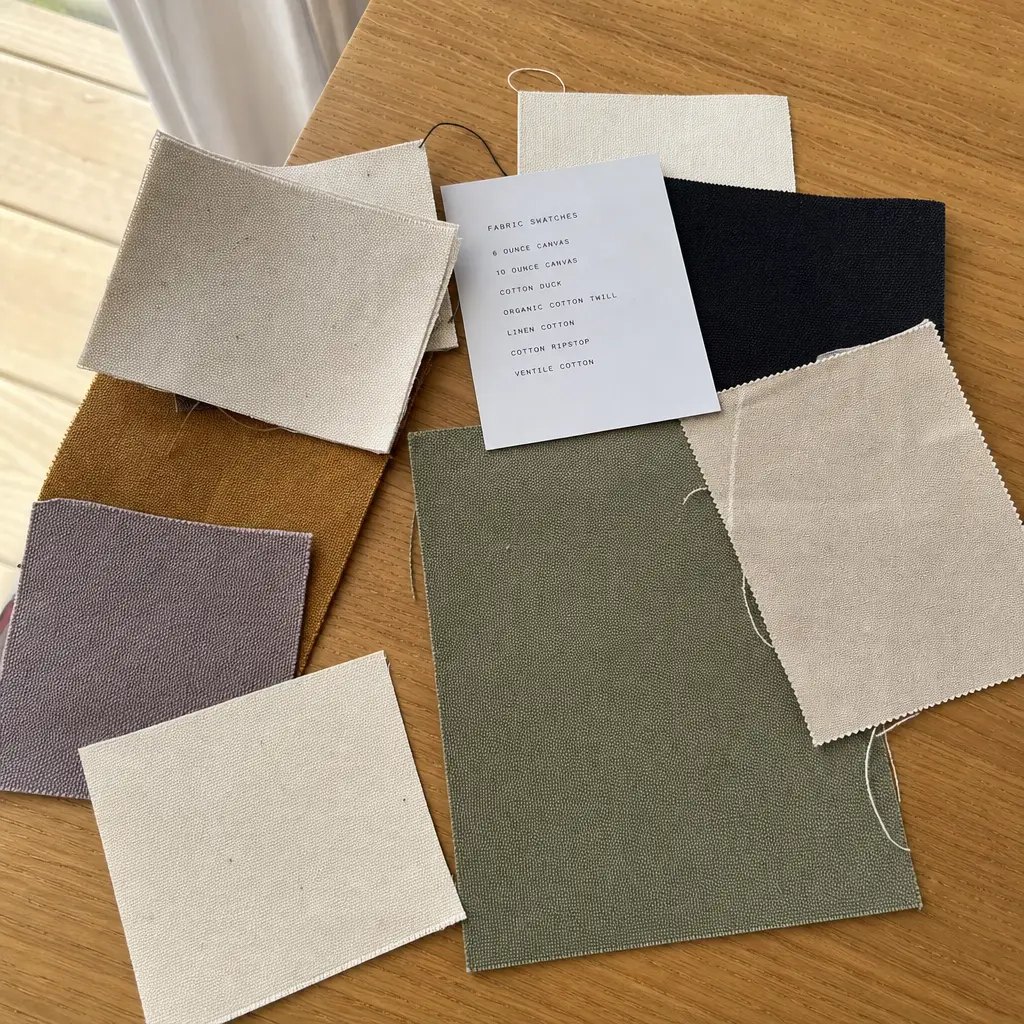
- Request a fabric swatch or reference sample before approving bulk if hand feel matters for retail presentation.
- For dark dyed fabrics or cords, ask for rubbing checks against a white cloth and against natural cotton lining or inserts.
- If sustainability claims are part of the brief, ask what can be documented at order stage and shipment stage.
Set Size, Shape, and Construction Around Actual Load
A standard flat drawstring backpack around 35 x 45 cm finished size works well for many liquor retail campaigns. It gives a usable front print area, folds efficiently, and handles a mix of light promotional contents. But that common size should not be treated as automatic. If the bag must hold a boxed bottle, rigid gift set, or wider branded merchandise bundle, the geometry may need to change.
Adding a gusset can increase usable volume, but it also changes sewing time, fold thickness, and carton yield. A gusseted bag can solve fit problems while creating a freight penalty if the carton count drops too sharply. Buyers should ask suppliers to compare flat and gusseted versions on both unit price and pieces per carton before choosing.
Construction detail matters most at the stress points. The lower corners where the cords anchor absorb the load when the bag is carried. For bottle-adjacent uses, reinforced corners are not an upgrade; they are a basic requirement. The top channel also needs enough consistency and width for the cords to move without jamming or abrading the seam.
Finished size tolerance should be written into the order, especially if inserts, printed brochures, or gift boxes need a reliable fit. It is common for factories to quote based on cut size unless the buyer specifically asks for finished sewn dimensions, so procurement teams should remove that ambiguity early.
- State finished width and height in centimeters, with tolerance.
- Specify flat or gusseted construction and gusset depth if applicable.
- Request reinforcement at lower cord points: bar tack, triangle stitch, or equivalent method.
- Confirm cord diameter and material; 5-6 mm cotton cord is common for better visual value.
- Check that artwork placement leaves room for the top channel and lower fold area.
Plan Logo Printing With Folding and Cartons in Mind
For wholesale cotton drawstring backpacks, screen printing is usually the most workable method when the logo uses one to three solid colors. It is cost-efficient at volume, reasonably durable on cotton, and easy to repeat for chain rollouts. But buyers in liquor retail often need more than a simple front logo. They may require campaign marks, compliance wording, regional variations, or a premium visual style tied to a bottle brand.
Cotton texture affects detail reproduction. Fine legal text, delicate lines, and large smooth color fields can all behave differently on woven fabric than they do on coated paper or a digital proof. A small typographic element that looks crisp on screen may soften in production. That is why print method should be chosen around the artwork, not after the quote is issued.
Carton planning also interacts with print planning. Large ink blocks can stiffen the front panel and make fold lines more visible. If the bulk pack folds directly across a heavy logo area, the buyer may see pressure marks or slight offset after the shipment has been compressed in cartons for weeks. This is especially relevant for promotions that need a clean premium look at opening.
A practical approval step is to ask the supplier to fold the printed sample exactly as it will be packed in bulk. Then leave it under light pressure or inside a sample carton. This test is simple, but it reveals whether the chosen print layout and fold plan are compatible.
- Provide vector artwork and Pantone references whenever possible.
- State logo size, print side, distance from top seam, and acceptable position tolerance.
- Ask whether fine text should be enlarged or simplified for cotton printing.
- Avoid placing large solid logos directly on the primary fold line if presentation is important.
- For metallic or specialty effects, request a strike-off and approval sample before bulk commitment.
Understand MOQ, Version Splits, and Cost Drivers
MOQ for custom cotton drawstring backpacks is rarely one simple number. The practical minimum depends on fabric sourcing, dyeing requirements, screen setup, cutting efficiency, and how many versions need to be packed separately. A supplier may advertise a low MOQ, but that often applies only to one natural fabric color and one simple print.
For liquor retailers, version management is a frequent hidden cost. One campaign may need multiple store names, several regional distributors, or different branded messages for different product lines. Even when the total quantity is healthy, many small logo splits can drive up setup charges and increase the risk of packing mistakes. The factory has to manage screens, work orders, finished goods segregation, and carton labeling for each version.
Procurement teams should separate base MOQ from artwork-version MOQ. Ask what quantity is needed for one core spec, then ask what quantity or surcharge applies per additional logo version. This makes quote comparison far more realistic.
If the program is recurring, buyers should also ask whether screens, color standards, and carton specifications can be retained for repeat orders. That matters because the cheapest first run is not always the best long-term procurement option if the second run becomes inconsistent or requires full redevelopment.
- Ask for the MOQ for one fabric color and one logo version first.
- Request separate pricing or surcharges for additional store or regional logo splits.
- Clarify whether setup charges are one-time, repeatable, or charged per run.
- Check whether quantity tolerance applies to the total order or to each artwork version.
- For repeat programs, ask how long artwork screens and approved references are kept.
Build a Carton Plan Before You Issue the Purchase Order
Shipping carton planning should be treated as a core buying decision, not an afterthought for the warehouse team. For cotton drawstring backpacks, pieces per carton can vary widely depending on fabric weight, cord bulk, print area, fold style, and carton strength. Two suppliers may offer similar unit prices while creating very different landed-cost outcomes because one packs efficiently and the other uses oversized cartons or low carton counts.
For many 8 oz to 10 oz flat cotton backpack programs, 100 to 200 pieces per export carton is a workable range. But that range is only a starting point. A heavy 10 oz bag with a broad printed panel and thick cord may require fewer pieces than a simpler blank style. If the bag is 12 oz canvas or gusseted, the count may need to drop further to keep cartons from bulging or exceeding practical gross weight.
The buyer should request not just pieces per carton but the full packing logic: how the bag is folded, how many go in each inner polybag, whether printed faces are stacked together or alternated, what outer carton material is used, and whether cartons are suitable for sea-freight stacking. Those details affect both presentation and warehouse efficiency.
Carton data also supports cross-functional planning. Freight teams need dimensions and CBM. Warehouse teams need manageable weight and count structure. Merchandising teams may want inner-pack quantities that match store allocation. When this information is gathered before PO approval, the order is easier to cost, receive, and distribute.
- Request carton length, width, height, net weight, gross weight, and total order CBM.
- Ask for fold method photos or a packed-carton sample if print quality is sensitive to pressure.
- Use 5-ply cartons for heavier fabric, sea freight, or stacked storage conditions.
- Keep carton gross weight within the buyer's receiving and handling preference, especially for manual DC operations.
- If store allocation matters, ask whether inner packs can match store bundle quantities without hurting carton efficiency.
Approve Samples Like a Procurement Buyer, Not Just a Marketer
A blank sample can confirm a rough size, but it does not confirm whether the ordered product will perform in production, in cartons, or in retail presentation. For liquor retail orders, a meaningful sample approval should use the intended fabric, actual cord, actual sewing method, and the intended print process. Otherwise, the buyer is still guessing on the most important variables.
The best sequence is usually fabric or swatch approval, print strike-off review, then one full pre-production sample. If the order is large or the print area is sensitive to crease marking, a packed-carton sample is also useful. This allows the buyer to see not only the appearance of one unit, but how the units will behave after being folded and compressed.
Testing should reflect the real use case. Insert the likely contents into the bag. Pull the cords repeatedly. Look at how the lower corners react under load. Check whether the top opening gathers evenly. Review whether the logo remains visible and presentable when the bag is filled. Then fold the bag as the factory plans to pack it and recheck the print panel.
This kind of sample handling is basic but valuable. It catches the issues most likely to create claims later: too-soft fabric, poor logo placement, weak reinforcement, rubbing ink, or fold lines across the key branding area.
- Measure finished size from the actual sewn sample, not from the artwork spec sheet alone.
- Check cord smoothness and lower-corner strength under repeated pulling.
- Rub the print lightly with a dry white cloth and inspect for transfer or abrasion.
- Evaluate the sample both empty and filled with intended contents.
- Review a folded sample after pressure to judge visible crease and ink-mark risk.
Set Quality Control Standards That Match Retail Reality
Quality control on a cotton drawstring backpack order should go beyond obvious sewing defects. In liquor retail, the bag is often part of a premium presentation, so the buyer should control cosmetic quality, version accuracy, and packed-carton condition as carefully as basic construction.
Start with measurable specifications. Size tolerance, fabric weight tolerance, print position tolerance, and acceptable stitch quality should all be written in the PO or approved spec sheet. If natural cotton is used, the buyer should state what level of seed fleck or weave variation is acceptable. If bleached or dyed fabric is used, stain and shade consistency should be reviewed more tightly.
Version control is especially important in split-logo programs. The wrong store logo in the right carton can be just as costly as a defective bag. QC should therefore include count verification by version, carton-mark review, and spot checks that the carton contents match both the label and the packing list.
Carton inspection should not be skipped. Even if the product itself is acceptable, weak, overfilled, or mislabeled cartons can create receiving claims, crushing damage, or rework costs. A final random inspection should include both loose product checks and packed-carton checks so the buyer sees the shipment in its real shipping state.
- Write product tolerances into the PO instead of relying on verbal understanding.
- Inspect cosmetic issues that matter in retail: stains, oil spots, mismatched cords, and off-center prints.
- Check split-version packing by carton number and label, not just total pieces.
- Verify carton dimensions and gross weight against the approved packing plan.
- Require corrective action if cartons bulge, labels are missing, or counts do not match the packing list.
Compare Quotes on Landed Cost and Execution Risk
A low ex-factory price is not a complete buying answer. Liquor retail procurement teams usually care about total delivered value: the right presentation, manageable warehouse handling, and predictable landed cost. That means quote comparison should include carton efficiency, sample process, QC support, and version-management capability in addition to unit price.
A strong quote comparison sheet should line up each supplier on the same assumptions: fabric GSM or oz, finished size, print method, logo size, cord type, reinforcement, sample cost, production lead time, pieces per carton, carton dimensions, gross weight, and total CBM. Without that structure, buyers can end up comparing a light fabric quote to a heavy fabric quote or a weak carton plan to a proper export-carton plan.
Supplier type also matters. A direct bag factory usually gives the most control over fabric, construction, and carton packing details. A trading company may be useful if the buyer is bundling many promotional items in one project, but factory-level data should still be requested. A local promotional reseller may help for speed or small orders, though often with less transparency on production details.
The most useful quote is not always the cheapest first-line number. It is the one that reduces hidden changes later: freight surprises, version confusion, unplanned repacking, or quality claims tied to an unclear spec.
- Compare all suppliers using one standardized RFQ and one structured bid sheet.
- Reject vague wording such as 'thick cotton' or 'standard export carton' without measurable details.
- Separate unit price from setup, sample, labeling, and inland logistics charges.
- Use carton CBM and gross weight data early to estimate freight and receiving cost.
- Consider repeat-order consistency and responsiveness, not just the first-run quote.
Specification comparison for buyers
| Spec decision | Recommended option | When it fits | Buyer risk to check |
|---|---|---|---|
| Fabric weight for liquor retail gift use | 8 oz to 10 oz cotton canvas, or 220-280 GSM plain cotton | Suitable for tasting kits, branded merchandise bundles, loyalty gifts, and light bottle-adjacent retail packaging | Below about 180 GSM can feel too soft and show contents through the fabric; above 12 oz raises carton weight, reduces pcs per carton, and increases freight |
| Backpack size for one bottle-adjacent retail set | Approx. 35 x 45 cm finished size for general programs; add gusset only when a box or wider gift set must fit | Works for brochures, coasters, openers, mini accessories, apparel add-ons, and some short-carry bottle presentations | Flat backpacks are not protective bottle shippers; a larger bag without stronger construction can still fail under glass weight |
| Drawcord type | 5-6 mm cotton cord with reinforced lower corner stitching or bar tacks | Best for a natural retail look and better perceived value than thin synthetic cord | Dark cords can bleed onto natural cotton if poorly dyed; thinner cords can cut into seams and feel low grade |
| Print method | Screen print for 1-3 solid colors; heat transfer only for detailed artwork; embroidery for premium small logos only | Screen print offers stable cost and repeatability for store rollouts and promotional campaigns | Large solid coverage can stiffen the panel and show fold marks; small legal text may blur on textured cotton |
| Packing method | Flat folded, 25 or 50 pieces per inner polybag, 100-200 pieces per export carton depending on GSM and print area | Balances receiving efficiency, carton handling, and freight use for most chain retail programs | Overpacking can create permanent creases and pressure marks; underpacking wastes CBM and raises landed cost |
| Carton strength | 5-ply export carton for sea freight, stacked warehouse storage, or heavier fabric orders; 3-ply only for very light controlled shipments | Needed when cartons move through forwarders, importer warehouses, distributor DCs, and store allocation points | Weak cartons can bulge, crush, or change measured dimensions, leading to damage and freight disputes |
| MOQ structure | Keep one fabric color and one print method across the base order; split logos only after base MOQ is met | Good for liquor chains, brand owners, distributors, and regional campaign rollouts | Many small artwork splits raise setup cost, scheduling complexity, and mixed-carton risk |
| Supplier route | Direct bag factory for custom size, GSM, packing plan, and carton marking control | Best when buyers need repeatable specs, pre-shipment carton data, and bulk packing consistency | Trading-only quotes may omit fabric tolerance, fold plan, carton specs, and accountability for final packing |
Buyer checklist before sampling
- Define the exact use case: promotional giveaway, tasting-event kit, loyalty gift, bottle presentation bag, staff merchandise pack, or accessory bundle. The intended contents determine the needed GSM, seam reinforcement, and practical pieces per carton.
- Specify fabric by measurable standard, not by generic wording. State cotton canvas or plain woven cotton, plus ounce weight or GSM, and note whether the fabric is natural, bleached, dyed, washed, recycled, or organic if required.
- Confirm the finished size after sewing, not only the cut size. Include size tolerance, drawcord channel depth, and whether the bag is flat or gusseted.
- State the expected load and whether the bag may hold a full bottle for short in-store carry. If yes, list bottle type, approximate filled weight, and whether any box or insert is included.
- Define the logo process in writing: print method, artwork size, Pantone colors, print side, print position, and whether the logo must remain visible when the bag is filled or folded for retail display.
- Request a packing plan before approving the PI: fold method, pcs per inner bag, pcs per carton, carton dimensions, net weight, gross weight, and estimated total CBM for the order quantity.
- Approve at least one full pre-production sample using real fabric, real cord, and real printing. A swatch or digital mockup is not enough for fold-mark and carton planning.
- Set QC checkpoints in the PO: size tolerance, GSM tolerance, print position tolerance, acceptable stitching defects, stain standards, cord pull expectation, and carton condition standards.
- Require clear carton marks for warehouse receiving: SKU, PO number, logo version, color, quantity, carton number, country of origin, and any retailer routing or barcode labels.
- Separate retail presentation from transport protection. Cotton drawstring backpacks can package or present bottle-related items, but they are not certified protective packaging for shipping glass bottles by parcel.
Factory quote questions to send
- What fabric weight do you recommend for a cotton drawstring backpack used by liquor retailers, and can you quote both 8 oz and 10 oz options with the same size and print assumptions?
- Is the quoted size a finished sewn size or a cut-panel size, and what tolerance do you apply to width, height, drawcord channel, and lower corner placement?
- Which print method is included in the unit price, and what logo size, color count, ink type, and print coverage are assumed?
- If our artwork includes small legal text or fine lines, do you recommend screen print, transfer, or a revised artwork approach for cotton texture?
- What is the MOQ for one fabric color and one logo, and how does pricing change if we need multiple store names, regional versions, or mixed carton packing?
- Can you provide the full carton plan in advance, including fold method, pieces per inner bag, pieces per carton, carton dimensions, gross weight, net weight, and estimated CBM for our quantity?
- How will the printed side be folded in bulk packing, and what steps do you take to reduce pressure marks, ink offset, or visible crease lines?
- What sample stages can you provide: blank size sample, fabric swatch, print strike-off, pre-production sample, and packed carton sample?
- What in-line and final inspection standards do you use for stitching, stains, print defects, GSM verification, and packing accuracy?
- How many production days are needed after sample approval and deposit, and does your lead time include fabric sourcing or dyeing, screen preparation, printing, sewing, inspection, and export packing?
Quality-control points to confirm
- Finished size should normally stay within plus or minus 1 cm unless a special washed process is used; measure multiple pieces from different cartons, not only top-of-line samples.
- Fabric GSM or ounce weight should be checked against the approved sample and PO tolerance, because lower-weight substitution changes hand feel, opacity, and carton yield.
- Seam construction around the drawcord channel must be even and secure, with no skipped stitches, loose ends, open seams, or seam grin at stress areas.
- Lower cord attachment points should use reinforced stitching such as bar tacks, triangle reinforcement, or doubled folded seams suited to the expected load.
- Cord length, thickness, and knot consistency should be checked so pairs match visually and functionally; uneven cords create a poor retail presentation.
- Print position should be measured from fixed reference points such as side seam and top channel, with a written tolerance agreed before mass production.
- Print adhesion and flexibility should be checked after folding and light rubbing; heavy ink areas should not crack, peel, or offset onto adjacent fabric panels.
- Natural cotton should be inspected for dark seed flecks, weaving slubs, oil marks, mildew smell, and inconsistent base shade if a cleaner retail look is required.
- Dyed fabrics and dark cords should be checked for crocking or bleeding risk, especially where they touch natural cotton, paper inserts, or bottle labels.
- Carton counts, inner pack counts, and artwork versions must match the packing list exactly; mixed versions are one of the most expensive avoidable errors in multi-store programs.