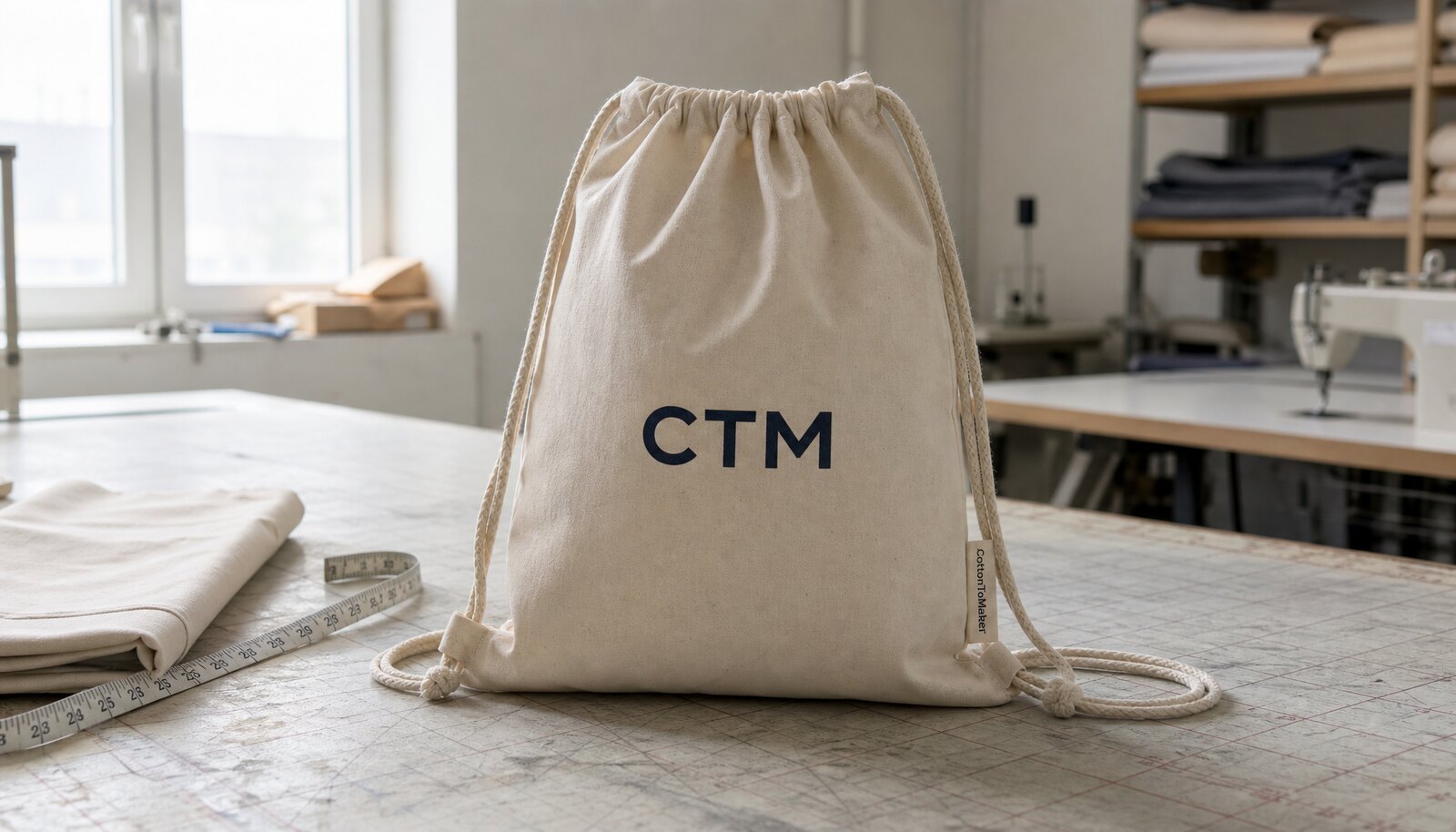
1. Plan from the in-hands date, not the ship date
Corporate gifting deadlines are rarely flexible. A drawstring backpack may be part of a trade show kit, employee onboarding pack, campus recruitment giveaway, product launch, dealer meeting, or wellness campaign. If the goods arrive after the fulfillment team closes kits or the venue receiving window ends, a low unit price will not rescue the program.
Separate three dates before asking suppliers to quote: the event date, the required in-hands date, and the supplier handover date. The event date is when recipients need the gift. The in-hands date is when your warehouse, office, distributor, or fulfillment partner must have usable inventory. The handover date is when packed cartons leave the factory or reach the nominated forwarder.
For most programs, keep 5 to 10 business days between receipt and the event. Use a longer buffer if the bags must be counted, inspected again, repacked into gift boxes, split by destination, or shipped to individual recipients. Also include buyer-side timing: artwork approval, sample comments, deposit release, packing instructions, and final shipment authorization can all become critical-path delays.
- Set the required in-hands date before supplier selection.
- Ask suppliers for milestone dates, not only a vague production lead time.
- Add internal brand, legal, event, and warehouse approval time to the calendar.
- Treat the freight handover date and usable inventory date as different milestones.
2. Use an RFQ that prevents false quote comparisons
An RFQ that says “cotton drawstring backpack with logo” will attract quotes built on different assumptions. One supplier may price 110 GSM natural cotton with a small one-color print. Another may price 150 GSM stock dyed cotton, thicker cord, reinforced exits, and individual packing. Both quotes may be honest, but procurement cannot compare them as equal.
A practical RFQ should define finished size, fabric GSM, fabric finish, fabric color, construction style, cord material, cord diameter, cord color, reinforcement method, logo method, logo size, print color count, quantity, packing method, destination, and delivery term. If you have a reference sample, measure it flat and send photos of the front, back, seam, cord exit, logo area, and folding method.
Avoid subjective words such as standard, premium, heavy, or good quality unless they are backed by numbers. The goal is not to make a simple bag complicated. The goal is to remove the assumptions that change cost, MOQ, sample time, and inspection results.
- State width by height and identify whether the bag is flat or gusseted.
- Specify cotton by GSM, finish, and color rather than by broad material name only.
- Provide intended contents and approximate loaded weight.
- Ask each supplier to quote the same packing and delivery basis.
3. Select cotton GSM, color, and finish for both brand feel and timing
Fabric weight affects cost, opacity, handfeel, print appearance, folding, and perceived value. Very light cotton may work for low-cost mass giveaways, but many corporate programs start in the 120 to 150 GSM range because it balances handfeel and efficient production. For heavier kits, 160 GSM or above can feel more substantial, but stronger body fabric should be matched with better seams, cord, and reinforcement.
Do not treat GSM as an exact number unless the supplier has agreed to that standard. Textile weight varies by lot and roll. Some suppliers may propose a tolerance such as plus or minus 5% to 8%, while others may work to a different internal rule. The buyer should not assume a universal tolerance; the quote and PO should state the agreed range and, if important, the measurement method.
Color is also a lead-time choice. Natural or off-white cotton is usually the safest option when schedule certainty matters. Stock dyed fabric can be efficient if the quantity is physically available from one lot. Custom dye adds lab dips, approval cycles, bulk dyeing, drying, finishing, and shade checks. If exact bag color is not essential, avoiding custom dye can protect the calendar.
- Use 120 to 150 GSM as a common starting range, then adjust for kit weight and brand positioning.
- Write the supplier-confirmed GSM tolerance into the PO.
- Choose natural or confirmed stock fabric for faster programs.
- For custom dye, agree on lab dip timing, bulk shade standard, and rejection process before PO release.
4. Match decoration to artwork risk and approval time
Screen printing is often the most practical decoration method for cotton drawstring backpacks, especially for one-color or two-color corporate logos. It scales well, works on flat panels, and is straightforward to inspect. A centered front-panel print is usually the lowest-risk option because placement can be measured from fixed seams or edges.
Artwork still needs technical review. Fine lines, small reversed text, gradients, tight registration, halftones, and heavy ink coverage may not reproduce cleanly on textured cotton. Before artwork approval, ask the supplier to confirm minimum line width, minimum text size, registration risk, ink opacity, and whether details should be simplified.
If exact brand color is required, provide Pantone or brand references and allow time for ink adjustment or a print strike-off. If commercial matching is acceptable, state that clearly. Embroidery, heat transfer, and woven labels can be useful for specific programs, but they add cost, handling, and inspection variables. Choose the method that fits the logo, quantity, budget, and timeline.
- Supply vector artwork and final print size.
- Define print placement with measurements and tolerance.
- Keep artwork away from the drawstring channel if gathering will distort it.
- Approve a physical print sample when color, opacity, or fine detail is important.
5. Treat cords, seams, and reinforcements as load-bearing specifications
The predictable failure points are cord exits, bottom corners, side seams, knots, and the drawstring channel. These details matter when the backpack carries more than a flyer or T-shirt. Corporate kits often include notebooks, drinkware, catalogs, chargers, apparel, or product samples, so the supplier should understand the intended load before confirming construction.
Cord specification should include material, diameter, color, length, knot method, and end finish. Cotton cord may support a natural product story; blended or polyester cord may offer different abrasion, cost, or color options. The functional requirement is simple: the cord should move smoothly, pairs should be similar in length, knots should remain secure, and the bag should open and close without snagging.
Reinforcement choices should match use. Eyelets, stitched holes, or reinforced fabric exits can all work when made correctly. For heavier kits, ask about extra reinforcement at cord exits and bottom corners. If the bag will carry dense items, add a manual pull check or load-handling check to the inspection plan.
- Share the approximate loaded weight and largest item dimensions.
- Confirm cord diameter, length tolerance, knot method, and end finish.
- Check that knots cannot slip through exits during normal use.
- Upgrade reinforcements before production rather than after sample failure.
6. Use a realistic milestone schedule
A lead-time plan should show dependencies. Artwork cannot move to print setup until file, size, color, and placement are approved. Bulk cutting should wait until fabric, dimensions, and construction are confirmed. Carton labels cannot be prepared accurately until destination splits, SKU, PO number, carton quantity, and carton marks are known.
For a straightforward order using available fabric and simple screen printing, a realistic planning framework may look like the schedule below. These are planning ranges, not guaranteed standards; the supplier should confirm the actual timeline based on quantity, capacity, holidays, and freight route.
- Artwork and spec review: 1 to 3 business days after complete RFQ and vector artwork.
- Pre-production sample making: 3 to 7 business days for stock fabric and simple print; longer for custom dye or trims.
- Sample courier transit and buyer review: 3 to 7 business days, depending on route and internal approvals.
- Bulk material preparation and production setup: 2 to 5 business days after sample approval and deposit.
- Bulk cutting, printing, curing, sewing, trimming, and inline QC: commonly 10 to 25 business days for straightforward bulk orders, depending on quantity and capacity.
- Final inspection, corrective action if needed, and packing: 2 to 5 business days.
- Export documents, carton photos, packing list review, and freight handover: 1 to 4 business days.
- Add freight transit and destination receiving buffer separately; do not hide them inside the factory production lead time.
7. Approve samples as production controls, not just visual mockups
A physical pre-production sample helps verify fabric handfeel, GSM impression, finished size, print color, opacity, placement, stitch quality, cord movement, knot security, odor, fold method, and perceived value. Photos are useful for speed, but they cannot fully confirm texture, stiffness, smell, cord comfort, or how the bag behaves when loaded.
Clarify sample status. A true pre-production sample uses the intended fabric, cord, print method, construction, size, and packing. A reference sample may use substitute fabric, temporary print, approximate size, or alternate cord. Reference samples can help early decisions, but they should not be treated as the bulk standard unless all deviations are documented.
Test the sample with the actual kit contents. Close and open the drawstring several times, carry the bag by the cords, check whether the logo remains visible when gathered, and measure placement from fixed seams or edges. Keep one approved sample or a complete photo and measurement record for inspection comparison.
- Record approved size, print size, placement, cord details, construction notes, and accepted deviations.
- Photograph front, back, logo close-up, seam, cord exit, and folded packing view.
- State whether the approved sample is a true production sample or reference only.
- Do not release bulk production until sample comments are closed in writing.
8. Compare suppliers by control, transparency, and schedule ownership
The lowest FOB price is not always the lowest-risk choice for a dated corporate gift. Supplier structure affects how quickly problems are detected and corrected. A direct factory or accountable managed supplier can be valuable when one party must coordinate fabric sourcing, printing, sewing, trimming, QC, packing, and export handover.
Trading companies and sourcing agents can also be useful, especially if the gift set contains multiple product categories. The key issue is visibility. Procurement should know who prints, who sews, who controls the approved sample, who prepares carton labels, and who authorizes final packing.
Subcontracting is not automatically a problem. Undisclosed subcontracting is the risk because it can hide bottlenecks and blur responsibility for rework. For rush programs, a stock supplier may be the right choice if the buyer can accept existing size, color, fabric, and construction. Even then, confirm actual stock quantity, lot consistency, decoration time, and repacking time.
- Ask which steps are in-house and which are external.
- Require capacity confirmation for the target production window.
- For stock goods, verify physical quantity and lot consistency.
- Evaluate communication speed and milestone discipline alongside price.
9. Control commercial variables before issuing the PO
The final cost is shaped by fabric consumption, GSM, color, quantity, print method, number of print colors, logo coverage, trim choice, reinforcement, sewing complexity, packing, inspection support, and delivery term. A quote that hides setup charges or excludes packing requirements may look attractive until purchasing tries to place the order.
Ask suppliers to separate unit price from additional charges where practical. Common extras include screen charges, artwork adjustment, pre-production samples, print strike-offs, lab dips, sample courier fees, barcode labels, hangtags, special carton marks, third-party inspection support, and repacking.
MOQ is tied to setup efficiency and material purchasing. If the required quantity is below a supplier’s preferred MOQ, simplify first: one size, one stock or natural fabric color, one print position, one or two colors, standard cord, and bulk packing. Custom dye, woven labels, many destinations, and individual barcodes usually push MOQ or lead time up.
- State price basis clearly, such as EXW, FOB, CIF, DDP, or another agreed term.
- Confirm deposit and balance payment timing because late payments can delay production or shipment release.
- Define overrun or underrun tolerance and minimum usable quantity.
- List every required label, carton mark, and packing service in the quote request.
10. Lock QC, packing, and freight handover before the last production week
Quality control should be tied to the approved specification, not left to general judgment. Inspection should cover fabric, finished size, print, stitching, cords, reinforcements, cleanliness, odor, packing, and carton marks. If the buyer wants specific acceptance criteria, those criteria must be written into the PO or inspection checklist before production starts.
Packing can create hidden delays. Bulk packing is usually fastest for distributors and fulfillment warehouses, but individual polybags, barcode labels, hangtags, strict folds, destination splits, and special carton marks add labor and checking time. Relabeling cartons after packing is inefficient and increases receiving errors.
Cotton products should be packed in clean, dry conditions. Cotton can absorb moisture and odors if cartons are stored near damp or contaminated areas. Before shipment release, request packed-carton photos, carton marks, a draft packing list, and confirmation that carton counts match the destination split. Freight handover should happen only after inspection status, packing list, documents, and payment release are aligned.
- Confirm fold, inner bundle count, pieces per carton, carton dimensions, gross weight, and carton numbering.
- Provide exact carton mark wording early, including PO, SKU, campaign, destination, quantity, and carton number if required.
- Ask for packed-carton photos and draft packing list before release.
- Separate final inspection date from freight pickup date so there is time to correct issues.
Specification comparison for buyers
| Supplier or spec choice | Cost impact | MOQ impact | Schedule impact | Best use scenario |
|---|---|---|---|---|
| Natural cotton, 120-150 GSM, one-color screen print | Usually cost-efficient because fabric and print setup are simple | Often easier to support at moderate quantities | Shorter if fabric is in stock and artwork is clean | Trade shows, employee welcome kits, campus recruiting, event giveaways |
| 160 GSM+ cotton with reinforced exits | Higher fabric consumption and stronger sewing/trims can raise unit cost | May require higher MOQ if fabric is not stocked | Can add sourcing and sewing time, especially during peak capacity | Premium kits, notebooks, bottles, catalogs, denser product samples |
| Stock dyed fabric | Moderate cost increase versus natural, depending on available colors | Lower MOQ than custom dye if stock is physically available | Usually faster than custom dye but slower than natural if stock must be verified | Brand-aligned color when exact shade is not critical |
| Custom dyed cotton | Higher due to lab dips, dyeing, shade control, and possible minimum fabric order | Often increases MOQ because dye lots have minimums | Adds approval loops for lab dip and bulk shade | Campaigns where bag color is a core brand requirement |
| One-color screen print | Lowest setup complexity for most logo programs | Generally friendly to smaller bulk orders | Fastest decoration route after artwork approval | Simple corporate logos, event marks, slogans, QR-free graphics |
| Multi-color screen print or large ink coverage | Higher screens, setup, registration control, and ink use | May raise MOQ depending on factory setup efficiency | Adds strike-off and registration risk | Bold campaign artwork where color count is important |
| Embroidery or woven label details | Higher trim or stitching cost and more handling | Can increase MOQ for labels or thread setup | Adds trim sourcing and sewing-line control | Premium brand feel, retail-style gift packs |
| Bulk packing | Lowest packing labor and material cost | Supports lower MOQs more easily | Fastest route to carton completion | Distributor, importer, or fulfillment warehouse that will kit later |
| Individual polybags, barcodes, or destination splits | Higher labor, material, label, and checking cost | May increase MOQ or admin fees for many splits | Adds packing and inspection time | Direct-to-employee kits, warehouse scan-in, multi-office distribution |
Buyer checklist before sampling
- Set the event date, required in-hands date, warehouse receiving deadline, and delivery buffer before requesting quotes.
- State quantity by destination if cartons ship to multiple offices, distributors, venues, or fulfillment centers.
- Define finished size, fabric GSM, fabric color, construction style, cord material, cord diameter, cord color, reinforcement method, logo method, logo size, and print color count.
- Share intended contents and approximate loaded weight so the supplier can confirm seam, cord, and reinforcement suitability.
- Provide vector artwork, Pantone or brand color references, preferred print size, and a note on whether exact or commercial color matching is required.
- Ask the supplier to flag artwork risks such as fine lines, small text, gradients, reversed details, heavy ink coverage, or print distortion near the drawstring channel.
- Require a physical pre-production sample when fabric, logo, size, cord, construction, or packing is customized.
- Confirm MOQ, unit price basis, setup charges, sample fees, lab dip fees, courier costs, inspection support, payment terms, and overrun or underrun tolerance.
- Write supplier-confirmed tolerances into the PO for GSM, finished size, print placement, shade, packing quantity, and acceptable defects.
- Lock fold method, inner bundle count, pieces per carton, carton dimensions, gross weight, carton marks, barcode labels, and carton numbering before mass packing.
Factory quote questions to send
- What exact fabric are you quoting: fiber composition, weave, GSM, finish, color, and whether it is stock fabric or made for this order?
- What GSM tolerance do you apply for this order, and how will bulk GSM be checked if verification is requested?
- Is the fabric natural, bleached, stock dyed, custom dyed, pre-shrunk, or untreated for shrinkage? What shade standard will bulk be judged against?
- What are the finished dimensions, seam allowance if available, and finished-size tolerance after sewing?
- What cord material, cord diameter, cord length, cord color, knot method, and eyelet or reinforced-hole construction are included?
- What maximum loaded weight do you recommend for this specification, and what upgrades would you suggest for heavier kits?
- Which decoration method is quoted, how many colors are included, and what artwork limits apply for line width, small text, gradients, reversed details, or large ink coverage?
- Are screen charges, plates, artwork adjustment, print strike-offs, lab dips, courier fees, labels, carton marks, or inspection support billed separately?
- What is the MOQ at this exact specification, and which changes would increase MOQ or extend lead time?
- Can you provide a physical pre-production sample using the intended fabric, cord, print method, construction, and packing? How many working days are needed after final artwork?
Quality-control points to confirm
- Bulk fabric GSM matches the written specification within the supplier-confirmed tolerance, with no unapproved substitution to lighter or different-finish material.
- Fabric color matches the approved swatch, lab dip, or pre-production sample under agreed lighting, with no obvious shade mixing within a carton or shipment lot.
- Finished dimensions stay within the PO tolerance; for simple sewn bags, some suppliers may propose around plus or minus 1 cm, but the agreed order standard should control.
- Logo size, print position, print color, registration, and opacity match the approved sample, with no visible bleeding, cracking, ghosting, pinholes, smears, contamination, or poor curing at normal viewing distance.
- Logo placement is measured from fixed seams or edges, not judged only by eye; the inspection report should state the placement tolerance used.
- Stitching is even and secure, with no skipped stitches, open seams, broken threads, needle cuts, seam slippage, or puckering that distorts the logo area.
- Loose threads are judged against the buyer’s inspection standard; for example, the PO may define whether threads longer than 5 mm must be trimmed or treated as defects.
- Cord moves smoothly through the channel, cord pairs are consistent, knots are secure, cord ends are clean, and eyelets or reinforced holes do not tear during the agreed manual pull check.
- Stress points at bottom corners, cord exits, side seams, pocket edges if any, and reinforcement areas match the approved construction and show no early tearing after handling.
- Bag body is clean and giftable, with no oil stains, dirt marks, mold odor, excessive lint, holes, cuts, broken-needle risk, unacceptable slubs, or fabric defects beyond the approved standard.