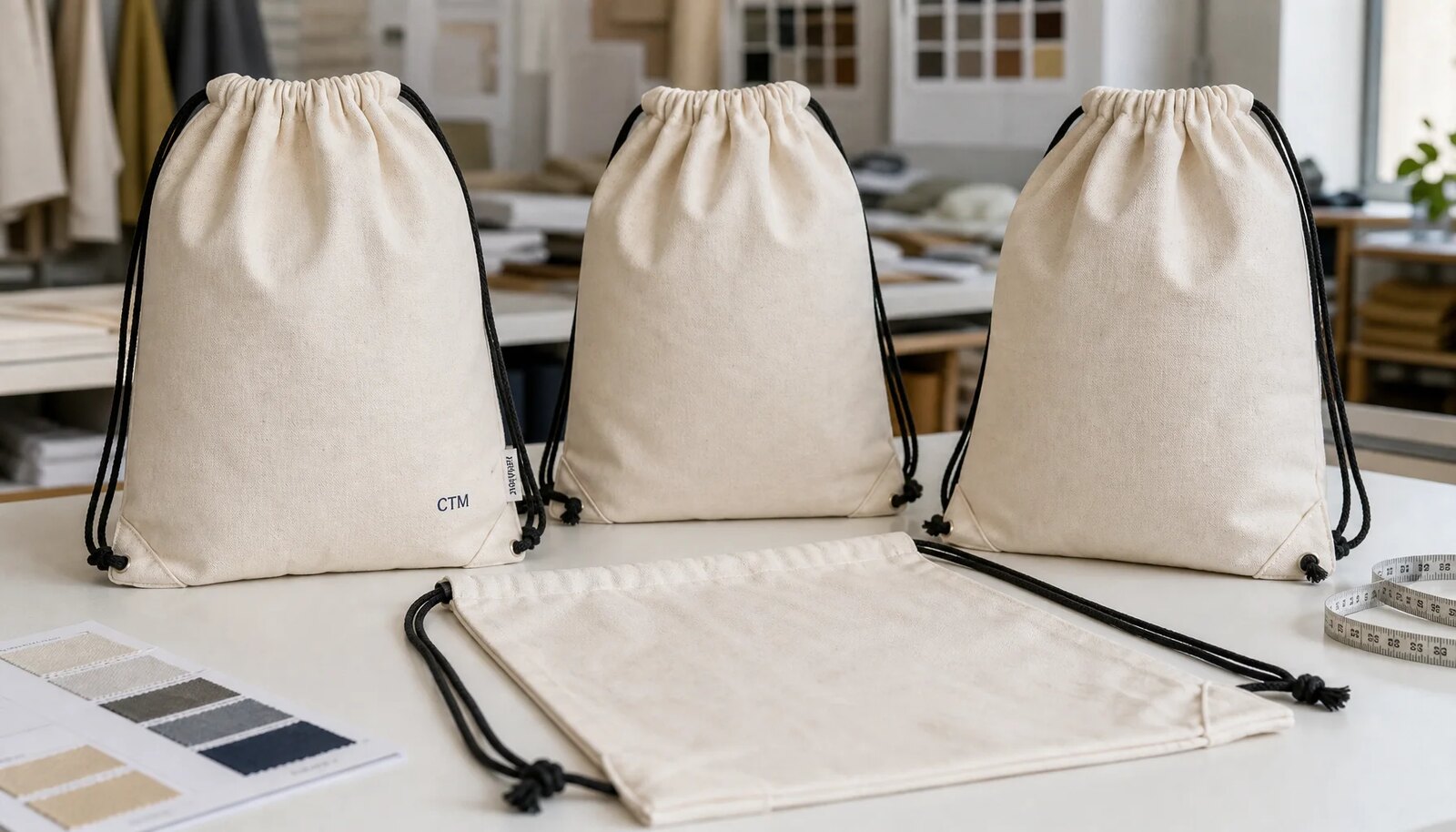
Start With the Hotel Use Case
Wholesale cotton drawstring backpacks for hotel retail look simple, which is why they are often under-specified. A paid resort-shop item, spa retail gift bag, beach activity backpack, in-room welcome amenity, kids club pack, and conference drop can share the same silhouette but require different fabric weight, cord comfort, reinforcement, logo control, and packing presentation.
Begin the RFQ with the commercial use. Paid retail needs cleaner folding, stronger handfeel, fewer visible defects, reliable barcode or hangtag control, and a front panel that looks intentional on a shelf. Amenity programs may prioritize cost and packing speed. Distributor programs need repeatable SKU separation and carton accuracy more than elaborate unit presentation.
Describe the expected load in real items. A backpack carrying a towel, sunscreen, and water bottle places more stress on lower cord exits than a welcome letter and slippers. If guests will wear it during excursions, cord diameter and channel movement matter. If the bag is displayed in a spa shop, print scuffing, odor, fold marks, and label placement matter before cartons leave the factory.
- Paid retail: start with 8 oz to 10 oz cotton canvas, reinforced lower corners, clean logo execution, and retail-ready packing.
- In-room amenity: consider 6 oz to 8 oz cotton only when the load is light and the buyer accepts a softer promotional handfeel.
- Beach or pool program: prioritize cord strength, rub-resistant print, dry cartons, and packing that limits moisture exposure.
- Spa or wellness program: inspect odor, natural cotton shade, handfeel, subtle branding, and presentation that does not need store rework.
- Kids activity use: avoid sharp hardware, loose eyelets, small detachable trims, and excessive cord length unless safety is reviewed.
- Distributor replenishment: require SKU separation, barcode accuracy, carton sequence, and stable inner quantities for receiving efficiency.
Build a Factory-Ready Specification
A usable specification turns a general idea into a product a factory can quote, sample, sew, inspect, and repeat. For cotton drawstring backpacks, the spec should define finished dimensions, fabric weight, weave, finish, drawcord material, cord diameter, channel depth, seam construction, reinforcement method, thread color, logo method, logo placement, label position, hangtag, unit packing, carton packing, and tolerance.
Write target values and tolerances together. For example: finished width 350 mm plus or minus 10 mm, finished height 450 mm plus or minus 10 mm, logo centered plus or minus 5 mm, cord diameter 8 mm plus or minus 1 mm, and cord length plus or minus 20 mm. Exact tolerances should match the design and supplier capability, but they must be agreed before production.
Natural cotton needs a visual standard. Small flecks and slight shade variation may fit a resort or wellness look. Oil marks, mildew, rust stains, holes, dirty handling marks, strong odor, and heavy slubs do not. Use the approved sample to show acceptable cotton character, then classify unacceptable marks as defects.
- Dimensions: finished width, height, channel depth, cord length, logo size, logo location, label location, and reinforcement position.
- Materials: cotton oz, GSM, weave, finish, color, shrinkage expectation, thread type, cord material, cord diameter, and cord color.
- Construction: bottom fold or seam, stitch density target, seam type, cord routing, lower corner reinforcement, and cord-end finish.
- Branding: vector artwork, Pantone target, decoration method, print colors, placement from fixed edges, label art, and strike-off approval.
- Packing: fold method, sleeve or bundle, pieces per inner, master carton quantity, carton marks, barcode labels, and mixed-carton rules.
- Commercial terms: MOQ by option, price breaks, sample fee, setup charges, lead-time gates, inspection standard, and quote validity.
Select Fabric Weight Deliberately
Fabric weight affects handfeel, opacity, sewing behavior, carton weight, freight cost, and guest confidence. Quote weight in both oz per square yard and GSM because buyers and suppliers may use different systems. Useful reference points are 6 oz at about 203 GSM, 8 oz at about 271 GSM, and 10 oz at about 339 GSM.
For many hotel retail programs, 8 oz cotton canvas is the practical starting point. It offers better body and opacity than lightweight promotional cotton while remaining manageable for sewing and packing. A 10 oz canvas feels more substantial and often presents better on a shelf, but it increases material cost, carton weight, and freight impact. A 6 oz cotton backpack can work for light welcome kits, but it should not be evaluated as a retail canvas bag.
Finish changes the risk profile. Natural unbleached cotton supports a relaxed resort look but shows dirt and water marks. Bleached cotton gives a cleaner base for bright prints. Dyed cotton needs lab dip approval, dye-lot control, and shade tolerance. Washed cotton can feel softer but may change finished dimensions, fabric body, and print adhesion.
Ask whether the quoted GSM is before or after finishing, and whether the fabric is stock, newly woven, dyed, washed, recycled blend, or certified material. If sustainability claims matter, request documents for the specific fabric lot or certification scope rather than relying on broad wording such as eco, natural, or organic style.
- 6 oz cotton, about 203 GSM: suitable for light amenity packs, conference drops, and low-load giveaways.
- 8 oz cotton canvas, about 271 GSM: balanced for resort retail, spa merchandise, and guest activity programs.
- 10 oz cotton canvas, about 339 GSM: stronger shelf presence with higher sewing, packing, carton, and freight impact.
- Natural cotton: approve fleck level and shade reference, but reject stains, mold, oil, rust, holes, and contamination.
- Dyed cotton: require lab dip approval, dye-lot traceability, shade tolerance, and color-compatible cord and thread.
- Washed cotton: sample before approval because washing can alter size, structure, handfeel, and print performance.
Engineer the Cord and Stress Points
The drawcord is both closure and shoulder strap. Many failures start at the lower cord exits, where repeated pulling concentrates stress on fabric and stitching. A sample can look fine when empty but tear when a guest carries towels, bottled water, books, or retail purchases.
For hotel retail cotton drawstring backpacks, 8 mm to 10 mm cord is a practical range. Cotton cord supports a natural canvas story and feels soft, but fraying and shade variation must be controlled. Braided polyester cord improves color consistency and abrasion resistance, but it changes the material story. Choose cord by guest comfort, expected load, and brand positioning, not only unit cost.
The channel must match the cord. If it is too tight, the bag is hard to close and the top edge puckers. If it is too loose, the opening looks uneven and less finished. Inspectors should open and close sampled bags several times because a cord can look correct while still twisting, snagging, or jamming.
Lower corner reinforcement should be specified. Options include bar tacks, triangular fabric patches, reinforced seam construction, or eyelets. Metal eyelets may look neat but add corrosion, snagging, and safety considerations for poolside or children’s programs. For many hotel retail bags, fabric reinforcement and clean stitching are easier to control.
- Cord diameter: specify target diameter, tolerance, material, color, and end finish.
- Cord length: define finished length tolerance so straps are wearable but do not hang unevenly or excessively low.
- Channel depth: match to cord diameter and test closure movement after sewing, logo application, and packing.
- Lower exits: reinforce with approved bar tack, fabric patch, or seam construction and inspect inside and outside.
- Pull/load check: use an agreed method, such as a steady pull for several seconds or a load simulation using intended contents.
- Hardware: avoid metal eyelets for children, poolside, or corrosion-sensitive programs unless risk is reviewed and approved.
Control Branding Before Bulk Printing
Logo defects are highly visible in hotel retail. Screen printing is usually the practical method for one to three solid-color hotel marks because it works well on cotton canvas and remains cost-efficient at wholesale quantities. The RFQ should state Pantone target, print size, placement from fixed edges, number of colors, and acceptable texture from the cotton weave.
A digital mockup is not enough. It cannot confirm ink absorption, rub resistance, handfeel, curing, or whether fine lines will hold on canvas. Large solid prints may stiffen lightweight cotton, crack if under-cured, or transfer if packed too soon. Small reversed text may fill in, and fine lines may break on coarse fabric. Ask the factory to flag artwork limitations before the strike-off stage.
Embroidery can suit small premium marks, but it needs enough fabric body, controlled stitch density, and backing to prevent puckering. Woven labels are useful for multi-property programs because one base backpack can be localized with labels, hangtags, or small property-specific prints. Heat transfer can support complex art, but test gloss, edge lift, handfeel, and adhesion on the actual fabric.
Bulk logo application should not begin until artwork, placement, color, and strike-off are approved. Final inspection should check whether the logo is centered, straight, cured, registered, clean-edged, and free from scuffing or packing transfer, not simply whether the logo exists.
- Screen print: best for simple hotel marks, one to three solid colors, and medium or large front-panel logos.
- Embroidery: best for small premium marks on 8 oz or 10 oz canvas with backing approved.
- Woven label: useful for subtle branding, shared base bags, and property-specific replenishment.
- Heat transfer: use only after checking gloss, edge lift, handfeel, adhesion, and bend performance.
- Placement tolerance: measure from fixed edges, such as top seam and side seam, instead of visual centering.
- Print checks: inspect Pantone match, tilt, registration, bleeding, cracking, stickiness, dry rub, damp rub, and scuffing.
Separate MOQ and Cost Drivers
A useful wholesale quote separates the items that drive MOQ and price. Natural stock cotton may be available at lower minimums. Dyed fabric, washed fabric, custom cord, woven labels, hangtags, barcode stickers, belly bands, and retail sleeves may each have separate minimums or setup charges. Without this breakdown, the buyer may discover too late that the preferred color, label, or packing format is not viable at trial volume.
Ask for price breaks at realistic quantities such as 500, 1,000, 3,000, and 5,000 pieces, or at the actual launch and replenishment forecast. The goal is not only the lowest unit price; it is understanding whether the specification is economical at launch and repeatable later. A hotel group may reduce cost and complexity by using one common blank body with property-specific print, label, or hangtag variations.
Freight inputs belong in supplier comparison. A 10 oz backpack feels more premium but weighs more and may reduce pieces per carton. Individual sleeves protect presentation but add material and volume. Ask for pieces per carton, carton dimensions, CBM, net weight, and gross weight before choosing the final supplier.
Separate first-order costs from repeat-order costs. Screen setup, development sampling, label setup, and hangtag layout may be one-time or occasional charges. Dyed fabric, custom cord, and retail packing may apply every order. The PO should also state rules for overage, shortage, defective replacement, partial shipment, and mixed cartons.
- Quote levels: compare the same spec at launch and replenishment quantities.
- Adders: separate sample fee, screen fee, lab dip, strike-off, label setup, hangtag, barcode, sleeve, belly band, and inspection support.
- MOQ drivers: identify higher minimums for dyed fabric, washed finish, custom cord, woven labels, and retail packaging.
- Freight data: compare pieces per carton, carton dimensions, CBM, net weight, and gross weight.
- SKU strategy: price common base bags separately from property-specific logos, labels, and hangtags.
- Order rules: agree overage, shortage, defective replacement, mixed cartons, and partial shipment terms before PO release.
Use Sampling as a Gate
Sampling should move from concept to bulk-equivalent approval. A development sample confirms size, shape, fabric direction, and logo concept. It should not approve mass production if it uses substitute fabric, sample-room cord, different thread, temporary labels, or non-final packing. The pre-production sample should use bulk-equivalent fabric, actual cord, thread, logo process, label, hangtag, fold, and packing.
Review samples with measurement tools and a short use simulation. Measure finished width, height, channel depth, cord diameter, cord length, logo placement, label position, and reinforcement position. Open and close the drawstrings several times. Load the backpack with the intended contents and wear it briefly. Look for corner distortion, shoulder discomfort, seam stress, blocked channels, panel twisting, or print cracking.
Sample comments should be measurable. Instead of saying make it stronger, request a defined change: increase fabric from 6 oz to 8 oz, widen cord from 6 mm to 8 mm, add bar tacks, move the logo upward by 20 mm, change fold direction, or add a sleeve. Specific comments prevent repeated resampling and avoid vague quality disputes.
Photos are useful for layout checks, but they cannot confirm fabric body, odor, cord comfort, print curing, rub resistance, or retail presentation. For hotel retail orders, keep a physical pre-production sample sealed, labeled, and traceable to the PO, SKU, date, and approved version.
- Development sample: use for design direction and mark any substitute fabric, cord, print, or packing clearly.
- Pre-production sample: require bulk-equivalent fabric, cord, thread, logo, labels, hangtags, fold, and packing.
- Sample report: record dimensions, tolerances, GSM, cord diameter, print size, placement, packing method, and version date.
- Use simulation: load intended contents and check shoulder comfort, corner stress, channel movement, and panel distortion.
- Approval control: seal and label the approved sample with PO number, SKU, date, and version.
- Change control: request confirmation or a revised sample if fabric lot, cord source, print method, or packing changes.
Inspect With Defect Classes and AQL
Final inspection should compare bulk goods against the sealed sample, signed spec sheet, artwork file, and packing instruction. Many B2B buyers use an AQL-style random inspection plan with separate limits for critical, major, and minor defects. The exact AQL level depends on order value, sales channel, and risk tolerance, but common consumer-goods practice is zero tolerance for critical defects and tighter limits for major defects than minor defects.
For example, a buyer might inspect to General Inspection Level II with AQL 0.0 for critical defects, 2.5 for major defects, and 4.0 for minor defects. The supplier and buyer should agree the plan before production starts. If the order includes several colors, hotel properties, logo versions, or packing formats, the inspector should pull samples across those SKUs rather than only from the largest carton group.
Critical defects make the product unsafe, contaminated, or unacceptable for guest contact. Examples include mold, severe moisture, strong chemical or musty odor, sharp hardware, hazardous contamination, or a safety-related cord issue. Major defects affect function, brand appearance, or sellability: wrong GSM, wrong size outside tolerance, broken seam, unusable cord, severe stain, wrong logo color, under-cured print, missing barcode, or mixed SKU. Minor defects are small appearance issues inside the agreed sellability threshold.
Functional checks should be measurable where possible. Confirm dimensions against tolerance. Verify cord diameter and length. Open and close cords repeatedly. Apply an agreed pull check at lower exits, such as a steady manual pull for several seconds or a load simulation using intended contents. Bend printed panels and perform dry rub and light damp rub checks on the print. Record photos with carton number, SKU, defect class, measured result, count, and proposed corrective action.
- Critical defects: mold, contamination, unsafe hardware, strong odor, severe dampness, or safety-related cord failure.
- Major defects: wrong GSM, wrong size, broken seam, failed cord, severe stain, wrong logo, print transfer, mixed SKU, or missing barcode.
- Minor defects: small thread ends, tiny specks, or slight natural cotton variation within the approved reference.
- Sampling: pull units across cartons, SKUs, colors, logo versions, and production timing.
- Function: check cord movement, lower-corner strength, seam security, print curing, dry rub, damp rub, and bend performance.
- Disposition: document whether goods need sorting, repair, replacement, cleaning, relabeling, reprinting, or repacking before release.
Audit Packing and Cartons
Packing is part of product quality for hotel retail. A correctly sewn backpack can arrive unsellable if it is heavily creased, scuffed, damp, mislabeled, or mixed by SKU. Loose bulk packing saves cost but increases wrinkles, print abrasion, cord tangles, and counting labor. Individual sleeves, recycled polybags, paper belly bands, tissue wraps, or counted inner bundles can improve presentation, but each format needs approval.
Approve the fold before mass packing. A flat fold may look tidy but create a hard crease through the logo. Rolling can reduce sharp creases but may bend hangtags. A belly band can look polished but may rub the printed panel if cartons are compressed. If goods ship directly to a resort shop, spa desk, or property storeroom, the packing should not require heavy steaming, refolding, tagging, or sorting at destination.
Carton specifications should be part of the quote and inspection plan: pieces per carton, carton dimensions, carton material, inner quantity, carton marks, SKU label format, net weight, gross weight, and carton number sequence. Avoid mixed cartons unless the assortment list is written and easy to verify. Heavy canvas bags should not be over-compressed into cartons that create permanent creases or exceed practical handling weight.
Cotton absorbs humidity and odor, so moisture control matters. Inspect cartons for dryness, water marks, crushed corners, musty smell, and damp product feel. If shipping during humid seasons or to coastal warehouses, discuss storage conditions, inner liner options, and desiccant use where appropriate. A practical receiving limit can include clean dry cartons, no water staining, no musty odor, and no product dampness at inspection.
- Carton marks: include PO, SKU, property, color, logo version, quantity, carton number, gross weight, net weight, and dimensions.
- Unit packing: specify sleeve, belly band, tissue wrap, bundle count, or inner carton and test against scuffing.
- Retail fold: approve fold or roll position so logo, label, hangtag, and barcode remain presentable.
- Compression: reject packing that creates permanent creases, cord dents, print transfer, or distorted panels.
- SKU control: separate cartons by property, color, logo version, and barcode unless mixed packing is approved in writing.
- Moisture acceptance: cartons should be dry, clean, odor-free, free of water marks, and not soft or crushed from damp storage.
Control Lead Time by Approval Gates
Lead time is more than sewing time. Include artwork confirmation, lab dip or fabric approval, development sample, sample transit, pre-production sample approval, fabric booking, cutting, printing or embroidery, sewing, trimming, packing, final inspection, and shipment booking. Hotel buyers need the real calendar for openings, seasonal resort programs, spa launches, conferences, and retail resets.
Schedule risk often comes from small late decisions: unclear Pantone references, artwork edits after strike-off, fabric changes after sample approval, barcode corrections, label artwork delays, and packing choices made after sewing begins. Dyed cotton, washed finishes, custom cord colors, woven labels, hangtags, and retail sleeves can each add approval time.
Write gates into the PO timeline. Do not cut bulk fabric until GSM, finish, color, and size are approved. Do not print bulk panels until artwork, print size, placement, and strike-off are approved. Do not pack until fold method, unit packing, carton count, carton marks, and SKU labels are approved. Do not release shipment until inspection results and any corrective action are accepted.
Rushing shifts risk to the buyer. Air freight may protect an opening date, but cotton backpacks can be expensive to fly because canvas weight and protective packing add volume. A realistic schedule with inspection before balance payment and shipment release gives the factory time to sort, repair, or repack goods while they are still at origin.
- Artwork gate: vector file, Pantone target, logo size, placement, and color count approved before strike-off.
- Fabric gate: GSM, finish, color, shrinkage expectation, and bulk lot confirmed before cutting.
- Production gate: pre-production sample approved before mass sewing and full logo application.
- Packing gate: fold, sleeve or bundle, hangtag, barcode, carton count, and carton marks approved before packing.
- Inspection gate: random inspection completed before release, with time reserved for sorting or repacking.
- Logistics gate: carton dimensions, gross weight, booking date, delivery terms, and documents confirmed before cargo handover.
Specification comparison for buyers
| Buying decision | Best-fit specification | Use when | QC risk to control |
|---|---|---|---|
| Retail-grade hotel backpack | 8 oz to 10 oz cotton canvas, about 270 to 340 GSM, finished size tolerance written on PO, reinforced lower cord exits, 8 mm to 10 mm cord | Resort boutiques, spa shops, beach retail, activity counters, paid guest merchandise | Do not approve from appearance only; verify GSM, cord diameter, finished size, reinforcement, logo placement, packing presentation, and carton SKU accuracy |
| Amenity or event backpack | 6 oz to 7 oz cotton, about 200 to 240 GSM, simple body, one-color logo, bulk or bundle packing | Welcome kits, conference drops, kids activity packs, low-load in-room amenities | Avoid comparing this price to retail canvas; lighter cotton may show contents, wrinkle more, and fail sooner at lower cord exits |
| Natural cotton finish | Unbleached cotton with approved visual reference for flecks, shade, and handfeel | Coastal resorts, wellness brands, spa positioning, casual sustainable look | Natural character is not a license for defects; reject oil, mold, rust marks, damp odor, holes, heavy slubs, and dirty handling marks |
| Dyed or branded color | Lab dip approved fabric, dye-lot control, shade tolerance, compatible thread and cord | Hotel groups with brand color standards or seasonal retail collections | MOQ and lead time can rise; inspect shade variation by carton, print contrast, crocking risk, and substituted cord or thread colors |
| Logo method | Screen print for 1 to 3 solid colors; embroidery for small premium marks; woven label for subtle shared-base programs | Most hotel retail and multi-property replenishment programs | Approve strike-off; inspect Pantone match, registration, tilt, edge sharpness, curing, dry rub, damp rub, and print scuffing after packing |
| Packing format | Retail sleeve, paper belly band, recycled polybag, tissue wrap, or counted inner bundle with carton marks by PO/SKU/property | Direct-to-property shipments, boutique shelves, distributor receiving, barcode-controlled inventory | Loose packing reduces cost but can create wrinkles, cord tangles, scuffed prints, mixed SKUs, dampness exposure, and store-level rework |
| Inspection plan | Approved sealed sample, signed spec sheet, AQL-style random inspection, defect classification, carton audit before release | Orders where hotels cannot sort visible defects at destination | Use measurable checks: dimensions, GSM evidence, cord pull/load checks, print rub checks, carton moisture/odor review, and SKU count verification |
Buyer checklist before sampling
- Define the use case before pricing: paid hotel retail, in-room amenity, spa gift bag, beach activity pack, kids club kit, conference welcome backpack, or distributor replenishment SKU.
- State fabric weight in both oz and GSM; common references are 6 oz about 203 GSM, 8 oz about 271 GSM, and 10 oz about 339 GSM.
- Specify finished width, height, channel depth, seam construction, cord material, cord diameter, cord length, cord-end finish, and lower-corner reinforcement method.
- Set measurable tolerances, such as finished size plus or minus 10 mm, logo placement plus or minus 5 mm, cord diameter plus or minus 1 mm, and cord length plus or minus 20 mm.
- Describe the intended load in real items: towel, slippers, robe, water bottle, sunscreen, books, amenity kit, or retail purchases.
- Send vector artwork, Pantone targets, logo size, print location from fixed edges, color count, label artwork, hangtag requirements, and barcode format if needed.
- Request a pre-production sample made with bulk-equivalent fabric, bulk cord, actual thread, final logo method, label, hangtag, fold, and packing.
- Confirm whether sample fees, screen charges, lab dips, strike-offs, labels, hangtags, barcodes, sleeves, carton marks, and inspection support are included or separate.
- Agree defect classifications before production: critical for safety or contamination, major for function or sellability, and minor for small appearance issues inside tolerance.
- Require packing data before PO release: inner quantity, pieces per carton, carton dimensions, net weight, gross weight, carton marks, SKU labels, mixed-carton rules, and moisture-control approach.
Factory quote questions to send
- What exact cotton fabric is quoted: weave, finished weight in oz and GSM, color finish, shrinkage expectation, stock or dyed-to-order status, and any certification documents available?
- What GSM tolerance do you control in bulk, and can you provide a fabric lot record or allow GSM verification from inspected sample cuts?
- What tolerances do you support for finished width, height, channel depth, cord length, cord diameter, logo placement, label placement, and reinforcement position?
- Which construction is included: bottom fold or bottom seam, stitch type, stitch density target, seam finish, bar tack, fabric patch, or reinforced corner seam?
- What cord material, diameter, color, end finish, and length are included, and how do price and MOQ change for cotton cord, polyester cord, or custom cord color?
- Which logo method is recommended for this artwork, and what checks can you support for Pantone match, dry rub, damp rub, bending, curing, adhesion, and print scuffing?
- Can the pre-production sample use bulk-equivalent fabric, bulk cord, actual thread, final label, real hangtag, approved logo process, and intended unit packing?
- What separate MOQ or setup costs apply to dyed fabric, washed fabric, custom cord, woven labels, hangtags, barcode stickers, belly bands, retail sleeves, or multiple property logos?
- What packing is included in the base price, how many pieces are packed per inner bundle and master carton, and what are carton dimensions, CBM, net weight, and gross weight?
- How will multi-SKU orders be controlled: separate cartons by property, color, logo version, and barcode, or mixed cartons with written assortment lists and inner separation?
Quality-control points to confirm
- Confirm bulk fabric matches the approved spec and quoted construction; no unapproved substitution from 8 oz canvas to 6 oz cotton or from canvas to lighter sheeting.
- Verify GSM by agreed method, such as fabric lot documentation and/or measured sample cuts, within the approved percentage or range stated on the spec sheet.
- Measure finished width, height, channel depth, logo placement, label placement, cord length, and reinforcement position across units from multiple cartons.
- Inspect fabric for oil stains, rust marks, mold, dampness, severe shade bands, weaving holes, dirty handling marks, heavy slubs outside reference, and chemical or musty odor.
- Check drawcord material, diameter, color, length, routing, and end finish; both sides should close smoothly without twisting, jamming, snagging, or uneven opening height.
- Apply an agreed pull or load check to lower cord exits, such as a controlled pull for several seconds or a buyer-approved load simulation using intended contents.
- Inspect bar tacks, patches, lower corner seams, side seams, channel seams, and bottom seams for skipped stitches, loose loops, open seams, needle cuts, tearing, and thread nests.
- Check logo color, print size, placement, registration, edge sharpness, tilt, opacity, curing, cracking, stickiness, bleeding, and transfer after dry rub, light damp rub, and bending.
- Audit packing for correct fold, sleeve or bundle format, hangtag, barcode, SKU label, carton count, carton marks, carton condition, odor, dampness, and mixed-carton accuracy.
- Classify defects consistently as critical, major, or minor and record defect photos with carton number, SKU, measured result, quantity affected, and proposed disposition.