Start With the Hotel Retail Use Case
Wholesale cotton drawstring backpacks for hotel retail are not the same product as a low-cost event giveaway. The bag sits in a gift shop, spa reception, resort boutique, or guest room retail display, so the first buying problem is not only price. The bag must look like it belongs with the hotel brand, feel acceptable in the guest's hand, and survive real use after purchase.
Before requesting quotes, define the bag's job. A spa retail bag may need a soft natural cotton look and a calm one-color logo. A resort shopping backpack may need heavier fabric, stronger cord, and a larger carrying capacity. A welcome amenity bag may prioritize packing efficiency and fast replenishment. These use cases lead to different fabric weights, print methods, and MOQ decisions.
- For light amenity packaging, 6 oz to 8 oz cotton can work if the bag will not carry heavy items.
- For hotel boutique retail, 8 oz to 10 oz usually gives a better perceived value.
- For beach, resort, or activity retail, consider 10 oz to 12 oz plus reinforced stress points.
- For premium room programs, prioritize handfeel, print cleanliness, and packing presentation over the lowest unit price.
Choose Fabric Weight Before Comparing Prices
Many quote gaps come from unclear fabric descriptions. One supplier may quote 5 oz cotton sheeting while another quotes 10 oz canvas, and both may call the item a cotton drawstring backpack. For hotel retail, that difference changes the product feel, print result, carton volume, and repeat order consistency. Always write fabric weight in oz and GSM when possible.
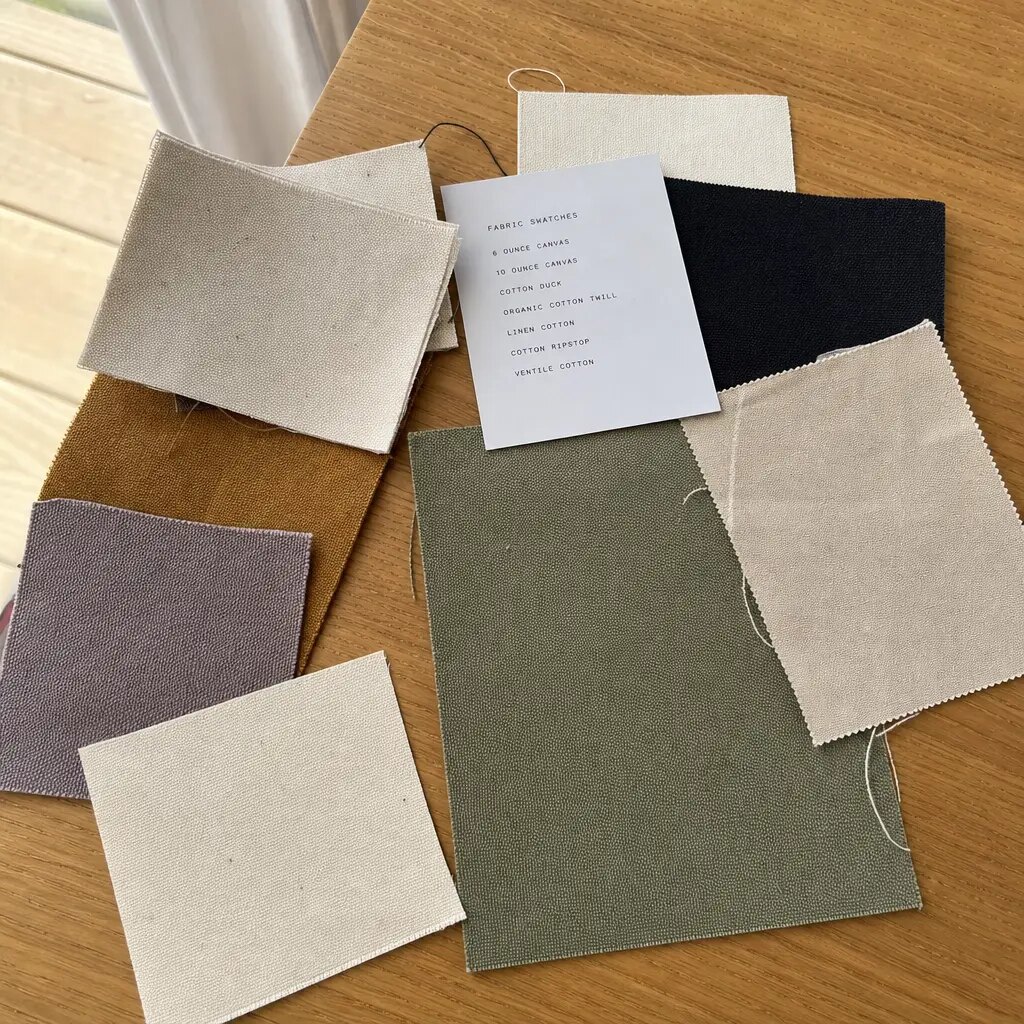
A practical range is about 200 to 340 GSM, depending on the look you want. Lighter cotton folds small and keeps freight down, but it may look too thin on a retail hook. Heavier canvas improves structure and durability, but it can make the drawstring mouth harder to close and can increase sewing cost. Natural cotton also varies in speckle level, so a swatch is useful before artwork approval.
- 6 oz cotton: lower cost, lighter handfeel, suitable for amenity packaging or low-load retail.
- 8 oz cotton: balanced option for many hotel gift shop and spa programs.
- 10 oz cotton canvas: stronger retail feel with better structure and print surface.
- 12 oz cotton canvas: premium and durable, but higher material cost and bulkier packing.
- Dyed cotton: better brand color control, but needs lab dip approval and higher MOQ.
Bag Size, Cord, and Construction Details
The common adult drawstring backpack size is around 34 x 42 cm, but hotel retail buyers should not use that size blindly. If the bag is meant to carry a folded towel, sandals, robe accessories, or spa products, test the actual load. If it is used as a lightweight souvenir or guest room add-on, a slightly smaller size may improve shelf fit and reduce cost.
Cord construction matters more than many RFQs admit. Thin cord can cut into the shoulder and makes the product feel cheap. Cotton cord or flat cotton tape works well for natural branding, while polyester cord may be stronger and cheaper but less aligned with an eco-style hotel program. The cord exit point and channel stitching must be clean because this is where daily wear often starts.
- State finished size, not only cutting size, and allow a realistic sewing tolerance.
- Use 5 mm to 7 mm cord for a better shoulder feel on retail backpacks.
- Consider bartacks or reinforced stitching if the bag will carry beach or activity items.
- Approve cord color and cord length together with the fabric, not as a separate assumption.
- Avoid oversized bags with very light fabric unless the product is only for display or light packaging.
Print Method and Logo Placement Decisions
For most hotel logos, screen printing is the safest and most cost-effective decoration method. It works well for one-color or two-color artwork, gives a clean finish on cotton, and is easy to repeat for replenishment orders. Heat transfer can handle gradients or detailed art, but it may feel less natural on a cotton backpack and needs careful testing for cracking, edge lift, and handfeel.
Logo placement should be tested with the bag filled, not only when flat. A centered logo that looks perfect on a table may sit too low when the bottom expands. For hotel retail, the front panel should show the brand clearly when hanging on a peg, folded in a basket, or placed on a shelf. Keep print away from seams, folds, and the cord channel.
- Use vector artwork and Pantone references for clean screen preparation.
- Keep a minimum safety margin from side seams, bottom fold, and cord channel.
- Approve a print strike-off when using natural cotton because ink absorption can vary.
- Avoid heavy ink coverage over large areas if a soft handfeel is part of the product value.
- Record print size in centimeters and position from top or bottom edge for repeat orders.
MOQ Logic for Hotel Retail Programs
MOQ is not only a supplier policy; it is driven by fabric availability, dyeing, printing setup, cutting efficiency, and packing labor. A natural cotton backpack using stock fabric can often support a lower first order than a custom dyed version. A custom color, special cord, inner label, barcode sticker, or retail band can raise the practical MOQ even if the sewing factory is flexible.
For a new hotel retail program, it is usually better to launch with stock natural or standard dyed fabric, then move to custom fabric after sales data is available. This reduces inventory risk and lets the buyer test guest response. If the program is for a chain, cruise group, distributor, or seasonal resort rollout, higher MOQ may be acceptable because consistent color and unit cost matter more.
- Stock natural cotton: best for first orders, sampling speed, and lower development risk.
- Stock dyed cotton: useful when brand color is flexible and lead time is tight.
- Custom dyed cotton: better for brand control, but requires lab dip and higher volume.
- Custom cord or label: small detail with real MOQ impact if the material is not in stock.
- Multi-property rollouts: consolidate volume by using one base bag with property-specific print runs.
Quote Data That Makes Supplier Comparison Fair
A useful quote must show what is included. A low unit price can hide thinner fabric, no screen charge, no barcode labeling, no inner carton, or a loose packing method that increases damage risk. When procurement teams compare suppliers, the quote sheet should separate product cost, decoration cost, packing cost, sample cost, setup cost, testing cost, and export terms.
Ask for carton data early. Cotton backpacks are not heavy, but they can take volume when packed loosely or when fabric weight increases. Carton dimensions, pieces per carton, gross weight, and estimated CBM per 1,000 pieces help importers compare landed cost instead of only FOB price. This is especially important for hotel retail distributors shipping to multiple properties.
- Quote fabric weight, bag size, cord type, print method, and packing style on the same line.
- Separate screen charge, sample charge, lab dip charge, and testing cost from unit price.
- Include Incoterms, port, currency, payment terms, and quote validity date.
- Request estimated CBM and carton weight before freight comparison.
- Clarify whether spare bags, overage, retail labels, and inspection repacking are included.
Sample Approval Should Prevent Bulk Mistakes
A hotel retail sample is not approved only because the logo looks correct. The buyer should handle the bag, pull the cords, fill it with expected items, fold it into retail packing, and inspect the print under normal light. If the product will sit in a boutique or spa, wrinkles, stains, odor, and poor cord alignment can make the item look like a cheap giveaway.
The approved sample should become the reference for production. Keep one sample with the buyer, one with the factory, and one for the inspection company if third-party QC is used. Mark the approved sample date, fabric weight, print method, print size, cord detail, and packing style. Without this reference, bulk production disputes become subjective.
- Measure finished width and height after sewing and compare with the RFQ tolerance.
- Check whether the bag closes smoothly when empty and when lightly filled.
- Rub the print surface with a dry white cloth to look for obvious ink transfer.
- Review stitching density, loose threads, skipped stitches, and cord channel neatness.
- Approve the retail packing sample together with the product sample.
Quality Thresholds for Inspection
Inspection criteria should be written before production starts. For cotton drawstring backpacks, common defects include dirty fabric, oil marks, uneven natural cotton shade, crooked printing, weak seams, skipped stitches, cord length variation, and inconsistent carton labels. These problems are easier to prevent when the factory knows the acceptance rules before cutting fabric.
Use measurable thresholds where possible. For example, define finished size tolerance, print position tolerance, and acceptable color variation. Not every natural cotton speckle is a defect, but stains, mildew odor, rust marks, or dark contamination on the front print area should be treated seriously. Retail buyers also need a clean packed appearance because hotel staff may not have time to steam, refold, or sort bags on arrival.
- Finished size tolerance: commonly plus or minus 1 cm unless a tighter standard is agreed.
- Print position tolerance: commonly plus or minus 0.5 cm to 1 cm depending on artwork size.
- Fabric defects: reject visible stains, holes, mildew smell, severe slubs, and front-panel contamination.
- Stitching defects: reject open seams, broken stitches, loose bartacks, and weak cord channels.
- Packing defects: reject wrong barcode, mixed designs, crushed cartons, and unprotected printed faces.
Packing Plan for Retail and Distribution
Packing for hotel retail must protect the product while fitting the receiving process. Individual polybags are common because they keep natural cotton clean during ocean freight and warehouse handling. If the hotel wants a more eco-style presentation, a paper band or recyclable bag can be used, but it still needs to protect the print face and prevent dust marks.
Carton packing should not be decided after production. Over-compressed cartons can create hard creases across the logo and make the product look poor on the shelf. Loose cartons waste freight cost and can lead to shifting, abrasion, or crushed edges. The best packing plan balances product presentation, carton strength, freight efficiency, and the buyer's retail receiving requirements.
- Confirm individual packing: polybag, paper band, folded only, or retail belly band.
- Specify whether barcode, SKU sticker, size label, or country-of-origin label is required.
- Request carton mark format before packing starts, especially for distributors.
- Limit mixed SKU cartons unless the receiving team can process them accurately.
- Use a carton drop and compression discussion for heavier 10 oz to 12 oz orders.
Lead Time and Schedule Risk
Lead time should start from final approval, not from the day the RFQ is sent. A realistic timeline includes artwork review, fabric sourcing, sample making, sample shipping, buyer approval, material booking, cutting, printing, sewing, trimming, inspection, packing, and export documentation. Hotel retail programs often run against opening dates, seasonal resort demand, or marketing launch windows, so unclear approval timing creates real risk.
The highest schedule risks are custom dyed fabric, revised artwork, delayed sample feedback, and last-minute packing changes. If the buyer changes from screen print to heat transfer after sample approval, or adds barcode labeling after sewing, the factory must rework the plan. A clean production calendar should identify which approvals are on the buyer side and which steps are on the factory side.
- Allow extra time for lab dips when the fabric or cord is custom dyed.
- Approve artwork size and print color before booking screen production.
- Do not release bulk printing until the fabric shade and print strike-off are accepted.
- Schedule inspection before the final vessel or courier cutoff, not on the same day.
- Keep replenishment specs unchanged when repeat delivery speed is more important than redesign.
Specification comparison for buyers
| Spec decision | Recommended option | When it fits | Buyer risk to check |
|---|---|---|---|
| Fabric weight | 8 oz to 10 oz cotton canvas for most hotel retail programs | Good balance between shelf appearance, print surface, packing volume, and guest reuse | Below 6 oz may feel promotional; above 12 oz can increase freight and make drawcord closure bulky |
| Bag size | Around 34 x 42 cm for adult guest retail use | Fits towel, slippers, water bottle, spa items, or light resort shopping | Oversized bags may need thicker cord and reinforced seams to avoid strap stress claims |
| Drawcord material | Cotton cord 5 mm to 7 mm or flat cotton tape for a softer retail feel | Matches natural hotel branding and avoids the cheap look of thin polyester cord | Cord color, shrinkage, and end finishing must be approved with the bag sample |
| Print method | Screen print for solid logos; heat transfer only for detailed multi-color art | Screen print gives better cost control on repeated hotel retail replenishment orders | Large ink coverage on natural cotton can stiffen the panel and show uneven absorption |
| Decoration position | Front center logo with minimum 5 cm margin from bottom seam | Keeps the logo visible when the bag is filled and hanging in a retail display | Low placement can distort over the bottom fold or disappear behind shelf lips |
| MOQ route | Use stock greige/natural cotton fabric for first order; custom dyed fabric for repeat volume | Reduces first-order MOQ and speeds sampling for hotel boutiques or resort launches | Custom dye needs lab dip approval and extra allowance for shade variation across batches |
| Supplier route | Direct bag factory when specs, artwork, packing, and inspection plan are clear | Best for importers, distributors, and hotel retail programs with repeat purchasing | Trading-only quotes may hide subcontracted stitching, weaker QC control, or unclear rework responsibility |
| Retail packing | Individual recyclable polybag or paper band plus master carton with barcode label | Protects natural cotton from dust while keeping retail handling efficient | Over-compressed cartons can crease prints, deform cords, and create poor shelf presentation |
Buyer checklist before sampling
- Define target customer use: spa bag, resort shopping bag, welcome amenity, or hotel gift shop retail item.
- State fabric type and weight in oz or GSM, including whether natural, bleached, dyed, or organic cotton is required.
- Specify finished bag size, acceptable tolerance, cord type, cord thickness, and whether reinforcement is needed at the cord channel.
- Provide artwork as vector file with Pantone references, print size, print position, and whether a pre-production print strike-off is mandatory.
- Confirm MOQ by fabric route: stock natural cotton, stock dyed fabric, custom dyed cotton, or certified cotton program.
- Require one physical sample approved for fabric handfeel, stitching, cord function, print quality, and retail packing before bulk production.
- Set QC acceptance criteria for seam strength, print adhesion, color difference, stains, odor, needle holes, and carton labeling.
- Request carton dimensions, gross weight, pieces per carton, packing method, and estimated CBM before comparing freight or landed cost.
- Separate one-time charges such as screen setup, sample fee, artwork adjustment, lab dip, testing, and retail barcode labeling.
- Build lead time from approval date, not RFQ date, and reserve time for sampling, print proofing, inspection, and export paperwork.
Factory quote questions to send
- What cotton fabric options are available in 6 oz, 8 oz, 10 oz, and 12 oz, and what are the matching GSM figures?
- Is the quoted fabric greige, natural, bleached, dyed, organic, recycled cotton blend, or certified cotton, and can you provide a swatch?
- What is the MOQ for stock fabric versus custom dyed fabric, and does the MOQ change by color, print method, or packing style?
- Which print method do you recommend for our artwork, and what is the maximum print size without panel distortion or ink cracking?
- Can you quote screen charge, sample charge, pre-production sample cost, and whether these are refundable after bulk order confirmation?
- What stitching construction is included: lockstitch, overlock, reinforced cord channel, bartack, or extra seam allowance?
- What are the finished size tolerances, fabric weight tolerance, print position tolerance, and color tolerance you will accept during inspection?
- How many pieces per carton, what carton size, what gross weight, and what estimated CBM per 1,000 pieces?
- What production lead time starts after sample approval and deposit, and how many days are needed for inspection and export packing?
- Which documents can you provide for import clearance, retail receiving, or compliance review, such as packing list, commercial invoice, material declaration, or test report if ordered?
Quality-control points to confirm
- Fabric weight should be verified against the approved sample, with normal mill tolerance stated before production.
- Finished size should be measured flat after sewing, not estimated from cutting size.
- Drawcord length should allow comfortable shoulder carrying without causing the bag mouth to remain open.
- Cord channel stitching should run straight with no skipped stitches, puckering, or loose thread ends.
- Front print should pass a dry rub check and show no major pinholes, smudging, ghosting, or off-center placement.
- Natural cotton panels should be inspected for oil marks, rust stains, yarn contamination, mildew smell, and obvious shade panels.
- Seam strength should be checked at side seams, bottom corners, and cord exit points using the approved loading expectation.
- Retail packing should protect the print face from abrasion and keep each bag clean during carton handling.