Start With the Use Case, Not the Logo
For wellness studios, cotton drawstring backpacks are rarely a pure giveaway. They usually sit in one of three jobs: retail merchandise, member welcome kit, or event carry bag. That matters because the proofing standard changes with the use case. A retail bag needs cleaner print edges and tighter stitching than a one-off promo bag, while a staff kit may need stronger cord attachment and a larger print zone for wayfinding or sponsor marks.
The common sourcing mistake is treating the bag as a print surface first and a sewn item second. Cotton behaves differently from coated synthetics. It absorbs ink, shifts slightly in sewing, and can shrink after finishing. If the proof only checks logo appearance and not the bag structure, the bulk run can still miss the brief even when the print looks acceptable.
- Retail programs need consistent logo placement across every carton.
- Studio merch should hold up to repeated handling, not just shelf display.
- Event bags usually fail on cord strength, not on artwork approval.
- Proofing has to cover both print appearance and how the bag carries weight.
Lock the Bag Spec Before You Review Artwork
Most wholesale cotton drawstring backpacks for wellness studios land in the 120 to 140 GSM range for everyday retail use. Below that, the bag starts to feel too soft and can show seam pull or print show-through. Above that, you get a more structured hand feel, but the cost rises and the bag becomes less packable. For a clean, repeatable program, specify fabric weight, weave, and finishing in the RFQ instead of leaving the factory to choose a standard blank.
The other spec points matter just as much. A finished size around 34 x 42 cm or 38 x 45 cm is common, but the true control points are seam allowance, gusset depth if used, cord diameter, and top-channel construction. If the bag has a back panel print that sits near the drawcord channel, the proof should show how the artwork clears the sewn tunnel after tension is applied.
- Use one finished size and one fabric weight per quote to keep comparisons clean.
- Ask the factory to confirm shrinkage allowance before sample approval.
- Define whether the bag is unbleached natural cotton, bleached white, or dyed.
- State if you want a gusset, because that changes print placement and carton count.
Choose a Print Method That Matches Cotton, Not Just the Artwork
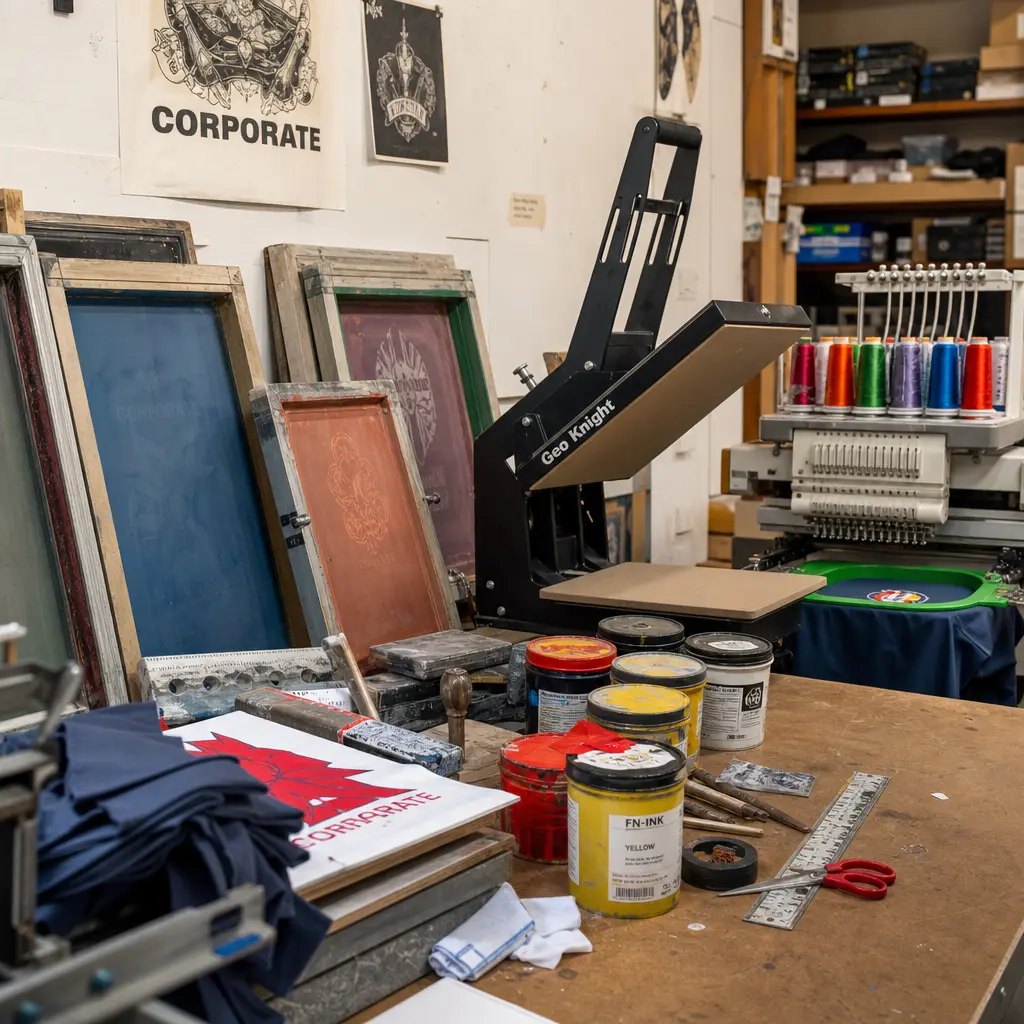
For cotton drawstring backpacks, screen print is usually the most practical default for one to two spot colors. It holds solid logos well, gives predictable registration, and scales cleanly when the order repeats. If the design has fine gradients, photorealistic detail, or many colors, you can move to heat transfer or a higher-end decoration route, but the buyer should treat that as a different product with different failure modes and cost structure.
Print proofing should focus on opacity, edge sharpness, and how the ink behaves on the actual fabric weave. A white logo on natural cotton can look muddy if the ink is too thin. Dark ink can sit too flat if the mesh and squeegee setup are wrong. If the logo crosses a seam, the proof should show whether the factory can keep the line legible after sewing tension changes the panel shape.
- Screen print suits simple brand marks and repeat orders.
- Heat transfer can work for short runs, but check hand feel and wash durability.
- DTG is usually not the first choice for a budget cotton backpack program.
- Ask for artwork proof on the exact blank and not on a generic mockup.
Use the Right Sourcing Route for the Order Size
The best supplier route depends on whether you are buying control, speed, or price. A direct factory gives the cleanest path for repeatable production because one party owns the sewing and the print line. A trading company can help if you need several product categories in one shipment, but you must confirm who is responsible for the actual proof, not just the commercial quote.
For small programs, a local decorator or stock importer may be the fastest way to test the market. The tradeoff is spec drift. Once the blank bag is already in inventory, the exact fabric weight, cord type, and seam layout are fixed. That can be fine for a trial run, but it is a poor basis for a long-term retail line unless you have already validated the product and the landed cost.
- Direct factory favors reorders and tighter spec discipline.
- Trading companies are useful when you need coordination across products.
- Domestic decorators are strongest on speed, not always on cost per unit.
- Stock importers help with launch speed, but they limit control over the blank.
Build an RFQ That Produces Comparable Quotes
A useful RFQ for this category should give the supplier enough detail to stop guessing. Include finished size, target GSM, fabric color, print method, print size, number of ink colors, carton pack, label requirements, and whether the bag needs a hang tag or retail barcode. If the logo has multiple versions, tell the factory which one is production approved and which are only concept options.
The quote should come back as line items, not a single lump sum. For example, fabric, sewing, print setup, per-piece print charge, label, inner pack, carton pack, and freight terms should be separated. That is how you see where a cheaper quote is saving money. Often the low offer simply reduces GSM, simplifies the cord, or excludes packing details that your distributor actually needs.
- Ask for MOQ by color, artwork, and packing method.
- Request lead time from approved sample, not from purchase order date.
- Require a quote line for sample cost and sample courier cost.
- Make carton quantity and gross weight part of the quote comparison.
Proof the Sample Like It Is a Production Part
The pre-production sample is where most printing problems become visible if you know what to look for. Spread the bag flat, then measure the print from the top seam and the side seam. Check whether the logo sits square to the bag body and whether the art shifts when the drawcord is pulled tight. If the logo is intended to sit above the fold line, confirm that the sewing line does not cut through it once the channel is finished.
The sample review should also include handling, not just photos. Rub the print lightly with clean dry cloth, fold and unfold the bag, and load a few kilograms into the bag to see how the panel hangs. Cotton can make a good-looking proof fail after the first tension cycle if the seams are weak or the print is placed too close to a stress point.
- Measure logo placement on a flat bag and on a tensioned bag.
- Review front, back, inside seams, cord ends, and top channel finish.
- Check for needle marks, oil spots, and thread tails around the print area.
- Approve the sample only after the factory confirms the same blank and process will be used in bulk.
Set Acceptance Criteria Before Bulk Production Starts
A good proofing checklist turns vague quality language into pass or fail rules. For cotton drawstring backpacks, that usually means a clear position tolerance for the print, an acceptable range for GSM, and a stitch quality target at the cord channel and corners. If you leave those points open, the factory may deliver bags that are technically printable but still not aligned to your retail standard.
Use acceptance criteria that a warehouse team can actually inspect. If your team cannot measure it, the factory will not consistently hold it. A simple rule set is enough: no visible ink bleed, no skipped stitches in stress zones, no mixed shade within the same carton, and no print drift beyond the agreed tolerance. That makes dispute resolution much easier if there is a bulk deviation.
- Define a print placement tolerance in millimeters or centimeters.
- Define what counts as a defect: smear, misregistration, stain, broken stitch, or cord issue.
- Set a carton-level sampling plan before shipment.
- Decide whether one bad bag triggers rework, replacement, or carton sorting.
Pack for Shelf Readiness and Low Damage Rates
Packing is not an afterthought on a printed cotton backpack program. If the bag is going into retail or a studio shop, you need to know whether it ships flat, folded, polybagged, or loose packed by carton. Too much folding can crease the print. Too little protection can leave dust marks, especially on light-colored bags and white logos. The right answer depends on whether the bag is sold individually or nested into a display carton at receiving.
Carton efficiency also affects landed cost. A slightly larger bag or a thicker GSM can reduce the number of units per carton and increase freight cost even if the unit price looks strong. Ask for carton dimensions, gross weight, and inner pack quantities in the quote. That lets your logistics team compare suppliers on the same basis instead of discovering a transport penalty after the order is confirmed.
- Confirm whether the bags are packed flat, folded, or individually polybagged.
- Ask for carton dimensions and gross weight before final approval.
- Check that barcode and SKU labels survive transit and warehouse handling.
- If the bags are retail-ready, require a clean outer pack and consistent folding.
Plan Lead Time and Landed Cost Before You Place the PO
Lead time on this category is usually driven by three things: artwork approval, print setup, and packing requirements. A simple one-color bag can move quickly once the sample is approved, but a multi-color print or special label can add days at each step. If the factory is waiting on approval for a proof that is missing size or placement detail, the schedule slips even if the sewing line is ready.
Landed cost is the number that matters to procurement, not just ex-factory price. Compare at least three scenarios: direct factory with full packing, blank stock with local print, and oversea sourcing with domestic finishing. One option may look cheaper per unit, but carton size, sample fees, freight, duty, and rework risk can erase the gap. A clean quote lets you see whether the savings come from real efficiency or from hidden spec reduction.
- Track lead time from approved sample to ready-to-ship cartons.
- Separate factory price from freight, duty, and local receiving costs.
- Compare landed cost using the same carton count and same decoration method.
- Hold one fallback supplier route in reserve if artwork revisions are still active.
Specification comparison for buyers
| Spec decision | Recommended option | When it fits | Buyer risk to check |
|---|---|---|---|
| Direct factory | Best for repeat programs with one approved artwork and stable volume | 500 units and up, custom label, repeated reorders, tighter spec control | Confirm the factory can hold your print placement, carton pack, and re-order color match without changing materials |
| Trading company or sourcing agent | Use when you need multi-supplier coordination or product consolidation | Mixed SKU programs, first-time sourcing in Asia, buyers without local QA support | Ask who actually prints and sews the bag, because responsibility can be split between two parties |
| Domestic decorator | Best for urgent launches and short-run promotional drops | Fast turn programs, event merchandise, local fulfillment | Check whether the blank bag is the same cotton weight and construction you expect from import production |
| Stock importer with overprint | Good for low artwork complexity and quick retail tests | Small retail trials, seasonal pop-ups, low MOQ needs | Watch for limited size and color options, plus logo placement that is fixed by their inventory layout |
| Small regional screen printer | Works for simple one-color logos on blank stock | Community studios, staff kits, limited budget runs | Ink coverage and stitch distortion are often less controlled than in a factory that prints before final packing |
| Low-cost offshore factory | Best unit economics at scale if the spec is locked | Large retail rollouts, distributor programs, private label replenishment | Verify they will not swap fabric GSM, cord thickness, or print method after sample approval |
| Blank stock plus local print | Useful when you want speed with some brand control | Short launches, multiple artwork versions, regional fulfillment | The blank bag and local print have to match the final use case; thin stock can fail after decoration |
| Co-managed factory plus third-party QC | Strong choice for buyers who need proofing discipline | Sensitive brand launches, new suppliers, larger POs | Budget for inspection and sample courier time, or the schedule advantage disappears |
Buyer checklist before sampling
- Lock finished bag size, seam allowance, cord length, and acceptable shrinkage before the first print proof.
- State fabric composition and target GSM, not just 'cotton' or 'natural cotton'.
- Specify print method, number of colors, print area, and whether the logo can move around seams or the drawcord channel.
- Provide vector artwork plus Pantone references or an approved ink target.
- Request the exact production blank, not a substitute sample on a different fabric weight.
- Approve a pre-production sample in natural light and under store lighting, with close review of edge sharpness and registration.
- Confirm carton quantity, inner pack, and whether bags are polybagged or loose packed.
- Ask for a line-item quote that separates fabric, sewing, printing, labeling, packing, and freight terms.
- Set a rework rule for print misalignment, stain contamination, broken stitches, and shade variation.
- Get the lead time in calendar days from artwork approval, not from initial inquiry.
Factory quote questions to send
- What is the base fabric GSM, weave type, and shrinkage range after printing and finishing?
- Is the drawcord cotton, polyester, or blended, and what diameter is used in production?
- How many print colors are included in the quote, and what is the setup charge per artwork version?
- Can you show a photo of the exact pre-production sample fabric and print process, not only a reference bag?
- What is the MOQ per color, per print position, and per label option?
- What carton packing count do you recommend for this size and weight, and what is the master carton size?
- What is the lead time after sample approval, and what parts of that lead time are at risk if artwork changes?
- Which QC checks do you perform for print registration, stitch strength, and carton count before shipment?
Quality-control points to confirm
- Fabric GSM stays within the agreed tolerance, usually about plus or minus 5 percent for this category.
- Finished size stays within the agreed tolerance after sewing, with no visible twist, skew, or panel mismatch.
- Print position matches the approved proof, including distance from top seam, side seam, and drawcord channel.
- Ink coverage is even, with no pinholes, bleeding, ghosting, or oily residue on the front panel.
- Seams are secure at the cord channel, stress points, and bottom corners, with no skipped stitches or loose thread clusters.
- Cord pull feels balanced and does not drag unevenly through the channel.
- Carton count, label, and SKU marks match the purchase order and packing list.
- Sample and bulk shade remain consistent across cartons, with no mixed lots unless pre-approved.