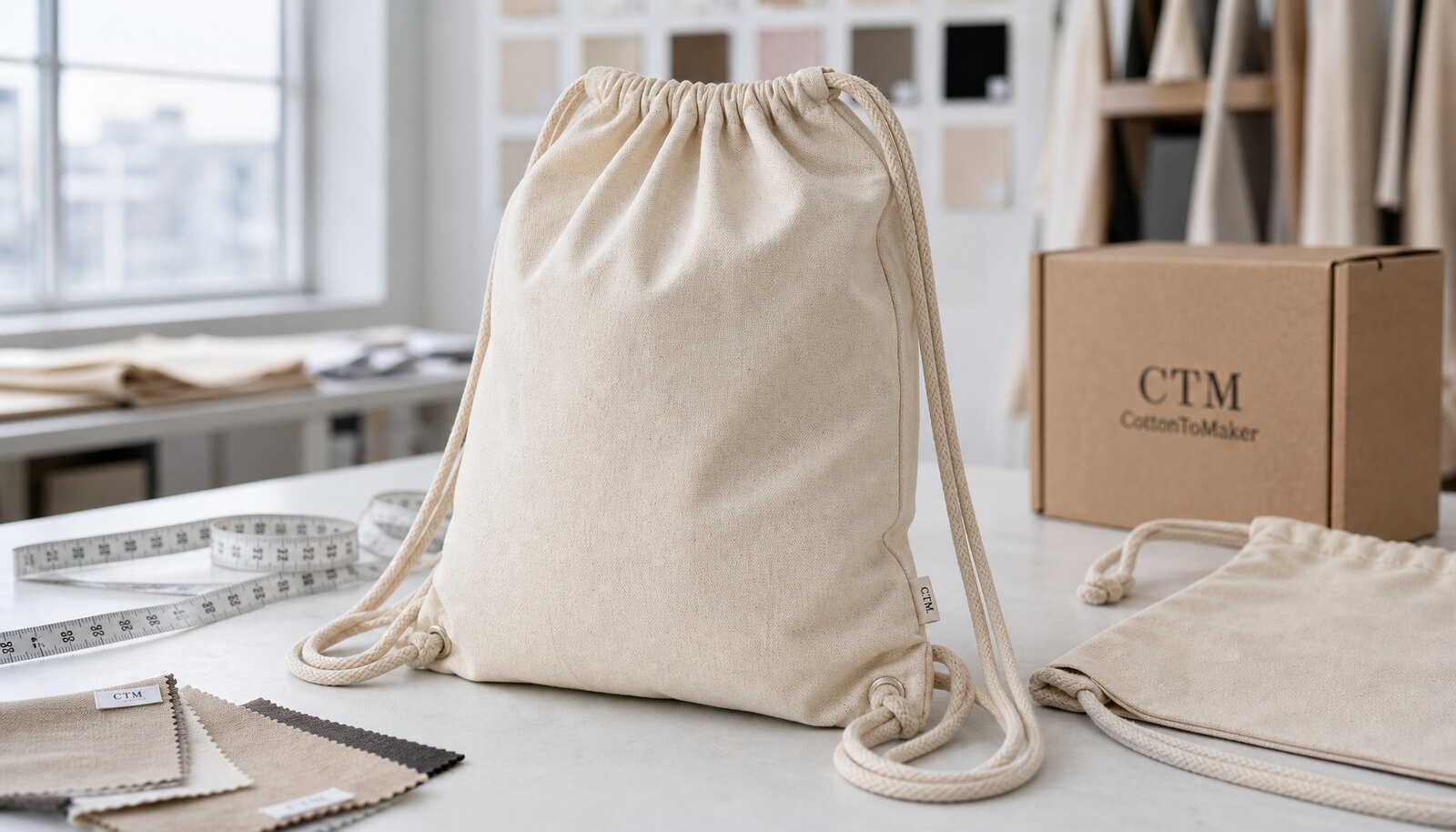
Start With Sell-Through, Not Supplier Minimums
Gift shops buy differently from general promotional channels. The order is usually tied to a seasonal display, a destination theme, a museum store program, or a branded add-on that has to look retail-ready on day one. That means the right MOQ is not the number a factory prefers to run first. It is the smallest lot that still gives you enough sell-through to clear the shelf before the next season or assortment change.
Before you ask for quotes, define the role of the product. A low-ticket impulse item can live with a simpler spec and a tighter first run. A more premium souvenir needs better fabric, cleaner packing, and more cushion in the margin. Once that commercial role is clear, you can tell whether the supplier minimum is a real blocker or just a negotiating starting point. If the order is underpowered relative to your sell-through history, reduce complexity before you try to reduce quantity.
- Anchor the first order to store count, display space, and expected sell-through, not to an optimistic annual forecast.
- Keep the opening run narrow if the design is unproven; one body color and one artwork is easier to validate than a large assortment.
- Ask for quotes at the target quantity plus 25 percent and plus 50 percent so you can see where the real cost curve changes.
- If the bag is for a seasonal event, work backward from the sell date and protect the approval calendar before you commit to quantity.
Choose a Spec That Gives You Negotiating Leverage
The fastest way to lower MOQ is to reduce the number of factory variables. A simple cotton drawstring backpack with one fabric, one cord color, one print position, and no lining is easy to cut, sew, print, and pack. As soon as you add contrast panels, pockets, metal hardware, multiple labels, or a more complicated fold, the factory has to spread setup cost over a smaller batch. That is where minimums move upward.
For most gift shop programs, the better question is not how many extra features the bag can carry. It is which features actually help the product sell. A heavier body fabric, a cleaner print, or a neat woven side label often creates a better retail impression than stacking on extra components. If the customer can already understand the value from the handfeel and the branding, keep the spec simple and spend the budget where it shows up to the shopper.
- Use one body fabric, one cord style, and one decoration position for the opening order.
- Treat 120-140 GSM as a common lightweight souvenir range and 180-220 GSM as a sturdier retail-feel range, then confirm the look with a sample rather than relying on the number alone.
- Avoid lining, pockets, extra zippers, or mixed trims unless those details are essential to sell the product.
- If the artwork is simple, screen print is usually the cleanest low-cost route; reserve embroidery or special labels for a premium shelf position.
Read the Real MOQ Drivers Inside the Factory
MOQ is usually a cost-recovery problem, not an arbitrary policy. Fabric procurement, dye lot planning, screen or plate setup, cutting efficiency, packing labor, and carton allocation all show up in the minimum. A factory that needs to buy a full roll, set up a print screen, and open a packing line for a small order will either price that burden into the unit cost or push back on the quantity.
The better negotiation move is to trade variables instead of arguing about the number in isolation. One body color instead of three, a standard cord color instead of a custom shade, a longer lead time, or a simpler packout can unlock a lower MOQ more effectively than asking the supplier to absorb the same workload for less money. If the supplier cannot explain which part of the process drives the floor, the quote is probably not detailed enough for procurement use.
- Fabric minimums are often the hidden driver when the supplier must buy a whole roll or a full dye lot.
- Each print color can add setup cost, especially on small runs where screen prep is not diluted across volume.
- Packing changes can cost more in labor than in materials, especially if the factory has to re-fold, re-label, or re-carton the goods.
- Mixed colors and mixed artwork increase sorting time and line handling, which is why assortments usually carry a higher effective MOQ.
- A standard carton size is usually cheaper to run than a custom retail shipper, even when the unit itself looks simple.
Compare Sourcing Routes Before You Compare Unit Price
A direct factory is not always the lowest-risk route, and a trading company is not always the most expensive. What matters is how much control you need, how many SKUs you are trying to combine, and how fast the product has to land. If you have one repeatable design with a clear spec, factory direct is usually the cleanest baseline. If you need a mixed gift shop assortment with smaller quantities per style, a trading company can sometimes bundle demand more efficiently than a factory that wants one focused run.
Stock blanks and local decoration are worth serious consideration when you need speed or you are testing demand. They often win on time, not on perfect unit economics. The mistake buyers make is comparing quotes without normalizing the spec. If one supplier quotes 140 GSM cotton, screen print, and shelf-ready packing while another quotes a lighter blank, loose packing, and no carton detail, the lower number is not a valid comparison. Compare apples to apples first, then decide whether speed, control, or margin matters most.
- Direct factory: best when you want a repeatable spec and a long-term reorder path.
- Trading company: useful when you need communication support, mixed styles, or consolidated shipments.
- Stock blank plus decoration: good for a test launch, a rush order, or a very small first run.
- Nearshore supplier: often the better route when replenishment speed matters more than the absolute lowest ex-works price.
Build the Quote Matrix Before You Negotiate
A clean quote matrix is more valuable than a long email chain. Put every supplier on the same template and require the same inputs: fabric weight, color count, print method, packing format, carton data, lead time, and MOQ by design or color. If the factories are answering different questions, the buying team is comparing noise instead of cost. A short table from each supplier is better than a paragraph of assumptions.
The matrix should also show what happens as volume changes. Some suppliers look expensive at the minimum but become competitive after a few hundred more units. Others are the opposite: they quote attractively at the low end and then flatten out because they are padding the setup. If you show three quantities side by side, you can see whether the factory is giving you a real curve or just a single number with hidden margin buried inside it.
- Ask every supplier to use the same incoterm and the same packing standard before you compare pricing.
- Separate recurring unit price from one-time setup charges so the total is visible.
- Ask for carton size, pieces per carton, gross weight, and estimated CBM, not just a finished unit price.
- If the supplier refuses to show volume tiers, treat the quote as incomplete rather than competitive.
Approve the Sample Like a Production Buyer
A sample is supposed to prove the order can be made consistently, not just that the artwork looks good. Measure the bag against the approved spec, check the actual fabric feel, test the cord behavior, and verify the print or label placement in real light. If the sample is only approved from a photo or a PDF, you are still guessing about the material, the handfeel, and the stitching quality.
Set the acceptance rules before the sample arrives. Decide what matters enough to stop the order. For a gift shop program, a slightly off-center label may be acceptable if the rest of the construction is clean. A noticeably lighter fabric, a weak seam, a bad cord channel, or a muddy logo should not be. If the supplier offers a lab dip, strike-off, or pre-production sample, use it to lock the material and print result before bulk begins. That avoids the common trap where the first approved image is not the same as the production output.
- Approve a physical sample whenever the bag has branding, seasonal color sensitivity, or shelf-ready packing.
- Use a simple rule for rework: if the sample is lighter, smaller, or materially different from the approved reference, do not release bulk.
- For print-sensitive art, require a strike-off or print panel before production starts.
- Keep one reference sample on your side so later production can be checked against the exact approved version, not a memory of it.
Lock Packing, Cartons, and Freight Early
Packing is not a side note on gift shop programs. Retail buyers care about how the bag folds, whether it opens cleanly, and whether it can be scanned or displayed without extra labor. If the item lands as a loose bundle with no barcode or a poor fold, the store or distributor pays for that omission. A quote that does not define the fold method, polybag, hangtag, barcode, and master carton count is not ready for a buying decision.
Packing also changes freight in a very practical way. A small shift in fold size or inner pack count can change carton dimensions enough to alter the cube, which then changes ocean or air cost. This is why the quote needs carton data, not just unit data. If the supplier only gives you a per-piece number, they have not yet told you the real landed cost. Ask for the packed configuration early, then check whether the carton weight and cube still fit your warehousing and receiving limits.
- Confirm whether the product is shipped flat-packed, folded, polybagged, or shelf-ready before you accept the unit price.
- Lock the inner pack count early so the carton size and freight estimate do not move later.
- Request barcode placement, label size, and carton marks before bulk packing starts.
- If the order is going to a distribution center, ask for carton weight limits and palletization details before you approve the packout.
Use QC Thresholds the Factory Can Actually Follow
Quality control gets stronger when the rules are concrete. A good QC plan tells the factory what counts as acceptable variation and what counts as a defect. For cotton drawstring backpacks, that means checking size, fabric weight, stitching, drawcord behavior, print placement, packing accuracy, and carton condition. If the standard is too vague, every inspection becomes subjective and the supplier can argue later that the result was within normal variation.
Use practical thresholds, not wishful ones. As a starting point, many buyers allow a small fabric weight variance around the approved GSM, but they reject a bag that is visibly lighter or that changes handfeel in a way the customer would notice. For size, keep a tight tolerance on the body dimensions and a separate check on usable capacity. For print, define placement tolerance and look for wash or flex sensitivity if the bag will be handled often. The point is to catch the problems the customer will see, not to write a QC document that sounds strict but cannot be enforced on the line.
- Set a fabric tolerance against the approved GSM and reject any sample that changes feel enough to affect the retail impression.
- Inspect seam quality at the bottom corners, side seams, and top channel where load is transferred.
- Run a simple pull or hang test on sample pieces before bulk release; if the cord slips or a seam opens, stop the order.
- For basic logos, define a placement tolerance and reject obvious drift, skew, or ink fill-in.
- Confirm overrun or underrun tolerance in writing so the shipped quantity matches the PO expectation.
- Use a final carton check for moisture, odor, loose threads, print damage, barcode readability, and folding consistency.
Negotiate MOQ Without Diluting the Spec
The strongest MOQ negotiation is specific. Start with the quantity you can realistically place, then offer tradeoffs that make the factory's setup easier. A buyer who can commit to one fabric color, one print position, a standard cord color, and a simple carton pack has a credible reason to ask for a lower opening order. A buyer who wants the factory to support the same complexity at a smaller run is asking for a subsidy, not a negotiation.
Protect the details that define the product. A lower MOQ is not useful if the supplier quietly substitutes lighter fabric, trims the print size, or changes the packout in a way that hurts retail value. If the factory agrees to a smaller run, the written quote should still name the exact material, print method, packing standard, and tolerance rules. Put the approved sample, packing standard, and quantity tolerance into the PO so the commercial agreement and the production reality stay aligned.
- Offer a simpler spec before asking for a smaller order.
- Use a forecast or repeat-order plan when you want the factory to treat the first order as the start of a program, not a one-off.
- Keep the quote tied to the approved sample so the supplier cannot downgrade details later.
- If the unit price drops but the spec gets vague, treat the quote as worse, not better.
Know When to Switch Routes or Walk Away
Not every order belongs on the same sourcing path. If your per-design volume is too small to absorb a print setup and a dedicated packing run, move toward stock blanks or a pooled assortment instead of forcing a custom cut-and-sew order. If the market window is short and the product has to arrive quickly, a nearshore supplier or local decoration route may be the more rational choice even if the ex-works number is higher. The right answer depends on inventory risk and delivery certainty, not just on the cheapest piece price.
There is also a point where a quote should be rejected. If the supplier will not separate setup from unit price, will not state the fabric weight, will not define the packout, or keeps changing the MOQ after each clarification, the quote is not mature enough for procurement. Walk away when the comparison cannot be normalized. A clear no is cheaper than a weak yes that turns into substitutions, delays, or carton surprises after the PO is issued.
- Switch to stock blank plus local decoration when your volume is too small to justify a full factory setup.
- Switch to nearshore when the schedule is tight and the market window is short.
- Switch to a pooled multi-design order when the body spec can stay fixed but the artwork needs variety.
- Walk away when the supplier cannot quote the same spec twice or keeps moving the MOQ after clarification.
- If the order is seasonal and the shipping window is fixed, prioritize lead-time certainty over a small unit-price advantage.
Specification comparison for buyers
| Sourcing route | Typical MOQ band | Typical lead-time band | Main price drivers | Packing/freight impact |
|---|---|---|---|---|
| Direct factory, one design | 500-2,000 pcs per color/design is common for a simple cut-and-sew program | 20-45 days after sample and artwork approval | Fabric GSM, number of print colors, cord type, sewing labor, setup charges | Best unit economics when the bag is flat-packed and standardized, but polybag, hangtag, and carton labor add cost quickly |
| Trading company, mixed SKU program | 300-1,000 pcs total across several styles, often with a lower per-style floor | 25-55 days depending on how many factories are being consolidated | Consolidation margin, QC handling, communication overhead, and re-packing | Useful when you need assortment control, but extra handling can increase cube and make freight less efficient |
| Stock blank plus local decoration | 50-200 pcs per design for a test launch or urgent seasonal order | 7-21 days if the blank stock is available locally | Blank inventory cost, local print or embroidery charges, and repacking labor | Fastest route for small runs, but cartons can be less efficient and repeated local handling can raise damage risk |
| Nearshore cut-and-sew supplier | 200-800 pcs per design or color is a common starting point | 15-35 days for a straightforward order | Higher labor rates, smaller production batches, and local material availability | Usually better for replenishment speed and lower inland complexity, though the unit price is often higher than offshore |
| Offshore low-cost factory | 1,000-5,000 pcs across a stable program, with higher floors for dyed fabric or multi-color print | 30-70 days depending on material sourcing and shipping mode | Fabric roll minimums, dye-lot planning, screening, packing standards, and export handling | Lowest ex-works price at scale, but freight, duty, and inventory carrying cost can erase the headline savings |
| Pooled multi-design order | 300-1,500 pcs total across 3-6 designs, often 100-300 pcs each | 25-50 days if the body spec stays identical | Artwork changes, sort-and-pack labor, and the risk of slow-moving SKUs | Works best when the body, fabric, cord, and carton spec stay fixed; otherwise sorting and packout can become expensive |
Buyer checklist before sampling
- Define the target retail price or wholesale ceiling before asking for quotes, because the spec has to fit the margin, not the other way around.
- Lock the bag dimensions, fabric GSM, cord type, and whether the body is lined, reinforced, or unlined.
- Set the MOQ target by design, color, and total program volume before comparing supplier responses.
- Ask for three quote tiers, ideally at the target MOQ, plus 25 percent, and plus 50 percent, so you can see the real price curve.
- Specify print method, print size, artwork version, and whether the logo must be front-only, front-and-back, or include a side label.
- State the packing requirement up front: fold method, polybag, hangtag, barcode, inner pack, and master carton count.
- Request EXW, FOB, and if needed DDP pricing so freight and inland handling do not get buried inside a single number.
- Require a physical pre-production sample for any order with branding, seasonal color requirements, or retail-facing packing.
- Ask for lead time split into sample, material sourcing, production, packing, and shipping, not one blended number.
- Decide in writing whether the supplier may substitute fabric shade, drawcord color, carton style, or packing material if stock runs tight.
Factory quote questions to send
- What is the exact fabric composition, weave, and nominal GSM, and what tolerance do you allow around that GSM?
- Is the MOQ calculated per design, per color, per print screen, per packing style, or by total order volume?
- What one-time charges are separate from the unit price, including screens, plates, cutting setup, labels, hangtags, and carton changes?
- Can you quote at three quantity levels so we can see the break point where the unit price actually changes?
- Which print method do you recommend for this artwork, and what is included in that method on the quote?
- What is your standard overrun or underrun policy, and what range can you commit to in writing?
- What packing format is included by default, and which items are extra if we need shelf-ready retail packing?
- How many days do you need for lab dip, strike-off, or pre-production sample approval before bulk begins?
- Can you share carton size, gross weight, pieces per carton, and estimated CBM so we can calculate freight accurately?
- What inspection standard do you use, and what defect rate or AQL do you normally accept for this product type?
Quality-control points to confirm
- Check finished dimensions against the approved sample and the tech pack, and treat any repeated variance greater than about 1 cm on body size as a production issue unless your spec allows more.
- Compare the actual fabric weight to the approved GSM and treat a delta of more than about 5 to 7 percent, or a visibly lighter handfeel, as a warning sign that the body may not wear as expected.
- Inspect the seam construction at the side seams, bottom corners, and top channel; there should be no skipped stitches, open seams, or loose thread clusters in stress areas.
- Test the drawcord, knot security, and cord glide by loading the bag with a realistic weight; if the cord slips, jams, or cuts into the channel, the sample should be reworked.
- For basic logos and simple print positions, keep placement close to the approved position, ideally within 2 to 3 mm on a centered mark, and reject obvious drift or skew.
- If the order uses screen print, check for fill-in, weak ink coverage, color mismatch, cracking at fold points, and ink bleed onto the reverse side.
- If the order uses embroidery or a woven label, inspect edge crispness, thread coverage, label symmetry, and whether the backing creates uncomfortable bulk.
- Use a simple pull or hang test on sample pieces before bulk release; if seams open, eyelets tear, or the top channel distorts under normal load, stop the order.
- Confirm the overrun and underrun quantity against the PO before shipment; anything outside the written tolerance should trigger buyer approval, not silent shipment.
- Review the retail packout on actual packed cartons, not just on one photo, and check barcode readability, carton marks, moisture, odor, and folding consistency.