Start with the buying use case
Coffee roasters do not buy cotton drawstring backpacks for one generic reason. The bag may be a retail add-on, a subscription gift, an event handout, an internal welcome pack, or a bundle carrier for beans and accessories. Each channel creates a different spec. A retail pack needs cleaner finishing, better fold consistency, and decoration that reads well from arm's length. An event giveaway can tolerate a lighter build if the cost and freight target matter more than premium handfeel.
The RFQ should reflect that use case from the first line. If the factory does not know whether the bag needs to hold a mug, a 250 g bag of coffee, a notebook, or a mixed kit, it will guess on fabric weight and reinforcement. That is how quotes become impossible to compare. A procurement-grade brief starts with the end use, the expected load, the display environment, and the delivery channel.
- State the use case first: retail resale, event giveaway, staff kit, or bundle packaging.
- List the heaviest realistic load the bag must carry, not just the item list.
- Note whether the bag must hang on a peg or sit neatly in a retail box.
Lock the build before you price it
For wholesale cotton drawstring backpacks, the useful range is usually 8 oz to 12 oz cotton canvas. Eight ounce fabric is lighter, cheaper to ship, and acceptable for simple promos, but it can feel soft and lose shape after printing. Ten to twelve ounce canvas gives the bag more body, better print clarity, and a more retail-ready feel. If the buyer wants a premium result, the extra value usually comes from a stable fabric, neat stitch work, and a clean top hem rather than decorative features that add little functional value.
The bag size must be written as a finished measurement, not a vague nominal size. A bag that is described only as 30 x 35 cm can still vary in feel depending on whether that measurement is cut size or finished size, whether the base is boxed, and whether the channel eats into usable height. The same is true for the cord. Cotton braid, twisted cotton, and polyester blend cords all behave differently in handfeel, knot security, and color matching. If the cord ends need metal tips or heat seal, that also has to be in the spec because it changes both cost and line speed.
- Specify fabric in GSM or oz and confirm the weave and finish.
- Write the finished size and the measurement method.
- State whether the base is flat, boxed, or lightly gusseted.
Compare supplier routes before you compare unit price
The right supplier route depends on control, speed, and how many moving parts the order contains. A direct cut-and-sew factory is usually the best fit when you want one party to control fabric, sewing, decoration, and packing. That makes the quote easier to audit because the supplier can show the production cloth, the print method, and the carton sample in one place. It also reduces the chance that one subcontractor changes the bag after the sample was approved.
A trading company can still be a good route if it has a stable factory base and can coordinate multiple product lines. It is more useful when the buyer needs paperwork support, mixed categories, or a smaller internal team. The tradeoff is transparency. You need to know the actual factory, the real markup, and the path for revisions. A local decorator on imported blanks is the fastest option for small urgent runs, but it is the weakest option for controlling fabric weight, seam construction, and retail finish.
- Ask who actually cuts, sews, prints, and inspects the bags.
- Request the factory name and production photos, not only sales samples.
- Compare only quotes built on the same artwork, size, and packing method.
Write the RFQ like a production brief
A useful RFQ for wholesale cotton drawstring backpacks should be short enough to read, but complete enough to produce a stable quote. The essentials are the bag size, fabric weight, color, cord type, decoration method, print size, packing format, quantity, destination, and delivery window. If the buyer sends only a logo and asks for a price, the supplier will fill in the blanks with its standard build. That is rarely the same build another factory will assume, which is why low-effort RFQs create quote drift and misleading comparisons.
The best format is one page of core specifications and one page of reference files. Include a flat sketch if you have it, but do not rely on the sketch alone. The supplier should be able to read the spec and tell you whether the quoted build is blank, printed, or label-based, what the MOQ is by artwork and by color, and whether the bag ships polybagged or bulk packed. If you need mixed shipments or staggered delivery, say so up front because it changes the production and carton plan.
- Include one final art file and one reference image for color and placement.
- List the exact packing method, carton count, and destination terms.
- Call out whether mixed colors, mixed artwork, or split shipments are allowed.
Read the quote as a production document
A procurement-grade quote should break out the cost drivers instead of hiding them in one number. Ask for the blank bag cost, decoration cost, packing cost, and any special handling separately. This matters because coffee roaster buyers often need to compare one-color screen print against woven label options, or 8 oz canvas against 10 oz canvas. If the supplier gives only a total, you cannot see whether the higher number comes from fabric, setup, or a packing assumption that you never asked for.
Use the quote to test whether the supplier understands the spec. A good supplier can tell you if the fabric is stock or made-to-order, whether the print is in-house, and whether the cartons are standard or custom. If the order size is uncertain, ask for a price ladder at 1,000, 3,000, and 5,000 pieces. Then compare the spread. For the same spec and Incoterm, a meaningful quote spread is usually modest. If one supplier is dramatically lower, the usual reason is not magic pricing. It is a hidden assumption about fabric weight, decoration method, packing, or inspection scope.
- Request separate lines for blank bag, print or label, packing, and freight-related handling.
- Ask for price bands at 1,000, 3,000, and 5,000 pieces if volume may change.
- Compare quotes only after confirming the same Incoterm and carton spec.
Set decoration limits that match the artwork
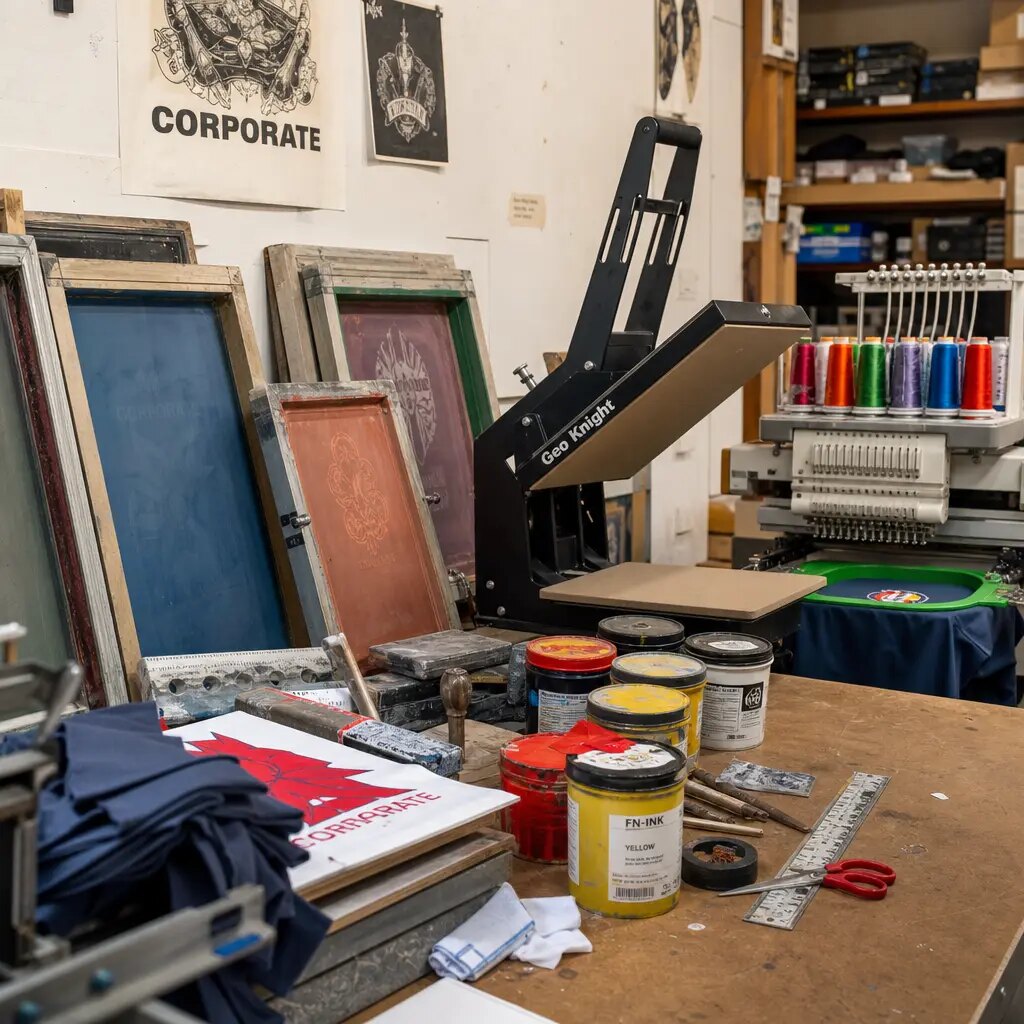
For most coffee roaster programs, one-color or two-color screen print is the cleanest and most cost-effective decoration route. It handles logos, roast messages, and short brand marks well. The RFQ still has to specify ink opacity, cure method, and placement tolerance. On natural cotton, weak ink coverage can look dirty or washed out, while too much ink can stiffen the panel and crack after folding. If the artwork is simple and the order needs to move quickly, screen print is usually the least risky choice.
A woven label or sewn patch can be a better answer when the brand wants a premium handfeel or the artwork is too small to print cleanly. That route shifts the risk from ink quality to label construction, stitch placement, and tactile comfort. Buyers should watch the label size, thread color, edge finish, and whether the label interferes with the drawcord channel or the user's hand when the bag is opened. If the artwork is busy, detailed, or dependent on fine gradients, simplify it before you send the RFQ. Cotton bags do not reward overcomplicated decoration.
- Keep artwork simple if the order is low MOQ or time sensitive.
- Define the maximum print area and exact centerline placement.
- Approve the decoration on production fabric, not on paper alone.
Use sample approval to test the whole build
A sample is not only a visual approval tool. It is the best chance to test whether the bag works in the hand and survives basic use. Pull the cords, fill the bag with a few representative items, open and close it repeatedly, and check the stress points around the channel and the lower corners. If the bag will be folded into a kit or shelf box, fold it the same way every time and confirm that the packed footprint works. A sample that looks good flat can still fail when folded, loaded, or stacked in cartons.
The sample should be made from the same fabric and the same decoration method intended for bulk production. That means the same print screen, label type, cord construction, and finishing process. Ask the supplier to confirm the exact sample stage. A blank sample is useful for dimensions, but it does not prove decoration quality. A pre-production sample is the one that should be approved before the bulk order starts. If a revised sample comes back after feedback, re-approve it before release so production does not drift.
- Test the sample as a working bag, not only as a display item.
- Record approved size, color, and print placement with photos.
- Do not release bulk production until the corrected sample is signed off.
Set tolerances and defect limits before production starts
Procurement buyers need tolerances, not vague approval language. A practical starting point for soft goods is plus or minus 0.5 cm on small dimensions and plus or minus 1.0 cm on larger dimensions, unless the bag is unusually large or the retailer needs tighter control. Print placement should usually stay within plus or minus 0.5 cm of the approved position. Cord length, label placement, and seam alignment should also be written into the approval standard so the factory knows what counts as acceptable variation and what counts as rework.
Quality limits should be written in defect terms. Major defects are visible failures that affect function or presentation, such as open seams, severe print misregistration, broken stitch lines, or bags that miss the size tolerance. Minor defects are cosmetic issues that do not stop use but still matter in wholesale, such as loose thread tails or small print specks. A normal starting point is AQL 2.5 for major defects and AQL 4.0 for minor defects, with zero critical defects. If the design uses metal tips or other metal trim, add metal-control or needle-detection checks only if those parts are part of the design and relevant to your market.
- Write width, height, cord length, and print position tolerances into the PO.
- Use AQL 2.5 major and 4.0 minor as a normal bulk inspection baseline.
- Define critical defects as zero tolerance, not as a percentage.
Plan the QC checklist around failure points
QC for cotton drawstring backpacks should focus on the failures that actually happen in production. First, confirm the fabric weight and appearance against the approved sample. Then inspect the seams, especially the lower corners and the cord channel. These are the places where weak stitching shows up first. A simple static load test of 3 kg to 5 kg is a useful buyer benchmark for light to medium-use bags because it reveals seam slippage, channel distortion, and cord pull issues before the order ships.
Color and decoration need separate checks. Natural or dyed cotton can vary from lot to lot, so the buyer should inspect color under daylight and indoor light, not just in the factory aisle. If the bag is printed, check coverage, registration, and edge quality. A damp rub test is useful when color transfer is a concern, and a wash test is sensible if the bag will be treated as reusable merchandise. For the final carton audit, verify that the finished units match the approved sample in size, fold, and handfeel, and that the carton labels match the PO exactly.
- Inspect the first production carton before the rest of the lot is packed.
- Check both daylight and indoor light for color and print judgment.
- If the bag includes metal trims, add the agreed metal-control check to the packing step.
Treat packing and carton specs as part of the product
Wholesale cotton drawstring backpacks are light enough that packing design can change the landed cost more than buyers expect. Bulk packing in a master carton is usually the most economical route for wholesale distribution. Individual polybags, barcode stickers, insert cards, and retail headers are useful only when the presentation requirement justifies the extra labor and material. If the bag is going into a coffee bundle, the folded size matters almost as much as the bag size because the carton and the retail shipper both have to fit the final bundle format.
The carton spec should be confirmed before production starts. Ask for carton dimensions, gross weight, quantity per carton, and whether cartons are homogenous or mixed by SKU. Carton labels should be simple and consistent: PO number, color, quantity, and carton sequence if the shipment is split. Mixed cartons can save space, but they make receiving slower and increase the chance of distribution errors if the warehouse needs strict SKU separation. This is why packing should be part of the RFQ, not an afterthought.
- Request carton size, gross weight, and units per carton before confirming freight.
- Specify whether retail polybags, barcode labels, or insert cards are required.
- Say whether cartons must be homogenous or whether mixed packing is allowed.
Specification comparison for buyers
| Spec decision | Recommended option | When it fits | Buyer risk to check |
|---|---|---|---|
| Sourcing route | Direct cut-and-sew factory with in-house printing | Best when you need one owner for fabric, sewing, decoration, and packing | Confirm the factory controls the key steps and is not passing print or QC to an outside shop |
| Sourcing route | Trading company with a stable factory network | Useful if you need mixed product lines, consolidated paperwork, or help with coordination | Ask for the actual factory name, the real production photos, and a change-control path for revisions |
| Sourcing route | Local decorator on imported blanks | Works for urgent small runs or one-off promotions | The blank bag spec may not match your target fabric weight, seam quality, or retail finish |
| Fabric weight | 10 oz to 12 oz cotton canvas | Retail-ready bags that need body, better print clarity, and repeat use | Heavier cloth raises cost and can change sewability, shrinkage, and freight weight |
| Fabric weight | 8 oz cotton canvas | Event giveaways and lower-cost bundle inserts | Too light can look limp, distort after printing, and fail simple load tests |
| Decoration | One-color screen print on one panel | Best value for roaster logos, short slogans, and simple artwork | Lock down ink opacity, cure method, and placement tolerance in the RFQ |
| Decoration | Woven label plus small print | Useful when the brand wants a more premium feel or less reliance on ink coverage | Check label handfeel, stitch placement, and whether it interferes with the drawcord channel |
| MOQ strategy | One artwork and one colorway per PO | Good for predictable demand and tight SKU control | Too many variants can turn setup cost into a hidden margin leak |
| Packing route | Bulk pack with one master carton liner | Usually the lowest landed cost for wholesale distribution | Confirm carton count, folded size, and whether every bag is folded the same way |
Buyer checklist before sampling
- Finished bag size in cm and inches, with the measurement method stated as flat finished size or expanded size
- Fabric weight in GSM or oz, plus the acceptable tolerance and whether the fabric is natural, bleached, dyed, or washed
- Canvas color standard, including an approved swatch or Pantone reference if color consistency matters
- Artwork file, print size, print placement, number of colors, and whether the logo is screen print, heat transfer, or woven label
- Drawcord material, cord diameter, cord length, and whether the cord ends need knots, heat sealing, metal tips, or clean cut ends
- Reinforcement detail at the lower corners and drawcord channel, including bartacks, backstitching, or edge binding if required
- Sample approval criteria for size, color, print clarity, seam quality, odor, and folding consistency
- Carton count, carton dimensions, gross weight, palletization need, and whether retail polybags or barcode stickers are required
- Target MOQ by artwork, colorway, and shipment, plus whether mixed cartons are allowed
- Lead time start point, delivery window, destination terms, and whether fabric, cord, ink, and cartons are already in stock
Factory quote questions to send
- Please quote the same bag as blank, with one-color screen print, and with a woven label so I can compare landed cost on the same spec.
- What is the actual fabric GSM or oz, and what shrinkage should we expect after washing or steam handling?
- What finished size tolerance do you hold on width, height, and cord length, and how do you measure it?
- Is printing done in-house, and what are the setup charges for each color, each placement, and each change in artwork?
- Which steps are subcontracted, if any, and who owns final inspection before packing?
- Can you show carton dimensions, quantity per carton, gross weight, and pallet count for the quoted build?
- What sample stage do you provide first: blank sample, pre-production sample, or production sample, and what is the cost?
- What inspection standard do you use for mass production, and can you work to AQL 2.5 major and 4.0 minor?
- Can you provide the compliance documents we need for our market, including fiber content, origin, and any restricted-substance declarations?
- What is the surcharge for retail polybags, barcode labels, hangtags, inserts, or mixed carton packing?
Quality-control points to confirm
- Fabric weight matches the approved spec and stays within the agreed tolerance across sampled cartons
- Finished size is within tolerance for width, height, and cord length, with no visible skew or panel twist
- Print is centered and registered correctly, with clean edges, full coverage, and no pinholes, smearing, or cracking
- Seams at the lower corners and drawcord channel hold under a 3 kg to 5 kg static load test without opening or seam slippage
- No skipped stitches, broken stitches, loose thread tails, or needle damage on visible panels
- Drawcord slides smoothly, knots or tips are secure, and the cord ends do not fray excessively after handling
- Color matches the approved swatch under normal daylight and indoor light, with no heavy dye bleed or striking rub-off
- If the design uses metal tips, rivets, or other metal trims, confirm the agreed metal-control or needle-detection check before packing
- Cartons are labeled consistently with PO number, color, quantity, and carton sequence, and carton count matches the shipping mark
- Use a written AQL plan, typically AQL 2.5 for major defects and 4.0 for minor defects, with zero critical defects