Why carton planning matters more than most craft fair buyers expect
When you source wholesale cotton drawstring backpacks for craft fairs, the carton plan is not a back-office detail. It shapes landed cost, carton handling, print protection, receiving speed, and how quickly your team can stage inventory for an event. A bag that looks inexpensive on a unit-price sheet can become costly if the cartons are oversized, underfilled, or packed in a way that scuffs the print before the product reaches the table.
For craft fair buyers, the shipment has to do several jobs at once. It must arrive clean enough for retail display, compact enough to protect margin, and organized enough to count, move, and restock quickly. That means the supplier's carton plan is part of the buying decision, not something to leave until the end. If a factory cannot clearly explain how the bags will be folded, packed, marked, and stacked, the quote is incomplete even if the unit price looks attractive.
Carton planning also affects supplier comparison. Two quotes can show the same bag price while hiding very different packing assumptions. One may use a smaller carton with tight fold control and lower gross weight. Another may use a loose pack method that wastes air and increases freight charges. Without carton dimensions, piece count, and gross weight, procurement teams cannot calculate true cost per sellable unit.
The best approach is to treat the carton as a measurable part of the spec. Define the bag, define the print, define the fold, and define the shipping carton. Once those items are fixed, the supplier can quote something you can actually compare, inspect, and receive without surprises.
For event buyers, that discipline pays twice. First, it gives you a clearer landed cost before you place the order. Second, it gives your team a smoother receiving process when the cartons arrive close to show time. A clean carton plan is not just about freight savings. It is also about reducing sorting time, avoiding damaged stock, and making sure the first bag out of the box looks as good as the approval sample.
- Carton volume can change landed cost more than a small unit-price difference.
- Poor packing can create crushed corners, cord tangles, scuffed print, and inconsistent carton counts.
- A good carton plan makes supplier quotes comparable instead of vague.
- Clear pack details also speed up receiving, counting, and event restock.
Start with the bag spec before you ask for freight
The most common sourcing mistake is asking for a price before the bag spec is locked. If the fabric weight, finished size, cord type, and print method are still flexible, the quote is only a placeholder. For craft fair retail, a bag that feels sturdy in hand often falls in a midweight cotton canvas range, but the exact GSM should be chosen for the program, not copied from a generic range. A lighter fabric can work for low-load giveaways, while a heavier build may be more suitable when the bag itself is part of the retail value.
Size matters just as much as fabric weight. Common retail-friendly sizes such as 12 x 16 in or 14 x 16 in are practical for events because they are easy to stack, easy to carry, and usually fit smaller gift items, merch, or giveaway kits. Larger bags may look more generous, but they also reduce carton density and can increase shipping cost. For a craft fair buyer, the right choice is usually the size that gives a clean retail look without wasting cube or forcing the pack team to over-handle the bags.
Do not forget how finishing changes the final product. If the bag is printed and pressed, the final size can differ from the cut size. If the fabric is washed, dyed, brushed, or heat set, the finished measurements can shift again. Ask the supplier to quote finished size, not only cut size, and ask whether shrinkage allowance is already built in. This is especially important if the final order must match a previous season's carryover product or a display standard already approved by your team.
A practical spec sheet for a craft fair program should include finished size, fabric GSM, weave type, cord material and diameter, cord length, top hem construction, seam allowance, and whether the bag includes a side label or printed brand mark. If you leave any of these out, the supplier may choose the cheapest acceptable option, which can be fine for giveaways but risky for retail resale.
Buyers should also define the visual hand feel they want. A cotton backpack at a fair booth is often handled before it is purchased. That means drape, stiffness, wrinkle resistance, and closure feel matter more than they would in a simple giveaway program. If you want a more premium presentation, specify that early. A factory can often adjust the fabric selection, cord weight, or fold method, but only if the request is in the quote stage rather than after sampling.
- Confirm finished dimensions, not only cut size.
- Ask whether GSM is measured before or after printing and finishing.
- For event retail, prioritize clean shape and consistent closure over oversized capacity.
- List cord length and cord diameter so the pull feel is consistent across reorders.
- Specify the hand feel you want if the bag will be sold at table level, not just handed out.
Choose the supplier route that matches your decision risk
The supplier route affects how much detail you get back in the quote. A direct factory with carton planning experience is usually the best fit when you need control over pack count, carton cube, print safety, and lead time. Factories are also better positioned to quote the full production chain: cutting, printing, sewing, packing, carton labeling, and export packing. But not every factory quote is complete. Some factories are strong on production but weak on quote clarity, so the buyer still has to ask for carton size, gross weight, and packing method before the order is truly defined.
Trading companies or sourcing agents can be useful when the buyer wants several options quickly or needs help coordinating multiple factories. The downside is that packing details may be thin, because the broker is relaying information rather than building a carton plan from the start. That can create hidden gaps: the unit price may look competitive, but the carton spec is missing, the sample scope is unclear, or the ship mark instructions are unresolved. For procurement teams, that means more email back-and-forth and a greater chance of late changes.
If you are sourcing for craft fairs, the best quote route is usually the one that combines a realistic production MOQ with carton-level detail. Ask each supplier to quote the same version of the bag: same size, same fabric, same print count, same fold method, same carton count. Then compare not only unit price but also pieces per carton, carton dimensions, and what packing labor is included. That gives you a better picture of which supplier will truly deliver the product you can sell.
It also helps to keep your quote versioning strict. If you change the art, the fabric color, or the label placement, treat it as a new quote version. That discipline prevents buyers from comparing apples to oranges and avoids production errors when the factory references the wrong file or packing instruction. It is especially useful when the same style is being quoted by more than one factory, because the smallest wording difference can hide a major packing difference.
When a supplier is strong, they will usually be able to answer practical questions without hesitation: how many bags per carton, how the bags are folded, where the label sits, and whether the carton dimensions are internal or external. If those answers are slow or vague, the risk is not only administrative. It often means the supplier has not settled the production path, which can later show up as unstable packing or late quote revisions.
- Write decisions in measurable language, not only descriptive language.
- Ask for sample photos plus one physical approval sample for important orders.
- Tie quotation, sample approval, and inspection notes to the same spec version.
- Treat a missing carton plan as a missing part of the quote, not a minor omission.
- Ask whether carton dimensions are internal or external before you compare freight.
How print method changes cost, yield, and carton safety
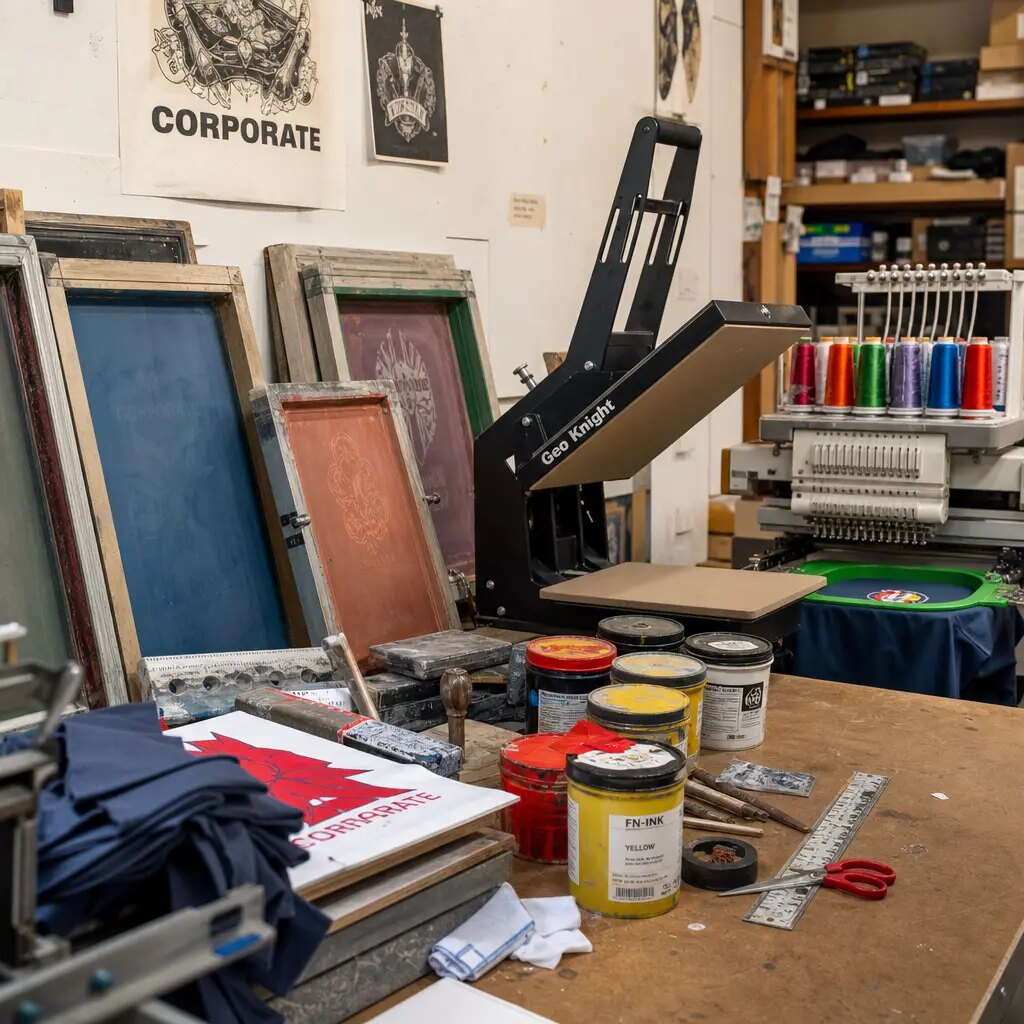
Print method is one of the biggest drivers of both cost and carton performance. For cotton drawstring backpacks, one- or two-color screen printing is usually the most predictable option. It is cost-efficient, repeatable, and suitable for simple logos or straightforward event branding. If the artwork is small and clean, screen print often gives the best balance of durability and price. The main risks are poor mesh selection, weak ink curing, and registration errors if the supplier rushes the setup.
For buyers who need a cleaner retail appearance or a lower setup burden on short runs, a woven or sewn side label can be a smart alternative. It works especially well when the bag surface is textured or the brand mark is simple and needs to stay crisp across repeated orders. A label can reduce the risk of cracked ink on fold lines, but it must be sewn securely and positioned consistently. If the label is part of the brand identity, inspect edge finish, thread color, and stitch density before approval.
Heat transfer can work for smaller runs or more detailed art, but it should be used carefully. On cotton, transfer methods can introduce shine, stiff hand feel, or cracking if the artwork crosses fold points or if the curing is not controlled. Buyers should ask how the print will behave once the bag is folded into the carton. If a design sits right on the fold area, print scuffing and transfer wear become packaging issues, not just decoration issues.
The safest way to manage print is to define both appearance and durability requirements. Ask for print placement tolerance, expected hand feel, cure method, and whether the print is expected to survive normal retail handling without cracking or lifting. For craft fair inventory, the bag often gets opened, restacked, and handled many times before sale, so the decoration needs to survive repeated touch, not only a photo proof.
Also ask whether the factory uses any protection between printed faces during packing. A simple tissue sheet, a careful fold direction, or a small inner wrap can reduce scuffing enough to matter on arrival. That may sound minor, but when cartons are opened repeatedly during event prep, a cleaner pack-out saves time and preserves the first impression on the sales table.
- Screen print works best for simple logos and repeat orders.
- Heat transfer can be useful for short runs, but check cracking and gloss.
- A woven or sewn label can be a better choice when the bag surface is textured.
- Ask how the print behaves at the fold line and inside the carton.
- Confirm whether any interleaving is used to protect printed surfaces.
MOQ logic: keep the first order simple enough to quote cleanly
MOQ is not just a factory demand; it is the point where setup cost, fabric cutting efficiency, and packing labor become economical. A supplier may quote a lower MOQ on paper, but if that order includes several colors, multiple print positions, or special packing, the unit price often rises enough to erase the apparent benefit. That is why procurement buyers should ask how MOQ changes by fabric color, print color count, cord specification, and carton configuration instead of asking for one general minimum number.
For craft fairs, the best low-risk MOQ strategy is to simplify the order. Choose one fabric color, one print location, and one standardized packing method. If the order is seasonal or test-market driven, this structure gives you a realistic price while keeping the production path manageable. It also makes reorders easier, because the factory can reuse the same cutting ratios, print setup, and carton loading standard.
Low MOQ can still be worthwhile when the goal is demand testing, but only if the decision variables are controlled. If you want to test three colors, two print methods, and different pack counts, the small order will often behave like three separate production runs. That creates more setup waste, more approval time, and more room for shipping inconsistency. In procurement terms, the order is not really small anymore; it is fragmented.
The safest buyer approach is to ask for tiered pricing at realistic volume points. For example, request pricing at 500, 1,000, and 3,000 pieces if the supplier can quote those levels. That shows where the cost curve improves and helps you decide whether it is worth increasing volume to reduce freight and setup cost per unit. If the supplier cannot explain the price movement between tiers, the quote probably still has hidden assumptions.
If you expect repeat business, talk about reorders as part of the first quote. Some suppliers will keep the same print screens, cutting settings, or carton spec on file; others will treat the next order as a fresh setup. Knowing that difference early helps you plan the first purchase with the second one in mind. That matters for craft fair programs, because a successful show often leads to a quick reorder window.
- Ask for price breaks at 500, 1,000, and 3,000 pcs if possible.
- Avoid mixing too many colors in a first order if freight space is tight.
- Use one pack spec across SKUs whenever possible to simplify receiving.
- Treat multiple print positions as separate setup events unless the supplier says otherwise.
- Ask whether reorder pricing keeps the same screens, labels, or carton spec on file.
Sample approval: inspect the bag and the pack, not just the artwork
A pre-production sample should match the final order, not an idealized version of it. That means final fabric, final cord, final print method, final label placement, and the same folding or packing method intended for bulk. A flat artwork proof can confirm the logo, but it cannot confirm how the backpack will behave once sewn, folded, and packed. For cotton drawstring backpacks, sample approval must cover both product quality and carton readiness.
When you inspect the sample, use practical acceptance criteria. Check the finished size against the target tolerance. Confirm that the print is centered and that the ink does not smear, pinhole, or strike through. Pull the cord several times to make sure the channel does not tear and the cord knots do not slip. Inspect the seams for skipped stitches, loose thread ends, or weak reinforcement at the corners. If the sample includes a woven label, verify that it sits flat and does not distort the bag shape.
A useful tolerance framework for many wholesale programs is to define a size window before production begins. For example, buyers often approve a small variance on finished dimensions rather than expecting every bag to match exactly. The important part is to agree on that window before mass production, not after the cartons are packed. The same applies to print placement. A centered logo is not enough; the buyer should define the acceptable offset in millimeters or fractions of an inch, because that is what the QC team can actually measure.
Carton-ready sample review is equally important. Ask the factory to show the actual fold, inner wrap if used, and master carton arrangement. The sample should reflect the way the bags will arrive in your warehouse or at the fair prep site. If the product needs to look retail-ready on arrival, the fold should be clean, the print should avoid crease lines, and the bag should open without permanent wrinkles or cord tangling. This is often where first orders fail, because the product itself is acceptable but the packing method makes it harder to sell.
If the supplier proposes a substitution, record it immediately and ask for written confirmation. Substitutions can be harmless or they can change the final product significantly. A different fabric lot, a different thread color, or a lighter carton can all affect final quality. The approval sample is your best chance to lock those variables before the bulk run begins. It is also the right moment to confirm the carton label format, because a sample carton that looks good but cannot be identified quickly on receipt creates avoidable work later.
- Check both sides of the print if ink strike-through is possible.
- Pull the cord repeatedly to confirm the channel and knot security.
- Review the exact folding method so the bag opens cleanly on arrival.
- Approve the sample only when the final materials match the quote.
- Define size and print-position tolerances before the PO is released.
- Confirm carton label format and ship mark placement on the sample carton.
Carton planning that reduces freight waste and event-day handling time
The key carton question is not simply how many bags fit in one box. The real question is how many bags fit safely, consistently, and economically. A quote can look efficient because the carton count is high, but if the box is too large or too light, the shipment may waste cube and increase freight cost. For wholesale cotton drawstring backpacks for craft fairs, carton planning should focus on cube, gross weight, and handling practicality together.
A useful carton plan starts with the folded thickness of the bag and the shipping mode. Air freight rewards tighter packing and stable gross weight. Ocean freight offers more flexibility, but the cartons still need to stack without crushing the cotton or distorting the print area. If the backpack is printed, over-compression can create line marks or transfer scuffs. If it includes a label, loose packing can rub the edges. The packing method should protect the decoration as much as the fabric.
Ask the supplier to quote pieces per carton, carton dimensions, net weight, gross weight, and whether the carton includes inner wrap, tissue, or individual polybags. Those details matter because carton count alone does not tell you enough. One supplier might quote more pieces per carton in a box that is awkward to move and expensive to freight. Another might quote fewer pieces per carton with better stacking efficiency and less damage risk. The second quote may actually be cheaper per delivered unit once freight is added.
For craft fair buyers, there is also an operational angle. Smaller, standardized cartons are easier to receive, open, count, and stage for event inventory. If the carton is too heavy, staff may open it awkwardly and damage the contents. If the carton count varies across boxes, the receiving team will waste time reconciling packing lists. A strong carton plan makes the warehouse easier to run, not just the shipment cheaper.
It is worth asking for the supplier's recommended carton fill method. Some factories pack by exact piece count; others pack by target gross weight to keep stacks consistent. For cotton drawstring backpacks, consistency often matters more than squeezing in one or two extra pieces if that extra density increases wrinkling or makes the box hard to handle. A good carton spec should be practical for shipping, receiving, and final retail prep.
When you compare suppliers, compare the same carton metric every time. If one quote gives carton dimensions and another only gives piece count, ask for the missing data before you make a decision. Freight forwarders quote on volume and weight. Warehouses receive by carton count and label. QC checks by sample and pack integrity. The quote should support all three realities, not only the factory's production preference.
- Target stable carton weights that warehouse staff can handle safely.
- Keep pack counts consistent across cartons to simplify inbound checks.
- Use stronger cartons if the bags are printed or have sewn labels that can rub.
- Compare carton cube, not only piece count.
- Ask whether the pack target is based on piece count or gross weight.
- Request the same carton metric from every supplier before comparing freight.
Use freight mode rules, not guesswork, when you compare landed cost
Freight comparison only works when the shipment data is complete. A bag that appears cheap in the factory quote can become expensive once volume, carton count, and handling are added. The first step is to calculate landed cost on the same basis for every supplier: product cost, packing cost, carton cost, domestic pickup if any, export docs if any, and freight by mode. That makes the comparison useful for procurement rather than just for price shopping.
Air freight is usually the better choice when the event date is close, the order is relatively small, or the cartons need to arrive quickly for merchandising or a seasonal launch. But air freight magnifies cube inefficiency, so a loose pack can become expensive very fast. Ocean freight is usually better when you have the calendar to absorb the lead time and the order is large enough to benefit from lower per-unit transport cost. The carton plan should match the mode, not fight it.
A simple decision rule helps. If the bags are for an event with a fixed setup date and the order is small, prioritize speed and pack consistency over maximum carton density. If the order is larger and the bags will sit in inventory before the fair, a sturdier carton and better stackability may be worth the extra packing cost because they reduce damage and simplify warehouse storage. In both cases, the supplier should quote the same pack format so the mode decision is based on logistics, not packaging drift.
Buyers should also ask whether palletization is part of the quote. For heavier shipments or export-bound orders, palletizing can protect cartons from crushing and speed up receiving. But palletization also adds weight, space, and cost, so it should be evaluated as part of the landed-cost calculation. Ask for pallet count, pallet dimensions, and whether the supplier is pricing stretch wrap or corner protection if those are needed.
The most useful freight comparison is a per-sellable-unit view. Divide the total landed shipment cost by the number of good bags that can actually be sold. That is more honest than dividing by the purchased quantity, because it reflects carton damage, sampling losses, and any unusable stock from QC rejections. This is the number that matters when you are planning a fair season with a fixed margin target.
If you are comparing multiple suppliers, keep the freight assumptions identical: same ship date, same lane, same mode, same pack count, same carton dimensions. Any difference in those inputs should be noted before the quote is judged. Otherwise, the numbers can look competitive while describing very different logistics realities.
- Use the same freight assumptions for every supplier before comparing cost.
- Choose air freight for time-sensitive, smaller orders; use ocean when the calendar allows.
- Ask whether palletization is included and what it adds to cost and weight.
- Calculate landed cost per sellable bag, not just per purchased bag.
- Treat carton density as a freight variable, especially for air shipments.
What a usable supplier quote should include
A procurement-ready quote should be more than a unit price line. It should show the exact bag specification, the production method, the packing method, and the carton data needed for shipping. Without that information, you cannot compare two suppliers fairly because you do not know whether they are quoting the same product. For drawstring backpacks, the quote should include fabric GSM, weave type, finished size, cord details, print method, number of colors, carton count, carton dimensions, gross weight, sample lead time, and bulk lead time.
The quote should also identify what is excluded. Is artwork cleanup included? Is a pre-production sample included or charged separately? Are inner bags, tissue, or special ship marks part of the scope? Are carton labels printed and applied at the factory, or does that happen only if the buyer requests it later? These details matter because hidden exclusions often become the exact costs that push a project over budget.
Buyers should also ask the supplier to distinguish between product price and packing price if the factory treats them separately. Some factories quote the bag and packing together, while others charge extra for polybags, tissue, folding, or reinforced cartons. If you do not separate those items, it becomes very hard to determine why one quote is higher. Clear breakdowns make negotiation easier and reduce friction later when the packing standard is checked against the invoice.
A clean quote is one that a receiving team, a freight forwarder, and a QC inspector could all understand without extra interpretation. If any of those three groups would need to ask follow-up questions, the quote is not yet specific enough for procurement. This is especially true for craft fair programs, where you may have to reorder quickly and need the next shipment to match the first without re-qualifying every detail.
If the factory can, request the quote in a line-by-line format: product spec, print setup, sample charge, packing method, carton spec, and shipping assumption. That structure makes it much easier to compare suppliers side by side and to negotiate only the part that is truly flexible. It also helps internal stakeholders approve the purchase faster, because finance, logistics, and merchandising can each see the line items that affect their own part of the process.
For a cleaner internal review, attach your own one-page spec sheet to the RFQ. Keep it short but specific. The best versions usually list the finished product, the decoration, the pack style, and the carton requirement on one page. That reduces guesswork and gives the supplier less room to interpret the request in a way that changes cost later.
- Insist on carton packing specs in the quote, not only in a later email.
- Compare gross weight and carton dimensions, not just piece price.
- Separate artwork setup, sampling, and bulk pricing in the quote.
- Ask what is excluded so hidden packing charges do not appear later.
- Request quote line items for product, print, packing, and cartonization if possible.
- Attach a one-page spec sheet to the RFQ so the supplier quotes the same version every time.
QC checkpoints that catch the problems buyers actually see at the fair
Inspection for cotton drawstring backpacks should be practical, not theoretical. The issues that matter most to craft fair buyers are the ones customers notice immediately: uneven size, poor print placement, loose cords, weak seams, and cartons that arrive crushed or hard to open. QC should therefore focus on both product appearance and pack integrity.
At the product level, check finished dimensions, seam quality, cord performance, and decoration durability. Measure several units from different cartons, not just one sample from the top of a box. Look for side seam consistency, bottom seam strength, and clean thread trimming. If the design includes a printed logo, check for ink density variation, ghosting, or pinholes. If the bag uses a woven label, confirm stitch placement and label orientation. These are simple checks, but they catch the most visible quality defects.
At the carton level, inspect count, pack style, carton strength, and external marking. A master carton should match the packing list, and carton dimensions should match the approved quote within a reasonable variance. If cartons are too weak, they can crush the bags or distort the folded shape during transit. If labels are missing or illegible, receiving time increases and inventory control suffers. For export shipments, the outer carton should also be clearly marked with style, color, quantity, and carton number where required by your process.
A smart inspection plan uses multiple checkpoints: incoming sample approval, in-process inspection after the first printed or sewn pieces, and final random carton checks before dispatch. You do not need an overly complex test plan to avoid common issues; you need a repeatable one. That repeatability is what protects reorders, not just first orders.
If you have a buyer-side standard, share it with the factory before production starts. Even a short checklist is enough if it includes acceptable tolerances, photo references, and carton marking rules. Factories work better when they know what will be measured before the shipment is packed rather than after the goods are already loaded. This matters even more when your team is preparing inventory for a craft fair calendar, because there is rarely time to sort a mixed shipment after arrival.
It also helps to define a simple defect ranking before you place the order. For example, decide which issues are critical enough to reject, which can be repaired, and which are acceptable within tolerance. That small step reduces arguments at inspection and gives the factory a clear target. In practice, buyers who define this early tend to get cleaner cartons and fewer surprises.
- Measure units from multiple cartons, not just the top box.
- Check seam strength, cord security, and print durability together.
- Match carton count and marking to the packing list before release.
- Use in-process checks to catch sewing or print drift early.
- Define rejectable versus repairable defects before production begins.
Specification comparison for buyers
| Supplier route | Best fit | What to confirm in the quote | Main risk if you skip it |
|---|---|---|---|
| Direct factory with carton planning experience | Orders that need exact pack counts, repeatable reorders, and export-ready carton data | Finished size, fabric GSM, cord spec, print method, pieces per carton, carton dimensions, gross weight, and labeling standard | You may compare unit prices that hide very different freight and handling costs |
| Trading company or sourcing agent | Buyers who need fast market checks or multiple factory options | Who actually owns the carton spec, who approves samples, and whether the final packing instruction is factory-issued or relayed | A vague pack plan can survive the quote stage and fail at production |
| Factory with strong print capability but limited export packing support | Simple domestic runs or short-haul programs where freight cube is less critical | Whether carton size, pallet loading, and ship marks are part of the scope or extra | You may get good decoration quality but poor receiving performance |
| Supplier with low MOQ and flexible colors | Test orders, seasonal trials, or limited craft fair runs | MOQ by color, MOQ by print design, and the cost impact of changing packing style | Small orders can become expensive if every variable triggers a setup charge |
| Supplier with stronger cartons and tighter pack controls | Export shipments, stacked freight, or inventory handled many times before sale | Carton strength, pack method, and whether the pack protects print and fold lines | Protection may improve, but freight cost can rise if the cartons are oversized |
| Material | 6-10 oz cotton canvas, 210D polyester, rPET, or blended cotton with shrinkage and colorfastness expectations set before sampling | Before price comparison | Different cloth weights, backing, or certification claims make quotes hard to compare |
| Construction | cord diameter, eyelet or reinforced channel, bottom corner reinforcement, seam allowance, bar-tack position, and load target | Before sampling | Weak stress points create returns and failed inspections |
| Decoration | screen print, transfer, embroidery, woven label, or drawstring tag tested against folding and abrasion | Before artwork approval | The wrong method can crack, bleed, pucker, or fail on the chosen fabric |
Buyer checklist before sampling
- Lock finished bag size, fabric GSM, weave type, cord diameter, and print method before requesting quotes.
- State whether the carton plan is for retail-ready display, e-commerce fulfillment, warehouse storage, or event giveaway stock.
- Request product price plus carton data: pieces per carton, carton size, gross weight, and pallet estimate if needed.
- Approve a pre-production sample using final fabric, print placement, cord length, and label position.
- Confirm whether bags will be flat packed, folded with tissue, or individually polybagged, and how that affects labor and carton count.
- Ask for shrinkage allowance after printing, washing, or heat setting if the fabric is treated.
- Set acceptable print tolerance, stitch tolerance, and cord pull performance before mass production.
- Compare landed cost by shipment method, not just ex-works unit price.
- Request carton test details if the shipment is export-bound, stack-heavy, or likely to sit in transit for more than one week.
Factory quote questions to send
- What fabric GSM and weave are you quoting, and what is the finished bag size after sewing and any finishing process?
- How many pieces fit in one master carton, what are the carton dimensions, and what is the gross weight per carton?
- Is your quote based on flat packing, tissue folding, inner polybags, or individual polybags, and what labor is included?
- Which print method are you using, how many colors are included, and what is the setup charge for each artwork change?
- Can you share sample photos or a pre-production sample showing print position, stitch quality, cord finish, and label placement?
- What is the MOQ by color and by print design, and what cost change applies if we reduce the order or change the artwork?
- What lead time applies to sample approval, bulk production, and final carton loading?
- What carton strength and ship mark standard do you use for export cartons, especially if the shipment will be stacked?
- What is your acceptable size tolerance for the finished bag and what is your stitch tolerance for seam alignment?
- Can you confirm whether the quoted carton size is internal or external dimensions?
Quality-control points to confirm
- Finished size within the agreed tolerance, especially after pressing, washing, or heat setting if applicable.
- Fabric GSM verified against the approved swatch or lab-measured sample, not only the supplier's description.
- Weave consistency checked for visible slubs, thin areas, or lot-to-lot color variation.
- Print placement centered within tolerance and free of smearing, pinholes, misregistration, or ink strike-through.
- Ink cure or transfer adhesion checked with a simple rub test and fold-line inspection after compression.
- Cord length and cord diameter consistent across the lot, with knots secured and draw closure functioning smoothly.
- Side seams and bottom seams clean, with no skipped stitches, loose threads, weak corner reinforcement, or open stitch gaps.
- Cartons built to the agreed flute strength and packed to the approved piece count without crushing the bags.
- Labels, barcodes, and shipping marks legible and positioned as requested on carton faces.
- Random carton count and gross weight matched against the packing list before dispatch.