The Buying Problem Behind This Backpack Order
Wholesale cotton drawstring backpacks look simple, which is why many university bookstore orders are under-specified. The buyer sends a logo, bag size, and target quantity, then receives quotes that are impossible to compare. One supplier may price a 120 GSM cotton bag with thin cord and bulk packing, while another quotes 180 GSM cotton canvas, reinforced corners, individual bags, and a print strike-off. The cheapest line often wins until receiving finds weak seams, uneven prints, mixed cartons, or a bag that feels too thin for retail sale.
For procurement teams and bookstore retail buyers, the main risk is not whether a factory can make a cotton drawstring backpack. The risk is whether the supplier understands campus retail compliance, branded merchandise expectations, and import documentation discipline. A useful RFQ must lock down the construction, printing, packing, inspection, and lead time assumptions before the quote is compared. This article focuses on one buying problem: how to qualify and brief a supplier so the delivered backpacks match the bookstore program instead of only matching a low unit price.
- Primary category: Drawstring Backpacks.
- Typical uses: bookstore resale, admissions kits, orientation packs, alumni gifts, department promotions, and campus event merchandise.
- Main failure modes: thin fabric substitution, poor print curing, weak drawcord channel, inconsistent packing, and missing compliance evidence.
- Best RFQ approach: compare suppliers on production controls and packed landed cost, not only FOB unit price.
Choose the Fabric Weight Around Real Use
Cotton drawstring backpacks are usually quoted by GSM, but GSM alone does not describe the whole bag. A 150 GSM plain weave cotton can feel different from 150 GSM brushed cotton or lightweight canvas. For university bookstores, the safest baseline is often 150-180 GSM cotton for general retail and welcome-kit use. It feels more credible than thin promotional cotton while still folding well and keeping freight volume reasonable. If the backpack is expected to carry books, water bottles, or heavier apparel, move toward 180-220 GSM cotton canvas and add reinforcement at the lower corners.
Low GSM can still be acceptable, but only when the use is clearly light-duty. A 120-140 GSM cotton drawstring backpack may work for brochures, pens, lanyards, or short event giveaways. It is not a good choice when the store wants a reusable product that students will carry across campus. The RFQ should state both the intended load and the expected customer handling. That helps the factory recommend seam type, drawcord thickness, and whether a reinforced corner patch or bar tack is needed.
- Light giveaway: 120-140 GSM cotton, simple structure, low load expectation.
- Bookstore baseline: 150-180 GSM cotton, stronger hand-feel, better print support.
- Premium retail: 200-220 GSM cotton canvas, stronger body, higher unit and freight cost.
- RFQ detail: include fabric type, GSM, color, shrinkage expectation, and tolerance, such as plus or minus 5 percent.
Build the Construction Spec Before Artwork
Artwork approval should not come before construction approval. A drawstring backpack has several functional points that affect cost and failure risk: the top cord channel, side seam, bottom corners, drawcord material, cord exit point, and knotting method. If the bag will carry heavier campus merchandise, the lower cord attachment point needs more than a simple seam catch. A bar tack, triangular reinforcement, or inserted fabric loop can reduce tearing, especially on cotton fabric that may soften after handling.
Finished size also affects both usability and cost. A common backpack size for campus programs might be around 34 x 42 cm or 35 x 45 cm, but the right size depends on contents. A bag for folded sweatshirts needs more body width than a bag for orientation papers. A bag for bookstore resale should have a clean front panel with enough flat area for the logo and minimal distortion from seams. The supplier should quote from finished dimensions and include tolerance, because cutting width, seam allowance, and washing or pressing can shift the final size.
- Define finished size, seam allowance, and size tolerance instead of using a rough sample photo.
- Specify cotton cord, polyester cord, or braided drawcord; each has different feel, shrinkage, and cost.
- Add bar tacks or reinforcement when the bag may carry books, bottles, or tech accessories.
- Keep logo artwork away from the drawcord channel, side seam, and bottom stress area.
Match Print Method to Logo and Volume
Screen printing is usually the most practical method for wholesale cotton drawstring backpacks when the artwork uses solid university colors. It gives good opacity, predictable cost at volume, and a durable result when cured correctly. The quote should state the number of print colors, print size, ink type, and whether a white underbase is needed on dyed fabric. A one-color logo on natural cotton is straightforward; a three-color logo on navy cotton is a different cost and quality discussion.
Heat transfer or digital printing can be useful for short runs, gradients, or department artwork that changes often. The tradeoff is hand-feel and durability. Transfers can feel heavier on soft cotton and may crack if the wrong film is used. Digital print may need pretreatment and careful wash or rub testing. For bookstore resale, a print strike-off on actual bulk fabric is more valuable than a computer mockup. The buyer should approve color, edge sharpness, opacity, placement, and feel before bulk printing starts.
- Screen print: best for solid logos, repeat orders, and one to four spot colors.
- Heat transfer: useful for detailed artwork or lower MOQ, but test cracking and edge lift.
- Digital print: useful for gradients and photo-style designs, but verify cotton pretreatment and wash performance.
- Embroidery: possible on heavier canvas, but it may pucker lighter cotton and increase production time.
Understand MOQ Logic Before Negotiating
MOQ is not a single number. A supplier may have one MOQ for cutting and sewing the bag, another for custom dyed fabric, another for custom cord color, and another for efficient screen printing. If the buyer only asks for the lowest MOQ, the answer may hide substitutions. For example, a factory can make 500 natural cotton bags from available fabric, but custom PMS-dyed cotton may require a much higher fabric lot. A custom cord color may also require a separate dye lot or minimum purchase from a trim supplier.
For university bookstores, the cleanest negotiation is to separate fixed costs and variable costs. Screen setup, sample labor, artwork adjustment, label development, and carton label setup are fixed or semi-fixed. Fabric, sewing, printing, packing, and inland freight are variable. A supplier who shows these items clearly is easier to compare than one who only provides a low all-in unit price. If the order is for several campus departments, combining artwork variations on the same bag body can improve production efficiency while keeping SKUs separate in packing.
- Clarify MOQ by bag body, fabric color, print design, cord color, woven label, and packing style.
- Ask whether overrun or underrun tolerance applies; common bulk production may vary slightly unless controlled.
- Use the same body fabric across departments when possible to reduce cutting and material waste.
- Do not approve a low MOQ quote until the supplier confirms exact fabric and trim availability.
Read Supplier Compliance Evidence Like a Buyer
Supplier compliance for bookstore merchandise is broader than a certificate list. The factory should be able to explain where fabric is sourced, how restricted substances are controlled, how printing inks are managed, and how social compliance is handled. Buyers should not accept vague statements such as 'all materials are safe' without evidence that fits the market and product. For cotton drawstring backpacks, practical evidence may include material declarations, ink declarations, factory audit status, production photos, and inspection records.
The buyer also needs to know whether the supplier is the actual maker or only a coordinator. A direct factory with cutting, sewing, and printing control can usually respond faster to construction changes. A trading company may still be useful, but the buyer should understand who owns quality responsibility. If printing is subcontracted, the supplier must still control color, curing, and defect sorting. Compliance paperwork is only useful when it connects to the actual production batch, not a random sample made months earlier.
- Request a factory profile showing production processes handled in-house and outsourced.
- Require material and ink declarations tied to cotton bags and printed accessories, not unrelated apparel.
- Confirm whether social audit status, restricted substance controls, and inspection access meet the buyer's policy.
- Keep batch-level records: fabric roll reference, print approval, inspection report, and packed goods photos.
Approve Samples in the Right Order
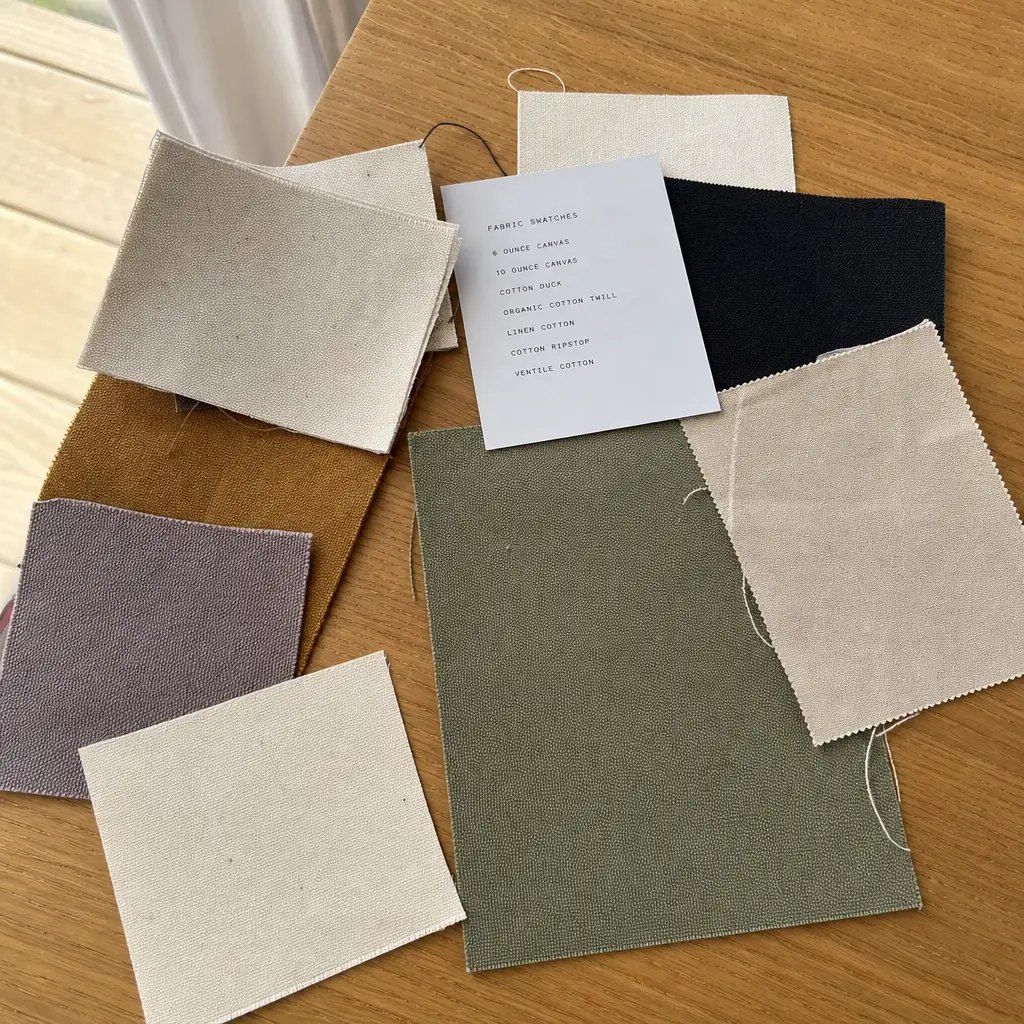
A single pretty sample is not enough for a bookstore order. Sampling should move from material confirmation to print strike-off, then to pre-production sample, and finally to packed sample when retail packing matters. The material sample confirms fabric weight, hand-feel, color, and shrinkage. The print strike-off confirms ink, color, placement, opacity, and curing on the real fabric. The pre-production sample confirms construction, dimensions, drawcord movement, and reinforcement. The packed sample confirms barcode labels, folding, polybag or paper band, carton marks, and shelf presentation.
Buyers should approve measurable criteria, not just visual impressions. A useful sample approval note includes finished dimensions, GSM target, print location measurement, Pantone reference, cord length, seam appearance, and packing method. If the sample is made from substitute fabric because bulk fabric is not ready, that limitation must be written clearly. Otherwise, the sample becomes a false standard and both sides argue later when the production fabric behaves differently.
- Material swatch: approve GSM, weave, color, hand-feel, and shrinkage expectation.
- Print strike-off: approve color, opacity, edge quality, hand-feel, and rub resistance.
- Pre-production sample: approve finished size, seam strength, cord function, and reinforcement.
- Packed sample: approve folding, labels, carton marks, piece count, and barcode placement.
Set QC Thresholds Before Bulk Cutting
Quality control becomes expensive when standards are discussed after defects appear. For cotton drawstring backpacks, the most useful thresholds cover fabric appearance, measurement, stitching, print, drawcord function, and packing accuracy. Cotton naturally has slubs and texture, especially in natural or unbleached fabric. The buyer should define what is acceptable and what is not. Small natural cotton specks may be acceptable for an eco-style product, while oil marks, mildew odor, large stains, and severe shade variation should not pass.
Inspection should include functional tests, not only appearance checks. Pull the drawcord repeatedly through the channel, check that knots do not slip, inspect bottom stress points, and measure print placement across several pieces. Print defects are common when bags are stacked before ink is cured or when fabric lint affects ink adhesion. Carton inspection matters too: a perfect bag in a mislabeled carton can still fail bookstore receiving. For retail distribution, mixed SKUs and wrong barcodes create more cost than a few loose threads.
- Measurement: finished size usually controlled within plus or minus 1 cm unless otherwise specified.
- Print placement: define tolerance from top edge and center line before printing starts.
- Stitching: reject skipped stitches, open seams, blocked cord channels, and weak bottom cord catches.
- Packing: verify SKU separation, barcode match, carton mark, piece count, gross weight, and carton condition.
Packing and Carton Data Affect Landed Cost
Packing is often treated as a final detail, but it changes labor cost, carton volume, receiving time, and freight calculation. Bulk packing is cheaper and faster, but it may not fit a university bookstore that needs individual sale units, barcode labels, or e-commerce fulfillment. Individual polybags protect the cotton surface and keep each unit clean, but they add material cost and may trigger packaging rules. Paper bands or recyclable belly bands can support a cleaner retail presentation, though they require artwork, printing, and manual application.
For importers and distributors, carton data must be available before the landed-cost comparison is complete. The quote should include pieces per carton, carton dimensions, gross weight, net weight, and estimated CBM. Cotton drawstring backpacks are flexible, but heavier GSM and individual packing increase volume. Air freight may be reasonable for a small event order, while sea freight is better for repeat bookstore replenishment. Without carton data, a low FOB price can turn into a high landed cost after freight is calculated.
- Bulk pack: lowest packing cost, suitable for internal event distribution.
- Individual polybag: cleaner handling, useful for resale or fulfillment, but adds cost and waste.
- Paper band: better retail look, needs label artwork and manual packing control.
- Carton spec: require dimensions, gross weight, net weight, piece count, CBM, and carton mark format.
Lead Time Risks in Bookstore Programs
University bookstore schedules are tied to academic calendars, orientation weeks, sports events, alumni weekends, and seasonal retail windows. Missing the date can make the merchandise almost worthless. Lead time should be counted from final approval of the pre-production sample, artwork, packing labels, and deposit or purchase order, not from the first email. Cotton fabric availability, dyeing, print screens, sample revisions, and packing label approval can all move the ship date.
The best way to reduce schedule risk is to freeze the parts that drive the factory calendar. Confirm fabric stock or dyeing schedule first, then approve the print strike-off, then lock packing and carton labels. If the buyer needs multiple department logos, group artwork approvals and avoid releasing them one by one. Last-minute changes to cord color, fabric shade, barcode label, or carton sorting can interrupt production even when the bag body is already sewn. A realistic schedule includes buffer time for inspection and possible rework.
- Sample stage: allow time for fabric swatch, print strike-off, and courier transit.
- Production stage: count from final written approval, not from preliminary quotation.
- Inspection stage: reserve time for final random inspection and corrective sorting if needed.
- Shipping stage: compare sea, rail, truck, and air based on bookstore receiving deadline and carton volume.
Specification comparison for buyers
| Supplier option | What to verify | Commercial advantage | Buyer risk to control |
|---|---|---|---|
| Direct sewing factory | cord material proof, reinforcement close-ups, load-test photos, approved sample tag, and bulk-line first-piece record | Better sample-to-bulk control and faster production feedback | May be weaker on export paperwork or branded packing unless checked early |
| Trading company | Factory name, production photos, trim-source proof, and who owns QC decisions | Can coordinate small mixed orders and extra services | Markup can hide real factory capability and slow defect decisions |
| Specialized bag workshop | cord diameter, eyelet or reinforced channel, bottom corner reinforcement, seam allowance, bar-tack position, and load target | More practical for detailed construction, trims, and repeat programs | Capacity may be limited during peak seasons |
| Low-price general supplier | 6-10 oz cotton canvas, 210D polyester, rPET, or blended cotton with shrinkage and colorfastness expectations set before sampling | Useful for simple promotional runs with loose specs | Material downgrades, weak packing, and vague inspection scope can erase savings |
| Retail-ready supplier | fold direction, cord protection, bundle count, carton compression, moisture bag, and retail label position | Can handle labels, SKU separation, carton marks, and receiving rules | Higher unit cost must be compared against reduced warehouse work |
| Compliance-focused supplier | Fabric records, labeling review, test plan, and production traceability | Safer for retail programs and repeat brand orders | Documentation claims need evidence, not only sales language |
| Local sample room plus bulk factory | Signed sample, bulk factory handoff, first-piece photos, and deviation owner | Good for complex branding before large production | Sample room quality may not match bulk line unless handoff is controlled |
Buyer checklist before sampling
- Define the backpack size in finished dimensions, not only approximate artwork size; include width, height, drawcord length, and acceptable tolerance.
- State the cotton fabric weight in GSM and fabric type, such as plain weave cotton or cotton canvas, with an allowed GSM tolerance.
- Separate sample approval stages for material, print strike-off, pre-production sample, and packed production sample when the order is retail-facing.
- Require the supplier to identify where printing is done: in-house, approved subcontractor, or external decorator, with accountability for print defects.
- Include logo color references using Pantone or approved physical standard; do not rely only on monitor mockups.
- Specify whether the bag must carry notebooks, textbooks, apparel, or light welcome-kit items so the factory can judge seam and corner reinforcement.
- Confirm drawcord material, thickness, color, knotting method, and whether metal tips, plastic tips, or simple cotton cords are allowed.
- Set packing rules for individual bag, inner carton, master carton, barcode label, carton mark, carton weight limit, and pallet requirement if any.
- Request quote data by line item: fabric, printing, trims, packing, sampling, mold or screen charges, inland freight, and export terms.
- List compliance evidence required before purchase order release, such as material declaration, social audit status, restricted substance policy, and inspection availability.
Factory quote questions to send
- What cotton fabric construction and GSM will be used for the quoted backpack, and what is the allowed GSM tolerance in bulk production?
- Is the fabric supplied greige, bleached, dyed, or washed, and what shrinkage result should we expect after normal handling or washing?
- Will the printing be completed in your own workshop or by a subcontractor, and who signs off on color, curing, and rub resistance?
- What MOQ applies to the bag body, fabric dyeing, print color, cord color, and retail packing separately?
- How many pieces are included in sample cost, and does the sample use the exact bulk fabric, cord, print ink, and packing method?
- What is the normal production lead time after pre-production sample approval, and which steps are on the critical path?
- What carton size, gross weight, pieces per carton, and estimated CBM will be used for sea or air freight calculation?
- Can you provide photos or documents for inline inspection, final random inspection, needle control if applicable, and packing verification?
- What are the most common defects on this backpack style in your factory, and what prevention controls are used during production?
- If artwork, packing label, or campus delivery date changes after approval, which cost and schedule items will be affected?
Quality-control points to confirm
- Finished size tolerance should normally be controlled within plus or minus 1 cm unless the design has special panel shaping.
- Fabric GSM should be checked from bulk roll cutting samples, not only from the approved sales sample.
- Print position should be measured from the top edge and side seam, with tolerance agreed before production.
- Screen printed logos should pass basic tape, dry rub, and visual opacity checks after curing.
- Drawcord channel stitching must be even, open, and free from skipped stitches that block cord movement.
- Bottom corners should be reinforced or bar-tacked when the bag is intended to carry books, bottles, or heavier campus merchandise.
- Loose threads, oil marks, mildew odor, shade variation, and cotton slubs beyond the approved standard should be separated during finishing.
- Cartons should meet the agreed piece count, SKU separation, gross weight limit, and bookstore receiving label requirements.
- AQL or buyer-defined inspection levels should include workmanship, print, measurement, packing, and carton mark checks, not only visual appearance.
- A packed production sample should be retained by the factory and buyer for dispute comparison.