Start With The Bookstore Use Case
Canvas zipper portfolios look simple in a catalog, but university bookstore programs use them in different ways. A portfolio sold on a retail shelf needs better finishing, cleaner packing, and stronger logo placement than a giveaway inserted into an orientation kit. A department event folder may need only document storage, while a bookstore private-label item may need a tablet pocket, pen loop, hangtag, and barcode.
MOQ negotiation becomes easier when the factory understands the commercial use. If the item is a one-time campus event, the buyer may need lower MOQ and faster sampling. If it is a semester reorder item, the factory can plan fabric purchasing, retain print screens, and quote sharper quantity breaks. The RFQ should describe the selling channel before it describes decoration.
- Bookstore shelf stock: stronger retail packing, hangtag, barcode, and consistent carton count matter.
- Orientation kits: lower unit cost, fast packing, and carton efficiency usually matter more than premium trims.
- Alumni merchandise: logo finish, fabric handfeel, and presentation can justify higher fabric weight.
- Department orders: smaller MOQ may be possible if the base portfolio stays common and only the print changes.
Set A Specification That Factories Can Price
A useful RFQ for wholesale canvas zipper portfolios should separate the body construction from decoration. Factories cannot compare accurately if the request says only canvas portfolio with university logo. The cost changes according to finished size, fabric weight, lining, zipper type, pocket count, seam binding, print area, print color count, and retail packing.
For most university bookstore buyers, a practical starting point is 12oz cotton canvas, roughly around 400 GSM, with a nylon coil zipper and one logo position. This gives enough body for a retail accessory without moving into a heavy executive case. If the buyer wants a more premium portfolio, 14oz canvas or a lined construction can work, but the increased thickness affects cutting, sewing speed, corner neatness, and freight weight.
- Common finished size: A4 or letter document size plus zipper allowance, not exactly paper size.
- Canvas range: 10oz for budget programs, 12oz for balanced retail, 14oz for premium handfeel.
- Lining choice: unlined for cost control, cotton lining for a cleaner inside, polyester lining for smoother document handling.
- Zipper choice: nylon coil for flexible daily use, metal zipper for heavier look but more weight and higher defect risk.
- Logo position: front center is easiest; corner logo, patch, or side label needs more accurate placement control.
Understand MOQ Logic Before Negotiation
MOQ is not a single number. A factory may have one MOQ for raw canvas purchase, another for dyeing, another for printing, another for woven labels, and another for efficient sewing line setup. A low MOQ can be realistic if the buyer uses natural canvas, standard zipper color, and a single screen print. It becomes harder when the order needs custom dyed fabric, multiple department logos, special lining, or several sizes.
The best negotiation method is to keep the expensive variables stable. For example, a university bookstore can order one common portfolio size and natural canvas body, then split the logo prints by college department. If the factory prints after sewing, the split may be less efficient. If panels are printed before sewing, the factory may need minimum quantities per artwork because cut panels must be controlled separately.
- Lower MOQ is more realistic with natural or stock-color canvas.
- Custom dyed canvas often pushes MOQ upward because dye lots and shade control require batch volume.
- Multiple logos increase setup and panel handling even when the bag body is identical.
- One shared body specification across departments gives the supplier more room to reduce MOQ.
- Request MOQ by version, not only total order quantity.
Use Quantity Breaks To Compare Real Cost Movement
A single unit price at one quantity does not show whether the supplier is quoting honestly or padding risk. Ask for the same specification at several quantities such as 300, 500, 1000, and 3000 pieces. The difference between breaks reveals whether the main cost driver is fabric purchasing, logo setup, sewing labor, packing, or factory overhead.
For canvas zipper portfolios, the first meaningful cost drop often appears when fabric cutting and printing can be batched efficiently. A second drop may appear when carton packing and sewing line setup are spread across more units. If the price barely changes between 500 and 1000 pieces, the specification may be labor-heavy or the supplier may already be using stock materials. If the price drops sharply only at 3000 pieces, the supplier may be relying on a larger fabric purchase or outsourced trim MOQ.
- Compare each quote using the same fabric weight, zipper grade, logo size, packing, and carton count.
- Separate one-time charges such as screens, embroidery digitizing, mold fees, and sample costs.
- Request Incoterm clearly: EXW, FOB, CIF, or DDP changes the comparison completely.
- Use carton data to estimate freight, because heavier canvas can make a cheap unit price more expensive landed.
- Do not negotiate only on unit price if the supplier is quietly reducing canvas weight or zipper quality.
Choose Logo Methods By Retail Expectation
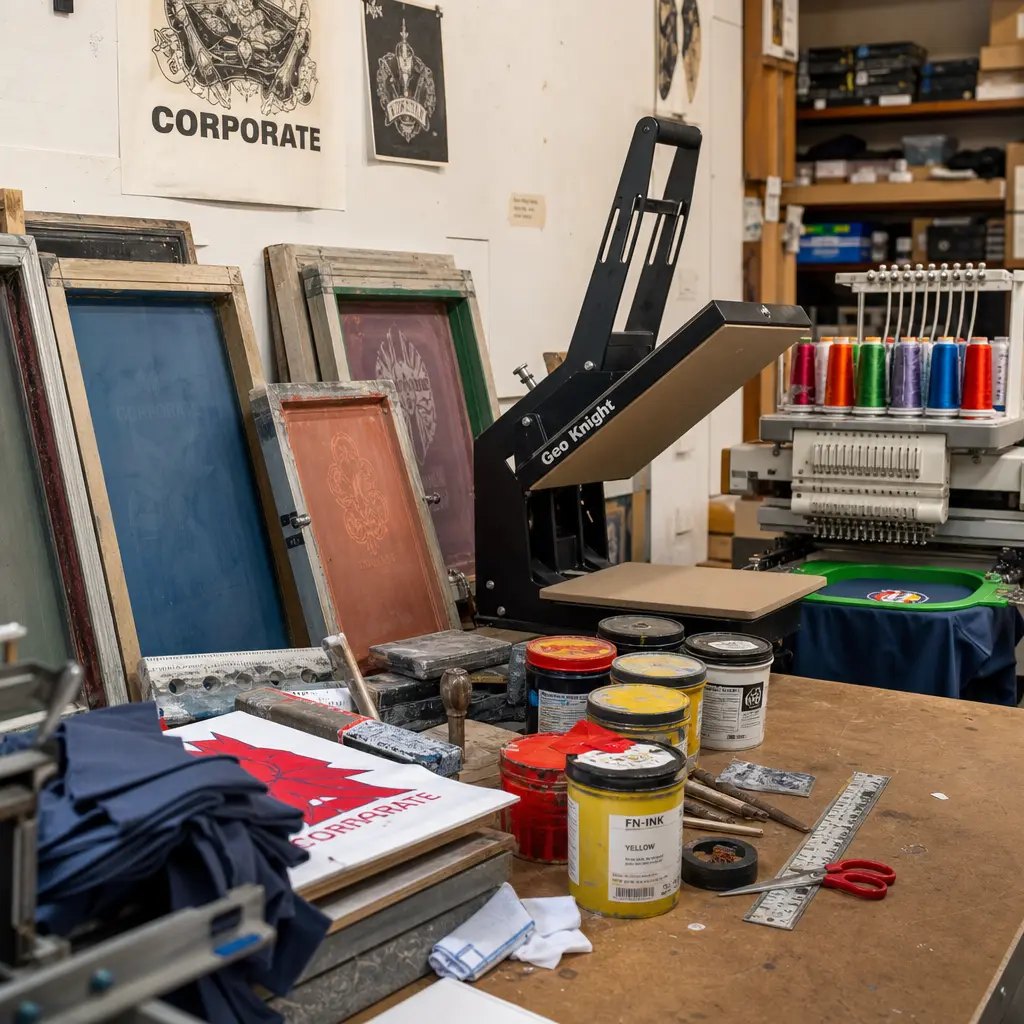
Screen printing is usually the most practical decoration for university bookstore canvas portfolios. It works well on flat canvas panels, gives stable cost at volume, and handles one to three solid logo colors cleanly. For natural canvas, ink opacity must be approved on the actual fabric, because unbleached canvas texture can dull bright school colors.
Embroidery, woven patches, leather-look patches, or woven side labels can raise perceived value, but they also change the sewing process. Embroidery can pucker if the canvas is too light or if the design is dense. Patches need consistent edge sewing and placement. Heat transfer can look sharp for detailed artwork, but buyers should test adhesion and edge lifting on textured canvas before using it for bookstore retail stock.
- Screen print: best for flat solid logos, moderate cost, and repeat orders.
- Embroidery: best for small premium marks, but not ideal for large dense university crests.
- Woven patch: good for retail shelf appeal and repeatable branding across bag styles.
- Heat transfer: useful for detailed designs, but needs adhesion testing on canvas texture.
- Side woven label: subtle branding option when the main panel must stay clean.
Sample Approval Should Prevent Bulk Disputes
A factory sample is not only a photo confirmation. For this product category, the approved sample should lock the finished size, canvas weight, zipper movement, logo color, pocket layout, stitching quality, packing style, and barcode placement if retail packing is required. A sample made from substitute fabric is useful for shape review but not enough for production approval.
The most efficient sampling route is swatch, print strike-off, construction sample, then pre-production sample. The swatch confirms fabric handfeel and color. The strike-off confirms logo method and ink behavior. The construction sample confirms size and pockets. The pre-production sample confirms that all final materials and packing are ready before bulk cutting starts.
- Measure the sample size with documents or tablet inserted, not only when empty.
- Pull the zipper repeatedly and watch whether the canvas catches near corners.
- Place the sample under store lighting to judge print color and fabric shade.
- Test pocket depth using the actual intended item, such as notebook, tablet, or pen.
- Keep one approved sample with the buyer and one sealed sample at the factory.
Quality Thresholds Need To Be Written Down
Canvas naturally has slubs and texture, so the QC standard must separate acceptable fabric character from unacceptable defects. Minor yarn variation may be normal. Oil stains, holes, large dark marks, obvious shade panels, crooked logo placement, skipped stitches, zipper failure, and dirty packing are not acceptable for university bookstore retail stock.
For finished dimensions, tolerance should be realistic. A small document portfolio may hold plus or minus 0.5 cm, while a larger padded or lined version may need plus or minus 1 cm. Zipper testing should include repeated open-close cycles from both ends of the pull direction. The inspector should also examine zipper end reinforcement because failures often begin where thick canvas corners meet the zipper tape.
- Major defect: zipper cannot close smoothly, logo is visibly crooked, seam is open, or stain is obvious on the front panel.
- Minor defect: small thread end, slight canvas slub, or tiny print speck outside the main logo area.
- Critical defect: sharp metal burr, needle, broken zipper part, incorrect barcode, or mixed logo artwork in carton.
- Functional test: zipper movement, pocket usability, seam strength at corners, and packing count.
- Visual test: logo position, ink coverage, fabric shade, surface cleanliness, and retail presentation.
Packing Affects Both Retail Handling And Freight
Packing is often under-specified in canvas zipper portfolio quotes. A bookstore may need individual polybags, recycled bags, belly bands, hangtags, barcode labels, or carton-only bulk packing. Each choice changes labor time, material cost, inspection time, and receiving accuracy. If barcode placement is wrong, the receiving team may need to relabel every unit after delivery.
Canvas portfolios should not be compressed so tightly that zipper corners bend or printed panels crease. Flat packing protects shape but increases carton size. Folding reduces freight volume but may create crease marks, especially on heavier canvas. The RFQ should define the packing method and carton count, then require the supplier to provide carton dimensions and gross weight before order confirmation.
- Retail pack: individual bag, hangtag, barcode sticker, and clean folding standard.
- Bulk pack: lower cost, faster packing, but less protection for shelf-ready merchandise.
- Carton count: fixed units per carton help warehouse receiving and shortage checks.
- Carton marks: SKU, artwork version, quantity, gross weight, net weight, and destination reference.
- Moisture control: dry cartons and inner packing matter because canvas can absorb odor and humidity.
Plan Lead Time Around Campus Calendars
University bookstore buying has calendar pressure. Orientation, homecoming, semester start, graduation, and department events create fixed selling windows. A canvas zipper portfolio order that arrives two weeks late may lose most of its commercial value, even if the unit price was good. Lead time should be planned from artwork confirmation, not only from deposit date.
A realistic schedule includes artwork review, material swatch, print strike-off, sample making, sample shipping, revision time, bulk material purchasing, printing, sewing, inspection, packing, export booking, and inland delivery. Buyers often lose time between sample receipt and written approval. A clear approval deadline helps the factory protect production space.
- Artwork and RFQ alignment: allow time to convert brand files into printable production artwork.
- Sampling: plan for at least one revision if pockets, zipper, or logo placement are new.
- Bulk production: starts only after deposit, material confirmation, and final sample approval.
- Inspection: should occur before final carton sealing or before shipment release.
- Shipping buffer: add time for port congestion, customs review, campus receiving rules, and peak season freight.
Compare Landed Cost, Not Only Unit Price
The lowest FOB price is not always the lowest landed cost. Canvas weight, carton size, folding method, and packing materials all affect freight. A 14oz lined portfolio may look attractive at the unit level, but if it increases carton volume and weight, the landed cost can move outside the bookstore target margin. Buyers should calculate landed cost before approving premium upgrades.
Quote comparison should include unit price, tooling or setup charges, sample charges, packing cost, carton dimensions, gross weight, expected duty category, inspection cost, freight, and local delivery. If the program uses several department logos, include the cost of artwork splits and separate carton marking. A supplier that provides complete quote data can be more valuable than a supplier with a low but incomplete price.
- Unit price: verify it includes the final fabric, zipper, logo method, and packing.
- One-time cost: screen, digitizing, patch setup, sample fee, or special trim setup.
- Freight data: carton dimensions, gross weight, and units per carton.
- Receiving cost: barcode accuracy, SKU separation, and carton labeling reduce warehouse labor.
- Reorder value: repeatable materials and retained artwork can reduce future setup friction.
Specification comparison for buyers
| Spec decision | Recommended option | When it fits | Buyer risk to check |
|---|---|---|---|
| Direct factory with cut-and-sew capacity | Best route for bookstore programs needing fabric, logo, pocket, zipper, and packing control | Useful when annual reorder potential is visible and the buyer can approve a physical pre-production sample | Low quote may exclude inner lining, zipper grade, carton protection, or logo setup charges |
| Trading company using multiple bag factories | Acceptable for mixed campus merchandise orders if documentation is transparent | Fits buyers consolidating portfolios, totes, pouches, and event bags in one shipment | Factory identity, QC responsibility, and material consistency may be harder to verify |
| Stock portfolio supplier with logo printing only | Fastest option for small launch quantities with limited customization | Works for alumni events, orientation gifts, or bookstore test orders under normal factory MOQ | Stock fabric weight, zipper color, and dimensions may not match campus retail expectations |
| 12oz cotton canvas body | Balanced weight for retail handling, screen printing, and zipper portfolio structure | Good for bookstore price points where the item must feel substantial but not heavy | Some suppliers quote 10oz while calling it heavy canvas; require GSM or oz plus tolerance |
| 14oz canvas or canvas with lining | Premium handfeel for executive folders, alumni merchandise, or branded conference kits | Fits higher retail price points or bundled textbook and tech accessory programs | Higher fabric cost, slower sewing speed, and thicker seams can raise MOQ and defect risk |
| Screen print campus logo | Most stable cost for one to three solid colors on flat canvas panels | Best for classic university marks, department logos, and bookstore private labels | Ink opacity and registration must be tested on the final canvas color before bulk approval |
| Embroidery or woven patch | Better perceived value when the design is small and the buyer wants a durable textured logo | Useful for alumni, faculty, or premium bookstore ranges | Thick stitching can distort thin panels; patch edges need clean attachment and wash testing |
| Custom size and inner organization | Specify tablet pocket, pen loop, document sleeve, or card pocket only when the retail use is clear | Fits bookstore buyers selling portfolios as study, interview, or campus conference accessories | Every added pocket increases labor minutes, sample iterations, and minimum cutting quantity |
Buyer checklist before sampling
- Define the selling channel first: bookstore shelf stock, orientation kit, alumni merchandise, department event, or online retail bundle.
- Set the target size by use case: A4 documents, 13-inch laptop sleeve, tablet portfolio, or simple zipper document pouch.
- State fabric in both oz and GSM where possible, such as 12oz canvas around 400 GSM, with agreed tolerance.
- Separate body fabric, lining fabric, zipper tape, zipper puller, binding, label, and inner pocket requirements in the RFQ.
- Decide whether the campus logo needs screen print, heat transfer, embroidery, woven patch, leather patch, or woven side label.
- Provide Pantone references for logo colors and fabric color, not only digital artwork files.
- Request one plain material swatch and one printed strike-off before approving a full construction sample.
- Set zipper requirements including metal or nylon coil, puller style, opening length, and minimum smoothness standard.
- Confirm MOQ by fabric color, logo design, size, and packing method instead of asking only for one total MOQ.
- Ask suppliers to quote at two or three quantity breaks so negotiation is based on real cost movement.
Factory quote questions to send
- What is the MOQ for this canvas zipper portfolio by fabric color, logo method, size, and inner pocket construction?
- Can you quote 300, 500, 1000, and 3000 pieces with the same specification so we can see the real quantity break?
- What canvas weight are you quoting in oz and GSM, and what is your normal tolerance after dyeing or finishing?
- Is the fabric cotton canvas, cotton-poly canvas, recycled cotton blend, or another material, and can you provide a swatch?
- Which zipper type, zipper size, and puller style are included in the quote?
- Does the unit price include logo setup, screen charge, embroidery digitizing, woven label, hangtag, barcode sticker, and packing labor?
- How many print colors are included, and what is the surcharge for each additional color or logo position?
- Can you make a printed strike-off on the final fabric color before the full sample?
- What sample fee, sample lead time, and revision fee apply if the first sample needs adjustment?
- What production lead time starts after deposit and sample approval, and what causes that lead time to change?
Quality-control points to confirm
- Fabric weight should be measured against the approved swatch, not only against the supplier quotation.
- Finished dimensions should stay within the agreed tolerance, commonly plus or minus 0.5 cm for small portfolios and plus or minus 1 cm for larger document cases.
- Zipper must open and close smoothly across repeated pulls without fabric catching at the end stops.
- Logo position should be centered according to the tech pack, with print registration and color matched to the approved strike-off.
- Seams at zipper ends, corners, handle tabs if used, and inner pocket stress points need reinforcement or clean backstitching.
- Canvas panels should be free from oil stains, major slubs, weaving holes, dirt marks, and obvious shade variation within the same carton.
- Inner pockets and pen loops should hold the intended item size without pulling the outer panel out of shape.
- Cartons should use export-grade board, correct carton marks, dry inner packing, and enough protection to avoid crushed zipper corners.
- Barcode, hangtag, and retail label placement should match the bookstore receiving requirement before bulk packing starts.
- Final inspection should include functional zipper testing, size measurement, logo review, packing count, and carton condition.