Start With the Bookstore Use Case
For university bookstores, a canvas zipper portfolio is usually not just a document pouch. It may be sold as a branded campus item, packed into an orientation kit, used for alumni events, or bundled with notebooks, pens, and admission materials. The right material depends on how the item will be handled before and after sale. A portfolio that sits on a retail shelf needs clean shape retention and attractive branding. A portfolio that ships inside a student welcome kit needs flat packing, zipper reliability, and enough clearance for printed inserts.
The buying problem is simple: many quotes look similar at first glance, but fabric weight, zipper grade, lining, print method, and packing can change the real landed cost and failure rate. If an RFQ only says canvas zipper portfolio with logo, suppliers may quote very different constructions. One quote may use 10 oz cotton canvas without lining, another may use 14 oz canvas with a stronger zipper and inner pocket. Those are not comparable products.
- For retail resale, prioritize hand feel, print cleanliness, barcode packing, and shelf presentation.
- For orientation kits, prioritize document clearance, flatness, carton efficiency, and predictable delivery.
- For alumni or executive programs, prioritize heavier canvas, reinforced zipper ends, and a cleaner interior finish.
- For promotional giveaways, control the spec tightly so cost reductions do not weaken the zipper or print.
Choose Canvas Weight by Function
Canvas weight is the first cost and quality decision. For zipper business bags in bookstore channels, 12 oz canvas, roughly 380-410 GSM, is usually the practical middle point. It has enough body to hold a flat portfolio shape, accepts screen printing well, and does not become too bulky at zipper corners. If the product needs to feel more premium, 14 oz or 16 oz canvas can be used, but the sewing construction must be adjusted. Heavy canvas with a cheap zipper often fails faster than medium canvas with a better zipper.
Do not compare quotes by ounce rating alone. Some suppliers describe fabric by finished ounce per square yard, while others convert from GSM. Natural canvas, bleached canvas, dyed canvas, and recycled cotton blends can also feel different at the same GSM. Pre-shrinking and washing are additional choices. Washed canvas has a softer hand but may look more casual and can vary slightly in shade. Unwashed canvas looks cleaner and flatter for print, but shrinkage must be managed if heat curing is used.
- 10 oz canvas is suitable only when the portfolio is light-duty, price-sensitive, and not expected to carry thick inserts.
- 12 oz canvas is the safest standard for most custom university bookstore zipper portfolios.
- 14 oz canvas improves retail feel but needs careful zipper sewing and corner control.
- 16 oz canvas should be reserved for premium programs where higher unit cost and freight volume are acceptable.
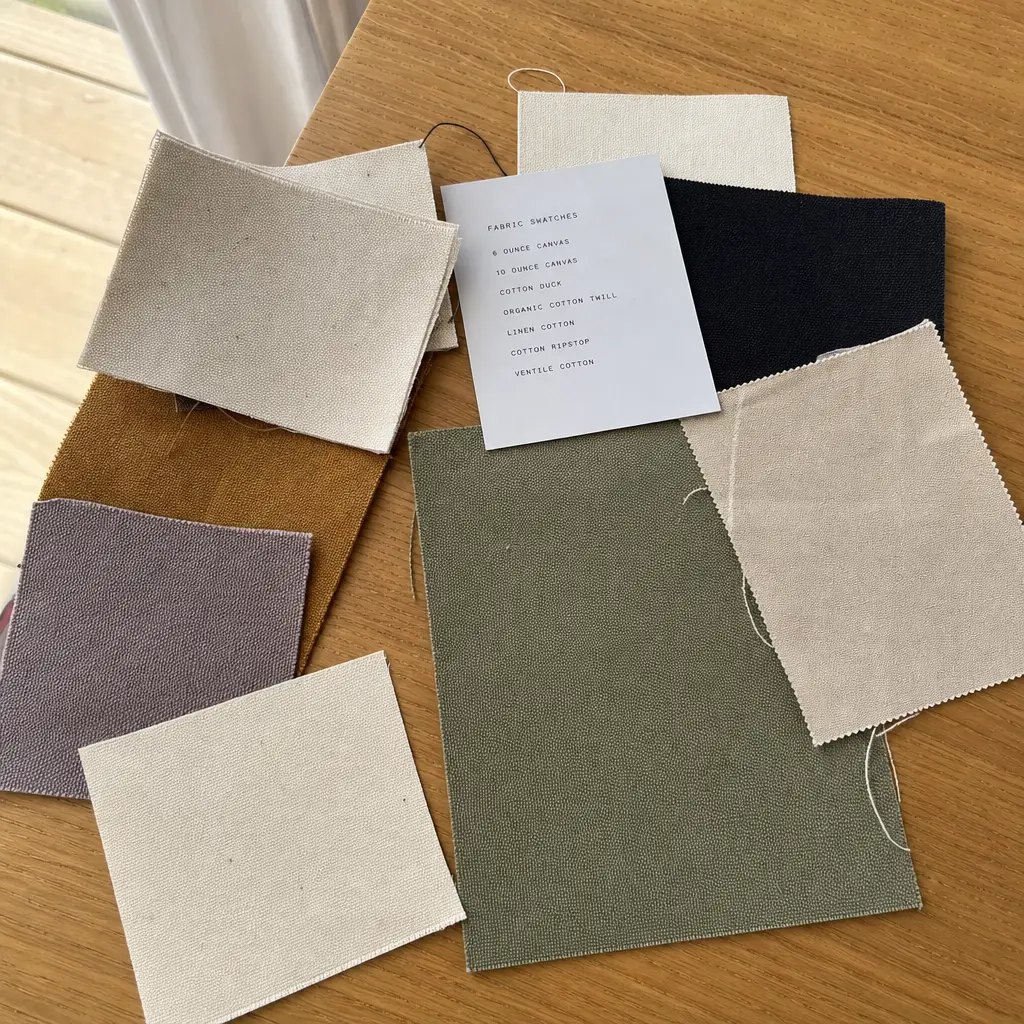
- Request fabric swatches from bulk stock, not only a neat showroom swatch with no production relevance.
Specify Size Around Real Contents
Finished size should be built around the largest item the bookstore will place inside. Letter-size papers, A4 papers, spiral notebooks, course catalogs, brochures, and tablets all behave differently. A flat sheet can slide into a tight sleeve, but a notebook with rings or a packet of forms needs clearance. A common mistake is approving a sample that fits one loose sheet but curls a full orientation packet after packing.
For RFQ purposes, give the factory the target contents and the finished external size. If the portfolio is designed for letter-size documents, allow practical clearance around the paper and seam allowance. If it needs to hold A4 documents for international programs, use A4 as the controlling dimension. If the portfolio includes a gusset, define whether the gusset is functional or only a soft side expansion created by fabric flexibility.
- Send the factory a content list such as one notebook, three brochures, pen, admission folder, and lanyard.
- Set finished size tolerance before production, commonly plus or minus 5 mm for body dimensions.
- Confirm zipper opening length, not just external width, because the zipper stop reduces usable entry space.
- Avoid unnecessary oversizing because it increases fabric consumption, carton size, and shelf footprint.
- If the item is sold on peg hooks or shelves, define hangtag, belly band, or barcode label position early.
Treat the Zipper as a Critical Component
The zipper is the most common failure point on canvas zipper portfolios. Bookstore buyers often focus on fabric and logo, but returns usually come from zipper snagging, loose pullers, broken stitching near zipper ends, or poor opening alignment. A No. 5 nylon coil zipper is normally suitable for this product category because it is flexible, smooth, and easier to sew around canvas than many chunky metal zippers. Metal zippers can look premium, but they add weight, cost, and risk of scratching contents if the construction is not well finished.
The RFQ should define zipper tape color, teeth color, puller material, slider finish, and opening direction. If the university bookstore wants a branded puller or fabric zipper tab, separate that as an option because it can change MOQ and lead time. Zipper ends should be bound or reinforced so the pull does not tear the corner after repeated use. During sampling, operate the zipper with the portfolio loaded, not empty, because loaded corners reveal sewing and zipper alignment problems.
- Use No. 5 nylon coil zipper as the standard comparison spec for most bookstore programs.
- Require smooth operation through corners with no skipped teeth or catching at seam intersections.
- Add bar tacks or reinforced stitching at zipper stress points if the portfolio will be frequently handled.
- Avoid very small pullers on heavy canvas because students and retail customers pull harder than expected.
- Keep a sealed approved zipper sample or photo record for bulk inspection comparison.
Select Branding Method for Canvas Texture
Screen printing is usually the most reliable branding method for wholesale canvas zipper portfolios when the artwork uses one to three solid colors. It is cost-efficient at volume, durable when cured correctly, and works well for campus names, bookstore logos, and mascot graphics with suitable line thickness. The limitation is that coarse canvas texture can break tiny details. Fine serif text, small registration marks, and thin mascot outlines may not print cleanly unless the artwork is adjusted.
Heat transfer, digital transfer, embroidery, woven labels, and leather or PU patches each have a place, but they should not be treated as equal substitutes. Transfers can handle complex color artwork but may feel less integrated with canvas and need wash and rub testing. Embroidery gives a premium look but can pucker the panel and is usually better for smaller marks. Woven side labels are useful when the front panel must stay clean or when the bookstore wants subtle branding.
- For screen print, provide vector art, Pantone references, print size, and exact placement from seams.
- For heat transfer, require adhesion testing on the approved canvas surface and colorfastness review.
- For embroidery, approve stitch density on the actual fabric weight to prevent panel distortion.
- For woven labels, specify label size, fold type, seam location, and whether the logo must face outward.
- For trademarked university marks, build approval time into the sampling schedule before bulk printing.
Understand MOQ and Cost Drivers
MOQ depends on which parts are standard and which parts are custom. A natural canvas zipper portfolio using stock fabric, stock zipper, and screen print can often be produced at a lower MOQ than a custom dyed canvas portfolio with custom lining and branded zipper puller. The buyer should avoid forcing every detail to be custom unless the retail margin supports it. For campus stores, a smart approach is to keep the base construction standard and spend customization budget where customers notice it: front logo, zipper pull, hangtag, or label.
The largest cost drivers are fabric consumption, canvas weight, lining, zipper grade, print colors, labor time, and packing requirements. Heavy canvas increases material cost and may reduce pieces per carton. Extra pockets, pen loops, and internal dividers add labor even when the material cost looks small. Barcode labels, individual polybags, desiccants, or kraft bands also affect packing labor and line speed. A useful quote separates these options instead of hiding them in one total price.
- Base portfolio cost is driven mainly by fabric weight, size, zipper grade, and sewing complexity.
- Custom dyed fabric raises MOQ because the fabric mill needs dye lot volume and lab dip approval.
- Multiple print colors add screen charges, registration risk, and longer sampling time.
- Internal pockets and pen loops increase labor more than many buyers expect.
- Retail packing should be quoted separately from bulk export packing for margin comparison.
Approve Samples With Measurable Criteria
A sample should not be approved only because the logo looks good in photos. The procurement team should handle it like a miniature pre-production inspection. Measure the finished size, test the zipper repeatedly, insert the actual documents, check print position, and review how the portfolio lays flat. If the sample is made with substitute fabric or temporary zipper, mark it clearly and do not let it become the final standard without another confirmation sample.
For university bookstore orders, the approved sample becomes the reference for buyers, brand managers, and third-party inspectors. Keep one sealed sample at the buyer side and one at the factory. If a campus trademark office must approve colors or logo placement, obtain written approval before the factory buys bulk fabric or opens printing screens. Small artwork changes after screen making can delay production and create extra charges.
- Measure length, width, zipper opening, pocket size, and print position against the spec sheet.
- Open and close the zipper at least 30 times, including with the portfolio loaded.
- Rub the print lightly with a dry white cloth after curing to identify weak adhesion or powdering.
- Place the target contents inside and confirm no curling, corner stress, or zipper strain.
- Photograph the approved sample from front, back, inside, zipper end, and label positions.
Set QC Thresholds Before Bulk Sewing
Canvas products have natural variation, but that does not mean all defects are acceptable. The QC standard should define which issues are critical, major, and minor. A broken zipper, wrong logo, sharp metal burr, severe stain, or size that cannot fit the intended documents should be treated as a serious defect. Small slubs in natural canvas may be acceptable if they match the approved fabric character and do not affect printing.
Inspection should cover incoming fabric, in-line sewing, print curing, final trimming, and packing. If the order is large or split across several campus stores, an in-line inspection is useful because zipper alignment and print placement problems are cheaper to correct before final packing. For final inspection, sampling should include pieces from different cartons and different production times, not only the clean top layer packed for presentation.
- Critical defects include unsafe sharp edges, wrong trademark artwork, broken zipper, or contaminated product.
- Major defects include large stains, severe print misplacement, open seams, wrong size, or zipper snagging.
- Minor defects include small thread ends, slight natural canvas slubs, or tiny shade variation within approved range.
- Confirm stitch density and seam allowance on both straight seams and zipper corner areas.
- Use the approved sample, spec sheet, and packing instruction together during inspection.
Plan Packing for Retail Receiving
Packing affects both landed cost and retail readiness. Canvas zipper portfolios are usually packed flat, but they still need protection against dirt, moisture, and compression marks. Individual polybags keep products clean and make distribution easier, while kraft belly bands reduce plastic and can improve shelf presentation. If the bookstore requires barcode labels, retail price labels, or SKU stickers, define label content and placement before carton artwork is printed.
Carton planning should balance protection and freight efficiency. Too many pieces per carton can bend corners and create pressure lines in canvas. Too few pieces waste volume and increase freight cost per unit. If the order includes multiple designs, colors, or campus departments, carton markings must prevent mixed SKU errors. Importers should request carton dimensions and gross weight at quote stage, not after production, because carton volume can influence freight budget and warehouse receiving.
- Use flat stacking with clean interleaving if the print surface may rub during transit.
- Add desiccant or moisture protection when shipping during humid seasons or long ocean transit.
- Specify inner pack quantity if the distributor will allocate goods to several campus locations.
- Require carton marks showing SKU, color, quantity, PO number, destination, and gross weight.
- Approve barcode label format before mass packing to avoid relabeling at the warehouse.
Build a Realistic Lead Time
Lead time should be split into sample development, artwork approval, material preparation, bulk cutting, printing, sewing, final inspection, and packing. The riskiest schedule points are custom dyed fabric, late campus logo approval, print screen changes, and zipper or puller customization. A buyer who only asks for one total production time may miss the real bottleneck. For seasonal bookstore programs, late artwork approval can be more damaging than a slow sewing line.
A practical RFQ asks the factory to show lead time after deposit, after artwork approval, and after sample approval. These dates are not always the same. If the order is for orientation week, homecoming, graduation, or a conference, the buyer should work backward from the in-store date, adding ocean or air transit, customs clearance, warehouse receiving, and campus distribution. Rush air freight can protect the event date, but it can erase the cost advantage of a heavy canvas product.
- Allow time for fabric swatches and lab dips if using dyed canvas or custom lining color.
- Confirm whether the factory can reserve production capacity before final trademark approval.
- Keep artwork frozen after sample approval unless the schedule allows another print proof.
- Request photos or video of bulk fabric, print trial, and first finished pieces before mass packing.
- Add buffer for university approval workflows, which often involve more than one stakeholder.
Specification comparison for buyers
| Spec decision | Recommended option | When it fits | Buyer risk to check |
|---|---|---|---|
| Main fabric weight | 12 oz canvas, about 380-410 GSM, pre-shrunk if possible | Most university bookstore portfolios carrying notebooks, orientation papers, tablets, and campus merchandise inserts | Lower GSM can collapse around documents; higher GSM raises freight volume and may make corners bulky |
| Premium fabric upgrade | 14-16 oz canvas, about 450-540 GSM, with reinforced seam allowance | Alumni shops, executive education gifts, graduation bundles, and higher retail price points | Need needle and thread matched to thickness; poor folding can cause wavy zipper edges |
| Lining choice | 210D or 300D polyester lining for clean interior and easier document slide-in | Bookstores that want a finished retail feel and lower lint transfer to notebooks or electronics | Thin lining can tear at zipper ends; color migration must be tested on dark linings |
| Zipper type | No. 5 nylon coil zipper with branded or plain metal puller | Standard A4 or letter-size zipper business bags where smooth opening matters more than a heavy outdoor look | Cheap coil zippers may snag at corners; test 30 open-close cycles on pre-production sample |
| Print method | Screen print for 1-3 solid campus colors; heat transfer only for complex art or gradients | Most bookstore logos, mascot marks, department names, and event graphics | Canvas texture can break fine lines; specify minimum line thickness and Pantone target |
| Shape and size | Letter/A4 compatible body with 10-15 mm document clearance on each side | Orientation kits, admissions folders, continuing education packs, and faculty meeting gifts | Too-tight sizing causes curled documents; oversizing increases carton dimensions and shelf footprint |
| Corner reinforcement | Bound zipper ends and bar-tacked stress points at pull tab and side seams | Repeat retail handling, shelf display, and students opening the portfolio frequently | Without reinforcement, failures usually start at zipper end stops and top corners |
| Packing format | Individual polybag or kraft belly band, then export carton with flat stacking | Bookstores needing barcode labels, clean shelf receiving, or distribution to multiple campus stores | Over-compressed cartons can crease canvas; loose cartons increase rubbing and dirty marks |
Buyer checklist before sampling
- Define the finished size around the largest document or insert, not only around the zipper portfolio exterior.
- Specify canvas weight in both oz and approximate GSM so quotes are comparable across factories.
- State whether fabric must be natural, dyed, recycled cotton blend, organic cotton, or conventional cotton canvas.
- Provide logo file, Pantone colors, print size, placement tolerance, and whether bookstore trademark approval is required before bulk.
- Choose zipper size, zipper tape color, puller style, opening direction, and whether a zipper pull tab is needed.
- Confirm lining, internal pocket, pen loop, card slot, gusset, handle, or hangtag requirements before sampling.
- Require pre-production sample approval for fabric hand feel, zipper operation, print adhesion, and finished dimensions.
- Request carton packing plan with pieces per carton, carton size, gross weight, barcode placement, and anti-moisture protection.
- Separate sample lead time, bulk lead time, and transit time in the purchasing calendar.
- Ask the supplier to quote the base portfolio and each option upgrade separately so merchandising can choose a retail margin.
Factory quote questions to send
- What canvas weight, yarn construction, and shrinkage control are included in the quoted price?
- Is the quoted fabric stock canvas, custom dyed canvas, recycled blend canvas, or made-to-order greige fabric?
- Which zipper brand or grade is included, and can the factory provide zipper pull strength or cycle test records?
- What is the MOQ for the blank portfolio, and what changes the MOQ for custom dyed fabric, lining color, or branded pullers?
- Which print method is quoted, how many colors are included, and what setup charges apply for screens or transfers?
- What finished size tolerance, print placement tolerance, and color tolerance will the factory accept in bulk production?
- How many samples are included, what sample charge applies, and is the charge refundable after bulk order confirmation?
- What is the proposed packing method, carton quantity, carton dimensions, and estimated gross weight per carton?
- What production lead time applies after deposit and artwork approval, and what materials could extend the schedule?
- Which inspection standard will be used, and what defect examples will be treated as major or minor defects?
Quality-control points to confirm
- Finished size should stay within agreed tolerance, commonly plus or minus 5 mm for portfolio body dimensions.
- Canvas GSM should match approved swatch within a practical tolerance, commonly plus or minus 5 percent unless otherwise agreed.
- Zipper should open and close smoothly without skipped teeth, corner snagging, loose pullers, or exposed sharp metal edges.
- Seams should have even stitch density, secure backstitching, and no broken thread at corners or zipper ends.
- Print should meet approved color standard, pass light rubbing after curing, and show no unacceptable bleeding into canvas texture.
- Lining should be caught securely in seams and should not pucker, twist, or reduce usable document space.
- Interior should be clean, without loose thread, fabric dust, oil marks, needle holes, or zipper tape residue.
- Cartons should protect flat shape and avoid compression marks, moisture damage, dirty edges, or mixed SKU packing.