Why procurement teams reject these orders
Wholesale canvas zipper portfolios can look simple on a quote sheet and still fail procurement review for very ordinary reasons. The canvas may arrive softer than expected, the zipper line may feel weak, the logo may drift off placement, or the shipment may reach the warehouse with scuffed corners and crushed cartons. For tech startup programs, those defects are more visible because the product is often handed out in onboarding kits, conference packs, investor materials, or sales enablement bundles. When the first touchpoint feels cheap, the brand absorbs the complaint even if the manufacturing mistake happened upstream.
The most common sourcing error is treating the portfolio as a flat pouch rather than a working business bag. A zipper portfolio has to carry documents, notebooks, tablets, chargers, or mixed collateral without collapsing or putting extra stress on the zipper ends. That means procurement needs to review structure, seam reinforcement, print durability, and packing performance, not only the logo.
Another trap is sample optimism. A polished factory sample can conceal production risks such as stitch drift, zipper binding, inconsistent dye lots, or carton packing that will not survive freight. A serious sourcing process separates visual approval from production control and asks the supplier to prove that the sample can be repeated at order quantity. That is the difference between a nice sample and a usable wholesale program.
- Use one approved reference sample for material, print, zipper, and packing.
- Treat the zipper line as a functional component, not decoration.
- Match the product spec to the contents the startup will actually carry.
- Ask the factory how it controls lot-to-lot fabric and trim variation.
Define the use case before you ask for a quote
Start with the end use, not the catalog photo. A tech startup kit for investor meetings has different requirements from a field-sales document carrier or a conference giveaway. If the portfolio must protect a tablet, it needs more structure, cleaner edge finishing, and a zipper system that opens smoothly without catching thicker contents. If it only needs to hold handouts and a notebook, the spec can stay lighter and more price-sensitive.
Write the load case in plain language. For example: one A4 notebook, one pen, one cable set, and one slim tablet sleeve. That gives the supplier enough information to choose canvas weight, pocket layout, zipper size, and handle style. If the buyer cannot describe the contents, the factory will guess, and the quote will be built on assumptions rather than a usable spec. Procurement teams get better bids when the contents are spelled out clearly and the same way across all suppliers.
Also define the handling environment. If the portfolios go straight into warehouse cartons, the priority is pack efficiency and count accuracy. If they are handed to clients at events, the look of the zipper pull, label placement, and surface finish matters more. Clear use-case language helps the factory balance structure, cost, and presentation without overengineering the bag or stripping out the features the program actually needs.
- Define the contents first: documents, notebook, tablet, chargers, or mixed kits.
- State whether the portfolio is for internal use, client gifting, or event distribution.
- Confirm whether presentation, protection, or lowest unit cost is the top priority.
- Ask suppliers to recommend the structure based on the use case, not just the size.
Canvas weight, weave, and body construction
For most wholesale canvas zipper portfolios, 12 oz to 16 oz canvas is the practical sourcing range. Lower weights can work for simple document carriers, but they are more likely to sag, wrinkle, or show print distortion when filled. Higher weights give better body and a more premium feel, but they increase material cost and can make the finished bag bulky if the design is not adjusted. The right answer depends on whether the buyer wants a lean carrier or a more structured business accessory.
Do not approve the fabric by name alone. Ask for ounce or GSM weight, weave construction, finishing method, and whether the material is pre-shrunk, washed, dyed, coated, or bleached. These details affect shrinkage, color consistency, print behavior, and seam stability. A 12 oz canvas with poor finishing can perform worse than a tighter, better-processed lighter fabric, so the buyer needs a full spec rather than a catalog term. If the supplier cannot name the finishing process clearly, the risk usually shows up later in packing and repeat orders.
Construction matters just as much as the fabric. Unlined bodies are usually the most economical and can still look clean if the seams are bound well. Partial lining at the zipper area or pocket area can improve feel and reduce fray where the user handles the product most. Full lining looks more finished but adds labor time, increases thickness, and can complicate zipper sewing. The right choice depends on whether the portfolio is meant to feel like a premium business accessory or a practical organizer that must stay cost-efficient at scale.
- 12 oz: lighter, lower cost, and suitable for document-only portfolios.
- 14 oz: balanced option for mixed document and accessory kits.
- 16 oz: stronger structure for premium programs or heavier contents.
- Ask whether the fabric is pre-shrunk or likely to change size after packing.
- Specify whether seams must be bound, turned, or left raw inside.
Zipper specification is a quality gate
The zipper is one of the easiest places for a portfolio to fail in use. Buyers should specify zipper size, tape width, puller finish, stopper method, and stitching method instead of saying only “good zipper.” For this product category, nylon coil zippers are usually the practical default because they run smoothly on soft goods and handle repeated opening better than many low-cost alternatives when the tape and stop points are properly sewn. The wrong zipper can make an otherwise decent portfolio feel cheap the moment it is opened.
Ask the factory to state the zipper size in the quote, such as 5# or 8#, and to confirm tape width and tooth consistency. The right choice depends on body thickness and opening length. A zipper that is too small can feel flimsy and bind at the corners; one that is oversized can look heavy and add cost without improving the user experience. The puller should match the brand tone and be tested for sharp edges, surface finish, and secure attachment. This is a small detail with a big user-visible impact.
Pay close attention to the top stop, end stop, and zipper tape stitching. These are frequent failure points during transit and daily use. If the opening ends near a pocket edge or handle join, the construction needs extra reinforcement so the zipper does not split or distort the panel. The buyer should ask for a sample zipper run test and a stress check at the corners before approving bulk cutting. A quick open-close check is not enough; the zipper should be checked under the same pressure it will face when the portfolio is full.
- Specify zipper size, tape width, puller style, and stop method.
- Require a smooth run test from fully closed to fully open on the sample.
- Check corner reinforcement where the zipper meets seams or pockets.
- Reject sharp pullers, loose stops, or uneven tape stitching.
Print method changes both cost and risk
Print method is one of the most misunderstood parts of the quote. Screen print is usually the best choice when the logo is simple, the order may repeat, and the brand wants solid opacity on canvas. It handles flat areas well and is easier to compare across lots, but it requires disciplined artwork separation, color approval, and setup control. For procurement, the question is not whether print exists; it is whether the factory can hold registration and color density across the full run.
Heat transfer and embroidery solve different problems. Heat transfer can be useful for lower MOQ orders, multi-color marks, or designs that do not justify a screen setup. Buyers should still inspect edge lift, cracking, fading, and texture mismatch after handling. Embroidery gives a premium look for small marks or side labels, but it can pucker the canvas if stitch density is too high or the logo is too large. It also adds thickness, which can interfere with seams and zipper corners if the placement is too tight.
If the startup order needs a clean professional result at scale, keep the logo simple. One strong spot color with precise placement is often more reliable than a detailed graphic that slows the line and raises defect risk. If the artwork includes gradients or multiple tones, ask how the factory will convert it for production and whether the sample reflects the final method or only a visual mockup. Procurement should always ask for the production-ready art spec, not just the design file the marketing team uses internally.
- Screen print: best for simple logos and repeat production.
- Heat transfer: useful for lower MOQ or more complex artwork.
- Embroidery: premium look for small marks, but avoid large fills.
- Ask for print area, color count, and placement tolerance in writing.
- Require rub or abrasion checks if the portfolio will be handled frequently.
Compare supplier type before comparing price
The lowest quote is not always the lowest-risk quote. A direct factory with in-house cutting, printing, sewing, and packing usually gives better control because the same team can adjust stitch density, zipper tension, and logo placement before bulk starts. If the production chain is fragmented, the buyer may get different answers from different parties when defects appear, which slows corrective action and blurs responsibility. For procurement teams, that creates hidden cost even when the unit price looks attractive.
Trading companies can still be useful when they manage communication well or coordinate packaging, compliance paperwork, or mixed product sets. The procurement team should just understand what is actually being controlled. If the quote looks attractive but the zipper, print, or packing is subcontracted, the apparent simplicity may hide lead-time risk and quality drift. The question is not factory versus trading company as a label; it is whether the supplier owns the critical process steps and can explain them without hand-waving.
For B2B buyers, the better comparison is process ownership. Ask who buys the fabric, who installs the zipper, who checks the final appearance, and who signs off before shipment. A supplier that can answer clearly and show production responsibility is usually easier to manage for repeat startup programs, where consistent branding matters across multiple batches and office locations. Reorderability matters as much as the first shipment, especially when the portfolio becomes part of an ongoing onboarding or event program.
- Direct factory: stronger process control and clearer root-cause handling.
- Trading route: acceptable if they disclose the real maker and subcontract points.
- Integrated supplier: easier for QC traceability when artwork and packing are customized.
- Ask which steps are in-house and which are outsourced.
- Verify whether the sample room is the same place that produces bulk orders.
Use MOQ logic that matches startup demand
MOQ should be discussed by color, print method, and packing format. A factory may offer a lower quantity for a plain canvas portfolio but require more units once the buyer adds custom branding, special zipper pulls, or retail-style packing. That does not automatically signal a problem; it usually reflects setup time, material sourcing, and production line changes. Procurement gets better comparisons when those variables are separated instead of bundled into one vague minimum order number.
Mixed-color orders can look flexible on paper but often create hidden complexity. If the buyer wants three body colors with one logo, the factory may need multiple dye lots, separate cutting runs, or extra sorting during packing. Those steps add labor and can introduce shade inconsistency. For a startup launch, it is often smarter to start with one core color, confirm demand, and then expand to other colors after the first lot has been accepted and used. That approach keeps the first order clean and easier to inspect.
A useful MOQ discussion should also include the sample path and reorder logic. If the supplier can support a smaller first order but only with a higher unit cost, the buyer needs to know that upfront. If the product is intended to become a quarterly reorder item, procurement should ask for repeat-order pricing and whether the approved sample, print screen, or cutting pattern can be held for future production. This matters when the bag becomes a standard startup kit component rather than a one-off campaign item.
- MOQ rises with color count, print complexity, and packing customization.
- Ask whether MOQ is per style, per color, or per logo version.
- Separate trial-order logic from repeat-order pricing.
- Ask how MOQ changes when adding inserts, labels, or retail packing.
- Request reorder terms so the first quote reflects the long-term program.
Inspection points that catch hidden defects
The first quality review should happen on the pre-production sample, not on the shipment. That sample should be checked as if it were a final order: zipper run, seam flatness, pocket placement, logo position, handle reinforcement, and panel symmetry. Canvas makes defects easier to see than some synthetic materials, so even a slightly crooked stitch line or uneven corner can look unprofessional once the product reaches a client or event attendee. Small issues are easier to spot here than after 2,000 units are already packed.
For bulk inspection, the buyer should define acceptance criteria before production begins. Good inspection includes visual, functional, and packing checks. Visual checks cover color consistency, thread trimming, and print alignment. Functional checks cover zipper movement, load-bearing seams, and pocket usability. Packing checks cover polybag condition, carton count, and shipping marks. If the portfolio includes a wrist strap or hand-carry handle, the stress point should get a pull test because that area often fails before the main body. The buyer should not assume that a clean exterior means the internal construction is sound.
Do not leave the inspection method vague. If the buyer expects a third-party inspector to check the goods, the factory should know the sampling method, defect classification, and acceptable limits in advance. Otherwise, disputes happen after packing and before shipment, when changes are most expensive. A clear checklist helps the factory self-correct while production is still running, which is the cheapest point to fix a problem. This is especially important for business bags, where the same fault can repeat across every piece in the batch.
- Check zipper run, stop points, and puller finish on every sample batch.
- Inspect handle bar-tacks and side seam intersections under load.
- Measure logo placement and panel dimensions against the approved drawing.
- Review thread trimming, loose fibers, and corner finishing carefully.
- Confirm that the inspection standard is written before bulk starts.
Build sample approval into three gates
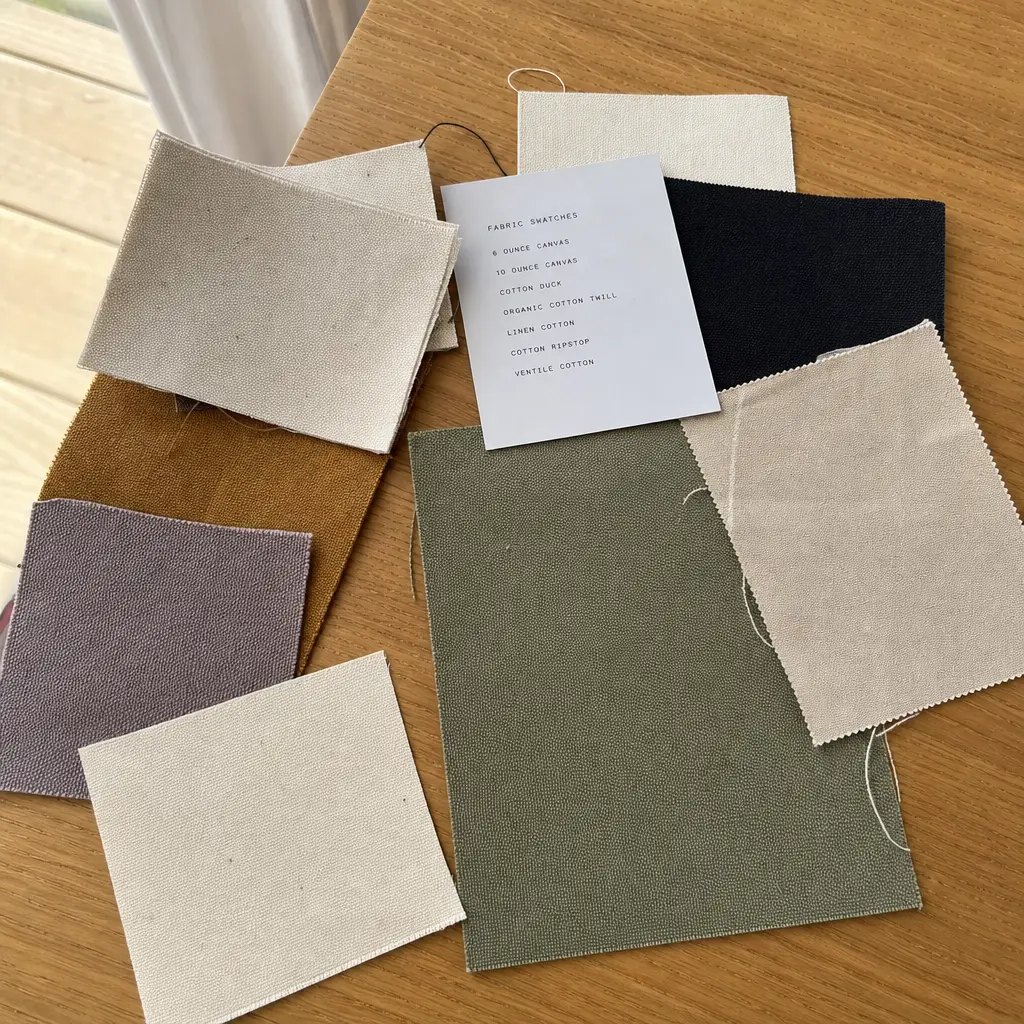
A useful sample process has three stages: material swatch, pre-production sample, and shipment reference sample. The swatch confirms fabric hand feel, color, zipper tape tone, and thread direction. The pre-production sample confirms construction, print placement, pocket size, handle reinforcement, and seam finishing. The shipment reference sample becomes the agreed physical standard for final inspection and later dispute resolution. Without all three, the buyer is often forced to negotiate from memory instead of from a physical standard.
Do not let the factory treat a photo as final approval unless the buyer only needs a rough visual concept. Canvas, zipper color, puller finish, and stitch quality are all easier to judge in person. A picture can miss small but important issues such as zipper shade mismatch, uneven binding, or logo placement that is slightly off center. A physical sample costs time, but it saves rework and protects schedule. It also gives the procurement team something concrete to show internal stakeholders when they ask what “approved” actually means.
The best practice is to sign off each step in writing. Keep the approved swatch or a labeled piece of it, retain the pre-production sample, and document any approved deviations. If the first production lot differs from the sample, the buyer has a clear reference for discussion. That matters for branded business bags that will be reordered across multiple campaigns or office locations, because consistency across runs is often the hidden requirement that decides whether the supplier stays on the approved vendor list.
- Swatch: fabric, zipper, and thread confirmation.
- Pre-production sample: full construction and branding approval.
- Shipment reference: hold this sample for final inspection comparison.
- Sign off the sample stage in writing, not by verbal message only.
- Store the approved sample where future buyers and inspectors can access it.
Packing details affect damage rate and warehouse cost
Packing is part of quality, not a final afterthought. Canvas zipper portfolios can scuff, stain, crease, or collect moisture in transit if they are packed loosely or with weak cartons. The usual export approach is one piece per polybag, with a desiccant when humidity or transit time makes it worthwhile, then bulk packed in export cartons with clear count labels and SKU marks. If the buyer skips these details, the product may arrive technically complete but still fail warehouse intake because the cartons are hard to identify or the bags are damaged.
Packing should also match the sales channel. Retail-ready programs may need transparent bags, printed insert cards, or bagless presentation. Internal corporate use may only need protective polybags and efficient carton loading. Procurement should ask the supplier to quote the exact packing method because carton size, inner packing, and label format change freight cost and warehouse handling. Oversized cartons waste space, while overfilled cartons distort the bags and can stress the zipper tape or handle. Small packing choices often decide whether the batch arrives ready to shelve or needs rework on arrival.
For overseas freight, carton strength and moisture control deserve the same attention as the product itself. Humid routes, long transit windows, and mixed warehouse environments can create problems even if the sewing is good. Buyers should ask whether the supplier uses carton reinforcement, corner protection, or moisture barriers when needed. The goal is simple: the goods should arrive clean, countable, and ready for intake without repacking. That keeps receiving smooth and reduces the chance of hidden damage showing up after the goods are already distributed.
- Require carton count, gross weight target, and inner pack spec in the quote.
- Use moisture protection when shipping through humid lanes or long transit routes.
- Request external carton marks that match SKU, color, and quantity.
- Confirm whether packing is retail-ready or warehouse-only.
- Check that the carton size protects the zipper shape instead of compressing it.
Specification comparison for buyers
| Spec decision | Recommended option | When it fits | Buyer risk to check |
|---|---|---|---|
| Fabric weight | 12 oz to 16 oz canvas, or confirmed GSM equivalent with ±5% lot tolerance | Best for startup welcome kits, conference handouts, sales decks, and document carriers that need body without excessive bulk | Too light can sag and distort print; too heavy raises unit cost, carton weight, and freight |
| Body construction | Unlined or partial-lined body with bound seams and reinforced zipper corners | Fits mid-price programs where exterior appearance and repeatability matter more than luxury interior finishing | Raw seams can fray; full lining adds labor, thickness, and can create zipper corner bulk |
| Print method | Screen print for simple logos; heat transfer for lower MOQ or multi-color artwork; embroidery for small marks only | Use screen print for one or two spot colors and repeat orders; use transfer or embroidery when MOQ is low or artwork is more complex | Poor artwork prep causes misregistration, weak edge coverage, cracking, or density variation after handling |
| Closure spec | Nylon coil zipper, 5# to 8# size depending on product thickness, with matched puller and secure top and end stops | Works well for portfolios carried with documents, notebooks, tablets, and sales materials | Weak end stops, thin zipper tape, or poor tape stitching can fail in transit or feel rough in use |
| Internal layout | One main compartment plus one flat document pocket | Good for meeting kits, investor decks, and onboarding packs that need simple organization | Extra pockets increase sewing time, cost, and bulk at the zipper track |
| Handle style | Webbing hand-carry handle or detachable wrist strap with reinforced bar-tacks | Useful for event kits and field sales teams that carry the portfolio alone | Weak handle stitching shows first during load tests and repeated pick-up cycles |
| MOQ route | Factory-direct MOQ aligned to fabric, color, and print setup, often 300 to 1000 pcs per color depending on complexity | Best for branded procurement with repeat potential and controlled artwork | Low MOQ may sharply increase unit price or force mixed material lots and slower lead time |
| Packing method | Each piece in a polybag, with desiccant when needed, then bulk packed in export cartons with SKU marks | Appropriate for overseas shipment and warehouse intake with batch traceability | Weak inner packing, no carton marks, or poor carton sizing can cause moisture, scratches, and count disputes |
| Supplier route | Direct manufacturer with in-house cutting, printing, sewing, and final inspection | Best when QC control and repeatability matter more than the fastest quote | Trading-only quotes may hide subcontracted finishing and make root-cause handling slower |
Buyer checklist before sampling
- Confirm canvas weight in ounces or GSM, plus the allowed lot tolerance by color and production run.
- Approve the zipper type, zipper size, tape width, puller finish, and end-stop style with a physical sample.
- Lock artwork file format, print size, Pantone references, and print placement tolerance before bulk cutting.
- Define stitch density, bar-tack count, seam allowance, and edge binding requirements in the tech pack.
- State MOQ by color, logo method, and packing format so every quote is comparable.
- Require a pre-production sample approval before bulk sewing starts.
- Specify carton count, inner polybag spec, moisture control, shipping marks, and outer carton strength.
- Ask the factory to confirm whether trim, zipper, labels, or packaging are sourced externally.
- Set acceptance criteria for zipper pull force, handle reinforcement, print placement, and seam appearance.
- Keep a signed reference sample and approved spec sheet for repeat orders.
Factory quote questions to send
- What is the exact canvas weight, weave density, and finishing used for the quoted price?
- What is the allowable lot-to-lot tolerance for fabric weight, shade, and shrinkage?
- Is the zipper sourced in-house, and what is the zipper size, tape width, puller style, and stop method?
- Which print method is included, what are the setup charges, and how many colors are included in the base price?
- What is the MOQ by color, by logo method, and by packing format, and does mixed-color ordering change the unit price?
- What sample stages are included: swatch, pre-production sample, and shipment reference sample?
- What stitch standard do you follow for handle bar-tacks, pocket corners, zipper ends, and seam allowance?
- How are the goods packed per carton, what inner protection is used, and are moisture controls included?
- What is the real production lead time after sample approval, and which steps can extend it?
- Who owns final QC before shipment, and what AQL or inspection method do you use if a third party checks the goods?
Quality-control points to confirm
- Measure canvas weight against the approved spec and reject obvious shade, weave, or shrinkage drift outside the agreed tolerance.
- Inspect zipper travel from end to end for smooth pull, centered teeth, secure stops, and no snagging at the pocket edge.
- Check print alignment, color density, edge coverage, and rub resistance against the approved sample standard before release.
- Pull-test handles and side seams, with special attention to bar-tacks, corner stress, and zipper end zones.
- Verify panel dimensions, corner squareness, zipper opening length, and usable internal space so the portfolio fits the intended contents.
- Review carton count, inner polybag condition, desiccant placement, carton marks, and gross weight before dispatch.
- Confirm thread color matches the approved sample or is within the agreed contrast tolerance.
- Inspect seam allowance consistency and look for skipped stitches, loose threads, needle holes, or puckering at zipper corners.
- Check that labels, care tags, or side brand marks are placed exactly where the buyer approved them.
- If the portfolio includes inserts or accessories, confirm the set count and match it to the packing list.