Start With the MOQ Problem, Not the Bag Name
Wholesale canvas zipper portfolios look straightforward in a product listing, but the MOQ challenge starts as soon as the buyer adds branding, packing, and timing requirements. A tech startup may ask for one quantity for onboarding kits, another for a conference giveaway, and a third for partner sales folders. To a factory, that is not a single order. It is three different builds with different setup costs, packing needs, and delivery risks. If the RFQ does not separate those elements, the supplier either protects itself with a high MOQ or answers with a low quote that gains cost later through add-ons.
The best way to negotiate is to keep the body spec stable and make the branding layer flexible. Hold the same size, same canvas weight, same zipper specification, and same internal layout. Then split the order by logo version, insert card, or carton marking. That gives the factory one cutting plan and one sewing flow while still supporting multiple startup teams or event campaigns. It also makes repeat orders easier because the base portfolio stays reusable.
Procurement teams should think in terms of production interruptions. Every time the factory switches canvas rolls, changes zipper color, swaps labels, or prints a new screen, efficiency drops. A lower MOQ is not only a quantity question; it is a continuity question. If the buyer wants a better number, the smartest lever is fewer changeovers, not just a harder price demand. That is why a clear spec sheet usually gets better results than a one-line request for cheap custom portfolios.
- Better MOQ request: 1,000 pieces total, same body, two logo versions at 500 pieces each.
- Weaker MOQ request: 1,000 pieces split across three sizes, four colors, two zipper types, and custom boxes.
- Best early-stage compromise: standard canvas color with custom print and simple individual packing.
- Main negotiation target: reduce MOQ per logo without changing the physical portfolio.
- Best supplier behavior to reward: one continuous material run, one approved sample, one packing standard.
Choose the Canvas Weight Before Discussing Price
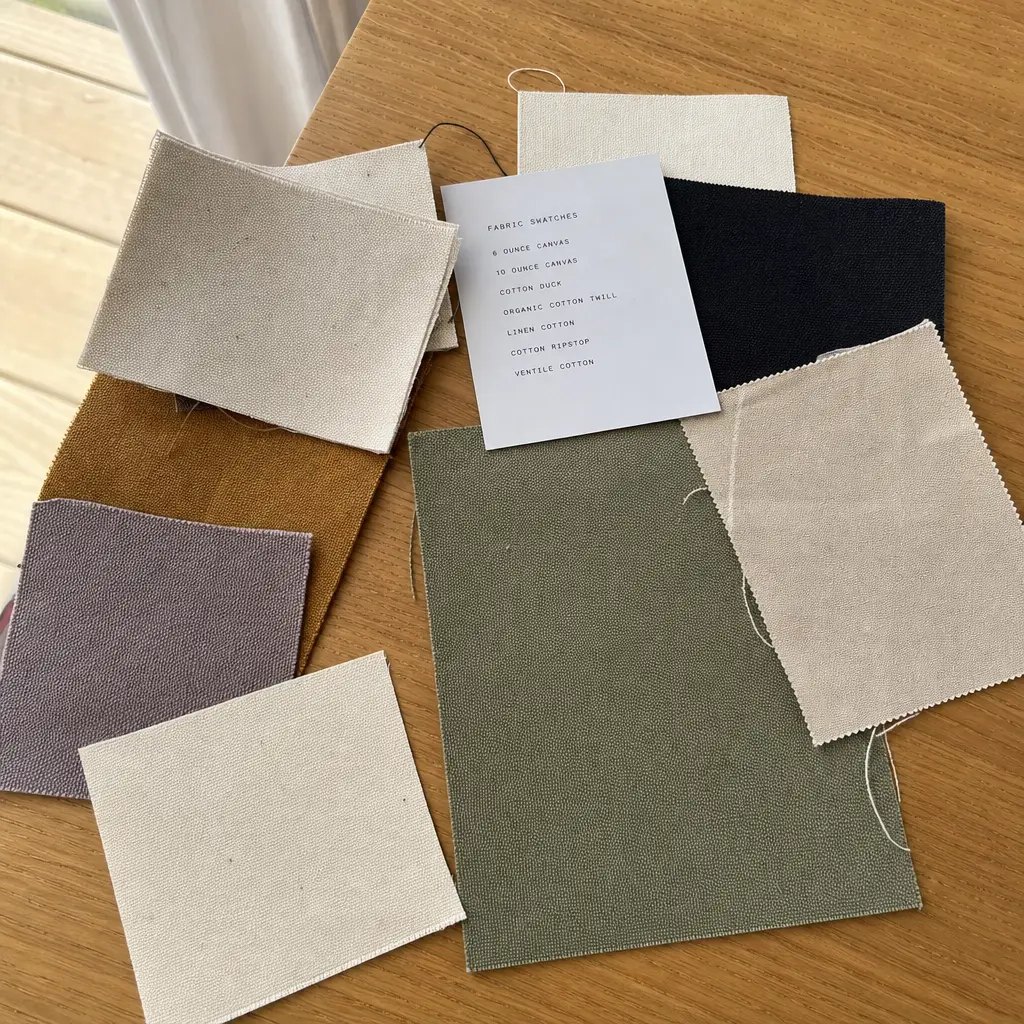
Fabric weight changes more than the material cost. It affects cutting behavior, sewing speed, freight weight, and the first impression the buyer feels in hand. For canvas zipper business bags, a practical range is often 10 oz to 16 oz cotton canvas, roughly 330-540 GSM depending on weave and finishing. A 12 oz canvas around 380-410 GSM is a common starting point for zipper portfolios because it has enough body to hold a clean flat shape without becoming too stiff at the corners. That middle range is often the easiest point for MOQ negotiation because it keeps performance and cost in balance.
For tech startup buyers, the main mistake is matching from a photo alone. Photos do not reveal whether the sample uses washed canvas, coated canvas, laminated backing, interlining, or hidden padding. A lower GSM may look fine online but feel weak once documents, a tablet, charger, and brochures go inside. A heavier canvas may look premium but can create zipper drag or bulky corners. The RFQ should define fabric weight and construction, not just color and size.
Buyers should also ask how the fabric is measured. Some suppliers quote greige weight before finishing, while others quote post-dyeing or post-wash weight. Those numbers are not always the same. If the buyer wants a fair comparison, each supplier should state whether GSM is measured before or after finishing, whether the canvas is pre-shrunk, and whether any coating changes the final handfeel. That detail matters when comparing two quotes that look similar but behave differently in production.
- 10 oz canvas: lower cost, lighter freight, acceptable for event giveaways with short use cycles.
- 12 oz canvas: balanced choice for branded portfolios used in employee kits or sales meetings.
- 14-16 oz canvas: stronger handfeel, better retail impression, higher sewing and freight cost.
- Washed canvas: softer and more casual, but dimensions and shade can vary more.
- Laminated canvas: adds stiffness and dirt resistance, but may affect recyclability and folding marks.
- Ask whether the quoted GSM is before or after dyeing, washing, or coating.
Specify the Portfolio Layout in Buyer Language
A zipper portfolio is more than a pouch with a zip, and procurement buyers should describe it by what the user needs to carry. A startup onboarding portfolio may need an A4 document sleeve, pen loop, welcome card pocket, cable pocket, and tablet compartment. A distributor selling to retail buyers may prefer a simpler interior because fewer stitching operations reduce price and lower defect risk. The supplier cannot quote accurately if the buyer only says to make it organized. The interior layout has to be defined as a functional system.
Factories respond better when the RFQ includes finished dimensions and target item sizes. Instead of writing 'inside organizer pockets,' state the actual objects the bag must hold. For example, one slip pocket for a 10.9 inch tablet, one full document sleeve for letter paper, two card slots, and one elastic pen loop. If a charger or cable needs its own space, say so. That prevents a supplier from quoting a simplified layout while another quotes a more complex interior. Without that clarity, unit prices are not comparable.
The same rule applies to the opening style and zipper access. Some buyers want the bag to open three sides for easier flat loading, while others want a top zipper only to keep sewing labor down. Side gussets, zipper stops, and inner binding all change the sewing steps. If the portfolio must sit flat on a desk like a presentation folder, say that. If it must behave like a compact travel organizer, say that too. The buyer language should describe use, not just appearance.
- Document sleeve: confirm A4, letter, or custom brochure size.
- Tablet pocket: give device size plus whether a case must fit.
- Pen loop: state elastic, canvas loop, or webbing loop.
- Card slots: define quantity and whether business cards or access cards are the target.
- Padding: state foam thickness or request a light interlining if the item should remain slim.
- Opening style: specify three-side zip, top zip, or wraparound zip if it matters.
Use MOQ Levers That a Factory Can Actually Accept
MOQ is tied to material purchase rolls, dye lot minimums, screen setup, zipper sourcing, cutting efficiency, label production, packing material printing, and line scheduling. A factory may accept a lower MOQ if the order uses stock fabric, standard zipper colors, and a simple one-color logo. The same factory may require a higher MOQ for custom dyed canvas, custom zipper tape, printed lining, and a branded retail box. The buyer should negotiate around those cost centers rather than arguing for a lower number in the abstract.
For tech startup buyers, the strongest position is a structured forecast. A buyer can propose a first production run with stable specifications, then reserve the same pattern for reorder. Instead of pushing only for the lowest starting MOQ, negotiate which costs are one-time charges and which items can carry into repeat orders. Pattern making, print screens, and approved material references can reduce friction on the second order if they are documented. This is especially useful for startup ecosystems where the same supplier may service several brands with similar canvas, zipper colors, and packing logic.
It also helps to know which concessions are easy for the factory and which are expensive. Changing only the logo usually costs less than changing the bag body. Changing body color may be manageable if the supplier already stocks the fabric. But changing body color, zipper color, lining color, and packing design at the same time usually pushes MOQ up because each line item needs separate handling. The best outcome is not everything custom at a low MOQ. It is usually one stable body with one flexible brand layer.
- Reduce MOQ by using natural, black, navy, or other stock canvas colors.
- Keep zipper tape in standard black, natural, or matching stock color.
- Use one body size and change only the front logo for different departments or events.
- Accept a separate setup fee instead of forcing the factory to absorb it into a small run.
- Bundle several startup client orders under one distributor purchase order when the body spec is identical.
- Ask the factory to quote setup charges separately from repeating production cost.
Match the Logo Method to Canvas Texture
The most common logo methods for canvas zipper portfolios are screen printing, heat transfer, embroidery, woven label, leather patch, and debossed patch. Screen printing is often the most cost-effective for one or two solid logo colors on cotton canvas. It works well for clean startup marks, short slogans, and event names. The buyer should give Pantone references but also understand that natural canvas absorbs ink differently from coated paper. On textured material, opacity and edge sharpness matter more than people expect, especially on light logos over dark canvas or dark logos over raw canvas.
Small typography and thin lines need special attention. A tech logo that looks sharp on a website may lose detail on 12 oz canvas because the weave breaks the ink edge. If the brand mark has fine gradients or very small text, a woven label or patch can be more reliable than direct printing. Embroidery is durable and premium, but it can pucker lighter canvas and add cost. Heat transfer can handle more color variation, yet it should be tested for adhesion and surface feel. The best method depends on artwork size, color contrast, quantity, and the brand's tolerance for visual variation.
Procurement buyers should also ask what size limits apply to each method. A factory may quote a unit price assuming a logo no larger than a certain area. If the final logo is bigger, cost changes. Placement matters too. Chest-style placement near the top center behaves differently from a corner mark near the zipper edge. The buyer should specify the artwork size in millimeters, exact placement from the top and side seams, and whether one-color reverse printing or special inks are required. That level of detail reduces rework and protects the quote.
- Screen print: strong value for solid one-color or two-color front logos.
- Heat transfer: useful for multi-color logos, but test adhesion and handfeel on cotton canvas.
- Embroidery: durable and premium, but can pucker lighter canvas and adds cost.
- Woven label: good for small detailed marks and repeat brand programs.
- Patch: useful for premium retail positioning, but adds MOQ for patch material and die setup.
- Always confirm maximum logo size and exact placement from finished seams.
Build the RFQ Around Comparable Quote Data
A low unit price is not useful if it excludes the details that make the portfolio sellable. When comparing suppliers, procurement teams should force the quote into the same structure: finished size, fabric weight, construction, lining, zipper, logo method, packing, carton details, sample terms, lead time, payment terms, Incoterm, and inspection standard. This prevents one supplier from quoting a single-layer canvas pouch while another quotes a padded, lined zipper portfolio. Without standard quote inputs, the buyer is comparing different products and calling it sourcing.
Quote data should also show the breakpoints where MOQ changes price. Ask for 500, 1,000, 2,000, and 5,000 pieces using the same specification. The price curve often reveals whether the main cost is setup, material, labor, or packing. If the price drops sharply after 1,000 pieces, the factory may be spreading setup and material purchase more efficiently. If the drop is small, the product is labor-heavy or the supplier has already priced tightly. This makes MOQ negotiation more practical because the buyer can see which quantity level unlocks the best production economics.
A strong RFQ also clarifies what is excluded. Some factories quote the body only and omit inspection, polybags, barcode stickers, or carton upgrades. Others include a low price that assumes generic packing and then charge for every custom item later. The buyer should ask for a line-item breakdown whenever possible. Even if the factory prefers to quote a combined price, it should still state the cost basis clearly so procurement can compare like for like.
- Require unit price by quantity tier using the same artwork and packing assumptions.
- Separate sample fee, print screen charge, label setup, and courier cost from the unit price.
- State Incoterm clearly, such as EXW, FOB, CIF, or DDP if available from the supplier.
- Request carton dimensions and gross weight so freight estimates are not guessed.
- Ask whether overproduction or underproduction tolerance applies, such as +/-3 percent or +/-5 percent.
- Confirm whether the quoted price includes inspection, inner packing, and export cartons.
Approve Samples With Functional Checks
A sample should prove more than appearance. For canvas zipper portfolios, the buyer should load the sample with the real items it will carry: documents, tablet, cable, pen, brochure, and any welcome kit insert. The zipper should close without forcing the corners. The portfolio should sit flat after loading and should not twist because one side has too many pocket layers. If the product will be used in sales meetings or client gifts, the handfeel and open-close motion matter as much as the printed logo.
Use the sample to lock the reference standard for bulk production. Keep one approved sample with the buyer and one with the factory. Mark important points on the sample report, including logo placement, zipper color, inner pocket sizes, stitching density, edge binding, fabric handfeel, and packing style. Bulk production should not begin until these points are signed off, especially if the order has multiple logo versions. A photo approval is not enough for a product with moving parts and multiple fabric layers.
A good sample review also catches hidden sourcing issues. The buyer should check whether the zipper pull is comfortable, whether the zipper tape color matches the canvas in daylight, whether the lining makes the portfolio too bulky, and whether the pockets are positioned so they do not block the main opening. If the product is for startup teams, people will use it in daily work, not just in photos. That means the sample has to work for carrying, opening, stacking, and shipping. Sample approval should feel like a mini pilot run, not a styling check.
- Load test: insert the target documents and device before approving capacity.
- Zipper test: open and close repeatedly around the corners and check for fabric bite.
- Logo test: bend the printed area lightly and check ink cracking or poor opacity.
- Pocket test: confirm the actual item fits without tearing stitches or stretching fabric.
- Odor test: reject strong chemical or mildew smell before it becomes a carton-wide issue.
- Reference control: keep a sealed approved sample for both buyer and factory records.
Set QC Thresholds Before Bulk Sewing Starts
Quality control should be written in measurable terms. Words like 'good zipper' and 'nice stitching' are not enough for a factory inspection team. For a business portfolio, major defects include zipper failure, wrong size, wrong logo, missing pocket, serious stain, strong odor, open seam, and incorrect packing. Minor defects may include small loose threads, slight shade variation within an approved range, or small internal stitch irregularities that do not affect use. If the buyer does not define this before production, the factory may apply its own interpretation, which can create disputes after shipping.
For larger orders, many buyers use an AQL inspection approach. The exact AQL level depends on risk tolerance and sales channel, but the defect categories should be defined. Critical defects should be zero tolerance, especially safety issues, mold, sharp broken metal, or wrong customer branding. A distributor handling several startup logos should pay special attention to mixed-logo packing because one wrong carton can create expensive fulfillment errors. The inspection plan should identify what counts as a critical, major, or minor defect and who pays if the shipment must be reworked.
Procurement teams should also define measurement methods. Do not only say the size must be correct; state how it will be measured. Specify whether the portfolio is measured flat or lightly filled, whether zipper corners are included in the length, and whether tolerance applies before or after packing. For print approval, define whether color is matched against Pantone, a physical target swatch, or the approved sample under standard light. QC works best when the factory can test to the same rule the buyer will later use at receiving.
- Critical defects: mold, unsafe sharp parts, wrong brand logo, severe contamination.
- Major defects: broken zipper, missing pocket, wrong size, open seam, obvious print error.
- Minor defects: small loose thread, slight internal stitch unevenness, small removable dust mark.
- Measurement tolerance: define acceptable finished size variation before production.
- Branding tolerance: define print position and color acceptance with the approved sample.
- Mixed-carton control: confirm SKU and logo-version labels before cartons leave the factory.
Design Packing for Warehouses, Not Only Photos
Packing can change both cost and damage rate. For wholesale canvas zipper portfolios, common options include individual polybag, recycled polybag, paper band, kraft sleeve, barcode sticker, hangtag, and master export carton. Retail buyers may need barcode placement and carton labels. Startup procurement teams may prefer reduced plastic, but the product still needs protection from dust, moisture, and corner bending during transport. The right packing choice depends on whether the items are moving through retail shelves, office distribution, or third-party logistics.
Carton design matters because flat portfolios can warp if packed too tightly or too loosely. If the carton is overfilled, corners may bend and zipper sliders may press marks into the canvas. If the carton is too large, the portfolios shift during transit and cartons may collapse. Ask the factory for carton dimensions, pieces per carton, gross weight, and whether an inner carton or divider is needed for premium packaging. This is especially important when the portfolio includes padding or a structured inner board.
The buyer should also align packing with warehouse operations. If the receiving team uses barcode scanning, ask for barcode location and carton numbering. If the buyer wants direct-to-user kits, ask whether the factory can insert leaflets, gift cards, or assembly instructions. If sustainability is part of the brand message, define the allowed packaging materials up front and ask for evidence if the factory proposes recycled or compostable options. Do not let a sustainability claim arrive only after the quote; that is how hidden cost creep begins.
- Individual packing: choose recycled polybag, glassine bag, or paper band based on channel needs.
- Carton loading: avoid excessive compression at zipper corners and printed panels.
- Warehouse labels: include SKU, logo version, quantity, carton number, and destination if needed.
- Retail packing: confirm barcode, warning label, hangtag, and any carton drop-test requirement.
- Sustainability claim: do not print recycled or organic claims unless material documents support them.
- Packing spec: define inner bag, insert card, carton ply, and master carton weight limit.
Plan Lead Time Around Approval Bottlenecks
A realistic production schedule starts after final artwork, final specification, and sample approval. For a standard canvas zipper portfolio, a sample may take about 7-12 days after artwork and material confirmation. Bulk production may take about 25-40 days after sample approval, depending on order size, season, material availability, and logo complexity. These are planning ranges, not guaranteed delivery promises, because fabric sourcing and factory loading can change. Buyers should treat them as baseline assumptions for internal planning, not as a committed delivery date.
The most common schedule risk is late approval. A tech startup may change logo color, add a card pocket, adjust the zipper puller, or switch from natural canvas to black canvas after the sample. Each change can restart costing, sampling, or material sourcing. Procurement teams should set an internal approval deadline and freeze the specification before the factory orders materials. A late decision on artwork can cost more than a higher unit price because it can push the project past the event date.
For event-driven programs, the buyer should work backward from the true need date. If the portfolios must be in hand for a conference or employee onboarding wave, the schedule needs extra time for inspection, correction, export handling, shipping, customs, and warehouse receiving. The safest practice is to build a buffer into every stage and to ask the factory for the latest approval date that still protects the ship date. When a supplier gives a lead time, buyers should ask whether it already includes packing, QC, and booking time or only sewing time.
- Artwork freeze: approve vector logo, Pantone references, print size, and print location.
- Material freeze: approve canvas GSM, color, lining, zipper, puller, label, and packing.
- Sample freeze: approve one physical pre-production sample before bulk cutting.
- Production buffer: add time for inspection, rework if needed, booking, and customs documents.
- Event deadline: work backward from arrival date, not from the factory's sewing completion date.
- Ask whether the stated lead time includes sample confirmation, packing, and final QA.
Specification comparison for buyers
| Spec decision | Recommended option | When it fits | Buyer risk to check |
|---|---|---|---|
| Outer canvas fabric | 12 oz cotton canvas, about 380-410 GSM | Balanced choice for startup onboarding kits, sales meetings, and retail-ready business accessories | Below 10 oz may feel soft and collapse after packing; above 16 oz can raise sewing cost, break-in stiffness, and freight weight |
| Portfolio structure | Flat zipper portfolio with light interlining and internal slip pockets | Suitable for A4 or letter documents, tablet sleeves, cable cards, and onboarding materials | Overbuilt organizers increase labor minutes, needle holes, and line balance issues because more stitching operations are required |
| Zipper specification | No. 5 nylon coil zipper with metal puller or branded fabric pull | Reliable for daily office use and easier to source in standard colors | Cheap zippers may wave on canvas; test opening force, slider travel, tape alignment, and puller securement on the approved sample |
| Logo method | Screen print for 1-2 color logos; woven label or patch for small detailed marks | Best for tech startup branding where the logo must stay clean but budget is controlled | Fine gradients, tiny QR codes, and thin reverse-out lines can fail on textured canvas |
| MOQ negotiation lever | Consolidate same body fabric and zipper, vary logo by startup team or event | Helps distributors serve several startup accounts without forcing a high MOQ per logo | Factory may still require separate screen setup, label MOQ, or packing artwork MOQ per design |
| Sample approval | Pre-production sample with final GSM, zipper, lining, logo, and packing | Needed before bulk cutting when the portfolio is used as a branded client-facing item | Photo approval alone misses stiffness, zipper smoothness, odor, fit, and pocket clearance |
| Packing format | Individual recycled polybag or paper band, then 40-80 pieces per export carton | Works for wholesale distribution, employee kits, and warehouse pick-pack operations | Over-tight cartons can bend portfolio corners; oversized cartons raise freight dimensional weight and shift damage |
| Lead time plan | 7-12 days for sample after artwork approval, 25-40 days bulk after sample sign-off | Realistic for custom canvas zipper portfolios with standard fabric and standard zipper colors | Peak season, custom dyed canvas, special zipper tape, or printed lining can add weeks |
| Quote comparison data | Require fabric GSM, dimensions, zipper type, logo process, packing, carton size, and production loss allowance | Allows procurement teams to compare factory quotes on the same scope instead of only unit price | A low quote missing inner structure, packing, or inspection standard usually becomes a later surcharge |
Buyer checklist before sampling
- Define the portfolio use case: startup onboarding kit, conference gift, sales folder, retail accessory, or distributor stock item.
- State finished size with tolerance, such as 340 x 250 mm for A4 or 13.5 x 10 inches for letter documents.
- Specify outer fabric weight in oz or GSM, plus whether the fabric is natural, bleached, dyed, washed, or laminated.
- List internal layout requirements, including tablet pocket size, document sleeve, pen loop, cable pocket, card slots, and lining color.
- Choose zipper type, zipper tape color, puller style, and whether the zipper must pass a pull test or cycle test.
- Provide vector logo artwork and define print size, print position, Pantone references, and acceptance limits for logo placement.
- Separate MOQ by body color, logo design, packing artwork, and shipment destination instead of using one vague total quantity.
- Request pre-production sample approval before bulk cutting and keep one sealed sample as the factory reference.
- Confirm individual packing, master carton size, carton weight limit, barcode requirements, and whether cartons must pass a drop test.
- Compare quotes using the same Incoterm, currency, sample fee rule, tooling charge, lead time, and inspection responsibility.
Factory quote questions to send
- What exact canvas weight will be used, in oz and GSM, and is the weight measured before or after dyeing, washing, or coating?
- Is the quoted structure single-layer canvas, canvas with lining, canvas with interlining, or canvas with foam padding?
- What zipper grade is included, what size is the zipper, and can the zipper color match the canvas or logo color?
- What is the minimum order quantity per body color, per logo design, per zipper color, and per custom woven label?
- Which logo methods are quoted, what setup charges apply, and what is the maximum print area included in the unit price?
- Can the factory make a pre-production sample using final material and final logo method before bulk cutting?
- What are the sample lead time, bulk lead time, and latest artwork approval date that still protects the required delivery window?
- What packing is included in the quote, including individual bag, paper insert, carton ply, carton dimensions, and gross weight?
- What quality standard will be used for inspection, and what AQL levels are acceptable for critical, major, and minor defects?
- Which costs are excluded from the unit price, such as mold charge, screen charge, label MOQ, bank fee, local handling, or export carton upgrade?
Quality-control points to confirm
- Finished size tolerance should normally stay within +/-5 mm for length and width unless the construction is heavily padded.
- Fabric weight should match the approved specification within a practical tolerance, such as +/-5 percent, and should not feel loose, uneven, or see-through.
- Zipper must open and close smoothly around corners without skipped teeth, fabric bite, slider jamming, or broken pullers.
- Logo position should remain within agreed placement tolerance, commonly +/-3 mm for front panel printing on flat portfolios.
- Screen print should have clean edges, correct color, acceptable opacity, and no heavy ink cracking after light bending.
- Internal pockets should fit the target items stated in the RFQ, such as A4 paper, tablet, cable card, pen, or business card.
- Seams should be straight with secure back-tacking at zipper ends, handle points if used, and pocket stress points.
- No strong chemical odor, mildew smell, oil stain, loose threads, needle holes, or dirty fold marks should be accepted.
- Cartons should protect corners from bending and should not exceed the buyer's warehouse handling weight limit.
- The bulk shipment should match the approved sample for fabric handfeel, zipper color, logo scale, internal layout, and packing.