Buying Problem: Logo Placement Is a Production Decision
For wholesale canvas zipper portfolios, logo placement is not just a branding preference. It affects cutting, printing sequence, sewing accuracy, rejection rate, packing pressure, and final presentation. A tech startup may want a clean mark on the front, but the factory must place that mark around zipper tape, seam allowance, lining attachment, corner curves, and panel shrinkage. If the RFQ only says front logo, every supplier may quote a different printable area and still believe they are correct.
The safest buying approach is to define a logo zone instead of only a logo location. A practical logo zone includes finished product orientation, distance from visible edges, logo size in millimeters, tolerance, and print method. This gives procurement teams a better way to compare quotes because the cheaper supplier cannot silently move the logo, reduce its size, or print after sewing when the artwork really needs panel printing before assembly.
- Use finished-product measurements, not cutting-panel measurements, when describing logo placement.
- Keep logo artwork away from zipper edges, pocket stitch lines, and rounded corners unless a sample proves it works.
- Treat the approved logo placement as a controlled production spec, equal to fabric weight or zipper grade.
- Include front, back, inside, side label, and zipper puller options only if each location has a real buyer purpose.
Portfolio Construction That Affects the Logo
A canvas zipper portfolio looks simple from the outside, but the construction decides where the logo can sit cleanly. A flat document pouch with one zipper has fewer restrictions. A business portfolio with lining, inner pockets, pen loop, card slots, and a padded tablet sleeve has more stitch lines and panel tension. The more structure inside the bag, the more the front panel can pull slightly during sewing, especially near corners and zipper ends.
For the Zipper Business Bags category, buyers should separate decorative branding from functional branding. A front print builds recognition during events and sales meetings. A woven side label gives a retail-style finish without dominating the product. A small zipper puller mark supports premium detail but may require a mold or extra trim MOQ. These choices are not equal in cost or schedule, so they should be quoted as separate options.
- Flat zipper pouch style gives the largest stable front print area and lowest sewing complexity.
- Lined portfolio style improves perceived value but needs more control over panel squareness after assembly.
- Side label branding is low profile and repeatable, but it requires accurate seam insertion and label stock planning.
- Custom zipper pullers add brand detail, but they are slower than standard pullers and usually need higher MOQ.
Canvas Weight and Handfeel Choices
Most wholesale canvas zipper portfolios for startup merchandise or business gifting sit between 12 oz and 16 oz cotton canvas, roughly 400-540 GSM depending on weave, finishing, and moisture content. A 10 oz canvas can work for light document sleeves, but it may feel too soft if the buyer expects a portfolio that holds shape on a conference table. An 18 oz fabric can look premium, but it raises cutting resistance, needle stress, shipping weight, and corner bulk.
Buyers should not evaluate fabric by GSM alone. A tightly woven 12 oz canvas can feel more stable than a loose 14 oz fabric. Washed canvas may feel softer but can shrink and wrinkle more. Dyed canvas adds brand color options but introduces shade control, lab dip approval, and minimum dye-lot quantity. Natural canvas is often faster and more economical, but small cotton seed flecks may be visible around a light logo unless accepted in the standard.
- For event giveaways, 12 oz canvas with one-color print is usually a practical cost-performance point.
- For retail or executive gifting, 14-16 oz canvas gives better structure and a stronger handfeel.
- For dyed startup brand colors, build in lab dip approval and shade tolerance before production booking.
- For light logo colors on natural canvas, approve a real print strike-off because fabric flecks may show through.
Front Logo Placement Rules That Prevent Rework
The most reliable front logo placements are centered in the upper third or positioned lower right on the front panel. Centered upper placement gives visibility when the portfolio is carried or stacked. Lower-right placement looks more restrained and suits tech brands that prefer a clean business accessory. Both options should leave at least 25 mm from visible seams and zipper edges, and more clearance if the portfolio has a rounded corner or thick piping.
Avoid placing logos across the zipper line, over a folded gusset, or too close to a pocket stitch line. The print may look acceptable on the fabric panel but become tilted after sewing. If printing is done after assembly, the pressure bed may not sit flat because the zipper, lining, or internal pockets create uneven height. For accurate placement, many factories prefer to print the flat fabric panel before sewing, then use cutting and stitching marks to control alignment.
- Recommended front logo width for most A4 or Letter portfolios is 70-120 mm, depending on brand style.
- Minimum clearance from seam or zipper should be written as 25 mm unless sample testing supports less.
- Placement tolerance of plus or minus 3 mm is realistic for many canvas portfolios when panels are printed before sewing.
- Large centered logos need panel squareness control because even a small tilt is obvious on a rectangular portfolio.
Print Method Selection for Startup Logos
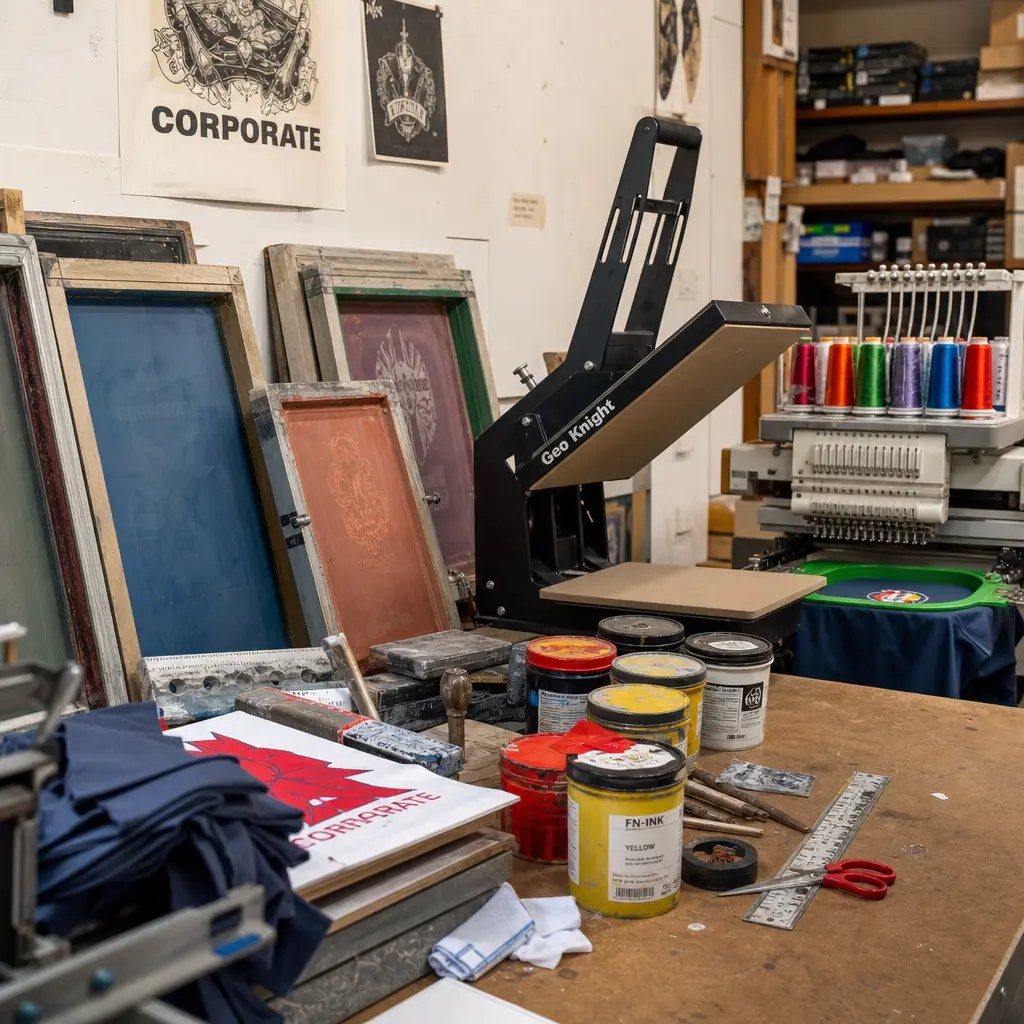
Screen printing is usually the most practical method for wholesale canvas zipper portfolios when the logo is one to three solid colors. It gives good opacity, clean edges, and predictable unit cost after screens are made. For tech startup marks with fine text, the artwork should be simplified before production. Very thin strokes, small registration marks, or tiny slogans often fill in on textured canvas, even when they look sharp in the PDF.
Heat transfer can reproduce gradients and full-color artwork better, but it changes the surface feel and may show a film edge on natural canvas. Embroidery can look premium on small patches, but direct embroidery on a portfolio front can pucker the canvas and interfere with inner lining. Woven labels are strong for subtle branding and repeat orders, though they require label MOQ and advance stock control. The best quote will explain why one method fits the artwork instead of simply accepting any file.
- Use screen print for solid marks, strong Pantone colors, and medium-size front-panel branding.
- Use heat transfer only after approving film edge, handfeel, wash or rub performance, and color matching.
- Use embroidery on a sewn patch or small badge rather than large direct embroidery on a thin front panel.
- Use woven labels when the brand wants retail detail, repeatability, and lower risk of front-panel print defects.
MOQ Logic and Real Cost Drivers
MOQ is not only a factory policy; it comes from setup loss, fabric purchasing, printing screens, trim availability, labor scheduling, and packing materials. A simple natural canvas zipper portfolio with one-color print may be feasible around 300-500 pieces if the factory has suitable fabric and zipper stock. A dyed canvas body, custom lining color, branded zipper puller, woven side label, and printed retail sleeve can push the practical MOQ to 1000 pieces or more.
When comparing supplier quotes, procurement teams should separate base product cost from customization cost. A quote that looks cheaper may exclude screen charges, sample freight, custom label MOQ, carton marks, or individual packing. Another supplier may include more items and look higher at first glance. The correct comparison is landed cost per usable piece at the same specification, not the lowest unit price line in an email.
- Base material cost rises with heavier canvas, dyed fabric, lining, padding, and reinforced pockets.
- Print cost depends on color count, print size, setup method, reject allowance, and whether panels are printed before sewing.
- Trim cost changes with zipper grade, puller type, side label, snap, elastic loop, card pocket, and inner sleeve.
- Packing cost changes with individual bags, paper sleeves, insert cards, barcode stickers, and carton strength.
Sample Approval Before Bulk Production
A sales sample made from available materials is useful for shape discussion, but it should not be treated as bulk approval. For logo placement, the important sample is a pre-production sample using confirmed canvas, zipper, lining, print method, logo size, and packing. This sample should be measured flat and also reviewed as a finished item, because the logo can shift visually after the zipper and lining are installed.
Approval should include written acceptance criteria, not only a photo confirmation. Buyers should keep one signed or labeled sample at their office and require the factory to keep a matching sealed sample in the production room. If the logo is critical, request a separate print strike-off on the actual canvas before the full portfolio sample is made. This prevents wasting sample time on a construction that already has a print color or opacity problem.
- Approve fabric swatch, logo strike-off, and full pre-production sample as separate gates when schedule allows.
- Measure logo distance from finished left edge, bottom edge, zipper line, and nearest seam.
- Review the sample with documents or tablet inside, because stuffing can change how the front panel sits.
- Keep the approved sample standard visible for in-line inspection and final inspection.
QC Thresholds for Zipper Portfolios
Quality control should focus on defects that buyers and end users will notice immediately: crooked logo, dirty canvas, rough zipper, loose threads, uneven corners, and warped panel shape. For canvas products, natural slubs are sometimes acceptable, but oil stains, mildew odor, strong shade variation, and dark marks in the logo area should not pass. The inspection standard should define which fabric characteristics are natural and which are defects.
Functional checks matter because zipper portfolios are handled repeatedly. The zipper must run smoothly around the opening without catching lining or canvas. Stitching should hold at stress points, especially near zipper ends, corner turns, pocket openings, and side labels. Print adhesion should be tested with dry rub and light tape pull. If the product is packed quickly after printing, insufficient curing can cause logo transfer inside the polybag or onto the next piece.
- Set AQL or internal inspection levels before production, especially for retail or distributor orders.
- Inspect logo placement using a simple measuring jig or marked ruler, not only visual judgment.
- Open and close the zipper several times on sampled pieces from different cartons.
- Check front-panel scuffing after packed samples sit under carton pressure for at least one day when possible.
Packing Choices That Protect the Logo
Packing is often quoted late, but it can decide whether the logo arrives clean. Canvas zipper portfolios with fresh screen print should not be packed face-to-face without protection. Individual recycled polybags, glassine-style paper sleeves, or tissue separation can reduce rubbing. For natural canvas, a breathable packing plan may also help avoid trapped humidity during long sea freight, depending on destination and season.
Carton loading must balance protection and freight volume. Too many portfolios in one carton can crease the front panel, especially if the logo area sits under zipper pullers or thick seams from adjacent pieces. Too few pieces per carton increases cubic volume and landed cost. Buyers should request estimated carton dimensions and gross weight at quote stage so freight forwarders can calculate air, sea, or courier impact before the order is approved.
- Pack printed faces in the same direction only if there is a protective layer between pieces.
- Avoid placing metal zipper pullers directly against a printed logo zone during compression.
- Use export cartons strong enough for stacking, especially for sea freight and distributor warehousing.
- Confirm carton marks, SKU labels, barcode labels, and inner packing count before final packing begins.
Lead Time and Schedule Risk
A realistic timeline includes artwork review, fabric sourcing, print strike-off, sample making, sample shipping, buyer comments, material booking, cutting, printing, sewing, trimming, inspection, packing, and export handling. For a simple stock-fabric order, the schedule may be much shorter than a fully customized order. For dyed canvas, custom labels, or molded pullers, the critical path usually starts before sewing because material approval controls everything that follows.
Tech startup orders often connect to launch events, onboarding programs, investor meetings, or trade shows. That makes schedule risk more expensive than a small unit-cost difference. Procurement teams should identify the non-negotiable delivery date and work backward. If there is no time for a full custom trim route, use stock zipper, stock canvas, and a well-controlled front print. It is better to deliver a clean, consistent product on time than approve too many custom details that compress inspection and packing.
- Allow time for at least one sample revision if logo placement, color, or portfolio structure is new.
- Book dyed fabric, woven labels, and custom zipper pullers early because they can control the production calendar.
- Do not start bulk cutting until print placement and fabric shade are approved in writing.
- Keep a buffer for final inspection, carton relabeling, or repacking if the goods ship to retail distribution.
Specification comparison for buyers
| Spec decision | Recommended option | When it fits | Buyer risk to check |
|---|---|---|---|
| Front logo position | Lower right or centered upper third with at least 25 mm clearance from zipper and seams | Best for startup event gifts, onboarding kits, retail display, and B2B sales folders | Logo can distort if printed across folded edges, zipper tape pressure, or thick seam allowances |
| Canvas body fabric | 12 oz to 16 oz cotton canvas, roughly 400-540 GSM depending on weave and finishing | 12 oz works for lighter conference portfolios; 16 oz feels stronger for retail or laptop-adjacent use | Quoted GSM alone is not enough; compare finished handfeel, shrinkage, weave density, and panel stiffness |
| Logo print method | Screen print for solid logos, heat transfer for gradients, embroidery only for small patches or labels | Screen print is usually the cleanest balance for tech startup marks on canvas zipper portfolios | Fine type below 1.5 mm strokes can fill in on coarse canvas; gradients need transfer testing before bulk |
| Logo size | 70-120 mm wide for front panel marks; 25-45 mm for side label or puller branding | Keeps the portfolio usable in meetings without turning it into a billboard | Oversized prints increase setup attention, ink coverage issues, rubbing risk, and rejection disputes |
| Zipper specification | Nylon coil zipper size 5 with smooth slider; metal puller or branded fabric pull tab if required | Good for document portfolios that open and close often during onboarding, events, and sales visits | Cheap sliders save little but cause high complaint risk; test corner travel and fabric bite before approval |
| Inner structure | Cotton lining or 210D polyester lining with document sleeve, card pocket, and pen loop | Useful when buyers want a real business accessory instead of a flat pouch | Each extra pocket changes sewing sequence and panel tension; logo position may shift after assembly |
| MOQ planning | Start from 300-500 pieces for simple stock canvas with one-color print; 1000+ pieces for dyed fabric or custom trim | Allows startups to test event demand while giving the factory enough quantity to control setup loss | Low MOQ with many custom details often hides cost in sample fees, printing setup, packing, or freight minimums |
| Packing format | Individual recycled polybag or paper sleeve, 20-40 pieces per export carton depending on size and stiffness | Protects light canvas from dust and print scuffing during sea or air freight | Tight cartons can crease the front print area; oversized cartons raise freight volume and landed cost |
Buyer checklist before sampling
- Define portfolio size by real document use, such as A4, US Letter, tablet sleeve, or onboarding paperwork, not only by outside dimensions.
- Specify fabric as finished canvas weight, color, weave, and whether the fabric is washed, dyed, bleached, or natural.
- Place the logo on a flat panel zone with written clearance from zipper, seam, handle loop, gusset fold, and pocket stitching.
- Send vector artwork with Pantone references, minimum stroke width, logo size in millimeters, and acceptable print tolerance.
- Request a pre-production sample made with bulk fabric, bulk zipper, final lining, final print method, and final packing.
- Set inspection points for zipper function, print adhesion, seam strength, panel squareness, odor, stains, and carton condition.
- Compare quotes using the same MOQ, print colors, packing method, sample cost, tooling, lead time, and freight term.
- Reserve schedule time for logo strike-off approval before cutting bulk fabric if the logo position is critical.
Factory quote questions to send
- What finished GSM or ounce weight is quoted for the canvas, and can you send a fabric swatch from the same mill lot before sampling?
- Is the logo printed before sewing or after sewing, and how will you control placement tolerance on the finished portfolio?
- What is the maximum flat print area on the front panel after seam allowance, zipper tape, and corner radius are considered?
- Which print method do you recommend for this artwork, and what minimum line thickness and color tolerance can you hold on canvas?
- What MOQ applies separately to the blank portfolio, dyed canvas, custom zipper puller, woven side label, and printed packaging?
- How many days are required for artwork proof, sample making, sample revision, bulk material booking, production, inspection, and packing?
- What tests or in-line checks do you perform for zipper smoothness, print rubbing, seam strength, needle holes, and fabric stains?
- How many pieces fit in one export carton, what is the estimated carton size and gross weight, and can the packing reduce front-panel creasing?
- Are setup charges, screen charges, sample charges, lab dips, trim molds, and inland transport included or listed separately?
- Can you quote EXW, FOB, and delivered freight options with the same product specification so landed-cost comparison is possible?
Quality-control points to confirm
- Logo placement tolerance should normally be within plus or minus 3 mm on a flat front panel and tighter only after sample validation.
- Print color should be compared against an approved strike-off under consistent light, not judged from a phone photo.
- Screen print adhesion should pass light tape pull and dry rub checks without visible flaking or heavy color transfer.
- Zipper must open and close smoothly around corners without fabric bite, skipped teeth, slider wobble, or sharp puller edges.
- Main seams should have even stitch density, no loose thread ends on visible panels, and no puckering near the printed logo zone.
- Finished size tolerance should be agreed in millimeters, with separate tolerances for outer width, height, gusset, and internal pocket size.
- Canvas should be free from oil marks, large slubs in the logo area, mildew odor, dye streaks, and obvious shade variation within a carton.
- Packing should prevent direct logo-to-logo rubbing, carton crushing, moisture exposure, and barcode or label mismatch.