The buying problem: hotel retail needs a cleaner portfolio specification
Wholesale canvas zipper portfolios sit between soft promotional bags and structured office accessories. That makes sourcing tricky for hotel retail buyers. A grocery tote can tolerate some body softness, but a portfolio sold in a hotel shop or used for guest documents must lie flat, protect papers, zip smoothly, and still look good on a shelf. The supplier compliance checklist should therefore cover construction details, not only fabric weight and logo size.
For the Zipper Business Bags category, the common mistake is quoting the item like a simple canvas pouch. A portfolio has longer zipper runs, wider flat panels, corner stress points, and a higher risk of visible print distortion. If the RFQ does not define zipper grade, panel structure, print tolerance, packing method, and compliance evidence, each supplier will fill the gaps differently. The result is quotes that are impossible to compare and samples that look acceptable one by one but fail when packed, shipped, and displayed in retail.
- Define whether the portfolio must hold A4, letter size, tablet, menu cards, welcome documents, or conference materials.
- Decide if the item is a retail product with hangtag and barcode or a back-office amenity packed in bulk.
- Treat zipper performance and panel flatness as core quality points, not cosmetic extras.
- Use one approved sample as the control standard for fabric handfeel, zipper glide, print color, and finished shape.
Choose the supplier route before comparing unit prices
A hotel retail program often involves several properties, logo versions, barcodes, and delivery windows. The lowest quote is not useful if the supplier cannot control mixed-SKU packing or provide consistent materials over repeat orders. For canvas zipper portfolios, the better sourcing route is usually a bag factory that understands sewing construction and can manage zipper, fabric, printing, and export packing under one production schedule.
A trading company can work when the order is small, highly standard, and based on existing stock materials. The risk increases when the buyer needs custom dyed canvas, special zipper pullers, inside labels, hangtags, or multiple property logos. In those cases, a trader may split printing, cutting, sewing, and packing across different workshops. The buyer then has less visibility when shade variance, zipper waviness, or carton shortages appear.
- Use a direct factory for repeat programs, multiple SKUs, custom packaging, or compliance-sensitive retail accounts.
- Use a distributor only when speed from existing inventory matters more than customization.
- Use a trading company carefully for small trial orders, but require production photos and actual material details.
- Avoid comparing a stock-item quote against a custom-made quote without separating fabric, zipper, print, and packing assumptions.
Fabric weight and structure: what makes the portfolio retail-ready
For canvas zipper portfolios, 12 oz cotton canvas, roughly 380-420 GSM, is a practical starting point. It provides enough body for a flat document holder without becoming too bulky at the zipper seam. A lighter 8-10 oz canvas can be suitable for low-cost guest kits or conference inserts, but it may wrinkle easily and look less valuable in a retail display. A heavier 14-16 oz canvas gives a premium handfeel, yet increases sewing difficulty and freight weight.
Natural canvas is popular for hotel retail because it fits resort, spa, and eco-positioned product lines. It also shows dirt, oil, and shade difference more easily than dyed fabric. Bleached canvas gives a cleaner print base but may need stricter stain control. Dyed canvas creates stronger brand alignment, but custom dyeing changes MOQ and lead time. If the supplier quotes dyed canvas at a very low MOQ, clarify whether the color is from stock fabric rather than a custom lab dip.
- 8-10 oz canvas: lower cost, flexible feel, better for amenity programs than premium retail.
- 12 oz canvas: balanced choice for most wholesale canvas zipper portfolios.
- 14-16 oz canvas: heavier shelf presence, higher cost, more seam bulk, and higher carton weight.
- Natural canvas: retail-friendly look but needs tighter stain and shade inspection.
- Dyed canvas: better brand color control when MOQ and lab dip time are acceptable.
Zipper, corners, and sewing details that affect failure rate
The zipper is the main functional component, and it is also where many low-cost portfolio orders fail. A No. 5 nylon coil zipper is usually the safest choice because it bends around portfolio corners more smoothly than metal teeth. For a straight top-zip design, metal zipper can be used for a premium look, but it increases cost, weight, and scratching risk. If the zipper runs around two or three sides, nylon coil is normally the practical option.
Corner sewing needs special attention because the zipper tape, canvas panel, and seam allowance all meet at the stress point. Poorly controlled corners create puckering, hard zipper movement, and uneven finished size. Reinforced bartacks at zipper ends and clean trimming of seam allowance prevent loose threads from catching the slider. For hotel retail, the zipper should feel smooth enough for a guest buyer to test in-store without thinking it is a cheap promotional item.
- Specify No. 5 nylon coil zipper for most flexible portfolio designs.
- Use wider seam allowance and controlled corner radius when the zipper runs around more than one side.
- Require zipper end reinforcement so the slider does not pull off during normal use.
- Reject samples where the zipper catches at the corner, waves along the edge, or exposes uneven tape.
- Define puller material and shape; a flat puller may be easier to pack than a bulky decorative puller.
Branding method: control logo quality without damaging the panel
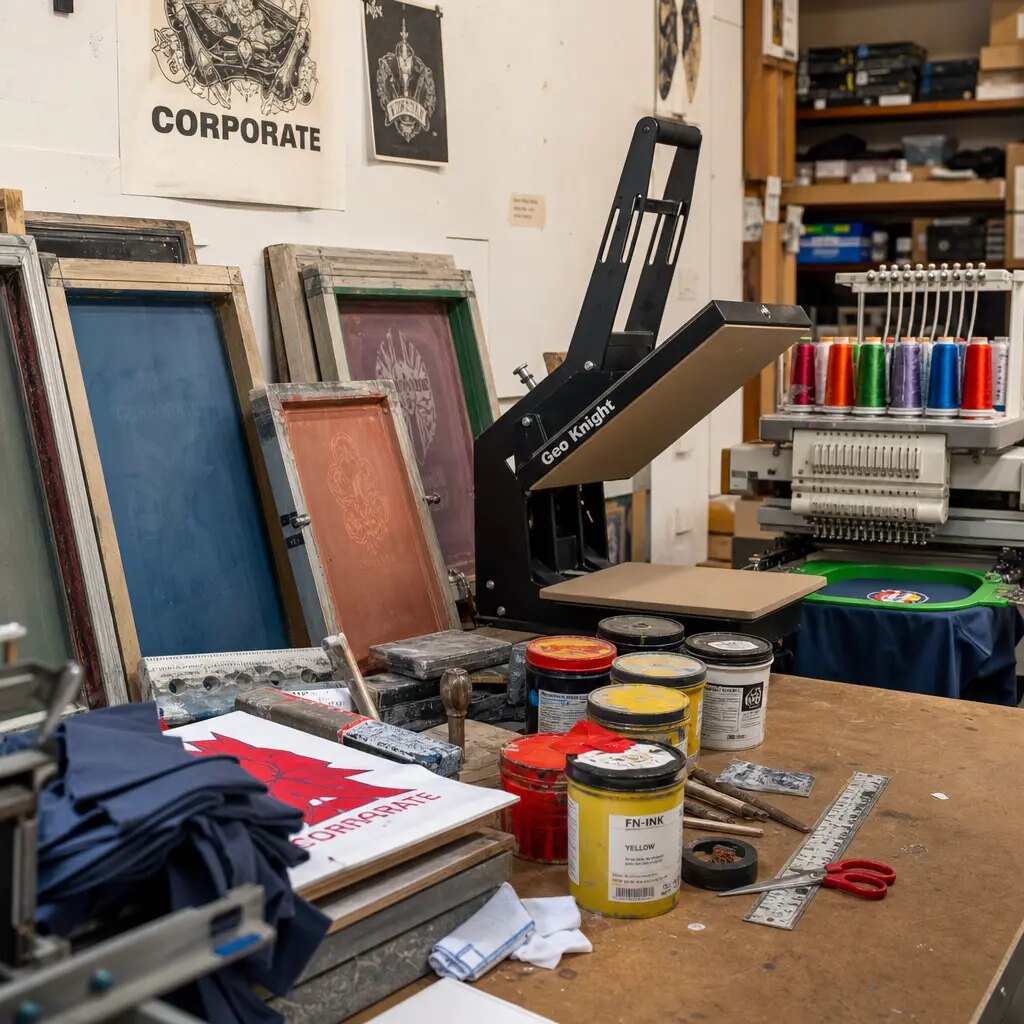
Screen printing is the standard method for solid hotel logos, resort names, and simple retail graphics on canvas zipper portfolios. It gives a clean result on flat panels and is cost-effective for bulk orders. The buyer should provide vector artwork, Pantone references, print size, and placement from finished edges. Without this, suppliers may print from a low-resolution file or place artwork before sewing in a way that shifts after the zipper and seams are assembled.
Heat transfer can reproduce fine detail and gradients, but it may add a different surface feel and can be less suitable for products exposed to heat during storage. Embroidery looks premium but can distort flat panels, especially on lighter canvas, and may create an uncomfortable inside back if there is no lining. Woven labels are useful when the buyer wants a subtle branded retail line rather than a large front logo. Each branding method changes sample approval and QC criteria.
- Screen print: best for solid one- to four-color logos on natural or dyed canvas.
- Heat transfer: useful for complex artwork, but test adhesion and surface feel.
- Embroidery: premium appearance, but check panel puckering and inside thread finishing.
- Woven label: good for discreet brand identity and easier repeat consistency.
- Large print coverage: check stiffness, cracking, ink smell, and color rubbing before bulk approval.
MOQ logic: why one headline MOQ is not enough
A supplier may state an MOQ such as 500 or 1,000 pieces, but that number has limited value until it is broken down by material and process. Canvas fabric, zipper tape, zipper puller, lining, print screen, woven label, hangtag, and retail barcode sticker can each carry a different minimum. For hotel retail programs with multiple properties, the buyer may order one construction with five logo versions. That can be efficient if the fabric and zipper are shared, but expensive if each logo requires a separate print setup and packing line.
MOQ also affects price honesty. A supplier may quote a low unit price based on full-roll fabric consumption, then add surcharges after seeing smaller color splits. Procurement teams should present the order matrix clearly: total quantity, quantity per logo, quantity per color, packing method, and delivery split. This lets the factory calculate cutting efficiency, print setup, and carton label work correctly before the PO is issued.
- State total order quantity and quantity per SKU.
- List fabric color and zipper color combinations separately.
- Identify whether each logo version needs a separate print screen or label setup.
- Clarify if overrun or underrun is allowed, especially for custom dyed fabric.
- Request price breaks at realistic quantities such as 500, 1,000, 3,000, and 5,000 pieces.
Supplier compliance evidence that should be tied to the actual order
Compliance paperwork is only useful when it relates to the materials in the order. A factory profile, old audit, or general statement does not prove the canvas, ink, zipper puller, coating, label, and packaging for this portfolio meet the buyer’s requirements. Hotel retail buyers selling through chain properties or distributor networks should request material declarations and, when needed, test support based on the actual fabric color and print method.
The compliance checklist should also cover production control. Needle control, metal contamination prevention, clean storage, fabric shade segregation, and carton traceability are practical factory measures that reduce shipment risk. For natural cotton canvas, moisture control matters because mildew odor can ruin a retail delivery. A supplier who can explain how materials are stored, cut, printed, cured, sewn, inspected, and packed is usually safer than one who only sends a low price and a product photo.
- Material declaration for cotton canvas, lining, zipper tape, zipper puller, ink, label, and packaging.
- Restricted substance statement or test support according to the buyer’s market requirements.
- Needle control and broken needle log for sewing production.
- Carton traceability with SKU, logo version, quantity, and production batch.
- Moisture and odor control for natural canvas before sealing cartons.
Sample approval: build a standard that production can follow
A first sample proves the design direction, not production readiness. For canvas zipper portfolios, the buyer should review size, zipper path, corner shape, fabric handfeel, print appearance, inside finishing, and packing fit. If the first sample uses substitute fabric or a stock zipper color, mark it clearly as a fitting sample. Do not allow it to become the final standard unless all substitutions are accepted in writing.
A pre-production sample should be made with actual bulk fabric, zipper, puller, print method, label, and packing. This is the sample that should be signed or sealed as the approval standard. For multi-logo programs, the construction can be approved once, but at least one print strike-off or digital proof should be approved for each logo. Production should not begin cutting all fabric before the buyer has approved the final physical standard.
- Measure inside usable space, not only outside finished size.
- Test zipper movement with the portfolio empty and with sample documents inside.
- Rub the printed logo lightly after curing to check adhesion and surface dryness.
- Place the sample inside the proposed polybag or paper band to see if corners bend.
- Keep one approved sample at the buyer side and one at the factory side for QC comparison.
Packing and carton planning for hotel retail distribution
Packing is a cost driver and a quality control point. Canvas zipper portfolios can arrive with dirty corners, compression lines, warped panels, or zipper scratches if the packing plan is too tight. Individual polybags protect natural canvas from carton dust and moisture, while paper bands or tissue wrapping may better support plastic-reduction policies. The right choice depends on the buyer’s retail presentation, warehouse handling, and sustainability rules.
Carton planning should be completed before the order is placed, not after production. Units per carton affects carton weight, CBM, pallet loading, warehouse labor, and damage risk. A flat portfolio should not be folded unless the design is made for folding. For retail buyers, carton marks should show SKU, logo version, property code, quantity, PO number, and carton sequence. Mixed cartons should be avoided unless the distributor’s receiving system is designed for them.
- Use flat packing for document portfolios to protect panel shape.
- Separate light natural canvas from dark printed items if rubbing is possible.
- Keep carton gross weight manageable for warehouse handling, often below 15-18 kg when possible.
- Add corner protection or inner carton dividers for premium retail versions.
- Require carton photos and final packing list before shipment release.
Lead time and schedule risks hidden behind the sewing date
The sewing time is only one part of the production calendar. Fabric procurement, lab dips, zipper sourcing, print screen preparation, sample courier time, artwork approval, bulk cutting, printing, curing, sewing, trimming, inspection, packing, and export booking all affect the cargo ready date. A quote that says production takes 25 days may still become a 45-day project if custom materials or slow approvals are involved.
Hotel retail programs often have fixed launch dates tied to property openings, seasonal travel, events, or conference calendars. To protect the schedule, procurement teams should identify the critical path before deposit. Custom dyed canvas, special zipper tape, molded pullers, retail hangtags, and barcode labels are common delay points. The safest workflow is to approve artwork, material standards, and packing artwork before sample approval, not after bulk goods are already in sewing.
- Stock fabric and stock zipper: faster route if color flexibility is acceptable.
- Custom dyed fabric: add time for lab dip, approval, dyeing, and shade control.
- Special zipper puller: may require mold, plating, and separate approval.
- Multiple property logos: schedule print approvals in parallel to avoid holding sewing.
- Peak season: reserve production capacity before final artwork if the program date is fixed.
Specification comparison for buyers
| Supplier option | What to verify | Commercial advantage | Buyer risk to control |
|---|---|---|---|
| Direct sewing factory | zipper source record, production-line zipper test photos, approved trim card, cutting marker photos, and final open-carton count | Better sample-to-bulk control and faster production feedback | May be weaker on export paperwork or branded packing unless checked early |
| Trading company | Factory name, production photos, trim-source proof, and who owns QC decisions | Can coordinate small mixed orders and extra services | Markup can hide real factory capability and slow defect decisions |
| Specialized bag workshop | zipper gauge, zipper tape width, puller finish, binding tape, corner reinforcement, seam allowance, and document-size tolerance | More practical for detailed construction, trims, and repeat programs | Capacity may be limited during peak seasons |
| Low-price general supplier | 300D-600D polyester, 10-12 oz canvas, or recycled PET with backing stiffness matched to document weight | Useful for simple promotional runs with loose specs | Material downgrades, weak packing, and vague inspection scope can erase savings |
| Retail-ready supplier | flat packing, insert board if needed, SKU bundles, carton weight limit, moisture protection, and barcode visibility | Can handle labels, SKU separation, carton marks, and receiving rules | Higher unit cost must be compared against reduced warehouse work |
| Compliance-focused supplier | Fabric records, labeling review, test plan, and production traceability | Safer for retail programs and repeat brand orders | Documentation claims need evidence, not only sales language |
| Local sample room plus bulk factory | Signed sample, bulk factory handoff, first-piece photos, and deviation owner | Good for complex branding before large production | Sample room quality may not match bulk line unless handoff is controlled |
Buyer checklist before sampling
- Define the portfolio use first: retail sale, guest amenity, conference kit, spa folder, or loyalty gift. The required structure and finishing level change with the use.
- Specify finished size with tolerance, for example A4 document fit plus zipper clearance, not only a flat fabric cutting size.
- State canvas weight in oz and approximate GSM, and note whether natural, bleached, dyed, or washed canvas is required.
- Separate the MOQ by body fabric color, zipper color, lining, print design, woven label, and carton mark.
- Require zipper type, zipper size, tape color, puller material, and puller shape to be listed on the quote.
- Provide artwork in vector format and define print location, print size, Pantone target, and acceptable color tolerance.
- Include compliance needs before quotation: restricted substances, labeling, packaging material limits, carton drop test requirement, and document format.
- Approve a physical pre-production sample before bulk cutting when the order includes custom zipper color, lining, large print coverage, or retail packaging.
- Set inspection acceptance criteria for dimensions, zipper operation, print defects, seam strength, stains, odor, and packing accuracy.
- Request carton dimensions, gross weight, units per carton, CBM, and pallet suggestion so landed cost can be compared before placing the PO.
Factory quote questions to send
- Is the quoted canvas stock fabric or custom dyed fabric, and what is the exact fabric weight in oz and GSM?
- What is the minimum order quantity by fabric color, zipper color, print design, and woven label design?
- Which zipper brand or grade is used, and can the zipper tape and puller color be matched to our approved sample?
- Will the zipper be tested for opening and closing cycles before packing, and what failure rate triggers rework?
- What print method is included in the price, how many colors are included, and what is the maximum print area before surcharge?
- Are labels, hangtags, barcode stickers, care labels, warning labels, and retail packaging included or quoted separately?
- Who is responsible for pre-production sample cost, courier cost, and remake cost if the factory sample misses the approved specification?
- What documents can be supplied with shipment: commercial invoice, packing list, material declaration, test report support, carton photos, and inspection report?
- What is the production schedule from deposit and sample approval to cargo ready date, and which steps are on the critical path?
- What are the carton size, carton weight, units per carton, and estimated CBM for the quoted packing method?
Quality-control points to confirm
- Finished size tolerance should normally be controlled within plus or minus 5 mm for portfolio width and height unless the design has a structured frame.
- Zipper must open and close smoothly across the full run without skipped teeth, trapped fabric, uneven tape tension, or loose puller attachment.
- Main seams and zipper end bartacks should withstand normal pull testing without thread breakage or seam opening.
- Canvas panels must be free from oil marks, heavy slubs in logo areas, mildew odor, dirty fold lines, and visible shade difference within the same order.
- Print placement should stay within the approved tolerance, commonly plus or minus 3 mm for small logos and plus or minus 5 mm for larger front graphics.
- Ink color should be compared against the approved physical sample or Pantone target under consistent lighting, not only by phone photo.
- Metal parts, if used, should be checked for rust, sharp burrs, plating color variation, and staining risk on natural canvas.
- Each carton should match the packing list by SKU, logo version, property code, quantity, and barcode label before sealing.
- AQL inspection should include appearance, measurement, zipper function, seam strength, print adhesion, packing, and carton marking rather than only visual sorting.