1. Start with the real use case, not the unit price
Wholesale canvas zipper portfolios are bought for a work process, not as a blank product category. For tech startups, that process may be employee onboarding, conference handouts, sales leave-behinds, partner welcome kits, investor meetings, or customer success packs. Each use case changes the build. A slim document carrier for an event does not need the same body, zipper, or interior layout as a portfolio that travels daily with a tablet, notebook, and cables.
That is why the first sourcing conversation should be about contents and handling, not discounts. Ask what the portfolio must carry, how often it will be opened, and who will use it. Is it a one-time giveaway or a reusable sales tool? Will it live in a kit, sit on a conference table, or move in and out of a backpack? When those answers are clear, it becomes much easier to define the right fabric weight, zipper grade, and internal structure.
Procurement buyers also need to align internal stakeholders early. Marketing may push for stronger branding. Operations may care most about carton efficiency and unpacking speed. Finance may want the lowest landed cost. Sales may care whether documents fit without curling. A good brief turns those competing priorities into measurable specs: finished size, canvas GSM, zipper construction, logo method, interior features, and packing format.
If the product is treated as a generic pouch, the quote comparison will be misleading. One factory may price a soft 10 oz body, another may include lining and a stronger zipper, and a third may quietly assume lighter trim. All three numbers can look competitive until the first sample or delivery. Defining the use case first keeps the quote honest.
- For conference distribution, prioritize clean branding, zipper reliability, and freight-efficient packing.
- For internal sales use, prioritize body structure, useful pockets, and repeat-order consistency.
- For investor or enterprise gifting, prioritize finish quality, alignment, and low defect visibility.
- For distributor or reseller channels, prioritize barcode-ready packing, stable specs, and presentation on receipt.
2. Write a measurable spec sheet before requesting quotes
A better RFQ starts with measurable product language. For most wholesale canvas zipper portfolios, the shell fabric usually falls in the 12 oz to 16 oz range, or about 340-450 GSM. That range is broad enough to cover many business uses, but buyers should still choose deliberately. Around 340-380 GSM often works for lighter onboarding kits and event folders. Around 400-450 GSM gives more body, a firmer handfeel, and a stronger visual impression when the item is carried or set on a table.
Fabric finish matters as much as weight. Natural canvas gives a casual matte appearance and is widely used for startup merchandise. Washed canvas softens the hand but may look less crisp. Coated, laminated, or backed constructions improve structure and surface resistance, but they can also change sewing behavior and add seam bulk. If the program needs a specific color, ask whether the quote is based on stock-dyed canvas or custom dyeing. That one detail can move both lead time and MOQ.
Dimensions should be written in finished size, not vague fit language. Say exactly how wide and tall the portfolio should be when closed, and define gusset depth if one exists. For soft goods, a practical starting tolerance is often ±0.5 cm on overall length and width, with tighter control for pocket openings or label position when needed. The point is not to force impossible precision; it is to create a shared standard the factory can actually hit.
Include lining or reinforcement only if the program needs it, but make the decision explicit. Unlined canvas is cheaper and lighter. A lining, foam sheet, paperboard insert, or nonwoven reinforcement changes body feel, sewing time, and freight weight. If the buyer does not state those items, factories may quote different constructions and then call them equivalent. They are not equivalent, and the difference becomes visible in the sample and the price.
- Lock shell fabric in GSM or oz, not only as “heavy canvas” or “premium canvas.”
- State whether the item is lined, partially lined, padded, reinforced, or fully unlined.
- Use finished dimensions, not pattern dimensions, for RFQ and QC.
- Write tolerances into the spec sheet before sample approval, not after delivery.
3. Match zipper construction to the way the portfolio will be used
The zipper is a small component with a large effect on the buyer experience. It gets touched on every use, which makes it one of the most important parts of the spec. Yet many quotes still describe it only as a “nylon zipper” or “metal zipper.” That is not enough for procurement. Buyers should ask for zipper type, size, tape color, puller style, and whether the zipper is stock or custom sourced. For many business portfolios, a #5 nylon coil zipper is the most practical default because it stays flexible, runs smoothly, and does not add unnecessary weight. Slim folders may use #3. Larger gusseted builds may need #8 if the load is heavier.
Metal zippers can look more premium in some programs, but they are not automatically better. They can add weight and demand tighter alignment around corners and end stops. If the portfolio is relatively rigid and the design keeps the zipper line straight, metal can work well. If the item opens and closes around documents, a notebook, or a tablet insert, nylon coil often performs better because it forgives slight misalignment and stays smoother under daily use.
Ask the factory how the zipper ends are reinforced. Many early failures start at the top corners, the end stops, or any point where the seam changes direction. If the portfolio has a carry handle or a gusset, those areas deserve extra attention too. Reinforcement at the stress points may be a bartack, a denser stitch pattern, or a layered seam construction. Buyers do not need to specify the factory’s method, but they should absolutely ask what method is used and whether it appears on the approved sample.
Do not approve zipper performance on an empty sample only. Load the portfolio with the intended contents, or with a realistic dummy load. Then open and close it several times. Watch for catching at the corners, zipper bowing, tape twist, or a shell that buckles because the load is too tight for the closure line. This is where many seemingly minor design choices become production issues. It is much cheaper to correct them in sampling than after bulk sewing.
- Specify zipper size by standard notation such as #3, #5, or #8.
- Require tape color and puller style approval on the sample, not only in writing.
- Check zipper operation on both empty and realistically loaded samples.
- Review reinforcement at zipper ends, corners, gussets, and handles if present.
4. Keep the interior layout practical and easy to sew
A clean interior is usually more valuable than a crowded one. It is tempting to add pockets, loops, dividers, and extra storage zones because they sound useful in a brief. But every extra feature increases cutting, sewing, alignment, and defect risk. It can also reduce usable volume if the body is already slim. For most startup programs, one main compartment plus one to three flat pockets is enough. That covers document packs, notebooks, thin accessories, and simple sales materials without overcomplicating the build.
The best interior spec is written around the real insert. If the portfolio should hold A4 or letter-size documents, give the target pocket depth so papers do not curl or bend. If it should hold a tablet, define the device size and whether a protective case is included in the measurement. Buyers often say “fits tablet,” but the factory cannot guess whether that means bare device, slim case, or padded sleeve. A few millimeters make a difference once seam allowance, lining turn, and zipper clearance are added.
Be selective about add-ons. Pen loops are useful if the portfolio will be used in sales meetings or onboarding kits, but they add labor only when recipients will actually use them. Card slots work well for certain enterprise or investor kits and are often unnecessary for event giveaways. A padded divider can improve protection, but it also adds thickness and cost. In procurement terms, every feature should earn its place.
The interior should also be judged in the loaded state, not only when the shell is flat on the table. A pocket that looks clean during inspection may distort when the portfolio is closed. That is why sample approval should include real contents or a dummy load. If a feature prevents the zipper from closing smoothly, the design is too busy for the intended use.
- Specify pocket width and depth using the actual insert size, not descriptive terms like “fits documents.”
- Only add pen loops, card slots, or padded dividers if the end use clearly requires them.
- Remember that each extra compartment increases labor, seam bulk, and variation risk.
- Check loaded closure clearance before approving the final interior layout.
5. Treat branding like a production spec, not a decoration
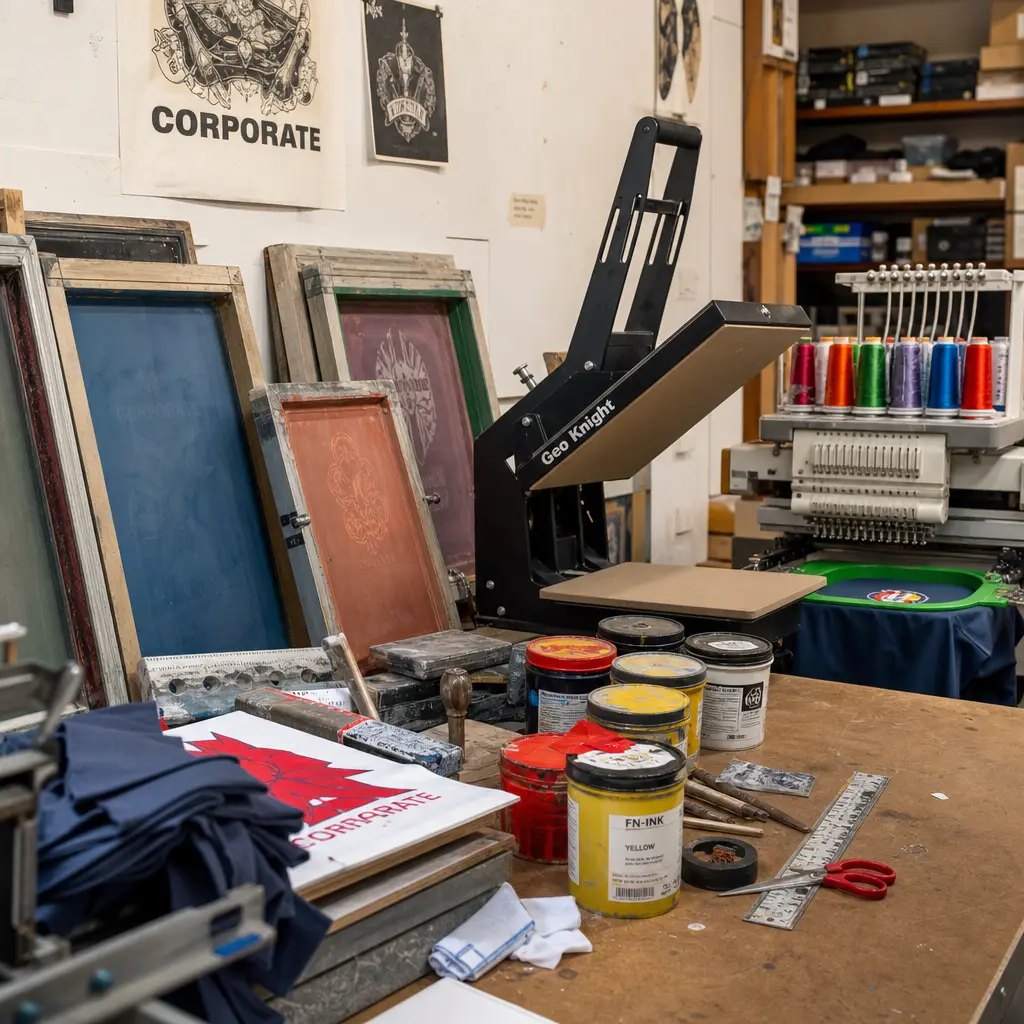
Branding is one of the main reasons tech startups choose custom portfolios, but it is also where spec drift shows up quickly. For simple logos, screen printing is usually the most practical and repeatable method. It tends to be cost-effective, relatively easy to inspect, and suitable for repeat orders. If the program needs a richer feel, woven labels, rubber patches, and debossed patches can look more premium, but they also introduce setup steps and visual variation points that buyers should plan for.
Logo placement must be controlled with physical reference points. A digital mockup is helpful, but it is not enough. The approved placement should be measured from the top edge, side edge, or centerline of the front panel so the factory has something objective to build against. That matters even more when the logo sits near a zipper line, a seam curve, or a patch pocket. On a sewn product, a small shift is visible faster than it would be on a flat print piece.
Color control deserves the same discipline. Provide Pantone references where possible, then ask how the factory will match them on the chosen substrate. Ink on natural canvas, thread on woven labels, and molded patch materials all behave differently. If brand color is critical, approve on the actual canvas base, not just on a screen. The good news is that most startup branding is forgiving if the buyer sets expectations clearly and uses version-controlled artwork from the start.
When comparing quotes, separate one-time setup from repeat cost. Screen setup, patch mold cost, woven label development, and artwork sampling should be listed apart from the unit price. That makes the first order easier to understand and the reorder more predictable. It also keeps multiple startup departments, campaign versions, or event-specific graphics from getting mixed together later.
- Use screen print for simple, repeatable logos and straightforward QC.
- Use woven labels or patches when a more tactile, premium look is worth added setup steps.
- Measure placement from physical reference points, not just by eye on a mockup.
- Keep artwork files version-controlled across all colorways and SKU variants.
6. Read MOQ and pricing by configuration, not by headline number
MOQ only helps if it is defined by configuration. A supplier may say the minimum is 300 units, but the real rule may be 300 per colorway, 300 per logo version, or 300 per zipper tape color. For startups running separate versions for recruiting, sales, and onboarding, that distinction matters. Otherwise, a buyer can approve a total volume that looks acceptable and still end up paying surcharges or being pushed into standardization they did not want.
Good quotes separate the cost elements. Ask for base product price, branding setup, sample charge, special trim cost, packaging cost, and any carton upgrade. If the order requires custom zipper tape, custom pullers, or a special label, those costs should not disappear inside a vague unit price. The clearer the quote structure, the easier it is to compare factories fairly and the easier it is to explain the economics internally.
Low prices deserve a second look, especially when the order is highly customized. A very aggressive quote may assume stock canvas, stock zipper tape, standard carton sizing, or looser color tolerance. None of those assumptions are automatically bad, but they must be visible. If a buyer later wants a specific canvas shade or a custom puller, the hidden cost often reappears in a change order. Procurement teams are usually better off paying a realistic price up front than negotiating around surprises later.
A transparent price ladder is especially useful for reorders. If the factory can explain why pricing changes at 500, 1,000, or 3,000 pieces, that helps with planning. The reason may be fabric yield, setup amortization, or packing efficiency. Whatever the cause, it is useful information. Buyers can use it to decide whether to scale a pilot, split a launch, or consolidate variants into one production run.
- Request MOQ by colorway, logo version, and packing option.
- Separate setup and sampling charges from recurring unit price.
- Ask whether the price assumes stock materials or true custom sourcing.
- Compare first-order and repeat-order pricing when branding setup is involved.
7. Make sample approval functional, measurable, and traceable
A pre-production sample is the buyer’s chance to catch mistakes before bulk sewing begins. For a canvas zipper portfolio, the sample should be judged as a working object, not just a visual mockup. It needs to close correctly when loaded, sit reasonably flat if that matters to the design, and show stable construction around the zipper line, corners, and pockets. If the item is meant to feel structured, the sample should keep that structure under normal use. If it is meant to stay slim, the sample should prove it can do so with the intended contents inside.
The sample should be tested with actual contents or a realistic dummy load. Insert the document stack, notebook, tablet dummy, card bundle, or accessory set the portfolio is meant to carry. Then open and close the zipper several times. Watch for snagging, corner ripple, panel skew, or distortion at the pocket openings. A sample that looks fine empty can behave very differently once loaded, and those are exactly the problems that create dissatisfaction after shipment.
Measure the sample against the written spec. Finished length, width, gusset depth, and pocket opening should all be checked. Logo placement should be compared against the agreed physical reference points. Zipper tape color, puller style, label position, and fabric handfeel should be confirmed too. Ask whether the sample uses bulk-equivalent materials and trims. If the sample is built with better components than the production run, it is a poor approval basis.
Keep approval records organized. Save photos of the approved sample, the dated BOM, and any comments about adjustments. That record matters when the first production units are inspected, and it becomes even more valuable when the product is reordered months later by a different team member. In a fast-moving startup environment, traceability prevents quiet substitutions from becoming accepted “normal.”
- Load-test the sample with actual or simulated contents before approval.
- Check finished measurements against the spec sheet, not against a rough estimate.
- Confirm that sample materials and trims are bulk-equivalent.
- Record approval comments by version so corrections are traceable.
8. Build QC around the parts that fail first
Quality control works best when it is specific. “Good workmanship” is not a control point. For wholesale canvas zipper portfolios, the QC plan should start with incoming materials, continue through inline sewing checks, and finish with final random inspection. Incoming checks often include fabric weight confirmation, shade comparison against the approved swatch, zipper specification review, and verification that labels or patches match the approved artwork.
Inline QC is where the most useful corrections happen. Inspectors should watch logo placement, seam alignment, zipper insertion quality, pocket symmetry, and corner construction before the whole run is complete. If puckering starts around the zipper tape or the pocket line begins to drift, the line can still be corrected. If it is caught only at the end, the rework cost is much higher. For first orders, asking for inline photos or a short inline report is a sensible request.
Final inspection should cover both appearance and function. Common checkpoints include finished dimensions, zipper operation, visible fabric flaws, thread trimming, label position, logo accuracy, and stress-point stitching. A random selection of units should be opened, lightly loaded, and zipped repeatedly. Carton count, assortment, SKU labels, and carton marks should be checked against the PO and packing spec. On custom startup orders, mixed versions are a frequent problem, so carton labeling deserves the same attention as the product itself.
The most useful QC standards are written before production starts. Even if the buyer later uses a third-party inspector, the supplier should know what matters: the accepted tolerance, approved shade reference, zipper grade, branding method, and packing format. Clear standards reduce back-and-forth and make reorders more stable. They also help the factory produce to a repeatable baseline instead of improvising from one order to the next.
- Check fabric GSM, shade, zipper spec, and branding components before bulk cutting.
- Use inline QC to catch zipper puckering, panel skew, and logo shift early.
- Inspect both product quality and carton/assortment accuracy at final stage.
- Write acceptance criteria into the order file so factory and buyer use the same standard.
9. Specify packing and carton details before the PO goes out
Packing affects landed cost more than many buyers expect. For many startup programs, bulk packing with tissue or interleaf is the most efficient choice because it lowers material use and reduces carton volume. That works well if the portfolios will be repacked into onboarding kits or distributed through a fulfillment partner. Even in bulk pack, though, the factory still needs to protect the surface from zipper impressions, dust transfer, and corner abrasion during transit.
Individual polybags make sense when the channel requires retail presentation, direct-to-consumer handling, or separate barcode labeling. They are less useful if the buyer will immediately unpack the portfolios and repack them into larger kits. Procurement teams should compare not only packing cost but also carton dimensions, gross weight, and how efficiently the units nest. A small packaging change can shift freight cost more than a minor material upgrade.
Carton specs belong in the quote stage, not after production starts. Ask for outer carton dimensions, units per carton, gross weight, and the carton board grade or strength standard used. This information helps estimate freight, warehouse handling, and receiving labor. It can also reveal whether the factory has optimized the packing layout. If the order includes multiple startup brands, departmental versions, or event batches, carton labels should make sorting easy without opening every box.
Landed-cost thinking does not stop at shipping. Buyers should ask whether cartons stack cleanly on pallets, whether barcodes are placed where the receiving team expects them, and whether the packing style supports a 3PL or kit assembler. These are operational details, but they directly affect the cost per usable unit. A lower ex-factory price can disappear quickly if the cartons are inefficient or mislabeled.
- Request carton dimensions, units per carton, and gross weight before placing the PO.
- Choose bulk pack or individual bags based on channel, not habit.
- Specify carton marks, SKU labels, and mixed-assortment rules in writing.
- Compare freight impact of packing options before deciding on final presentation.
10. Control lead time, reorders, and final release with one clean file
Lead time should be understood stage by stage. For a standard custom canvas zipper portfolio, a common planning range is about 35-50 days after sample approval, depending on order size and complexity. But a single total number hides the real schedule. Material booking, cutting, sewing, branding, inspection, packing, and ex-factory release all have their own timing. If a supplier cannot explain those steps, the delivery promise is less reliable.
Custom-dyed canvas, non-standard zipper tape, molded pullers, retail packaging, or multiple logo versions usually extend the schedule. Ask the supplier which steps are on the critical path and what usually causes delays. The most common answers are delayed artwork approval, fabric dye confirmation, trim shortage, and packaging signoff. Those are normal issues, but they should be visible before the PO is released so the buyer can plan around them.
Reorders are where many startup programs lose consistency. Save the approved sample photos, BOM, measured dimensions, zipper spec, branding references, and carton details in one place. On the next order, quote against that same baseline rather than relying on memory or a previous invoice line. This matters when a team changes, a campaign expands, or the buyer needs the same portfolio again months later under a tighter deadline.
Before releasing the order, make sure one version of the truth is in the file: use case, contents, finished dimensions, fabric spec, zipper spec, branding method, approved sample, packing instructions, QC checkpoints, and delivery milestone. That is the heart of a practical wholesale canvas zipper portfolios for tech startups wholesale buying checklist. When the brief is specific, quote comparison gets easier, production risk goes down, and receiving becomes less painful.
- Ask for lead time by stage, not just a single total number.
- Clarify whether the promised date is ex-factory finished, inspected, packed, or handed to the forwarder.
- Store approved sample, BOM, QC notes, and carton spec for future reorders.
- Release the PO only after all dimensions, materials, branding, packing, and milestone dates are aligned.
Specification comparison for buyers
| Spec decision | Recommended option | When it fits | Buyer risk to check |
|---|---|---|---|
| Canvas fabric weight | 12 oz to 16 oz canvas, typically 340-450 GSM | Most startup onboarding kits, conference giveaways, sales folders, and tablet document sleeves | Below about 320 GSM often feels soft and wrinkles more easily; above about 450 GSM can raise sewing difficulty, seam bulk, and freight |
| Finished size tolerance | Set finished size tolerance at ±0.5 cm on length/width and ±0.3 cm on pocket openings unless design requires tighter control | Useful for comparing factories on a like-for-like basis and avoiding disputes after receipt | No written tolerance means the supplier may judge by appearance rather than measurable dimensions |
| Main sourcing route | Direct factory with signed spec sheet and sample-room approval | You need repeat orders, custom trims, stable QC, and visibility into BOM changes | A low first quote may exclude trim upgrades, export carton strength, or print setup costs |
| Print or branding method | Screen print for simple logos; woven label, rubber patch, or debossed patch for more premium positioning | Single-color startup branding, recurring B2B programs, or investor gifting | Artwork may shift if logo placement is approved only on a digital proof instead of a sewn sample |
| MOQ logic | Start at 300-500 pcs per colorway or logo version if custom fabric, labels, or hardware are involved | Pilot programs, startup launches, test orders, and departmental variants | Very low MOQ can hide higher setup charges, trim substitutions, or limited color consistency |
| Closure specification | #5 nylon coil zipper is the practical default; #3 suits slim folders, #8 suits heavier gusseted builds | Portfolios that need smooth daily opening and closing without excess weight | Unspecified zipper size/grade is a common source of complaints, especially at corners and end stops |
| Interior structure | One main compartment plus 1-3 flat pockets, optional pen loop, optional padded divider if device carry is required | Sales teams, event folders, and onboarding kits where organization matters but capacity must stay usable | Extra pockets increase labor and can reduce usable capacity if the body is too slim |
| Packing method | Bulk pack with tissue or interleaf, then export carton by size/color; individual polybag only if channel requires it | Importers, distributors, and kit assemblers trying to reduce freight and unpacking labor | Overpacking adds volume weight; underpacking can cause zipper impressions, dust marks, or corner abrasion |
| Lead-time strategy | Allow about 35-50 days after sample approval for standard custom builds; longer if custom-dyed canvas, custom pullers, or retail packaging are involved | Realistic production planning for startup launch calendars and repeat procurement | Artwork approval, fabric dyeing, zipper stock, and packaging changes are common delay points |
Buyer checklist before sampling
- Confirm the target use case: document carrier, tablet sleeve, conference portfolio, onboarding folder, premium sales kit, or investor handout.
- Lock the finished size in centimeters or inches and define acceptable tolerance for overall size, pocket opening, and gusset depth.
- Specify canvas weight in GSM or oz, weave style if known, and whether you want natural, dyed, washed, coated, or laminated finish.
- State whether lining is required, its material, color, and approximate weight, or note clearly that the item is unlined.
- Define zipper type, size, tape color, puller style, end-stop finish, and whether the portfolio must zip closed under a realistic load.
- List exact interior features: number of pockets, pocket widths and depths, pen loops, tablet divider, business-card slot, or document sleeve.
- Choose the branding method and provide artwork in vector format with Pantone references, logo size, and placement from fixed edges.
- Set MOQ by colorway, logo version, and packing style so variants cannot be mixed without approval.
- Request a pre-production sample and write approval criteria covering finished dimensions, logo placement, zipper operation, and load test fit.
- State packing requirements, units per carton, carton dimensions target, barcode labels, carton marks, and whether retail-ready packing is needed.
Factory quote questions to send
- What canvas composition, fabric weight in GSM or oz, and finish are included in the quote, and is the item lined or unlined?
- What are the finished dimensions, and what production tolerance do you apply to overall size, pocket openings, and gusset depth?
- Is the zipper nylon coil or metal, what size is it (#3, #5, #8), what is the tape color, and what puller material is included?
- What is the exact MOQ per colorway, per logo version, and per packing configuration?
- Which branding method is included, and what are the separate setup charges for screens, molds, woven labels, rubber patches, or debossed patches?
- What stitch density range do you use on main seams, and what reinforcement is applied at zipper ends, handle points, and stress corners?
- Can you provide a pre-production sample, sample lead time, sample charge policy, and whether the sample uses bulk-equivalent materials?
- How are items packed per carton, how many units per carton, what are the export carton dimensions and gross weight, and what carton board grade do you use?
- What is the production lead time after sample approval, broken into material booking, cutting, sewing, inspection, packing, and ex-factory date?
- If the specified fabric shade, zipper, or puller is unavailable, what substitution process do you follow and when will you request written approval?
Quality-control points to confirm
- Canvas weight should match the approved specification within an agreed tolerance, commonly around ±5% for GSM unless a tighter standard is contracted.
- Fabric color should match the approved lab dip, swatch, or sealed sample under consistent lighting; panel-to-panel shade variation should be controlled before cutting.
- Finished size should be checked against the approved spec, with overall length and width commonly held within ±0.5 cm and smaller internal pocket dimensions within an agreed range.
- Zipper must run smoothly from end to end through repeated open-close cycles without catching, tooth/coil distortion, tape twisting, or separation at seam junctions.
- Zipper size, tape color, puller style, and stop construction must match the approved sample and BOM; no zipper-brand or grade substitution should occur without approval.
- Logo placement must stay within the approved location tolerance, commonly measured from top edge and side edge; print color or patch color should match the approved reference.
- Stitching must be even, with no skipped stitches, loose threads, seam grin, raw-edge exposure where not specified, or excessive puckering along zipper tape.
- Stress points such as zipper ends, top corners, handles, and gusset joins should be checked under light load because these are common early failure points.
- Interior pockets and dividers must hold the stated dimensions after sewing and after the product is closed, not only when the shell is lying flat before assembly.
- Lining, foam, board insert, or reinforcement materials must match the approved BOM so the body feel and stiffness do not drift between sample and bulk.