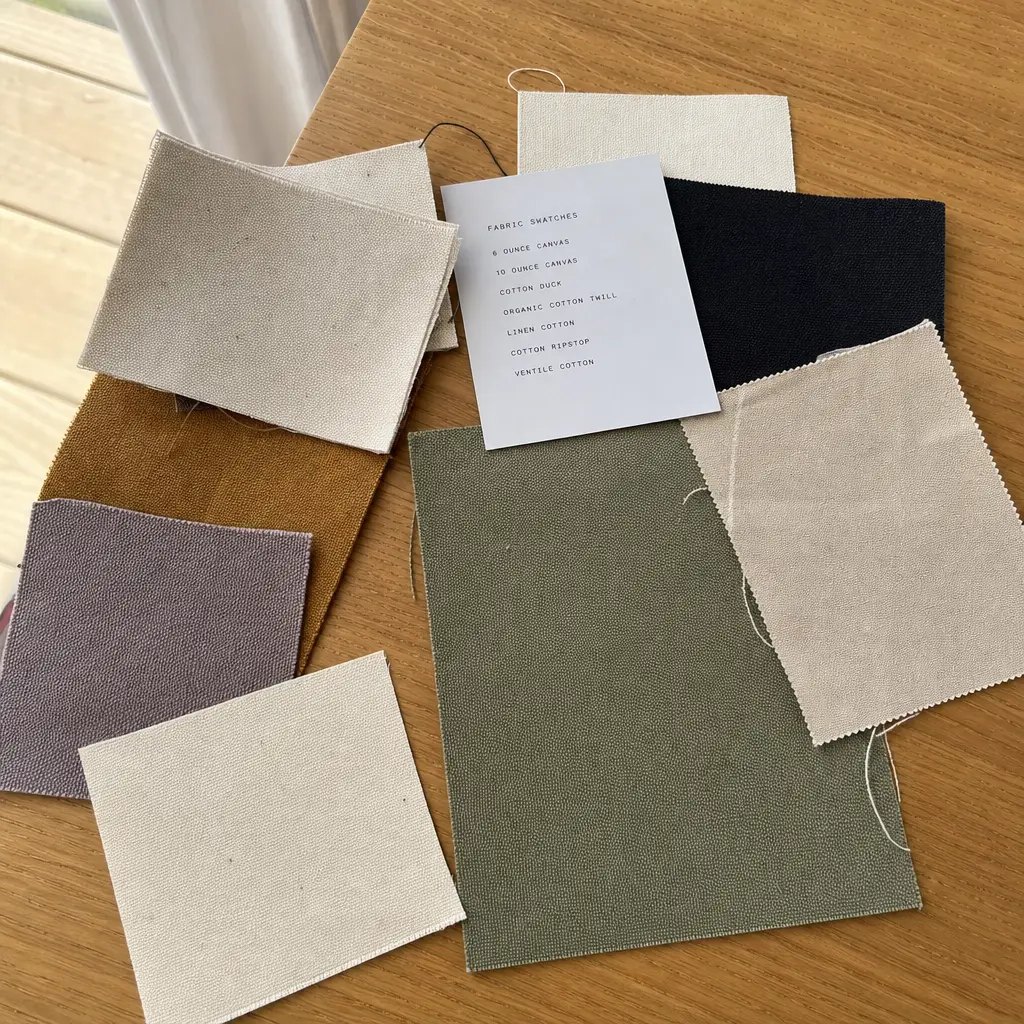
Why this portfolio spec matters for tech buyers
A canvas zipper portfolio looks straightforward, but procurement outcomes depend on the spec more than the silhouette. For tech startups, these items often end up in onboarding kits, pitch meetings, conference packs, investor events, and product launch bundles. That means the portfolio has to do three jobs at once: look credible, carry the right contents, and survive bulk packing without creating claims. If the spec is vague, the factory will fill in the blanks with its own assumptions.
The buying question is not only whether the portfolio looks good in a sample room. It is whether the same item can be repeated across lots, packed efficiently, and delivered without hidden substitutions. A supplier may quote one interpretation of “canvas zipper portfolio,” but the final product can change depending on fabric body, zipper grade, lining, and packing standard. Procurement should define the use case first so the quote is based on function, not on a loose category name.
Tech brands also use this product in different ways. One team may need a flat document carrier for events. Another may need a structured sleeve for tablets, cables, and notebooks. Those uses change the ideal fabric weight, the allowable thickness, and the internal usable width. The buyer should choose the primary use case before asking for pricing, otherwise the factory will quote against a guess and the sample approval will carry avoidable risk.
The same item can also move through several channels after production. It may be inserted into a wider kit, relabeled, stored in a warehouse, and re-shipped through a 3PL. Once that happens, packaging quality and dimensional consistency matter as much as aesthetics. A portfolio that works in hand can still create receiving problems if the carton count is off, the item creases badly, or the internal size is tighter than expected after lining and seam allowance.
A strong RFQ does not need to be long, but it does need to be specific. It should state what the portfolio will carry, which channel it serves, and which specifications are fixed. That helps suppliers quote the same construction instead of each inventing a slightly different version. It also gives procurement a better basis for comparing landed cost, not just unit price.
The best sourcing briefs separate mandatory requirements from preferences. Outer size may need to match an insert, while zipper color or puller finish may be negotiable. That distinction helps buyers avoid paying for decorative features that do not change function. It also gives room for future revisions without reopening the whole sourcing process.
One more point matters for operators: portfolios are not just soft goods, they are packaging-adjacent items. If the bag is part of a branded kit, it affects the visual order of everything else in the box. That is why procurement needs material detail, print detail, and packing detail together. Looking at one without the others often leads to a quote that seems attractive but is expensive to correct later.
- Define the use case before asking for price.
- Treat the portfolio as part of the kit, not a standalone accessory.
- Separate must-have specs from negotiable extras.
- Ask suppliers to quote the same construction assumptions.
- Check fit, packing, and landed cost together.
Start with the fabric, not the logo
For wholesale canvas zipper portfolios for tech startups, the body fabric usually lands in the 12–16 oz range, or roughly 350–500 GSM depending on weave, yarn count, and finishing. That range is wide enough to support different use cases without forcing the product into one look. Lighter fabric reduces cost and can be easier to sew. Heavier fabric holds shape better and usually gives a more premium hand. The right answer depends on whether the portfolio needs to be crisp, durable, or simply good enough for document transport.
A practical starting point for launch kits or sales decks is often 12–14 oz canvas. It balances appearance and cost, and it is usually easier to pack flat. If the item will be handled more often, used in executive gifting, or expected to hold shape after repeated packing, 14–16 oz is typically safer. Buyers should decide whether the item needs to stand up on a desk, resist scuffing, or just protect papers in transit. It is hard to get all three at the lowest weight.
Canvas is not one material. Cotton canvas, poly-cotton canvas, washed canvas, and enzyme-finished canvas behave differently in sewing and in appearance. A washed finish can soften the hand, but it can also reduce crispness around print areas. A poly-cotton blend may improve dimensional stability, while a plain cotton canvas can feel more traditional. Ask the supplier to state fiber blend, weave type, and finishing process. If the quote only says “canvas,” it is too vague to compare.
Sourcing teams should also ask how the fabric behaves across lots. Material consistency affects how the logo prints, how the edges press, and how the finished item packs. If the factory cannot explain roll width, color method, or whether the full order will come from one dye lot, the bulk order may drift from the sample. That matters especially when the portfolio sits inside a branded kit and needs to visually match other items.
Shrinkage and finishing also matter. Canvas can move after washing, pressing, and cutting. Buyers do not need a laboratory report for every purchase, but they do need the factory to say how they control cut size and what tolerance they expect after finishing. If a supplier is unwilling to discuss shrinkage or shade variation, treat that as a sourcing risk rather than a minor detail.
The simplest test is practical. Put the intended contents inside, close the zipper, and check whether the body bows, wrinkles, or telegraphs the items underneath. A good fabric is not the one with the most technical language in the quote; it is the one that fits the use case and still packs cleanly. That is the buyer’s real metric.
- Use 12–14 oz for lighter, more price-sensitive programs.
- Use 14–16 oz when shape retention matters more than minimum cost.
- Ask for the blend, weave, and finish instead of “canvas” alone.
- Request lot consistency and shrinkage control details.
- Test the sample with the real contents before approving fabric.
Zipper and lining choices drive the user experience
The zipper is usually the first function a buyer notices in hand. A #5 nylon zipper is the common working choice because it runs smoothly, handles curves well, and does not overload the seam. Metal zippers can look sharper, but they add weight and can be less forgiving if the closing path is not aligned. For most procurement programs, the better zipper is the one that opens reliably after repeated use, not the one that looks most expensive by itself.
Puller choice matters almost as much as zipper size. A plain puller keeps the quote lower, while a branded puller can lift perceived value if the project supports it. The finish should match the intended audience. For internal onboarding or event distribution, a standard puller is often enough. For executive gifting or premium launch kits, the puller finish should be treated as a real spec because it changes how the product is perceived at first touch.
Lining is more than decoration. An unlined portfolio is faster to make and easier to price, but the interior may feel rougher and can shed fibers. A 210D or PU lining creates a cleaner interior, improves slip for papers or tablets, and can make the item feel more polished. The tradeoff is added labor and a small reduction in internal space. Buyers should compare usable inside dimensions, not just the outer size shown on the quote.
When comparing zipper options, do not stop at the size number. Ask for tape composition, slider type, puller finish, top and bottom stop style, and whether the zipper color is stock or custom dyed. Coil, molded, and metal zippers behave differently. Those differences should be written into the quote because they affect smoothness, durability, and sourcing risk. For most business portfolios, a stock black, navy, or natural tape is the least risky route.
Lining changes inspection too. A lined portfolio can hide internal stitch work, which helps presentation but makes production discipline more important. An unlined item exposes the inside, so thread tails, seam waviness, and raw edge finishing become visible immediately. Choosing not to line the portfolio does not remove quality requirements; it simply moves them into full view.
The right combination depends on what the portfolio will carry. For document-only use, lining may not add enough value to justify the cost and size reduction. For mixed-content kits, lining often earns its place because it improves durability and presentation. Ask the supplier to show the internal construction sequence because two portfolios with the same outer dimensions can have very different usable space after seam allowance and zipper insertion are accounted for.
- Choose nylon zipper tape when smooth action and scale pricing matter.
- Specify zipper size, tape color, puller style, and stopper detail in the RFQ.
- Use lining only when the buyer will pay for the cleaner interior finish.
- Confirm usable internal width after lining, not only outer size.
- Request cycle testing when the item will be opened often.
Print method should match the canvas texture
Canvas texture can make the same logo look crisp or muddy depending on the print method. Screen print is usually the first option for bold artwork, one- or two-color logos, and larger logo blocks. It is efficient for bulk orders and keeps recurring production simple, but tiny text and thin strokes can fill in on a coarse weave if mesh, ink load, or drying are not controlled. Heat transfer can reproduce more detail, though it may feel less integrated with the fabric and can show edge lift after repeated handling.
Embroidery or woven labels can work better when the logo is small and the brand wants a cleaner premium cue. Embroidery adds thickness, so it may not suit a slim front panel. Woven labels are useful when the buyer wants consistent branding across a textile program, but the placement still has to avoid zipper travel, fold lines, and shipping compression. If the portfolio is part of a broader startup welcome kit, a woven label can help unify the package, but only if it fits the overall design and pack-out plan.
A better RFQ asks for print size, placement distance from edges, color tolerance, and whether the factory prints on cut panels or on finished goods. Those are different processes. Seams can distort a panel, which changes where the logo lands. Buyers should also ask about abrasion resistance, bending behavior, and whether the method holds up after repeated folding at the same line. A logo that looks excellent flat on the table can still fail in transit or after handling.
If the artwork is detailed, do not assume the supplier will simplify it correctly on its own. Ask the factory to state the minimum line thickness and smallest readable text it can hold. That avoids back-and-forth and helps procurement decide based on production limits rather than design intent. A practical rule is simple: if the logo needs a magnifying glass to read, the print method or fabric texture probably needs to change.
For brand-sensitive programs, request a strike-off or print sample on the actual canvas finish before approval. That matters especially when the logo uses gradients, reversed-out type, or small legal text. A paper proof cannot show how the ink sits in the weave or how the canvas color changes contrast. Ask the factory to confirm register tolerance too, because layered prints on textured fabric show misalignment quickly.
Buyers should also think about how the mark ages in use. A portfolio handled at events will rub against notebooks, folders, and other bags. The logo should still look acceptable after repeated contact. That does not require a lab claim from the factory, but it does require a sample check that includes rubbing, folding, and normal carry conditions.
The right branding method is the one the supplier can repeat. A complicated print that works once but varies across lots creates more risk than value. Procurement should reward methods the factory can execute consistently, not the one that sounds most impressive in a sales deck.
- Use screen print for strong, simple branding on textured canvas.
- Use transfer or woven labels when artwork has fine detail or small type.
- Approve print on the same fabric finish, not on a different substrate.
- Ask for a strike-off when line thickness or small type matters.
- Check abrasion and fold behavior before final release.
MOQ logic: what actually changes the quote
MOQ is not one number because the material stack changes the answer. A factory can usually offer a lower quantity when it uses stock canvas, standard zipper tape, and a standard lining color. Once the buyer asks for custom-dyed canvas, branded zipper pulls, special pocket layouts, or custom packing inserts, the MOQ rises because the supplier has to reserve more components and absorb setup time. A useful quote should separate standard materials from custom components so the buyer can see exactly where the cost changes.
For startup programs, a pilot run using existing fabric and trims is often the safest route. It reduces the chance of dead stock if the launch spec changes. Procurement should also ask whether MOQ is per color, per artwork, or per SKU, because one order can become several production lines if sizes or imprint versions differ. If the supplier can mix colors or logos in one run, that should be written clearly rather than assumed.
MOQ discussions should include component lead time, not just quantity. Stock zippers may be available quickly, but a branded puller or custom zipper tape can add time because the factory may need separate sourcing or approval. The same is true for custom carton printing and insert cards. Ask which parts are already in stock, which parts need purchase orders, and which parts depend on upstream minimums. If the answer is vague, the quote may look workable but fail once production begins.
A clean way to compare options is to price three versions side by side: a no-custom pilot, a limited branding run, and the target spec. That shows how spend changes as the program matures. It also gives the internal team an alternate route if the launch date tightens. A factory that can move between these versions without rewriting the whole quote is usually easier to manage and less risky over time.
The quote should also separate unit cost, setup cost, sample fee, and any surcharges tied to color or artwork. That makes it easier to compare suppliers and see whether a low unit price is hiding a large one-time charge. If the item is likely to reorder, a slightly higher setup fee can still be the better choice if it secures a stable repeat specification. Procurement should optimize for repeatability, not just the cheapest first run.
Ask the supplier to identify the constraint that really drives MOQ. In many cases it is not sewing capacity but fabric reservation, print tooling, zipper component sourcing, or packing labor. Once the true constraint is known, the buyer can decide whether to simplify the spec, split the order, or accept the minimum as the cost of control.
- Separate MOQ for fabric, print, zipper, and packaging in the quote.
- Ask whether the factory can mix colors or artwork within one production batch.
- Use stock trims for pilots; move to custom parts after validation.
- Clarify whether MOQ is per SKU, per color, or per logo version.
- Ask which component has the longest lead time.
Compare sourcing routes before you compare unit price
A direct factory quote usually gives the best control over fabric, zipper, and packing, especially for repeat business. It is the strongest route when the buyer has artwork locked, needs QC clarity, and wants fewer hidden substitutions. A trading company can still be useful if it consolidates multiple items into one shipment or helps with compliance paperwork, but the buyer should still demand visibility into the real production source and trim specifications. The question is not only who is cheapest, but who can reproduce the approved spec with the least ambiguity.
The comparison table is not just about price. It shows how sourcing routes change the practical risk of a portfolio program. A lower quote is not cheaper if it hides lighter canvas, weaker zippers, or oversized cartons that increase landed cost. Procurement should ask every vendor to quote the same spec structure so the comparison is fair and the internal decision is easier to defend.
The quote source also affects communication depth. A factory-direct supplier should be able to explain seam construction, material availability, and packing flow without translating through a middle layer. A broker should be able to manage the order and still confirm the factory behind the scenes. If nobody can explain the product in plain language, the order is already at higher risk of mismatch between the approved sample and the bulk run.
For startup programs that may repeat across seasons, the source model matters as much as the first price. If the portfolio will become a recurring onboarding item or event kit component, the buyer should favor the route that supports repeatability, documentation, and stable reorders. The first order is only one part of the buying decision; the real cost appears when a successful item needs a second or third round with the same spec.
Procurement should also confirm who owns the problem if something goes wrong. If a factory and trader both touch the order, ask who handles claims, who signs the packing list, and who authorizes corrective action if the first carton fails. Clear accountability reduces delays when shipping timelines are tight. It also prevents the buyer from chasing two parties for one defect.
A good sourcing route should make it easy to get the same answer twice. If the supplier can explain the spec clearly, show material control, and document approval points, the buyer can manage the order with much less risk. That is worth more than saving a small amount on the first quote if the order is supposed to become repeat business.
- Factory direct usually wins on repeatability and spec transparency.
- Brokered supply only makes sense when it adds real service value.
- Compare landed cost, not just ex-works price.
- Ask who will actually cut, sew, print, and pack the goods.
- Use the same RFQ structure with every vendor.
Sample approval should test use, not just looks
A sample can look correct on the table and still fail in real use. The portfolio should be opened and closed repeatedly to see whether the zipper tracks cleanly and whether the puller is comfortable. The seam near the zipper ends should not pucker, and the body should keep a square profile after folding. If the portfolio is meant to hold a tablet, cables, or a notebook, the buyer should test those contents inside the sample, not just inspect an empty pouch. The point of sampling is to simulate use, not to admire artwork in isolation.
A stronger approval process usually has at least two stages: a blank or material sample, then a pre-production sample with the final artwork and trim set. If the order is large or the artwork is sensitive, ask the factory to confirm the exact fabric lot, zipper lot, and print placement before cutting. That reduces the risk of a perfect sample followed by a bulk run that looks different because the factory substituted trims. It also lets procurement validate the final cost before it becomes a shipment dispute.
For a useful approval package, the buyer should record measurements on a short sign-off sheet. Include outer dimensions, internal usable space, zipper smoothness, print placement, thread color, and packing method. If the product will go into multiple channels, test it in each intended setting: desk carry, bag-in-bag use, event distribution, and shipping carton compression. If it fails in any one of those settings, the spec probably needs to be adjusted before bulk production.
A simple rule helps keep approvals realistic: test the sample with the actual contents inside. Documents alone may not reveal a tight zipper line, but a tablet or cable bundle often does. If the portfolio is part of a tech kit, the approved sample should prove that the full kit fits without forcing the seams. The buyer is not only approving a bag; they are approving dimensions, trim behavior, and pack-out logic.
Ask whether the sample was made on the same line and by the same team that will handle bulk production. In some plants, sampling and mass production use different operators or equipment, which can change seam behavior. The buyer should not assume one approved sample guarantees perfect mass output unless the factory can show process control and a pre-production checkpoint.
If possible, keep a signed reference sample sealed with the PO record. That is valuable when a later production lot drifts on zipper feel, print position, or internal size. The sample is not just a keepsake; it is the practical standard against which bulk production should be judged.
Procurement teams should also be careful about approving based only on a visual photo. Photos do not show zipper resistance, fabric stiffness, or whether the portfolio collapses when packed flat. Use the sample to make a functional decision, then document the approval in writing so there is no ambiguity once mass production starts.
- Test zipper motion, opening width, and seam symmetry on the sample.
- Compare the sample against the intended contents, not an empty bag.
- Use a sign-off sheet that records fabric, zipper, print, lining, and packing.
- Request a pre-production sample if the run is large or artwork-sensitive.
- Keep a sealed reference sample for production comparison.
QC should catch defects at each stage, not only at final inspection
For this category, quality control works best when it is spread across incoming materials, cutting, sewing, finishing, and packing. If the factory only checks at the end, problems can travel too far before they are visible. Good buyers ask for simple stage gates: fabric check before cutting, in-line check during sewing, end-line check before packing, and carton check before shipment. That structure does not need to be complicated, but it does need to exist.
At the fabric stage, look for shade variation, slubs, stains, and width mismatch. At sewing, check seam straightness, zipper insertion, bartack placement, and thread tails. At finishing, check fold memory, print alignment, and whether the bag closes smoothly without force. At packing, confirm the unit count, carton labels, polybag condition, and moisture protection. Each stage has different failure modes, and each stage should have its own pass/fail standard.
The most useful QC specs are concrete. Rather than saying “good workmanship,” ask the factory to agree on visible defect limits and functional defect limits. For example, a zipper that catches, a panel that is out of size beyond the agreed tolerance, or a logo that is visibly off-center should all be listed as reject conditions. Buyers do not need a long standard to buy well; they need a short standard that the factory can actually execute.
A practical manual check is better than a vague promise. Open and close the zipper repeatedly, check whether the puller sits square, and inspect the seam at the ends where stress concentrates. Look at the portfolio under daylight or neutral warehouse lighting because textured canvas can hide print or shade problems under warm indoor light. The approved sample should be the reference for these checks, not the salesperson’s description of the product.
If the order is customer-facing, ask for first-carton inspection before the rest of the lot is packed. That lets the buyer confirm workmanship, packaging, and carton labels before the full shipment is closed. It is easier to stop a problem in one carton than to resolve it after the goods are on the water or already in a regional warehouse.
Reject criteria should also cover substitutions. If the supplier changes zipper tape, puller finish, lining color, or carton style without written buyer approval, that is not a minor issue. It is a spec change. Procurement should make that clear in the PO and sample sign-off so there is no argument about what counts as conforming product.
The final point is traceability. Ask for lot records on fabric and trims when the order is large enough to justify it. If a problem appears later, those records make it easier to isolate whether the issue came from one roll, one trim batch, or one packing lot. That is a practical protection for both buyer and factory.
- Check fabric, sewing, finishing, and packing as separate stages.
- Write reject criteria for function, size, print, and substitutions.
- Use daylight or neutral lighting for visual inspection.
- Request first-carton approval before the entire shipment is closed.
- Keep lot records for fabric and trims on larger orders.
Packing and carton planning protect margin
Packing is part of product cost, not an afterthought. Canvas zipper portfolios can often be flat packed, but the factory still needs to protect the printed surface and avoid permanent fold marks. A simple polybag with moisture control is usually enough for most programs, while a dust bag or tissue insert may be justified for higher-end retail packaging. The buyer should decide early whether the portfolio ships as a standalone unit, as part of a set, or as a shelf-ready item, because that choice changes the packing standard and sometimes the QC sequence.
Carton dimensions matter because freight often moves by volume, not just weight. A quote with a low unit price but oversized cartons may lose on air freight or small-parcel distribution. Ask the supplier for packed quantity per carton, outer carton dimensions, gross weight, and estimated CBM per shipment volume. Then compare the landing scenario for sea freight, air freight, or mixed distribution. Small changes in flat-packing efficiency can affect total landed cost more than a tiny trim saving.
Packing also affects how the portfolio arrives. If the canvas is over-compressed, deep fold lines can remain visible after unpacking. If the polybag is too loose, cartons may shift internally and scuff print or corners. Ask for first-carton approval if the goods are going to retail, gifting, or customer-facing fulfillment. That gives the buyer a chance to check pack count, carton marks, and how the finished product sits once the case is fully packed.
A practical packaging spec should state whether the supplier may use desiccant, whether each unit should be bagged individually, and whether cartons need barcode labels or product ID marks. If your logistics team uses inbound scanning, those markings matter. The more specific the packing instruction, the less likely the supplier is to improvise during production and shipping. That saves time during receiving and reduces avoidable claims later.
If the portfolio will be inserted into another kit, ask for pack-out sequencing. Some factories pack the bag first and then add insert cards, while others use a final assembly station. The sequence can affect cleanliness, fold memory, and labor cost. Clear instructions reduce the chance that the supplier optimizes for their own workflow at the expense of your fulfillment process.
Procurement should also check pallet fit if the order is moving through a warehouse. A carton that looks efficient in a factory can waste space on a pallet if the proportions are awkward. That may sound minor, but pallet inefficiency quickly becomes real money in domestic distribution or 3PL receiving. Ask the factory to quote pack-out in the same format your logistics team uses so the cost comparison is usable.
In short, packing is not a postscript. It is part of the product spec. If the buyer does not define it, the supplier will. And the supplier’s goal may be to protect the goods in the easiest way for production, not the best way for the buyer’s freight and fulfillment model.
- Specify whether the portfolio should stay crease-safe during transit.
- Request carton count, dimensions, gross weight, and CBM on the quote.
- Choose packing based on channel: warehouse, retail shelf, or launch kit.
- Ask whether polybags, desiccant, and carton labels are included.
- Request first-carton approval for customer-facing or retail orders.
Lead time risk comes from setup, not sewing alone
For this category, production lead time is usually shaped more by material confirmation, print setup, and trim procurement than by sewing time. A stock-material order can move faster, while a custom-dyed canvas or custom zipper pull adds approval time and setup time. Buyers should separate sample lead time from bulk production lead time because factories often quote them differently, and delays can happen at the handoff between those stages. If the launch date matters, the schedule should be built around the slowest upstream component, not the stitching line.
A workable sourcing flow is to lock material and print details first, approve the sample second, and then release bulk production with a written packing standard. If the product is tied to a launch date, allow time for art corrections, tool changes, and carton testing. Short lead times are possible only when the factory already has the right canvas and zipper stock on hand, so the RFQ should make inventory assumptions explicit. Without that clarity, a factory may promise speed based on stock that is not actually available after the order is placed.
Procurement should also ask where the clock starts. Does lead time begin after deposit, after artwork approval, after sample sign-off, or after fabric arrival? That detail matters because different suppliers define the start date differently. A quote that says “25 days” is incomplete if one factory begins counting at payment and another only starts after all materials are in the warehouse. For a fair comparison, request a milestone schedule: sample, material reserve, pre-production check, bulk sewing, packing, and shipment release.
If the order includes multiple colors or multiple logo versions, ask whether those run sequentially or in parallel. Sequential production can stretch timelines even when the count looks manageable. For startup programs with launch windows, that distinction can decide whether the product lands on time. The cleanest way to reduce lead-time surprises is to keep the first order simple, then add complexity after the supply chain proves itself.
Ask whether the factory can provide a documented critical path for your order. A useful production plan shows when fabric is cut, when printing happens, when zipper insertion is complete, when final inspection occurs, and when cartons are sealed. That level of detail gives procurement and operations a chance to intervene before the order slips.
Lead time risk also rises when suppliers are vague about substitutions. If the factory cannot commit to zipper tape, puller finish, or lining color, it may still ship on time but not to the approved spec. That is why lead time and substitution control should be discussed together. Speed is only useful if the shipment is the right product.
A realistic schedule leaves room for sample feedback, not just production. Buyers often underestimate how much time is lost when the first sample is visually close but functionally off. Building a correction buffer into the plan is cheaper than rushing a flawed approval and living with the result in bulk.
- Ask for separate sample, material, and bulk lead times.
- Confirm whether stock materials are available before you schedule launch dates.
- Build a buffer for artwork revision and first-carton approval.
- Clarify when the lead-time clock starts and stops.
- Check whether multi-color or multi-logo runs are sequential or parallel.
Specification comparison for buyers
| Spec decision | Recommended option | When it fits | Supplier-side and landed-cost impact | Buyer risk to check |
|---|---|---|---|---|
| Body fabric | 12–16 oz canvas, usually about 350–500 GSM depending on weave and finish | Most tech-startup portfolios that need structure, logo clarity, and moderate cost | Lower weights usually reduce sewing time and freight weight; higher weights raise labor, carton bulk, and packing volume | Below 12 oz may wrinkle or telegraph contents; above 16 oz can slow sewing, increase needle damage risk, and add freight volume |
| Lining | Unlined or 210D/PU lining | Unlined for document-only use; lined for tablets, cables, and premium kits | Unlined lowers material and labor cost; lining adds cut size, sewing steps, and usually reduces usable interior space slightly | Unlined interiors can shed fibers; lining can hide internal defects if inspection is weak |
| Closure | #5 nylon zipper with standard slider, or branded puller if needed | Daily-use portfolios that need smooth opening without excess weight | Standard zipper stock reduces MOQ and lead time; custom pullers or color-matched tape increase tooling, sourcing, and substitution risk | Cheap zipper tape can wave or jam; puller finish should match brand tier and expected wear |
| Print method | Screen print for bold logos; heat transfer or woven label for detailed branding | Screen print for simple one- or two-color marks; transfer or label for small text and gradients | Screen print is usually best for stable repeat runs; detailed methods can add setup cost and require tighter artwork control | Fine lines can fill in on rough canvas; request a strike-off and abrasion check before bulk approval |
| Handle/strap | No handle for document carriers; webbing handle for premium versions | When the buyer wants a cleaner profile or easier carry in meetings and event kits | Adding a handle adds bartacks, labor, hardware, and another failure point; it also raises pack thickness | Extra hardware increases cost, lead time, and anchor-point failure risk |
| Corner and edge build | Binding or turned seams with reinforced stress points | Portfolios that must survive repeated packing, shipping, and sample handling | More reinforcement usually improves rejection resistance but adds labor and inspection time | Poor seam allowance can pucker near zipper ends and shift finished size |
| MOQ route | Stock fabric plus standard zipper parts for lower MOQ; custom-dyed canvas for larger runs | Pilot orders, launch testing, or multi-SKU brand programs | Stock components keep MOQ and lead time lower; custom dye or special trims tie up inventory and create minimums per component | Custom dye and custom hardware can lock inventory and delay sample approval |
| Supplier route | Factory direct for repeat programs; trading company only if it adds compliance or consolidation value | Buyers needing stable spec control, direct QC, and fewer middle margins | Factory-direct quotes usually make landed cost easier to read; intermediaries can help with documentation but may hide trim source | Brokered quotes can obscure fabric source, zipper grade, and trim substitutions |
| Packing method | Flat packed with moisture protection and carton inner polybag | When carton density, freight cost, and shelf-ready condition matter | Flat packing usually improves CBM efficiency; over-compression can create crease claims and under-packing wastes freight space | Creasing, scuffing, and carton overfill are common packing failures |
Buyer checklist before sampling
- Confirm fabric weight in oz and GSM, not just the word canvas.
- Lock zipper specification by size, tape type, slider finish, and color.
- Approve artwork on the actual fabric and print method, not a paper proof only.
- Set seam, zipper, bartack, and measurement acceptance points before sampling.
- Ask for carton dimensions, polybag plan, and master carton count.
- Compare landed cost using freight volume, not unit price alone.
- Request a pre-production sample with final trims if order size or artwork risk is high.
- Define whether the order is for documents only or for tablets, cables, and mixed kits.
- Ask for the factory’s internal tolerance sheet for dimensions, zipper position, and stitch count.
- Confirm whether any substitutions require written buyer approval before mass production.
Factory quote questions to send
- What is the exact canvas construction, finished weight in oz, and target GSM, and can you source the same lot across the order?
- Which zipper size, tape material, slider type, puller style, and color stock will you use?
- What is the minimum order quantity for stock materials versus custom-dyed fabric or custom hardware?
- Which print method do you recommend for our artwork, and what is the minimum line thickness or text size you can hold reliably?
- What sample stage do you offer: blank sample, pre-production sample, or top sample with full artwork?
- What are the carton size, packed quantity, and estimated CBM per 1,000 pcs?
- What is the standard production lead time after sample approval, and what events can extend it?
- Can you confirm whether any trims, lining, or zipper components may be substituted if a stock item runs short?
- What are the finished size, internal usable size, and seam allowance after construction?
- Will you provide a first-carton check before the remaining goods are packed and shipped?
Quality-control points to confirm
- Fabric weight should be verified against the approved spec before mass cutting, not just after sewing. A practical control is to agree a tolerance band with the factory in advance, commonly around ±5% unless the program needs tighter control.
- Request a fabric inspection at incoming roll stage for weave consistency, visible slubs, oil stains, and color variation. Reject rolls with obvious streaking, shade drift, or surface contamination before they reach cutting.
- Zipper function should be checked on the sample and first bulk lot with repeated open-close cycles and corner-turn stress. A reasonable acceptance target is smooth travel with no snagging, no skipped teeth, and no seam capture at the zipper path.
- Stitch quality should be measured at zipper tape attachment, bartacks, and edge seams. Ask for a defined stitch density range, consistent backtack length, and no loose threads longer than the buyer’s approved limit at visible points.
- Finished size should be checked at outer dimensions and internal usable space because lining and seam allowance reduce capacity. Agree a dimensional tolerance, such as ±5 mm on critical linear measurements, before production starts.
- Print inspection should cover placement, edge sharpness, color match, opacity, and strike-through on the back side. Ask for a strike-off on the actual fabric finish and reject artwork that bleeds into the weave or loses legibility at normal viewing distance.
- Pull-strength checks should be used at zipper ends, strap anchors, and bartack points. If the item includes a handle, ask for a manual tug test on the sample and first production lot so weak anchoring is caught early.
- Packing QC should confirm unit count, carton marks, moisture protection, and no crushing of corners or printed areas. Require the carton label to match SKU, color, quantity, and PO number exactly.
- Ask the factory to separate appearance defects from functional defects in the pass/fail sheet. For procurement use, any defect that affects opening, fit, print readability, or carton count should be treated as a rejection trigger.
- Keep the approved sample sealed and signed, and have the supplier confirm which sample set controls production. If a buyer sees multiple sample versions, the order needs one clearly designated reference sample to avoid disputes.