Why Logo Placement Changes The Whole Quote
For a canvas zipper portfolio sold through hotel retail, the logo is not just decoration. Its location changes the print method, the visible panel size, the chance of seam distortion, and sometimes the entire sewing layout. A buyer who treats placement as an afterthought usually gets inconsistent quotes, because one supplier prices the job as a simple front-panel print while another prices it as a more complex panel modification. If the portfolio has a zipper wrap, gusset, or binding near the artwork, the logo zone can shrink quickly once the pattern is cut and sewn.
The commercial problem is simple: hotel retail buyers need a product that feels branded but still looks premium on a shelf. A large center print may help brand recall, but it can look too promotional if the hotel wants a quieter retail assortment. A small lower-corner mark may feel refined, but it can disappear in merchandising photos. The right answer depends on how the portfolio is displayed, who carries it, and whether the buyer is trying to sell a branded souvenir, a travel accessory, or a functional document case.
- Define the retail use first: shelf display, gift shop checkout, conference resale, or amenity resale.
- Treat placement as part of the spec, not just the artwork file.
- Ask the supplier to quote the same bag with two placement options if the brand is still testing.
Set The Base Spec Before You Talk Artwork
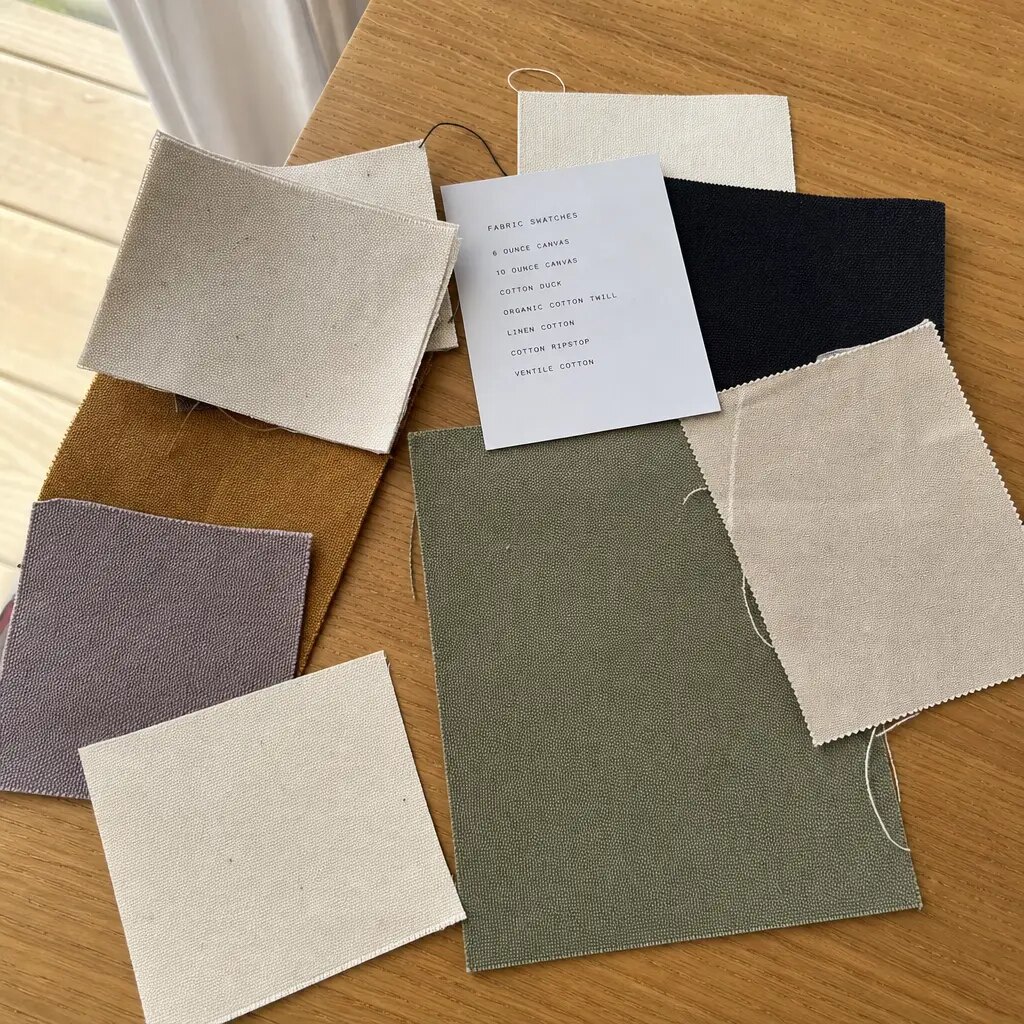
A clean logo position only works when the base bag spec is stable. For wholesale canvas zipper portfolios, most buyers should start by locking the canvas weight, lining, zipper type, and overall dimensions before they compare decoration methods. A 12 oz canvas body around 340 gsm will feel lighter and more flexible, while 14 to 16 oz canvas around 400 to 450 gsm usually gives the portfolio more structure and a better retail hand feel. If the product needs to stand up on a shelf or protect paper inserts, the heavier end is often safer.
The interior build matters because logo placement looks different on a soft bag and a structured one. Thin canvas may ripple around a printed panel; a lined body with a stable interlining will hold the art more cleanly but may add cost and lead time. The zipper spec matters too. A cheap zipper can ruin an otherwise good design by making the top edge buckle, which makes the logo appear slightly off even when the print is technically correct.
- Canvas weight should be written in gsm or oz, not just described as "heavy" or "premium."
- If the portfolio carries documents, notebooks, or tablets, ask for the approximate finished thickness when filled.
- Match zipper color and puller finish to the logo strategy so the hardware does not fight the artwork.
Choose A Placement Zone That Survives Sewing
The safest placement zones are the ones farthest from stress points. On a zipper portfolio, that usually means the lower front panel or a centered front panel with enough margin from the zipper seam and side binding. The logo needs visual balance, but it also needs breathing room. If the print sits too close to the zipper track, the bag can distort when opened. If it sits too close to the bottom seam, the artwork may be cut off or visually compressed after sewing. Buyers should ask the factory for a measured placement sketch, not only a mock artwork proof.
Different placement choices solve different merchandising problems. A centered logo reads clearly from a distance and is easier for hotel retail buyers who want a strong branded look. A lower-corner logo feels more understated and often works better for premium properties or design-led retail counters. Side labels and woven tabs can be a good secondary brand marker when the front panel needs to stay clean. What matters is that the chosen zone can be repeated on every production lot without drifting as the sewing line changes operators.
- Require the supplier to show the logo dimension and its distance from the finished edge.
- Avoid placing fine text across seams, zipper corners, or curved binding lines.
- If the logo must be large, ask for a sample that shows the bag both flat and zipped.
Match The Decoration Method To Handling And MOQ
Print method has a direct impact on durability, setup cost, and minimum order quantity. For most canvas zipper portfolios, one-color screen print is still the most practical route when the logo is bold and the run is not tiny. It gives a clean look, good abrasion resistance, and predictable repeatability. Heat transfer can work for small artwork or multi-color graphics, but buyers should be careful with long-term cracking and with the shiny finish that sometimes makes a hotel retail item look less textile and more promotional.
Woven patches, embroidery, and sewn labels can be smarter if the portfolio will face heavy handling or repeated packing and unpacking. They usually cost more per unit and can raise MOQ because the supplier needs extra setup and trim sourcing. Embroidery also needs enough fabric structure behind it; on lightweight canvas, dense stitching can pucker the panel. The right method is not the one that looks best in a single sample photo. It is the one that keeps the logo readable after warehousing, shelf display, and guest use.
- Use screen print when the artwork is simple and the buyer wants a balanced cost-to-durability ratio.
- Use a woven or sewn label when the brand wants a quieter, premium look and the front panel should stay uncluttered.
- Use heat transfer only when the design or short-run timing justifies the higher risk of wear change.
Compare Supplier Routes Before You Compare Prices
For hotel retail programs, the supplier route is often more important than the first unit price. A direct factory with in-house sewing and decoration can control placement better because the same team handles cutting, printing, and final assembly. That matters when the logo must stay in a precise zone across several sizes or colors. A trading company may still be useful if the buyer needs one-source coordination across multiple items, but the quote must clearly show which factory actually makes the portfolio and who is responsible for each process step.
A hotel amenity supplier or local decorator can be useful for very small runs, yet these routes often add hidden cost in handoffs, slower sampling, and weaker control over artwork consistency. If the buyer is importing at scale, the comparison should include sample quality, response speed, production control, packing accuracy, and the ability to repeat the same placement later. The cheapest quote is not useful if the supplier cannot reproduce the same logo position on the second replenishment order.
- Ask who prints, who sews, and who packs. One quote should not hide three separate vendors.
- Review prior work photos of the same fabric and decoration method, not just general factory pictures.
- If you expect repeat orders, choose the route that can hold placement across production batches.
Build The RFQ So Quotes Can Be Compared Line By Line
A useful RFQ for wholesale canvas zipper portfolios should separate the bag body, decoration, trim, packing, and carton work. If the supplier only gives a single all-in unit price, the buyer cannot tell whether the quote includes the actual print setup, the zipper puller, the lining, or only a rough base bag. For logo placement work, the artwork size should be written in millimeters, and the placement should be defined relative to a finished edge or seam, not just described as "front center." The supplier needs the same measurement language that the buyer will use during inspection.
Good quotes also show what changes the price. A move from one-color screen print to a woven patch, or from a flat front panel to a structured gusset, can create a real cost jump. The factory should show MOQ by color and artwork, sample fee, bulk lead time, packing method, and any extra charge for barcode stickers or retail inserts. If the buyer compares two quotes and one of them is missing those items, the quote is incomplete even if the unit price looks better.
- Request a line-item quote with fabric, sewing, decoration, zipper, packing, and carton costs separated where possible.
- State whether the artwork is one color, multi-color, or text plus icon, because each changes setup.
- Ask for a sample lead time and a bulk lead time, not a single combined promise.
Use Sample Approval To Catch Placement Errors Early
A pre-production sample is the point where many logo placement mistakes should be caught, but only if the sample uses the final artwork size and the final material. A flat digital proof is not enough. The logo may look correct on screen and still feel too high once the zipper seam and binding are sewn in. The sample should be checked zipped, unzipped, folded, and viewed from a normal retail distance. For hotel retail, that means the buyer is evaluating both the brand read and the product feel at the same time.
The sample check should focus on measurable items rather than taste alone. If the logo is supposed to sit 35 mm above the bottom seam, write that down and measure it on the finished sample. If the front panel needs to remain clean around the edge stitching, define the minimum clear space. If the buyer wants a softer, quieter brand expression, make that part of the approval notes before bulk starts. Once the supplier begins production, changing placement becomes expensive because it may require screen changes, cut changes, or rework.
- Approve the sample in the same state the customer will see it: packed, unboxed, and visually merchandised.
- Measure placement on the actual sample, not on the cutting pattern.
- Keep the approved sample as a physical reference for the bulk inspection team.
Set QC Thresholds That Match Retail Expectations
For hotel retail, the QC standard is usually stricter on appearance than on raw function. The bag needs to open smoothly, but the first thing buyers notice is whether the print is aligned and the front panel is clean. That means tolerance should be set on the logo position, not only on the finished bag size. Small variations in stitch line and panel tension are normal, but they should not move the logo into the zipper line or make the visual center look off. The tolerance must be realistic enough for production and tight enough to keep shelf units consistent.
The quality note should also cover the common fail points of canvas zipper portfolios: skipped stitches near stress corners, print smudge near the fold, loose threads at zipper ends, and panel puckering near the label. If a woven or sewn brand mark is used, the edge should lie flat and not lift after pressing or packing. Retail buyers who receive cartons with mixed-looking units often spend more time sorting stock than selling it, so the inspection standard should be written to protect unpack-and-display readiness.
- Set a visual tolerance for logo placement and make it part of the final inspection sheet.
- Reject samples with zipper snagging, panel puckering, or obvious print registration drift.
- Check both outer appearance and opening action, because a good-looking bag can still fail in daily use.
Pack For Retail, Not Just For Shipping
Packing has to support both import handling and store presentation. For many hotel retail buyers, the most practical unit is an individual polybag with a barcode sticker and a clean insert card if the brand requires one. The portfolio should arrive flat, dry, and free from dust or loose fibers. If the product has a front logo, the bag should be packed so the logo faces the same direction on every unit when opened from the carton. That small detail matters when store staff are moving stock quickly from receiving to shelf.
Master carton planning also affects risk. If the carton is too full, the zipper and printed panel can take compression marks. If it is too loose, the goods can shift and crease. The supplier should provide carton dimensions, unit count, and gross weight so the buyer can compare storage and freight efficiency. If the hotel retail program uses multiple SKUs or colors, the carton mark needs to identify the style clearly so receiving teams do not mix batches during replenishment.
- Confirm whether the polybag needs a warning text or ventilation hole depending on destination requirements.
- Keep barcode placement consistent so store staff can scan without unpacking every unit.
- Ask for carton photos before shipment if the order is time-sensitive or color-sensitive.
Compare Lead Time And Landed Cost, Not Just Factory Price
A strong quote for wholesale canvas zipper portfolios should show the full timing chain: sample time, artwork setup, bulk production, packing, and freight handoff. Logo placement can add setup time if the factory needs a new screen, a label source, or a trim adjustment. If the supplier promises a short bulk lead time without mentioning sample approval or material booking, the schedule risk is probably being pushed to the buyer. For hotel retail launches, that risk can be more expensive than a modest unit price increase.
Landed cost is where many buyers make the wrong comparison. A lower ex-factory price can disappear once the order includes special packing, internal labels, individual polybags, longer lead time, or air freight because the launch date is fixed. The better comparison is the cost to receive a shelf-ready unit in the right carton, with the correct logo placement and no secondary handling. A factory that quotes more clearly may look expensive at first, but often wins once the buyer includes freight, rework, and receiving labor.
- Compare quotes on the same basis: same artwork size, same placement, same packing, same incoterm or freight assumption.
- Add the cost of rework or relabeling if a supplier cannot guarantee placement consistency.
- Use one landed-cost sheet for all suppliers so the decision is based on the same numbers.
Specification comparison for buyers
| Spec decision | Recommended option | When it fits | Buyer risk to check |
|---|---|---|---|
| Sourcing route | Direct factory with in-house sewing and decoration | Best when you need one quote for bag build, logo placement, and packing | Confirm who owns artwork setup, sample approval, and rework if the logo lands off-position |
| Logo placement | Lower front panel or centered front panel with a measured margin from seams | Works for hotel retail where the product must read clearly on shelf and in guest photos | Check whether the zipper line, top binding, or side gusset distorts the logo area |
| Decoration method | One-color screen print or woven patch for high handling, heat transfer only for short runs | Good when the bag will be carried, packed, and reopened often | Ask for rub resistance, crack resistance, and whether the artwork has fine lines that may fill in |
| Fabric weight | 12 to 16 oz canvas, roughly 340 to 450 gsm | Suitable for portfolios that need structure without feeling stiff or bulky | Verify shrinkage, color consistency, and whether lining changes the hand feel after sewing |
| Zipper spec | Nylon coil zipper with a durable puller and matching tape color | Useful for smooth opening and lower breakage in retail use | Test slider action, pull strength, and whether the zipper tape sits flat after washing or pressing |
| Supplier type | Factory that can show similar logo placement work on canvas products | Best when brand accuracy matters more than the lowest first quote | Request live photos, previous sample references, and a clear response on how they measure placement |
| Sampling route | Pre-production sample with actual artwork size and final material | Needed when placement, scale, or print finish affects buyer approval | Do not approve a flat artwork proof alone; the panel size and seam lines change the look |
| Packing route | Individual polybag plus barcode sticker and master carton by SKU | Fits hotel retail programs with store receiving and distribution requirements | Confirm carton count, insert cards, suffocation warnings, and whether the barcode stays visible without opening the bag |
Buyer checklist before sampling
- Final logo file in vector format with the exact print size in millimeters
- Chosen placement zone marked on a flat sketch and on the actual panel dimensions
- Canvas weight, lining spec, zipper type, and puller finish written into the RFQ
- Sample approval requirement stated as a physical pre-production sample, not only an artwork proof
- Packing spec defined by unit pack, barcode location, carton count, and master carton size
- Lead time split into sample time, bulk time, and any extra time for artwork setup or color matching
- Quote breakdown that separates bag body, decoration, zipper, lining, packing, and freight handling
- QC limits for logo position, stitch quality, zipper function, and visible fabric defects
Factory quote questions to send
- Where exactly will you measure the logo placement from: seam edge, stitch line, or finished panel edge?
- What canvas GSM, lining weight, and zipper specification are included in the unit price?
- Is the print setup fee separate, and does it change if we move the logo to another panel?
- Can you show a similar canvas zipper portfolio sample with the same decoration method?
- What is the MOQ by color, artwork, and print method, and does a second logo placement create a new MOQ?
- What sample will you make before bulk, and how much does that sample cost with courier shipping?
- Which packing items are included: polybag, barcode sticker, insert card, silica gel, or master carton mark?
- What is the expected bulk lead time after sample approval, and what events can delay it?
- If the sample passes but bulk placement drifts, how do you handle rework or replacement?
Quality-control points to confirm
- Logo position should stay within a defined tolerance from the finished edge and zipper line across the whole run
- Print edges should be sharp, with no ghosting, smearing, or visible color break at the panel fold
- Fabric should match the approved canvas weight and color shade, with no oil spots, holes, or heavy slubs in the front panel
- Zipper must open and close smoothly through repeated cycles, with no snagging at the top corners
- Stitching should be even, secure at stress points, and free from loose thread tails longer than a small trim allowance
- Sample and bulk cartons should match the approved packing count, barcode placement, and carton mark format
- Any woven label, patch, or embossed mark must sit flat without puckering the fabric around it
- Final packed units should be clean, dry, and free from odor, dust, and transit damage before carton sealing