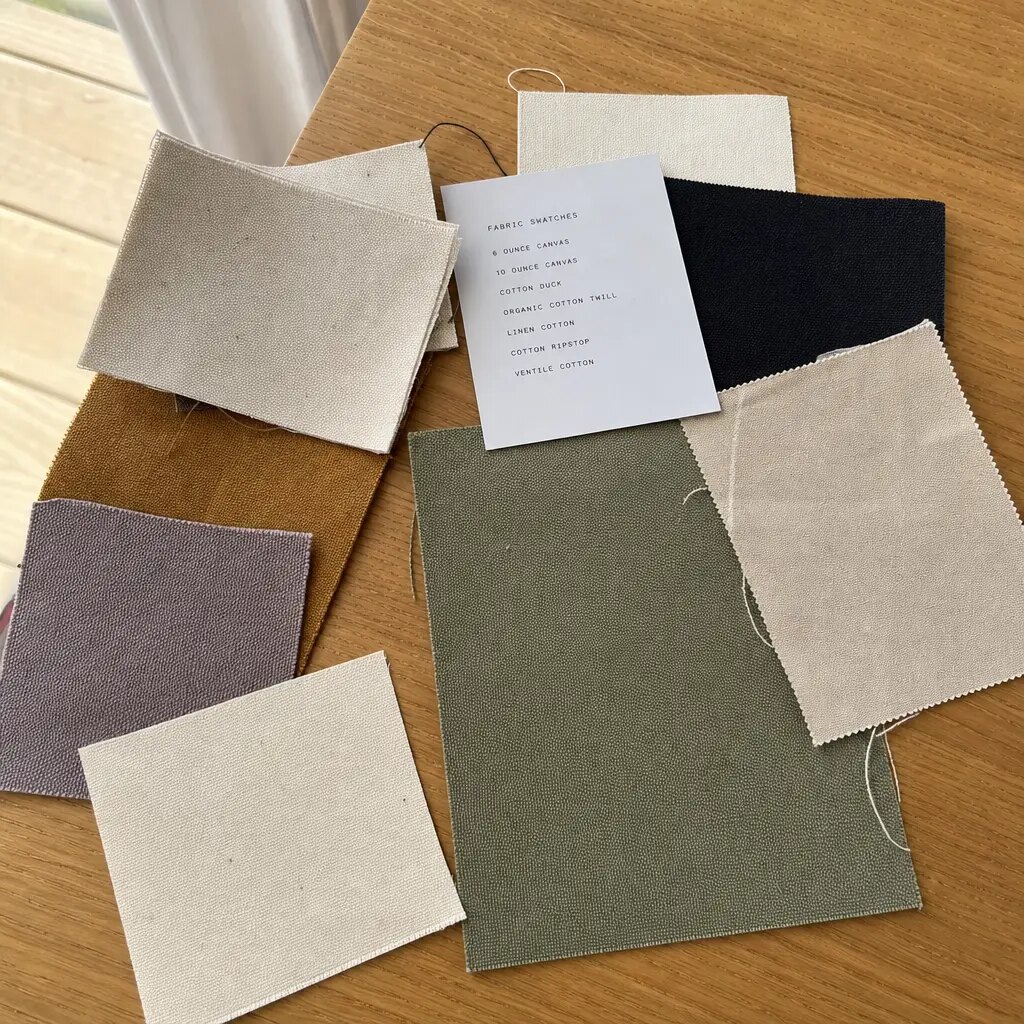
Start with the job the portfolio must perform
For a coffee roaster, a canvas zipper portfolio is rarely just a soft accessory. In wholesale sales, it may be the folder a rep opens on a cafe counter, the kit a distributor carries into account reviews, or the package a new wholesale customer receives with pricing sheets, roast profiles, certifications, cupping notes, merchandising guidance, order forms, and small sample packs. It needs to look intentional, protect paper from bending, and open without a fight during a conversation.
That use case should lead the specification. If the RFQ only says “canvas zipper portfolio,” suppliers can interpret it many ways: a flat promotional pouch, a simple document sleeve, or a generic bag with a zipper. It may photograph well but fail once a rep adds a catalog, sample cards, and two coffee bags. Before you discuss fabric color or logo placement, define the payload and the setting where the item will be used.
It also helps to separate internal-use and customer-facing versions. A field sales kit may prioritize durability, fast access, and practical pocketing. A wholesale onboarding kit may need cleaner finishing, more controlled branding, and more careful carton sorting. A trade show handout may need simpler construction and faster packing. When all of those needs are pushed into one loose product request, quotes become hard to compare and quality expectations become hard to enforce.
- Write the use case in one sentence, such as: “reusable sales rep portfolio for documents, sample cards, and two 100 g coffee sample bags.”
- Identify the user: internal sales team, distributor team, cafe buyer, event attendee, or new wholesale account.
- Decide whether the item must feel premium for customer presentation or mainly work as a reusable field organizer.
- State the expected use frequency: daily route sales, seasonal launch, one-time onboarding, or event distribution.
Turn the payload into dimensions, opening, and layout
Sizing is where many portfolio projects go wrong. A product intended for US letter documents needs usable internal clearance beyond 8.5 x 11 in. An A4 version needs clearance beyond 210 x 297 mm. That extra space must allow for seam allowance, zipper tape, pocket edges, document thickness, and the user’s hand movement. If the finished portfolio is quoted at the paper size itself, corners will catch, pages will bend, and the zipper will carry stress it was not meant to carry.
Ask suppliers to quote finished outside dimensions and usable internal dimensions separately. They are not the same. Outside size affects appearance, carton volume, and freight. Usable inside size determines whether the portfolio actually works. For thicker kits, define gusset depth as well. Flat construction is best for documents and cards. A shallow 15-25 mm gusset can handle modest sample contents. A deeper 30-50 mm gusset should be reserved for a confirmed payload because it changes the silhouette and adds bulk.
Opening style matters just as much as size. A top zipper is economical and clean, but it can feel tight for a large document stack. A three-side zipper gives better access and visibility, yet it requires well-controlled corner sewing. Sharp corners make sliders drag. Stretched zipper tape creates rippling. Too many interior pockets can also backfire. One main compartment plus one flat sleeve is often enough; add pen loops, card slots, elastic straps, or dividers only when the sales team has tested the layout.
- Confirm finished outside dimensions and usable internal dimensions separately in the RFQ and sample approval notes.
- Add practical clearance beyond the paper size instead of matching the paper size exactly.
- Use flat construction for documents and cards; use a 15-25 mm gusset for modest sample contents; use 30-50 mm only for confirmed thicker kits.
- Specify whether the zipper opens on the top only, two sides, or three sides, and note the intended opening direction.
- Test the layout with the real payload before approving bulk production.
Specify canvas weight, finish, shrinkage, and lining
Canvas weight affects structure, hand feel, durability, sewing difficulty, and freight cost. A 12 oz canvas, roughly 340 GSM, can work for lighter document portfolios or trade show pieces. A 14 oz canvas, roughly 400 GSM, is often a strong middle choice for repeated B2B use because it gives the panel more body without making zipper corners overly stiff. A 16 oz canvas, roughly 450 GSM or more, can suit a firmer premium build or heavier kit, but it adds seam bulk and shipping weight.
Do not rely on ounces alone. Suppliers may describe canvas by ounces, GSM, yarn count, or vague terms such as “heavy canvas.” Put both ounces and GSM in the spec and ask for the acceptable tolerance. Fabric lots vary, and finishing changes hand feel. If the roaster wants organic cotton canvas, recycled-content canvas, or another sustainability claim, request documentation requirements before quoting. Vague eco wording should not appear in the supplier spec unless it can be supported.
Finish is more than a style choice. Washed or softened canvas can fit a natural coffee brand, but washing may shift shade and shrink the fabric. Unwashed structured canvas looks cleaner and more formal, though it can feel stiff when lined. Coated or waxed-look canvas needs extra caution because it may mark, smell, resist printing, or change over time. For natural, black, olive, charcoal, tan, or custom brand colors, approve a physical swatch or lab dip and keep it as the inspection standard.
Lining should be priced deliberately. It gives a cleaner interior, hides seam allowances, and can protect documents or tablets from raw edges. It also adds material cost, sewing time, bulk, and another color-control variable. For a basic document portfolio, unlined construction with bound or clean-finished seams may be enough. For a premium account-facing kit or tablet-and-sample carrier, lining is usually worth quoting as an option.
- Specify canvas as both oz and GSM, for example 14 oz / about 400 GSM, with an agreed tolerance.
- State finish clearly: unwashed structured, washed soft, dyed, natural, coated, waxed-look, organic, or recycled-content canvas.
- Approve a physical color standard rather than relying only on a screen image or digital mockup.
- Ask whether shrinkage is controlled before cutting or allowed for in pattern dimensions.
- Price lined and unlined versions separately if the buying team has not finalized the channel requirement.
Treat the zipper as a functional component, not trim
The zipper is often the first part users notice when something feels cheap. A low-cost zipper can look acceptable in a sample photo but drag under load, separate at the coil, snag at corners, or lose slider tension after repeated use. For standard document portfolios, a No. 5 nylon coil zipper is usually practical because it is flexible, light, and smooth around moderate curves. For larger portfolios, heavier contents, or wide three-side openings, a No. 8 nylon coil zipper may be the better choice.
Nylon coil is generally more forgiving than metal teeth on a soft portfolio. Metal zippers can look premium, but they are heavier, less flexible around corners, noisier on counters, and more likely to abrade nearby material. Unless the brand specifically needs the metal look, smooth operation should win. Specify zipper tape color, slider finish, puller shape, and whether a branded puller is included or excluded. “Good quality zipper” is not a procurement specification.
Look closely at zipper end construction in the sample. Zipper ends, pull tabs, stop areas, and corner turns carry repeated stress. A clean front panel does not compensate for a slider that catches at the corner or tape that pulls loose after a few uses. Ask the factory how it controls corner radius, whether zipper ends are reinforced, and whether the same zipper source will be used in production. Test the approved sample loaded, not only empty.
- Use No. 5 nylon coil for standard document portfolios; consider No. 8 nylon coil for heavier contents or wider openings.
- Specify zipper type, size, tape color, slider finish, puller style, and stop construction in the PO.
- Ask for zipper source or grade if the order is repeatable or customer-facing.
- Check slider smoothness at corners after the portfolio is loaded with the intended kit contents.
- Reject vague zipper wording such as “standard zipper” unless the supplier defines the component.
Build an RFQ that makes quotes comparable
A useful RFQ forces suppliers to price the same product. Include finished dimensions, usable internal size, gusset depth, canvas weight and GSM, finish, lining, zipper size and type, internal pocket layout, stitching requirements, branding method, logo placement, packing format, quantity by variant, incoterm, and delivery window. If one supplier quotes 12 oz unlined canvas with a No. 5 zipper and another quotes 14 oz lined canvas with a No. 8 zipper, the cheaper price is not a better price. It is a different item.
Separate fixed charges from unit cost. Screen setup, embroidery digitizing, woven label minimums, leather-look patch tooling, branded zipper pull tooling, sample charges, packaging development, carton labeling labor, and inspection can change the real order cost. This matters when the roaster needs multiple distributor logos, seasonal artwork, or different versions for different account tiers.
Use a structured quote table instead of piecing together email replies. Ask for unit price at defined quantities, MOQ by variant, sample cost, sample lead time, bulk lead time after sample approval, payment terms, incoterm, estimated carton dimensions, gross weight, packing quantity, and optional upgrade pricing. A supplier that can present a clear bill of materials and cost breakdown is usually easier to manage than one that only offers a headline unit price.
- Attach a spec sheet with drawings or annotated photos for dimensions, zipper path, pocket layout, and branding placement.
- Quote a base build first, then add upgrades such as lining, No. 8 zipper, woven label, patch, retail sleeve, or barcode labeling.
- Ask for MOQ by body color, zipper color, lining color, artwork version, and packing version.
- Require estimated carton dimensions and gross weight early enough to estimate freight and landed cost.
- State whether the order is a pilot, one-time campaign, or repeat wholesale supply program.
Manage MOQ, variants, supplier route, and landed cost
MOQ is not just a total order number. For canvas zipper portfolios, minimums may be driven by fabric purchasing, dye lot, zipper tape color, lining fabric, woven labels, patch tooling, print setup, and sewing-line efficiency. A quote for 1,000 units in natural canvas with one logo may not apply to 250 units each in natural, black, olive, and charcoal. Likewise, one logo is not the same as five distributor co-branded versions.
Know which type of supplier you are dealing with. A direct sewing factory can be efficient for repeat programs when the buyer has a complete spec and can manage sampling, inspection, and freight. A trading company may help coordinate materials, decoration, packing, and export documents, especially in mixed-product programs. A local decorator can be useful for small pilots or quick logo changes, but may be decorating imported blanks with limited control over the original construction. None is automatically better; the best route depends on volume, customization, lead time, and visibility.
Compare landed cost, not just unit price. Include sample fees, setup charges, inspection, inland freight, international freight, duty, customs brokerage, domestic delivery, warehousing, rework risk, and packing labor. A low unit price can disappear if cartons are oversized, variants are mixed incorrectly, or required distributor labeling is excluded. Ask for clear incoterms such as EXW, FOB, CIF, DDP, or domestic delivered pricing so internal stakeholders know what is included.
- Ask whether the supplier is the actual sewing factory and which components or processes are subcontracted.
- Start with one body color, one zipper color, one lining color, one artwork, and one packing method to establish the base price.
- Request price breaks at realistic quantities and separate variant surcharges.
- Confirm reorder MOQ, expected reorder lead time, and whether the same fabric, zipper, and label can be matched later.
- Compare quotes by landed cost and quality-control visibility, not by unit price alone.
Choose branding that works on textured canvas
Coffee roaster artwork often includes heritage typography, origin references, badges, small farm or region names, and simple color palettes. Canvas suits that visual language, but it is not smooth label stock. Screen print is practical for bold one- or two-color logos with moderate line thickness. Fine type, gradients, distressed art, and QR codes are harder to reproduce consistently on textured fabric.
If detail is important, consider a woven label, embroidered patch, rubber patch, heat-applied patch, or leather-look patch. These options can deliver cleaner small elements or a more premium impression, though each has its own setup cost, MOQ, attachment method, and inspection points. For account-facing wholesale programs, a small controlled brand mark often looks more professional than a large full-panel print that may wear at fold or grip areas.
Placement deserves measurement. The logo should remain visible when the portfolio is held, laid flat, or partially unzipped. Avoid placing the primary mark too close to zipper teeth, seam edges, gusset transitions, or fold points. Pantone references are helpful, but ink on natural canvas will not match coated paper exactly. Dark fabric may need an underbase, which adds thickness and can change hand feel. Approve a strike-off or decorated pre-production sample on the actual production fabric.
- Use screen print for bold marks, simple shapes, and limited-color artwork.
- Use woven labels or patches for detailed logos, small type, premium positioning, or higher abrasion areas.
- Avoid QR codes on coarse canvas unless the supplier proves scan reliability on a decorated sample.
- Define logo placement from measurable reference points, not only “center front.”
- Approve decoration on the actual production fabric and finish, not only on a digital proof.
Approve samples with measurement and loaded-use testing
A pre-production sample should represent the bulk product as closely as possible. It should use the same canvas, zipper, thread, lining, label, patch, print ink, curing method, pocket construction, and packing method planned for production. A rough prototype can help confirm size and structure, but it should not be treated as final approval if the fabric, zipper, or decoration has been substituted.
Test the sample with the actual contents. Load the document stack, sample cards, sample bags, tablet, pen, business cards, and inserts. Open and close the zipper repeatedly, especially through corners. Check whether papers slide in cleanly, whether the portfolio lies flat, whether pockets block access, and whether the outside panel bulges. Hold it the way a sales rep would carry it into an account. Put it on a counter the way a buyer will see it. Those small handling tests catch issues that photos miss.
Record sample approval in writing. Note approved finished dimensions, internal clearance, gusset depth, canvas weight, zipper type, logo placement, pocket layout, reinforcement points, packing, and any accepted deviations. Photograph the sample from the front, back, inside, zipper corners, branding close-up, and loaded condition. If the factory later proposes a change to fabric lot, zipper source, ink system, or construction, require written notice and decide whether a revised sample is needed.
- Measure the sample against the RFQ, including outside size, usable inside size, gusset, pocket dimensions, and logo placement.
- Load the sample with real documents and coffee sample packs before approving bulk.
- Cycle the zipper when empty and loaded; pay attention to corner drag and zipper-end stress.
- Check hand feel, odor, lint, cleanliness, and whether the canvas marks too easily.
- Approve the sample with written notes and photos, not only a casual email saying it looks good.
Set QC tolerances and defect categories before production
Quality control should focus on the failures that matter in a B2B sales portfolio: zipper function, correct fit, clean brand presentation, seam strength, fabric appearance, pocket usability, and accurate packing. A shipment can still cause commercial problems when the sewing is acceptable but the artwork versions are mixed, the carton labels are unclear, or the front panels show visible shade mismatch.
Write measurable tolerances before the purchase order. Common controls include finished dimension tolerance, logo placement tolerance, acceptable fabric weight range, shade approval standard, print color approval, zipper cycling requirement, and carton count accuracy. The exact numbers should be agreed with the supplier based on construction and material, but they must be written. Finished size should state whether the item is measured closed, empty, and laid flat. Logo placement should reference a seam, zipper edge, panel centerline, or other measurable point.
Define critical, major, and minor defects in advance. Critical or major issues may include broken zippers, wrong size, wrong artwork, wrong color, wet cartons, mold odor, sharp hardware, missing required labels, or a portfolio that cannot fit the approved payload. Major visual defects may include crooked logo placement, severe puckering, obvious front-panel shade mismatch, or repeated skipped stitches. Minor defects may include trimable loose threads or slight cosmetic variation within the approved standard.
- Use the approved sample and written spec as the inspection standard.
- Pull inspection units from multiple cartons and production points, not only from one top carton.
- Inspect function with the intended payload, not just empty portfolios.
- Require rework photos and, when necessary, re-inspection before shipment release.
- For larger orders, consider third-party inspection using an agreed AQL plan and defect list.
Control packing, labeling, and shipment documents
Packing is part of the product specification. An internal sales team program may need one unit per polybag and a labeled master carton. A distributor shipment may require SKU labels, artwork-version separation, carton marks, and packing lists by variant. A retail or event program may need barcode labels, hang tags, inserts, sleeves, or individual boxes. These choices affect labor, carton dimensions, inspection time, and freight cost, so quote them before the PO is released.
Canvas needs protection from dust, moisture, lint, and crushing. Natural canvas shows dirt quickly. Dark canvas can show lint. If the transit route includes humidity exposure, ask whether desiccant is required and whether cartons will be lined or otherwise protected. Do not overpack cartons just to reduce freight if the portfolio has structured inserts, patches, or thick gussets; compression can distort corners and zipper lines.
Receiving accuracy matters in wholesale programs. Carton marks should include PO number, SKU, colorway, artwork version, quantity, carton number, gross weight, net weight, and destination if required. If multiple artwork versions ship together, use printed labels and clear carton separation rather than handwritten notes. Request packing photos and carton label photos before shipment release so mistakes can be corrected before the goods leave the factory.
- Define individual polybag, bulk bundle, inner carton, and master carton requirements in the RFQ.
- Confirm whether mixed colorways or artwork versions are allowed in the same carton; if allowed, require a clear mixed-carton label.
- Request carton dimensions, gross weight, and units per carton for freight planning before final production is packed.
- Require carton marks that match your warehouse or distributor receiving system.
- Ask for pre-shipment packing photos, carton label photos, and a packing list by SKU and artwork version.
Specification comparison for buyers
| Spec decision | Recommended buying specification | When it fits | Buyer risk to check |
|---|---|---|---|
| Primary use case | Name the main job before quoting: document portfolio, sales sample kit, tablet-and-paper case, trade show handout, or wholesale onboarding folder. | Coffee roaster sales reps, distributor meetings, cafe account visits, origin sheets, roast profile presentations, and new wholesale customer kits. | A vague use case often produces a generic canvas pouch: weak structure, poor document clearance, and no allowance for sample packs. |
| Finished size and clearance | For US letter, allow usable internal clearance beyond 8.5 x 11 in. For A4, allow clearance beyond 210 x 297 mm. Record finished outside size and usable inside size separately. | Line sheets, price lists, contracts, certificates, sell sheets, cupping cards, and printed wholesale catalogs. | Quoting only the paper size leads to bent corners, zipper strain, and disputes over whether measurements refer to cut size, outside size, or usable internal space. |
| Gusset depth | Use flat construction for documents; 15-25 mm shallow gusset for sample cards or slim sample packs; 30-50 mm only when the real payload requires it. | Roaster reps carrying documents plus several small inserts or coffee sample bags. | Too much gusset changes the product from a professional portfolio into a pouch, adds seam bulk, and can distort the zipper line. |
| Canvas weight | 12 oz / about 340 GSM for lighter document use; 14 oz / about 400 GSM for most repeated B2B programs; 16 oz / about 450 GSM+ for heavier or premium builds. | Daily sales calls, distributor kits, seasonal wholesale programs, and buyer presentation folders. | Underweight canvas collapses and wrinkles. Overweight canvas raises freight weight, thickens seams, complicates zipper corners, and may increase print cracking at folds. |
| Fabric finish and color | Specify unwashed structured, washed soft, dyed, natural, coated, or waxed-look canvas. Approve a swatch or lab dip and define shade tolerance. | Natural, black, olive, charcoal, tan, or brand-color programs where lot consistency matters. | Washing and finishing can change shrinkage, shade, hand feel, odor, print adhesion, and final dimensions. |
| Zipper specification | No. 5 nylon coil for standard portfolios; No. 8 nylon coil for heavier contents or wide three-side openings. Specify tape color, slider finish, puller shape, and zipper end construction. | Portfolios opened repeatedly in buyer meetings, route sales visits, distributor offices, and trade shows. | Low-grade coil, loose sliders, weak stops, tight corners, or wavy tape can make the item fail even when the canvas and logo look fine. |
| Stitching and reinforcement | Request lockstitch or approved seam type, SPI target, backtacks at stress points, reinforced zipper ends, and consistent topstitch distance from edge. | Sleeve openings, gusset corners, zipper ends, pull tabs, labels, and any handle or carry loop. | Skipped stitches, short backtacks, loose seam ends, and uneven corner sewing are common functional and visual defects. |
| Branding method | Screen print for bold 1-2 color marks; woven label, embroidered patch, heat-applied patch, or leather-look patch for finer detail or a premium look. | Coffee roaster logos, wholesale program marks, distributor co-branding, limited-release kits, and trade show programs. | Fine type, gradients, QR codes, large ink blocks, and artwork placed across seams or fold points can bleed, crack, lose readability, or shift in production. |
| MOQ and variants | Quote the base version first: one body color, one zipper color, one lining color, one artwork, one packing method. Then price each variant separately. | Pilot runs, seasonal kits, co-branded distributor versions, multiple cafe account tiers, or repeat replenishment programs. | A low MOQ may exclude fabric dye minimums, zipper color minimums, print setup, label MOQ, variant sorting labor, or carton labeling complexity. |
Buyer checklist before sampling
- Define the exact operating use: internal sales rep kit, distributor presentation folder, cafe buyer onboarding pack, trade show giveaway, sample carrier, document portfolio, or tablet-and-paper hybrid.
- List the real payload by item and size: US letter or A4 documents, number of sheets, catalog thickness, coffee sample bag dimensions, cupping cards, roast profile cards, tablet model, pen, business cards, and inserts.
- Confirm finished outside dimensions, usable internal dimensions, gusset depth, zipper opening length, zipper path, corner radius, and whether documents can be inserted without bending.
- Choose canvas by ounces and GSM, then specify weave, finish, color standard, lining requirement, seam finishing, expected shrinkage control, and whether the fabric is stock or custom dyed.
- Specify zipper size, type, tape color, slider finish, puller style, zipper source or grade, zipper stop construction, pull tab, and whether the slider must pass loaded corner turns smoothly.
- Define stitching requirements: seam type, target stitches per inch, thread color, visible topstitch position, backtack points, reinforcement points, and loose-thread trimming standard.
- Approve branding based on artwork detail, print color count, placement, canvas texture, abrasion risk, bend points, and whether underbase printing is required on dark fabric.
- State MOQ and price breaks by body color, zipper color, lining color, label type, artwork version, packing format, and shipping destination instead of asking only for one total-order price.
- Request a pre-production sample made with production canvas, zipper, thread, lining, label, hardware, and final decoration method; do not approve bulk from a material-substituted prototype.
- Create a sample review sheet covering loaded fit, zipper cycling, seam alignment, pocket usability, print position, shade, hand feel, odor, dimensions, and carton packing assumptions.
Factory quote questions to send
- Are you the sewing factory, a trading company, or a decorator sourcing blanks, and which steps are in-house versus subcontracted: cutting, sewing, washing, printing, embroidery, labeling, packing, and final QC?
- What finished outside dimensions, usable internal dimensions, gusset depth, zipper opening length, seam allowance, and dimensional tolerances are included in the quote?
- What canvas weight in ounces and GSM, weave type, yarn quality, finish, color standard, shrinkage expectation, and fabric weight tolerance are included?
- Is the bulk fabric stock, custom dyed, washed canvas, softened canvas, organic cotton canvas, recycled-content canvas, coated canvas, waxed-look canvas, or another specified material?
- Will you provide a fabric swatch, lab dip, or bulk shade band for approval, and how will you control shade variation between panels, lots, and reorder production?
- Is the zipper No. 5 or No. 8, nylon coil or metal, and what zipper source, slider type, puller style, tape color, slider finish, zipper stops, and reinforcement method are included?
- What stitch type, thread type, stitches per inch range, topstitch distance, backtack locations, and reinforcement details will you use at zipper ends, sleeve openings, gusset corners, pull tabs, and labels?
- Does MOQ change by body color, zipper color, lining color, label type, patch type, print color count, packing method, artwork version, or delivery destination?
- Which branding method do you recommend for our artwork on the specified canvas, and what are the setup charges, placement tolerance, color matching limits, curing requirements, and abrasion concerns?
- Will the pre-production sample use the same production fabric, zipper, thread, lining, label, patch, hardware, printing ink, curing method, and packing as bulk production?
Quality-control points to confirm
- Fabric weight should match the approved specification within the agreed tolerance, commonly controlled by GSM measurement on incoming fabric. Visible panels should not show thin spots, dye streaks, oil marks, mildew odor, heavy shade mismatch, or obvious weaving defects.
- Bulk fabric shade should match the approved swatch, lab dip, or shade band. Panels on the same unit should be cut from compatible lots so the front, back, gusset, and sleeve do not look mismatched.
- Canvas shrinkage and finishing should be controlled so final portfolios stay within the written dimensional tolerance after cutting, sewing, printing, pressing, and packing. Confirm whether dimensions are measured empty, closed, and laid flat.
- Finished dimensions should be checked on units from multiple cartons, including outside size, usable internal opening, gusset depth, zipper opening length, and pocket dimensions, so documents, tablets, or sample packs fit without forcing the zipper closed.
- Zipper should run smoothly through repeated open-close cycles when empty and loaded, especially around corners, with no snagging, coil separation, loose slider, missing stops, sharp puller edges, tape waviness, or misaligned zipper ends.
- Stitching should be even and secure, with agreed stitches per inch, straight visible topstitching, no skipped stitches, loose threads, broken seam ends, puckering, exposed raw edges, weak backtacks, or crooked sewing at visible zipper corners.
- Stress points such as sleeve openings, zipper ends, pull tabs, labels, gusset corners, pocket corners, and any handle or loop should be reinforced according to the approved sample and should resist normal hand pulling during inspection.
- Print or patch branding should match the approved proof and decorated sample in color, density, placement, edge definition, attachment strength, and cleanliness, with no ghosting, ink bleed, poor curing, cracking at bends, tackiness, scorched fabric, or glue marks.
- Logo placement should stay within the written tolerance from approved reference points such as zipper edge, seam edge, or panel center, because even a small shift can look obvious on a clean front panel.
- Internal pockets, sleeves, dividers, card pockets, and pen loops should align to the approved sample, sit flat, remain usable when the portfolio is loaded, and not twist, sag, block the zipper path, or create exterior bulges.