Start with the commercial use, not the word “portfolio”
Wholesale canvas zipper portfolios for craft fairs can mean several different products. One buyer may picture a retail-ready document organizer with a woven label and inner pocket. Another may need a flat vendor admin pouch for order forms, receipts, line sheets, stickers, business cards, pens, square readers, or small flat samples. A factory that receives only the phrase “canvas zipper portfolio” may quote the fastest flat-bag construction it already knows. That may be affordable, but it may not protect paper corners, sit neatly on a craft fair table, or survive repeated opening during a busy event.
Begin with the channel and the handling conditions. A portfolio sold as a maker-market accessory needs clean front panels, consistent logo placement, and a presentation that looks intentional. A vendor-kit portfolio needs dependable inner clearance and packing that does not press the zipper pull into the fabric. A distributor or marketplace program needs barcodes, inner packs, carton marks, and receiving-friendly carton quantities. These are operational choices, not decorative extras. They influence the pattern, material, sewing sequence, inspection plan, and landed cost.
A practical wholesale buying checklist starts with use case, target contents, selling price range, reorder plan, and receiving requirements. Share those details before asking for a quote. The supplier can then price an engineered zipper business bag rather than a generic pouch. You also avoid paying for features that do not matter, such as complicated pocketing on a short-term giveaway, while protecting the features that do matter, such as smooth zipper function and usable document space for working craft fair vendors.
- For vendor admin kits, prioritize usable inner clearance, zipper reliability, document corner protection, and easy one-hand handling at a booth.
- For retail resale, prioritize clean canvas panels, stable logo placement, hangtag or barcode readiness, and consistent folded or flat presentation.
- For branded giveaways, control MOQ, setup charges, and carton volume while avoiding canvas that feels disposable.
- For distributor stock, use a repeatable standard spec so fabric shade, zipper finish, label position, and packing can be controlled across reorders.
- For event or workshop packs, test the exact insert bundle before finalizing portfolio size, pocket layout, and packing method.
Specify canvas fabric by weight, finish, shrinkage, and print surface
Canvas weight drives both perceived value and manufacturing risk. A 10 oz cotton canvas, often about 300-340 GSM depending on weave, can work for economy promotions. It is lighter and usually less expensive, but it wrinkles more easily and may feel less protective for paperwork. For many wholesale canvas zipper portfolios for craft fairs, 12 oz canvas is the safer starting point. At roughly 380-420 GSM, it has enough body for repeated handling while still sewing cleanly and packing flat.
Heavier is not automatically better. A 14 oz canvas, often around 430-480 GSM, gives a more substantial retail feel, especially with a woven label or upgraded zipper. A 16 oz canvas, often around 500-540 GSM, needs careful sampling. It can add stiffness, but it also increases seam bulk, needle stress, corner-turning difficulty, zipper tape waviness, carton weight, and freight cost. If the buyer wants a more structured hand, a better pattern, light lining, or selective reinforcement may be more predictable than jumping to the heaviest canvas.
Finish should be treated as its own line item. Natural canvas has the familiar craft-market look, but it can show slubs, seed flecks, and shade variation. Bleached canvas looks cleaner yet may show dirt faster. Dyed canvas adds lab dip, bulk shade, and colorfastness questions. Washed canvas changes the hand feel and may change shrinkage. Water-repellent or coated canvas may improve resistance to handling, but it can reduce print adhesion and label stick. Ask for a sample made with the same production fabric, not an approximate substitute.
- 10 oz canvas: lower cost and lighter freight, suitable for short-term promotions but less structured for documents.
- 12 oz canvas: recommended baseline for most craft fair zipper portfolios and B2B vendor organizer programs.
- 14 oz canvas: upgraded hand feel for private-label retail, with careful review of corner bulk and zipper seam appearance.
- 16 oz canvas: premium and stiff, but confirm sewing feasibility, zipper smoothness, carton weight, and flatness before bulk approval.
- Natural canvas: inspect logo zones for heavy slubs, stains, yarn irregularity, and lot-to-lot shade difference.
- Dyed or washed canvas: request lab dip or shade standard, shrinkage target, odor review, and logo test on the exact fabric.
Engineer the size around usable clearance and real contents
Finished size is not the same as usable size. A buyer may ask for a 13 x 10 inch portfolio and assume letter paper will slide in easily. In production, the zipper seam, side seam allowance, fabric thickness, corner radius, and zipper mouth all reduce the working space. A4 programs need even closer attention because A4 sheets are longer than U.S. letter paper. If documents must sit flat without curled corners, write the minimum usable internal width and height into the RFQ and purchase order.
The best test is the actual insert bundle. Craft fair portfolios often carry a mixed stack: line sheets, price cards, order forms, small prints, business cards, pens, receipts, and sometimes a thin catalog. A single flat sheet test can be misleading. A thicker kit may force the zipper, bend document corners, or make the portfolio bulge in a way that looks poor at resale. Ask the factory to test closure with the intended bundle or with a measured dummy pack that matches the final thickness.
Decide internal organization before the first serious sample. A flat divider, card pocket, receipt pocket, pen loop, or document sleeve changes the pattern and the sewing order. If these are added late, the supplier may need to remake the sample and revise the price. For many B2B programs, one divider plus one small pocket is easier to control than a busy interior with several small compartments that raise labor time and alignment defects.
- Define finished outside dimensions, usable internal width and height, zipper opening length, and pocket depth as separate measurements.
- For U.S. letter contents, test with 8.5 x 11 in paper plus the intended clearance and any inserts.
- For A4 contents, test with 210 x 297 mm sheets and allow for the longer length, zipper mouth, and seam allowance.
- For art prints, specify whether the portfolio must protect sharp corners or only group sheets together.
- For catalogs or sample cards, measure the thickest expected bundle and test zipper closure under realistic load.
- For a pen loop, place it away from the zipper path and away from document corners to prevent pressure marks.
Treat the zipper as a functional component, not a trim detail
The zipper carries a large part of the customer experience. It runs across a wide opening, passes over canvas seams, and may be opened dozens of times during a craft fair weekend. A bargain zipper that works on a small cosmetic pouch can feel rough or unstable on a document portfolio. For most canvas zipper business bags, a No. 5 nylon coil zipper is the practical default. It is flexible, smooth, widely available, and less likely than metal teeth to scratch paper contents.
Metal zippers have their place. Antique brass or nickel teeth can support a rustic, premium craft-market look. They also add weight and cost, and they can create abrasion risk if the inside seam is not protected. If metal teeth are selected, check the zipper ends, the inside construction, and the way papers slide past the teeth. The puller should be large enough for regular use but not so bulky that it leaves impressions in the canvas when cartons are stacked.
Write the zipper spec in full: zipper number, teeth type, tape width, tape color, slider finish, puller type, puller length, opening direction, end treatment, and stock versus custom availability. Do not let zipper tape color become an informal supplier choice; it affects the whole front appearance. During sample approval, test the zipper with the real insert bundle inside and again after the sample has been packed or stacked. Compression can reveal slider interference, puller marking, and waviness that are not obvious in a photo.
- No. 5 nylon coil zipper: best default for smooth function, flexible sewing, and predictable cost on canvas portfolios.
- No. 5 metal zipper: suitable for premium retail positioning, but check weight, paper abrasion, and inside seam finishing.
- Reverse coil zipper: cleaner outside appearance, but confirm tape availability, slider feel, and MOQ before choosing it.
- Custom puller: useful for private-label programs, but may require tooling, higher MOQ, longer approval time, and replacement planning.
- Zipper end reinforcement: important where repeated pulling stresses the corner and where tape ends can fray.
- Zipper tape shade: approve against canvas color, logo color, and thread color before bulk production.
Match branding to canvas texture, order volume, and reorder control
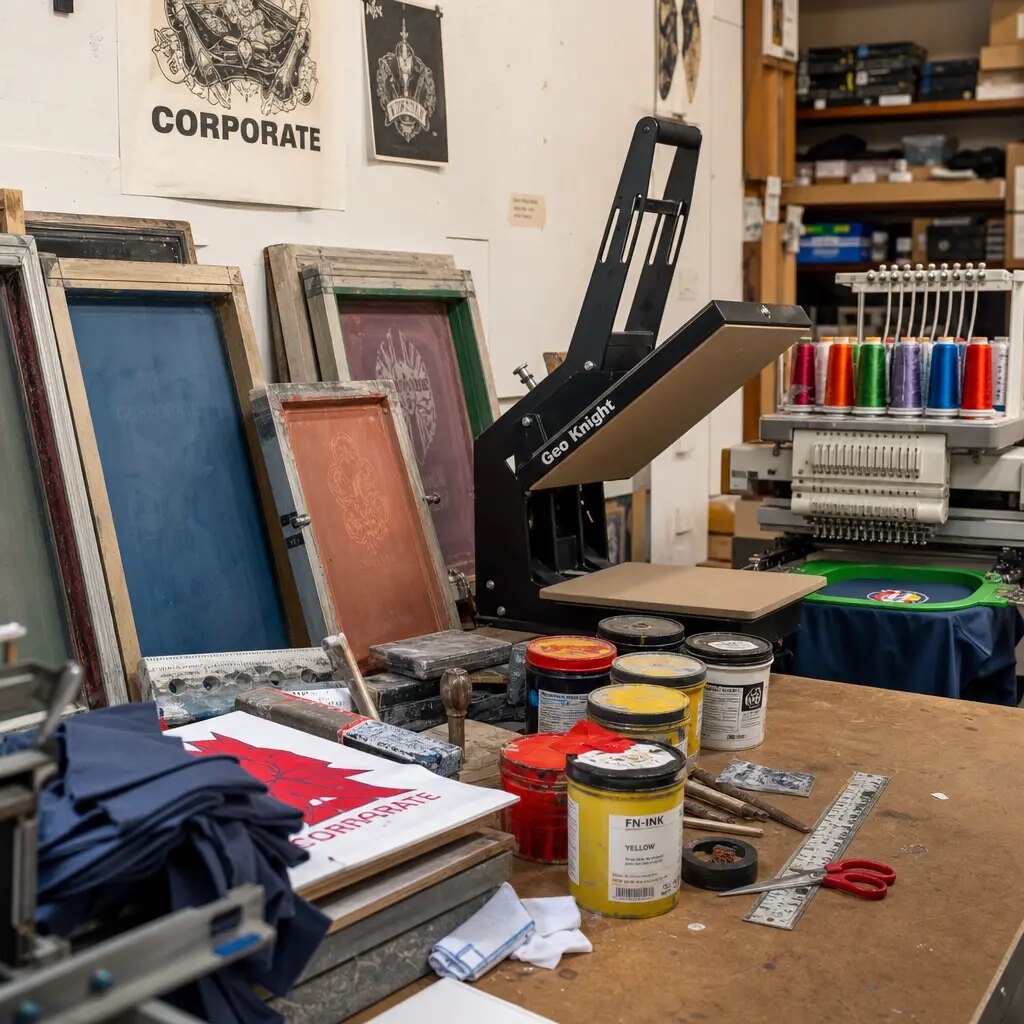
Canvas is a textured surface, not a smooth paper label. The weave, slubs, absorbency, and fabric finish all affect ink coverage and logo edges. Screen printing is usually the most practical method for simple one- to three-color artwork on wholesale canvas zipper portfolios for craft fairs. It can be durable and cost-effective when ink, mesh, pressure, and curing are controlled. Large solid logos deserve extra review because heavy ink deposits can feel stiff, crack, or show pinholes over textured yarns.
Heat transfer can be useful for detailed multicolor artwork, small full-color marks, and gradients. It must be tested on the actual production canvas. Rough canvas, washed canvas, and treated canvas may reduce adhesion or create edge lifting. Embroidery can look premium on small marks, but it can pucker thinner panels or leave backing and pressure marks. Woven labels are often the cleanest repeat-order solution because they avoid print distortion and keep private-label branding consistent from lot to lot.
Placement should be specified with measurements, not just a mockup. Logos too close to zipper teeth, bulky seam allowances, corner turns, folded edges, or interior pocket stitching can distort during sewing. Measure front-panel art from fixed top and side edges and write the tolerance into the purchase order. Provide vector artwork, Pantone or color standard, approved print size, and a strike-off or reference sample before bulk printing starts.
- Screen print: best for bold logos, simple slogans, and economical medium-to-large wholesale runs.
- Heat transfer: useful for detailed multicolor art, but test edge lifting, cracking, gloss, and adhesion on the exact fabric.
- Embroidery: premium for small marks, but check puckering, backing visibility, and thread color consistency.
- Woven label: strong choice for retail assortments, private label, and reorders where logo consistency matters.
- Inside printed label: useful for care notes, brand story, or SKU detail if it does not interfere with document fit.
- Patch label: specify patch material, color, compliance expectations, stitch color, edge finish, and placement tolerance.
Build an RFQ that makes supplier quotes comparable
Big quote gaps often come from different assumptions, not from pure factory efficiency. One supplier may quote 10 oz canvas, a generic zipper, one-color print, no pockets, and bulk packing. Another may include 12 oz canvas, a No. 5 nylon coil zipper, divider pocket, woven label, barcode sticker, individual packing, and export cartons. Both quotes may say “canvas zipper portfolio,” but they are not the same product and they will not create the same landed cost or resale impression.
A strong RFQ should read like a short technical sheet. Include finished size, usable inner requirement, fabric weight in oz and GSM, fabric finish, zipper specification, branding method, pocket layout, label requirements, packing plan, order quantity tiers, delivery date, inspection requirement, and trade term. If the product will move through distributors, marketplace prep, or retail kitting, add barcode labels, inner pack counts, carton marks, and routing rules before quotation rather than after sampling.
Ask suppliers to list assumptions and exclusions. Cost-down options are useful, but they should appear as separate alternatives, not hidden inside the main quote. The clearest B2B quotes separate unit price from one-time charges such as screens, label setup, custom puller tooling, revised samples, packing materials, and courier fees. They also include carton dimensions, gross weight, net weight, CBM, lead time after sample approval, payment terms, and quote validity.
- Send a product sheet with dimensions, GSM, zipper spec, logo method, pocket layout, labels, and packing in one document.
- Ask suppliers to quote the same specification at each quantity tier before discussing cost-down alternatives.
- Require disclosure of substitutions in fabric weight, zipper grade, print method, packing, or label type.
- Separate setup charges from unit price so small-lot and reorder economics are clear.
- Request carton size, units per carton, gross/net weight, CBM, and inner pack quantity for freight comparison.
- State inspection expectations before deposit so QC support is not negotiated under shipment pressure.
Understand MOQ by component, not only by finished product
MOQ is usually tied to component sourcing as much as factory willingness. Stock natural canvas, stock zipper tape, and a one-color screen print may support a trial order in the few-hundred-piece range. Custom dyed fabric, custom zipper tape, special slider finishes, custom pullers, woven labels, branded hangtags, retail sleeves, or barcode-specific packing materials can each introduce separate minimums. A finished-goods MOQ of 300 pieces may not hold if one component supplier requires 1,000 pieces.
Compare MOQ with unit cost, setup cost, and inventory risk. A low MOQ is helpful for testing a craft fair assortment, but the unit price may carry small-lot cutting waste, higher print setup allocation, and more manual handling. A larger MOQ may lower unit price, yet it increases stock exposure if the design is seasonal, event-specific, or tied to a single logo.
Clarify exactly what the MOQ applies to. Is it per style, size, color, logo, zipper tape color, label design, or total purchase order? This matters for assortments. A buyer may want 1,000 pieces across four colors, while the factory may require 500 pieces per color because each color needs separate fabric buying or cutting. For repeat programs, also ask how shade, zipper finish, label color, and logo placement will be controlled across lots.
- Request pricing at 300, 500, 1,000, and 3,000 pieces if those match your buying plan.
- Ask whether each price tier uses the same canvas weight, zipper, packing, and logo method.
- Clarify MOQ per color, logo, size, zipper tape color, label design, and packing type.
- For assorted colors, confirm minimum cutting quantity per color and whether mixed cartons are allowed.
- For custom components, ask for component MOQ, leftover handling, reorder lead time, and tooling ownership where applicable.
- For reorders, confirm whether approved fabric hand feel, zipper finish, label position, and logo placement can be maintained.
Use sample approval to test function, construction, and shelf presentation
A photo sample can make a weak product look fine. It will not reveal zipper roughness, poor seam reinforcement, mildew odor, print tackiness, or a portfolio that is too tight for the intended documents. Whenever possible, approve a physical sample made with actual production canvas, zipper, thread, print, label, pocket layout, and packing. If an early sample uses substitute material or trim, mark it clearly as a construction reference only. The final pre-production sample should become the sealed standard for bulk inspection.
Test the sample the way a craft fair seller will use it. Load the intended documents or kit bundle. Close the zipper. Lay the portfolio flat. Hold it near the zipper end. Open and close it repeatedly. Watch for paper corners catching, the zipper pull pressing into the front panel, warping when loaded, and pocket stitching that steals internal clearance. A portfolio that looks tidy when empty may be frustrating once it carries line sheets, receipts, and pens.
Approve the retail presentation before bulk production, not after cartons are packed. Review the individual bag or sleeve, hangtag position, barcode sticker location, insert placement, warning labels where required, and carton stacking method. Late packing decisions can create avoidable problems: hidden barcodes, bent hangtags, dirty panels, or zipper impressions across the front face after carton compression.
- Measure finished outside size, usable inner size, zipper opening length, pocket depth, and logo placement separately.
- Run the zipper at least ten full cycles during sample review, including cycles with the intended documents inside.
- Check letter, A4, art print, catalog, or kit-bundle fit using the actual target contents or a measured dummy pack.
- Rub the printed logo with a dry white cloth and check for ink transfer, flaking, tackiness, or surface cracking.
- Stack or pack the sample for 24 hours if possible, then check flatness, zipper impressions, and corner creasing.
- Review thread color, stitch density, backstitch security, zipper end finish, pocket alignment, label position, and odor.
- Photograph and sign off the approved sample from front, back, inside, zipper close-up, logo close-up, pocket view, and packing view.
Design packing for landed cost, receiving, and resale condition
Canvas zipper portfolios are flat, but they still need careful packing. Over-compressed cartons can create zipper-pull impressions, crushed corners, hard folds, and crease lines that do not recover easily. Natural canvas also shows dust, handling marks, and moisture stains more readily than darker synthetic fabrics. If the goods are retail-ready, included in craft fair kits, shipped to distributors, or routed through marketplace prep, individual packing can reduce contamination and repacking labor.
Choose packing based on the channel. Bulk flat-stack packing may be enough if the buyer will repack in-house. Individual polybags provide strong dust and moisture protection, although some buyers have plastic-reduction policies. Glassine or paper sleeves create a more natural presentation, but they need export cartons that protect against moisture and abrasion. Tissue interleaving can help when metal zipper pulls, sliders, or labels might mark adjacent units.
Carton information belongs in procurement planning. Units per carton, carton size, gross weight, net weight, and CBM affect freight cost, warehouse handling, and receiving accuracy. A slightly higher unit price can still produce a lower landed cost if the carton plan reduces damage and improves cube efficiency. For B2B buyers, carton marks, SKU labels, inner pack counts, and mixed-carton rules can also affect chargebacks and receiving speed.
- Pack portfolios flat whenever possible; avoid folding document portfolios unless the design is intended to fold.
- Use tissue or interleaving when zipper pulls, metal sliders, or labels can mark the next unit.
- Choose individual polybags for dust and moisture protection when allowed by the buyer’s packaging policy.
- Use paper or glassine sleeves for plastic-reduction programs, but protect cartons against moisture during export handling.
- Do not overfill cartons; compressed portfolios can arrive with zipper marks, crushed corners, and hard creases.
- Request packed-carton photos, carton dimensions, and gross weight before shipment on new or retail-sensitive orders.
- Confirm carton marks, barcode labels, SKU count, inner pack quantity, mixed-carton rules, and routing labels before packing starts.
Plan lead time, inspection, and shipment release before seasonal pressure
Lead time depends on approvals and components. Stock natural canvas and stock zipper tape can move faster once the sample is approved. Custom dyed fabric, washed fabric, custom zipper tape, custom pullers, woven labels, branded hangtags, barcode labels, and retail sleeves all add sourcing time before sewing begins. Print approvals can also extend the schedule because screens, strike-offs, Pantone matching, curing, and adhesion checks may require revision.
Work backward from the craft fair season, distributor delivery appointment, retail launch, or kit-packing deadline. Include artwork approval, first sample, courier transit, sample review, revised sample if needed, pre-production sample approval, material purchasing, cutting, printing, sewing, trimming, final QC, packing, inspection, export handling, freight, customs, and domestic delivery. Counting only sewing days creates a schedule that looks comfortable on paper and then fails in real life.
Arrange inspection before shipment pressure becomes intense. For retail-ready canvas zipper portfolios, inspection should cover size, usable opening, fabric cleanliness, zipper function, logo placement, print durability, stitch quality, pocket alignment, labels, packing, carton marks, and carton condition. Wrong size, wrong logo, zipper failure, heavy stains, mildew odor, and incorrect packing should be treated as major defects because they directly affect distribution and resale.
- Confirm artwork with vector file, print size, color standard, and placement dimensions before sample production.
- Separate sample lead time from bulk production lead time in the purchase schedule.
- Do not release bulk material purchase until product specification, commercial terms, and sample direction are clear.
- Book inspection during final sewing or packing, not after the supplier is already requesting shipment release.
- For fixed craft fair dates, keep buffer for sample revisions, customs, domestic trucking, receiving appointments, and repacking.
- Ask for inline photos of fabric, zipper, print, sewing, trimming, and packing to catch issues before final inspection.
Specification comparison for buyers
| Spec decision | Recommended B2B specification | When it fits | Procurement risk to verify |
|---|---|---|---|
| Canvas weight | 12 oz cotton canvas, typically about 380-420 GSM depending on weave; approve actual GSM, hand feel, shrinkage, and print result before bulk cutting | Best baseline for craft fair document portfolios, vendor admin kits, wholesale line-sheet pouches, booth paperwork, catalogs, receipts, and small flat inserts | Below 10 oz can feel like a giveaway pouch and may collapse; above 16 oz can create zipper waviness, corner bulk, slower sewing, higher freight weight, and carton compression marks |
| Canvas finish | Natural, bleached, dyed, washed, or coated canvas must be specified separately; for dyed or washed fabric request lab dip or shade band and shrinkage target before sampling | Natural canvas suits maker-market positioning; dyed canvas supports brand assortments; washed canvas gives a softer hand when shrinkage is controlled | Finishes can change GSM, shade, odor, print adhesion, ink cure, barcode adhesion, and size tolerance after pressing or packing |
| Finished size | Define finished outside dimensions plus usable internal clearance; common letter-friendly target is around 13 x 10 in, while A4-friendly programs often need more length and width depending on zipper placement | Needed when portfolios hold letter/A4 documents, order forms, price sheets, art prints, catalogs, workshop inserts, or vendor kit bundles | A quote based only on paper size fails because seam allowance, zipper mouth, fabric thickness, corner radius, and shrinkage reduce the usable opening |
| Zipper construction | No. 5 nylon coil zipper with color-matched or contrast tape and metal or molded puller; specify slider finish, puller length, end reinforcement, and whether tape is stock or custom | Most reliable default for wide canvas openings where smooth function matters more than decorative teeth | Generic zipper descriptions allow substitution; weak tape, poor slider quality, or wrong sewing tension can cause waviness, jams, uneven closing, or early failure |
| Premium hardware | No. 5 antique brass or nickel metal zipper only after checking inside seam protection and paper abrasion risk | Useful for premium rustic retail assortments, giftable portfolios, and private-label craft market products | Metal teeth add weight and cost; unfinished zipper ends or exposed teeth can scratch papers and increase defect rates at corners |
| Logo method | Screen print for 1-3 solid colors; heat transfer for detailed small multicolor art; woven label for consistent private-label reorders; embroidery only after puckering test | Screen print suits most wholesale runs; woven labels reduce reorder variation; transfers work when detail matters and adhesion is proven | Canvas texture, slubs, water-repellent finish, washed finish, or heavy ink areas can cause bleeding, poor edge definition, flaking, transfer lifting, or color shift |
| Internal organization | Decide during pattern stage: flat divider, card pocket, receipt pocket, pen loop, inside label, or document sleeve; define pocket depth and stitch placement | Adds value for craft fair sellers who need to organize orders, business cards, receipts, pens, and printed materials | Late pocket additions change sewing sequence, increase labor minutes, create alignment defects, and can interfere with zipper closure or document corners |
| MOQ and price tiers | Quote the same spec at 300, 500, 1,000, and 3,000 pcs where relevant; identify MOQ per color, size, logo, zipper tape, label, and packing material | Helps distributors, event buyers, private-label brands, and craft supply wholesalers compare realistic landed cost | Low MOQ may hide lighter fabric, bulk packing, generic zipper, mixed material lots, excluded setup charges, or non-repeatable component substitutions |
| Packing and carton plan | Flat packing preferred; individual polybag, paper sleeve, or glassine sleeve based on channel; request units/carton, carton size, gross weight, net weight, CBM, inner pack count, and carton marks | Important for distributor receiving, marketplace prep, retail resale, event kitting, and seasonal craft fair programs | Over-compression creates zipper-pull impressions, crushed corners, hard creases, dirty panels, label damage, and receiving chargeback risk |
Buyer checklist before sampling
- Define the commercial use before quoting: craft fair retail item, vendor document organizer, event kit pouch, workshop attendee pack, distributor stock SKU, branded giveaway, or private-label resale product.
- State both finished outside dimensions and usable internal dimensions; include the target paper or insert size, minimum clearance, zipper opening length, pocket depth, and measurement tolerance.
- Select canvas by function: 10 oz for economy promotions, 12 oz for most wholesale craft fair portfolios, 14 oz for upgraded retail feel, and 16 oz only after confirming corner bulk, zipper smoothness, and freight impact.
- Specify fabric in both oz and GSM, plus weave, color, finish, shrinkage expectation, color approval method, and whether the fabric is stock, custom dyed, washed, or coated.
- Lock the zipper specification: No. 5 nylon coil or metal teeth, tape width and color, slider finish, puller type and length, zipper opening direction, zipper end reinforcement, and custom puller requirements.
- Keep artwork away from zipper teeth, bulky seam allowances, corner turns, and folded edges; approve print size, Pantone or color standard, file format, and placement from fixed edges.
- Decide early on divider, card pocket, receipt pocket, pen loop, inside label, woven side label, hangtag, barcode sticker, retail insert, care label, and carton routing label because each affects labor and QC.
- Require a physical pre-production sample using actual production fabric, zipper, print, label, pocket layout, thread color, and packing; mark substitute-material samples as construction references only.
- Approve sample performance for size, document fit, zipper function, seam strength, print cure, color match, fabric cleanliness, odor, pocket alignment, flatness, and retail presentation.
- Request tiered pricing at realistic quantities such as 300, 500, 1,000, and 3,000 pieces using the same specification, then ask suppliers to list any cost-down alternatives separately.
Factory quote questions to send
- What exact canvas weight will be used in both oz and GSM, and is it stock greige/natural canvas, custom dyed fabric, washed fabric, coated fabric, or made-to-order fabric?
- What is the fabric construction or weave type, expected shrinkage after washing/finishing if applicable, and acceptable shade tolerance between approved sample and bulk?
- Is the quoted size the finished outside dimension, the cut panel dimension before sewing, or the usable internal space after zipper, seam allowance, and corner radius?
- What minimum clearance do you recommend for letter paper, A4 paper, catalogs, art prints, order forms, or the specific insert bundle we will provide?
- What zipper is included: nylon coil or metal teeth, zipper number, tape width, tape color, slider finish, puller shape, puller length, end reinforcement, zipper origin or grade, and stock versus custom availability?
- Does the quoted zipper pass a basic function test after sewing into canvas, and can you test full open-close cycles with the intended insert thickness inside?
- Which logo method is included, how many colors are quoted, what maximum print area is allowed, and are screens, setup, artwork adjustment, Pantone matching, and strike-off charges included?
- Can you provide print durability checks on the actual canvas, such as dry rub, tape pull, cure confirmation, transfer edge-lift check, or wash/handling test if relevant?
- What internal organization is included in the unit price, and how does the price change for a divider, card pocket, receipt pocket, pen loop, lining, inside label, woven side label, or hangtag?
- What is the MOQ for the quoted price, and what changes at 300, 500, 1,000, and 3,000 pieces using the same specification?
Quality-control points to confirm
- Finished outside size tolerance should normally be within ±5 mm for small and medium portfolios and ±8 mm for larger formats unless the approved pattern or buyer PO states otherwise.
- Usable internal space and zipper mouth opening must be measured separately from outside dimensions; the intended paper, catalog, art print, or insert bundle should fit without bending corners or forcing the zipper.
- Zipper function should be tested empty and loaded; use at least five full open-close cycles during final inspection and ten cycles during sample approval, with no jamming, skipped teeth, slider looseness, or fabric caught in the path.
- Zipper tape should lie flat without serious waviness, twisting, loose end stops, raw tape exposure, uneven topstitching, or seam allowance entering the slider path.
- Print placement should be checked from fixed edges, commonly within ±3 mm for small logos and ±5 mm for larger artwork unless the buyer requires tighter control.
- Screen print should pass a dry rub check and basic tape pull check after curing; reject flaking, tackiness, heavy ink bleeding, pinholes in solid marks, poor registration, or unacceptable color shift against the approved standard.
- Heat transfers should be checked for edge lifting, cracking, uneven gloss, trapped lint, poor adhesion to canvas texture, and distortion after normal flexing and handling.
- Stitch density should be consistent with the approved sample, commonly around 7-10 stitches per inch for canvas seams depending on construction; reject skipped stitches over 10 mm, broken thread, loose backstitch, or visible thread nests on face panels.
- Seam allowance and reinforcement at zipper ends, corners, and pocket openings should match the approved sample; weak reinforcement at zipper ends should be treated as a major functional defect.
- Fabric panels should be free from visible oil stains, mildew odor, water marks, heavy slubs in the logo zone, color lot mismatch, needle damage, hard creases, and unacceptable dirt from handling.