Start With the Portfolio’s Job
A canvas zipper portfolio for an artisan bakery is usually not a fashion pouch. It carries wholesale menus, product cards, price lists, invoice packs, buyer welcome documents, event sampling notes, or staff paperwork. The first buying mistake is treating it like a generic cotton bag and quoting only size, fabric, and logo. A portfolio has to stay flat, protect paper edges, open smoothly, and look clean when a sales representative places it on a cafe counter or retail buyer desk.
For procurement, the useful RFQ starts with the use case. A bakery distributor may need a low-cost document holder for sales teams, while a premium bakery brand may want a retail-ready presentation piece for wholesale onboarding. Those two programs may look similar in a catalog photo, but the correct canvas weight, zipper grade, print control, packing, and inspection standard can be different.
- For sales documents, prioritize internal clearance, flatness, and zipper reliability.
- For gift-with-purchase or retail display, prioritize clean print, nicer puller finish, and individual presentation packing.
- For staff use, prioritize seam strength, darker fabric color, and easy replacement cost.
- For buyer welcome kits, allow extra room for inserts, small catalogs, and sample cards without forcing the zipper closed.
Choose Canvas Weight by Structure, Not Habit
Many buyers write 10 oz, 12 oz, or 16 oz canvas in the RFQ because that is how cotton bags are commonly quoted. For zipper portfolios, the real issue is how the fabric behaves when cut into a flat rectangular shape with a zipper sewn around the edge. Too light, and the portfolio feels soft and may wrinkle around the print. Too heavy, and the corners become bulky, the zipper path gets crowded, and sewing cost increases.
A practical starting point is 12 oz cotton canvas, roughly 380-410 GSM after finishing, for a natural canvas bakery portfolio. It has enough body to present bakery documents neatly and usually accepts screen print well. A 10 oz canvas may work for budget programs, especially if the portfolio is small and the logo is simple. A 14-16 oz canvas can feel premium, but buyers should expect higher fabric cost, slower sewing, heavier cartons, and more attention needed at the zipper corners.
- 10 oz canvas, about 300-340 GSM, fits budget document sleeves and short-term promotions.
- 12 oz canvas, about 380-410 GSM, fits most wholesale bakery portfolio programs.
- 14 oz canvas, about 430-470 GSM, fits premium kits but needs better corner sewing control.
- 16 oz canvas and above should be tested carefully because zipper bulk and freight weight may offset the premium feel.
Size the Portfolio Around Real Inserts
A zipper portfolio fails quickly if the buyer specifies only outside dimensions. The usable inside space is reduced by seam allowance, zipper tape, fabric thickness, binding, and any inner pocket. For A4 sheets, menus, and bakery line cards, the factory needs the largest insert size and the expected stack thickness. Otherwise, the sample may look fine empty but become tight once documents are inserted.
For A4 paper, buyers often need internal clearance of at least 10-15 mm beyond the paper edges. For US letter, the same principle applies. If the bakery sales kit includes a thick folded catalog, price booklet, or small sample card holder, include the maximum filled thickness in the RFQ. A small gusset can help, but it changes the look, sewing process, carton volume, and cost.
- Give the factory the largest insert width, height, and stack thickness in millimeters.
- State whether the documents must lie flat or can flex slightly inside the portfolio.
- Add clearance for barcode labels, hangtags, and inner pockets if they sit near the zipper path.
- Approve the sample with the actual bakery inserts, not blank paper of a different size.
Control the Zipper Before It Controls Complaints
The zipper is a small cost item that creates a large share of user complaints. For most canvas document portfolios, a No. 5 nylon coil zipper is the safest specification. It is flexible, smooth, and easier to sew around corners than a chunky molded zipper. A metal zipper can look premium, but it adds weight and can feel stiff on a flat canvas portfolio unless the pattern is designed around it.
The RFQ should identify zipper size, tape color, puller finish, and opening direction. If the bakery brand uses natural canvas with brown or black print, matching zipper tape can make the item look more finished. If the program is price-sensitive, a standard off-the-shelf tape color is usually cheaper and faster than custom dyeing. The buyer should also define whether the zipper puller can carry a logo, because a custom puller affects tooling, MOQ, and lead time.
- Use No. 5 nylon coil zipper for most flat canvas zipper portfolios.
- Avoid No. 3 zipper on heavier canvas unless the sample proves smooth operation.
- Specify zipper tape color instead of accepting factory default without review.
- Test the zipper with the portfolio filled to the intended document thickness.
Print Proofing on Natural Canvas
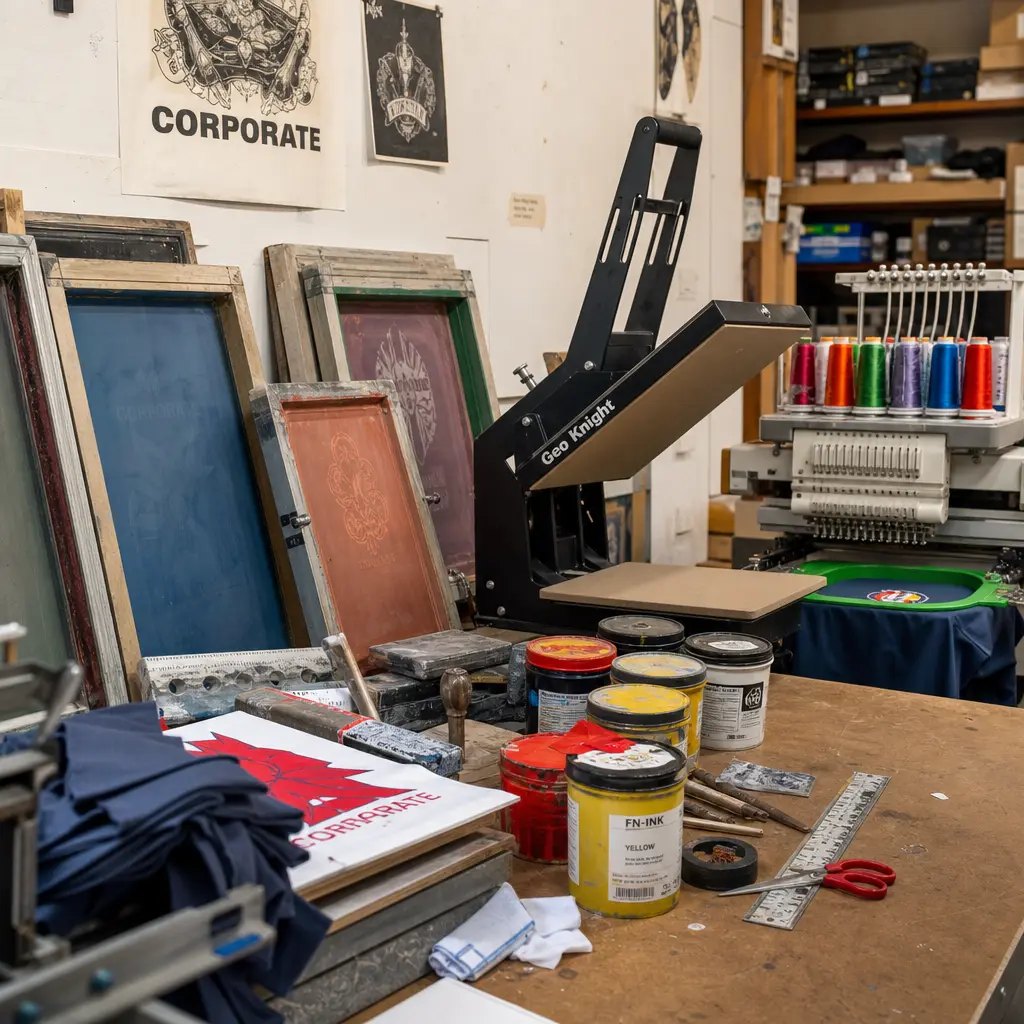
The keyword in this product is proofing, not printing. A digital mockup is useful for layout, but it does not prove ink coverage on natural cotton canvas. Canvas has texture, seed flecks, yarn variation, and absorbency. Fine bakery logo details, small taglines, and thin serif text may partially disappear unless the screen, ink deposit, and artwork thickness are adjusted before bulk printing.
For most artisan bakery logos, screen printing is the commercial choice. It works well for solid marks, one to four spot colors, and repeatable production. Heat transfer can reproduce more detail, but it may look less natural on canvas and can add a film feel. Embroidery is possible for small logos, but it may pucker the flat panel and is usually not ideal for thin bakery script. The print proof should be a physical strike-off on the same canvas weight and color that will be used for production.
- Set minimum line thickness for small bakery text before screens are made.
- Use Pantone references but approve the actual print on canvas, not paper.
- Measure logo position from finished edges after sewing, not only from cut panels.
- Keep important artwork away from zipper seams and corner bulk.
- Retain one approved strike-off at the factory and one with the buyer for final inspection comparison.
MOQ Logic and Cost Drivers
Wholesale canvas zipper portfolios are not priced only by unit count. The cost is built from fabric consumption, canvas dye or finishing, zipper sourcing, print setup, cutting labor, sewing time, inner construction, labels, packing, and export carton volume. A quote for 500 pieces may look high because screen setup, sample handling, and material minimums are spread across fewer units. At 1000 or 3000 pieces, the same setup costs are diluted, but carton space and inspection time still matter.
Procurement teams should ask the factory to show price breaks by quantity and by specification change. For example, the difference between 10 oz and 12 oz canvas may be smaller than the difference between a standard zipper and a custom puller. An inner slip pocket may add more labor than expected because it requires extra cutting, folding, pressing, and stitching. These details help buyers decide where to spend budget without weakening the core product.
- Main material drivers: canvas GSM, fabric color, zipper grade, and lining or pocket requirements.
- Main process drivers: screen count, color changes, custom puller, logo placement, and sewing complexity.
- Main logistics drivers: flat size, carton quantity, carton compression limit, and destination labeling.
- Main MOQ drivers: fabric lot minimum, zipper color minimum, print setup, and SKU split.
Sample Approval That Prevents Bulk Surprises
A good sample process separates three approvals: blank construction sample, print strike-off, and pre-production sample. The blank sample proves size, zipper path, corner finishing, seam strength, and document fit. The print strike-off proves ink color, coverage, registration, and logo scale on the actual canvas. The pre-production sample combines the approved material, zipper, print, labels, packing, and carton mark before bulk starts.
Do not approve a sample only because the front photo looks attractive. Open and close the zipper several times, insert the real documents, inspect the print under daylight and warm shop lighting, and look at the inside seams. For bakery brands, natural canvas often fits the brand mood, but it also shows dirt and handling marks. The approved sample should define what level of slubs, flecks, and color variation is acceptable.
- Blank sample approval: size, document fit, zipper movement, seam construction, and handfeel.
- Print strike-off approval: color, logo scale, line clarity, ink coverage, and position.
- Pre-production approval: all materials, trims, labels, packing, and carton information.
- Approval record: signed sample comments, dated photos, artwork version, and agreed tolerances.
Packing and Carton Planning for Clean Arrival
Natural canvas picks up dust, carton fiber, and warehouse marks easily. A zipper portfolio also has a broad flat face where pressure marks and creases are visible. Packing is not just a shipping detail; it affects whether the item looks acceptable when opened by a bakery sales team, distributor, or retail buyer. The safest approach is individual protection plus flat carton loading with controlled compression.
Individual recycled polybags are common because they protect against dust and moisture during ocean freight and domestic warehousing. Some bakery brands prefer paper sleeves or reduced-plastic packing, but the buyer should test whether paper scuffs the print or allows humidity marks. Cartons should not be overloaded to force a lower freight cost. If the printed panel sits under zipper pulls or stacked seams, pressure marks may appear after several weeks in transit.
- Confirm pieces per carton, carton dimensions, gross weight, net weight, and CBM before purchase order release.
- Keep zipper pulls from pressing directly into printed panels during packing.
- Use carton liners or moisture protection when shipping during humid seasons or long ocean routes.
- Define carton drop and compression expectations if the goods enter retail distribution centers.
- Require carton marks that match SKU, PO, color, quantity, carton number, and destination.
Lead Time Risks Buyers Can Actually Manage
The lead time for wholesale canvas zipper portfolios depends less on sewing alone and more on approval timing. Fabric booking, zipper sourcing, screen making, print proofing, sample courier time, buyer comments, bulk printing, sewing, inspection, and export packing all sit in sequence. If the buyer delays artwork confirmation or changes logo color after the strike-off, the factory may lose the production slot.
A realistic schedule should show decision gates. Sample development may take about one to two weeks depending on material availability and courier time. Bulk production may take several weeks after deposit and final approval, with longer timing during peak seasons or before major holidays. The buyer should not treat these as guaranteed delivery promises; they are planning assumptions that must be confirmed against the factory calendar and material stock.
- Artwork approval delay affects screen making and print strike-off timing.
- Custom zipper tape or puller can add more risk than standard fabric sourcing.
- Multiple logo versions require more print setup and stronger packing separation.
- Late changes to size can force new cutting patterns and waste previously prepared material.
- Final inspection should be scheduled before the vessel or truck booking becomes urgent.
Quote Data Needed for Landed-Cost Comparison
Two factories may quote the same canvas zipper portfolio at different prices, but the lower unit price is not always the lower landed cost. A quote without carton dimensions, gross weight, packing method, and included accessories can hide costs that appear later. Procurement teams should compare unit price together with CBM, defect risk, sample quality, and rework exposure.
The quote should show what is included and what is excluded. Screen setup, custom labels, hangtags, barcode stickers, individual packing, moisture protection, carton marks, inspection support, and document fees can all change the final cost. For distributors and importers, clean quote data also helps sales teams price the program correctly before committing to the bakery brand.
- Request price breaks at practical quantities such as 500, 1000, 3000, and 5000 pieces.
- Ask for unit price by spec option, such as 10 oz versus 12 oz canvas or standard versus custom zipper puller.
- Collect carton quantity, carton size, gross weight, net weight, and total CBM for each quantity.
- Clarify Incoterms, export port, sample fee, mold or setup fee, and payment terms.
- Separate one-time costs from repeat-order costs so the reorder price is easier to evaluate.
Specification comparison for buyers
| Spec decision | Recommended option | When it fits | Buyer risk to check |
|---|---|---|---|
| Canvas body weight | 12 oz cotton canvas, about 380-410 GSM after finishing | Best balance for bakery portfolio programs that need structure, print stability, and manageable freight weight | Do not compare quotes only by ounce; confirm finished GSM, shrinkage allowance, and whether the quote uses plain weave or duck canvas |
| Portfolio size | A4 or US letter internal clearance with 10-15 mm extra width around documents | Useful for bakery sales sheets, wholesale menus, order forms, invoice packs, and retail buyer kits | A tight size saves fabric but causes curled documents, zipper stress, and complaints from field sales teams |
| Zipper specification | No. 5 nylon coil zipper with metal or matching painted puller | Good for light-to-medium document carrying where smooth opening matters more than heavy luggage strength | Cheap No. 3 zippers reduce cost but can jam when canvas thickness and inner seams crowd the zipper path |
| Logo print method | Screen print with bakery-safe brand colors tested on actual canvas | Works for one-to-four color logos, simple line art, and repeat wholesale orders with stable branding | Natural canvas absorbs ink unevenly; approve a strike-off, not a digital mockup, before bulk cutting |
| Color matching | Pantone reference plus tolerance photo under daylight and warm indoor light | Important for bakery brands using cream, chocolate, coffee, wheat, or muted heritage colors | Unbleached canvas changes perceived color; the same ink formula can look darker than on coated paper |
| MOQ structure | MOQ based on fabric batch, zipper color, and print setup rather than only unit count | Allows importers to compare 500, 1000, and 3000 piece options with real cost drivers visible | A low MOQ quote may hide higher unit cost, mixed fabric lots, or limited zipper color choices |
| Inner construction | Single main compartment with optional flat slip pocket and bound inner seams | Keeps bakery catalogs and buyer documents tidy without turning the item into an expensive briefcase | Extra dividers, foam, pen loops, and labels add labor minutes and increase defect opportunities |
| Packing method | Individual recycled polybag or glassine-style paper sleeve, then flat-packed in export cartons | Protects natural canvas from dust during sea freight and warehouse handling | Over-compressed cartons create zipper impressions and corner creases that retail teams may reject |
Buyer checklist before sampling
- Define the portfolio use first: bakery sales kit, wholesale menu holder, retail buyer welcome pack, event giveaway, or staff document bag.
- Specify finished size with internal document clearance, not only outside dimensions.
- State fabric as finished GSM or ounce weight, canvas type, color, shrinkage tolerance, and whether washing is required.
- Provide logo artwork in vector format with Pantone references and maximum print area.
- Require a physical print strike-off on the same canvas before bulk production.
- Confirm zipper size, tape color, puller style, end stops, and zipper opening direction.
- Set seam allowance, stitch density, reinforcement points, and acceptable thread color.
- List all labels, hangtags, barcode stickers, care labels, and country-of-origin marking requirements.
- Request unit packing, carton quantity, carton dimensions, gross weight, and pallet loading data.
- Approve a pre-production sample with signed comments before fabric cutting and printing begin.
Factory quote questions to send
- What finished GSM and ounce weight are included in the quote, and can you send a fabric swatch from the planned production lot?
- Is the canvas natural, bleached, dyed, or washed, and what shrinkage tolerance should we allow after finishing?
- What zipper size, brand level, tape color, puller material, and puller finish are quoted?
- What is the maximum print area and recommended screen mesh for our logo on this canvas?
- Does the unit price include screen setup, color mixing, print strike-off, inner pocket, labels, hangtags, and export carton marking?
- What MOQ applies if we split the order into two bakery brand colors or two logo versions?
- What sample fee and sample lead time apply for a blank sample, print strike-off, and full pre-production sample?
- What are the carton dimensions, pieces per carton, gross weight, and estimated CBM for 1000 pieces?
- Which defects are treated as major defects during final inspection, especially for zipper function and print registration?
- What is the production lead time after deposit and artwork approval, and what dates require buyer approval to avoid schedule delay?
Quality-control points to confirm
- Finished size tolerance should usually stay within plus or minus 5 mm for document portfolios unless the design includes gussets or thick inner layers.
- Canvas fabric should be checked for oil marks, weaving slubs larger than the approved standard, color shade variation, and visible crease lines before cutting.
- Print position should be measured from fixed edges, with typical tolerance within plus or minus 3 mm for a front logo on a flat portfolio panel.
- Ink coverage should be even on high points of the canvas weave, with no pinholes that visibly break bakery logo text at normal viewing distance.
- Zipper must open and close smoothly for at least three full cycles during inspection, without catching seam allowance or loose thread.
- Corners should be square enough for document insertion, with no twisted zipper tape, puckered seams, or bulky folded seam stacks.
- Stitch density should be consistent across visible seams, commonly around 7-9 stitches per inch depending on fabric thickness and machine setup.
- Thread ends should be trimmed, backtack areas secure, and reinforcement stitching placed where the zipper opening receives pulling force.
- Unit packing should prevent dust, moisture exposure, barcode scuffing, and pressure marks on the printed front panel.
- Carton labels should match purchase order, SKU, color, quantity, carton number, gross weight, net weight, and destination requirements.