Start With the Portfolio Use, Not the Logo File
For artisan bakeries, a canvas zipper portfolio usually has a business purpose before it has a branding purpose. It may hold wholesale order forms, catering menus, tasting sheets, bread subscription cards, franchise paperwork, recipe class notes, or a slim retail gift insert. The correct specification depends on what goes inside. A portfolio built only around a nice front logo can fail if the buyer later discovers that A4 sheets curl, the zipper scratches menu cards, or the inner pocket is too shallow for a distributor price list.
Procurement teams should define the use case in the RFQ before discussing logo placement. A bakery chain using portfolios for staff training may accept a plain inside construction and a lower-cost nylon zipper. A premium bakery selling gift memberships may need a cleaner print area, retail-ready packing, and better zipper hardware. Importers quoting distributors should separate these versions instead of forcing every buyer into one spec.
- For A4 or letter documents, give the finished internal usable size, not only the outside portfolio size.
- For menus or tasting cards, test the thickest insert stack so the zipper does not strain at the corners.
- For retail gift sets, specify visible presentation standards, including fold marks, lint, packing sleeve, and hangtag needs.
- For sales teams, consider one flat slip pocket rather than many small compartments that increase labor and reduce flexibility.
Canvas Weight and Hand Feel Choices
Canvas weight is one of the biggest reasons quotes for the same-looking zipper portfolio differ. A supplier may quote 10 oz canvas because it cuts easily and looks acceptable in photos, while another quotes 16 oz canvas because the bag must feel substantial in hand. For bakery branding, 14-16 oz cotton canvas, roughly 475-540 GSM, is often the practical middle range. It gives enough body for a flat logo panel without making the zipper edge too bulky.
Heavier fabric is not automatically better. An 18-20 oz canvas can make the portfolio feel premium, but it also increases needle wear, seam bulk, carton weight, and freight cost. It can also make corners harder to sew cleanly, especially when the design uses a zipper around three sides. Lighter canvas may be fine for a promotional document pouch, but it wrinkles more easily and may not support crisp print registration after sewing.
- Use 10-12 oz canvas only for budget promotional programs or lightweight paperwork sleeves.
- Use 14-16 oz canvas for most wholesale bakery portfolios where durability and print appearance both matter.
- Use 18 oz or heavier only when the buyer accepts higher freight, heavier sewing, and possible corner thickness.
- Request fabric details in both oz and GSM because suppliers may use local naming that is not directly comparable.
Logo Placement That Survives Production
Logo placement should be measured from finished edges after sewing, not from the flat cut panel. Canvas moves during cutting, printing, folding, and sewing. If the logo is printed too close to the zipper, the final portfolio can look crooked even when the printer followed the artwork file. For most front-panel bakery logos, a safe placement is centered on the lower third or positioned on the lower right, with at least 25 mm clearance from seams, zipper tape, and corner curves.
The best placement also depends on how the portfolio is opened and displayed. A lower-right logo looks professional when the portfolio is carried flat or placed on a buyer’s desk. A centered logo works better for retail shelf presentation. Large logos can fight with canvas wrinkles and zipper pull shadows, while small logos may lose bakery details such as wheat stalks, rolling pins, or fine serif lettering. The RFQ should include a placement drawing with finished size references.
- Set a finished-goods placement tolerance, commonly plus or minus 3-5 mm for soft canvas portfolios.
- Keep fine logo details away from seam intersections where fabric tension changes the print surface.
- Avoid printing across folded edges unless the buyer accepts distortion and higher reject risk.
- For two-sided branding, decide which side is the true front so warehouse staff do not pack the product inconsistently.
Print, Patch, Label, or Embroidery
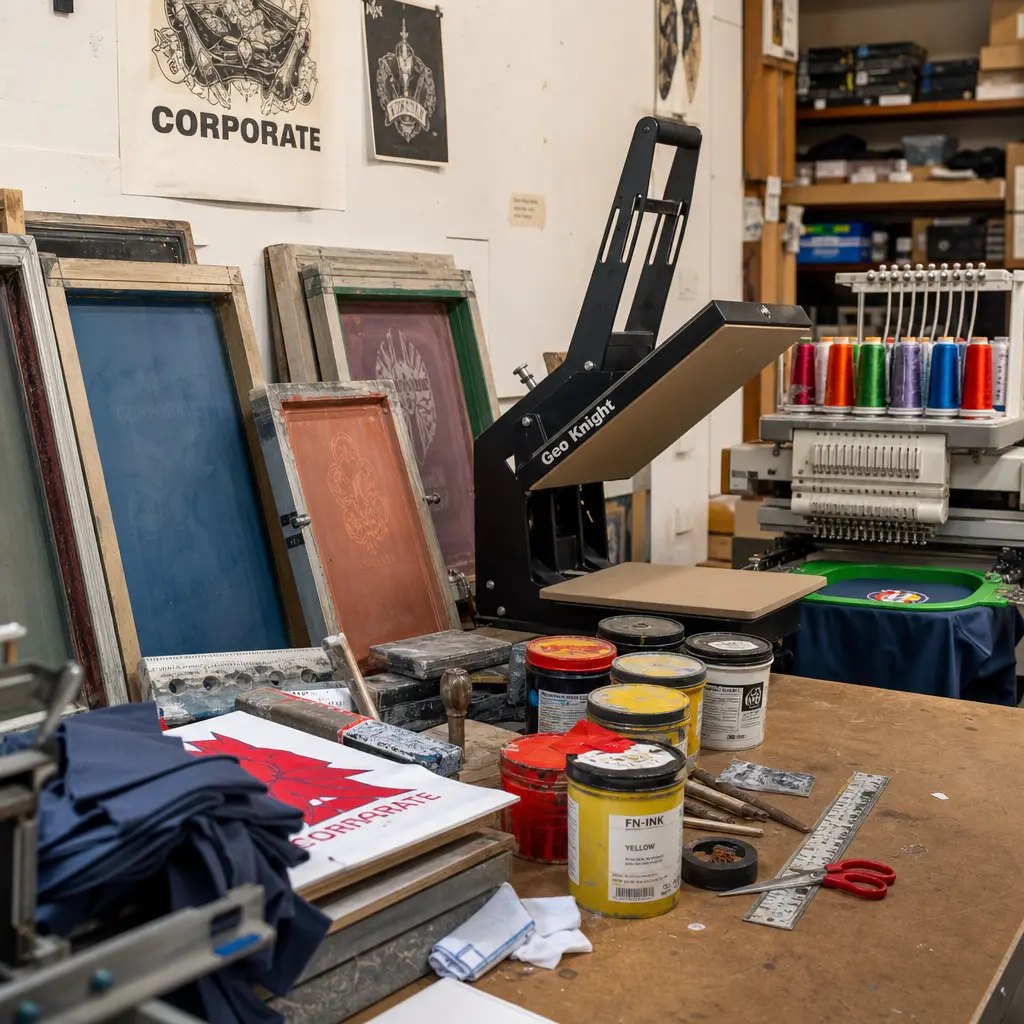
Screen printing is usually the most efficient method for wholesale canvas zipper portfolios with bakery logos. A one- or two-color water-based screen print gives a soft, natural finish that suits artisan food brands. It also keeps bulk production stable when the logo uses bold lines and moderate text size. For very small text, QR codes, or multi-color artwork, suppliers may suggest heat transfer or digital print, but these need more careful testing on textured cotton canvas.
Embroidery can look premium, but it is not always the best choice on a flat zipper portfolio. Dense stitching can pucker the canvas panel, especially on lighter fabric. A woven label sewn into the side seam is a good secondary brand marker, but it should not replace the main logo if retail visibility matters. Leather patches or embossed patches can work for premium bakery gift programs, yet they add material sourcing steps, color approval, and more hand labor.
- Use screen print for bold bakery names, simple icons, and repeatable wholesale cost control.
- Use woven labels for small secondary branding, batch identity, or distributor private-label identification.
- Use embroidery only after reviewing pucker risk, backing material, and stitch density on actual canvas.
- Use patches when the brand wants a premium accessory feel and can accept longer sampling time.
Zipper and Construction Details Buyers Miss
A zipper portfolio is judged every time the zipper moves. A low-cost zipper may pass a photo review but fail in daily use if it snags the inner seam allowance or catches loose threads. A No. 5 nylon coil zipper is usually reliable for document portfolios because it is flexible, smooth, and lighter than metal. Metal zippers look more premium, but they add weight and can leave pressure marks on printed canvas during tight packing.
Construction details should be written into the RFQ because they directly affect labor and quote comparison. Buyers should define whether the portfolio opens on one side, two sides, or three sides; whether corners are square or rounded; whether there is a lining; and whether the inside pocket is self-fabric, cotton lining, or another material. Each added pocket, binding, puller detail, or reinforcement changes sewing time and therefore MOQ logic.
- Specify zipper gauge, zipper tape color, puller material, and zipper direction.
- Define whether the zipper end is hidden, folded, bar-tacked, or covered with a fabric tab.
- State stitch color and visible topstitch requirements, especially for natural canvas.
- Keep pocket construction simple unless the portfolio must organize specific bakery documents.
MOQ Logic and Cost Drivers
MOQ is not only a factory preference. It is tied to fabric availability, cutting efficiency, print setup, zipper sourcing, and sewing line balance. A stock natural canvas portfolio with a one-color front print may be workable at 300-500 pieces, depending on size and season. A custom dyed canvas, special zipper puller, custom woven label, or patch can push the practical MOQ toward 800-1000 pieces because each component has its own supplier minimum.
Importers and distributors should ask for tiered pricing instead of a single unit price. A quote at 300 pieces may use stock trims and hand-cutting, while a quote at 1000 pieces may justify better cutting efficiency and lower print setup per unit. If the buyer only compares the lowest unit price, they may miss setup charges, sample charges, extra packing, inland freight, or carton volume differences that affect landed cost.
- Separate the quote for 300, 500, 1000, and 3000 pieces if the program may scale.
- Ask whether print screens, dyeing, woven labels, or special zipper pullers have separate minimums.
- Request setup charges as line items so repeat-order cost can be calculated correctly.
- Compare CBM and gross weight, not only FOB unit price, when the portfolio uses heavy canvas or metal hardware.
Sample Approval Workflow
A useful sample process has stages. The first prototype confirms size, pocket layout, zipper path, and general construction. The print strike-off confirms logo color, detail, hand feel, and placement on the chosen canvas. The pre-production sample should combine the final approved fabric, final zipper, final logo, final label, and final packing. Bulk cutting should not begin until this sample is approved, especially when the logo is close to seams or the bakery brand uses a strict color standard.
Buyers often lose time because they approve a pretty sample made from available fabric and then discover that bulk fabric behaves differently. Natural cotton canvas varies in slub, shade, and shrinkage. A bakery brand may accept slight natural variation, but the acceptable range should be agreed before mass production. If the product will sit in retail or be sold as part of a gift set, the sample should also be reviewed after packing and unpacking.
- Approve the logo size in millimeters and keep a signed artwork file or annotated PDF.
- Review the print on the actual bulk canvas color, not a substitute swatch.
- Test zipper movement with the intended document stack inside the portfolio.
- Keep one approved pre-production sample at the factory and one with the buyer for shipment inspection reference.
QC Thresholds for Bulk Inspection
Quality control should be written in terms a factory inspector can measure. For a canvas zipper portfolio, the most important checks are finished size, logo placement, print clarity, zipper function, seam strength, stains, odor, and packing condition. A soft canvas product will never behave like molded plastic, so buyers should avoid unrealistic tolerances. At the same time, visible logo drift, wavy seams, and zipper snagging should not be accepted as normal variation.
Logo inspection should be done on finished goods after sewing and packing trials, not only on printed flat panels. The inspector should measure from the finished left edge, right edge, bottom edge, or zipper edge according to the approved placement drawing. For screen printing, common defects include pinholes, ink smears, color inconsistency, blocked fine text, and poor opacity on dyed canvas. For embroidery, watch for puckering, loose threads, and backing showing through.
- Measure a sample set from each carton group, not only the top pieces from one carton.
- Reject zipper units that catch, split, reverse poorly, or expose loose thread inside the track.
- Classify stains on the front logo panel as major defects because they affect brand presentation.
- Include carton condition and inner packing in the inspection because zipper pressure marks can happen after sewing.
Packing and Carton Planning
Packing affects both appearance and landed cost. Canvas portfolios can be packed flat, lightly folded, or stacked with separators, depending on size and zipper hardware. Flat packing protects shape but increases carton length and volume. Folding can reduce CBM, but it may create creases across the logo or push zipper teeth into the printed surface. For bakery brands using natural canvas, lint and dust control also matter because pale fabric shows warehouse dirt quickly.
A practical packing plan is individual polybag or paper sleeve, then controlled carton quantity. Many portfolios fit 25-50 pieces per export carton depending on size, canvas weight, and hardware. Heavy cartons may look efficient but increase crushing risk and create handling problems for warehouses. Retail buyers should also define barcode, warning label, carton mark, and master carton sequence if the shipment goes directly to a distribution center.
- Use tissue, paper sleeve, or orientation control when metal zipper pullers may press against the logo.
- Avoid over-compressed cartons because canvas creases are difficult to remove at retail receiving.
- Request carton dimensions, gross weight, net weight, and pieces per carton before confirming freight.
- For distributor programs, include SKU, color, logo version, and carton count on the shipping mark.
Lead Time and Schedule Risk
Lead time should be calculated from approved sample and deposit, not from the first email inquiry. A realistic schedule includes artwork review, material confirmation, sample making, sample shipping, buyer review, pre-production approval, fabric cutting, printing, sewing, trimming, inspection, packing, and export booking. A simple stock-fabric order may move faster, while custom dyed canvas, special labels, or metal hardware can add time before the sewing line even starts.
The main schedule risk is late artwork or late spec changes. Moving the logo by 15 mm after the print screen is made can require a new screen or revised jig. Changing from nylon zipper to metal zipper after sampling affects weight, sewing tension, and packing. For seasonal bakery launches, holiday gift programs, or distributor catalog deadlines, buyers should lock the specification before requesting the final production slot.
- Treat sample approval as the start point for bulk lead time.
- Freeze artwork, logo placement, zipper type, and packing before bulk material purchase.
- Build extra time for peak seasons, public holidays, custom dyeing, and sea freight booking.
- Avoid approving production from photos only when the logo position or fabric shade is brand-critical.
Specification comparison for buyers
| Spec decision | Recommended option | When it fits | Buyer risk to check |
|---|---|---|---|
| Canvas body fabric | 14-16 oz cotton canvas, about 475-540 GSM, pre-shrunk if tight logo registration is required | Best balance for bakery brand portfolios used for menus, order forms, tasting notes, invoices, or retail gift sets | Below 12 oz may wrinkle and telegraph contents; above 18 oz raises sewing bulk and freight without always improving perceived value |
| Logo location | Front lower right or centered lower third with at least 25 mm clearance from seams and zipper tape | Works for screen print, embroidery patch, woven label, and heat transfer on most portfolio sizes | Artwork too close to the zipper can distort during sewing, especially when the panel is printed before assembly |
| Print method | Water-based or discharge-style screen print for 1-2 color bakery logos on natural or dyed canvas | Good for rustic, non-gloss branding where buyers want a soft hand and repeatable bulk pricing | Fine serif text, small wheat icons, and light ink on natural canvas need strike-off approval before bulk |
| Closure hardware | No. 5 nylon coil zipper for standard use; antique brass metal zipper only when the brand accepts higher cost and weight | Nylon coil is smoother for document bags; metal zipper suits premium gift packaging or retail display programs | Metal zipper can scratch printed panels during packing if separators or tissue are not specified |
| Interior structure | One main compartment plus one flat inner slip pocket, no heavy padding unless documents need protection | Keeps portfolio slim for bakeries carrying spec sheets, menus, certificates, tablet inserts, or sales samples | Extra pockets increase labor minutes and MOQ pressure; poorly specified pocket depth causes unusable storage |
| Branding component | Screen printed front logo plus optional side seam woven label for distributor or private-label programs | Useful when the bakery wants visible branding while the importer needs production traceability by design | Too many branding positions create approval delays and color matching disputes |
| MOQ structure | 300-500 pcs for stock canvas color with simple print; 800-1000 pcs for custom dyed fabric or special hardware | Keeps sampling and cutting efficient while allowing artisan bakery chains or distributors to test a program | Very low MOQ can force digital printing, stock trims, or higher unit pricing that is not visible in the first quote |
| Packing method | Individual polybag or glassine-style paper sleeve, 25-50 pcs per export carton depending on size and hardware | Protects print surface and zipper during sea or air freight; supports warehouse receiving counts | Over-tight cartons crease canvas and press zipper teeth into the logo area |
Buyer checklist before sampling
- Define the portfolio size by real contents: A4 documents, menu sheets, tasting notes, order forms, tablet sleeve, or retail gift insert.
- Specify canvas weight in oz and GSM, not only the word canvas; include whether natural, bleached, dyed, or washed fabric is required.
- Fix the logo placement with measurements from finished edges, not from the cut panel, and include minimum clearance from zipper and seams.
- Choose the print method based on artwork detail, hand feel, wash expectation, and fabric color; request a strike-off on actual canvas.
- State zipper type, zipper color, puller style, and whether hardware must pass color consistency checks across the shipment.
- List pocket layout, stitch color, seam construction, and reinforcement points before requesting price comparison.
- Request MOQ by spec tier: stock fabric with print, custom fabric color, special zipper, and multi-position branding.
- Approve a pre-production sample with final materials, final logo size, final placement, and final packing, not only a rough prototype.
- Set carton packing limits to avoid crushing, zipper marking, and uneven bundle counts at warehouse receiving.
- Require quote data that separates product cost, mold or setup charges, sample cost, packing cost, carton dimensions, and estimated gross weight.
Factory quote questions to send
- What canvas weight in oz and GSM are you quoting, and is it stock greige, natural, bleached, dyed, or washed fabric?
- Is the logo printed before sewing or after assembly, and what placement tolerance can your factory hold on the finished portfolio?
- What is the minimum safe distance from the zipper tape, seam line, bottom fold, and corner radius for this logo method?
- Which print method is included in the quote, how many colors are included, and what is the extra cost for each additional color or screen?
- What zipper type, zipper gauge, puller material, and zipper tape color are included in the base price?
- What MOQ applies to the quoted construction, and what changes if we use custom dyed canvas, metal zipper, embroidery, or woven label?
- Can you provide a fabric swatch, print strike-off, and complete pre-production sample before bulk cutting?
- What are the sample lead time, bulk production lead time after approval, and any blackout dates that may affect sewing capacity?
- What packing method, carton quantity, carton dimensions, net weight, and gross weight are included in the quote?
- What quality checks are performed for logo placement, zipper operation, seam strength, color shade, odor, stains, and carton drop risk?
Quality-control points to confirm
- Logo placement tolerance should normally be held within plus or minus 3-5 mm on finished goods, depending on print size and sewing method.
- Finished portfolio size tolerance should be defined, commonly plus or minus 5 mm for soft canvas goods unless a tighter sleeve fit is required.
- Zipper must open and close smoothly for the full length without catching fabric, loose threads, or inner pocket edges.
- Print should pass a dry rub check and reasonable tape pull review on the approved canvas surface before shipment.
- Front panels should be free from obvious oil stains, heavy slubs across the logo, needle damage, and severe creasing.
- Stitching should be even at visible edges, with no skipped stitches, broken threads, or unsecured zipper ends.
- Bulk color shade should match the approved sample within a practical tolerance under consistent light, especially for natural and dyed canvas.
- Cartons should not exceed the agreed quantity or weight, and inner packing should prevent zipper hardware from pressing into printed logos.