Start With the Buying Job, Not the Bag
Wholesale canvas wine carriers for university bookstores sit in a tricky middle ground. They are packaging, but they often sell like merchandise. A campus store may offer them empty on a gift wall, bundle them with alumni wine, use them for holiday food gifts, or hand them out at donor and department events. The same carrier needs to look giftable, carry glass safely, show licensed artwork cleanly, and arrive in cartons that staff can receive without a long sorting project.
That is why a fabric weight guide matters. Weight affects hand-feel, standing structure, seam bulk, handle comfort, print clarity, carton cube, and freight cost. More weight is not automatically better. A 14 oz canvas carrier can feel premium, but bulky seams may distort the base, slow sewing, reduce carton count, and make a small mascot print look less crisp. A lighter 10 oz carrier, if well reinforced and matched to the bottle, can be the smarter commercial choice.
The cleanest RFQ connects the fabric to the use case. Is the carrier for one bottle or two? Will the store sell it empty or loaded? Is the fabric natural, dyed, washed, or softened? Does the logo need licensing approval? Is the ship date tied to graduation, homecoming, holiday traffic, or a donor event? Those answers let the supplier engineer the carrier instead of guessing from a photo.
- Use 8 oz canvas only for light promotional sleeves or short-use packaging where structure is not the main value.
- Use 10 oz canvas as a practical starting point for most single-bottle bookstore carriers.
- Use 12 oz canvas for most two-bottle carriers, heavier bottle formats, and stronger retail presentation.
- Use 14 oz canvas only when the premium feel justifies added seam bulk, carton cube, and unit cost.
- Ask the supplier to recommend construction changes for each fabric weight rather than quoting fabric substitutions alone.
Fabric Weight Terms Buyers Should Control
Canvas is commonly quoted in ounces, GSM, or both. For procurement, both should appear on the RFQ, quotation, sample tag, purchase order, and QC checklist. A supplier quoting 10 oz canvas and another quoting 300 GSM canvas may be close, but the comparison is still incomplete unless the weave, finishing, and tolerance are understood.
As a working guide, 8 oz canvas is often around 220-240 GSM, 10 oz around 280-300 GSM, 12 oz around 340-360 GSM, and 14 oz around 400-430 GSM. These ranges are useful for quote planning, not final approval. A tight 300 GSM canvas may feel firmer than a loose 320 GSM fabric. A softened canvas may feel better in hand but can relax or shrink enough to change the finished measurements. Dyed canvas may look more custom but adds lab dip approval and shade control.
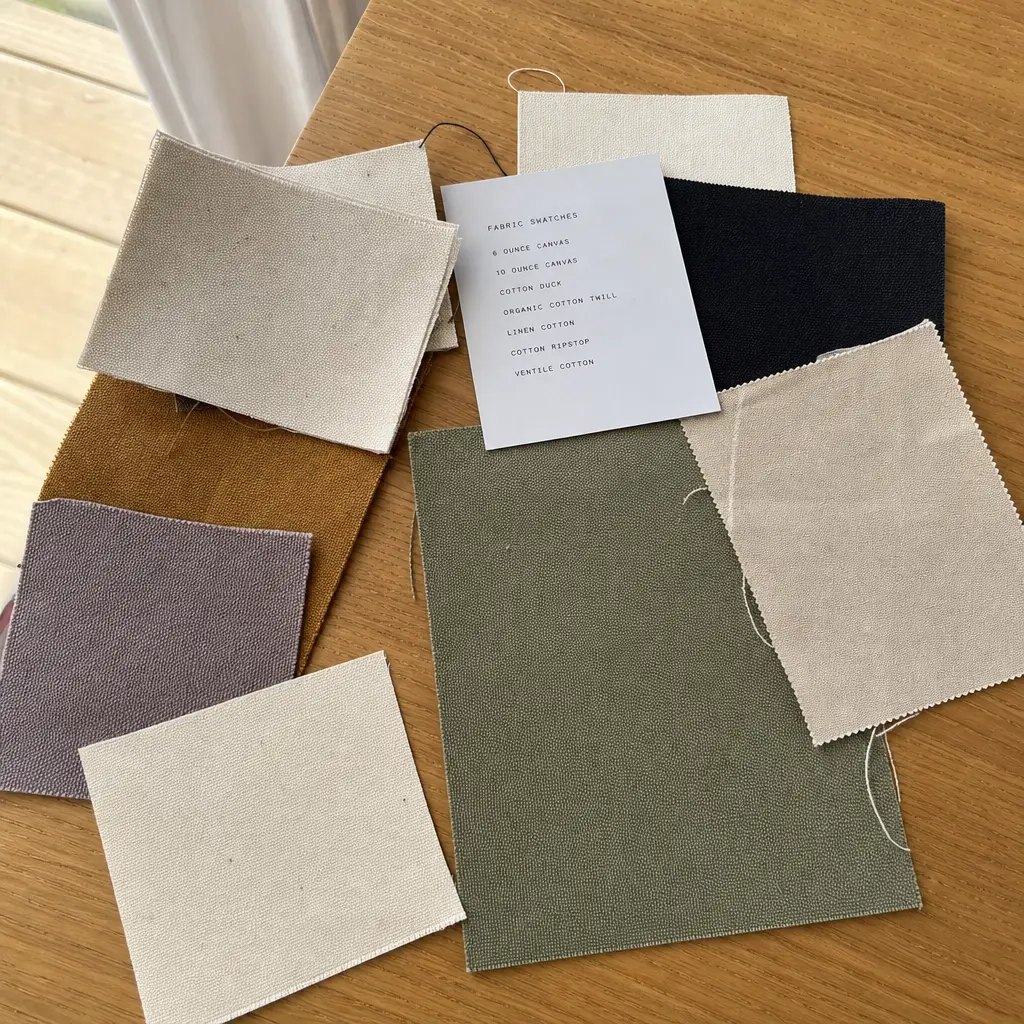
Avoid vague terms such as light, medium, heavy, premium, or tote-grade unless they are backed by a swatch and a GSM target. Keep one approved fabric swatch for the buyer, one for the factory, and one for inspection if the order is large enough to justify it. Reorders become much easier when everyone can compare bulk fabric against the same retained standard.
- List fabric by both oz and GSM, with an acceptable GSM tolerance agreed before production.
- Request a physical swatch from the same fabric quality planned for bulk production.
- For dyed canvas, approve lab dips under consistent lighting and define acceptable shade variation.
- For washed canvas, approve finished bag measurements after washing or softening, not only cut-panel dimensions.
- Retain an approved swatch and print strike-off for inspection and reorder comparison.
Match Weight to the Actual Bottle
The bottle should choose the bag, not the other way around. Standard 750 ml wine bottles vary in height, base diameter, shoulder shape, and glass weight. Champagne and sparkling cider bottles are usually wider and heavier. Olive oil, maple syrup, spirits, and regional gift products may be square, tall, or unusually wide. If the bookstore sells local goods or mixed gift sets, the RFQ should include the largest and heaviest item, not the easiest standard wine bottle.
For single-bottle carriers, 10 oz canvas is often the best balance of cost, structure, printability, and freight control. It can feel retail-ready when handle attachments, side seams, and bottom construction are reinforced. A 12 oz single-bottle carrier can make sense for premium alumni merchandise or a higher retail price point, but the buyer should confirm that customers can actually see and feel the upgrade enough to justify the landed cost.
For two-bottle styles, 12 oz canvas is usually the more reliable commercial baseline. Two bottles create more downward load and more side-to-side movement. The divider, handle tabs, and bottom corners are doing real work. A 14 oz two-bottle carrier can be appropriate for donor gifts or limited-edition programs, but it needs a practical review for seam bulk, folding, carton count, and print appearance before the order is released.
- Single 750 ml wine bottle: quote 10 oz as the base and 12 oz as the upgrade option.
- Two 750 ml bottles: quote 12 oz as the base and 14 oz only for premium or unusually heavy loads.
- Champagne or sparkling cider: check base diameter, shoulder width, and total loaded weight before approving the gusset.
- Olive oil or syrup: confirm whether the bottle is round, square, tall, or wider than standard wine.
- Mixed sets: test the heaviest and largest combination, including tissue, tags, and inserts.
Dimensions Matter as Much as GSM
Fabric weight cannot rescue a poor pattern. A strong carrier can still miss the bookstore requirement if the opening is too narrow, the gusset is shallow, the handle drop is awkward, or the divider sits too low. Reference photos help with style direction, but production should be controlled by finished measurements and written tolerances.
Bottle carriers are less forgiving than ordinary totes. A small reduction in gusset can make a wide bottle difficult to insert. A short body may expose too much glass for a gift presentation. A handle drop that looks fine on an empty sample can feel cramped when a tall bottle neck rises into the opening. The RFQ should also say how dimensions are measured: flat, opened, or loaded.
Many sewn canvas products use tolerances around plus or minus 5 mm for smaller details and plus or minus 10 mm for larger body dimensions, but the right tolerance depends on the pattern and factory process. Critical points such as divider width, gusset, and handle drop may need tighter control than non-critical points. Put those tolerances in the spec before sampling, not after bulk production starts.
- Specify finished height, width, gusset, bottom width, top hem depth, handle width, handle drop, divider height, and divider width.
- Include print placement tolerances measured from a seam, top edge, bottom edge, or centerline.
- State whether the bag must stand upright when loaded, hang on a peg, fold flat behind a register, or stack in a display.
- Ask the supplier to mark measurement points on the sample report so QC uses the same method.
- Test fit with the real bottle plus any tissue wrap, bottle tag, hangtag, insert, or barcode label.
Construction That Carries Real Weight
Canvas rarely fails in the center of a clean panel. Problems usually appear at the stress points: handles, side seams, bottom corners, divider seams, and top hems. A useful quote defines handle material, handle width, handle drop, reinforcement method, stitch pattern, thread type when relevant, and any bottom reinforcement. If those details are missing, two quotes with the same fabric weight may represent very different products.
Self-fabric handles give a coordinated look and match the body material exactly. Cotton webbing handles are often easier to sew consistently and can feel stronger, but color, texture, width, and edge finish still need approval. For loaded bottle carriers, handles around 25-38 mm wide are often more comfortable than narrow straps. The final choice should consider the retail look, loaded weight, and expected carry distance from checkout to car, event table, dorm, or reception venue.
Reinforcement should be functional and repeatable. Box-X stitching, bartacks, or a factory-approved equivalent can help distribute load where handles meet the body. For two-bottle carriers, the divider should be sewn into the structure so it limits bottle contact during normal walking. If it is too low, bottle shoulders can strike. If it is too tight, staff may struggle to load the carrier during holiday or event traffic.
- Use reinforced handle attachment at all load points, not only decorative topstitching.
- Specify handle width and handle drop in finished measurements.
- Inspect stitch density, skipped stitches, loose thread, and seam strain on early production pieces.
- Secure two-bottle dividers into side and bottom seams or another approved load-bearing structure.
- Check bottom corners and seam intersections because they often reveal whether heavy canvas is being sewn cleanly.
Licensed Artwork Needs Early Decisions
University bookstore programs usually involve licensed marks, so artwork control is more sensitive than it is for generic promotional bags. Campus names, mascots, seals, alumni marks, athletics marks, and department logos may have rules for Pantone color, minimum size, clear space, and placement. The RFQ should include vector artwork, Pantone references, print dimensions, measured placement, and the approval process required by the licensing office.
Screen printing is usually the best default for one to three solid colors on canvas. It works well at wholesale quantities and suits many campus marks. The risk is texture. Canvas can break up fine lines, small type, or detailed mascot artwork. Light ink on dark dyed canvas may require an underbase or extra print pass, which affects price, lead time, and hand-feel.
Heat transfer can support detailed or multi-color artwork, but it should be tested on the final fabric for adhesion, edge lift, flexibility, and rub resistance. Embroidery can look premium for small marks, yet dense embroidery may pucker lighter canvas and become costly for large filled designs. Woven labels are useful for a small side mark, collection name, or manufacturer label when the main front artwork changes by campus, department, or event.
- Use screen print for solid one-color or few-color licensed marks when print areas are not overly detailed.
- Use heat transfer only after approving adhesion, edge quality, hand-feel, and rub performance on final canvas.
- Use embroidery for small premium marks, not large dense logos on lightweight fabric without testing puckering.
- Approve Pantone match, print size, print placement, clear space, orientation, and licensing comments before bulk printing.
- Keep the approved strike-off available for inspection, especially when there are multiple logo versions.
MOQ and Quote Comparison Without Surprises
MOQ is not only a supplier preference. It reflects fabric sourcing, dyeing minimums, cutting efficiency, print setup, sewing line changeover, packing labor, and version control. A stock natural canvas carrier with a one-color screen print may support a lower MOQ than a dyed school-color carrier with custom webbing, individual polybags, hangtags, and several department logos.
A strong quote request separates the real cost drivers. Ask for quantity tiers such as 300, 500, 1,000, and 2,500 pieces per style when those volumes are realistic. Keep single-bottle and two-bottle versions separate because fabric consumption, divider labor, sewing time, and carton cube are different. Ask suppliers to quote each fabric weight on the same construction and packing basis. Otherwise, the prices will look comparable while the specifications quietly change.
Logo splits deserve special attention. A bookstore may want a main campus logo, alumni association logo, athletics logo, and department marks in one buy. That can work, but each design may require separate setup, strike-off approval, counting, packing, and carton marking. To keep the order manageable, standardize the bag body, fabric weight, print location, print size, and packing method across versions wherever possible.
- Compare unit price, setup charges, sample fees, print charges, packing cost, carton cube, and estimated freight together.
- Ask for MOQ by style, fabric color, logo design, label version, and packing method.
- Quote natural canvas separately from dyed canvas because dyeing can change MOQ and lead time.
- Avoid many small logo splits unless retail demand or event need justifies the added control work.
- For a first order, keep one body size, one fabric weight, and a limited number of artwork versions whenever possible.
Sampling Should Prove the Product
A photo sample does not prove that a canvas wine carrier is ready for production. The pre-production sample should use the final fabric weight, handle material, divider construction, print method, label placement, and packing fold. If the sample uses substitute fabric or temporary printing, the buyer can approve the general shape but not the actual performance.
Sample review should be practical and measurable. Check finished dimensions against the spec sheet. Insert the largest bottle without forcing it. Load the carrier with the heaviest expected combination and watch the handle tabs, side seams, bottom corners, and divider. For a two-bottle style, walk with the sample and check whether the bottles touch, tilt, or contact each other above the divider.
Print approval should happen on the same fabric weight and color planned for production. Rub the print with a dry white cloth to check transfer. Fold the bag as it will be packed and inspect whether ink cracks or sticks to the facing panel. If the bag will be individually polybagged, packed with tissue, labeled with a UPC, or shipped in mixed logo cartons, the sample should show that packing plan too.
- Approve fabric swatch, lab dip if dyed, print strike-off, pre-production sample, and packing method in sequence.
- Measure width, height, gusset, bottom width, handle drop, handle width, divider height, and divider width.
- Test with the largest and heaviest bottle combination, not only a standard empty bottle.
- Review print curing, rub resistance, edge sharpness, logo placement, and folding behavior.
- Document all sample comments and keep the approved sample as the production standard.
QC Before Shipment
Quality control should be written before production begins. For canvas wine carriers, the inspection plan should cover measurements, fabric condition, print quality, stitching, handle strength, divider function, odor, shade variation, packing, and carton markings. The buyer does not need an overly complex laboratory program for every order, but the factory and inspector should know what is acceptable.
A loaded test is especially important because this product carries glass. The test method can be simple, but it should be defined. The carrier may be loaded with the buyer-approved bottle weight and hung or lifted for an agreed duration while handles, seams, and bottom corners are checked for tearing, stitch failure, or distortion. The exact load and duration should match the risk level of the product and the bookstore use case.
Inspection photos help remote procurement teams make faster decisions. Ask for clear images of measurement points, handle stitching, divider construction, print close-ups, loaded test setup, open carton packing, retail labels, barcode placement, and exterior carton marks. When defects are found, photos should show the rejected condition and quantity affected, not only a general statement that goods were checked.
- Set AQL or another inspection sampling approach if your organization requires it, and define critical defects separately.
- Check GSM, canvas shade, odor, stains, slubs in the logo area, oil spots, mildew marks, and visible weaving defects.
- Inspect handle reinforcement, side seams, top hems, bottom corners, divider seams, and loose thread trimming.
- Test print placement, Pantone match, rub resistance, curing, cracking over folds, and ink offset after packing pressure.
- Verify carton count, logo assortment, barcode readability, PO number, carton marks, and moisture protection.
Packing for Store Operations
Packing affects landed cost, receiving speed, and retail presentation. Canvas carriers are commonly flat packed, but fold direction matters. A fold through the logo can leave a visible crease. Heavy handles can create uneven stacks. Printed faces can mark each other if goods are packed too tightly, packed before ink is fully cured, or shipped without adequate separation.
University bookstores often have limited backroom space and firm seasonal deadlines. Cartons should be light enough for practical manual handling and marked clearly enough that staff can identify style, logo, color, quantity, PO number, and carton sequence without opening every box. If different department logos or barcode versions ship together, each version should be separated and marked clearly.
Retail labeling should be confirmed before the quote is finalized. A carrier sold as merchandise may need a UPC sticker, hangtag, care label, country of origin label, price label, or warning label depending on destination and sales channel. Factory application can reduce store labor, but it adds a packing step that must be inspected. Barcode readability is not a small detail; unreadable labels slow receiving and checkout at the exact moment the store needs the product to move.
- Request pieces per carton, carton dimensions, net weight, gross weight, and packing layout before order confirmation.
- Use tissue, liners, or individual polybags when the printed face is large, dark, or important for retail display.
- Avoid mixed-logo cartons unless the assortment is clearly defined and receiving staff expect that packing method.
- Provide barcode files, hangtag artwork, label placement instructions, and carton marks before mass packing.
- Ask for packing photos showing folded units, open carton layout, retail labels, and exterior carton marks.
Specification comparison for buyers
| Spec decision | Recommended option | When it fits | Buyer risk to check |
|---|---|---|---|
| Single-bottle fabric weight | 10 oz canvas, commonly about 280-300 GSM, with reinforced handle attachment and controlled finished measurements | Bookstore gift counters, alumni merchandise, campus-branded retail, local product displays, and programs where cost, print clarity, and freight cube all matter | A soft or loose weave can feel underbuilt even at the quoted weight; confirm hand-feel, seam strength, loaded shape, and whether the bag must stand or fold |
| Two-bottle fabric weight | 12 oz canvas, commonly about 340-360 GSM, with a divider secured into side and bottom seams | Wine pairings, olive oil sets, syrup or cider gifts, donor packs, holiday bundles, and heavier bookstore assortments | Divider height, bottom corners, and handle stress points must be load tested with the heaviest bottle combination, not a convenient sample bottle |
| Premium edition fabric weight | 14 oz canvas, commonly about 400-430 GSM, approved only after seam-bulk, folding, and carton-cube review | Limited alumni drops, executive gifting, premium reusable merchandise, commemorative programs, and higher retail price points | Thick seam intersections can distort the base, slow sewing, reduce carton count, and make small logo details less sharp |
| Light promotional option | 8 oz canvas, commonly about 220-240 GSM, only when the product is positioned as a light sleeve or short-use promotion | Low-cost giveaways, event packaging, table gifts, or very light bottle formats where structure is not the selling point | May not feel giftable enough for bookstore retail; loaded handle, bottom strength, and brand perception need careful review |
| Artwork method for licensed marks | Screen print for one to three solid spot colors; heat transfer only after adhesion and rub testing on final fabric | University names, mascots, alumni marks, campus store logos, department marks, and simple licensed graphics | Pantone drift, poor coverage on textured canvas, ink transfer in packing, cracking over folds, or unapproved placement can delay approval |
| Handle construction | Self-fabric or cotton webbing handles, typically 25-38 mm wide, with box-X stitching, bartacks, or equivalent reinforcement | Loaded glass bottles carried from checkout to parking lots, events, dorms, alumni venues, receptions, or tailgate areas | Narrow handles can feel sharp under load; weak reinforcement may pass visual inspection but fail loaded carry testing |
| Divider construction | Same-fabric or reinforced divider sewn into the body and bottom structure, with measured height and width tolerances | Two-bottle carriers where bottle contact, clinking, and breakage perception must be controlled | A low divider lets bottle shoulders strike; a tight divider slows checkout packing and can distort the bag body |
| Finished dimensions | Specify height, width, gusset, bottom width, handle drop, handle width, divider height, divider width, and tolerances separately | Any order intended to fit wine, champagne, olive oil, maple syrup, spirits, cider, or mixed local gift items | A generic wine bag may not fit wide bottles, tall necks, tissue wrap, hangtags, boxed inserts, or barcode labels |
| Packing method | Flat packed with print protection, bulk polybag by carton, or individual retail polybag with UPC and hangtag as needed | Bulk receiving, campus warehouse distribution, retail wall display, event kitting, and store-level barcode control | Ink transfer, crease through the logo, handle memory, moisture exposure, mixed logos, and unreadable barcodes create rework |
Buyer checklist before sampling
- Define the bottle before choosing fabric: list bottle type, maximum height, maximum base diameter, shoulder width if relevant, loaded weight, and whether tissue, a neck tag, a hangtag, or a retail insert will be used.
- State canvas weight in both oz and GSM, and ask whether the quoted fabric is stock natural canvas, stock dyed canvas, dyed to order, washed, softened, or woven to order.
- Specify finished bag measurements: width, height, gusset, bottom width, handle width, handle drop, divider height, divider width, top hem depth, and measurement tolerance for each point.
- Clarify the selling use: empty retail merchandise, gift packaging sold with a bottle, donor event packaging, alumni bundle, holiday set, department gift, or promotional giveaway.
- Attach licensed artwork as vector files and provide Pantone references, print size, print position, clear space, logo orientation, and the university licensing approval workflow.
- Ask for fabric swatches, lab dips for dyed canvas, print strike-offs, and a pre-production sample made with final fabric weight, final handle construction, final divider, final print method, and final packing fold.
- Request a loaded sample test using the heaviest bottle combination the bookstore expects to sell, including champagne, cider, syrup, olive oil, or spirits if those are part of the assortment.
- Approve fabric hand-feel, shrinkage, seam bulk, bottle fit, divider position, print clarity, curing, rub resistance, odor, folding behavior, and retail presentation before authorizing bulk production.
- Separate quotes by style, quantity tier, fabric weight, fabric color, print color count, print setup, label method, packing method, carton size, pieces per carton, estimated gross weight, and sample cost.
- Confirm all retail and compliance items before packing: UPC sticker, hangtag, care label, country of origin label, warning label if required, campus store price label, department code, carton marks, and mixed-assortment rules.
Factory quote questions to send
- What canvas weights can you supply for this wine carrier in both oz and GSM, and are those fabrics stock qualities, dyed to order, washed, softened, or woven to order?
- What fabric weight tolerance will you hold in production, and how will GSM be checked against the approved swatch?
- For our bottle dimensions and loaded weight, do you recommend 10 oz, 12 oz, or 14 oz canvas, and what construction changes would you make for each option?
- Can you quote single-bottle and two-bottle versions separately using the same artwork size, fabric color, handle method, label method, and packing method so we can compare fairly?
- What is the MOQ per style, per fabric color, per print design, per label version, and per packing type, including any trial-order option and its price impact?
- Which print method do you recommend for our licensed university logo, and what are the setup charges, screen charges, underbase charges, transfer charges, or embroidery charges by color or design?
- Can you produce a fabric swatch, dyed lab dip if needed, print strike-off, and pre-production sample using final fabric weight, final print method, final handle construction, final divider, final label, and final packing fold?
- What finished measurement tolerances will you use for height, width, gusset, bottom width, handle drop, handle width, divider height, divider width, and print placement?
- What loaded handle test, seam inspection, divider check, print rub test, odor check, and packing check will your QC team use before shipment?
- How many pieces fit per export carton, what are the estimated carton dimensions and gross weight, and can carton weight be adjusted for campus warehouse or bookstore manual-handling limits?
Quality-control points to confirm
- Fabric weight tolerance should be agreed before production, using a target GSM range and a retained approved swatch instead of vague terms such as medium canvas or heavy canvas.
- Finished size tolerance should protect bottle fit; control body height, body width, gusset, bottom width, handle drop, handle width, divider height, divider width, and print placement separately.
- Bottle-fit inspection should use the maximum bottle size and the heaviest bottle combination expected in the bookstore program, including tissue wrap, hangtag, bottle collar, or insert if used.
- Handle attachment should pass a loaded hang or carry test based on real bottle weight, with the load, duration, sample size, and acceptable result agreed before production.
- Divider height and seam attachment should keep two bottles from striking during normal carrying and should not collapse, twist, or slow insertion during checkout packing.
- Print inspection should cover Pantone match, underbase coverage if used, edge sharpness, print placement, curing, dry rub, wet rub if required, cracking over folds, and ink transfer after packed pressure.
- Stitching should be even at handles, side seams, bottom corners, divider seams, top hems, and label points, with no skipped stitches, broken thread, loose thread nests, needle damage, or open seams.
- Canvas surface should be free of oil spots, mildew odor, water marks, heavy slubs in the logo area, dye streaks, dirt, shade variation beyond the approved standard, and weaving defects that affect retail presentation.
- Packing inspection should verify unit count, assortment count, carton strength, moisture protection, logo separation, retail labels, barcode readability, carton marks, PO number, and carton sequence.
- Retail presentation should be checked after unpacking: no severe crease through the logo, no handle distortion that prevents display, no ink offset, no visible packing stain, and no odor strong enough to affect saleability.