Buying Problem: A Small Bag With Heavy Consequences
Wholesale canvas wine carriers for university bookstores are not difficult products, but they combine several risk points in one small item: heavy glass bottles, visible logo printing, gift-ready shelf presentation, and often a licensed campus mark. A weak quote may look attractive until the buyer receives thin fabric, loose handles, poor divider construction, or cartons that arrive with creased printed panels.
The practical buying problem is not simply choosing the lowest unit price. Procurement teams need a specification that lets several factories quote the same product and gives inspection teams measurable acceptance points. Without that, suppliers may quote different canvas weights, different handle constructions, different print assumptions, and different packing methods while all using the same product name.
- Treat the carrier as a load-bearing retail gift item, not as a flat promotional tote.
- Separate construction cost from print cost so artwork variants do not hide in the unit price.
- Use the approved sample as the production standard for fabric handfeel, stiffness, sewing, and print scale.
- Write the RFQ around bottle fit, handle strength, logo approval, packing cube, and receiving requirements.
Define Bottle Fit Before Fabric or Price
The first specification should be the bottle the carrier must hold. A standard 750 ml wine bottle, a champagne bottle, a tall olive oil bottle, and a campus-branded drink bottle can have different diameters and shoulder shapes. If the factory only receives the phrase wine carrier, it may use a generic pattern that fits one bottle but becomes tight when the bookstore adds tissue wrap, hangtags, or a protective sleeve.
For university bookstores, the product may also be used beyond wine. Alumni gift shops may sell sparkling cider, local sauces, water bottles, or event bundles. That makes internal width, gusset depth, and handle drop more important than a simple flat bag measurement. A good RFQ gives bottle diameter, height, maximum loaded weight, and whether the carrier must stand upright on shelf.
- Single-bottle carrier: confirm internal width, gusset depth, bottle height exposure, and whether the neck should remain visible.
- Two-bottle carrier: define divider height, divider stiffness, and minimum separation between bottles.
- Gift carrier use: allow extra space for tissue paper, neck tag, ribbon, or retail hangtag.
- Shelf display use: specify whether the empty carrier should stand, semi-stand, or can be folded flat.
Canvas Weight and Construction Choices
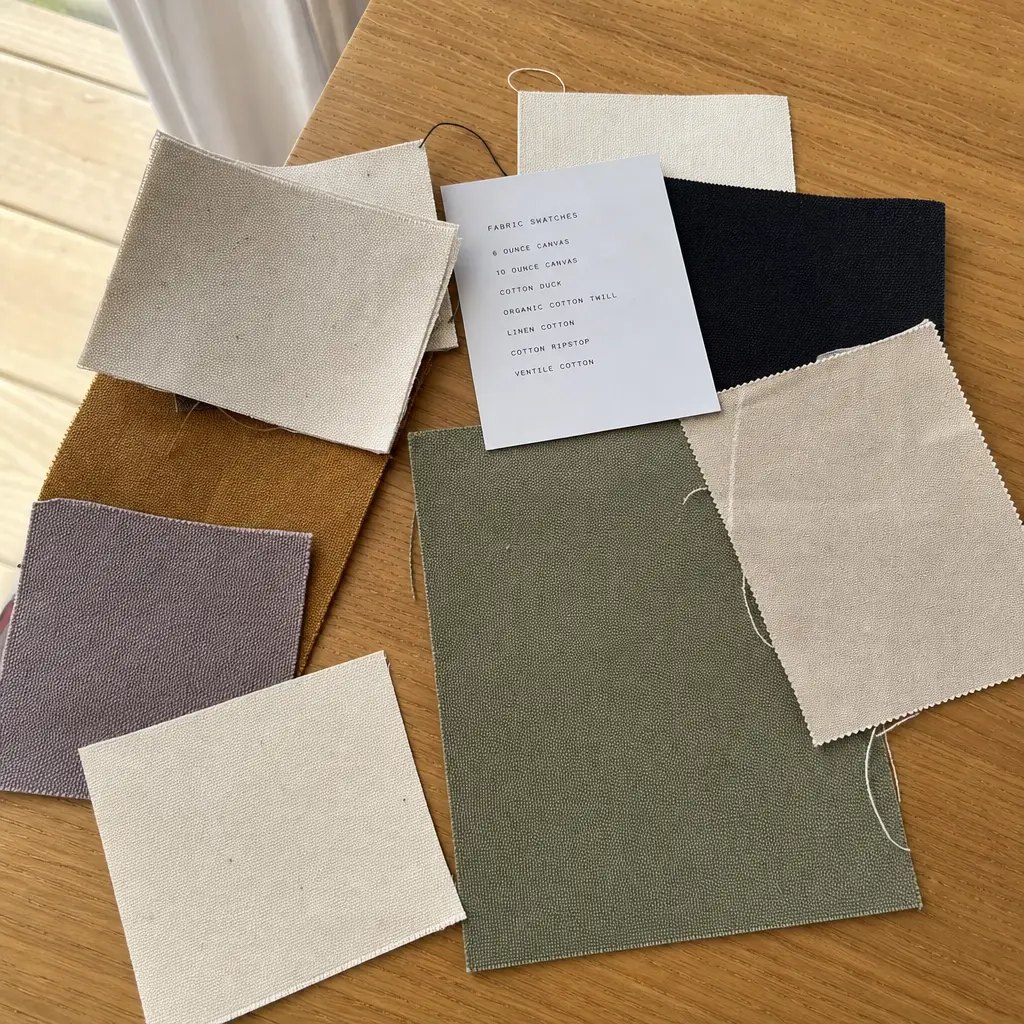
Canvas weight is one of the main cost and performance drivers. For most bookstore wine carriers, 10 oz to 12 oz cotton canvas, roughly 280-340 GSM depending on weave and finishing, gives a good balance of structure, print surface, and cost. Lighter fabric can be acceptable for low-cost event giveaways, but it may collapse on shelf and show bottle corners. Heavier 14 oz to 16 oz canvas looks premium but can be harder to sew neatly around gussets and dividers.
Buyers should also distinguish natural canvas, bleached canvas, dyed canvas, recycled cotton blend, and washed canvas. Natural canvas is common because it suits campus marks and has a straightforward price. Dyed canvas improves color blocking but raises colorfastness and shade-lot questions. Washed canvas gives a softer retail feel, but shrinkage, color variation, and higher labor cost must be included in the buying decision.
- Budget retail carrier: 8 oz to 10 oz canvas where low cost matters more than rigid shelf shape.
- Standard bookstore carrier: 10 oz to 12 oz canvas for better handle strength and print stability.
- Premium gift carrier: 12 oz to 16 oz canvas when the bag is part of a higher-value gift set.
- Dyed fabric orders: request lab dip approval, rubbing test, and confirmation of dye lot control.
- Natural fabric orders: approve acceptable specks and cotton seed marks before bulk production.
Handle, Gusset, and Divider Acceptance Criteria
Handle failure is the defect that most directly affects end users. A filled 750 ml bottle can weigh around 1.2 kg to 1.5 kg depending on glass and liquid. A two-bottle carrier may exceed 3 kg when the bag, divider, tissue, and retail inserts are included. The handle attachment should use box stitching, cross stitching, bartack reinforcement, or another agreed method that distributes load at the stress point.
Gusset and divider construction decide whether the bag functions like a real bottle carrier or only looks like one. For two-bottle carriers, the divider should be high enough to stop bottle bodies from hitting each other and low enough not to interfere with loading. If the divider is made from thin canvas, it can twist. If it is too thick, it adds cost and makes the folded bag bulky for packing.
- Handle width: commonly 2.5 cm to 3.8 cm depending on bag size and comfort requirement.
- Handle drop: define short hand-carry versus longer forearm carry before pattern making.
- Bottom seam: reinforce bottom corners where bottle weight concentrates.
- Divider seam: inspect inside stitching, not only outside appearance.
- Load test: use a test weight above the expected filled use weight and hold for an agreed time.
Print Method for Campus Logos and Licensed Marks
Screen printing is usually the most practical decoration method for wholesale canvas wine carriers when the artwork uses solid campus colors, mascot marks, or bookstore logos. It handles cotton canvas well, keeps unit cost reasonable at wholesale quantities, and allows clear color approval through a print strike-off. For dark dyed canvas, the quote may need an underbase layer, which affects ink handfeel, drying time, and price.
Heat transfer can be useful for complex artwork, gradients, or small detailed graphics, but buyers should evaluate the film edge, flexibility, and adhesion on textured canvas. Embroidery is possible for premium programs, but it can pucker lighter canvas and is often expensive for large filled logos. Woven labels or side labels are useful when the bookstore wants subtle branding or when the main panel must remain clean for gift use.
- Screen print: best for solid one-color to three-color logos and predictable wholesale cost.
- Heat transfer: useful for detailed art but requires adhesion and edge appearance approval.
- Embroidery: premium look but can distort canvas if backing and stitch density are not controlled.
- Woven label: good for small CTM, bookstore, or campus identity without a large printed panel.
- Licensing review: submit strike-off photos and physical samples early if university approval is required.
MOQ Logic and Cost Drivers Buyers Should Separate
A canvas wine carrier quote is usually built from fabric consumption, cutting labor, sewing complexity, print setup, print colors, finishing, packing, and export handling. The MOQ is not only a factory preference; it is connected to fabric purchasing, screen setup efficiency, line changeover, and carton packing. A two-bottle bag with divider and two print colors will not have the same MOQ logic as a simple single-bottle blank carrier.
For university bookstore programs, the common challenge is artwork splitting. One distributor may need the same carrier construction with several university logos. The best way to compare quotes is to ask for one base product price and then separate the print setup or small-batch surcharge by logo version. This avoids a misleading quote where one supplier hides setup cost inside a high unit price while another lists it separately.
- Separate base bag cost from decoration cost for clean quote comparison.
- Request MOQ per construction and MOQ per artwork, not only total order MOQ.
- Clarify whether screen charges are one-time, repeat-order, or charged again for every reorder.
- Ask whether fabric can be shared across several logo variants within the same production run.
- Confirm whether carton labels and barcode stickers create extra cost per bookstore destination.
Sample Approval Workflow That Prevents Bulk Mistakes
A good sample workflow uses several approval points, not one attractive photo. The blank construction sample proves bottle fit, handle length, gusset size, divider function, and fabric handfeel. The print strike-off proves ink color, logo size, edge sharpness, and print position. The pre-production sample combines the approved construction and decoration before bulk cutting starts.
Procurement teams should keep a sealed approved sample for comparison during inspection. If the order includes several university marks, each artwork should have at least a digital layout approval and, for licensed or high-risk colors, a physical strike-off. Phone photos are useful for speed, but they cannot replace physical checking when PMS color, fabric shade, print opacity, or handle strength matters.
- Blank sample approval: bottle fit, standing shape, handle comfort, divider position, and stitching strength.
- Print strike-off approval: Pantone color, ink coverage, line sharpness, logo size, and fabric reaction.
- Pre-production sample approval: final fabric, final print, final sewing, final label, and final packing method.
- Sealed sample control: keep one sample with buyer and one with factory to reduce later disputes.
- Revision tracking: label each sample with date, version, fabric weight, and artwork file name.
Packing and Carton Planning for Bookstore Receiving
Packing decisions affect freight cost, printed surface quality, and warehouse receiving. Flat packing is efficient for single-bottle canvas carriers, especially when the bag does not need to hold a rigid shape before display. Two-bottle carriers with dividers may need controlled folding so the divider does not bend in the wrong direction. Heavy compression can create permanent creases across printed panels.
University bookstores and distributors may have receiving rules for carton weight, carton size, SKU labels, and mixed cartons. A factory quote should include pieces per inner pack, pieces per export carton, carton dimensions, gross weight, net weight, and carton mark format. If cartons are too heavy, store staff may reject them or handle them poorly, increasing damage and shortage claims.
- Use flat packing when freight cube matters and creasing risk is controlled.
- Avoid tight rubber bands directly over printed panels or thick ink areas.
- Specify barcode, hangtag, polybag warning, and country-of-origin label requirements early.
- Keep logo variants separated by carton unless mixed cartons are clearly requested.
- Request carton drop or compression consideration when carriers ship with rigid inserts.
Lead Time Risks in University Bookstore Programs
Lead time risk usually appears before sewing starts. Fabric booking, lab dip approval, artwork correction, licensing approval, sample courier time, and deposit timing can each move the schedule. A supplier may quote a normal production lead time, but that number often begins after sample approval and material readiness, not after the first inquiry.
Bookstore programs often connect to fixed retail dates: homecoming, graduation, alumni weekend, holiday gift sets, and campus orientation. For those launches, the buyer should build a reverse schedule. Include sample revision time, production buffer, inspection window, export document preparation, customs clearance, and domestic delivery to the bookstore or distributor warehouse.
- Artwork delay: vector files, PMS references, and licensing approvals can hold sample making.
- Fabric delay: dyed or washed canvas may need lab dips and shade approval before cutting.
- Production delay: multiple logo variants increase setup time and carton sorting risk.
- Inspection delay: failed print or handle tests may require rework before shipment release.
- Logistics delay: carton cube, destination routing, and peak-season vessel space affect final arrival.
How to Compare Supplier Quotes Without Being Misled
Two quotes can look close but include different assumptions. One supplier may quote 10 oz natural canvas with one-color screen print and bulk flat packing. Another may quote 12 oz canvas, reinforced handles, individual hangtags, and separated carton labels. A procurement team should normalize the quote data before choosing a supplier, otherwise the lowest price may simply be the least complete specification.
The quote comparison should include unit price, fabric weight, print method, included colors, setup charges, sample costs, MOQ per artwork, packing quantity, carton dimensions, lead time basis, and inspection support. For importers and distributors, carton cube and gross weight can change landed cost enough to affect the buying decision. A slightly higher ex-factory price may be better if packing is efficient and rework risk is lower.
- Compare fabric GSM and finished bag size before comparing unit price.
- Identify whether print setup, labels, hangtags, and carton marks are included or excluded.
- Calculate landed cost using carton dimensions, not only unit price.
- Review sample quality against the same bottle and loading test for every supplier.
- Reject vague quotations that do not define fabric, print, MOQ split, packing, or lead time basis.
Specification comparison for buyers
| Spec decision | Recommended option | When it fits | Buyer risk to check |
|---|---|---|---|
| Fabric weight for standard bookstore retail use | 10 oz to 12 oz cotton canvas, usually around 280-340 GSM | Works for most single-bottle or two-bottle carriers where the bag must stand neatly on shelf and hold a printed campus logo | Canvas below 8 oz may collapse and wrinkle; canvas above 14 oz raises cost and can make seams bulky around dividers |
| Single-bottle versus two-bottle construction | Single-bottle for low price point; two-bottle with center divider for gift sets and alumni events | Single-bottle fits impulse sales near checkout; two-bottle fits licensed gift programs, holiday sets, and donor packs | Two-bottle bags need a stitched or inserted divider that reaches close to the base, otherwise bottles knock together in transit |
| Handle reinforcement | Self-fabric handles with box stitch or cross stitch at stress points | Suitable when carriers may hold 750 ml bottles, glass drink bottles, or heavy bookstore gift items | Straight lockstitch without reinforcement can tear at the handle root during loaded use or buyer inspection |
| Logo decoration method | Screen print for solid campus marks; heat transfer only for complex gradients or small photographic details | Screen print is usually best for bookstore quantities, spot colors, and durable flat logos | Ink bleeding on loose-weave canvas, poor PMS matching, or transfer film edge marks can cause licensing approval rejection |
| Interior bottle protection | Canvas divider, foam insert, or cardboard separator depending on retail price and packing method | Canvas divider gives a reusable product feel; cardboard separator works for lower-cost promotional packs | Thin dividers may shift; confirm bottle diameter, divider height, and whether the base keeps bottles separated |
| Shrinkage and washing expectation | Unwashed natural canvas for most retail carriers; pre-shrunk or washed canvas only if the buyer accepts higher cost | Unwashed canvas is common when bags are not intended for machine washing and need stable price | If care label implies washable use, expect shrinkage testing and possible print distortion after wash |
| Packing method | Flat pack by unit or bundle, inner polybag only if required, export carton with divider protection for shaped carriers | Flat packing saves freight and carton cube for university bookstore replenishment orders | Over-compression can crease printed panels; shaped two-bottle carriers may need controlled fold lines |
| MOQ and size assortment | One base construction with shared fabric and handle specs, then split print colors or bookstore names by agreed MOQ | Useful for campus chains, alumni associations, or distributors serving multiple bookstores | Too many small print variants increase screen setup cost, sampling time, and risk of mixed cartons |
Buyer checklist before sampling
- Define the carrier type before asking for price: single-bottle, two-bottle, four-bottle, or mixed-size wine and drink bottle use.
- State bottle dimensions and loaded weight, not only bottle volume; include diameter, height, and whether packaging sleeves are used.
- Choose a target canvas weight in oz or GSM and confirm whether the supplier quotes natural, dyed, bleached, or recycled-content canvas.
- Provide logo artwork in vector format with Pantone references, print size, print position, and whether licensing approval is required.
- Specify handle length, handle width, reinforcement stitch style, and required load test weight for acceptance.
- Confirm divider construction for multi-bottle carriers, including material, height, stitch position, and whether the divider is removable.
- Request pre-production sample approval for fabric, stitching, print color, logo size, barcode label, and final packing method.
- Require quote separation for bag unit cost, print setup, sample fee, carton packing, export carton marks, and any special labels.
- Set AQL or inspection thresholds for print defects, loose threads, broken stitches, size tolerance, carton shortage, and mixed styles.
- Confirm lead time by stage: material booking, sample revision, bulk production, inspection, packing, and vessel or courier handover.
Factory quote questions to send
- What canvas weight, yarn construction, and finished GSM are included in this quotation, and is the fabric dyed, natural, bleached, or washed?
- Is the quoted price based on one logo color, one print position, and one size, or does it include multiple campus bookstore artwork versions?
- What is the MOQ per bag construction and per print design, and what surcharge applies if we split the order across several university logos?
- Which print method is quoted, what is the maximum print area, and how many Pantone colors are included before extra screen charges apply?
- What handle reinforcement is included, and what loaded weight test can the factory perform before shipment?
- For two-bottle carriers, how is the divider attached, what material is used, and can the factory send photos of divider stitching from inside the bag?
- What sample types are available: blank construction sample, print strike-off, pre-production sample, and sealed production sample?
- How many pieces per carton are quoted, what are the expected carton dimensions and gross weight, and can cartons be adjusted for bookstore receiving limits?
- What inspection standard does the factory support, and which defects are treated as critical, major, and minor for canvas wine carriers?
- What is the realistic lead time after artwork approval and deposit, and which inputs from our side could delay production?
Quality-control points to confirm
- Fabric GSM should match the approved sample within agreed tolerance, commonly plus or minus 5 percent unless another tolerance is stated.
- Finished bag dimensions should be checked after sewing and pressing, not only after cutting, because seams and folds affect bottle fit.
- Handle attachment should pass a loaded hanging test using a weight heavier than the expected filled bottle load.
- Divider stitching on multi-bottle carriers should be secure, straight, and high enough to prevent glass-to-glass contact during normal handling.
- Print color should be compared against approved strike-off or Pantone reference under consistent lighting, not judged from phone photos only.
- Print adhesion should be checked by dry rub, tape pull where suitable, and light scratch testing based on the chosen ink system.
- Seams should have no broken stitches, skipped stitches, open seams, or loose thread clusters at handle roots and bottom corners.
- Carton count, style separation, barcode labels, and university logo variants should be verified before cartons are sealed for export.
- Printed panels should not be crushed by tight bundling, especially when thick ink, heat transfer, or dark canvas is used.
- Odor, mildew, oil marks, and dirty natural canvas panels should be treated as shipment risks, not only cosmetic issues.