Buying Problem
Wholesale canvas wine carriers for trade show exhibitors look simple until procurement tries to compare quotes. One supplier may quote a thin cotton wine sleeve, another may quote 12 oz canvas with a divider, and a third may include printing but not packing marks. The unit price difference can look attractive on a spreadsheet, but the real comparison depends on bottle fit, fabric weight, construction, artwork, packing volume, and whether the bag will survive being carried with a filled glass bottle.
For trade shows, the buying problem is usually fixed-date risk. A late or weak bag has little recovery value after the event starts. The best RFQ should therefore tell the factory how the carrier will be used: empty giveaway at the booth, pre-packed gift set for VIP meetings, distributor sample carrier, retail bundle, or post-event mailer. Each use changes the needed strength, print finish, carton plan, and inspection focus.
- Empty booth giveaway: lighter canvas may be acceptable, but print appearance still matters.
- Filled bottle handout: handle strength, base stability, and divider structure become critical.
- Retail gift pack: fabric handfeel, label finish, and crease control need tighter approval.
- Distributor event kit: carton labeling, mixed destination packing, and barcode control may be more important than decorative details.
Canvas Weight
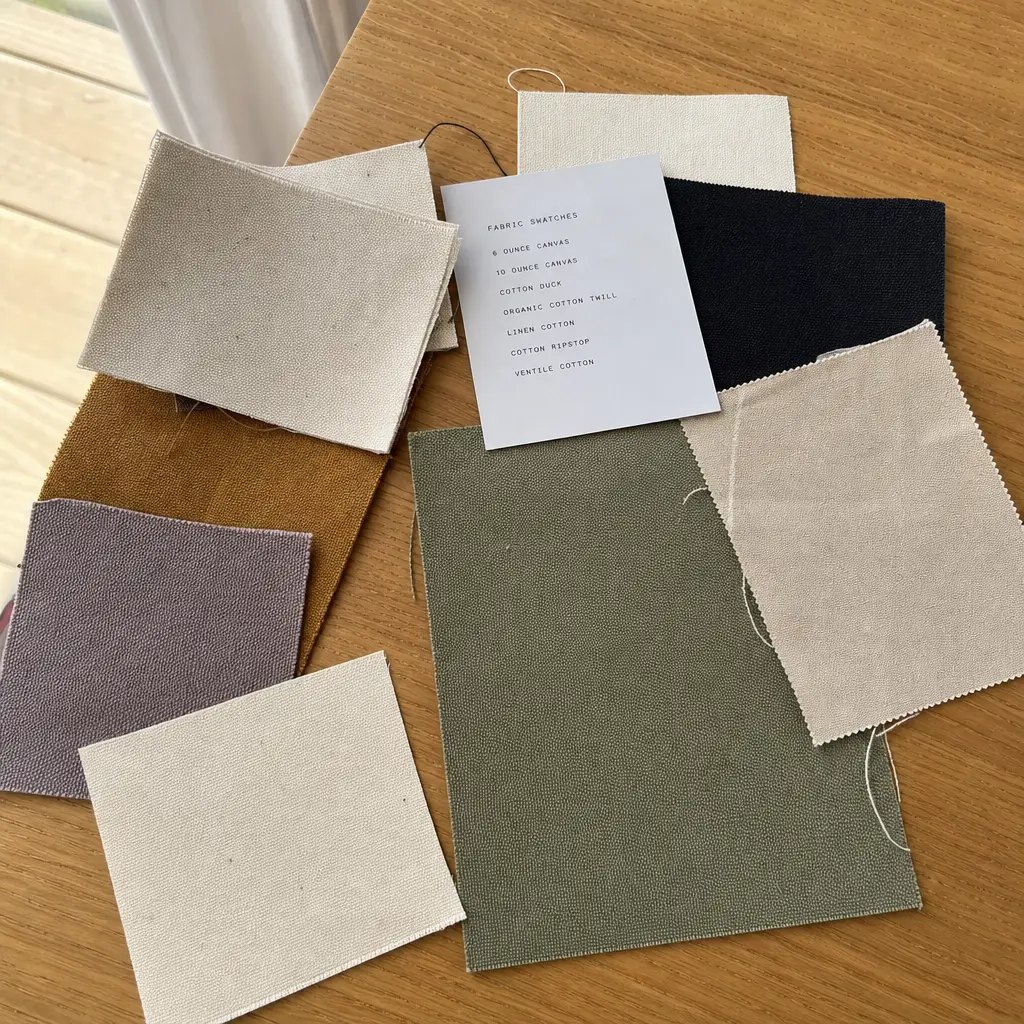
The most common quoting mistake is asking for canvas wine bags without defining fabric weight. In factory terms, canvas should be specified by oz and GSM. For many wine carriers, 10 oz to 12 oz canvas, roughly 280 to 340 GSM, gives a practical balance between strength, print surface, and freight cost. An 8 oz canvas can work for lightweight promotional sleeves, but it may collapse or wrinkle badly when displayed with a real bottle.
Heavier is not automatically better. A 14 oz canvas carrier feels substantial, but it raises fabric cost, sewing resistance, carton weight, and sometimes duty and freight impact. It can also make tight seams bulky around the bottom gusset. If the buyer wants a premium retail impression, heavier canvas may be justified. If the goal is a one-week trade show giveaway, a well-constructed 10 oz or 12 oz fabric often performs better commercially.
- Quote fabric as 10 oz / about 280 GSM or 12 oz / about 340 GSM, not only as cotton canvas.
- Set fabric tolerance in writing, because normal textile variation can affect handfeel and weight.
- For dyed canvas, include colorfastness expectations and note whether the shade must match a brand color.
- For natural canvas, accept that seed specks and slight shade variation are part of the material unless a cleaner grade is specified.
Carrier Structure
A canvas wine carrier is not one construction. A single bottle sleeve, a single bottle bag with handles, a two bottle carrier with a center divider, and a three bottle gift carrier all use different pattern logic. For a trade show exhibitor, the most common practical choices are a one bottle carrier with reinforced handles or a two bottle carrier with a divider. The divider should be sewn or secured so that two glass bottles do not knock against each other while being carried.
Bottle dimensions should be part of the RFQ. A standard 750 ml wine bottle is not the same as a champagne bottle or a tall spirits bottle. If the carrier is too narrow, the bag looks strained and the handle load concentrates at the top seam. If it is too wide, the bottle shifts and the giveaway feels loose. A boxed bottom helps the bag stand on a table, which matters for booth display and for kitting companies packing bottles before the show.
- Provide bottle height, base diameter, shoulder diameter if unusual, and filled weight.
- State whether the bag must stand upright when loaded.
- For two bottle carriers, require a divider height that prevents bottle contact during normal movement.
- Use reinforced handle stitching for any carrier expected to hold filled bottles.
Print Choices
For bulk canvas wine carriers, screen printing is usually the most stable and economical logo method when the design is one to three solid colors. It handles larger runs well and keeps unit cost predictable. However, canvas texture affects edge sharpness. Thin lines, small legal text, fine serif fonts, and QR codes can lose clarity unless the artwork is adjusted and tested on the actual fabric.
Heat transfer can make sense for multicolor artwork, gradients, or lower quantities, but buyers should verify handfeel, wash resistance if relevant, and whether the transfer edge is acceptable on a natural canvas surface. Embroidery is possible for premium programs, but it can pucker lighter canvas and usually costs more. Woven labels or side labels are useful when the front print needs to stay clean, especially for retail buyers who want a quieter brand presentation.
- Screen print: best for solid logos, event marks, and larger quantities.
- Heat transfer: useful for full-color graphics, but test edge feel and adhesion.
- Embroidery: premium look, better on heavier canvas, slower and more expensive.
- Woven label: clean branding option for retail or wine club packaging.
Bulk Pricing Logic
A reliable bulk pricing plan starts with understanding what the factory can combine in one production run. Quantity alone does not guarantee a lower price if the order is split across many artworks, canvas colors, or sizes. For example, 5,000 pieces with one fabric, one size, and one print is a different production job from 5,000 pieces split across ten regional logos. Cutting, screen setup, print alignment, packing segregation, and inspection all change.
Procurement teams should ask for price breaks that match realistic order decisions: 500, 1,000, 3,000, 5,000, and 10,000 pieces. The best comparison is not only unit price. It is unit price plus setup, sample cost, packing cost, inland freight, export carton volume, and expected defect allowance. If a supplier gives a very low unit price but leaves out print setup or uses a lower fabric weight, the apparent saving disappears during approval.
- Separate one-time costs from unit costs, including screens, sampling, artwork adjustment, and special packing.
- Request pricing per same artwork and pricing for mixed artwork programs.
- Compare carton CBM and gross weight because canvas wine carriers can be bulky when packed loosely.
- Clarify whether the quote includes export cartons, inner bags, hangtags, barcode labels, or retail sleeves.
MOQ And Order Splits
MOQ is driven by fabric procurement, cutting efficiency, print setup, and sewing line changeover. A factory may accept 300 pieces for a simple natural canvas wine sleeve, but a dyed canvas carrier with custom divider, multicolor print, and individual retail packing may need a higher MOQ to be workable. Buyers should not treat MOQ as a fixed number across every design.
For trade show exhibitors and distributors, the commercial question is often whether to combine event demand with post-show inventory. If the carrier design can be used after the show, ordering at the next price break may reduce unit cost. If the logo is event-specific and will expire after the exhibition, a smaller run with a slightly higher unit price may be smarter than carrying obsolete stock.
- Same size plus same artwork gives the cleanest MOQ and price break.
- Different fabric colors may require separate fabric minimums or dye lot planning.
- Regional logos can trigger separate print setup even when the bag body is the same.
- Event-dated artwork should be ordered closer to actual need, not inflated only to reach a price break.
Sample Approval
The approved sample should be more than a nice-looking photo. For canvas wine carriers, a useful pre-production sample uses the actual canvas weight, actual print method, final handle reinforcement, final divider if applicable, and proposed packing fold. A blank sample can approve dimensions, but it cannot approve ink behavior on textured fabric. A digital mockup can approve placement, but it cannot approve carrying performance.
The sample review should include a loaded bottle test. Put the intended bottle inside, lift by the handle, place it on a table, and check whether the base stands, the neck sits correctly, and the logo faces cleanly. For two bottle carriers, move the bag gently as a real visitor would. If bottles touch or the divider collapses, fix the pattern before mass production. That correction is cheap at sample stage and expensive after cutting.
- Measure body width, height, gusset, base, handle drop, and divider position.
- Compare fabric handfeel and thickness against the RFQ, not against memory.
- Review print opacity, edge sharpness, placement, and color under consistent lighting.
- Approve the packing fold because heavy creases across the print can become a visible complaint.
Packing And Freight
Packing affects both presentation and landed cost. Flat packing is common for canvas wine carriers, but the fold line should avoid the main logo whenever possible. For natural canvas, moisture protection matters because cotton can absorb odor and humidity during storage or ocean transit. For printed bags, ink-to-ink contact and heavy compression should be controlled so the logo does not transfer or crease.
For trade shows, carton handling is part of the product experience. A carton that is too heavy may be damaged at the advance warehouse or during booth setup. A carton with vague marks may be misplaced among other event materials. Procurement should request carton dimensions, gross weight, quantity per carton, and carton marks at quotation stage, not after production. This information is also needed for landed-cost comparison between suppliers.
- Keep carton weight practical for manual handling, especially when shipping to event warehouses.
- Use carton marks that match event, booth, SKU, destination, and purchase order requirements.
- Avoid folding directly through large printed logos when the artwork is sensitive to creasing.
- Request CBM by quantity so freight estimates are not based on guesswork.
Lead Time Risk
A trade show order should be scheduled backward from the date the goods must arrive at the booth, not from the opening day of the exhibition. Many shows require advance warehouse delivery before move-in. Importers also need time for customs clearance, local trucking, inspection, relabeling, or kitting. A factory production lead time that sounds acceptable may still be too late if it starts only after sample approval and final deposit.
The schedule should show each decision point: artwork confirmation, sample production, sample courier transit, sample comments, bulk fabric preparation, cutting, printing, sewing, inspection, packing, booking, and export. Rush orders are possible only when the design is simple and materials are available. The highest risk items are custom dyed fabric, multiple artwork versions, complex dividers, retail packing, and late changes to carton marks.
- Build sample revision time into the schedule, even when the first sample is expected to be correct.
- Lock artwork before screen making to avoid delays and extra setup charges.
- Confirm whether the quoted lead time starts after deposit, artwork approval, or sample approval.
- For fixed trade show dates, choose a slightly simpler construction over a late premium design.
Quote Data
A professional RFQ for wholesale canvas wine carriers should give the supplier enough information to cost the same product every time. The minimum data includes quantity, size, bottle dimensions, canvas weight, color, print method, artwork count, logo size, construction, packing, inspection requirement, shipment term, and destination. Without this, suppliers fill gaps with their own assumptions, and the lowest quote may simply be the thinnest specification.
When comparing offers, build a quote sheet that separates specification from commercial terms. Put fabric GSM, print method, MOQ, sample cost, production time, carton CBM, payment terms, and excluded charges into separate columns. This makes it easier to see whether one supplier is genuinely more competitive or just quoting a different bag. For importers and distributors, that discipline prevents margin surprises after the order is placed.
- Product: one bottle or two bottle carrier, dimensions, gusset, bottom type, divider, and handle style.
- Material: canvas oz/GSM, natural or dyed, shrinkage or colorfastness requirement if needed.
- Branding: artwork file type, Pantone colors, logo size, placement, print method, and number of versions.
- Commercial: quantity breaks, MOQ rules, sample charges, lead time, Incoterm, carton data, and inspection standard.
Specification comparison for buyers
| Spec decision | Recommended option | When it fits | Buyer risk to check |
|---|---|---|---|
| Sourcing route | Direct factory with in-house cutting, sewing, and print coordination | Best for trade show exhibitors ordering 1,000-20,000 pieces with custom size, divider, logo, and packing requirements | Confirm who controls print, packing, and final inspection; a trading-only supplier may quote fast but lose control during rush production |
| Fabric weight | 10 oz to 12 oz canvas, roughly 280-340 GSM, pre-shrunk or controlled shrinkage | Good balance for wine weight, print clarity, and shipping cost; suitable for one bottle and two bottle event carriers | Lower GSM may sag around the bottle neck; heavier canvas increases cost and carton weight without always improving perceived value |
| Construction style | Flat bottom wine carrier with boxed base, reinforced handle, and optional center divider for two bottles | Needed when the bag must stand during booth display or when distributors pack real bottles before the event | A simple sleeve bag may look cheaper in photos and can tip over if bottle diameter and base width are not matched |
| Print method | Screen print for solid logos; heat transfer only for fine gradients or low-volume multicolor artwork | Screen print gives stable unit cost for bulk orders and works well on natural or dyed canvas | Ink coverage on coarse canvas can look broken if the artwork has thin strokes, small text, or large solid panels |
| MOQ logic | Plan price breaks at 500, 1,000, 3,000, 5,000, and 10,000 pieces by same size and same artwork | Useful for exhibitors, importers, and distributors comparing event quantities against warehouse replenishment | Mixing colors, sizes, or artworks may split the production run and remove the expected bulk price advantage |
| Sample approval | Pre-production sample using actual fabric, actual logo method, handle reinforcement, divider, and packing | Important when the carrier will hold filled glass bottles, premium samples, or retail gift sets | Approving only a digital layout or blank sample can hide print placement, fabric handfeel, and bottle-fit problems |
| Packing plan | Flat packed by 25-50 pieces per inner bundle, carton weight kept practical for booth handling | Works for trade show shipments, distributor warehouses, and kitting companies preparing event packs | Over-compressed packing can crease printed areas; cartons that are too heavy create handling damage and event-site complaints |
| Lead time buffer | Allow sample time, artwork confirmation, bulk fabric preparation, sewing, printing, inspection, and export packing | Best for fixed-date trade shows where late arrival has no recovery value | A supplier quoting only sewing days may omit artwork revision, sample courier time, booking space, or peak-season congestion |
Buyer checklist before sampling
- Define the bottle type before quoting: 750 ml wine, champagne, spirits, or mixed bottle sizes, because diameter and height change the gusset, handle drop, and divider position.
- Specify fabric by oz and GSM, not only by the word canvas; request a tolerance range and confirm whether shrinkage is controlled before cutting.
- State the order split clearly: total quantity, number of artworks, number of fabric colors, number of sizes, and delivery destinations.
- Decide whether the carrier must stand upright when loaded; if yes, require a boxed bottom, correct base width, and a load test with a filled bottle.
- Send vector artwork with Pantone references, print size, print position, and whether small text must remain readable on textured canvas.
- Require a pre-production sample made with actual fabric, actual logo method, final seam structure, and proposed packing method.
- Set acceptance criteria for stitching, handle strength, print registration, color tolerance, stains, odor, and carton labeling before mass production starts.
- Request carton dimensions, gross weight, units per carton, and estimated CBM so freight and event handling costs can be compared accurately.
- Build schedule buffer for sample revisions, peak production periods, customs inspection, and trade show advance warehouse deadlines.
- Keep one approved sealed sample and one signed artwork file as the production reference for final inspection.
Factory quote questions to send
- What canvas weight in oz and GSM are you quoting, and what fabric tolerance should we expect in bulk production?
- Is the price based on natural canvas, dyed canvas, or washed canvas, and does the fabric need colorfastness or shrinkage testing?
- What bottle size did you use for pattern costing, including height, diameter, and expected filled bottle weight?
- Does the quoted construction include reinforced handles, boxed bottom, side gusset, bottom gusset, and divider if required?
- Which print method is included, how many colors are covered, and what is the maximum print area without a surcharge?
- What MOQ applies per size, per color, and per artwork, and how do price breaks change at 500, 1,000, 3,000, 5,000, and 10,000 pieces?
- What sample type will be provided before bulk production, and will it use actual canvas, actual printing, and final packing?
- What is the production lead time after sample approval, and what items are excluded from that timing such as courier, fabric dyeing, or booking space?
- How many pieces are packed per carton, what are the carton dimensions and gross weight, and can carton marks follow our trade show warehouse requirements?
- What inspection standard do you support, and can you provide production photos, inline findings, and final AQL results before shipment?
Quality-control points to confirm
- Fabric weight should be measured against the approved specification, with obvious thin, loose, stained, or heavily slubbed panels rejected before sewing.
- Bag size tolerance should normally stay within a practical range such as plus or minus 5 mm to 8 mm for main body dimensions, depending on construction.
- Handle attachment must withstand a loaded bottle test; reinforcement stitching should be even, secure, and positioned symmetrically.
- Divider position in two bottle carriers must prevent glass-to-glass contact during normal carrying and packing movement.
- Print color should be compared against the approved sample or Pantone target under consistent lighting, allowing for canvas texture but not major hue drift.
- Small text and QR codes should be tested on actual canvas before bulk approval; coarse fabric can reduce edge sharpness.
- Printed panels should be free from heavy smudging, pinholes beyond agreed tolerance, ink bleeding, and heat marks.
- Seams should have no skipped stitches, open seams, loose threads in visible areas, or needle damage around handle stress points.
- Packing should protect printed surfaces from transfer, heavy creasing, moisture, and carton abrasion.
- Final cartons should match the approved carton mark, quantity per carton, gross weight range, and destination label requirements.