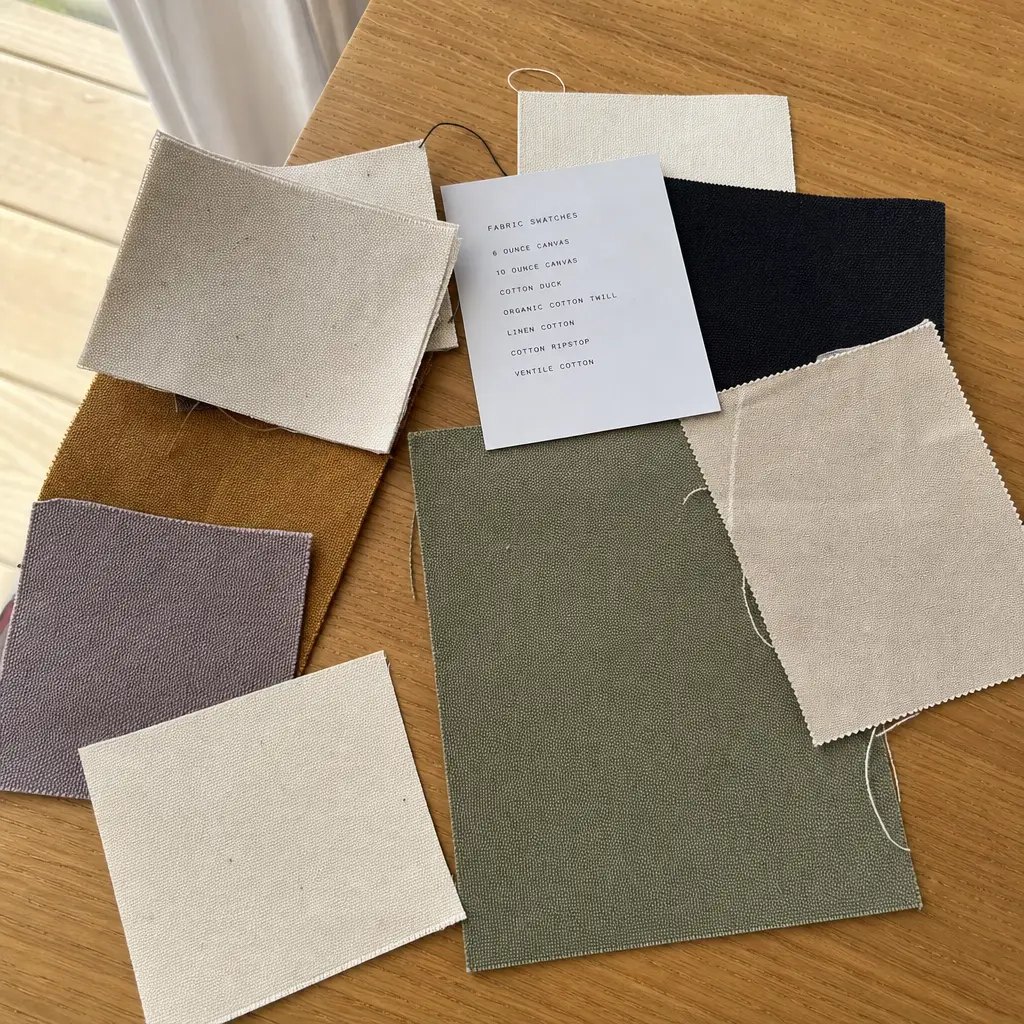
Why Compliance Matters for Canvas Wine Carrier Orders
Wholesale canvas wine carriers look simple, but they combine load-bearing sewing, food-adjacent gifting use, retail presentation, and brand decoration. A weak quote may list only size, color, and logo, while the real buying risk sits in fabric weight, divider strength, handle reinforcement, ink performance, carton packing, and supplier document control. For procurement teams and importers, the compliance checklist is not paperwork for the file. It is a way to stop unclear supplier assumptions before they become a bulk production problem.
Tech startups often buy canvas wine carriers for investor gifts, employee onboarding, customer appreciation, conference kits, or partner channel programs. These orders usually involve short launch windows and visible brand use. If the bag tears, the print cracks, or the carrier does not fit the bottle selected by the marketing team, the issue becomes operational and reputational at the same time. The strongest RFQ treats the wine carrier as a small engineered textile item, not a generic promotional bag.
- Primary category: Wine & Bottle Bags.
- Main buying problem: proving the supplier can make a safe, consistent, compliant carrier before deposit and bulk cutting.
- Typical order stakeholders: procurement, brand, events, retail, logistics, and compliance teams.
- Common failure point: supplier quotes a low unit price before the bottle format, fabric weight, print method, and packing are locked.
Define the Bottle Fit Before Discussing Price
The first compliance item is bottle geometry. A 750 ml Bordeaux bottle is not the same buying spec as a Burgundy bottle, Champagne bottle, sparkling wine bottle, olive oil bottle, or craft spirits bottle. Outside bag dimensions do not tell the full story because the internal compartment is reduced by seam allowance, divider thickness, fabric stiffness, and bottom construction. A buyer should provide the actual bottle height, diameter, shoulder width, and loaded weight, or send a bottle drawing to the supplier.
For two-bottle and six-bottle canvas wine carriers, divider layout is a production detail, not a decorative choice. A divider that is too low lets bottles knock together. A divider that is too tight slows packing and may deform the carrier. A soft divider can work for short event transport, while a reinforced divider or cross-divider is better for retail gift sets and distributor handling. The RFQ should state whether the carrier is for hand delivery, retail shelf display, courier shipment inside another carton, or reusable customer carry.
- State bottle type and maximum bottle diameter in the RFQ.
- Request internal usable compartment size after sewing, not only flat bag dimensions.
- Define whether the carrier must stand upright when loaded.
- For Champagne or sparkling bottles, confirm neck clearance and upper opening width.
- For retail gift packs, test fit with tissue, sleeve, hangtag, or bottle collar included.
Choose Canvas Weight by Use, Not by Habit
Canvas wine carriers are commonly quoted in 10 oz, 12 oz, 14 oz, or 16 oz cotton canvas, though some factories describe fabric in GSM. As a working conversion, 10 oz canvas is often around 340 GSM, 12 oz around 407 GSM, 14 oz around 475 GSM, and 16 oz around 542 GSM, depending on weave and finishing. The number alone does not guarantee strength, but it helps compare quotes. If one supplier quotes 12 oz and another quotes 280 GSM cotton, the comparison is not equal.
For single-bottle event gifting, 10 oz or 12 oz canvas can be sufficient if the handle stitching is reinforced. For two-bottle carrier programs, 12 oz to 14 oz is a more practical starting point. For six-bottle retail or winery-style carriers, 14 oz to 16 oz may be needed, especially if the carrier must hold shape on shelf. Heavier fabric improves structure and perceived value, but it increases material cost, sewing difficulty, carton weight, and freight volume. A smart buyer links GSM to intended loading and presentation rather than simply selecting the heaviest fabric.
- Natural unbleached canvas usually gives the most stable MOQ and lead time.
- Dyed canvas adds shade approval, dye fastness checks, and possible higher MOQ.
- Washed canvas gives a softer handfeel but needs shrinkage and shade control.
- Laminated or coated canvas may improve structure but changes recyclability and handfeel.
- Organic cotton or recycled cotton requires document scope review, not just a supplier claim.
Match Print Method to Logo Risk
Logo decoration is where many wine carrier orders lose time. Screen printing is usually the most cost-effective method for solid tech startup logos, one to three spot colors, and repeat bulk runs. It works well on natural canvas, but the buyer must approve ink color, print size, print placement, and curing. Fine type can fill in on coarse canvas, so artwork that looks sharp on a PDF may not be suitable for a woven cotton surface. Small legal lines, QR codes, and thin gradient marks need early review.
Heat transfer can handle full-color artwork and smaller details, but it may change the handfeel and can look less integrated on natural canvas. Embroidery gives a premium result but may pucker thinner canvas and is usually slower for large coverage. Woven labels or sewn side labels are useful when the bag should remain clean and retail-friendly. For supplier compliance, the buyer should know whether printing is done in-house or by a subcontracted print shop. If print is outsourced, sample timing, color control, and rework responsibility must be written into the quote.
- Use screen print for clean spot-color logos and strong cost control.
- Use heat transfer for complex color artwork after testing adhesion and handfeel.
- Use embroidery only after checking puckering, thread color, and reverse-side finish.
- Use woven or cotton labels when long-term brand durability is more important than large logo coverage.
- Set print placement tolerance, such as plus or minus 5 mm, before approving the sample.
Understand MOQ Logic Before Negotiation
MOQ for wholesale canvas wine carriers is driven by fabric sourcing, cutting efficiency, sewing setup, print setup, and packing labor. A supplier may accept a lower MOQ for natural canvas because greige or natural fabric is easier to source and can be shared across other bag orders. Custom dyed canvas, special weave, custom lining, custom webbing, or Pantone-matched handles usually increases MOQ because the factory must book a separate fabric or dye lot. The same applies to small batches split across many logo colors or delivery addresses.
Procurement teams should not negotiate MOQ only by pushing the quantity down. A better route is to ask what changes make the order easier to produce. For example, keeping the same carrier body and changing only the logo may be more efficient than changing bag size by department. Using one natural canvas body with different paper hangtags can reduce production risk. If the order is for a tech startup launch with uncertain demand, consider a first run using a standard body, then move to full custom construction after bottle fit, print feedback, and channel response are proven.
- Lower MOQ is more realistic with natural canvas, standard size, and one print color.
- Higher MOQ is likely with dyed fabric, custom fabric weight, private mold hardware, or multiple size splits.
- MOQ by color matters when the order includes black, navy, natural, and custom-dyed options.
- MOQ by logo method matters when comparing screen print, embroidery, labels, and transfer.
- MOQ by packing style matters if some units need retail belly bands and others need bulk cartons.
Read Supplier Quotes Beyond Unit Price
A professional quote for canvas wine carriers should contain enough production data to let a buyer compare suppliers on equal terms. Unit price alone is not useful if one supplier includes 12 oz canvas, reinforced handles, individual polybags, and export cartons, while another quotes 10 oz fabric, loose bulk packing, and no print setup. The RFQ should force each supplier to quote against the same fabric, dimensions, print method, carton packing, sample cost, lead time, and Incoterms.
Quote data also reveals supplier maturity. A capable factory should be able to state pieces per carton, carton size, gross weight, sample lead time, bulk lead time, payment terms, and inspection availability. If a supplier cannot explain fabric weight tolerance, print setup cost, or carton packing, the buyer may face hidden charges later. For importers and distributors, landed-cost comparison requires carton volume and weight, not just FOB unit price. A slightly higher unit price can become cheaper landed cost if the packing is efficient and the defect risk is lower.
- Compare FOB, EXW, CIF, DDP, or delivered terms carefully; they are not interchangeable.
- Separate tooling, screen setup, sample, label, hangtag, and special packing charges.
- Request carton dimensions and gross weight for freight estimate before final supplier selection.
- Confirm whether price includes export carton, moisture protection, barcode labels, and carton marks.
- Keep a quote comparison sheet with fabric, size, print, packing, MOQ, lead time, and document status.
Verify Supplier Compliance Evidence
Supplier compliance for canvas wine carriers should be practical and document-based. Buyers may need material safety information, azo-free dye confirmation, REACH-related declarations for EU markets, CPSIA considerations if products may be used around children, or retailer-specific restricted substance lists. Not every order needs every certificate. The right question is which documents are required by the sales channel, destination market, and customer policy. A corporate gift order may need less than a national retail order, but basic material traceability still matters.
Certificates must be checked for scope. A supplier may show an OEKO-TEX or GOTS certificate that belongs to a fabric mill, not the sewing factory, or covers a different material. This can still be useful, but it must be understood correctly. Ask for the holder name, certificate number, validity date, product scope, and material coverage. If a startup has an ESG policy, the purchasing team should separate marketing claims from verifiable documents. A claim such as eco-friendly canvas is not a compliance document.
- Match certificates to the material, dye, ink, or finished product being purchased.
- Check whether the document holder is the fabric mill, print shop, sewing factory, or trading company.
- Confirm the expiry date and product scope before using the document for retailer submission.
- For dyed canvas, request dye and restricted substance declarations relevant to the target market.
- For recycled or organic cotton, require transaction or scope documents where the channel requires them.
Approve Samples With Measurable Acceptance Criteria
A sample should answer production questions, not just show the buyer a nice-looking bag. The first sample may be a construction sample made from available fabric to confirm size and sewing. The pre-production sample should use bulk fabric, final thread, approved print method, final handle construction, label placement, divider structure, and intended packing. Buyers should clearly state which sample is for concept review and which sample is the locked production standard.
Sample approval should include measurements, bottle fit, handle lift, print appearance, seam quality, and packing simulation. A practical test is to load the carrier with the actual bottle weight and lift repeatedly by the handles while observing seam stress. For two-bottle and six-bottle designs, insert bottles and check whether the divider shifts or the base deforms. If print color is important, compare the sample to a Pantone reference or approved color chip under consistent light. Do not approve a sample based only on photos unless schedule risk is accepted.
- Record finished width, height, gusset, handle length, and compartment size.
- Photograph the approved sample from front, back, side, bottom, inside, and print close-up.
- Mark approved fabric weight, thread color, print color, and label position.
- Test bottle insertion and removal without tearing, excessive friction, or divider collapse.
- Keep one approved sample with the buyer and one sealed sample at the factory.
Set QC Thresholds Before Bulk Sewing
Quality control for canvas wine carriers should focus on load safety, appearance, and order accuracy. Critical defects include handles pulling out, open seams in load-bearing areas, wrong material, wrong logo, unsafe contamination, mold, strong chemical odor, or incorrect product that cannot meet the purchase order. Major defects include visible print defects, wrong dimensions outside tolerance, poor divider sewing, severe fabric stains, broken stitches, and carton packing errors. Minor defects include small loose threads or slight cosmetic variation within the approved standard.
For wholesale orders, buyers commonly use random inspection based on AQL sampling, but the acceptance levels should match the sales channel. A retail launch or distributor program may need tighter visual standards than a one-day internal event giveaway. The inspection should include measurement checks, print rub checks, handle strength observation, seam review, carton count, label verification, and barcode scanning if applicable. The supplier should understand rework responsibility before inspection starts, not after a failed report.
- Use tighter control for retail shelf goods, gift sets, and premium customer programs.
- Define critical, major, and minor defects in the purchase order or quality agreement.
- Require inspection when goods are fully produced and at least 80 percent packed, unless another stage is agreed.
- Reject mixed fabric shades, wrong logo position, weak handles, mold, or incorrect carton marks as serious issues.
- Keep defect photos and inspection reports linked to supplier scorecards for future sourcing decisions.
Control Packing, Freight, and Schedule Risk
Packing affects both presentation and landed cost. Canvas wine carriers can be bulk packed, individually polybagged, packed with paper belly bands, folded with hangtags, or placed in retail-ready inner cartons. Bulk packing is cheaper and reduces plastic, but it may increase wrinkling and makes retail distribution slower. Individual polybags protect against dirt and moisture, but some buyers avoid plastic for ESG reasons. Paper bands or recycled paper sleeves can improve presentation but add labor and require print accuracy.
Lead time should be broken into stages: artwork confirmation, sample production, sample transit, sample approval, fabric booking, cutting, printing, curing, sewing, trimming, packing, inspection, and shipment. A normal quote that says 25 to 35 days after approval is not enough for a hard launch date. If the order is for a tech startup event, investor meeting, retail drop, or distributor campaign, build a date-based schedule with approval deadlines. The biggest schedule risks are late artwork, custom dyed fabric, failed print sample, slow compliance document review, and missed vessel cutoff.
- Request carton dimensions and pieces per carton before freight quoting.
- Avoid overpacked cartons that crush handles, deform dividers, or exceed safe manual handling weight.
- Use moisture protection for ocean freight, especially during humid seasons.
- Align carton marks with warehouse receiving rules, not only supplier convenience.
- Reserve time for inspection and possible rework before the shipment cutoff.
Specification comparison for buyers
| Supplier option | What to verify | Commercial advantage | Buyer risk to control |
|---|---|---|---|
| Direct sewing factory | fit-test photos with reference bottle, bottom reinforcement close-up, handle load proof, and final carton photo set | Better sample-to-bulk control and faster production feedback | May be weaker on export paperwork or branded packing unless checked early |
| Trading company | Factory name, production photos, trim-source proof, and who owns QC decisions | Can coordinate small mixed orders and extra services | Markup can hide real factory capability and slow defect decisions |
| Specialized bag workshop | bottle fit, bottom reinforcement, handle or cord strength, divider option, seam allowance, and upright stability | More practical for detailed construction, trims, and repeat programs | Capacity may be limited during peak seasons |
| Low-price general supplier | cotton canvas, jute, felt, nonwoven, or laminated paper sized to bottle diameter, weight, and condensation risk | Useful for simple promotional runs with loose specs | Material downgrades, weak packing, and vague inspection scope can erase savings |
| Retail-ready supplier | upright or flat packing, bottle-protection insert, carton count, moisture control, and retail display orientation | Can handle labels, SKU separation, carton marks, and receiving rules | Higher unit cost must be compared against reduced warehouse work |
| Compliance-focused supplier | Fabric records, labeling review, test plan, and production traceability | Safer for retail programs and repeat brand orders | Documentation claims need evidence, not only sales language |
| Local sample room plus bulk factory | Signed sample, bulk factory handoff, first-piece photos, and deviation owner | Good for complex branding before large production | Sample room quality may not match bulk line unless handoff is controlled |
Buyer checklist before sampling
- Define bottle type before quoting: 750 ml Bordeaux, Burgundy, Champagne, craft spirits, or mixed bottle formats.
- State carrier format clearly: single bottle, two-bottle, four-bottle, six-bottle, divider type, handle length, and whether bottles must stand upright.
- Specify fabric by weight and finish, such as 10 oz, 12 oz, 14 oz, or 16 oz cotton canvas, natural unbleached or dyed canvas.
- Confirm whether fabric weight is quoted in oz per square yard or GSM; request the factory conversion and tolerance.
- Provide finished bag dimensions plus internal usable bottle compartment size, not only outside width and height.
- Require reinforcement details for handles, divider base, side seams, and load-bearing points.
- Lock print method by artwork style: screen print for solid logos, heat transfer for complex color, embroidery or woven label for premium branding.
- Set logo placement tolerance, print color standard, and acceptable ink coverage before sample approval.
- Request one physical pre-production sample using bulk fabric, bulk thread, and final print method before mass cutting.
- Ask for MOQ by construction, color, and print method, not a single vague order minimum.
Factory quote questions to send
- Are you a direct canvas wine bag factory, trading company, decorator, or stock goods supplier?
- What fabric weights can you supply for this style, and are they measured in oz or GSM?
- What is the actual finished size and internal compartment size for the bottle format we specify?
- Can the handle and divider construction safely hold the target bottle weight after repeated lifting?
- Which print methods are available in-house, and which are subcontracted?
- What is the MOQ for natural canvas, dyed canvas, custom fabric color, and each logo method?
- Does your quote include sampling, logo setup, carton packing, export documents, and inspection support?
- What fabric, dye, ink, or finished product compliance documents can you provide, and whose name appears on them?
- What are your normal sample lead time and bulk lead time after final approval?
- How many pieces fit per export carton, and what are the carton dimensions, gross weight, and net weight?
Quality-control points to confirm
- Fabric weight should match the approved spec within agreed tolerance, commonly plus or minus 5 percent unless otherwise negotiated.
- Finished size should match the approved sample and tolerance sheet; bottle compartments must fit the intended bottle without forcing.
- Handle attachment should include reinforced stitching, cross-stitching, bartack, or equivalent load-bearing construction.
- Side seams, bottom seams, and divider seams should have no skipped stitches, open seams, broken thread, or loose ends affecting strength.
- Print should match the approved color standard, with clean edges, no cracking, no major pinholes, no misregistration, and proper curing.
- Dyed canvas should be checked for shade consistency, rubbing fastness, odor, and visible dye streaks.
- Inside dividers should stand correctly, reach the intended height, and not collapse when bottles are inserted.
- Labels, hangtags, care labels, and barcode stickers should match the purchase order and packing instruction.
- Cartons should meet export strength requirements, with correct carton marks, no overloading, and enough internal protection to prevent deformation.
- Random inspection should include bottle fit test, handle lift test, print rub test, seam pull observation, measurement check, and packing count verification.