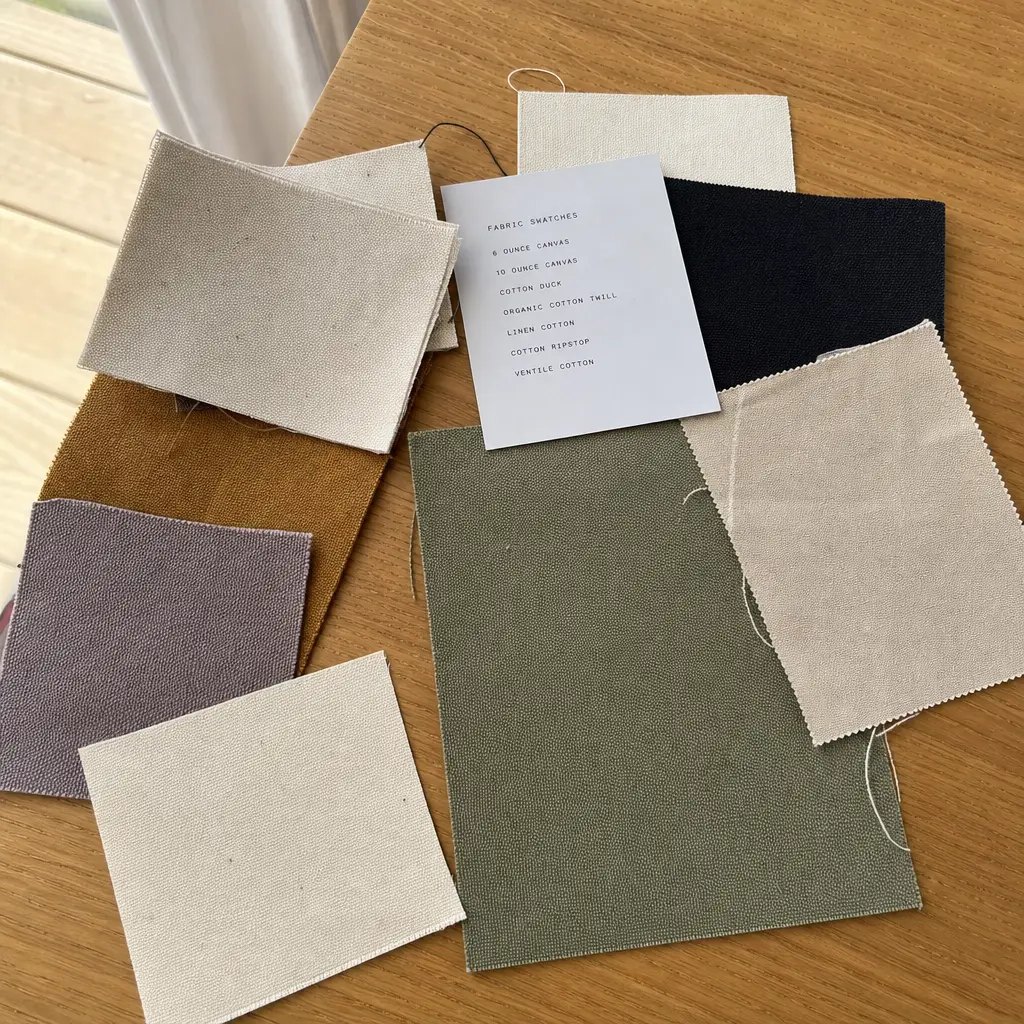
Define the carrier around the skincare product, not around the bag catalog
Wholesale canvas wine carriers for skincare brands are usually not bought for wine alone. They are used for glass body oils, facial mists, bath salts, fragrance bottles, refill containers, candles, influencer kits, or co-branded retail gifting. The buying problem is fit and protection. A carrier that looks acceptable empty can become unstable when a tall frosted bottle, pump cap, and outer sleeve are inserted.
Start the RFQ with the product load. Give the factory the filled weight, bottle diameter, shoulder shape, cap height, and whether the retail carton stays on the bottle. A 750 ml wine bottle and a 250 ml skincare bottle can have very different balance points. If the product is a high-value glass item, divider height and handle reinforcement matter more than saving a few cents on fabric.
- For a single hero bottle, specify internal width and gusset based on the largest bottle diameter plus clearance for labels and caps.
- For two bottles, require a full-height divider or reinforced center seam so containers do not hit each other during carryout.
- For mixed gift sets, provide a loading diagram showing bottle, jar, card insert, and tissue paper position.
- If the carrier must stand on a shelf, use a wider gusset and heavier fabric; narrow gussets collapse more easily.
- If the product has a pump, cap, glass dropper, or spray head, confirm the opening height protects it without hiding the branded label completely.
Fabric weight choices that affect structure, print, and freight
The word canvas is too vague for purchasing. For this product category, many buyers compare 8 oz, 10 oz, 12 oz, and sometimes 14 oz cotton canvas. In practical terms, 10 oz to 12 oz canvas, roughly 300-410 GSM depending on the weave, is the common range for a reusable bottle carrier that needs enough body to hold shape without becoming too bulky in a carton.
Lighter canvas can work for event giveaways or low-load promotions, but it tends to wrinkle and sag when used for glass packaging. Heavier canvas gives a more premium hand feel, yet it raises unit cost, makes seams thicker, increases carton volume, and can reduce print clarity around heavy ink coverage. For a skincare brand, the best fabric is usually the one that protects presentation after shipping and retail handling, not the one that feels thickest in a showroom.
- 8 oz canvas: suitable only for light paper-wrapped bottles or low-cost event bags; not ideal for premium glass skincare.
- 10 oz canvas: good balance for single-bottle carriers and moderate retail gift sets.
- 12 oz canvas: stronger structure for two-bottle carriers, heavier glass, or premium gifting.
- 14 oz canvas and above: useful for rugged programs but may create sewing bulk at gussets and handle attachments.
- Natural canvas may show cotton specks and slubs; bleached canvas gives a cleaner print base but can highlight stains and handling marks.
Construction details that prevent bottle knocking and handle failure
Most carrier failures are construction failures, not fabric failures. A strong canvas panel does not help if the handle stitching is short, the divider is shallow, or the gusset seam is not locked correctly. For retail buyers and distributors, the highest-risk points are the handle attachment, top opening, bottom corners, and the center divider on two-bottle formats.
A practical specification should include handle width, handle drop, stitch pattern, thread color, divider height, and seam finish. Cross-stitch or box-X reinforcement is preferred for heavier filled weight. Overlock seams can be acceptable for the inside, but they should be trimmed cleanly. For skincare bottles with delicate labels, rough raw seams or loose threads can scratch labels and create customer complaints even when the bag itself does not break.
- Handle width should normally finish around 2.5-3 cm for comfortable carrying of glass products.
- Handle drop should match the use: short hand carry for retail gifting, longer drop only if the carrier is designed for shoulder use.
- Divider height should reach near the bottle shoulder for glass-to-glass protection.
- Bottom gusset seams should be even and not twisted; a twisted gusset makes the carrier lean on shelf.
- Thread tension should be balanced, with no skipped stitches, puckering, or loose loops at handle roots.
Print method selection for clean skincare branding
Skincare artwork often includes small typography, ingredient marks, minimalist logos, and soft color palettes. Canvas is a textured fabric, so print method matters. Water-based screen printing works well for solid one- to three-color logos and gives a natural hand feel. Pigment printing is also common for cotton canvas. Heat transfer can reproduce gradients or fine multi-color artwork, but it needs adhesion testing and may feel less integrated with the fabric.
Embroidery can look premium on heavier canvas, but it is not suitable for tiny ingredient text or thin serif type. It also adds cost, creates thread texture, and can pucker lighter panels. If the wine carrier is part of a skincare gift set displayed in store, approve the print at actual size on the chosen canvas, not only as a digital proof. A logo that is sharp on paper may lose small details on 10 oz natural canvas.
- Use screen print for bold logos, simple icons, and larger text.
- Avoid very small reversed-out text on natural canvas because the weave can close the letters.
- Keep artwork at least 2 cm away from side seams, gusset folds, and handle stitch lines.
- For soft cosmetic colors, provide Pantone references and accept that natural canvas changes perceived color.
- Run a dry rub test and a fold-line check on printed samples before approving mass production.
MOQ logic and cost drivers behind supplier quotations
MOQ for canvas wine carriers is driven by more than a supplier's sales policy. Fabric availability, dye lot, cutting efficiency, screen setup, sewing line changeover, and packing labor all affect the minimum. A stock natural canvas with one-color print can usually support a lower MOQ than a dyed fabric, custom webbing handle, multi-color transfer, or retail-ready individual packing.
When comparing supplier quotes, separate real cost drivers from vague line items. A lower unit price can hide thinner canvas, smaller dimensions, unreinforced handles, cheaper carton packing, or a different print process. For importers, the landed cost difference may also change after carton cube is known. Heavier fabric and bulky folding can increase freight enough to cancel a small ex-factory saving.
- Fabric weight and material: heavier cotton canvas costs more and takes more space.
- Print setup: each screen color may require a screen charge and production setup time.
- Cutting efficiency: unusual shapes and deep gussets create more fabric waste.
- Sewing complexity: dividers, binding, bartacks, and inner labels add labor minutes.
- Packing: individual polybags, barcode stickers, plastic-free wraps, and carton separators add cost.
- Inspection requirement: third-party inspection, extra tests, or photo reporting may add service cost but reduce shipment risk.
Sample approval should simulate real packing and retail handling
A photo sample is not enough for this product. The pre-production sample should be made with the same fabric weight, sewing method, print process, divider, handle reinforcement, and packing fold that will be used in bulk. If the factory cannot use bulk fabric for the first prototype, label it clearly as a construction sample and require a second approval sample before production.
Test the sample with the actual skincare bottle or a dummy weight of equal size and mass. Load it, lift it, set it down, and leave it hanging for a period. Look for handle stretch, seam opening, panel distortion, divider movement, and whether the printed logo warps after loading. Also insert and remove the product several times to see whether seams catch labels or caps.
- Measure finished width, height, gusset, handle drop, divider height, and logo position against the drawing.
- Load test with intended packed weight plus a safety margin rather than testing empty bag strength.
- Check whether the bag stands upright with product inside and whether the base sits flat.
- Rub the printed logo with a dry white cloth and inspect for ink transfer.
- Fold the sample as it will be packed in cartons and reopen it after 24 hours to review crease marks.
- Keep one signed approval sample at the buyer office and one sealed reference sample at the factory.
Quality inspection checklist for bulk production
The keyword 'wholesale canvas wine carriers for skincare brands quality inspection checklist' points to the main procurement risk: a reusable gift carrier is a packaging item, a brand display surface, and a load-bearing product at the same time. Inspection must cover appearance, measurement, function, and packing. If QC only reviews the logo, weak handles and unstable dividers may reach the warehouse.
Set acceptance criteria before production starts. Fabric defects such as large stains, oil marks, holes, heavy slubs on the logo area, and color inconsistency should be classified clearly. Sewing defects such as skipped stitches, open seams, broken thread, loose handle roots, and crooked dividers should be counted as major defects when they affect use. Print defects should be judged at normal viewing distance but with additional checks for rub resistance and placement.
- Fabric: no visible oil stains, mildew marks, holes, major weaving defects, or strong shade variation within the same carton.
- Size: finished measurements within agreed tolerance, with special focus on gusset and handle drop.
- Print: correct artwork, color direction, registration, placement, opacity, and no obvious ink smear or pinhole clusters on the logo.
- Sewing: even stitch length, secure handle bartacks, clean seam joins, no open seams or loose threads longer than the agreed limit.
- Function: loaded carrier holds intended weight without seam opening, handle failure, or divider tearing.
- Inside finish: trimmed threads and no fraying that contacts product labels.
- Packing: correct quantity per carton, dry cartons, readable carton marks, no heavy compression damage, and SKU separation.
Packing choices that change receiving efficiency and product presentation
Packing is often treated as a final detail, but it affects carton cube, creasing, warehouse receiving, and retail kit assembly. Flat packing is efficient for freight, but over-compression can leave hard creases across the logo area. Folding the handle incorrectly can twist the handle roots and make the carrier look distorted when unpacked. For premium skincare launches, the carton opening experience at the kitting facility matters.
Decide whether the bags will be shipped in bulk bundles, inner polybags, kraft paper wraps, or individual retail sleeves. Plastic-free packing may align with brand values, but it provides less moisture protection during long ocean transit unless the export carton and storage conditions are controlled. If a distributor or retail DC will receive the goods, carton labels and SKU separation are just as important as the bag itself.
- Use inner bundles of 25 or 50 pieces when warehouse teams need fast counting.
- Keep one SKU per carton unless mixed cartons are specifically required and labeled.
- Limit carton gross weight to a level your warehouse can handle safely.
- Place print faces in a consistent direction to reduce rubbing between printed panels.
- Use moisture protection where ocean shipping, humid storage, or natural cotton canvas is involved.
- Add carton marks with PO number, item number, color, quantity, carton number, and destination if required.
Lead time risk from artwork, material booking, and inspection windows
Lead time should be broken into stages: artwork confirmation, sample making, sample transit, buyer review, material booking, cutting, printing, sewing, finishing, inspection, packing, export documents, and freight. A supplier may quote a production lead time that starts only after sample approval and deposit, while the buyer's launch calendar counts from the first RFQ email. That gap creates missed launch dates.
Canvas wine carriers with standard natural fabric and one-color print have fewer schedule risks than dyed fabric, custom woven labels, multi-color heat transfers, or plastic-free custom packing. Inspection also needs time. If the order ships immediately after sewing without a final inspection window, defects are discovered at the buyer's warehouse when the problem is much more expensive to correct.
- Allocate time for artwork proofing, especially if the logo has small typography or color-sensitive skincare branding.
- Do not book bulk fabric until the size, GSM, print method, and divider construction are approved.
- Treat sample courier time and buyer internal approval time as real calendar days.
- Reserve at least one inspection and rework window before the planned ship date.
- If goods are needed for a launch event, define the latest acceptable warehouse arrival date, not only the factory ship date.
- For repeat orders, keep a golden sample, fabric reference, and print drawdown to reduce approval time.
Quote comparison method for importers and distributors
A fair quote comparison needs more than unit price. Put each supplier quote into the same format: fabric GSM, dimensions, handle width, divider construction, print method, colors, packing, carton size, carton gross weight, MOQ, sample cost, production lead time, Incoterms, and inspection support. Without these fields, the cheapest quote may simply be a different product.
Landed cost can change when carton cube is added. A slightly higher ex-factory price with efficient flat packing may be cheaper delivered than a lower price packed in oversized cartons. For skincare brands selling through retailers, also consider labor after arrival. If the bags arrive unsorted, heavily creased, or without inner labels, the kitting facility spends time fixing a supplier-side packing decision.
- Compare quotes at the same Incoterm, such as FOB port or EXW factory, and do not mix them without adjustment.
- Request carton dimensions and gross weight before approving the supplier, not after production.
- Include screen charges, sample fees, label charges, packing upgrades, inspection cost, and inland freight where applicable.
- Review whether the quoted MOQ is per design, per color, per size, or total order quantity.
- Clarify whether replacement allowance, overrun, or underrun is included in the contract tolerance.
- For distributors, compare how each supplier supports repeat orders: fabric continuity, artwork files, reference samples, and reorder lead time.
Specification comparison for buyers
| Spec decision | Recommended option | When it fits | Buyer risk to check |
|---|---|---|---|
| Fabric weight | 10 oz to 12 oz cotton canvas, about 300-410 GSM depending on weave | Gift sets with glass bottles, facial oils, refill pouches, or premium skincare launches needing structure | Below 280 GSM may collapse after packing; above 450 GSM increases freight cube and may reduce print sharpness on seams |
| Construction style | Single-bottle carrier for hero products; two-bottle carrier with full-height divider for bundles | Single serum bottle, candle plus oil, wine collaboration, or paired cleanser and body oil gift set | Half dividers allow bottle knocking; divider top should not sit lower than the bottle shoulder for glass packaging |
| Handle reinforcement | Self-fabric handles with cross-stitch or box-X bartack, 2.5-3 cm finished width | Retail gifting, event carryout, distributor kits, or heavier glass bottles | Thin tape handles cut into fingers and fail pull tests; loose bartack threads signal poor machine setup |
| Print method | Water-based screen print for solid logos; heat transfer only for small multi-color artwork; embroidery for low-detail premium mark | Skincare brands with clean ingredient logos, batch gift packaging, or retail promotional sets | Heavy ink over rough canvas cracks at fold lines; heat transfer needs wash/rub testing and edge lift inspection |
| Logo placement | Front panel centered, 8-10 cm below opening, kept 2 cm away from seams and fold lines | Retail shelf presentation and unboxing photos where the bag must stand upright | Artwork too close to the gusset distorts when bottles are inserted; side seam printing needs separate approval |
| Inside finish | Bound seam or overlock with trimmed thread ends; no loose lint near bottle contact area | Skincare glass bottles, frosted jars, or labels that scratch easily | Raw fraying can contaminate product cartons; dark lint may show on pale cosmetic labels |
| Packing method | Flat-packed by size, 25-50 pieces per polybag or kraft bundle, export carton with carton marks | Wholesale distribution, retail DC receiving, and brand kitting operations | Over-compressed cartons cause permanent creases; mixed SKUs without inner labels slow receiving and repacking |
| Inspection level | AQL-style final inspection plus functional load test and print adhesion check | Orders above pilot quantities, multi-store distribution, or branded launch deadlines | Visual inspection alone misses weak handles, unstable divider stitching, and ink rub issues |
| Sourcing route | Direct factory for custom sizes and repeat programs; trading supplier only when consolidating mixed promotional items | Direct factory fits brand-controlled specs; trader fits one-off events with many non-bag items | A trader quote may hide fabric substitution; direct factory still needs written tolerance and approved sample controls |
Buyer checklist before sampling
- Define the actual product load: bottle diameter, height, filled weight, cap style, outer carton or sleeve dimensions, and whether the carrier must hold one bottle, two bottles, or a mixed skincare gift set.
- Specify fabric as cotton canvas by ounce or GSM, not only as 'canvas'. For most skincare wine carrier applications, use 10 oz to 12 oz canvas, roughly 300-410 GSM, unless a lighter event giveaway is intentional.
- State the finished bag dimensions with tolerances: width, height, gusset, handle drop, divider height, and acceptable shrinkage after finishing.
- Require a pre-production sample made with the same fabric weight, print method, handle stitch, divider construction, and packing fold as the bulk order.
- Approve logo artwork at actual size, including Pantone or ink reference, print position from top edge and side seams, and minimum distance from stitching.
- Test the sample with the real skincare bottle or a weight dummy for 30 minutes of hanging and three carry cycles before approving bulk production.
- Define inspection criteria for fabric stains, slubs, weaving defects, print pinholes, ink bleeding, crooked panels, loose threads, uneven handles, and divider strength.
- Set packing rules before quotation: pieces per inner bundle, polybag or plastic-free packing, carton size limit, carton weight limit, barcode or SKU label requirement, and palletization if needed.
- Separate sample lead time, bulk production lead time, and sea or air freight time in the sourcing schedule; do not treat supplier lead time as delivered-to-warehouse date.
- Request quote data in a comparable format: fabric GSM, bag size, print method, number of colors, MOQ, sample cost, tooling or screen charge, packing method, carton dimensions, gross weight, HS code suggestion, and Incoterms.
Factory quote questions to send
- What exact fabric will be used: cotton or cotton-poly blend, ounce weight, approximate GSM, weave type, shrinkage expectation, and whether it is greige, bleached, dyed, or washed?
- Can you quote the same carrier in 10 oz and 12 oz canvas so we can compare unit cost, structure, carton cube, and print result?
- What is the finished size tolerance for width, height, gusset, handle drop, and divider position after sewing and pressing?
- Which print method do you recommend for our artwork on canvas, and what are the limits for line thickness, small text, ink coverage, and color matching?
- Will the pre-production sample use the same bulk fabric lot, print screen, handle material, thread color, divider, and packing fold as mass production?
- What is your practical MOQ for this style and why: fabric minimum, dye lot, printing setup, cutting efficiency, or packing labor?
- What quality inspection steps are included before shipment, and can the inspection report show handle load test, print rub test, size measurement, and carton condition?
- How many pieces fit in one export carton, what are the carton dimensions and gross weight, and will the bags be flat packed or folded?
- What are the separate timelines for artwork proof, sample making, sample dispatch, material booking, bulk cutting, printing, sewing, final inspection, and export packing?
- If we need plastic-free retail packing, what substitute do you recommend and how will it affect moisture protection, carton strength, and receiving labor?
Quality-control points to confirm
- Fabric weight should match the approved sample within a practical tolerance agreed before production; large differences in hand feel, stiffness, or opacity need buyer approval before shipping.
- Finished dimensions should be measured flat and under the same method for all inspected pieces, with attention to gusset width and divider height because these affect bottle fit more than small panel variation.
- Handles should be load tested with at least the intended packed weight plus a safety margin; inspect for seam opening, thread breakage, handle elongation, and distortion around the bartack.
- Divider stitching should run straight and hold tension under side pressure from the bottle; a weak divider allows glass bottles or cosmetic containers to knock together during retail handling.
- Print quality should be checked for registration, ink coverage, edge sharpness, pinholes, rubbing, cracking at fold lines, and color consistency across cartons.
- Inside seams should be trimmed and clean, with no loose threads, lint clumps, needle holes enlarged by poor tension, or raw fraying that can catch on cosmetic labels.
- Bags should stand and open correctly after unpacking; severe compression creases or twisted handles should be classified as packing or finishing defects.
- Cartons should be clean, dry, square, and strong enough for export handling, with SKU, quantity, PO number, country of origin marking if required, and carton number sequence.
- Random inspection should include pieces from the top, middle, and bottom of cartons and from different production bundles, not only the clean samples kept near the packing table.