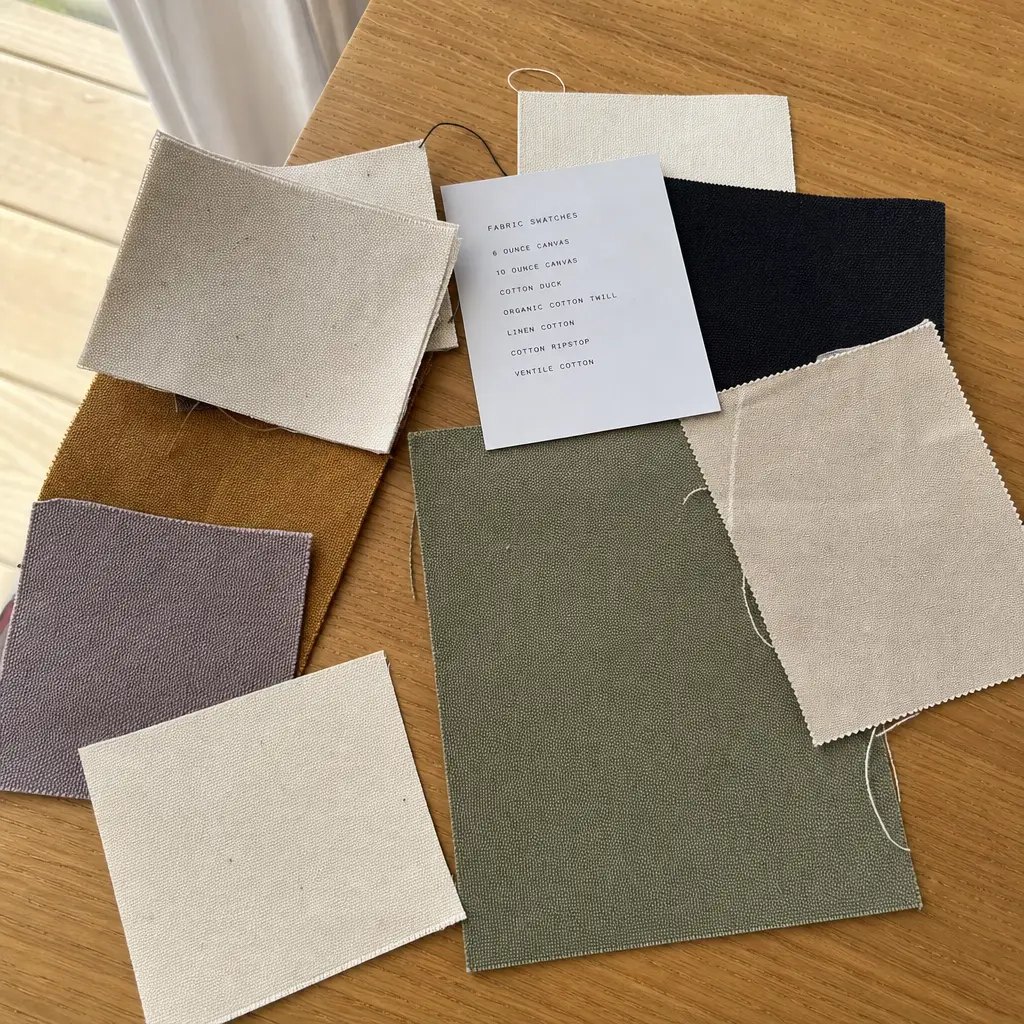
Why wholesale canvas wine carrier RFQs fail in natural grocery buying
Many sourcing errors begin because buyers treat a bottle bag like a generic promotional tote. In procurement terms, it is not a broad lifestyle bag category. It is a narrow, load-specific sewn product with visible fit risk, concentrated stress points, and much less room for supplier assumptions. When an RFQ simply says 'canvas wine bag with logo,' one factory may quote 8 oz cloth, another 12 oz stock canvas, another a flat body with no base gusset, and another a structured gusseted style with heavier reinforcement. The quotes can differ sharply, but the bigger problem is that they are no longer comparable.
Natural grocers usually add another layer of complexity. The bag may sit near checkout, in a seasonal gifting display, beside a wine fixture, or in a curated local-producer section where presentation matters. The bag needs to look clean when empty, hold a glass bottle securely when loaded, and arrive in cartons that stores or a central DC can receive efficiently. Procurement is balancing retail appearance, practical durability, freight cost, and order flexibility at the same time.
A well-built RFQ reduces guesswork before the sample stage. That matters because wine carriers often look simple enough that teams move too quickly into price comparison, only to discover later that one quote assumed no divider, another ignored packing requirements, and another used a much lighter fabric. At that point, the 'best' price is often just the most incomplete assumption set.
For B2B buyers, the objective is not to create more paperwork. It is to prevent hidden cost after quote approval. The most expensive mistakes usually appear after artwork screens are prepared, sewing capacity is booked, or launch timing is fixed. By then, changing the gusset, the handle reinforcement, or the packing method can affect both price and lead time.
- Bottle bag quote failures usually trace back to missing details on fabric weight, gusset construction, divider need, handle reinforcement, and packing format
- Natural grocery programs often need a balance of reusable feel, shelf presentation, and low-plastic packing that should be defined before quoting
- A comparable quote requires the same basis across suppliers: size, GSM, print count, packing count, sample stage, and incoterm
- If one supplier must make fewer assumptions than another, the quote comparison is already distorted
Build the base specification from the bottle, the shelf setting, and the handling reality
The correct starting point is the bottle, not the bag silhouette. A standard 750 ml wine bottle is often the default assumption, but many natural grocers also sell taller imported bottles, sparkling wine with broader shoulders, olive oil, cider, and seasonal gift-packed glass with unusual profiles. A supplier cannot price material yield or recommend the right gusset depth without knowing the actual range of products the bag must fit.
For a standard single-bottle bag, buyers often work within a practical range of roughly 100-120 mm finished width, 330-360 mm height, and 90-100 mm gusset, but those dimensions are not universal. The true bag size depends on bottle diameter, insertion clearance, seam construction, and whether the program wants a snug upright presentation or easier loading speed at checkout. If stores may use one bag for multiple bottle types, the larger bottle should control the spec.
The next major decision is fabric weight. For most wholesale canvas wine carriers for natural grocers, 12 oz to 14 oz canvas, around 340-400 GSM, is the safest operating range. It gives enough body for a reusable, premium feel without creating unnecessary freight cube or sewing resistance. Lighter 8 oz to 10 oz cloth may look acceptable in a flat sample photo, but once a glass bottle is inserted it can wrinkle, sag, or twist more than expected. Heavier 16 oz or above can work, but buyers should understand they are increasing not only material cost but also sewing labor, packed volume, and sometimes print stiffness.
Color and material claims should also be specified early. Natural canvas often gives the lowest-risk path for first orders because stock cloth is more common and MOQ pressure stays lower. If the program needs dyed fabric to match a brand palette, procurement should expect extra approval steps and longer lead time. If the retailer requires organic cotton, recycled content, or another material claim, document requirements should be clarified before the quote is treated as final, not after the sample is approved.
- Core RFQ inputs should include bottle dimensions, loaded weight, finished bag dimensions, fabric weight, color basis, print method, and packing details
- If one bag must fit several bottle types, quote to the largest realistic bottle in the range, not the easiest one
- State whether the bag must stand neatly only when loaded or also present well when empty on display hooks or shelves
- If sustainability claims matter, specify the evidence required at quote stage rather than assuming all suppliers use the same definition
Choosing between single-bottle and two-bottle canvas carriers without overbuying complexity
Single-bottle carriers are usually the strongest first choice for natural grocery retail. They are easier to engineer, easier to replenish, easier to fit into carton plans, and easier to quote consistently across suppliers. For checkout and impulse gifting, a structured single-bottle bag with side and base gussets covers the need with fewer failure points. This style also gives procurement the best chance of using stock natural canvas and standard sewing methods, which can help on MOQ and lead time.
Two-bottle carriers can work well, but only when the retail concept clearly justifies the extra cost and operational complexity. They usually involve more cutting, more sewing, more material, and more functional risk because bottle separation becomes critical. A two-bottle bag without a properly designed divider can allow bottle contact, label scuffing, and a poor carry feel. A divider that is too soft will collapse. A divider that is too thick can reduce insertion space and distort the outer body.
The RFQ should therefore define the divider at a useful level of detail. Is it plain fabric only, fabric with interlining, or lightly padded? Does it run full height? Is the purpose simply separation, or does the buyer want a more premium protective feel? These choices materially affect labor and packing volume, so leaving them vague usually leads to misleading quote comparisons.
Buyers should also think about how the bag is used in real stores. A single-bottle carrier may be a checkout add-on that staff do not spend much time explaining. A two-bottle carrier may be sold as part of a holiday assortment, where upright presentation and easier insertion matter more. Those operational differences should shape the RFQ, not just the desired outside appearance.
- Single-bottle bags usually offer the cleanest price-to-risk profile for launch programs and recurring replenishment
- Two-bottle bags should be specified with compartment width and divider construction, not just outside dimensions
- If the bag is intended for gift bundles, test insertion and carrying with actual bottle pairs rather than assuming equal bottle diameters
- Ask whether a two-bottle bag must remain balanced if one bottle is inserted slightly earlier than the other during loading
Fabric, handles, gussets, and reinforcement details that most affect performance
On bottle bags, construction details matter more than they do on many standard tote styles because the load is concentrated and vertical. A bag can look acceptable in a sample room but fail under repeated use if the stress path from body panel to handle is not reinforced correctly. Buyers should request specifics on handle attachment, reinforcement method, and stitch quality rather than assuming all canvas bags are sewn the same way.
Self-fabric handles are common and often sufficient for standard single-bottle use when they are properly sewn and reinforced with box-X stitching or a similar stress-point treatment. Cotton webbing handles can add durability and a more premium hand feel, especially for double-bottle programs or higher-end gifting. But webbing changes both appearance and cost, so it should be a deliberate design decision, not a supplier substitution hidden in one quote and omitted in another.
Gusset design also deserves more attention than it usually gets. A side and base gusset generally gives the best combination of bottle stability and visual structure. Flat bags can cost less on paper, but they tend to twist under load, present less cleanly on display, and may make print placement look off once the bottle expands the body. The opening width should also be reviewed with the actual bottle neck and shoulder shape in mind so loading does not feel tight or awkward.
For buyers comparing factories, a useful tactic is to ask for close-up photos of the handle join, gusset corners, inside seams, and divider connection. Front-facing photos alone can hide weak construction choices. In bottle bag sourcing, the stress points tell more than the logo panel does.
- Request the exact handle width, handle drop, and reinforcement style shown in the quote
- Ask whether side seams are turned and stitched in a way that reduces fraying and improves interior neatness
- Review whether the base gusset forms a stable footprint with the intended bottle rather than merely adding width on paper
- If appearance matters at retail, define acceptable loose-thread and seam-neatness standards before production
Print methods, logo placement, and artwork controls that change price and approval risk
Screen printing remains the most practical default for canvas wine carriers in wholesale B2B buying. It works well with simple logos, supports volume efficiently, and usually looks more natural on textured canvas than low-cost transfer methods. For most natural grocer programs, a one-color or two-color print is the easiest basis for quote comparison because setup, production rhythm, and expected appearance are all relatively predictable.
The main print risks on bottle carriers come from scale and placement. These bags have narrow panels, visible seams, and often a smaller centered artwork area than standard tote bags. A placement shift of even 5 mm can look significant once the bag is loaded and standing upright. That is why procurement should not approve artwork based only on a flat digital mockup. The print needs to be reviewed on the actual constructed bag, using the actual panel proportions and seam layout.
Large solid flood prints deserve caution. They can make the bag feel stiffer, especially on heavier canvas, and they are more likely to crack on fold lines during compression in cartons. Fine artwork also deserves caution because coarse weave can interrupt edge definition. On dark dyed fabrics, the need for white underbase or alternate ink strategy can raise cost and affect hand feel. If the artwork must sit close to a gusset fold or seam, that should be called out explicitly in the RFQ.
For buyers managing private label or retailer-owned artwork, it also helps to define practical print tolerances up front: placement reference points, acceptable color variation on natural fabric, and any rub-test expectation for retail handling. These details save time during sample approval and create a clearer basis for final inspection.
- Include artwork dimensions in millimeters and placement references from top edge and side seam, not just a centered mockup
- State whether Pantone matching is critical or whether visual close match on natural canvas is acceptable
- If the logo is small, confirm minimum readable line thickness on the chosen fabric weave
- Clarify whether the order includes woven side labels, care labels, barcode labels, or inside print so suppliers quote all decoration steps consistently
MOQ, quote tiers, and the hidden cost triggers in low-volume natural grocer programs
MOQ in this category is rarely one clean number. Buyers often hear an attractive low minimum that applies only to a plain stock item with no custom print, no custom size, and no special packing. Once a buyer adds logo printing, a dyed body color, a divider, barcode labels, or store-ready split packing, the true economic MOQ changes. If this is not unpacked during quotation, procurement can end up approving a low unit price that was never based on the real program.
The most efficient first-order strategy for many natural grocers is to stay close to stock conditions: natural canvas, standard single-bottle size, one-color screen print, and simple bulk packing. That approach allows the factory to use existing cloth inventory and more standard production flow. It also shortens the path from quote to sample because fewer approval dependencies exist.
Custom dyed fabric changes the equation. It can be the right choice when brand presentation requires it, but buyers should expect higher MOQ, longer pre-production work, and more coordination between fabric shade and print appearance. Low-volume custom dye programs are particularly vulnerable to hidden surcharge recovery, where a supplier keeps the headline MOQ low but adds charges elsewhere for dyeing, setup, or less efficient packing.
The most useful way to compare suppliers is to request structured quote tiers on the same specification, such as 500, 1000, 3000, and 5000 pcs. Buyers should also ask which costs are one-time and which repeat. A repeat order with no size change, no artwork change, and no new material development may have a meaningfully lower total cost structure than the first run, but only if the supplier separates those inputs clearly.
- Common hidden cost triggers include custom dye, low MOQ by color, added divider labor, individual polybag packing, and split cartons by SKU or store
- Request quote tiers and identify one-time screen or sample charges separately from repeat-order unit cost
- Ask whether MOQ applies per style, per color, per artwork, or per combined order quantity
- If testing a launch, compare the cost of a simpler stock-based first run against the cost of full brand customization from day one
Sample approval workflow that actually reduces production mistakes
A strong sample process has at least two functional stages for most non-stock wine carrier programs. First comes the blank construction sample. This stage is valuable because it isolates fit and construction before decoration complexity is added. Buyers should load it with the exact bottle intended for sale and check whether the bottle sits at the right height, whether the gusset opens symmetrically, whether the handle angle feels balanced, and whether insertion and removal are smooth.
This step is especially important when the bag is not for a single known bottle. If a natural grocer expects one SKU to cover several supplier wines or occasional seasonal bottles, the blank sample should be tested across that range. A bag can fit the narrowest bottle perfectly and still be too tight for the widest planned bottle. Catching that before printing saves both time and rework.
The second stage is the printed pre-production sample made on production-intent material. This is where logo placement, print feel, and the interaction between cloth color and artwork should be approved. For natural canvas, buyers should avoid over-approving a single ideal shade and instead define an acceptable range, since mild variation between lots is normal. For dyed fabric, the sample should be judged as a full combination of cloth shade, print color, and construction, not as separate decisions.
Procurement teams often lose time because comments arrive in fragments from design, merchandising, and operations. It helps to use a simple approval sheet that records fit decision, print decision, packing decision, and any changes still outstanding. If one detail remains unresolved, the sample should not be treated as fully approved just because the logo looks right in photos.
- Approve blank construction first when size, divider, or bottle fit is new
- Test with actual bottles, not only dimensional assumptions, because neck shape and shoulder width affect usability
- Approve printed pre-production sample on production-intent fabric and construction, not merely on a flat swatch
- Record comments in one version-controlled approval form so later disputes do not rely on email fragments
Quality control standards buyers should write into the PO, not discuss vaguely later
The phrase 'good quality' has little operational value in production. A factory needs practical acceptance points that can be checked in-line and at final inspection. For canvas wine carriers, the highest-value QC controls are usually dimensional accuracy, bottle fit, handle strength, print positioning, stitch quality, fabric condition, and packing correctness. These are not complex lab standards. They are practical controls that prevent the most common retail failures.
Dimensional tolerance matters because small variation becomes very visible on a narrow product. If the gusset runs narrow, the bottle may feel too tight. If the height runs short, the neck may protrude more than intended. If handle drop varies, the bags can look inconsistent on display hooks. Buyers should therefore state their key measurement points clearly and agree on tolerance expectations against the approved sample.
Load testing should also be realistic. The goal is not heavy industrial certification; it is repeatable confirmation that the intended bottle weight does not expose weak reinforcement or seam distortion. A simple repeated-lift test with the real load or equivalent dummy weight can reveal problems quickly. For two-bottle styles, the test should reflect the combined load, not only one bottle.
Print durability and appearance should be checked in the context of grocery retail handling. Shelf browsing, checkout use, and carton compression all create abrasion and fold pressure. If print quality matters, buyers should require checks on placement, curing, and dry rubbing rather than assuming decoration is acceptable once it visually matches the artwork.
Finally, QC should extend into packing. Count errors, damaged handles from over-compression, and moisture issues in cartons can turn an otherwise acceptable production lot into a receiving problem. On lower-value sewn goods, these errors are often more commercially disruptive than small cosmetic variations.
- State key measurements and tolerance expectations against approved sample, especially width, height, gusset, and handle drop
- Require practical load testing tied to the intended bottle weight and style configuration
- Define print placement tolerance and acceptable appearance standard on textured canvas
- Write packing accuracy, carton marking, and moisture-condition checks into the order requirements
Packing, carton planning, and landed-cost decisions that buyers often underestimate
Packing is one of the biggest silent cost drivers in this category because canvas wine carriers are more cube-sensitive than many buyers expect. The item itself is not heavy, but inefficient folding, overuse of poly, or oversized cartons can raise freight cost quickly relative to unit value. That is why packing should be part of RFQ normalization, not an afterthought after the price is accepted.
For many natural grocery programs, bulk packing by style in export cartons is the most efficient choice. If the DC needs easier count control, 25-piece or 50-piece inner bag grouping can be a good compromise. This supports receiving without forcing individual polybags onto every unit. Individual bagging usually adds labor, material cost, and carton volume while also creating unnecessary plastic for a retailer category that may prefer lower-waste presentation.
Carton dimensions should be reviewed before PO placement, because a supplier can appear cheaper while assuming a packing method that weakens container utilization. Buyers should ask for estimated carton size, gross weight, count per carton, and pieces per container under the proposed fold method. If the bag includes a divider, bottom insert, or stiffer handle material, that volume change should be visible in the quote assumptions.
Retail and import requirements also matter. Some programs require barcode labels on each bag, others only on master cartons. Some retailers prohibit excess poly or have carton gross weight limits for store handling. Others may need carton marks tied to purchase order, item number, or destination allocation. These are not minor administrative details. They shape labor time and should therefore be quoted consistently from the beginning.
- Specify whether barcodes, hangtags, or retail inserts are factory-applied or added after import
- Limit carton gross weight if store or DC handling rules require it
- If no individual polybag is allowed, define acceptable dust-protection method for export packing
- Request packed-carton photos and measured carton dimensions before shipment to confirm assumptions match production reality
Lead time planning, supplier comparison, and a practical RFQ template structure buyers can use
Lead time risk usually starts before production, not during sewing. Artwork delays, unclear bottle fit requirements, and fragmented sample comments consume the easiest days in the calendar. Once fabric is cut or screens are made, even small specification changes become expensive. For seasonal wine gifting and holiday grocery promotions, the approval path is often the true critical path. Buyers should therefore build the timeline from approval milestones rather than from the purchase order issue date alone.
Stock natural canvas and standard screen print usually create the most predictable schedule. Custom dyed fabric adds approval steps such as shade review and may also alter how the logo color reads. That means dyed programs need more buffer. Air freight should be treated as a recovery measure only. The product value and freight sensitivity of canvas bags rarely make air shipment a comfortable planned solution.
When comparing suppliers, normalize every quote to the same basis: same dimensions, same GSM, same handle reinforcement, same print count, same packing plan, same sample stage included, and same incoterm. If a supplier recommends a different construction, ask them to price both the requested version and their suggested alternative. This keeps innovation visible without losing quote comparability.
A practical RFQ template for this category should include five blocks: product use case, bottle data, bag construction, print and trim details, and packing plus logistics assumptions. It should also list quantity tiers and approval stages required. Factories that respond clearly to these points are often easier long-term partners because they are demonstrating process discipline, not just offering a low opening price.
Buyers should also judge communication quality. The best supplier response often identifies missing information, asks fit-related questions, and clarifies what was assumed. In this category, that is usually a better signal of future execution than an aggressively low quote that glosses over key details.
- Build the launch calendar from sample approval, bulk start, inspection ready date, and freight buffer rather than from PO date only
- Normalize quotes by specification, packing, incoterm, and currency before cost comparison
- Use an RFQ template with separate fields for bottle dimensions, bag dimensions, print details, reinforcement, and packing assumptions
- Prefer suppliers that identify open points clearly over suppliers that quote fast by making silent assumptions
Specification comparison for buyers
| Spec decision | Recommended option | When it fits | Buyer risk to check |
|---|---|---|---|
| Fabric weight | 12 oz to 14 oz canvas, about 340-400 GSM | Best for natural grocer private label programs needing shelf-ready feel, enough structure, and repeat use | Below 10 oz can collapse or distort under bottle weight; above 16 oz increases freight, sewing difficulty, and carton cube without clear retail payoff |
| Bottle format | Single-bottle with full side gusset and base gusset | Best for checkout add-ons, winery partnerships, seasonal gifting, and lower-risk first orders | Flat non-gusset styles can twist, print poorly when loaded, and feel less premium; verify fit against the tallest and widest bottle in the program |
| Divider construction | Stitched center divider only when a true 2-bottle format is required; add light padding only if label protection is important | Useful for holiday gift packs, paired bottle promotions, and premium basket programs | A soft divider may allow bottle collision; a bulky divider raises labor cost and makes insertion harder; confirm actual compartment width with loaded samples |
| Handle material | Self-fabric handle with box-X reinforcement for standard use; cotton webbing for heavier or more premium programs | Self-fabric works well on most single-bottle bags; webbing helps on 2-bottle bags or higher-end retail presentation | Handles stitched into seam only may pull out under repeated use; request reinforcement photos and stitch density details |
| Print method | 1-color or 2-color silk screen on canvas; heat transfer only for small detailed art or short runs | Screen print is usually the best balance of cost, look, and durability on textured canvas | Large flood prints can stiffen the bag and crack on folds; transfers can peel or look less natural on coarse weave |
| MOQ route | Use stock natural canvas base for 500-1000 pcs per size; dyed custom fabric usually only makes sense above 2000-3000 pcs | Best route for new natural grocer launches, regional tests, and seasonal trial programs | Some suppliers quote a low MOQ but omit screen charges, dye surcharges, or split-pack costs; ask for total landed quote assumptions |
| Inner packing | 25 or 50 pcs per inner bag if receiving needs counting aid; otherwise bulk pack by style in export carton | Good for DC handling while avoiding unnecessary individual polybags | Individual poly adds labor, plastic use, and carton volume; confirm whether retail or import compliance actually requires it |
| Shipping route | Sea freight for planned replenishment; air only for sample correction or emergency launch recovery | Fits stable forecast programs with approved artwork and realistic launch calendar | Canvas bags are freight-sensitive by cube; approval delays can force costly air shipment on a low-value textile item |
Buyer checklist before sampling
- State the exact use case: checkout add-on, gift-with-purchase, winery collaboration, holiday bundle, or shelf-ready reusable bag
- Specify bottle count clearly: single-bottle, two-bottle, or multiple SKUs in one program
- Provide target finished size in millimeters, including width, height, side gusset, base gusset, and handle drop
- Send bottle dimensions for every bottle the bag must fit, including tallest height, widest diameter, and any unusual neck or shoulder shape
- List the loaded weight the bag must carry, especially if the same style may be used for sparkling wine, olive oil, or heavier glass
- Specify fabric weight in GSM or oz canvas and note whether tolerance should be controlled against the approved sample
- Define whether natural canvas is acceptable or whether dyed color matching is required
- If organic cotton, recycled content, or other material claims are required, state what documentary evidence must be provided before order confirmation
- Attach print artwork with file format, print size, placement, Pantone references, and note any large solid areas that may affect hand feel
- Clarify whether the design includes outside print only, inside print, woven label, care label, or hangtag
Factory quote questions to send
- What exact canvas weight are you quoting in GSM, and what weight tolerance do you allow per lot?
- Is the quoted fabric stock natural canvas, stock dyed fabric, or newly woven and dyed fabric for this order?
- What finished dimensions do you recommend for a standard 750 ml bottle, and how would those dimensions change for taller or wider specialty bottles?
- How is the handle attached in your quote: seam-in only, bartack, box-X reinforcement, or a combination?
- What stitch density and seam allowance do you normally use on bottle bag stress points?
- What print process are you using, how many screens or setup charges apply, and what print durability checks do you perform before packing?
- Does your quote include any divider, bottom support, interlining, or stiffener board, and if not, what is the added cost for each option?
- What is the MOQ by size, fabric color, and print design, and what surcharge applies below your standard MOQ?
- Can you quote separate tiers for 500, 1000, 3000, and 5000 pcs using the same specification basis?
- What sample schedule do you offer for blank sample, printed pre-production sample, and bulk production after approval?
Quality-control points to confirm
- Measure finished width, height, side gusset, base gusset, and handle drop on statistically valid samples from early, middle, and late production
- Verify that the approved bottle can be inserted and removed smoothly without catching on seams, divider edges, or a too-tight opening
- Run a practical load test using the intended bottle weight or equivalent dummy weight for repeated lifts to confirm handle seam integrity and bag body stability
- Check canvas GSM against the approved sample and inspect fabric for weaving flaws, slubs, holes, yarn contamination, oil marks, and unacceptable shade variation
- Inspect print location against approved placement measurements and check Pantone match where applicable, edge sharpness, curing quality, and dry rub resistance
- Review seam allowance consistency, skipped stitches, loose threads, needle damage, raw edge control, and reinforcement pattern at stress points
- For 2-bottle styles, inspect divider attachment, compartment width, and whether bottles contact each other during handling
- Confirm base gusset opens properly and supports the bottle without twisting when the bag is carried by the handle
- Open random packed cartons to confirm count accuracy, barcode placement, carton marks, and that compression has not permanently crushed the handles or distorted the print
- Check for mildew smell, moisture exposure, dirty marks from handling, and any evidence of storage conditions that could affect natural canvas appearance