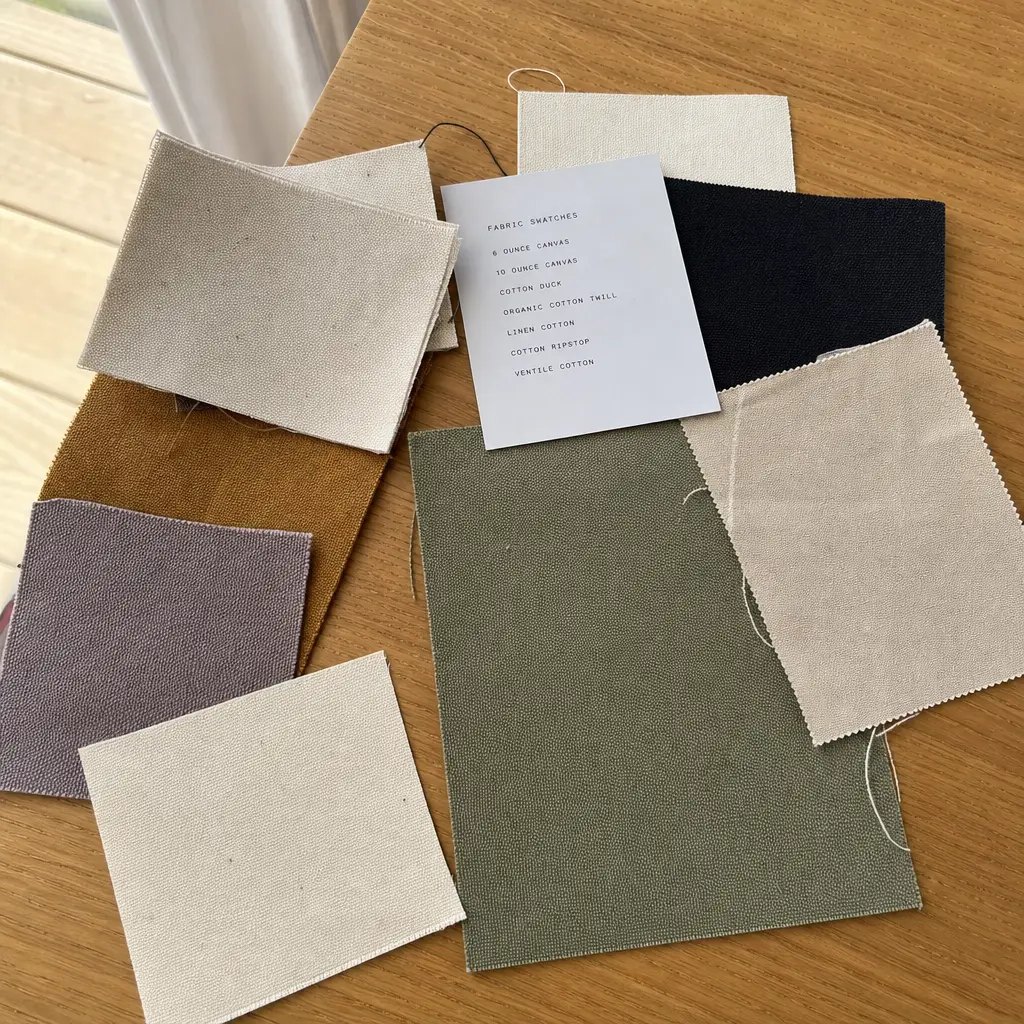
Why material selection matters more than style in wine carrier buying
For natural grocers, the main buying problem is usually not the silhouette. It is whether the carrier holds glass bottles securely, prints cleanly, fits the shelf story of the brand, and lands at a cost that still works after freight and retail margin. A wine bag that looks acceptable in a sample room can fail quickly in stores if the canvas is too light, the divider is too loose, or the handle stitching is built like a grocery tote instead of a load-bearing bottle carrier.
Canvas wine carriers sit in a narrow performance window. If you go too light on fabric to save a few cents, the side panels buckle and bottles knock together. If you go too heavy without need, unit cost rises, print hand stiffens, and carton cube becomes less efficient. Good buying starts with the bottle load, the retail use case, and the replenishment plan, then works backward into the fabric and construction.
- Single-bottle gift bags can often tolerate softer body structure
- Two-bottle carriers need more side-wall control to prevent bottle swing
- Four- to six-bottle formats need base reinforcement and stronger handles
- Natural grocer shoppers often reuse the bag, so first-use strength is not enough
Choose canvas weight from bottle load, not from generic tote standards
Many RFQs for wine carriers copy the same fabric weight used for grocery totes, often 8 oz or 10 oz canvas. That is a common specification error. Grocery tote weight is driven by broad volume use, but wine carriers concentrate weight in narrow points. A standard 750 ml bottle is heavy for its footprint, and the stress is transferred through the side seams, divider seams, and handle attachment points. Fabric that works for produce or bakery packaging may deform around glass bottles.
For most single- and two-bottle canvas wine carriers, 12 oz canvas, roughly 407 GSM, is a practical starting point. It gives better body and cleaner standing shape without moving too far up the cost curve. For four- or six-bottle formats, 14 oz to 16 oz canvas, roughly 475 to 542 GSM, is usually safer, especially when the bag has stitched partitions. If your brand wants a softer natural appearance, keep the body at 12 oz and reinforce the base and handle area separately rather than dropping overall GSM.
- 10 oz / about 339 GSM: only for light single-bottle promo bags, not ideal for repeated use
- 12 oz / about 407 GSM: standard range for better single- and two-bottle support
- 14 oz / about 475 GSM: preferred for structured multi-bottle carriers
- 16 oz / about 542 GSM: useful for six-bottle or premium reuse-driven programs
- Heavier fabric may require updated print settings and larger export carton planning
Natural cotton, dyed canvas, or recycled blend: what actually changes
Natural cotton canvas is still the easiest route for natural grocer retail programs because it matches shelf expectations, takes simple one-color branding well, and usually has the shortest sourcing path when stock fabric is available. It also hides moderate crease marks better than dark dyed fabric. The tradeoff is shade variation. Natural cotton is not a painted substrate. If the order is split across fabric lots, the ecru tone can move warmer or cooler, which matters if the brand identity expects uniform shelf presentation.
Dyed canvas gives stronger visual blocking and can make lower-coverage logos look more premium, but it adds process steps, MOQ pressure, and color risk. Dark colors can also increase print cost because white or light ink often needs an underbase. Recycled cotton blends are increasingly requested, but buyers should treat them as a separate material family rather than a direct substitute. Blend percentage, fiber cleanliness, and yarn consistency all affect print sharpness, seam appearance, and repeat shade control.
- Natural canvas: shortest lead time when stock fabric exists, but wider shade tolerance required
- Dyed canvas: stronger shelf impact, but usually higher MOQ and longer approval path
- Recycled blends: useful for sustainability positioning, but expect more slubs and color variation
- If shade consistency matters, request lot control or reserve fabric for repeat orders
Construction details that separate a reliable wine carrier from a repurposed tote
A canvas wine carrier is not just a tall tote bag. The product lives or fails on internal structure. For one bottle, the construction can be simple: front and back panels, gussets, a closed base, and stable handles. As soon as the format moves to two bottles or more, the need for a divider becomes structural, not decorative. Without bottle separation, glass knocks together and the bag loses shape in transit from shelf to checkout to car trunk.
The right divider depends on format. A two-bottle bag can work with a stitched center divider secured at the base seam. A four- or six-bottle format needs full partitions sewn to the bottom or locked into a reinforced base panel. Buyers should also separate handle style decisions from body style decisions. Self-fabric handles can be fine on lighter single-bottle programs, but cotton webbing sewn into side seams is a safer commercial choice for heavier bottle loads.
- For 2-bottle bags, divider should be secured at both top and base
- For 4-6 bottle bags, use stitched partitions, not loose inserts
- Bottom reinforcement can be a second fabric layer or internal patch
- Handle attachment should use bartack or box-X reinforcement at stress zones
- If handles do not run deep enough into side seams, the fabric panel may tear before the handle does
Print method should follow order volume and fabric color, not artwork preference alone
Screen printing remains the most practical option for wholesale canvas wine carriers because it balances setup cost, speed, and acceptable logo durability across medium and large runs. It works especially well on natural canvas with simple one- or two-color artwork. For natural grocer buyers, this is often the lowest-risk route because packaging teams usually want a clear brand mark, not photo-detail graphics. The print also sits naturally on canvas without making the bag feel like a promotional giveaway if ink coverage is controlled.
Heat transfer can work for short runs, detailed art, or multicolor seasonal programs, but it changes the hand feel and may look less integrated on textured canvas. Embroidery can elevate a small logo, especially near a side panel or upper front area, but it adds time and usually works better as an accent than a large front branding method. On dyed canvas, always price print with underbase assumptions if the art includes white or light colors. Some quotes look low only because the supplier has not included the extra print pass.
- Screen print: best for 1-2 color logos and repeat wholesale orders
- Heat transfer: useful for small MOQ or complex multicolor artwork
- Embroidery: suitable for smaller premium branding zones
- Dark fabric often requires underbase, raising unit cost and setup time
- Always approve print strike-off on actual production fabric, not only paper proof
How MOQ logic changes by fabric source, size change, and print complexity
MOQ for wine carriers is rarely one simple number. Buyers get more reliable quoting when they separate MOQ by fabric source, bag size, and decoration method. A factory may offer a lower MOQ on stock natural canvas and a standard single-bottle body because cutting efficiency is high and the fabric is already in inventory. The same factory may require a much higher MOQ for custom dyed olive canvas with stitched six-cell dividers because fabric dyeing, cutting loss, and sewing time all increase.
This matters when comparing suppliers. A low MOQ quote can look attractive but may rely on leftover stock shades, simplified construction, or reduced print consistency. For test orders, stock fabric plus standard dimensions is usually the most efficient entry route. If the program is likely to reorder, it is often better to lock the construction and fabric first, then add color and artwork complexity once the sell-through data is proven.
- Lowest MOQ usually comes from stock natural canvas and standard body sizes
- Custom dyed fabric often carries fabric minimums independent of bag MOQ
- Internal dividers and bottom reinforcement increase sewing time and labor cost
- Multi-color screen print can create setup-driven MOQ thresholds
- Ask for MOQ by SKU, by color, and by total order, not as one blended figure
Sample approval should test structure, load, and bottle fit—not just appearance
A sample approval process that only reviews shape and logo is weak for this product type. Wine carriers should be sampled in stages. Start with a fabric swatch or body material cutting to approve weight, weave, shade, and print suitability. Then move to a blank construction sample if the dimensions or divider layout are still being adjusted. Only after the structure is correct should you approve a pre-production sample with actual printing and a realistic bottle load test.
Bottle shape matters more than many buyers expect. A carrier that fits standard Bordeaux bottles may be tight for wider Burgundy bottles or unstable for sparkling wine because of height and shoulder differences. If the retail program will carry mixed bottle types, specify the largest practical envelope and test with physical bottles. A sample that stands neatly when empty but bows badly when loaded is not production-ready.
- Approve swatch before sample if material family is still open
- Use real bottles or equivalent weighted dummies in sample review
- Check divider clearance, base stability, and handle comfort under load
- Review print position after the bag is filled, not only when flat
- Request pre-production sample from bulk fabric lot when possible
Packing details affect freight cost, shelf prep time, and damage risk
Packing is often treated as an afterthought, but for canvas wine carriers it influences both landed cost and retail readiness. Flat packing is standard and usually best, but divider-heavy styles can deform if the carton is compressed too tightly. If the bag has a structured base or reinforced partitions, overpacking to save freight space can create creasing that does not fully recover in store. This is especially visible on dyed canvas and on bags with large front prints.
Procurement teams should align packing with the downstream handling route. Importers shipping into a central distribution center may want large master cartons with bundle counts by SKU. Retail buyers shipping directly to store networks may prefer lower carton weights, cleaner assortment labeling, and perhaps individual polybags only if dust protection is necessary. Polybags add cost and waste, so they should be justified by the retail environment rather than used automatically.
- Request pieces per carton, carton dimensions, and gross weight in every quote
- Avoid over-compression for divider bags and heavy GSM fabric
- Bundle by SKU and color to reduce receiving errors at DC level
- Use carton markings that match PO line structure and store allocation needs
- If no polybag is required, state that clearly to avoid hidden packing cost
Lead time risk usually comes from approvals and materials, not sewing capacity alone
Buyers often hear a single production lead time, but the real schedule is made up of several risk points: material reservation, dyeing if applicable, print setup, sample approval, and final packing. Sewing capacity is only one part. For natural canvas programs using stock fabric and simple screen print, the path can be relatively straightforward. Once custom dyeing, reinforced partitions, or embroidery are introduced, schedule risk moves upstream into material and pre-production approval stages.
The easiest way to reduce delay is to sequence decisions. Lock material and dimensions first, artwork second, and packing details before mass production starts. If the supplier waits for final logo approval before ordering fabric, the whole schedule slides. Likewise, if the buyer approves a print strike-off on one fabric lot and bulk uses another, there may be a color or ink absorption mismatch that triggers rework. Lead time control is really approval discipline.
- Stock fabric programs move faster than custom dyed programs
- Screen print setup is usually quicker than embroidery sampling
- Pre-production sample approval often determines the true ex-factory date
- Changing bottle size assumptions late can force pattern and divider changes
- Keep one owner responsible for artwork, dimensions, and packing sign-off
How to compare quotes on landed value instead of unit price alone
A lower unit price does not automatically mean a better wholesale buy. Wine carriers are sensitive to hidden differences in fabric weight, reinforcement, print coverage, and packing density. Two quotes can describe the same product in general terms while supplying very different structures. One may include 12 oz body fabric, bottom patch, and sewn divider; another may quietly use 10 oz body fabric with a floating divider and no reinforcement. The second quote looks cheaper until claim rates or customer complaints begin.
To compare landed value, normalize the quote into line items: fabric GSM, size, divider type, handle type, print colors, packing method, sample cost, and estimated freight cube. If possible, calculate cost per safe bottle carried rather than cost per bag. A six-bottle carrier with weak partitions is not equivalent to a six-bottle carrier with reinforced cells. For importers, carton cube and gross weight also matter because heavy fabric and poor packing efficiency can erase apparent ex-factory savings.
- Compare body GSM and reinforcement separately, not as one fabric note
- Check whether print setup and underbase are included
- Measure carton cube impact for heavy fabric and rigid divider styles
- Include sample rounds in total sourcing cost if design is still evolving
- If replenishment is likely, factor repeatability and shade control into supplier ranking
Specification comparison for buyers
| Spec decision | Recommended option | When it fits | Buyer risk to check |
|---|---|---|---|
| Base fabric weight | 12 oz canvas (around 407 GSM) for most 1-2 bottle carriers; 14-16 oz (475-542 GSM) for 4-6 bottle formats | Best balance of cost, structure, and print surface for natural grocer private label programs | Some suppliers quote lower GSM fabric but keep dimensions the same, causing sagging side panels and handle strain under glass bottle load |
| Canvas type | Cotton canvas with tight plain weave; recycled cotton blend only if shade tolerance is accepted | Fits brands wanting a natural hand feel and simple eco positioning without moving into jute texture | Recycled blends can have more slubs, color variation, and weaker print sharpness across repeat orders |
| Bottle separation | Stitched center divider for 2-bottle bags; full sewn partitions with bottom lock stitching for 4-6 bottle bags | Needed when bottles are glass, heavy, or likely to be carried from store to car without extra packaging | Loose dividers or drop-in inserts shift during use and often fail in transit testing |
| Handle construction | Self-fabric wrap handles for lighter bags; cotton webbing handles sewn into side seams for heavier formats | Use webbing when each bag may carry 3 kg or more or when shopper reuse is part of the retail value proposition | Short stitch length without bartacks can cut the fabric at stress points after repeated carrying |
| Bottom reinforcement | Internal bottom patch or doubled base panel on all multi-bottle carriers | Important for six-bottle wine carriers, gift packs, and distributor orders with long transport routes | Factories may omit reinforcement from quote samples unless it is listed line by line in the tech pack |
| Print method | 1-2 color screen print for natural canvas; heat transfer only for small runs or photo artwork; embroidery for small logo accents | Screen print gives lowest unit cost and best repeatability for grocery promotional volumes | Dark dyed canvas may need underbase print, increasing cost and making hand feel stiffer than approved sample |
| MOQ route | Stock fabric plus standard size for lower MOQ; custom dyed fabric and custom divider structure for full-container or annual program buys | Useful when testing one region first before national rollout | Low MOQ offers often use leftover fabric lots, causing shade mismatch across replenishment orders |
| Retail packing | Flat-packed in export cartons with size stickers and bundle counts by style/color | Best for importers and DCs that relabel or kit by SKU after arrival | Over-compression in carton packing can crease printed panels and distort structured divider bags |
| Sampling path | Approve material swatch first, then pre-production sample with actual bottle load test | Reduces wasted sample rounds when brand team is still deciding between natural and dyed canvas | A photo approval alone will not show panel collapse, handle twist, or divider clearance with real bottle shapes |
Buyer checklist before sampling
- Define bottle count and maximum filled weight per bag before requesting fabric GSM
- Specify finished size with gusset width, not only bottle quantity description
- State whether bottles are standard 750 ml Bordeaux, Burgundy, sparkling, or mixed shapes
- List required base fabric weight in GSM or oz and allow no substitution without approval
- Identify if dividers must be stitched in place or removable
- Specify handle material, width, drop length, and whether handles must run under the base
- Note print method, artwork colors, print area, and whether dark fabric needs white underbase
- Request sample load test using actual bottle weight or equivalent dummy load
- Define packing method: flat pack, inner polybag, bundle quantity, carton count, and carton weight limit
- Approve shade standard for natural canvas or dyed fabric before bulk production
Factory quote questions to send
- What is the exact fabric composition and tested GSM for body panels, dividers, and bottom reinforcement?
- Is the quoted handle construction self-fabric, cotton webbing, or blended webbing, and what is the width and stitch pattern?
- Are divider panels included in the quoted unit price, and are they sewn to the base or only attached at upper seams?
- Does the print price include white underbase, screen setup, Pantone matching, and print on both sides if needed?
- What MOQ applies for stock natural canvas versus custom dyed canvas and custom dimensions?
- Can you provide a swatch card or small cuttings showing natural canvas shades and dyed lot tolerance?
- What is the carton packing plan, including pieces per carton, carton dimensions, and gross weight?
- What is the sample lead time for blank sample, printed sample, and pre-production sample?
- What production lead time applies after sample approval and deposit for 3,000, 10,000, and 30,000 pieces?
- What in-line and final QC points do you use for seam strength, print adhesion, measurement, and load testing?
Quality-control points to confirm
- Fabric GSM must match approved tolerance and be tested before cutting, especially when multiple lots are used
- Finished dimensions should stay within agreed tolerance for height, width, gusset, and handle drop
- Handle attachment points need clean bartacks or reinforced box stitching with no skipped stitches
- Divider seams must be straight, fully caught in seam allowance, and secure at bottom join points
- Print color, position, and opacity must match approved standard without pinholes or excessive ink spread
- Natural canvas shade should be checked lot to lot because ecru variation is common in cotton fabric
- Load test should reflect actual bottle weight and carrying method, not only static table testing
- Carton packing must prevent handle creasing, print offset, and divider deformation during export transit