Why liquor retailers need a bulk pricing plan, not just a low unit quote
For wholesale canvas wine carriers, the cheapest first quote rarely gives the lowest total buying cost. Liquor retailers usually buy these bags for several different commercial uses: paid add-on sales at checkout, holiday gift packaging, wine club shipments, tastings, winery collaborations, store opening promotions, and distributor gift sets. Each use case changes what matters most. A checkout resale bag needs shelf appeal and repeat-use durability. A short promotional giveaway may prioritize cost control. A multi-bottle gifting set needs divider security and better presentation. If buyers use only one unit-price number to compare all of those needs, they often approve the wrong specification and pay for corrections later.
A good bulk pricing plan breaks the purchase into decision layers. First, define the bag family: one-bottle, two-bottle, or larger multi-bottle format. Next, define the common production inputs that could be shared across SKUs: canvas weight, body pattern, handle type, and print method. Then identify the variables that create cost jumps: dyed fabric, extra print colors, woven labels, divider sewing, barcode labeling, and custom packing. This approach helps procurement compare suppliers on the same basis instead of comparing incomplete quotes that hide important differences.
For liquor retailers, consistency also matters beyond cost. If one batch arrives with a softer canvas, different natural shade, or weaker handles than the previous order, the product may look inconsistent on shelf and lower perceived quality. That can affect conversion if the wine carrier is sold as merchandise rather than simply used as packaging. A structured pricing plan protects against this by linking commercial assumptions to technical specifications, sample approval, and QC checkpoints.
The practical goal is simple: create a quote framework that can be reused for seasonal launches and reorders. That means procurement can model whether the next order should stay in one standard stock program, split into regional logo variants, or move up to a more premium format. In other words, a strong buying plan turns wholesale canvas wine carriers from a one-off purchase into a manageable category.
- Useful quote logic: setup cost + material cost + print cost + sewing cost + packing cost + export carton cost
- Best planning unit: by SKU family, not only by one sample
- Most important commercial variable: how much of the order can share the same fabric, same screens, and same sewing line
- Most common buyer mistake: approving a quote before bottle size, gusset, and print size are fully defined
Start with bottle format and retail use case before choosing fabric or branding
The first technical decision for wholesale canvas wine carriers is not logo placement or fabric weight. It is bottle fit. A standard 750 ml wine bottle, a champagne bottle, and a broad-shoulder liquor bottle do not sit the same way in a fabric carrier. Some spirits bottles are shorter and wider. Some sparkling bottles are heavier and need more bottom support. If the retailer wants one bag to cover mixed wine and spirits formats, the gusset and base need enough tolerance to handle that variation without twisting, bulging, or feeling unstable when carried.
This matters because pattern shape drives both cost and usability. A narrow, well-fitted one-bottle bag can look clean and premium on shelf, but if it is too tight for a broader bottle profile, store teams may force stock into the bag and stretch seams. If the pattern is too generous, the bag may feel sloppy and low value. For two-bottle or gift-set programs, internal space planning is even more important. Bottles should not collide during carrying, and the divider should be sewn in a way that actually controls movement rather than simply sitting loose inside the bag.
Retail use case should be stated in the RFQ because the same format can be built differently depending on how it will be sold. A checkout add-on bag may need a cleaner shape, better print presentation, and enough durability for repeated customer use. A tasting event carrier may prioritize lighter cost and simple logo visibility. A distributor gift-set carrier may need stronger handles, better structured packing, and exact brand consistency across multiple locations.
Before requesting prices, buyers should provide the factory with real bottle measurements and the intended program type. At minimum, specify bottle height, widest diameter, target number of bottles per bag, desired neck clearance, handle drop, and whether the bag should stand upright when empty or only when filled. That level of detail reduces pattern assumptions and makes supplier quotes far more comparable.
- Typical one-bottle body: front/back panel, side gusset, bottom fold or separate bottom seam, two handles
- Two-bottle version: same body plus internal divider secured into base construction
- Six-bottle tote: more relevant for bundled sales, distributor packs, or staff transport than impulse checkout retail
- Key RFQ dimensions: bottle height, widest diameter, target neck clearance, desired handle drop, and shelf display preference
Choose canvas weight for perceived value, load support, and freight efficiency
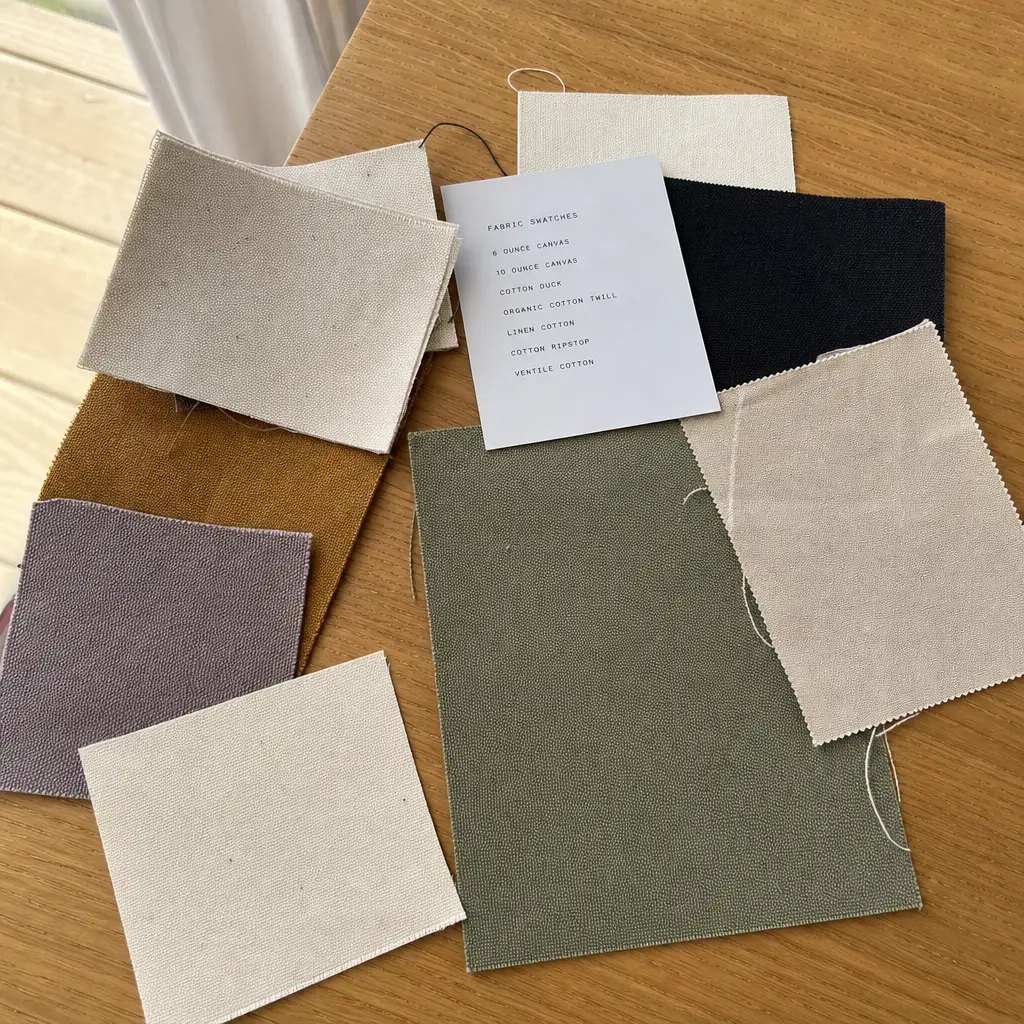
For most liquor retailers, 12 oz to 14 oz canvas, roughly 340 to 400 GSM, is the most practical range for wholesale canvas wine carriers. It offers enough structure to support one or two glass bottles, presents well in-store, and usually prints with acceptable opacity on natural canvas. This range also helps the bag feel like a reusable item rather than disposable packaging, which matters when the bag is sold at retail or used in a premium gift program.
Lighter fabrics such as 8 oz to 10 oz can be suitable for short-term promotional use, but buyers should understand the tradeoff. Lower weight fabric usually wrinkles more, holds less rigid shape, and can show more print strike-through or lower logo opacity. In a liquor retail setting, that can make the item feel like a low-cost giveaway even if the branding itself is attractive. This is especially noticeable when bags are stacked near the register or displayed next to premium bottled products.
Heavier canvas is not always the smarter upgrade. Moving to 16 oz or above increases material cost, often slows sewing, and can increase packed shipment volume and freight weight. If the retailer is importing a large quantity, those increases may materially affect landed cost. Also, very heavy canvas can reduce print sharpness on a textured weave and may not improve actual performance if the pattern or handle reinforcement is poorly designed. In many cases, upgrading handle construction and bottom support gives a better return than simply ordering the heaviest fabric available.
Buyers should also define the finish of the canvas because it changes both appearance and sourcing complexity. Natural canvas generally offers the best price stability and easiest printing. Dyed canvas can create a more branded look but usually adds MOQ, shade-control risk, and extra lead time. Enzyme-washed or specialty-finish canvas may change hand feel but can also affect print adhesion and consistency. If the product will be reordered seasonally, staying with a stock-supported natural canvas program often produces more reliable replenishment economics.
- 8 oz to 10 oz: suitable for short promotions and low-cost gifting, but lower perceived value
- 12 oz to 14 oz: standard recommendation for retail resale and regular reuse
- 16 oz plus: only justify when design, bottle load, or premium positioning truly needs it
- Natural canvas usually prints cleaner and prices lower than dyed specialty fabric
Print and branding decisions that change cost, appearance, and approval risk
In most wholesale canvas wine carriers programs, screen printing is the default recommendation because it balances durability, repeatability, and cost. For one-color or two-color logos on natural canvas, screen print usually delivers the most predictable bulk result and the best price break once order volume increases. This is especially useful for liquor retailers running store-brand programs, seasonal promotions, or co-branded wine partnerships where the artwork is simple and legible.
Problems begin when packaging artwork is transferred to canvas without adapting for fabric behavior. Fine outlines, gradients, metallic effects, photo-detail, and full-bleed coverage can all become difficult on a woven surface. Even if a supplier agrees to attempt the artwork, the production result may vary more than the retail team expects. Ink can sink unevenly into the fabric texture, and thin details may break or fill in. For reusable wine bags sold in-store, simpler graphics usually produce stronger visual consistency and fewer bulk claims.
Alternative branding methods can work, but they should be specified for a clear reason rather than treated as design upgrades by default. Heat transfer may support more detailed graphics for smaller runs, but it can change the hand feel and should be checked for aging performance. Digital print can reproduce more complex imagery, yet cost and color repeatability vary by factory and substrate. Woven labels add a premium touch and can improve traceability, but they introduce separate sampling, placement approval, and MOQ considerations. Embroidery is occasionally requested, though it is usually less efficient for this product category unless the branding concept truly depends on it.
A smart buyer asks the factory to confirm print limitations in practical terms: minimum line thickness, expected ink opacity on the selected canvas, registration tolerance for multi-color artwork, and whether strike-through on the interior is likely. This matters because a bag that looks acceptable as a digital mockup may not survive production reality. Buyers should also define logo placement with measurements from bag edges, not only a visual file, so QC teams can inspect consistently.
- Screen print: best for 1 to 2 colors, strong bulk economics, reliable on natural canvas
- Heat transfer: useful for detailed art on smaller runs, but film feel and aging need review
- Digital print: may suit detailed imagery, but cost and color repeatability vary by factory
- Embroidery or woven label add-on: good for premium touch, but extra MOQ and slower approval cycle
How MOQ really works for wholesale canvas wine carriers
MOQ for canvas wine carriers is usually driven by a mix of fabric sourcing, print setup, accessory planning, and sewing efficiency. Buyers sometimes hear one MOQ number and assume that all suppliers are being equally flexible or equally strict. In reality, one factory may be quoting against stock natural canvas and standard handle construction, while another is pricing custom dyed fabric, woven labels, or divided internal compartments. Those are not equivalent starting points, so the headline MOQ alone is not a meaningful comparison.
The best way to evaluate MOQ is to map which production inputs can be shared. If one retailer wants several logo colorways on the same one-bottle bag, using the same dimensions, same fabric, and same print area, the order may be split more efficiently than if each version changes bag size or artwork position. That shared-input logic is often the difference between a workable multi-store rollout and a fragmented set of small expensive SKUs. Buyers should ask the supplier to state MOQ by SKU and also by production family so procurement can understand where genuine flexibility exists.
Dyed canvas, custom trims, woven labels, and more complex divider constructions typically push MOQ upward because they require extra material planning and approval steps. Trial orders may also be possible at a lower quantity than full production, but usually at a weaker unit price. That is not necessarily a bad option if the retailer wants to test sell-through before committing to a larger seasonal buy. The key is to distinguish trial MOQ, standard MOQ, and reorder MOQ, because suppliers may quote them differently.
When negotiating, buyers should focus on transparency rather than only pushing the number lower. A low MOQ can still be expensive if each artwork variant carries separate screens, separate carton labels, and separate setup handling. In many liquor retail programs, a more economical strategy is to standardize construction and split only the branding elements that truly need to vary by region, brand partner, or campaign.
- Lowest MOQs usually apply to stock natural canvas and simple one-color print
- Dyed fabric and woven labels push MOQ upward because they need separate sourcing runs
- Multi-SKU programs are easier when dimensions and sewing construction stay identical
- Always separate sample MOQ, trial order MOQ, and full-rate replenishment MOQ in the quote
Build a bulk pricing model that procurement can actually use
To compare supplier offers properly, buyers need a pricing structure that separates fixed costs from variable costs. Fixed costs can include screens, pattern development if charged, custom label setup, and pre-production sampling. Variable costs include fabric consumption, cutting, sewing, printing, packing, and carton materials. This structure matters because one supplier may look more expensive at a pilot quantity but become more competitive once volume rises and setup costs are spread over more units.
For wholesale canvas wine carriers, material and sewing are usually the largest cost blocks, but the exact balance changes by style. A straightforward one-bottle bag often has fabric as the biggest component, followed by sewing and print. A two-bottle divider style may not use dramatically more fabric, but it often adds meaningful labor because of extra panel handling and divider attachment. That means a buyer looking only at bag dimensions might underestimate the actual cost difference between the two styles.
Procurement should also include commercial assumptions that are outside the unit manufacturing price. Packed carton volume affects freight. Barcode labeling affects receiving speed. Polybag choice affects both labor and sustainability preferences. If the retailer distributes through a central DC, same-SKU cartons may save domestic handling cost even if they do not reduce ex-factory bag cost. A true landed-cost view should therefore be built into the comparison sheet from the start.
One useful method is to ask all suppliers to quote the same volume tiers, such as 1,000, 3,000, and 5,000 pieces, with a line-by-line breakdown for print colors, labels, and packing options. That makes it easier to see whether a supplier is competitive because of real production efficiency or simply because an important service item has been excluded. It also gives procurement a better basis for reorder planning once initial sell-through data is available.
- Illustrative cost structure for a simple one-bottle bag: material 35 to 45 percent, sewing 20 to 30 percent, print 10 to 20 percent, packing 5 to 10 percent, overhead and margin balance
- Screen charges matter less on large runs, but matter a lot on pilot store launches
- Divider bags carry more labor risk than fabric risk
- Freight should be modeled by packed carton volume, not piece count only
Use sample approval to confirm production reality, not just visual design
A sample is only useful if it answers the production questions that matter. In wholesale canvas wine carriers sourcing, buyers often approve an early blank sample for shape and then move too quickly toward bulk without confirming final fabric, print, handle reinforcement, and packing. That creates predictable disputes later: the finished bag feels softer than expected, the logo is less opaque, the divider does not control bottle movement, or the folded packing creates visible creases at retail.
The pre-production sample should replicate the actual order as closely as possible. That means the same canvas weight, the same fabric finish, the same print method, the same handle attachment, the same woven label if used, and the same packing method. If the order is intended for resale, the sample should also be reviewed in realistic merchandising conditions. Put the actual target bottle inside it. Check whether the bag stands correctly, whether the logo remains visible once filled, and whether carrying comfort is acceptable with one hand.
Sample review should be based on acceptance criteria rather than general comments such as 'looks good' or 'needs to feel more premium.' Buyers should inspect measured dimensions, gusset fit, print placement, print coverage, seam bulk, and any puckering around reinforced handle areas. For multi-bottle styles, the divider should be tested with actual bottle weight to confirm that it remains fixed at the base and does not pull upward or distort the body shape.
It is also wise to approve the packing presentation at the sample stage. For example, if the bags will be sold folded at checkout, procurement should know whether the chosen fold leaves a visible front-panel crease over the logo. If warehouse teams require barcode labels or inner bundles, those should be tested before bulk starts, not added after the line is already planned.
- Put a real bottle into the sample, not only a paper template
- Review print opacity on natural canvas under store lighting
- Inspect seam puckering around the handle box stitch area
- Approve carton quantity and folded packing at the sample stage if warehouse presentation matters
Quality-control points that prevent the most common retail complaints
Most complaints on canvas wine bags are not dramatic failures. They are small defects that become highly visible in a retail environment: logos drifting off center, natural canvas shades mixed within one display, twisted seams that make the bag sit unevenly, loose reinforcement stitching, or contaminated fabric surfaces. Because these issues affect shelf presentation first, they can hurt sell-through before they trigger any formal return claim. For liquor retailers, that makes appearance control almost as important as structural reliability.
QC should therefore be built around the approved sample and the retailer's real tolerance for visible variation. Fabric weight, dimensions, gusset width, and handle drop should all have written tolerances. Print position should be measured from fixed points, such as top edge and side edge. Buyers should also define which natural-canvas characteristics are acceptable as part of the fabric and which are not. Minor slubs may be normal. Oil marks, mildew odor, severe shade variation, or strong contamination should not be accepted as normal commercial variance.
Structural checks are equally important. Handle reinforcement should match the approved stitch pattern, typically box-X or another agreed method. Bottom seams must be fully caught and straight. Divider styles should be checked at the base attachment point because this is a common weak area when factories try to simplify sewing. If the divider is attached only at the top seam, bottles may still collide and the bag can deform under load.
A practical QC plan also includes packing accuracy because receiving errors can create more operational cost than minor sewing defects. Cartons should contain the correct SKU, count, and labels. Mixed cartons should only be used if the buyer expressly requests them. For large liquor retail programs, this prevents avoidable recounts and store allocation mistakes after arrival.
- Reject major print misalignment that is obvious on shelf presentation
- Separate or rework cartons with visible fabric contamination or strong odor
- Require reinforcement stitching pattern to match approved sample exactly
- For natural canvas, agree what level of minor slub or speck is commercially acceptable before bulk
Packing and carton planning shape landed cost more than many buyers expect
Packing often looks like a minor detail during quoting, but it has a direct impact on warehouse efficiency, freight cost, and product presentation. For wholesale canvas wine carriers shipping into a distribution center, same-SKU cartons are usually easier to receive, count, and allocate than mixed cartons. Mixed packing may only make sense when the buyer already has a defined store-assortment workflow and wants to save local repacking labor. Otherwise, mixed cartons frequently create recounts and handling delays.
Buyers should decide early whether individual polybags are required, optional, or prohibited. Polybags can protect against dust and rubbing during transport, but they add material cost, packing labor, and plastic use. Some retailers accept folded bulk packing without individual bags if cartons are clean and shipping conditions are controlled. Others require individual protection because the product will move through multiple handling stages before store display. The right answer depends on the retailer's internal process, not on a generic factory preference.
Carton planning matters for freight as well as handling safety. Overfilled cartons may reduce the carton count, but they can crush print surfaces, create deep fold marks, and exceed acceptable warehouse lifting weights. Underfilled cartons increase cubic volume and can make landed cost unnecessarily high. Procurement should therefore specify carton quantity range, target gross weight cap, outer carton quality, and required carton labels. These decisions are especially important for import programs where domestic handling costs can outweigh a small difference in ex-factory price.
Natural canvas also benefits from practical shipping protection during humid seasons or long sea transit. If the route or season creates moisture risk, buyers should discuss desiccant use and container-loading practices. This is not a luxury requirement; it is part of preventing odor or mildew issues that can make the goods unsellable on arrival.
- State whether polybag is required, optional, or prohibited
- Use same-SKU cartons unless your DC specifically wants store-mix assortments
- Include carton label format: PO number, SKU, quantity, carton sequence, gross and net weight
- Confirm if desiccant is needed for sea freight on natural canvas during humid seasons
Lead-time planning for seasonal launches and repeat replenishment
Canvas wine carrier programs can appear simple, but timing often fails because buyers underestimate approval time rather than sewing time. If the order uses stock natural canvas, one-color screen print, and a familiar bag shape, production can move relatively quickly once the artwork and sample are approved. But lead time expands when dyed fabric, woven labels, multiple logo variants, or revised bottle-fit patterns are added. Retailers planning for holiday gifting or winery promotions should therefore build the schedule backward from in-store date, not forward from when the PO is placed.
The highest timing risk is usually in internal sign-off. Merchandising may still be refining artwork while procurement is asking for final pricing. Logistics may request a new carton format after the sample is already approved. Compliance may need care-label or origin details added late. Each of these changes can interrupt the sequence of screen making, cutting, and production planning. Once fabric is booked and printing screens are prepared, late art changes become especially disruptive.
A better process sets clear milestones: RFQ release, sample request, sample review deadline, artwork freeze, PO issue date, pre-production approval, bulk production window, shipment booking, and DC intake allowance. That schedule should include decision owners, not only dates. For repeat programs, buyers can save time by standardizing the core construction and changing only the logo or campaign wording, which reduces technical re-approval work.
It is also useful to ask suppliers how reorder lead time differs from first-order lead time. A stock-supported one-bottle natural canvas program with established screens may be replenished much faster than an initial launch. That distinction helps procurement decide whether to buy deeper for the first wave or rely on smaller follow-up orders once sell-through is understood.
- Build schedule around in-store date, then subtract import, receiving, and production time
- Expect longer lead time when fabric is dyed to Pantone or labels are custom woven
- Holiday programs need extra booking margin even when factory capacity looks open
- Artwork freeze should happen before bulk cutting and printing screens are finalized
Specification comparison for buyers
| Spec decision | Recommended option | When it fits | Buyer risk to check |
|---|---|---|---|
| Fabric weight | 12 oz to 14 oz canvas, about 340 to 400 GSM | Best balance for retail resale bags and repeat use with one or two glass bottles | Below 10 oz often feels too soft for premium liquor retail; above 16 oz raises freight and can print less cleanly on textured weave |
| Bag structure | Single bottle flat-bottom bag with side gusset | Fastest and most cost-efficient format for gift-with-purchase, POS add-on, and seasonal promotions | Flat non-gusset bags can twist under bottle load; confirm bottom width matches target bottle diameters |
| Divider format | Two-bottle sewn divider in same canvas body | Useful for gifting sets or wine club packs where bottle collision is a concern | Inner divider stitching failure is common if divider is caught only at top seam; request attachment to bottom panel |
| Handle material | Self-fabric webbed handles with box-X reinforcement | Works for most private label retail programs and keeps material sourcing simple | Rope or PU trims can delay production and create shade mismatch across lots; verify handle pull test standard |
| Print method | 1-color or 2-color screen print on natural canvas | Lowest setup cost for bulk runs and strongest price breaks over 1,000 pieces | Fine lines, metallic ink, and full-bleed art can fail on textured canvas; request line width and print registration tolerance |
| Branding route | Printed logo plus woven side label | Good for retail brands wanting visible logo plus discreet factory traceability | Woven labels add MOQ and approval cycles; confirm label fold type, placement, and seam allowance |
| MOQ strategy | Split by colorway within one approved size and print screen set | Useful when multiple store regions need different logo colors but same construction | Some factories quote blended MOQ but charge hidden setup per color; get MOQ and screen charges by SKU in writing |
| Packing plan | Individual polybag optional, 25 to 50 pcs master carton by same SKU | Works for importers shipping to a DC for later store allocation | Mixed SKUs in one carton slow receiving and raise recount errors; set carton weight cap and barcode label format |
| Sourcing route | Direct factory with in-house sampling or tightly managed sewing line | Best for repeat orders where sample accuracy, print control, and lead time predictability matter | Trading companies may offer low entry quote but outsource sewing and printing separately; ask who controls cutting, printing, inline QC, and export packing |
Buyer checklist before sampling
- Define bottle count and target bottle diameter before quoting; most pricing errors start when the bag width is approved before the actual liquor bottle profile is measured.
- State fabric in both oz and GSM if possible, for example 12 oz canvas approximately 340 GSM, to avoid supplier conversion games.
- Specify whether the canvas must be natural, dyed, enzyme washed, laminated, or lined; each choice changes print behavior and lead time.
- Attach artwork with actual print size in millimeters and identify Pantone references for each logo color.
- Note if the bag is for resale, gift-with-purchase, tasting events, or distributor kits; usage affects handle strength and finish level.
- Request a pre-production sample that matches final fabric, final handle construction, final print method, and final packing, not only a digital mockup or old stock sample.
- Approve seam allowance, bottom construction, and divider attachment method for multi-bottle carriers before bulk starts.
- Set packing rules by SKU, carton count, carton gross weight, carton dimensions, and shipping marks for warehouse receiving.
- List acceptance criteria for print position, stitch density, loose threads, odor, and fabric shade variation.
- Ask for quote validity period, raw material lock period, and what cost changes if reorder moves from 1,000 pieces to 3,000 or 5,000 pieces.
Factory quote questions to send
- What canvas weight are you quoting in GSM and oz, and what is the weaving construction behind that weight?
- Is the body fabric stock-supported or woven to order, and how does that change MOQ and replenishment lead time?
- What size tolerance do you hold on width, gusset, and handle drop after sewing and packing?
- Which print method are you using for this artwork, and what line thickness or ink coverage limitations apply on your canvas surface?
- How many colors are included in the print price, and what are the screen or plate charges by colorway?
- Can the MOQ be split across multiple logo colors or store variants while keeping the same size and construction?
- How is the handle attached: straight stitch, cross stitch, or box-X reinforcement, and do you have an internal pull-test standard?
- For divider styles, is the divider stitched into the bottom seam or only caught at the top edge?
- What is included in sample cost: blank sample, printed pre-production sample, courier, and revision rounds?
- What packing is included in the quote: individual polybag, inner pack, carton quality, desiccant, barcode labels, and carton marks?
Quality-control points to confirm
- Fabric weight should stay within the agreed tolerance range; use a practical cutoff such as plus or minus 5 percent from approved spec unless otherwise agreed.
- Body panel dimensions, gusset width, and handle drop should match approved sample within stated tolerance, commonly around plus or minus 5 millimeters for key points on simple bags.
- Print position should be centered per approved artwork layout, with consistent top margin and side margin across cartons.
- Screen print should show no major pinholes, ghosting, misregistration, ink cracking, or heavy strike-through inside the bag.
- Natural canvas shade should be commercially consistent within the same shipment; separate noticeably different lots rather than mixing in the same carton.
- Handle stitching should be secure, with no skipped stitches, seam opening, or visibly uneven reinforcement boxes.
- For bottle divider styles, the divider must be fixed at bottom and side connection points as approved, with no free-floating base.
- Bottom seam and side seam should remain straight and fully caught; no exposed raw edge beyond specified seam allowance.
- Finished bags should be free from oil marks, mildew odor, excessive lint, metal contamination, and sharp thread ends.
- Carton packing should match SKU count and labels exactly, because warehouse receiving errors often cost more than minor sewing defects.